Norwegian Museum of Cultural History: Tickets, Hours and What to See
The Norwegian Museum of Cultural History, known to most visitors as the Norwegian Folk Museum, is the open-air museum at the heart of Bygdøy, with more than a hundred historic buildings moved in from across Norway, a medieval stave church, and indoor exhibits covering centuries of Norwegian life.
Short answer
The Norwegian Folk Museum costs 200 NOK for adults, children 17 and under enter free, and it opens 10:00 to 17:00 every day. It sits on the Bygdøy peninsula, reached by seasonal ferry from Rådhusbrygge 3 or year-round bus 30. Most visits run two to three hours.
The Norwegian Museum of Cultural History, which most guidebooks and locals still call the Norwegian Folk Museum, is the largest open-air museum in Norway and one of the oldest in the world. It occupies the middle of the Bygdøy peninsula, between the ferry piers and the maritime museums, and it is the single best place in Oslo to understand what Norway looked like before oil, before electricity, and before the country became one of the wealthiest in Europe.
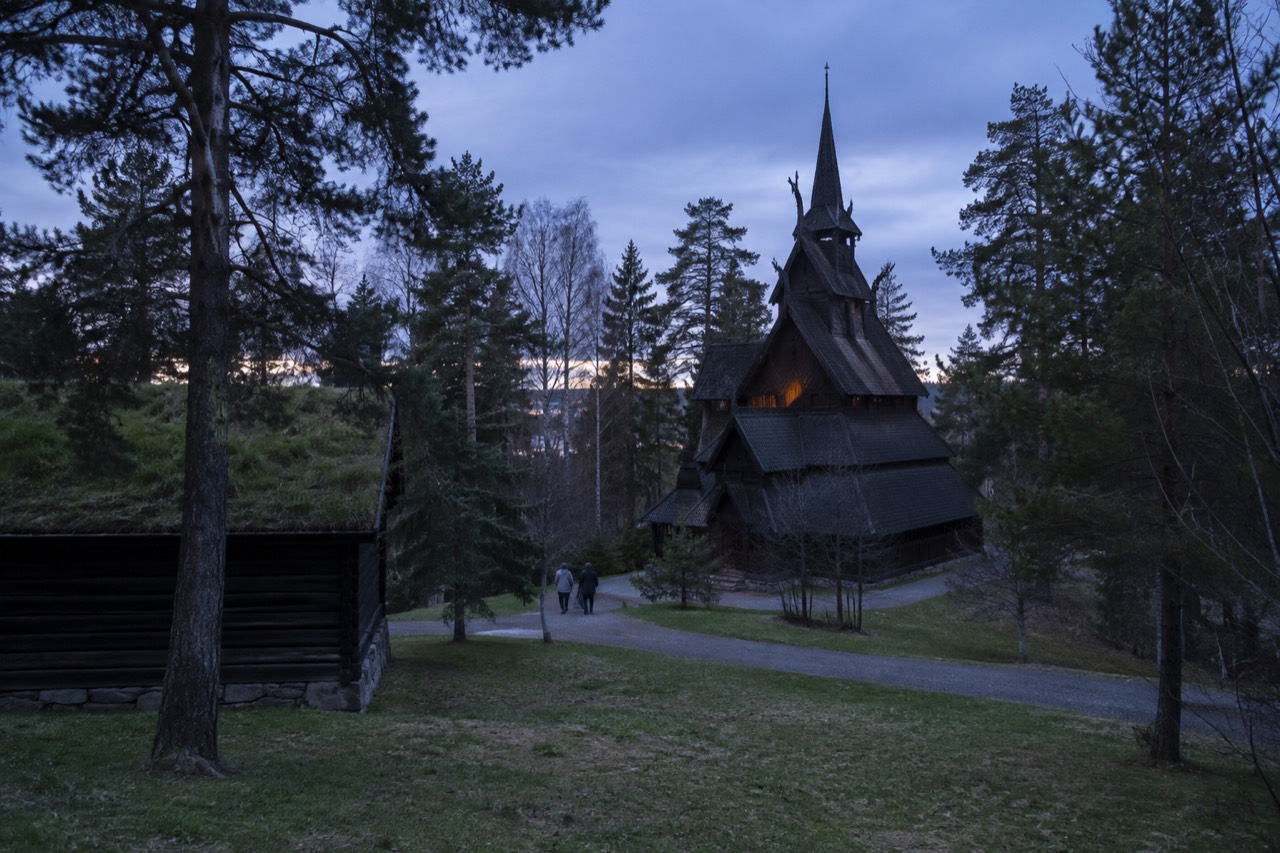
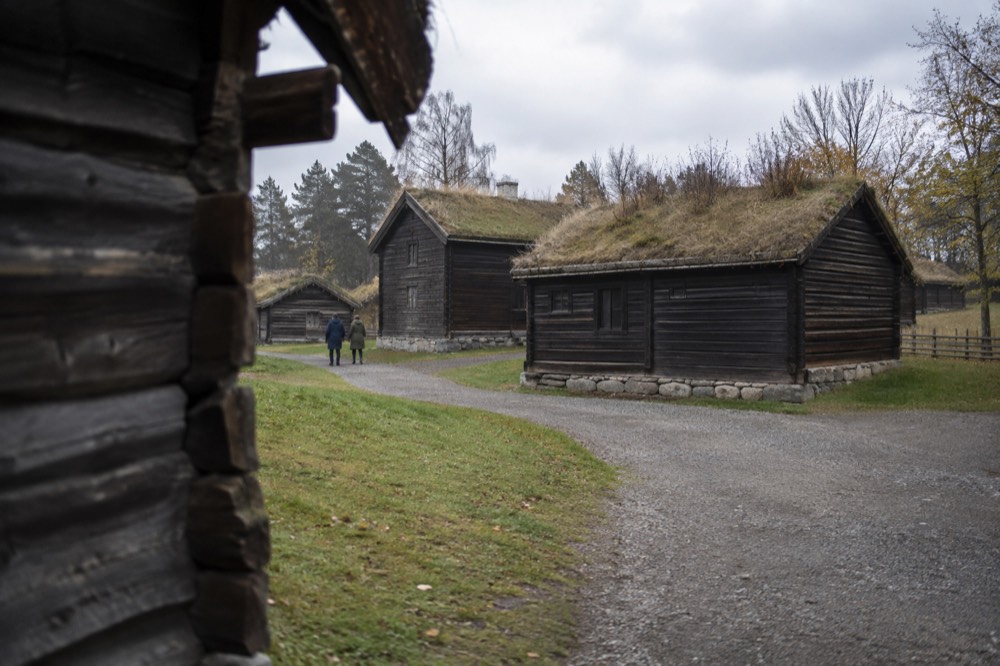
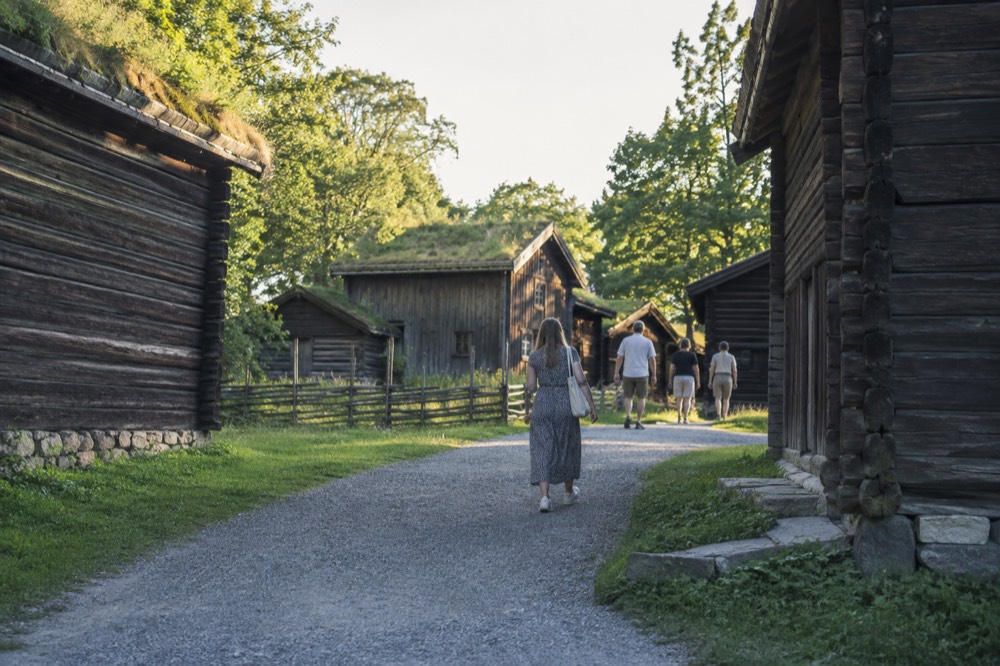
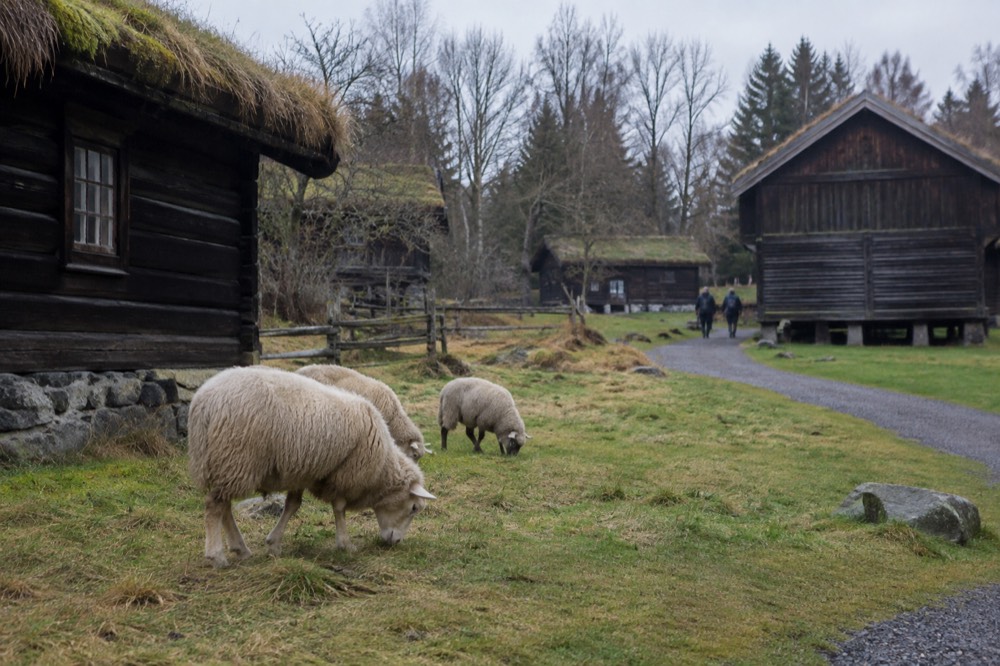
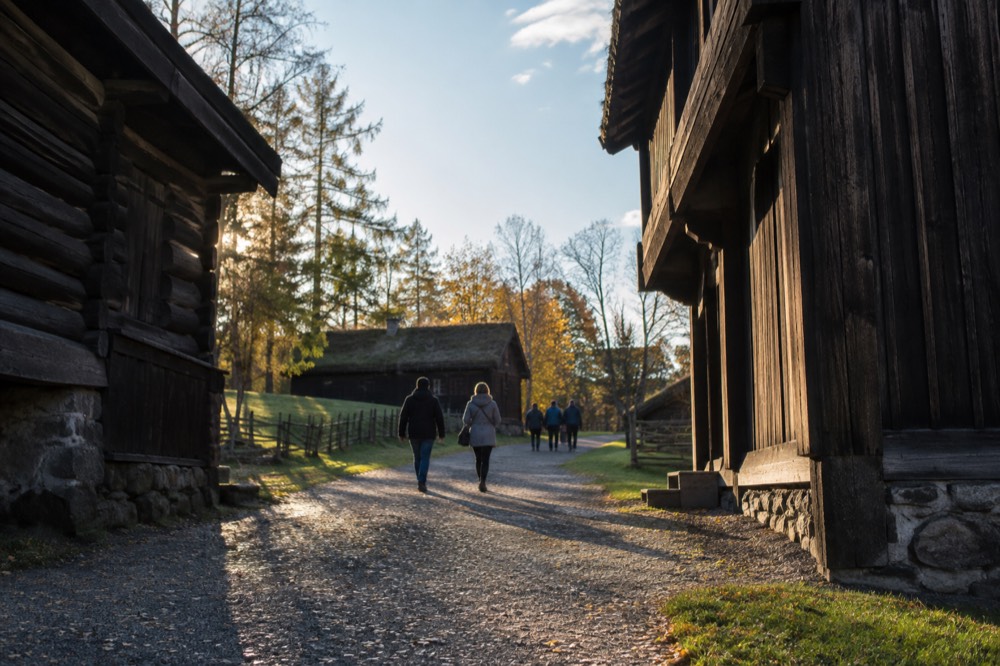
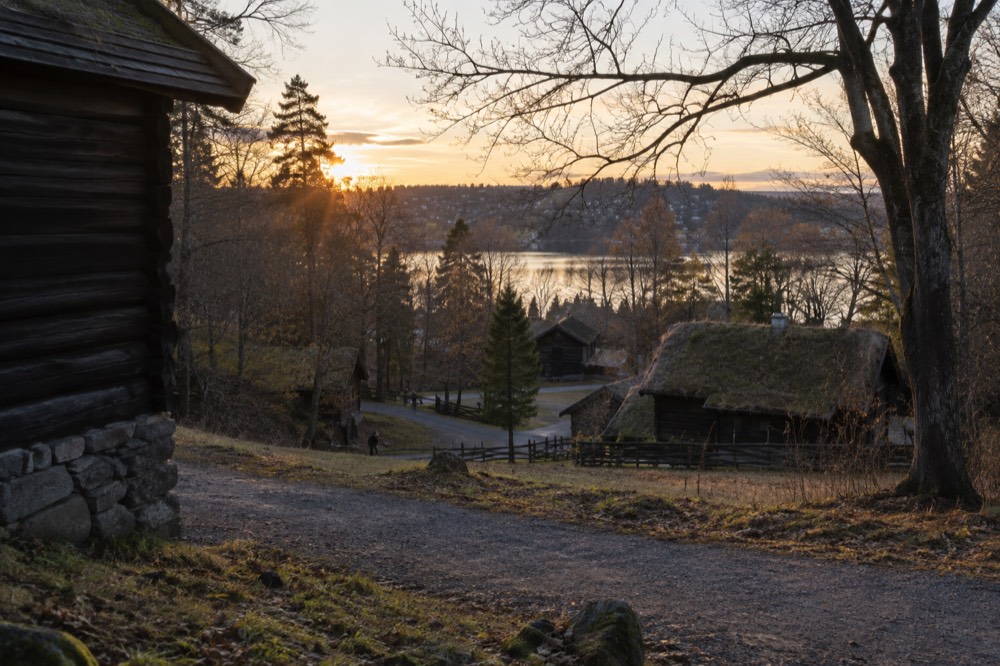
More than 150 buildings have been moved here piece by piece from towns, farms and fishing villages across the country and reassembled around gravel paths: farmsteads from the valleys of the east, a town street from the west coast, Sami dwellings from the far north, and a stave church from Gol that has stood on this spot since the Middle Ages. Costumed interpreters work in the old buildings in summer, livestock grazes in the historic farmyards, and the whole thing is close enough to central Oslo that you can be standing in the middle of it twenty minutes after leaving the National Theatre.
What Is the Norwegian Museum of Cultural History?
The Norwegian Museum of Cultural History is Norway's oldest and largest open-air museum, founded on Bygdøy at the end of the nineteenth century, with over 150 relocated historic buildings, an indoor collection covering Norwegian life from the late medieval period to the present, and a medieval stave church as its centrepiece. Adults pay 200 NOK, children 17 and under are free, and the museum opens 10:00 to 17:00 every day of the week. It is the place in Oslo where the countryside, the old town and the Sami north are all inside one fence.
The museum's Norwegian name is Norsk Folkemuseum, and that is the name on the signage and the tickets. English-language materials increasingly use the Norwegian Museum of Cultural History, which is a more accurate description of the scope: the indoor galleries hold folk art, costumes, toys, church art and everyday objects spanning centuries, and the "cultural history" label fits better than "folk" once you see the range. Both names refer to exactly the same institution, and searching for either will get you to the same gate.
The open-air part is what makes it different from every other museum in the city. The buildings are not replicas. They were bought or given, dismantled, shipped to Oslo and rebuilt here, a practice that began in the museum's early decades when Norwegian scholars realized that the country's wooden building traditions were disappearing. The Gol stave church is the most famous of them, and the museum's own account of its rescue and reassembly is a story in itself.
If you are planning a broader first visit to the city, our one day in Oslo itinerary places the museum inside a realistic schedule, and our Bygdøy peninsula guide covers the whole museum cluster in depth.
How Do You Get to the Norwegian Folk Museum?
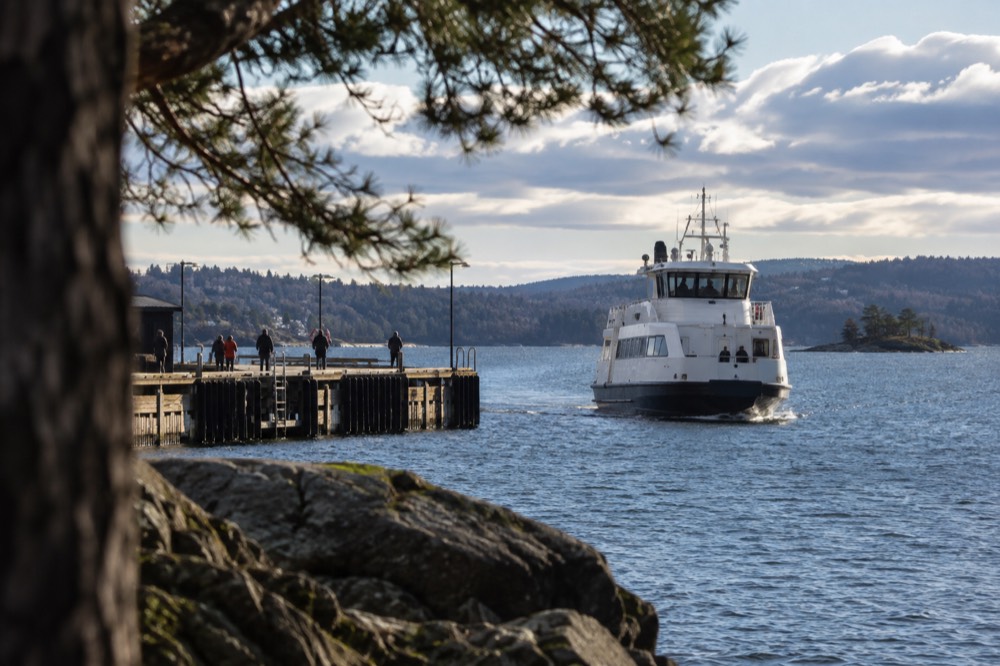
Take Ruter bus 30 from the National Theatre or elsewhere in the centre, about 15 minutes to the museum gates, year-round on an ordinary ticket. In season, roughly mid-March to early October, you can instead take the Bygdøy ferry from Rådhusbrygge 3 to the Dronningen pier, a 10-minute crossing, and walk about five minutes to the entrance. The ferry costs around 70 NOK one-way, is included with the Oslo Pass, and does not accept ordinary Ruter tickets, which is the detail that catches most visitors out. Both routes land you within a short stroll of the same gate, so the choice comes down to season, weather and how much you enjoy being on the water.
The two options are genuinely different systems, and mixing them up is the most common mistake visitors make on this peninsula. The Bygdøy ferry is a commercial seasonal service run from City Hall pier 3, platform F, stopping at Dronningen first and then Bygdøynes. Dronningen is your stop for the Folk Museum. Bygdøynes serves the Kon-Tiki and Fram museums. The ferry ran 14 March to 4 October in 2026, with departures about every 20 minutes through the day, so check the current season dates before relying on it.
Bus 30 runs all year, every day, as an ordinary Ruter service, and it stops at the museums themselves. It is the only option from early October to mid-March, and the honest fallback whenever the ferry queue at Rådhusbrygge stretches along the pier on a summer Saturday. A single zone 1 ticket covers it, and the same ticket covers the metro and trams you might use to reach the National Theatre in the first place.
One thing worth knowing before you plan the crossing: the island ferries in the Oslofjord are a separate Ruter service leaving from Aker Brygge, and their tickets have nothing to do with the Bygdøy ferry. Our Oslo ferries guide untangles the two systems, and our getting around Oslo guide covers the rest of the transport picture.
How Much Do Tickets Cost, and Is the Museum Covered by the Oslo Pass?
Adult entry to the Norwegian Folk Museum is 200 NOK, students pay 140 NOK, and children aged 0 to 17 enter free, with the museum open 10:00 to 17:00 daily and closed only 17 May and 24 to 25 December. The Oslo Pass includes entry, along with more than 30 other Oslo museums and all Ruter public transport in zones 1 through 4N. A 24-hour adult pass costs 580 NOK, so the museum alone does not pay for a pass, but a full Bygdøy day does.
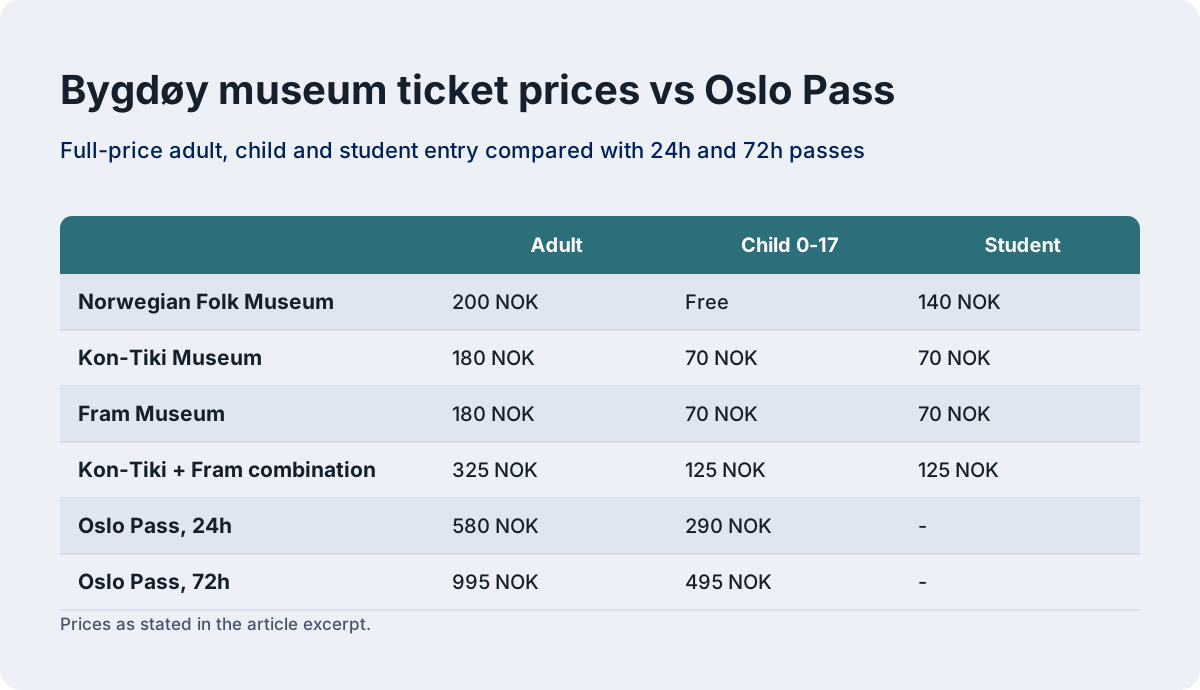
The maths on the pass is worth doing honestly, because this peninsula is where it usually breaks even. Here is what a full-price Bygdøy museum day costs against the 24-hour pass:
| Ticket | Adult | Child 0-17 | Student |
|---|---|---|---|
| Norwegian Folk Museum | 200 NOK | Free | 140 NOK |
| Kon-Tiki Museum | 180 NOK | 70 NOK | 70 NOK |
| Fram Museum | 180 NOK | 70 NOK | 70 NOK |
| Kon-Tiki + Fram combination | 325 NOK | 125 NOK | 125 NOK |
| Oslo Pass, 24h adult | 580 NOK | 290 NOK | - |
| Oslo Pass, 72h adult | 995 NOK | 495 NOK | - |
Three museums at full price comes to 560 NOK for an adult, and the pass at 580 NOK also covers the Bygdøy ferry, the buses, the trams and the metro for the whole day. Add a fourth stop anywhere in the city and the pass wins. Children get less out of the pass here because the Folk Museum is already free for them and the child pass costs 290 NOK.
The museum also sells a combination ticket with its sister institutions on the peninsula, which VisitOSLO lists among the covered attractions, so it is worth comparing the combination price against the pass if you are only doing two buildings. Our is the Oslo Pass worth it guide runs the full break-even calculation across the whole city.
What Can You Actually See Inside the Museum?
The core of the museum is the open-air area: over 150 original buildings arranged by region, including the Gol stave church, an entire recreated town street from western Norway, farmyards with animals, and Sami buildings from the north. Indoors, permanent exhibitions cover folk art, national costumes, toys, church art and everyday Norwegian life from the late medieval period through to the present. Together they make this the closest thing Norway has to a national story told in wood, wool and iron, and the outdoor area alone is bigger than most visitors expect.
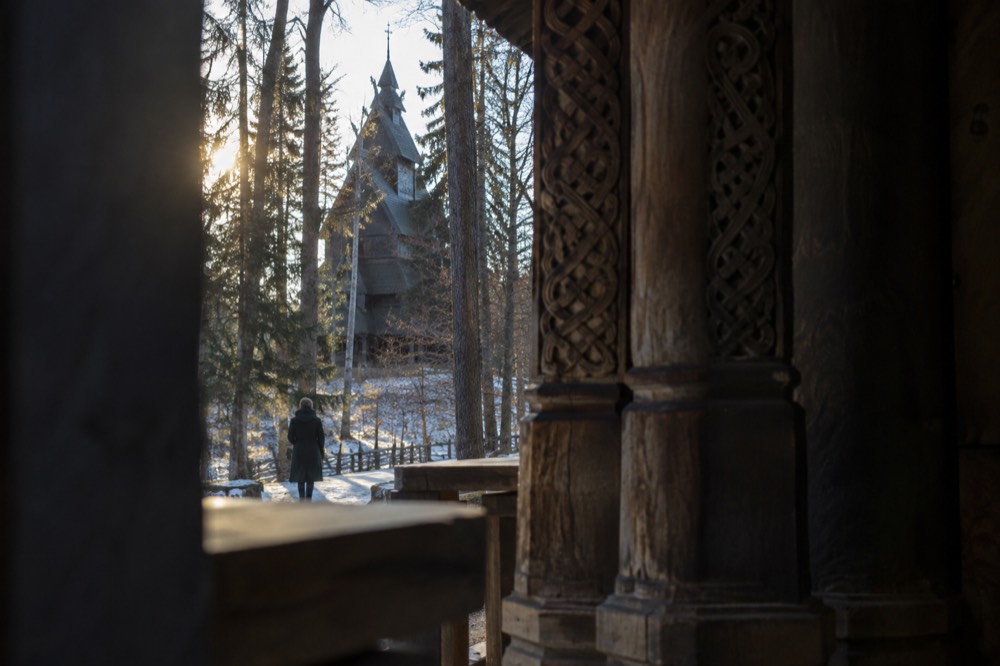
The Gol stave church is the headline building, and it deserves a slow circuit. It is one of the few surviving stave churches in Norway, built in the Middle Ages in the Hallingdal valley and moved to Bygdøy when it was sold to the museum's forerunner. The dark interior, carved portals and tiered roofline are the medieval Norway that the great stone cathedrals of continental Europe never had a counterpart to here. Our Gol stave church page covers the building and its history in detail.
The Old Town section recreates a streetscape of wooden houses from the west coast towns, transplanted building by building, and it is where the summer interpreters concentrate: bakers, silversmiths and costumed guides working in the shops. Children gravitate to the animals and the open space, which is one reason this museum works so well for families.
The indoor galleries matter more than most visitors expect, particularly in bad weather. The folk art collection, the costume collection and the exhibition on Norwegian life through the centuries are substantial, and the museum's toy exhibitions rotate. On a rainy day the balance flips, and the rainy day in Oslo guide treats this museum as a primary stop for exactly that reason.
How Long Does a Visit Take, and What Is the Best Time of Day?
Plan two to three hours for the Norwegian Folk Museum: two covers the open-air area and the stave church at a walking pace, three adds the indoor galleries properly. The best time of day is the first hour after opening at 10:00, when the coach groups have not yet arrived from the cruise terminals and the gravel paths are quiet. Mid-afternoon is the busiest window in July, and the museum closes at 17:00 sharp, so a late start costs you the open-air section in low light. Arriving at opening also puts you ahead of the ferry crowds that land at Dronningen mid-morning.
The seasonal difference is bigger here than at any indoor museum in the city. From late June to early August the interpreters are working, the animals are in the farmyards, and the cafe terraces are open: this is the museum at full power. From October to April the buildings are still open to walk around, the interiors are mostly closed for conservation, and the visit becomes a quieter, colder, shorter loop. Neither version is a bad visit, but they are different products, and you should match your expectations to the calendar. Everything else covered here is indexed on Oslo Travel Guide. Everything else covered here is indexed on Oslo Travel Guide.
Visitors with a full day should consider the museum as the anchor of a Bygdøy morning, followed by the Kon-Tiki and Fram museums at Bygdøynes in the afternoon. The walk between the two clusters takes about 15 to 25 minutes along the peninsula paths, or you can hop the ferry between Dronningen and Bygdøynes. The Kon-Tiki Museum ticket is the best-reviewed museum ticket in Oslo, and it is the natural pairing:
If you are short on time in the city altogether, our how many days in Oslo guide helps you decide whether Bygdøy earns a slot at all.
What About the Viking Age, and the Closed Viking Ship Museum?
The former Viking Ship Museum next door on Bygdøy is closed and will reopen as the Museum of the Viking Age in 2027, and no ticket to it exists. The Folk Museum is not a substitute for the Viking ships, but it does hold Viking-era objects and, more importantly, it sits beside the closed site, so many visitors combine the question with their Bygdøy plans. The honest substitute for the ships is Viking Planet in the city centre, a ticketed Viking experience that is actually bookable, and the only one worth pointing a reader towards while the new building is unfinished.
This is the most confused topic on the peninsula. The Viking Ship Museum shut in October 2021 for a complete rebuild, all three ships are being moved into the new building, and the museum's own site commits only to the year 2027, with no month. Some listings still sell entry to the closed building; those are excluded from everything we recommend. Our Museum of the Viking Age page tracks the closure in detail, and our answer on why the Oslo Viking museum is closed covers the timeline.
The Folk Museum's own relationship to the Viking era is modest but real: the institution absorbed collections over more than a century, and its medieval church art includes pieces that predate the stave church itself. Come here for the centuries after the Vikings, the farms, the towns and the church, and you will not be disappointed. Come here expecting longships and you have the wrong museum.
Is the Norwegian Folk Museum Good for Children?
Yes, and it is one of the best-value family outings in Oslo: children 17 and under enter free, the open-air area is essentially a walkable village with animals and space to run, and the summer interpreters and baking demonstrations are aimed squarely at families. An adult pays 200 NOK and a family of four can spend a full morning here for the price of one adult ticket per parent. Few capital-city museums offer this ratio, and fewer still give children an entire historic village to explore rather than a corridor of display cases.
The practical details matter with small children. The paths are gravel, so strollers with small wheels struggle in the historic area, and the buildings themselves are mostly step-access only. The museum is open 10:00 to 17:00 year-round, which suits a morning arrival. In winter the animals are fewer and the interpreters are gone, so the summer months are unambiguously the family window.
Older children and teenagers get more out of the indoor galleries than you might expect, particularly the toy collection and the exhibitions on Norwegian life through the centuries. The free things to do in Oslo guide lists the child-free entries across the city, of which this museum's policy is one of the most generous.
How Does the Museum Compare with Oslo's Other Museums?
The Folk Museum is the only open-air museum in Oslo and the only one of the city's major museums where the main collection is buildings rather than objects, which makes it complementary to, not competing with, the art museums and the maritime museums. If you want paintings you go to the National Museum or MUNCH, if you want polar ships you go to Fram, and if you want to understand how ordinary Norwegians lived for four centuries you come here. Most visitors have time for two or three of these, not all of them.
A realistic comparison for a visitor choosing:
| Museum | Focus | Adult entry | Time needed | Best for |
|---|---|---|---|---|
| Norwegian Folk Museum | Open-air buildings, folk life | 200 NOK | 2-3 hours | Families, history, half a day |
| Kon-Tiki Museum | Thor Heyerdahl's expeditions | 180 NOK | 1 hour | Adventure stories, all ages |
| Fram Museum | Polar exploration ship | 180 NOK | 1-2 hours | Boarding a real ship |
| National Museum | Norwegian and international art | Not confirmed | 2-3 hours | The Scream, art lovers |
| MUNCH | Edvard Munch's works | 280 NOK | 1-2 hours | Modern art, waterfront |
The pairing that works best on a single Bygdøy day is the Folk Museum plus one or both of the maritime museums, all within walking or ferry distance of each other. The Fram Museum's ship can be boarded, which children remember longer than any exhibit behind glass, and the Kon-Tiki Museum tells the raft voyage in a compact hour. Our Oslo museum day guide sequences the whole peninsula efficiently.
For visitors who want history but not another museum building, the evening walks are the alternative format. The myths and legends evening walk covers the city's darker stories in two hours after the museums shut:
And for art rather than artefacts, the guided walk through Vigeland Park costs nothing to enter on your own, but a guided art walk unlocks the sculpture the average visitor walks straight past:
What Should You Know Before You Go?
Bring comfortable shoes, check the ferry season before you plan the crossing, budget two to three hours, and expect gravel paths and step-only building access in the historic area. The museum is open 10:00 to 17:00 daily, closes only on 17 May and 24 to 25 December, and sells tickets at the gate and online. Food options on the peninsula are limited, so either eat before you come or plan for the museum cafe. Dress for the weather rather than for a museum, because most of what you came to see is outdoors, and Oslo's summer evenings can turn cool even in July.
A few practical points that are easy to get wrong. The cafe has seasonal hours, and in the shoulder months the nearest reliable food is back towards the city or at the other museums' kiosks. Photography is allowed in the open-air area, with restrictions inside some of the fragile buildings, and the staff at the gate will tell you which. The museum is largely outdoors, so check the forecast; August, not November, is Oslo's wettest month on the 1991 to 2020 normals, at 103 mm.
Accessibility is partial: the main paths are manageable for wheelchairs in dry weather, but the historic buildings themselves are not, and the terrain slopes gently towards the water. Visitors who need full step-free access will get more from the indoor galleries and our Oslo accessibility guide covers the city-wide picture.
Money matters are simple here. Norway uses the krone, not the euro, and card payment is accepted everywhere on the peninsula, including the ferry kiosk. Norway is in Schengen but not in the European Union, so visitors from outside the region can claim a VAT refund on qualifying purchases, a detail our Oslo currency and cash guide explains. For what things cost in practice, the is Oslo expensive guide uses real SSB price-level data rather than guesswork, and it shows the pattern this museum fits: museums and public transport in Oslo are not where the money goes, restaurants and alcohol are.
Can You Visit the Folk Museum and the Rest of Bygdøy in One Day?
Yes: a full Bygdøy day of the Folk Museum, Kon-Tiki and Fram takes about six hours at a relaxed pace, and it is the single most efficient museum day in Oslo. Start at the Folk Museum for opening at 10:00, spend two and a half hours there, walk or ferry to Bygdøynes for the maritime museums in the afternoon, and take bus 30 back to the centre before dinner. The Oslo Pass covers everything on that list, including the ferry and the bus, so the whole day can run on one ticket if you plan it that way.
A sample schedule that has worked for the peninsula's geography:
| Time | Activity | Notes |
|---|---|---|
| 09:40 | Ferry from Rådhusbrygge 3 | Or bus 30 from Nationaltheatret |
| 10:00-12:30 | Norwegian Folk Museum | Stave church first, then the Old Town |
| 12:30-13:15 | Walk or ferry to Bygdøynes | 15-25 minutes on foot |
| 13:15-14:15 | Kon-Tiki Museum | Compact, one hour is enough |
| 14:15-15:45 | Fram Museum | Board the ship itself |
| 16:00 | Bus 30 back to the centre | Or the ferry, in season |
The cruise-port variant of this day is tighter, and our Oslo cruise port day guide compresses the peninsula into a shore excursion. For everyone else, the temptation to add a fourth museum should be resisted: three is a full day, and the quality drops when you rush the Folk Museum's outdoor area, which is the part that rewards slowness.
If you would rather have a guide for part of the day, the sightseeing products that include Bygdøy are listed in our Oslo guided tours overview, and the combination bus and fjord cruise products cover the peninsula from a seat. But the honest answer for this museum is that it explains itself well, the signage is in English throughout, and the money is better spent on the ferry crossing and a good lunch afterwards.
Common Questions About the Norwegian Folk Museum
How much does the Norwegian Folk Museum cost?
Adult entry is 200 NOK, students pay 140 NOK, and children aged 0 to 17 enter free. The Oslo Pass includes the museum along with more than 30 other Oslo attractions and all Ruter public transport in zones 1 through 4N.
What are the opening hours?
The museum is open 10:00 to 17:00 every day of the week, year-round, and closes only on 17 May and 24 to 25 December. Last admission is well before closing if you want to see the open-air area in daylight.
How do I get to the Norwegian Folk Museum?
Take Ruter bus 30 from central Oslo, about 15 minutes, year-round on an ordinary ticket. In season, roughly mid-March to early October, the Bygdøy ferry runs from Rådhusbrygge 3 to the Dronningen pier, a 10-minute crossing at about 70 NOK one-way, free with the Oslo Pass and not valid with ordinary Ruter tickets.
How long should I spend at the museum?
Two hours covers the open-air area and the stave church at a walking pace; three hours adds the indoor galleries properly. Families with children tend to stay longer in summer, when the interpreters and animals are in the historic farmyards.
Is the Norwegian Folk Museum good for kids?
Yes. Children enter free, the open-air area works like a walkable village with animals and space to run, and the summer program includes costumed interpreters and baking demonstrations. The paths are gravel, so bring sturdy strollers or a carrier.
Can I see the Viking ships at the Folk Museum?
No. The Viking Ship Museum next door is closed and will reopen as the Museum of the Viking Age in 2027, and the ships are not viewable in Oslo in the meantime. The Folk Museum covers Norwegian life from the late medieval period onward, plus the medieval Gol stave church.