Gol Stave Church: Oslo's Medieval Timber Church on Bygdøy
The Gol Stave Church is the medieval timber church that anchors the open-air museum on the Bygdøy peninsula, and it is the closest thing Oslo has to a Viking-age building you can walk into.
Short answer
The Gol Stave Church is a faithful replica of a medieval Norwegian stave church, rebuilt at the Norwegian Museum of Cultural History on the Bygdøy peninsula. Entry is included in the museum's 200 NOK adult ticket, children 0-17 enter free, and the Oslo Pass covers it. Bus 30 runs year-round; the seasonal ferry from Rådhusbrygge 3 runs 14 March to 4 October.
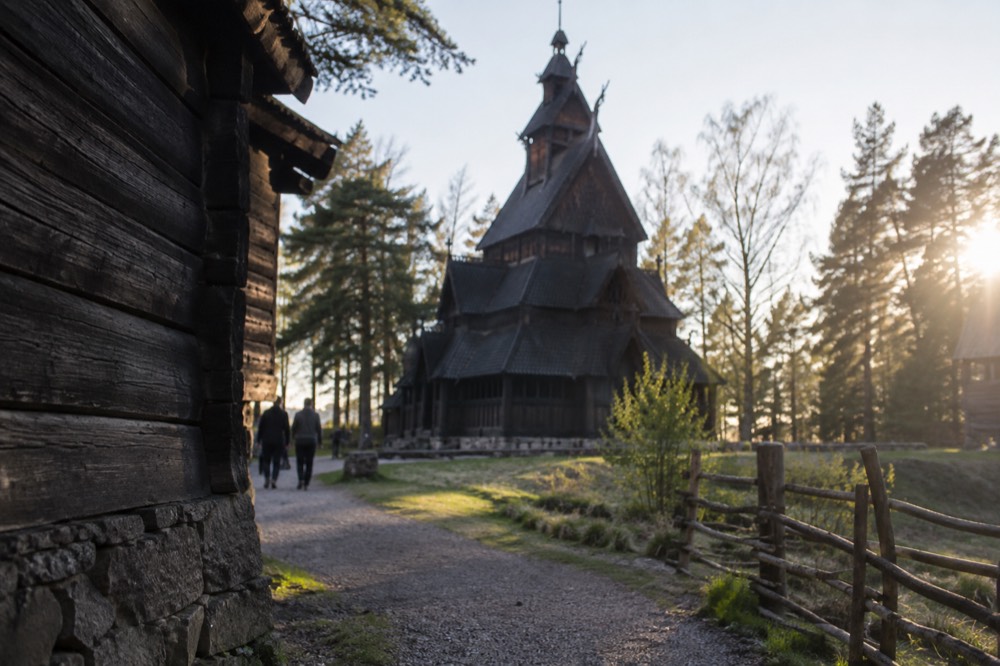
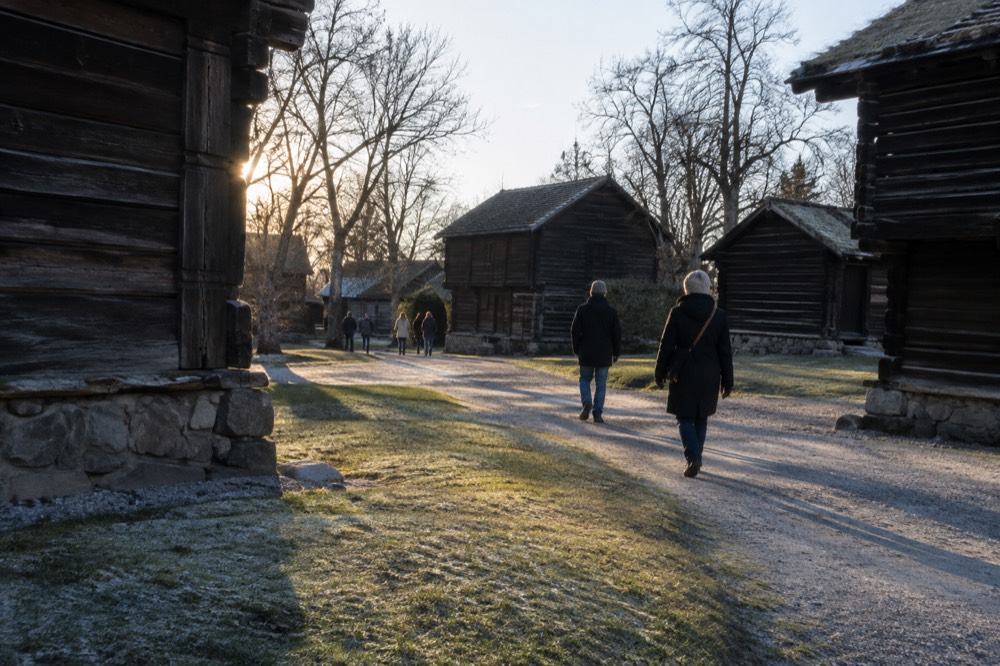
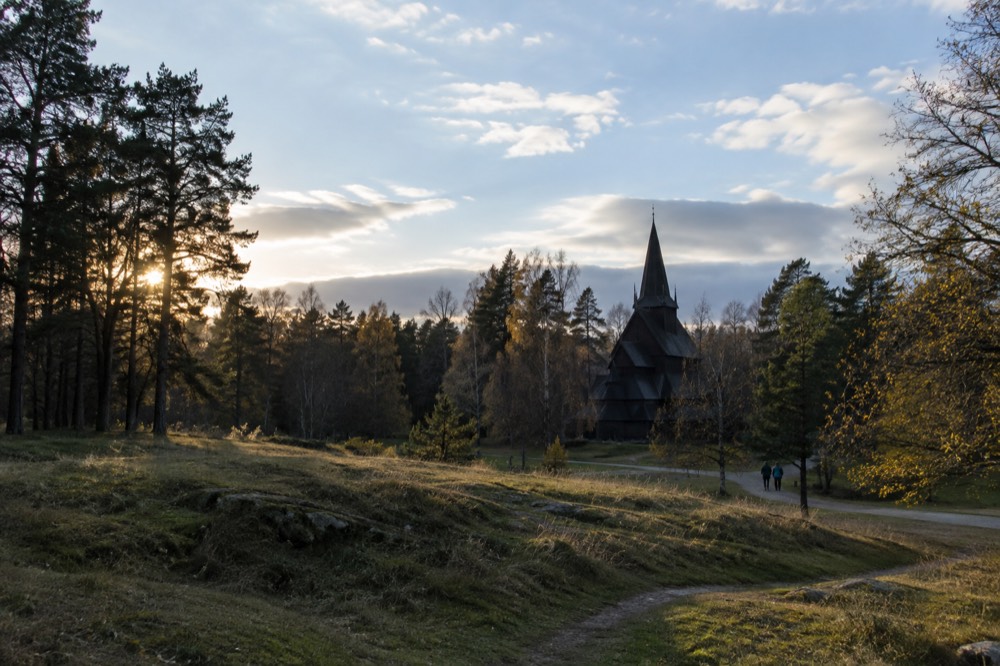
The Gol Stave Church is the building most visitors photograph on Bygdøy before they can name it. It stands at the top of the open-air grounds of the Norwegian Museum of Cultural History, blackened timber rising to a carved ridge turret, surrounded by farmsteads, turf roofs and wooden barns that were carried to the peninsula from across Norway. Few visitors arrive in Oslo planning to see a medieval church of crossed logs and dragon-head gables. Most leave having done exactly that, because it is the single most striking structure in the city's museum district, and because the walk up to it is half the point.
This page covers the church as a practical visit: what it actually is, how to reach it from the center, what it costs, what you can see once you are inside, and how to fold it into a full Bygdøy day alongside the Kon-Tiki Museum and the Fram Museum. The transport facts below come from the operators' own published pages, the prices from the museums' own ticket pages, and the two systems of boats that serve the peninsula are kept firmly apart, because they are genuinely different and conflating them costs visitors money.
What Is the Gol Stave Church?
The Gol Stave Church is a full-scale reconstruction of a medieval Norwegian stave church, erected on the Bygdøy peninsula as the founding centerpiece of the Norwegian Museum of Cultural History's open-air collection. It is not the original, which still stands in the inland village of Gol, but it is a faithful copy built using traditional timber techniques, and it is the reason the museum exists where it does. Entry is inside the museum's ordinary admission, with adults at 200 NOK and children 0-17 free.
Stave churches are Norway's own architectural invention: timber churches built on a frame of vertical posts, the "staves" of the name, with walls of vertical planks locked into sill beams rather than nailed together. The technique produced buildings of extraordinary character, dark and steep-roofed, carved with intertwined animal ornament along gables and portal lintels. Norway once had hundreds of them. Time, Reformation-era rebuilding and the nineteenth century's enthusiasm for tearing down the old in favor of the new reduced that number to a couple dozen survivors, and the survivors are now among the most visited buildings in the country.
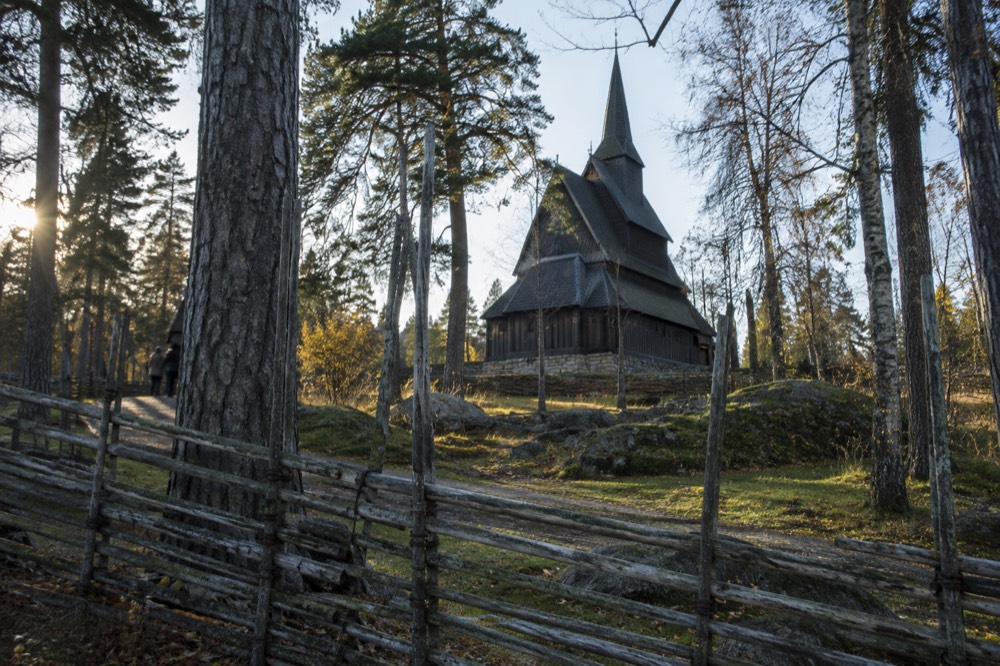
The museum's version is the one Oslo visitors see. The medieval original stands in Gol, a village in the Hallingdal valley, and the story of how a copy of it ended up on a peninsula in the capital is bound up with the origins of the open-air museum movement itself. The reconstruction was built at a time when Norwegians were beginning to realize that the country's rural timber heritage was disappearing faster than anyone was documenting it, and the church became the anchor around which farm buildings from many regions were later gathered. The museum's own published material treats the church as its founding monument, and the grounds around it grew outward from that spot.
What that means for a visitor is simple: you cannot see this building anywhere else in Oslo, and you cannot see the original without a long drive into the interior. The Bygdøy copy is the accessible version of one of Europe's strangest and most beautiful building traditions, and it sits fifteen minutes by boat from the City Hall pier. For a city that traded away most of its medieval wooden core to fire and redevelopment, it is a rare chance to stand inside the kind of building that filled the Oslo of the Middle Ages.
Where Is the Gol Stave Church and How Do You Get There?
The church stands inside the Norwegian Museum of Cultural History on the Bygdøy peninsula, reachable from central Oslo two ways: Ruter bus 30, which runs year-round and stops at the museum on an ordinary ticket, or the seasonal Bygdøy ferry from Rådhusbrygge 3, which runs 14 March to 4 October 2026, takes about ten minutes, and is not covered by Ruter tickets though the Oslo Pass does include it. The two options suit different days and different budgets, and the choice matters more than most guides admit.
Bus 30 is the dependable answer. It departs from central stops including Nationaltheatret and reaches the museum area in roughly fifteen minutes, and because it is an ordinary Ruter service, any valid Ruter ticket covers it. It runs all year, which matters in the deep winter months when the ferry is not sailing at all. If you are visiting outside the 14 March to 4 October window, or on a Monday when you simply want the fastest route, the bus is the only public option.
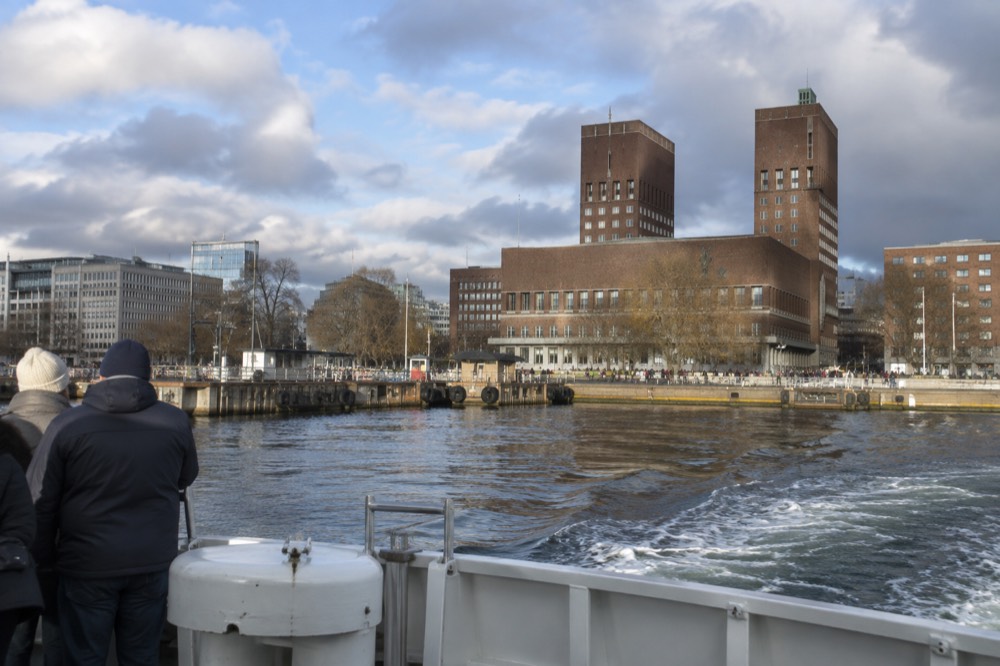
The ferry is the better story. It leaves from Rådhusbrygge 3, Platform F, beside the City Hall, and crosses to two stops on the peninsula: Dronningen, which serves the folk museum, and Bygdøynes, which serves Kon-Tiki, Fram and the Maritime Museum. Boats run roughly every twenty minutes during daytime hours, the crossing to the first stop takes about ten minutes, and a round trip of the peninsula's two piers takes about thirty. The operator's published one-way fare is about 70 NOK, slightly more if bought on board, and a day pass exists. Two rules trip visitors up. First, ordinary Ruter tickets are not valid on this ferry, it is a private seasonal service. Second, the Oslo Pass does cover it. Do not mix this boat up with the Oslofjord island ferries, which are ordinary Ruter services departing from Aker brygge on the other side of the pier front, as described in the site's guide to Oslo's ferries.
| Option | Route | Season | Ticket |
|---|---|---|---|
| Ruter bus 30 | Nationaltheatret to the museum stops on Bygdøy | Year-round | Ordinary Ruter ticket |
| Bygdøy ferry | Rådhusbrygge 3 to Dronningen pier | 14 March to 4 October 2026 | About 70 NOK one-way, Oslo Pass included, Ruter not valid |
| On foot or by bike | Along the waterfront promenade from the city center | Year-round | Free, allow about an hour |
Whichever way you arrive, the church is at the top of the museum's hill, and the walk up through the historic farmsteads is part of the visit rather than a commute. If you are planning the wider peninsula, the site's Bygdøy guide covers the full museum cluster, and the overview of things to do in Oslo places the peninsula in the context of the whole city.
Once you have decided how to get out there, the practical question is what the day costs, and that is where a little arithmetic pays for itself. The next section breaks down the numbers.
How Much Does It Cost to Visit the Gol Stave Church?
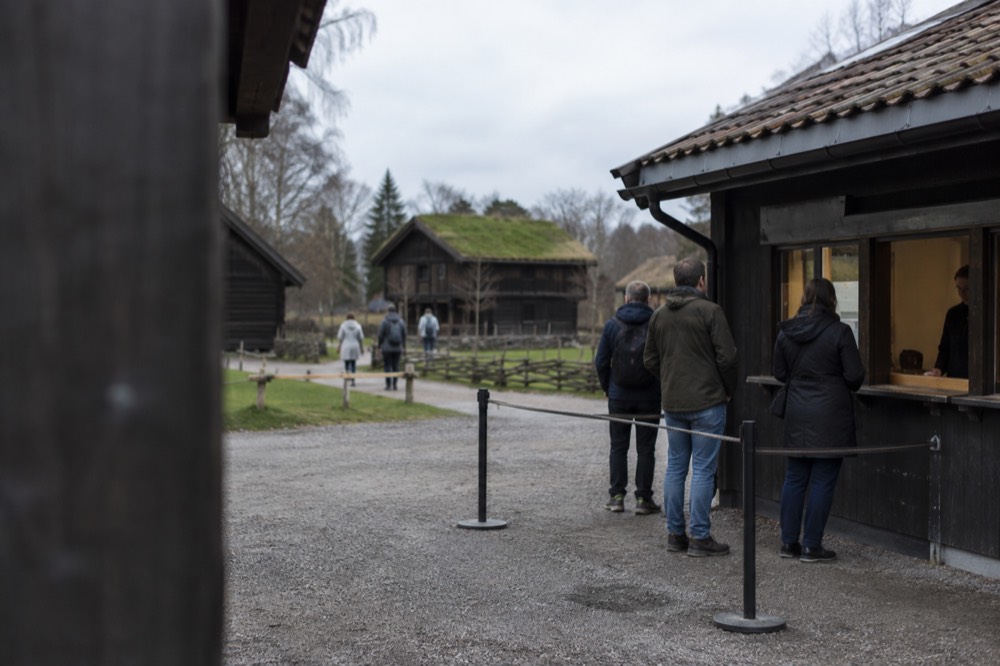
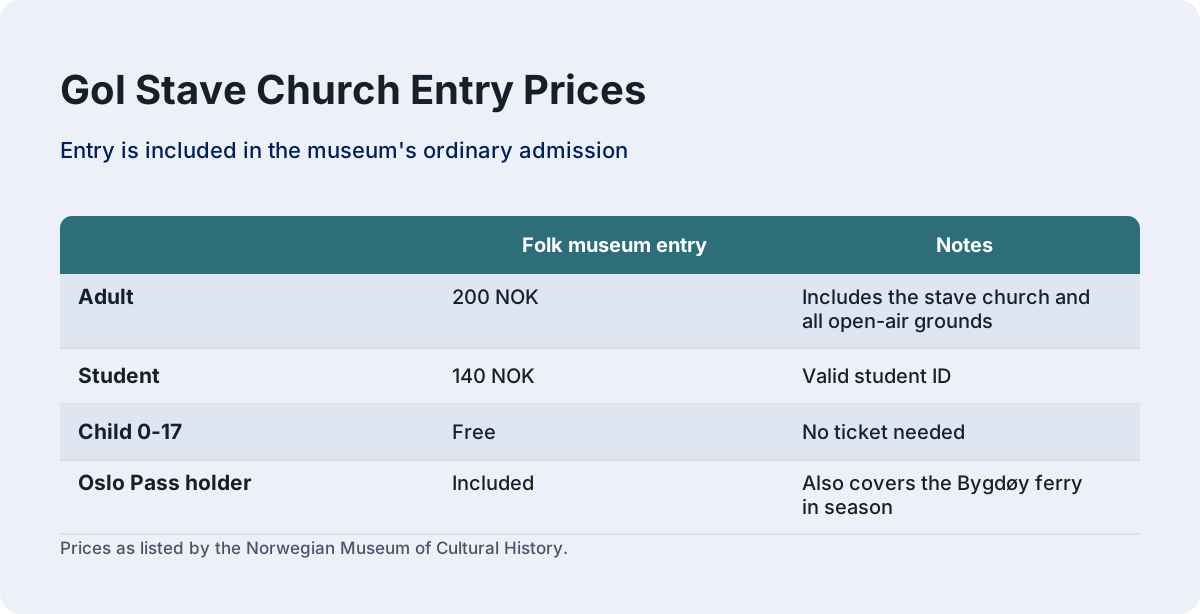
Entry to the church is included in the Norwegian Museum of Cultural History's ordinary admission: adults pay 200 NOK, students 140 NOK, and children aged 0 to 17 enter free, with the museum open daily from 10:00 to 17:00 and closed only on 17 May and 24 to 25 December. The Oslo Pass covers the museum, so pass holders walk straight in, and the pass also covers the Bygdøy ferry that carries you there in season. Those are the museum's own published figures, and they hold for the whole open-air grounds, church included.
The pass arithmetic deserves a moment, because Bygdøy is the single best place in Oslo to run it. The folk museum at 200 NOK, Kon-Tiki at 180 NOK and the Fram Museum at 180 NOK come to 560 NOK at full price for three attractions. A 24-hour adult Oslo Pass is 580 NOK and includes all of them plus the ferry plus every Ruter bus, tram, metro and island ferry in zones 1 through 4N, including the Vy trains to and from Gardermoen airport. One more modest attraction anywhere in the city, or simply the boat rides, and the pass has paid for itself. The site's full breakdown of is the Oslo Pass worth it runs the numbers across every pass length.
| Visitor | Folk museum entry | Notes |
|---|---|---|
| Adult | 200 NOK | Includes the stave church and all open-air grounds |
| Student | 140 NOK | Valid student ID |
| Child 0-17 | Free | No ticket needed |
| Oslo Pass holder | Included | Also covers the Bygdøy ferry in season |
Two practical warnings. The combination tickets sold at the Bygdøy museums are real and worthwhile if you are paying individually: Kon-Tiki plus Fram is 325 NOK for an adult, a clear saving against the two entries bought on their own, and adding the Maritime Museum brings the adult combo to 485 NOK. But the folk museum is not part of those combos, so factor its 200 NOK separately. And if you are arriving off-season, remember the ferry stops running in early October, which quietly changes the cost of the day because you will be on the bus.
If the church is your main reason for crossing the water, the rest of the peninsula is close enough that it would be a waste not to continue. The Kon-Tiki Museum sits at Bygdøynes, a pleasant walk from the folk museum's gates, and its entry ticket is the best-reviewed museum ticket in Oslo on either major platform, with a rating of 4.5 across more than a thousand reviews. Pairing the stave church's medieval timber with Thor Heyerdahl's balsa-wood raft makes for a satisfyingly strange day, one building that never left Norway and one that crossed an ocean.
What Can You See Inside the Church?
Inside, the church is a single dark timber nave with a raised central space, carved portal work, replica runic and painted decoration, and the smell of aged pine that no modern building reproduces; the interior is sparsely furnished by design, with the carved structure itself as the exhibit, and you can walk the ground floor and look up into the tiered roof frame that the stave technique makes possible. It is a short visit inside, fifteen minutes of slow looking, but it is fifteen minutes unlike anything else in the city.
The construction is the exhibit. Stave buildings rest on a frame of vertical posts set into sill beams, with the wall planks standing upright rather than laid horizontally, and the church's interior makes the logic visible: the load travels down the corner and intermediate staves into the ground sills, and everything else hangs off that skeleton. Look for the carved ornament where the structure meets the eye level, on the portal and along the beam edges, the intertwined animals and interlace patterns that carry the same visual world as the carved ship prows of the Viking age. The museum's signage explains the technique in English, and the church is interpreted as a building rather than as a place of worship. The full index of guides sits on Oslo Travel Guide. The full index of guides sits on Oslo Travel Guide.
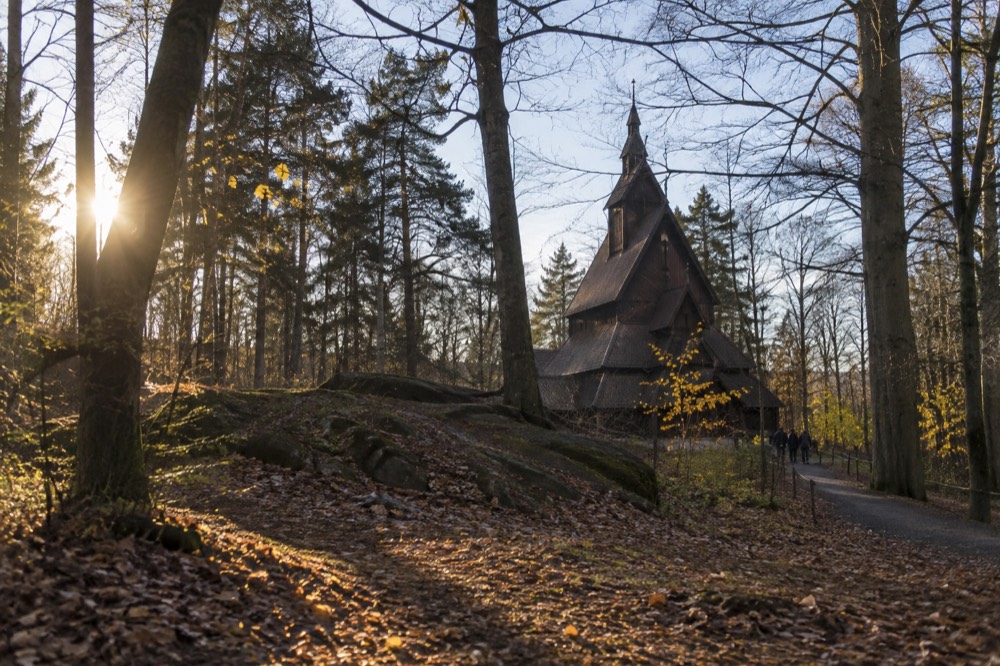
Around the church, the open-air grounds hold more than a hundred historic buildings, farmhouses, storehouses, barns and a stave-built bell tower, gathered from across the country and arranged as regional farmyards. In summer, costumed interpreters demonstrate traditional crafts in several of the yards, and livestock grazes some of the enclosures, which makes this the most family-friendly of the Bygdøy museums by a wide margin. Children enter free, and the combination of animals, open space and a building that looks like something from a saga does the entertaining without any help. The wider museum is covered in the site's page on the Norwegian Museum of Cultural History, including what else is on the grounds and how the seasons change it.
One honest note on the Viking question. Visitors sometimes arrive at Bygdøy expecting to see Viking ships, and the building they are thinking of, the former Viking Ship Museum, is closed and will reopen as the Museum of the Viking Age in 2027. Until then, the stave church is the closest the peninsula comes to Norway's medieval material world, and Viking Planet in the city center covers the Viking age in multimedia. The site's page on the Museum of the Viking Age tracks the reopening in detail.
How Much Time Should You Spend at the Church and on Bygdøy?
Allow 30 to 45 minutes inside the folk museum for the church itself, two to three hours for the museum's open-air grounds if you want to enjoy them, and a full day if you are combining the church with the other Bygdøy museums, which sit within a 15 to 25 minute walk of each other along the peninsula's paths. The church alone does not justify the crossing; the museum around it does, and the peninsula as a whole rewards the whole day.
The geography is compact but not tiny. The folk museum's entrance is near the Dronningen pier, and the Kon-Tiki, Fram and Maritime museums cluster together at Bygdøynes, the next pier along. Walking between the two clusters takes roughly fifteen to twenty-five minutes depending on pace and how often the waterfront stops you. In summer the ferry lets you hop: Dronningen for the folk museum, then re-board or walk to Bygdøynes for the rest. In winter, when the ferry is not running, bus 30 serves both clusters and the walk becomes the plan.
| Bygdøy sight | Adult entry | Time to allow | Nearest pier |
|---|---|---|---|
| Norwegian Museum of Cultural History, with the Gol Stave Church | 200 NOK | 2-3 hours | Dronningen |
| Kon-Tiki Museum | 180 NOK | About 1 hour | Bygdøynes |
| Fram Museum | 180 NOK | 1-2 hours | Bygdøynes |
| Norwegian Maritime Museum | Check the venue's own site | 1-2 hours | Bygdøynes |
A sensible shape for the day: ferry out on the first morning boat, the folk museum and the church while your legs are fresh, the walk or the ferry hop to Bygdøynes for lunch and the two polar museums in the afternoon, and the boat back with the city skyline ahead of you. The Fram Museum's interior is walk-through ship, and its own page on this site covers what to expect aboard. If the weather turns, Bygdøy is also the day that recovers best, because three of the four museums are substantially indoors and the peninsula's cafés are pleasant places to wait out a shower.
When Is the Best Time to Visit?
Mid-June to late August is the best window: the ferry is running, the open-air grounds are in full interpretation with costumed demonstrations and animals, and Oslo's daylight stretches past 21:00 so the whole peninsula stays usable into the evening. May and September are quieter and still served by the boat, while October to March means bus 30, shorter days and a museum running on its indoor rhythm. The church itself is the same building in every month, but the experience around it changes enormously.
The seasonal ferry window, 14 March to 4 October, is the practical calendar. Inside it, the museum's summer season adds the living-history layer, and the grounds are at their greenest. Outside it, you are riding bus 30 through residential Bygdøy, which is perfectly pleasant and considerably less romantic than arriving by boat across the water. The museum keeps its 10:00 to 17:00 hours year-round with the exception of 17 May, Norway's national day, when it is closed, and 24 to 25 December.
Crowds follow the cruise ships and the summer weekends. Bygdøy's museums are busiest between late morning and mid-afternoon in July; arriving for the museum's 10:00 opening, or after about 15:00, makes a visible difference to how the church interior feels. Weather matters less here than at Oslo's outdoor sights, since the church and most exhibits are under cover, but the open-air grounds are genuinely better in dry weather. The site's month-by-month Oslo weather and best time to visit Oslo guides cover the wider calendar if you are still choosing dates.
Is the Gol Stave Church Worth the Trip?
Yes, if you have any interest at all in buildings, craft or the medieval North, and even if you do not, because the church is one of the most photographed structures in Norway for a reason, the museum around it is the best family attraction on the peninsula, and the total cost of the visit, 200 NOK or covered by the Oslo Pass, is modest by Oslo standards. It is not worth a special trip if your Oslo time is under half a day and you have no appetite for museums, in which case the city center will serve you better.
The honest comparison is with what else the city offers. Oslo's center is rich in modern architecture and painting, the Opera House roof, the National Museum, MUNCH, but it is thin on anything that predates the nineteenth century, because fires and redevelopment took the medieval city. The stave church is the one place in the capital where a visitor stands inside a building tradition that reaches back to the Middle Ages. That scarcity is the whole argument. If your trip includes the fjord, the museums and a walk or two, the church is the piece that makes the picture older than a hundred years.
For visitors who want the peninsula without the planning, a sightseeing tour that covers Bygdøy's highlights is a reasonable shortcut, and the half-day option below pairs the peninsula's landmarks with the city's most famous park in one organized block. For everyone else, the do-it-yourself version of this page, bus or ferry, folk museum first, polar museums after, is the classic Oslo day, and it is the one locals recommend to visitors who ask what to do with a full day in the city.
One more pairing worth considering before you commit the day. If Bygdøy is your second or third day in the city, a guided walk of the center first gives the peninsula its context: the budget central walking tour runs about two hours with a local guide and costs less than the folk museum's own entry, which makes it the cheapest credible orientation in the city. Knowing what you are looking at on the peninsula, and why Norwegians gathered these buildings here at all, is worth the hour before the boat.
Common Questions About the Gol Stave Church
Is the Gol Stave Church in Oslo the original?
No. The original medieval church stands in the village of Gol in the Hallingdal valley. The Bygdøy building is a faithful reconstruction, erected as the founding centerpiece of the Norwegian Museum of Cultural History's open-air collection, and it is the version Oslo visitors can see.
How do I get to the Gol Stave Church from central Oslo?
Two ways: Ruter bus 30, which runs year-round from central stops such as Nationaltheatret in about fifteen minutes on an ordinary Ruter ticket, or the seasonal Bygdøy ferry from Rådhusbrygge 3, which runs 14 March to 4 October 2026, takes about ten minutes to Dronningen, and costs about 70 NOK one-way. The Oslo Pass covers the ferry; ordinary Ruter tickets do not.
How much does it cost to see the Gol Stave Church?
Entry is included in the Norwegian Museum of Cultural History's admission: 200 NOK for adults, 140 NOK for students, and free for children aged 0 to 17. The Oslo Pass covers the museum entirely.
How long does a visit take?
The church itself is a 15 to 30 minute experience. The museum's open-air grounds around it deserve two to three hours, and a full Bygdøy day combining the folk museum with Kon-Tiki and Fram runs five to seven hours including travel.
Can I see a Viking ship in Oslo instead?
Not at present. The former Viking Ship Museum on Bygdøy is closed and will reopen as the Museum of the Viking Age in 2027. Until then, Viking Planet in the city center and Viking-age objects at the Historical Museum are the honest options, and the stave church is the peninsula's medieval highlight.
Is the Gol Stave Church open in winter?
Yes. The museum keeps daily hours of 10:00 to 17:00 year-round, closing only on 17 May and 24 to 25 December. In winter you arrive by bus 30, since the Bygdøy ferry does not run outside its 14 March to 4 October season.
Before you lock the day in, here are the three products that pair most naturally with a Bygdøy visit: the best-reviewed museum ticket on the peninsula, the budget walking tour that orients you in the center first, and the fjord cruise that shows you the water you crossed all morning. As the editorial desk at oslotravelguide.com keeps finding, the visitors who enjoy Bygdøy most are the ones who arrive knowing what the ferry covers and what it does not.