Norway Currency and Cash: What to Know Before You Pay in Oslo
Norway runs on the krone and almost never on cash. Here is what that means for your wallet, your card fees and your refund claims, with the real numbers.
Short answer
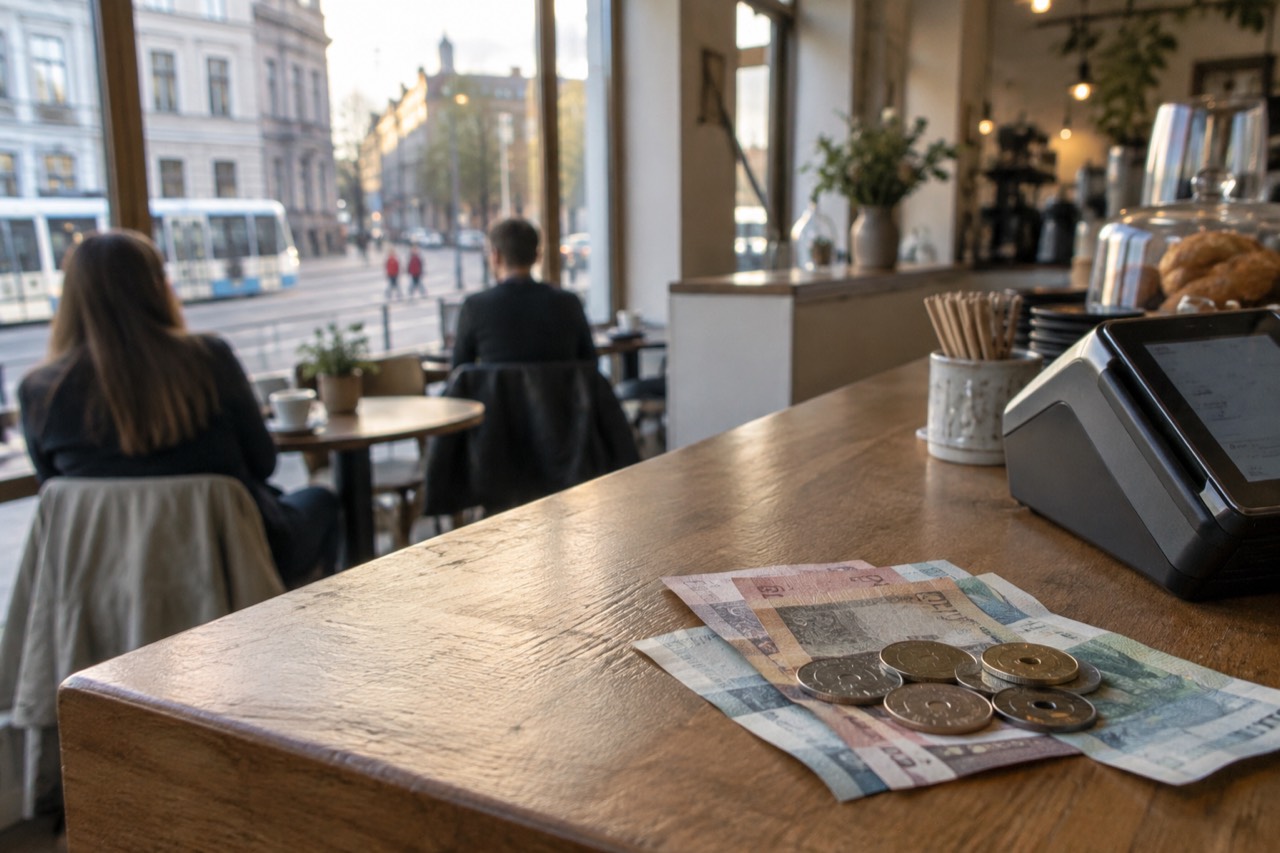
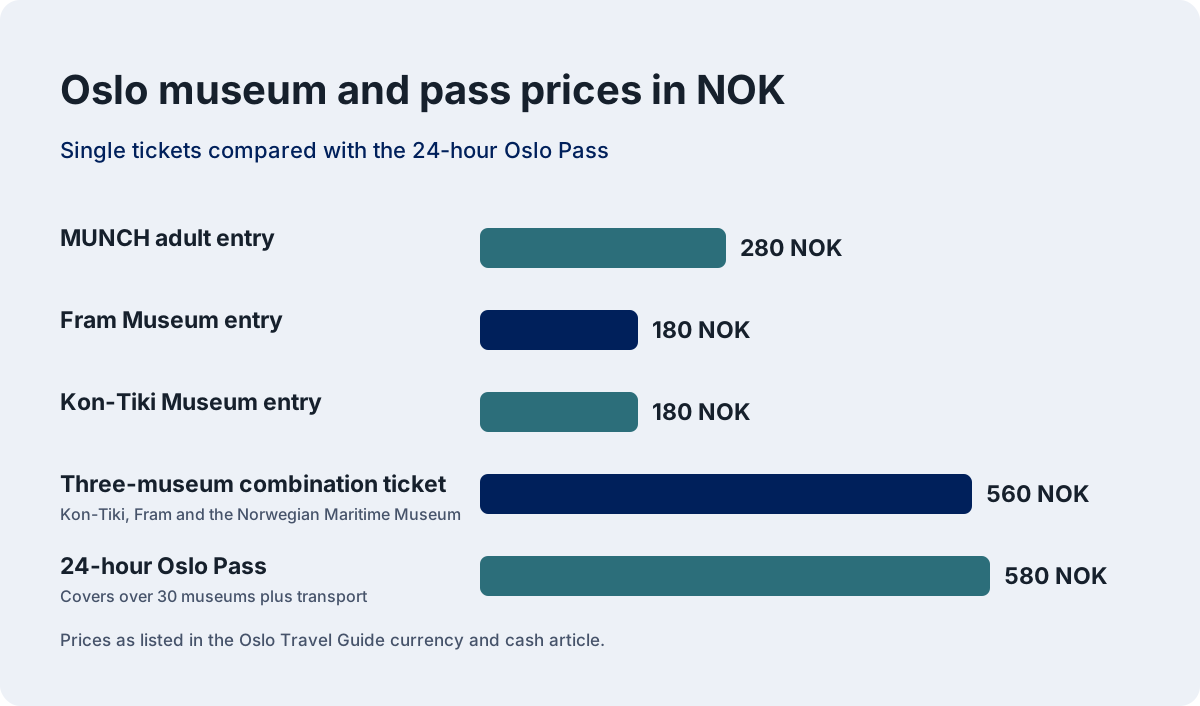
Norway's currency is the Norwegian krone (NOK), and the euro is not generally accepted. Oslo is close to cashless: cards and phones work almost everywhere, including street vendors and public transport. Norway is in Schengen but not the EU, so it sits outside EU VAT and non-EU visitors can claim a refund on qualifying purchases. A 24-hour Oslo Pass costs 580 NOK.
What Currency Does Norway Use?
Norway uses the Norwegian krone (NOK), and the euro is not generally accepted anywhere in the country. Norway is in the Schengen Area but is not a member of the European Union: it is an EFTA state in the European Economic Area, and it uses the krone rather than the euro. That combination, Schengen but outside the EU, is what creates the duty-free and VAT-refund situations visitors keep asking about.
The krone, literally "crown", has been Norway's currency since the nineteenth century, when the country joined the Scandinavian Monetary Union with Sweden and Denmark. Each of the three later went its own way, and today only Norway uses the krone with its current banknote series. The word appears on every price tag in the city as "kr", so a coffee listed at 45 kr costs forty-five kroner.
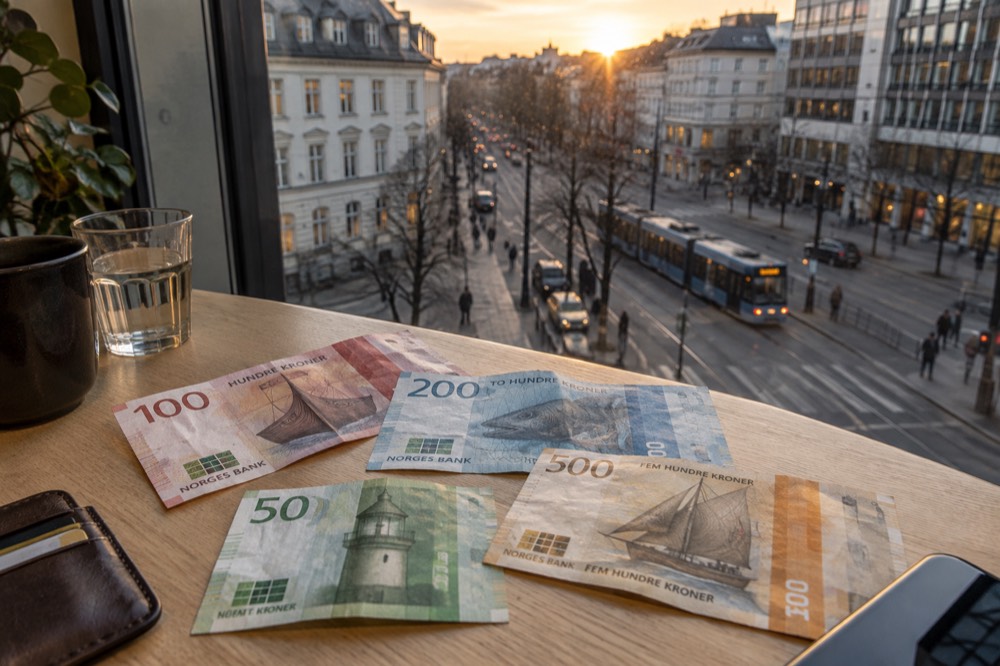
One krone divides into a hundred øre, but the øre exists only in accounting: the smallest coin in circulation is the 1-krone piece, and everything is rounded to the nearest whole krone. In practice you will handle a handful of small coins and a series of colorful notes, and the current note series celebrates the sea with designs that look nothing like the older bills some visitors remember.
A quick orientation on value: prices in Oslo feel high because they are, and the numbers themselves are large because the krone is a small unit. Something priced at 1,000 NOK is not a luxury purchase by default, it may simply be a decent restaurant dinner for two. Getting a feel for the krone's scale on your first day does more for your budget than any exchange-rate trick.
| Note or coin | Still in circulation | What it roughly covers |
|---|---|---|
| Small coins | Yes | Small purchases, rounding, lockers |
| Lowest-value note | Yes | A bakery item or a bus-fare top-up |
| Low-value note | Yes | A simple lunch item |
| Mid-value note | Yes | A mid-range cafe meal |
| High-value note | Yes | A dinner main plus a drink |
| Highest note | Yes, rarely seen | Large cash purchases only |
Do You Need Cash in Oslo?
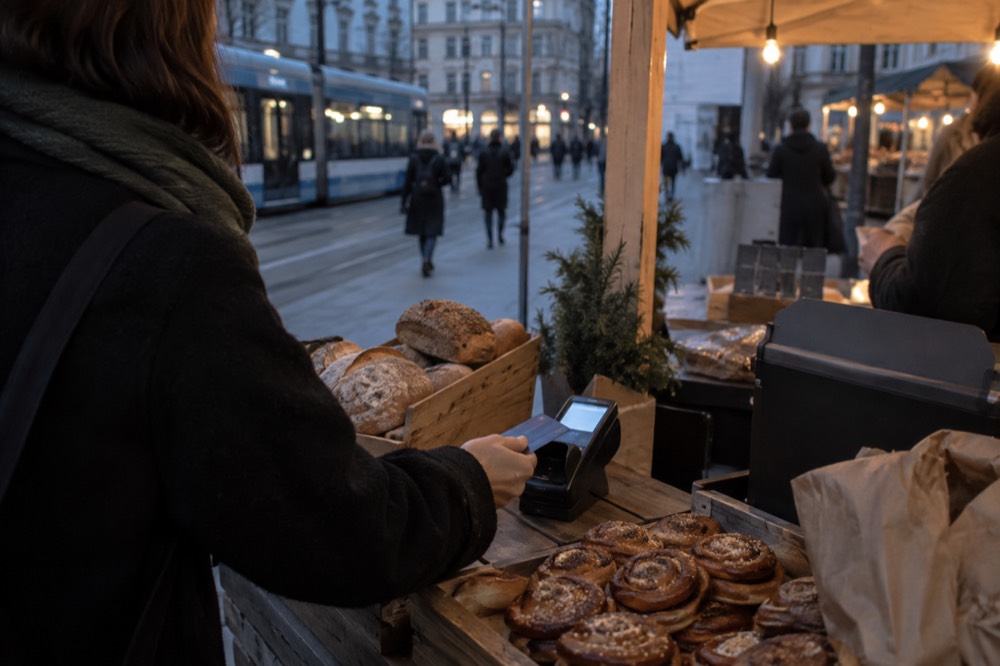
You almost never need cash in Oslo. Card and phone payments are accepted essentially everywhere, including buses, ferries, market stalls, museum shops and public toilets, and many city-centre businesses no longer accept cash at all. Carry a small amount of kroner as a backup if it comforts you, but plan on tapping your card for everything from the smallest purchase upward. Norway is one of the most cashless societies in Europe.
The practical consequence is that the old advice about arriving with a stack of local currency is obsolete. Norwegian banks have wound down cash infrastructure for years, and retailers have followed: staff may genuinely be unable to take your banknotes even if they want to. If you do want physical kroner, the cheapest route is a local ATM withdrawal with a card that refunds foreign fees, not an exchange bureau at the airport, whose margins are consistently the worst in the city.
One exception worth planning around: Vinmonopolet, the state alcohol monopoly, is the only place to buy wine and spirits, and it keeps restricted hours, closing every Sunday and on public holidays, with early Saturday closing. That is not a cash issue, but it is a payment-adjacent planning fact that catches visitors out. Supermarkets sell only beer and cider up to 4.7% ABV, and beer sales stop at a fixed evening cut-off.
Public transport is the other place visitors expect to need cash and do not. Ruter, the Oslo transit authority, sells tickets through its app as the primary channel, and on-board cash purchase is limited to buses and boats and costs more. The Oslo Pass, which covers over 30 museums plus transport in zones 1, 2, 3, 4V and 4N, is bought in advance and used entirely as a digital or physical pass, no coins involved.
Should You Exchange Money Before You Travel?
Exchange only what you will genuinely spend in cash, which in Oslo is usually close to nothing, and never change money at the airport on arrival if you can avoid it. Airport bureaux consistently offer the worst rates in the region, while a fee-free ATM withdrawal in the city centre gets you the network rate plus whatever your own bank charges. A small emergency reserve of kroner is a sensible ceiling.
If your home bank charges a flat foreign-transaction fee plus a percentage, the maths changes. A card with no foreign fees beats every exchange counter in the city, every time, because the spread on exchanging cash is larger than the network card rate even before commission. Travel cards loaded with kroner in advance can work, but check the reload rate: some lock a worse rate than the one you would get by simply tapping your ordinary debit card.
Dynamic currency conversion is the trap to refuse. When a terminal offers to charge you in your home currency instead of NOK, decline. The terminal's "helpful" conversion rate is set by the operator and is reliably worse than your bank's. Choose NOK, always, at every terminal, in every shop and restaurant. This one habit saves more money than any exchange strategy.
| Where you get kroner | Typical cost to you | Verdict |
|---|---|---|
| Airport exchange bureau | Wide spread plus commission | Avoid |
| City-centre exchange office | Better than airport, still a spread | Only for small amounts |
| Fee-free card in an ATM | Network rate, no bank markup | Best cash route |
| Ordinary debit card, tapped | Network rate plus your bank's fee | Fine for most visitors |
| Preloaded travel card | Depends on the locked rate | Check before loading |
The honest summary is that money-changing has become a minor side quest in Oslo. You will tap a card for your airport train, your museum entries and your dinners, and the krone in your pocket will mostly sit there. If you want to read more about how the city is laid out for a first visit, our one day in Oslo itinerary shows where the paid sights cluster.
How Expensive Is Oslo, Really?
Oslo is expensive in specific, measurable ways and ordinary in others. Statistics Norway's 2025 price-level survey puts Norwegian household prices 28.6% above the EU average, with food 33% above and alcohol and tobacco more than double the European average. Museums, public transport and the outdoors are the counterweights: Vigeland Park is free and open 24 hours, and a 24-hour Oslo Pass is 580 NOK.
The SSB survey makes Norway the sixth most expensive country in Europe overall, and that ranking is real, but it averages together very different spending categories. Where the money genuinely goes is alcohol, restaurants and taxis. Where Oslo is not unusually dear is culture: MUNCH costs 280 NOK for an adult, the Fram Museum 180 NOK, the Kon-Tiki Museum 180 NOK, and the Opera House roof is free to walk on. A visitor who drinks little, uses the T-bane and eats one restaurant meal a day will spend far less than the headlines suggest.
The Bygdøy museum peninsula illustrates the museum maths. Three museums at full price, Kon-Tiki, Fram and the Norwegian Maritime Museum, total 560 NOK in combination-ticket terms against a 580 NOK 24-hour Oslo Pass that also covers the ferry out and the transport back. That is the kind of break-even sum that makes the pass worth calculating rather than guessing at, and our is the Oslo Pass worth it page runs the full numbers.
| Spending area | How Oslo compares | What that means for you |
|---|---|---|
| Alcohol and tobacco | More than double the EU average | Buy at duty-free on arrival if you drink |
| Food and non-alcoholic drink | 33% above the EU average | Supermarkets over cafes for basics |
| Restaurants | Above Sweden, near Denmark's level | One good dinner beats three mediocre ones |
| Museums | 180-280 NOK entry, many free sights | Cheap by the standards of the city |
| Public transport | Zone-based, pass-discounted | Excellent value for the coverage |
| The outdoors | Free, always | Parks, islands, forest trails cost nothing |
How Do Cards and Contactless Payments Work in Norway?
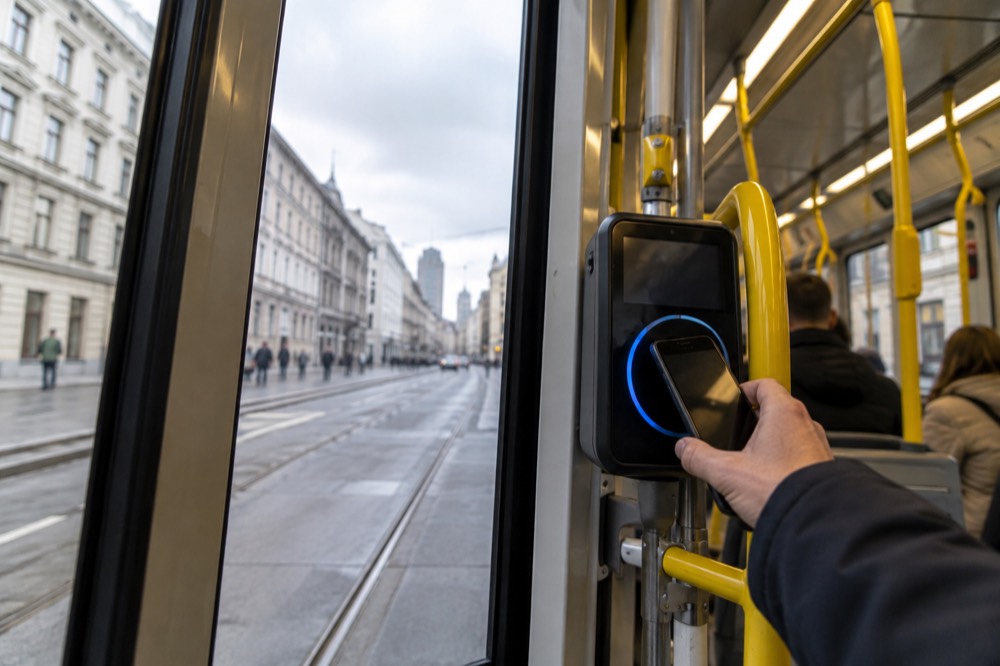
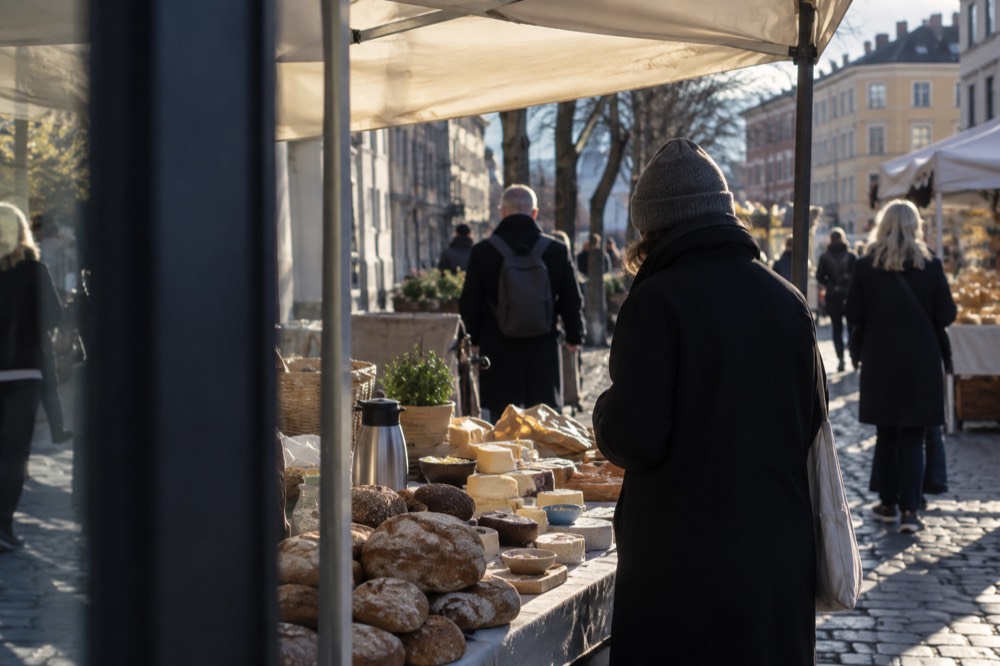
Every major card network works in Oslo, contactless is the default at nearly every terminal, and mobile wallets are accepted as widely as physical cards. There is no minimum purchase for card payments anywhere, and tipping prompts on card terminals are optional. The only payment friction a visitor meets is at the few remaining cash-only situations, which are vanishingly rare.
Terminals in Oslo handle tap, chip-and-PIN and phone wallets interchangeably, and staff will not blink at a small card purchase. Foreign cards are fine. If your card asks for a PIN and you have never set one, as some US-issued cards do, carry a backup card or set the PIN before travel; the terminal will not fall back to signature.
One genuinely Norwegian payment habit: card terminals often present a tipping screen at restaurants and taxis. Service is already included in Norwegian prices, and tipping is voluntary, so declining the prompt is completely normal and nobody treats it as rude. Rounding up or leaving something like 5 to 10% for genuinely good service is common but never expected, and our tipping in Oslo page covers the etiquette in full.
Public transport deserves its own note because it is the one system where payment method affects price. Tickets bought through the Ruter app are the standard price, and the same ticket bought on board a bus or boat costs more. That is the entire penalty: there is no tourist surcharge, no special visitor card needed, just a small premium for paying at the point of travel instead of before it.
Can Visitors Claim a VAT Refund in Norway?
Yes, because Norway is outside the EU customs union and outside EU VAT, non-resident visitors can claim a VAT refund on qualifying goods taken out of the country. Residents of EU countries can also use duty-free allowances arriving in Norway, since the usual intra-EU rules do not apply. You need a refund form from the retailer at purchase, and the goods must leave Norway unused.
This is the practical payoff of the Schengen-but-not-EU arrangement, and it is the detail most European visitors get wrong. Norway's VAT rate is high, so refunds on clothing, design goods and outdoor equipment are worth the paperwork above a minimum spend. The retailer has to be enrolled in a refund scheme for the process to work, so ask before you buy anything expensive, and keep receipts and goods together in hand luggage, because the refund point will want to see both.
The airport sequence matters. Get your form validated before checking your bags, since the items must be inspectable. At Oslo Airport Gardermoen the refund counters sit landside, which means building in time before security at peak hours. The refund arrives as a card credit or cash depending on the scheme, minus a fee.
Alcohol is the adjacent trap. Because Norway's own prices on alcohol and tobacco run at more than double the European average, the duty-free shop on arrival is not a tourist gimmick here, it is a genuine saving, and Norwegians themselves use it the same way. The state monopoly Vinmonopolet is the only domestic outlet for wine and spirits, with closed Sundays and early Saturday closing, so arriving travelers with a plan simply skip that bottleneck.
What Does Getting Around Oslo Cost?
The airport train is the single biggest priced decision: Flytoget costs 268 NOK one way, while Vy's ordinary trains cover the same run in about 23 minutes for roughly half the price, and the Oslo Pass covers the Vy trains outright but never Flytoget. Within the city, Ruter's zone system means a zone 1 ticket covers the entire metro network, and the 30-day zone 1 pass now costs 655 NOK.
That Vy-versus-Flytoget gap is the highest-value money fact in this guide, and most guides state it wrong or not at all. The Oslo Pass includes, in VisitOSLO's own wording, "transport to and from Oslo Airport Gardermoen with public trains operated by VY", and explicitly not Flytoget or the Flybussen coach. The difference in comfort is three minutes of journey time. Our Flytoget vs Vy comparison breaks the decision down fully.
On the water, two systems with different rules catch out even careful readers. The Bygdøy museum ferry runs seasonally from Rådhusbrygge 3, costs about 70 NOK one way, is included with the Oslo Pass, and does not accept ordinary Ruter tickets. The island ferries B1 and B2 are ordinary Ruter services from Aker brygge that ride on a standard ticket. Different operators, different piers, different rules, and merging them into one sentence is how bad advice spreads.
| Journey | Cost | Notes |
|---|---|---|
| Flytoget airport express | 268 NOK adult single | About 20 minutes, every 10 minutes |
| Vy train from the airport | Roughly half the Flytoget fare | About 23 minutes, covered by Oslo Pass |
| Ruter zone 1 travel | Zone 1 covers the whole metro network | App purchase is the standard price |
| 30-day pass, zone 1 | 655 NOK | Cut from 805 NOK in May 2026 |
| Bygdøy ferry | About 70 NOK one way | Oslo Pass yes, Ruter ticket no |
| Island ferries B1/B2 | Ordinary Ruter ticket | From Aker brygge |
How Should You Budget per Day in Oslo?
A realistic daily budget splits into a cheap floor built on supermarkets, free sights and a transit pass, a comfortable mid-range layer that adds one museum and one restaurant meal, and whatever you choose to spend above that on alcohol and fine dining, which is where Norwegian prices bite hardest. The levers that matter are drinks, dinners and taxis, not sights.
The free layer of the city is unusually thick. Vigeland Park's 200-plus sculptures cost nothing and are open around the clock, the Opera House roof is a free walk, the Akerselva river path is a free linear park, and the Oslofjord islands ride on an ordinary transit ticket. A visitor structuring days around these spends money only on food and transport, and the free things to do in Oslo guide lists them all.
At the paid layer, prices cluster tightly. Museum entries run 180 to 280 NOK, the Bygdøy combination ticket for three museums is 485 NOK, and a half-day guided walking tour of the centre starts around the price of a museum pair. The silent electric fjord cruise, the city's best-reviewed activity, costs from about the same as a dinner main, which is the quiet argument for spending on experiences over restaurant evenings in this city.
| Budget tier | What it looks like | Where the money goes |
|---|---|---|
| Bare-bones | Supermarket food, free sights, transit pass | Food and transport only |
| Comfortable | One museum, one cafe, one restaurant meal | Museums at 180-280 NOK, one dinner |
| Full | Guided tours, better dinners, some drinks | Tours and restaurant evenings |
| Alcohol-inclusive | Drinks alongside any tier | The single fastest budget multiplier |
What Money Mistakes Do Visitors Make in Oslo?
The recurring mistakes are paying in your home currency at the terminal, buying Flytoget tickets without checking the Vy alternative, changing cash at the airport, tipping out of guilt because a screen asked, and assuming Norway takes euros because it is in Schengen. Every one of these is avoidable with a decision made before you land, and none of them requires spending more money to fix.
The Schengen confusion deserves its own sentence because it drives real errors. Norway is in Schengen, so there are no routine passport checks arriving from other Schengen countries, but it is not in the EU, does not use the euro, and sits outside EU VAT. Travelers who treat Oslo like a euro-zone city arrive with the wrong cash, skip refund claims they were entitled to, and wonder why their card works but their assumptions do not.
The tipping screen is the softest trap. Norwegian prices already include service, and the terminal prompt is an option, not an obligation. Declining it is normal local behavior. The same goes for the round-up at a cafe counter: a few kroner is a gesture, not a requirement, and nobody is tracking it.
The last mistake is planning around cash at all. Visitors who withdraw large sums on day one end the trip with kroner they cannot spend, because the city gave them nowhere to use it. Withdraw little, tap often, and let the krone be a unit of account rather than a pocket full of notes. For the wider question of what the city costs compared with its neighbors, our is Oslo expensive page runs the comparison in full.
What Should You Actually Do with Money Before the Trip?
Set up one card with no foreign-transaction fees, decline currency conversion at every Norwegian terminal, decide in advance to take the Vy train rather than Flytoget unless speed matters more than the fare, and skip exchanging cash beyond a small reserve. If you drink, buy at duty-free on arrival. If you shop for goods to take home, ask for a VAT refund form at the till. That is the entire checklist.
Everything else on this page is context for those six decisions. The krone is the currency, the city is cashless, the pass maths rewards a museum-heavy itinerary, and the genuinely expensive parts of Oslo are the ones involving a bar tab or a taxi meter. A visitor who internalizes that split can spend confidently on the things that are fairly priced and skip the markup on the things that are not.
For the practical side of arriving and moving around, the getting around Oslo and Oslo airport to city centre guides carry the transport detail, and the best time to visit Oslo page helps if your dates are still flexible. This site, Oslo Travel Guide, keeps the full set of planning pages for the city.
One last thought on how the pieces fit together. The Kon-Tiki Museum ticket is one of the cheapest paid entries on Bygdøy at 180 NOK at the door, and the bookable version pairs naturally with a fjord cruise for a day that splits between water and museums without ever touching cash.
With the museum side of the day settled, the water side is the other half of the equation, and the electric boat is the standard answer there.
Common Questions About Norway Currency and Cash in Oslo
What currency does Norway use?
The Norwegian krone (NOK). The euro is not generally accepted, and Norway is in the Schengen Area but not in the EU, so it uses its own currency entirely.
Can I use euros in Oslo?
No, not in ordinary shops, restaurants or transport. Some airport shops may accept euros at a poor rate, but you should not plan on it. Pay in kroner by card.
Do I need cash in Oslo?
Almost never. Cards and phones are accepted everywhere including transit and market stalls, and many businesses no longer take cash at all. A small cash reserve is optional peace of mind.
Can I claim a VAT refund as a visitor?
Yes. Norway is outside EU VAT, so non-resident visitors can claim a refund on qualifying goods exported unused. Ask the retailer for a refund form at purchase and validate it before checking bags.
Should I tip in Oslo?
Service is included in Norwegian prices. Rounding up or leaving 5 to 10% for good service is common but voluntary, and declining a terminal's tipping prompt is completely normal.
Is it better to exchange money before I go?
Only a small amount, if any. A fee-free card tapped directly in NOK beats every exchange counter, and airport bureaux offer the worst rates in the region.