Oslo in Summer: What to Expect and How to Plan It
Summer is when Oslo changes shape: the daylight stretches to 18 hours and 50 minutes, the island ferries fill up, and half the city moves outdoors. Here is what the season actually delivers, with verified figures for planning.
Short answer
Summer in Oslo runs roughly June through August, with a July normal of 17.7°C, up to 18 hours 50 minutes of daylight on 21 June (sunrise 03:53, sunset 22:43), and swimming water of 15–20°C. August is the wettest month at 103 mm on the 1991–2020 normals, so pack a rain layer even in high season.
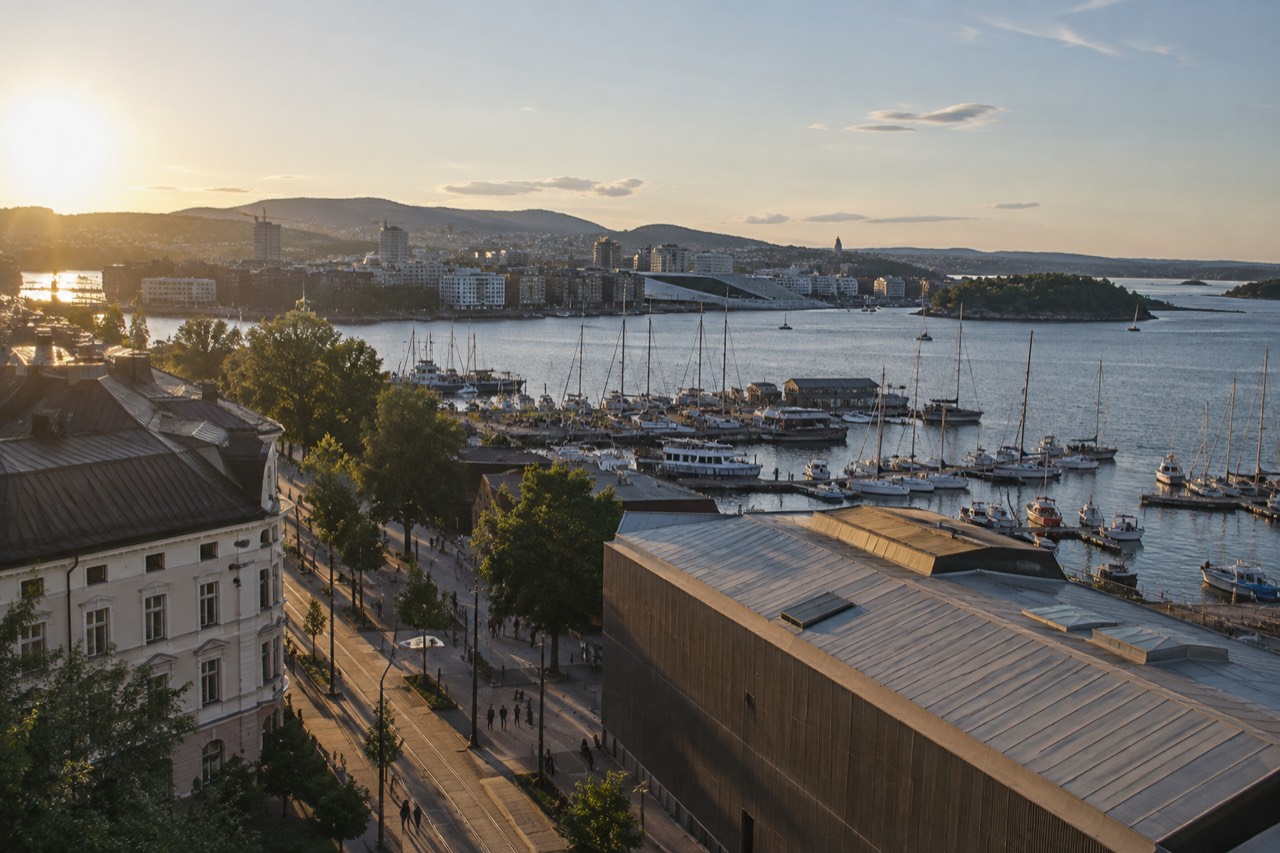
Summer is the season Oslo was built for. Between late May and early September the city shifts its center of gravity outdoors: the piers at Aker brygge fill with boats, the island ferries run full timetables, and the daylight is so long that an evening swim after dinner is a normal thing to do rather than a heroic one. MET Norway's normals put July at a mean of 17.7°C, mild rather than hot, and the sun is up for 18 hours 2 minutes in mid-July.
That light is the single biggest planning fact. On 21 June the sun rises at 03:53 and sets at 22:43, and the gap between is twilight rather than true darkness, so it never gets properly black. There is no midnight sun in Oslo; that needs latitude above about 66.5° N, and Oslo sits at 59.91° N. What you get instead is a very long, very usable evening, which changes how you schedule everything.
This guide covers the practical summer picture: the weather and daylight, how the transport options shift with the season, the swimming and island scene, what stays open, and a five-day itinerary that holds together. Every figure here comes from a primary source, and prices in Norwegian kroner are what you will actually pay at the counter.
What Does Summer Actually Feel Like in Oslo?
Summer in Oslo is mild, bright and green rather than hot, with July's normal mean at 17.7°C and August at 16.5°C, and the extremes run much further than the averages. Blindern station recorded 32.9°C on 15 July 2026, and 13.5°C in September 2025 as a monthly mean. Rain falls on roughly a third of summer days, and August, at 103 mm, is the wettest month of the whole year on the 1991–2020 normals.
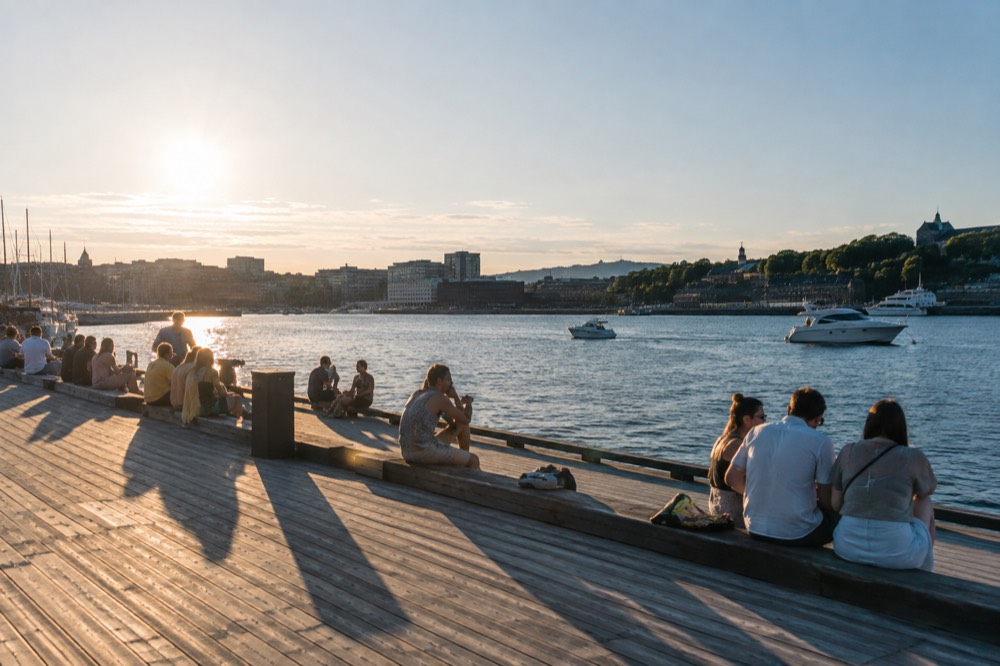
The honest summary is that Oslo summers are comfortable, not guaranteed. A July day can be 25°C and still, or 15°C with a breeze off the Oslofjord. MET Norway's 1991–2020 normals give June a mean of 15.3°C with 80 mm of precipitation, July 17.7°C with 87 mm, and August 16.5°C with 103 mm. Locals treat any day over 20°C as a beach day, and they are right to: the water in July and August typically sits at 15–20°C.
What surprises most first-time visitors is not the temperature but the light. Evening plans in Oslo can start at 20:00 and still feel like afternoon. Restaurant terraces stay full until the sun finally drops after 21:00 in July, and the waterfront at Aker brygge and Tjuvholmen keeps its crowd well past that. If you are used to southern European rhythms, shift everything about an hour later and it will fit.
The other honest point is the rain. August is the wettest month, ahead of October and November, which is not what most visitors expect when they book an August trip. That does not make August a bad month, the sea is at its warmest and the crowds thin after the July school holidays, but it does mean a rain plan is part of a summer plan, not an afterthought. Our rainy day in Oslo guide covers the indoor half of that equation.
How Many Days Do You Need for a Summer Trip?
Four to five days is the sweet spot for Oslo in summer. Two days covers the center, the Opera House roof, the Munch and a fjord cruise, while four to five lets you add Bygdøy's museums, an island afternoon, a forest edge trip to Frognerseteren and a long evening that is not rushed. Under three days you will spend the whole trip commuting past things you could have seen.
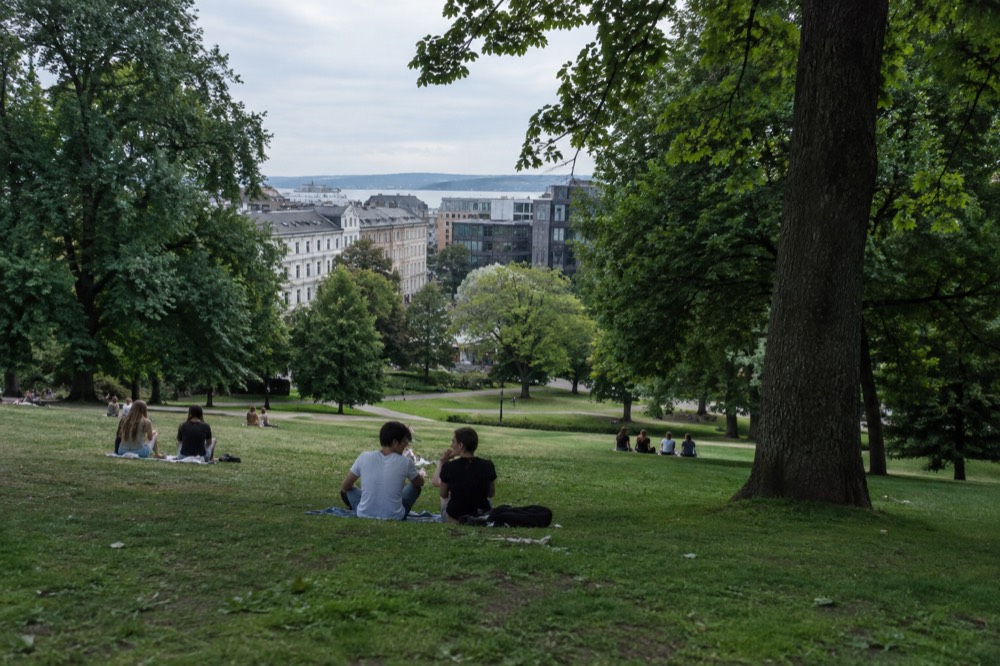
The reason the number is higher in summer than in winter is that the summer product is partly outdoors and partly spread out. Vigeland Park, the waterfront, the Akerselva river walk, the islands and the Nordmarka forest edge are all free or nearly free, but each eats half a day if done properly. A compressed two-day version works, and our one day in Oslo itinerary is built for exactly that, but summer rewards the slower version.
The bus is the efficient spine for the spread-out half. The Gray Line hop-on hop-off sightseeing bus loops the main sights, and with the 24 or 48-hour window you can step off at Vigeland Park, ride to the museums, and rejoin later without re-planning your day around tram timetables. For travelers who arrive by cruise ship or with kids in tow, that flexibility is worth more than the price difference against individual tickets.
Between the bus and your own feet, the geometry of the city is simple. The center is compact and walkable, the fjord runs along the whole south side, and the two big green excursions, Bygdøy to the west and Nordmarka above the north, are each one metro or bus ride away. Our how many days in Oslo page works through the same question without the seasonal lens, if you want the all-year version.
The Daylight: Plan Around 18 Hours of It
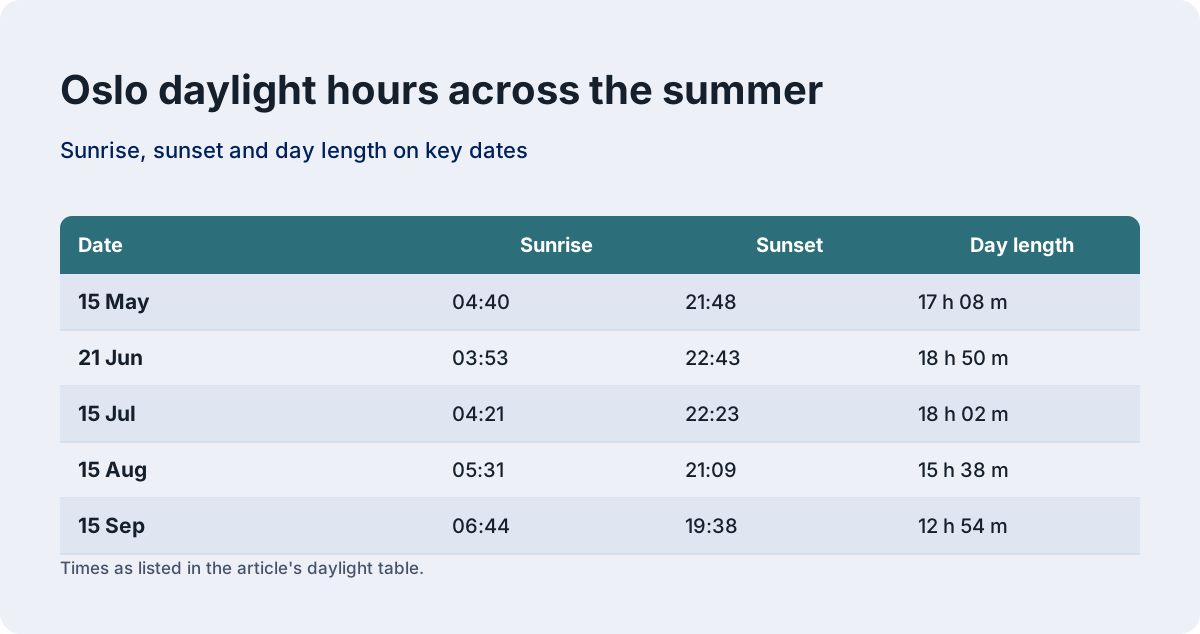
On 21 June Oslo gets 18 hours 50 minutes of daylight, sunrise 03:53 and sunset 22:43, and even in mid-July the day is 18 hours 2 minutes long. By 15 September that falls to 12 hours 54 minutes. There is no midnight sun at 59.91° N; the summer nights are long, bright twilights instead, and they shift your whole daily rhythm later whether you plan for it or not.
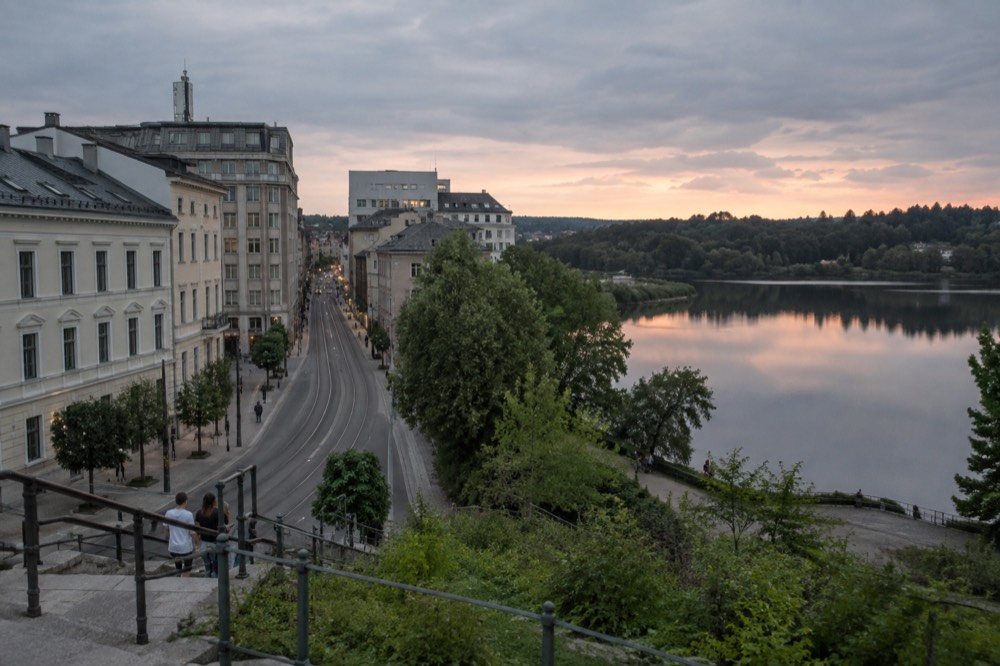
The swing across the year is enormous, from 5 hours 53 minutes of daylight on 21 December to 18 hours 50 minutes on 21 June, a factor of more than three. In practical terms this means a few concrete things. First, museums and attractions that close at 17:00 or 18:00 leave you with four or more hours of usable evening after they shut, and that evening light is often the best part of the day. Second, black-out curtains or an eye mask are not a luxury in a June hotel room. Third, if you are photographing the city, the golden hours are very late, and the "night" shots happen around 23:00.
MET Norway's sunrise data gives the summer arc precisely. Note that times are local, and Norway is on Central European Summer Time in this period.
| Date | Sunrise | Sunset | Day length |
|---|---|---|---|
| 15 May | 04:40 | 21:48 | 17 h 08 m |
| 21 Jun | 03:53 | 22:43 | 18 h 50 m |
| 15 Jul | 04:21 | 22:23 | 18 h 02 m |
| 15 Aug | 05:31 | 21:09 | 15 h 38 m |
| 15 Sep | 06:44 | 19:38 | 12 h 54 m |
The trap is over-scheduling the evening. It feels like mid-afternoon at 21:00, so you keep walking, and then you are out at midnight with a 09:00 museum slot booked. A workable summer rhythm is a late start, a proper afternoon indoors or on the water, and then the long evening outside, with the waterfront, the parks and the terraces as the venue. Our Oslo daylight hours guide works the whole year through if you are traveling outside summer.
Getting Around in the Summer
The Ruter system covers metro, trams, buses and the Oslofjord island ferries on one ticket, the Bygdøy museum boat from Rådhusbrygge 3 is a separate seasonal operator that Ruter tickets do not cover, and an Oslo Pass at 580 NOK for 24 hours includes both plus over 30 museums. Central Oslo is zone 1, and the airport sits in zone 4N.
The single most valuable summer transport fact is that the island ferries, lines B1, B1X and B2 out of Aker brygge, are ordinary Ruter services. A normal zone 1 ticket covers them, with no surcharge and no separate booking. B1 runs year-round, B2 to Langøyene and the B1X extra run mainly in the July-to-August peak. You can hop on and off with any valid ticket, which is what makes a swim-and-picnic island afternoon a spontaneous decision rather than a booked excursion.
The Bygdøy ferry is the one that trips people up. It runs seasonally from 14 March to 4 October, departs Rådhusbrygge 3, and Ruter tickets are not valid on it, roughly 70 NOK one-way or included with the Oslo Pass. It stops at Dronningen for the cultural history museum and Bygdøynes for Kon-Tiki, Fram and the Maritime Museum. Off-season, bus 30 covers the peninsula on a normal Ruter ticket. Two different piers, two different ticket rules, and guides that merge them into one "ferry" leave readers standing at the wrong quay.
| Ride | Where | Ticket | Notes |
|---|---|---|---|
| Island ferries B1/B1X/B2 | Aker brygge | Ordinary Ruter ticket | B2 to Langøyene is summer-only |
| Bygdøy museum boat | Rådhusbrygge 3 | Its own ticket, or Oslo Pass | Season 14 Mar – 4 Oct |
| Bus 30 to Bygdøy | Central Oslo | Ordinary Ruter ticket | Year-round |
| Flytoget airport express | Oslo S | 268 NOK adult | Not covered by Oslo Pass |
| Vy airport trains | Oslo S | Ruter ticket incl. 4N, or Oslo Pass | About 23 minutes |
The airport point matters on arrival. The Oslo Pass includes trains to and from Gardermoen, but only Vy's public trains, not the Flytoget express at 268 NOK. Vy's own airport run is about 23 minutes against Flytoget's 20. It rides on an ordinary multi-zone Ruter ticket, so a pass holder rides it free. Our Flytoget vs Vy comparison works the arithmetic in full.
If you would rather cover ground under your own power, summer is the one season where that genuinely works here. The 3-hour highlights bike tour is the best-reviewed cycling option in the city and works the center, the waterfront and the park system in one loop, which in July light you can book for the late afternoon and still finish in daylight. For travelers staying central and walking everywhere, our getting around Oslo guide has the full ticketing detail.
Swimming, Islands and the Oslofjord
Oslo is one of the few capitals where swimming in the sea is a normal summer activity, with official spots at Sørenga, Huk, Paradisbukta and Langøyene and July-August water temperatures of typically 15–20°C. The islands are a public ferry ride away on an ordinary Ruter ticket, and Hovedøya's ruined Cistercian abbey sits ten minutes off the mainland.
The water is cool rather than warm, and Norwegians treat that as a feature. The official bathing spots are free and public, some with seasonal kiosks. Huk on the Bygdøy peninsula and Paradisbukta next to it face the open fjord; Sørenga, next to the new seaboard promenade, is the deep-water option a short walk from the center; Langøyene is the island beach, reachable on the B2 ferry, with space to spread out that the mainland spots lose on a hot July Saturday. Everything else covered here is indexed on Oslo Travel Guide. Everything else covered here is indexed on Oslo Travel Guide.
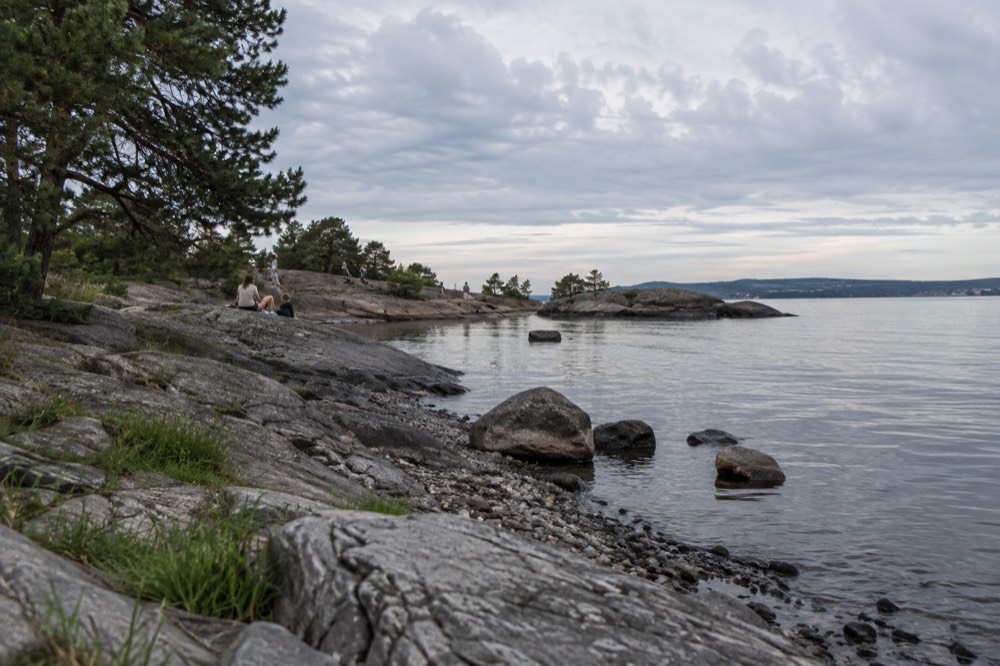
The islands reward the whole afternoon. Hovedøya is the close one, with monastery ruins, meadows and swimming coves. Gressholmen and Lindøya are small, cabin-dotted and quiet, the latter with the wooden houses that make it feel like a village that happens to sit in a harbor. Langøyene is the far one, the swimming and day-camp island, and in the peak weeks the B2 fills up by early afternoon. Our Oslo islands guide covers each one in detail.
If you want the fjord without organizing an island trip, the sightseeing boats run all summer and the choice of vessel changes the experience more than the route does. The silent electric fjord cruise is the best-reviewed activity in the city, a 90-minute loop with audio commentary and no engine noise, which matters when the whole point is the stillness of the inner fjord on a calm evening. Our Oslofjord cruise guide compares every boat format against each other.
For the more energetic version, the ferry-and-foot island hopping tour walks the islands rather than just looking at them, and the free walking tour of Oslo covers the land-side half of the city at no fixed price, tip-based, with the meeting point in the center. Between a free morning walk and a paid afternoon boat, a lot of the city can be covered for very little.
Museums and Attractions in High Season
Summer opening hours are at their longest: the Fram Museum runs 09:30–18:00 from May to September, the Kon-Tiki Museum is open all year, MUNCH stays open to 21:00 Wednesday through Saturday, and the Bygdøy museums pair into combination tickets at 325 NOK for two or 485 NOK for three, all covered by the Oslo Pass, which is 580 NOK for 24 hours.
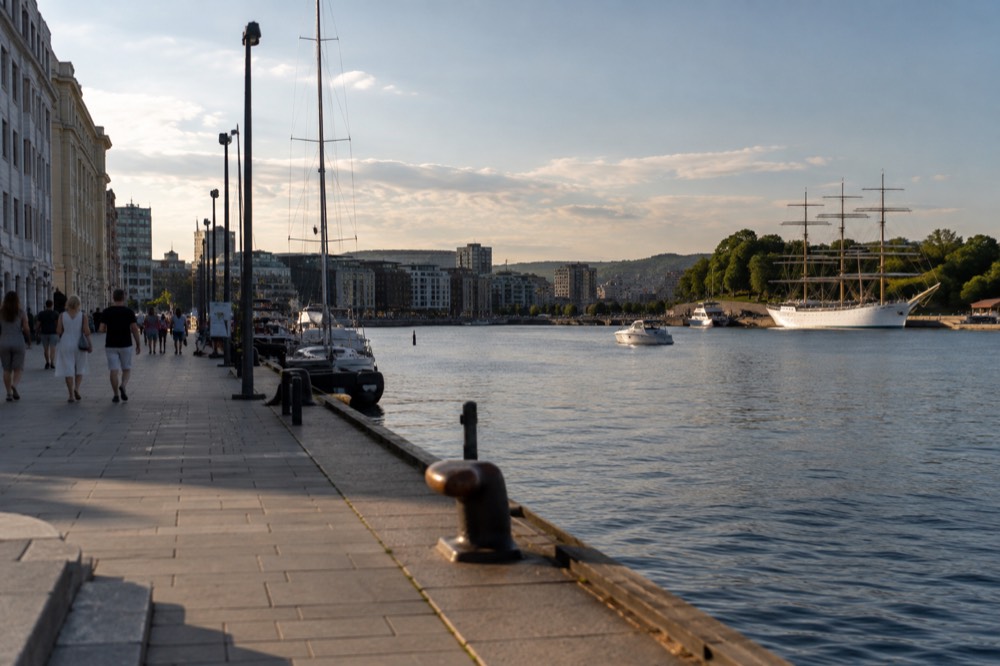
The Bygdøy peninsula is the museum cluster that fills a summer day. Kon-Tiki and the Fram Museum sit together at Bygdøynes, a 15-to-25-minute walk between piers from the Norsk Folkemuseum at Dronningen, and the combination tickets are the cheapest way to buy them. Kon-Tiki alone is 180 NOK adult, Fram is 180 NOK, and Kon-Tiki plus Fram is 325 NOK, with the three-museum version at 485 NOK including the Maritime Museum. With the Oslo Pass at 580 NOK covering entry plus transport, three museums plus a boat ride is very close to break-even on the 24-hour pass alone.
One closure matters for summer 2026 planning. The Museum of the Viking Age on Bygdøy, the former Viking Ship Museum, is closed for rebuilding and will reopen in 2027, as the museum's own site states, with no month confirmed. Viking-age objects are viewable at the Historical Museum in central Oslo in the meantime. Our Museum of the Viking Age page tracks the reopening, and it carries no ticket link because the building is shut.
| Venue | Summer hours | Adult price | Notes |
|---|---|---|---|
| Fram Museum | May-Sep 09:30–18:00 | 180 NOK | Kon-Tiki combo 325 NOK |
| Kon-Tiki Museum | Open all year | 180 NOK | Family ticket 400 NOK |
| MUNCH | Wed-Sat to 21:00 | 280 NOK (200 NOK after 18:00) | Under 25s pay 100 NOK |
| Norsk Folkemuseum | Daily 10:00–17:00 | 200 NOK | Children 0–17 free |
| Vigeland Park | Open 24 hours | Free | Over 200 sculptures |
| Opera House roof | Public access | Free | No ticket needed |
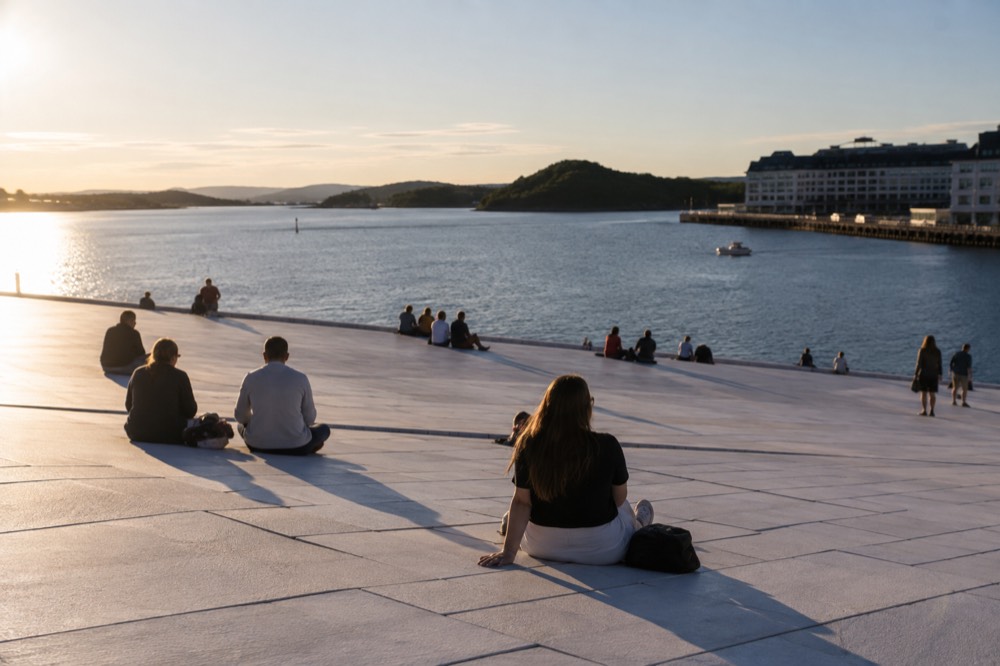
The free entries are a real part of a summer budget. Vigeland Park, the sculpture park in Frogner, is free, open 24 hours a day all year, and the long summer evenings are the best time to walk it, when the tour groups have gone. The Opera House roof is a public space, walkable without a ticket, and the late light off the marble slopes is the city's signature free view. Our free things to do in Oslo guide collects the rest, and oslotravelguide.com keeps the entry prices on every attraction page current so the budget math stays honest.
Rain, Crowds and the August Question
August is Oslo's wettest month at 103 mm on the 1991–2020 normals, ahead of October at 93 mm, and July is the busiest month for both crowds and prices. Late June offers the longest daylight with slightly fewer visitors, early September is quiet and still warm at a 12.2°C mean, and the rain rarely arrives as all-day downpours rather than heavy showers between bright hours.
The crowd rhythm follows the Norwegian school holidays, which run late June to mid-August. July is peak: island ferries fill, museum queues lengthen, and hotel rates sit at their highest. If your dates are flexible, the last week of June and the first of September give you nearly the same product, long daylight and warm water respectively, at lower pressure and usually lower cost. Our best time to visit Oslo page runs the whole-year comparison.
Rain planning is simple: have one indoor anchor per day, and let the forecast decide whether you use it. MUNCH's 21:00 late close makes it a genuine evening fallback, the Paradox Museum is the family rain option, and the National Museum holds The Scream for a long afternoon. The weather rarely cancels a whole day; MET Norway's own forecast service, yr.no, is what locals check, and its hourly precipitation graph is the right tool for planning a swim window two days out.
| Month | Mean temp | Precipitation | Practical read |
|---|---|---|---|
| June | 15.3°C | 80 mm | Longest daylight, school holidays start late June |
| July | 17.7°C | 87 mm | Peak season, warmest water, biggest crowds |
| August | 16.5°C | 103 mm | Wettest month, sea at its warmest, crowds thin |
| September | 12.2°C | 82 mm | Quiet, still swimmable early in the month |
A Five-Day Summer Itinerary
Five days is enough to cover the center, Bygdøy, one island afternoon, a forest-edge trip and a slow fjord evening, without any day feeling like a checklist. The shape that works is one anchor per morning, one outdoor block per afternoon, and the late daylight reserved for the waterfront, with the free and paid elements balanced so the budget goes where it shows.
The skeleton below assumes summer opening hours and the ferry season, and it leaves the evenings deliberately open, because in July the evening is the best product the city has.
| Day | Morning | Afternoon | Evening |
|---|---|---|---|
| 1 | Harbor, Opera House roof, free walking tour | Akershus Fortress, Aker brygge | Waterfront terraces, Tjuvholmen |
| 2 | Bygdøy: Kon-Tiki and Fram | Norsk Folkemuseum, boat back to Rådhusbrygge 3 | Vigeland Park in the late light |
| 3 | MUNCH, then Barcode district | Silent electric fjord cruise | Sørenga seawater pool |
| 4 | Island ferry to Hovedøya, abbey ruins | Gressholmen or Langøyene, swimming | Long dusk from the mainland piers |
| 5 | Metro Line 1 to Frognerseteren | Walk the forest edge, viewpoint over the city | Grünerløkka, dinner and bars |
Two notes on the skeleton. Line 1 of the metro ends at Frognerseteren, roughly 20 minutes from the center, and the walk down through the forest edge toward the Holmenkollen area is the cheap outdoor day in this plan. And the island day deliberately uses the public B1 and B2 ferries rather than a booked tour, because an ordinary ticket and a picnic do the same job for less; the tour version earns its price only if you want a guide and a fixed structure.
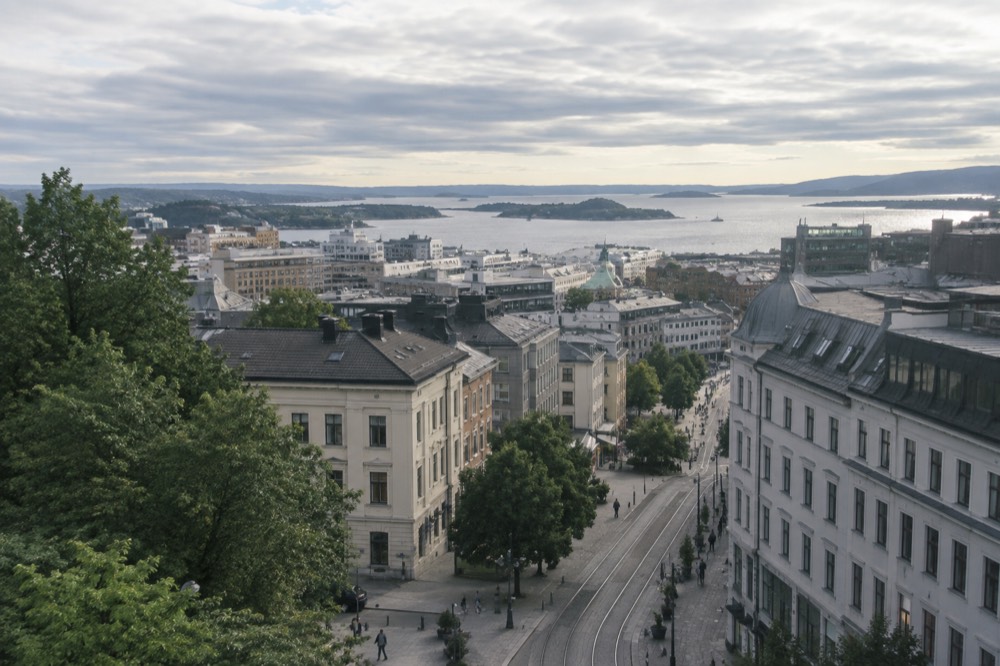
For shorter versions, cut from the bottom of the table: three days keeps days 1, 2 and 3, and the 3 days in Oslo itinerary rebuilds that plan in full. Families should swap day 4's swim island for the climbing park or the folk museum's open-air half, covered in our Oslo with kids guide.
What Summer in Oslo Costs
Oslo is expensive where food, drink and restaurants are concerned and reasonable almost everywhere else: Norway sits sixth in Europe on price level overall, food is 33% above the European average, and alcohol and tobacco cost more than double, but museums average 180–280 NOK, transport is a zone 1 ticket, and the best sights, the parks, the islands and the Opera House roof, are free.
Statistics Norway's 2025 price-level survey is the honest anchor: households face prices 28.6% above the EU average, with food 33% above and alcohol more than double. What that does not mean is that a summer visit is uniformly dear. The outdoor product, which is most of the summer product, costs a ferry ticket. The museum product is mid-range by European standards. The restaurant and bar product is where the budget bleeds, and the practical answer is the supermarket-and-picnic pattern every local uses on island days, with one proper restaurant meal rather than three a day.
| Summer item | Cost | Note |
|---|---|---|
| Oslo Pass, 24 hours | 580 NOK | Museums plus Ruter zones, incl. Vy airport trains |
| Island ferry ride | Ordinary Ruter zone 1 ticket | B1 year-round, B2 summer |
| Bygdøy boat | Around 70 NOK one-way | Included with Oslo Pass |
| Fram or Kon-Tiki | 180 NOK adult | Combo ticket 325 NOK |
| MUNCH | 280 NOK (200 NOK after 18:00) | Under 25s 100 NOK |
| Vigeland Park | Free | Open 24 hours |
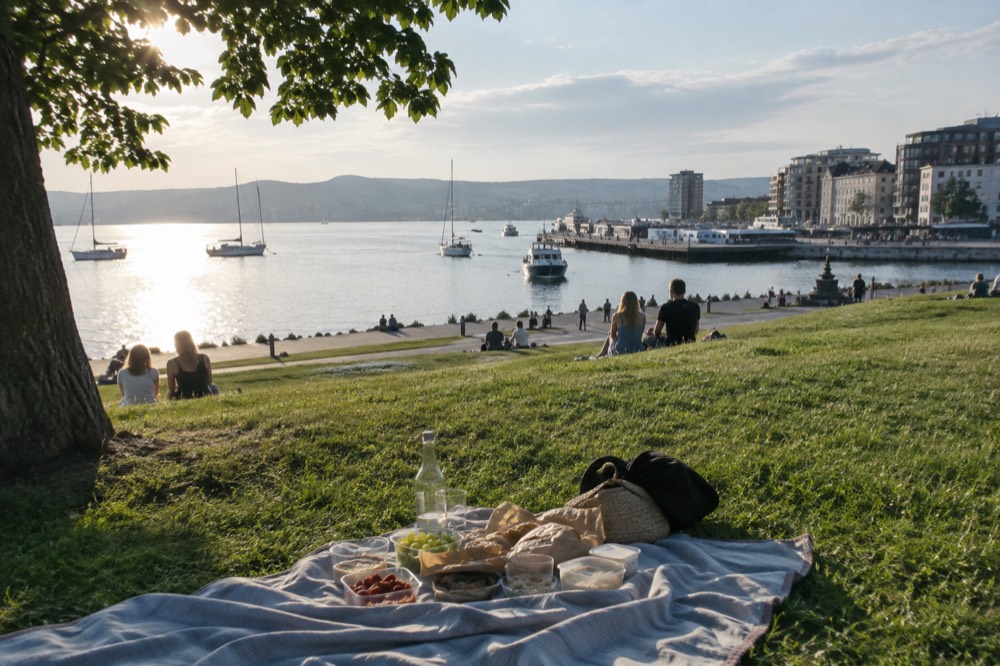
One rule worth carrying on any Norwegian trip: the state wine and spirits monopoly, Vinmonopolet, is the only place to buy anything stronger than supermarket beer, it closes early on Saturdays and is shut all Sunday, so an island picnic with wine needs planning the day before. Supermarkets sell beer only, up to 4.7% ABV, and stop at a fixed evening cut-off. Our is Oslo expensive page takes the cost question further.
The bus pass is also the one product in this guide that keeps working on the days the weather turns. A rainy August afternoon that cancels the island beach still runs the full loop past the museums, and the covered upper deck is a dry place to watch the city go by while you decide which stop deserves a second visit. That is why it earns the closing recommendation here rather than a fair-weather-only product.
Common Questions About Summer in Oslo
How hot is Oslo in summer?
July, the warmest month, has a normal mean of 17.7°C, with August at 16.5°C and June at 15.3°C. Heat waves do occur: Blindern station recorded 32.9°C on 15 July 2026. Days above 25°C are common enough in July that the beaches and swimming spots fill up, but you should not plan a trip around southern-European heat.
How many hours of daylight does Oslo get in summer?
The longest day is 21 June at 18 hours 50 minutes, with sunrise at 03:53 and sunset at 22:43. In mid-July the day is 18 hours 2 minutes, and by mid-August 15 hours 38 minutes. It never gets properly dark in late June, only twilight.
Can you swim in the Oslofjord in summer?
Yes. Official public spots include Sørenga, Huk, Paradisbukta and the island beaches on Langøyene, and July and August water temperatures typically run 15–20°C. Entry is free, and the island beaches are reached on an ordinary Ruter ferry ticket from Aker brygge.
What is the rainiest summer month in Oslo?
August, at 103 mm of precipitation on the 1991–2020 normals, which also makes it the wettest month of the entire year, ahead of October at 93 mm. It typically arrives as showers rather than all-day rain.
When does the Bygdøy ferry run?
The museum boat from Rådhusbrygge 3 runs seasonally, 14 March to 4 October, every 20 minutes, at roughly 70 NOK one-way or free with the Oslo Pass. Ordinary Ruter tickets are not valid on it. Bus 30 serves Bygdøy year-round on a normal ticket.
Is July or August better for visiting Oslo?
July gives the longest days, the warmest air and the biggest crowds. August gives the warmest sea and thinner crowds but the most rain. Late June splits the difference: nearly peak daylight with fewer visitors, though the water has not fully warmed.