Holmenkollen: Oslo's Hilltop Ski Jump, Museum and Forest Gateway
Holmenkollen is the hillside district northwest of central Oslo where the city's most recognizable structure, the ski jump tower, meets the forest edge of Nordmarka. Metro line 1 takes you there in about twenty minutes, the Ski Museum and jump tower cost 195 NOK, and the surrounding area is one of the few places a capital city hands you a world-class sports landmark and a wilderness trailhead at the same stop.
Short answer
Holmenkollen sits on metro line 1, roughly 15 to 20 minutes from Nationaltheatret in central Oslo. The Ski Museum and jump tower charge 195 NOK for adults, the museum is open year-round, and the surrounding hills are the gateway to Nordmarka's trail network. The area pairs naturally with Vigeland Park, which is free, on the same metro line.
What Is Holmenkollen and Why Do People Go?
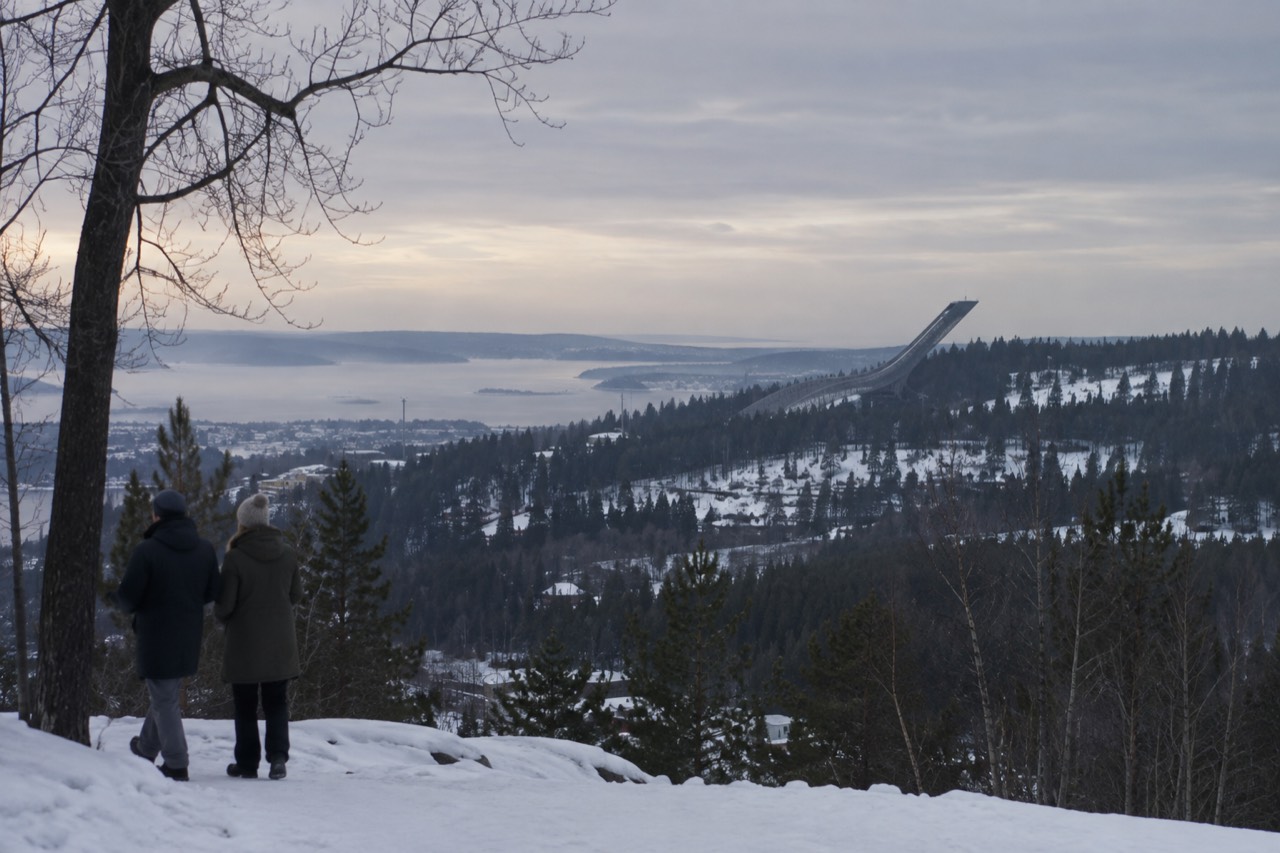
Holmenkollen is the hilltop district on Oslo's northwest side, named for the ski jump that has made it the most recognizable point on the city skyline. Visitors go for three things that sit on top of each other: the ski jump tower and its Ski Museum, the viewing panorama over the Oslofjord and the city, and access to the Nordmarka forest that begins where the neighborhood ends. Metro line 1 serves it, the museum charges 195 NOK for an adult ticket, and the site stays open in every season.
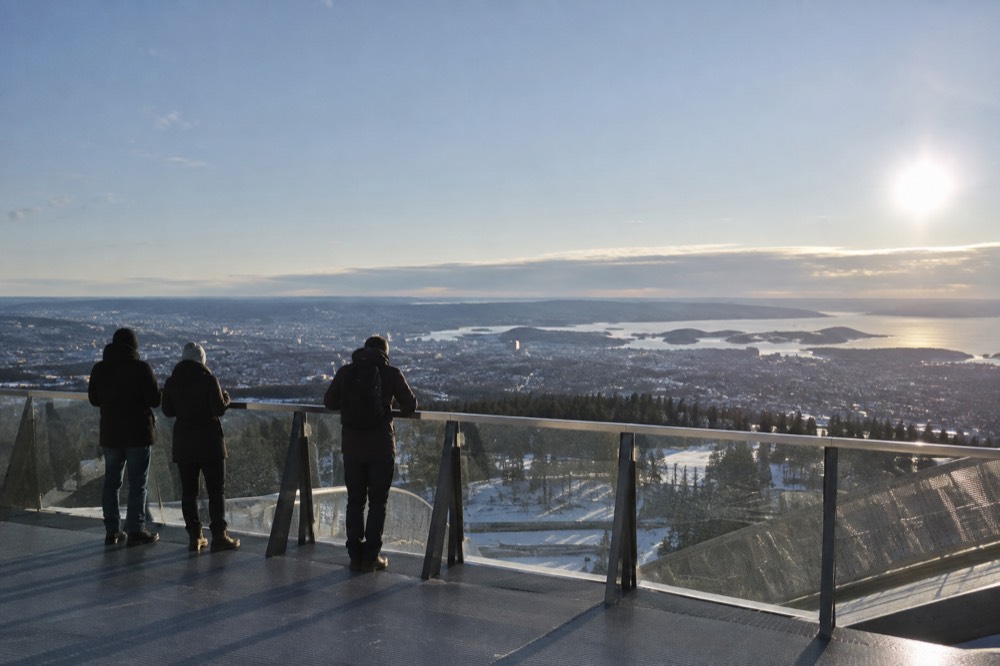
The tower is the reason most people make the trip. It stands on the ridge above the city, and from the top of the jump the view sweeps across the whole of Oslo, from the fjord islands in the south to the forest plateau in the north. The structure itself is a steel ski jump, and the viewing platform at the top of the tower is reached by elevator as part of the museum ticket. On a clear day the panorama is one of the best in the city, and unlike most viewpoints in Oslo this one has a museum and a metro station attached.
The second reason is the Ski Museum, the world's oldest ski museum according to the museum's own site, sitting inside the base of the jump structure. It covers 4,000 years of skiing history, from Stone Age skis through polar expeditions to modern competitive jumping. The third reason is the forest. Holmenkollen is where Oslo stops being a city and starts being Nordmarka, the protected forest that covers the hills north and west of town, with marked trails for walking in summer and groomed cross-country tracks in winter. You can step off the metro, look at a national monument, and be on a forest trail within minutes, which is a combination very few capital cities can offer.
The neighborhood around the jump is small and quiet: a scattering of apartment blocks, the Holmenkollen Park restaurant and hotel complex, and a lot of trees. Nobody comes here for the streetscape. They come for the landmark, the museum, the view, and the trailheads, and the area delivers all four on one metro ticket.
If you are building an Oslo itinerary, this is a half-day block, not a full day. The standard pairing is Holmenkollen in the morning and Vigeland Park on the way back down, since metro line 1 passes right by Frogner and the park is genuinely free and open around the clock. Our one day in Oslo itinerary puts exactly that combination together.
How Do You Get to Holmenkollen from Central Oslo?
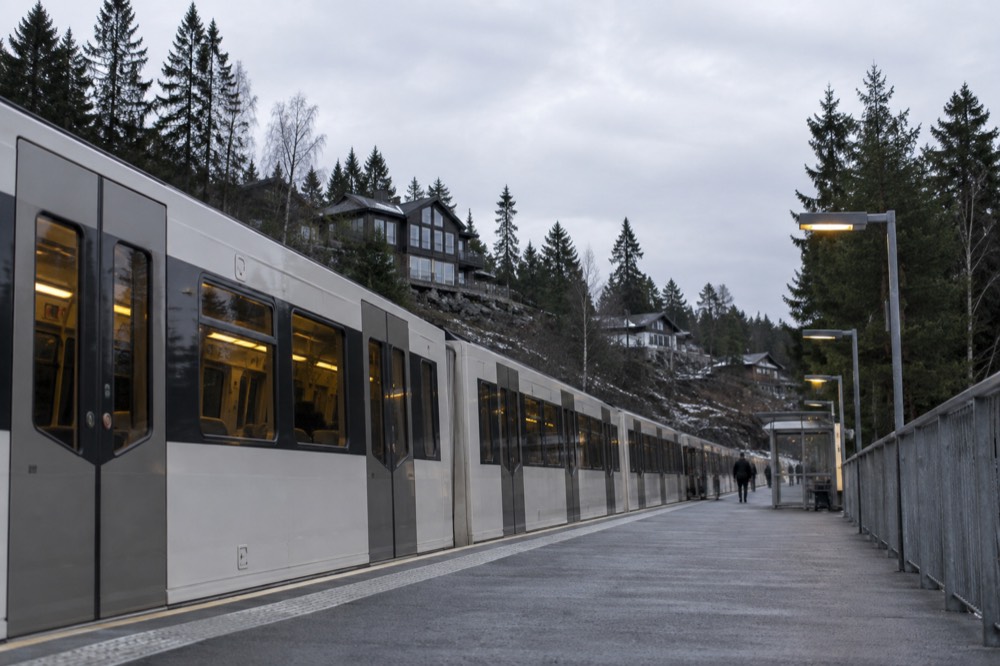
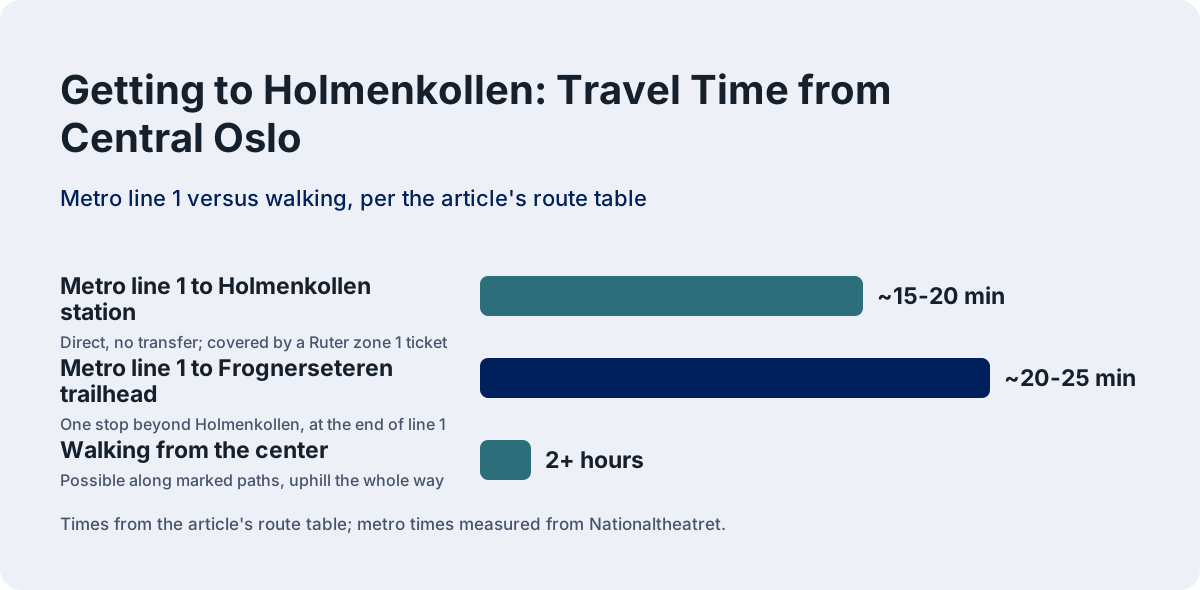
Take metro line 1 from any station in the city center, including Oslo S and Nationaltheatret, to Holmenkollen station. The ride takes roughly 15 to 20 minutes from Nationaltheatret, and Holmenkollen sits inside Ruter zone 1, so an ordinary zone 1 ticket covers the whole trip. The station is a short walk below the ski jump, and line 1 continues to Frognerseteren, the forest trailhead at the end of the line.
The metro is the whole story here, and it is a good one. Line 1 is the original Oslo T-bane route up the Holmenkollen hillside, and it is the reason the trip is so easy: no bus connections, no transfers, and a frequency that makes timing irrelevant for most of the day. The station named Holmenkollen is the one for the ski jump and museum. The walk from the platform up to the jump takes a few minutes uphill.
One planning detail worth knowing: line 1's terminus is Frognerseteren, one stop further on. If your plan is the ski jump plus a forest walk, you can ride to Frognerseteren first, walk the trail, and finish at the jump on the way back down, or the reverse. The terrain rises the whole way, so most people prefer to take the metro up as far as it goes and walk downhill.
| Route | How | Time from central Oslo | Ticket needed |
|---|---|---|---|
| Metro line 1 to Holmenkollen station | Direct, no transfer | ~15-20 min from Nationaltheatret | Ruter zone 1 ticket |
| Metro line 1 to Frognerseteren (trailhead) | Direct, one stop beyond Holmenkollen | ~20-25 min | Ruter zone 1 ticket |
| Bus 30 toward Bygdøy, no, bus routes to Holmenkollen | Not applicable, metro is the direct option | n/a | n/a |
| Walking from the center | Possible along marked paths | 2+ hours uphill | Nothing |
That last row is not a joke: locals do walk up. The hills are threaded with paths, and in winter the ski trails in Nordmarka are groomed for exactly this kind of movement. But for a visitor on a schedule the metro is the answer, and zone 1 coverage means the trip costs no more than any other metro ride in the city. The practical details of tickets, apps and zone rules are covered in our Oslo metro guide.
If you would rather have someone else organize the logistics, there is an organized option that pairs the hill with the city's other big landmark.
What Can You Actually Do at Holmenkollen?
Four things, all on one ticket or free: climb the jump tower for the panorama, tour the Ski Museum in its base, walk the surrounding parkland and jump complex for free, and use the area as the trailhead for Nordmarka forest trails toward Frognerseteren and beyond. The museum and tower ticket costs 195 NOK for adults, everything outdoors costs nothing, and the site is reachable year-round.
The tower comes first for most visitors. The elevator inside the structure rises to a viewing platform at the top of the jump, where the whole city is laid out below. The view runs south over the Oslofjord and its islands, east over the city center, and north into the forest plateau. This is the elevated vantage most comparable photos of Oslo are taken from, and it is the single best place to understand how the city sits between water and woods.
The museum comes second, and it is more substantial than its location suggests. Galleries in the base of the jump trace skiing from its prehistoric origins through polar exploration to the modern sport, with equipment, film and memorabilia on display. The museum's own site describes it as the world's oldest ski museum, and the collection backs the claim up. Plan on an hour to ninety minutes if you read the displays, less if you skim.
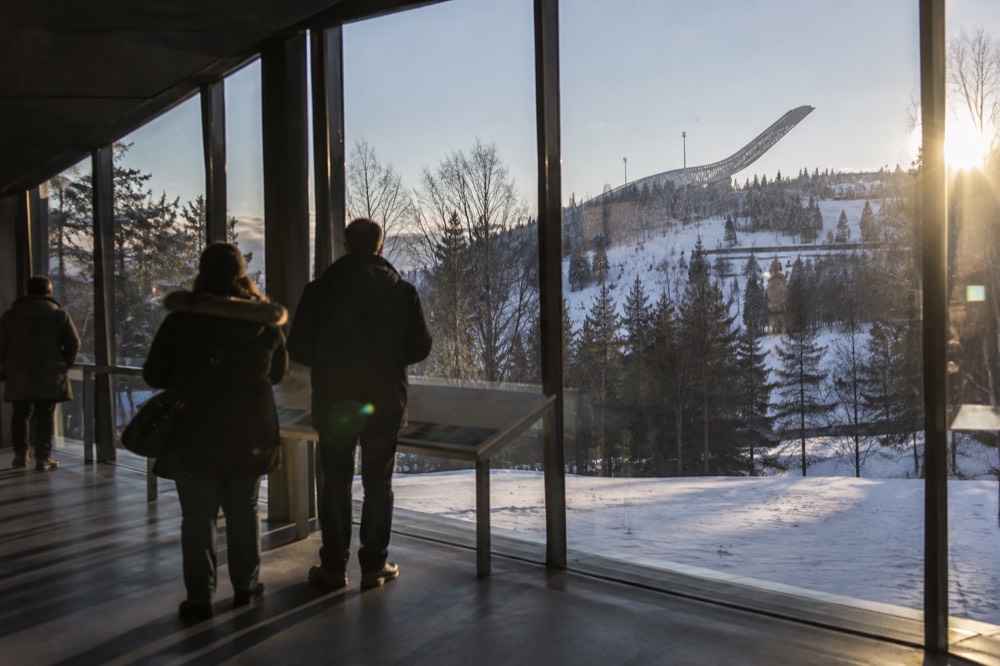
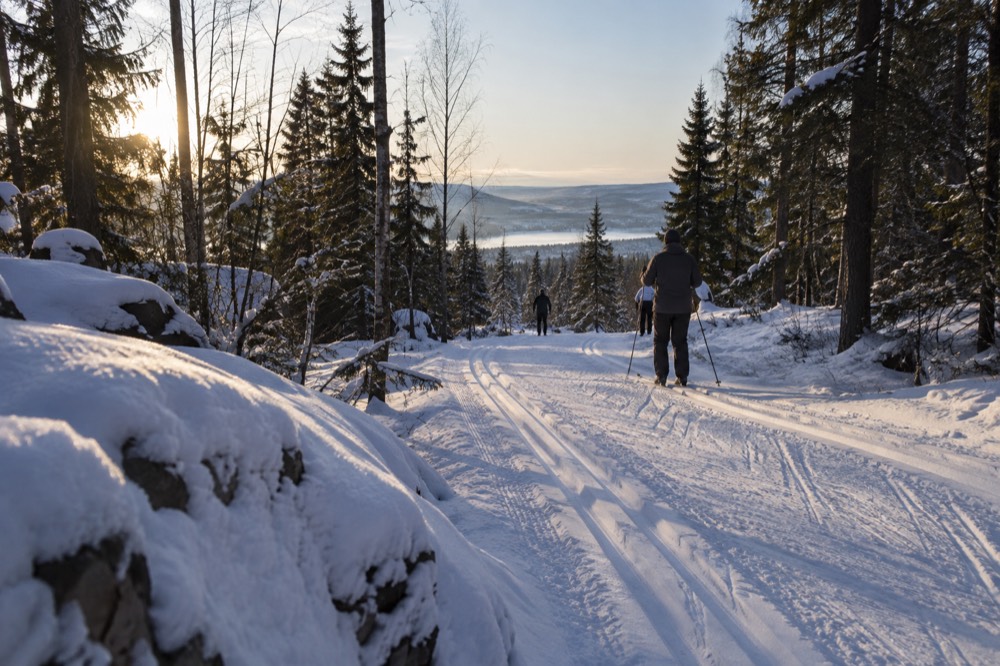
Third is the free part: the jump complex itself and the surrounding grounds. You can walk around the structure, stand at the bottom of the landing hill looking up, and wander the parkland without a ticket. In winter the area around the jump fills with locals on cross-country skis, because the groomed Nordmarka trails run right past it. There is also a zipline operation at the jump in season, running down the hillside, which is run independently of the museum ticket; check the operator's current season before promising it to anyone in your group.
Fourth, the forest. This is the part most visitors underuse. From the jump you can walk or ski marked trails to Frognerseteren, where there is a famous café terrace, and beyond into the deeper Nordmarka network. Our Nordmarka guide covers the trails in detail.
One caution that matters on this site: there is no standalone Holmenkollen ski jump ticket sold through any booking platform we use. The 195 NOK museum and tower ticket is bought on site or through official channels, and the only bookable products that include Holmenkollen are combination sightseeing tours. If a listing offers you a standalone jump ticket, treat it with suspicion. More on the honest booking routes below.
Is the Ski Museum and Jump Tower Worth the Ticket?
For most visitors, yes. The 195 NOK adult ticket buys both the museum and the tower elevator, and the two together take about two hours. The view alone justifies it on a clear day, and the museum is a genuine collection rather than a gift shop with panels. It is the weakest buy in heavy fog or low cloud, when the tower view disappears, and the strongest buy in winter, when the museum fills the short daylight hours and the forest around the jump is at its best.
The museum publishes its hours by season: January to April 10:00 to 16:00, May to September 10:00 to 17:00, and October to December 10:00 to 16:00. Those hours are generous enough that you rarely need to plan around them, but the last elevator up the tower will stop before closing, so arrive at least 45 minutes before the end of the day if the view is the point of your trip.
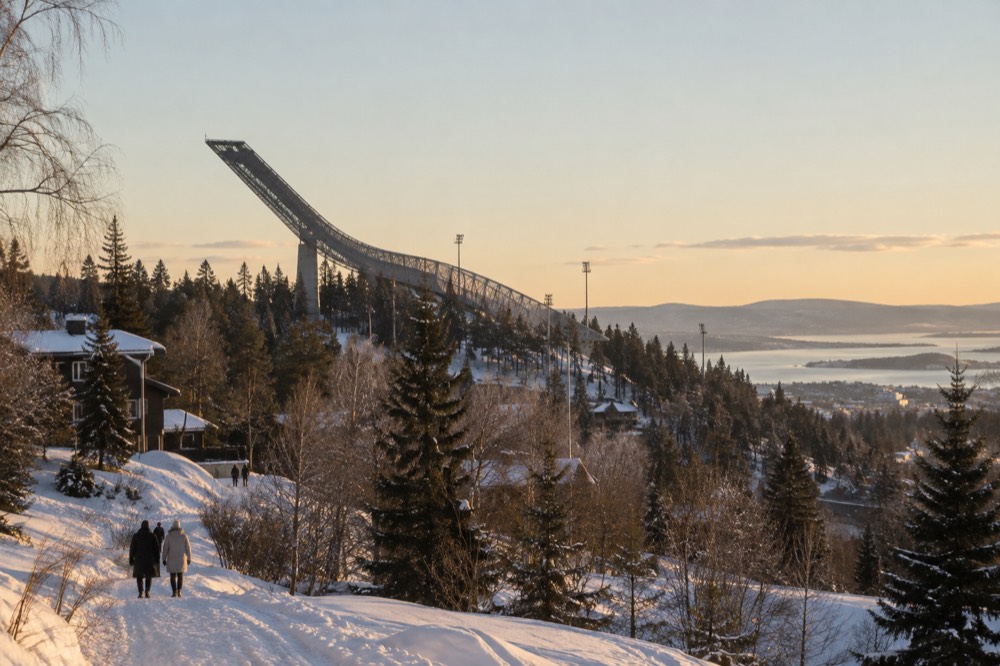
The honest alternative is free. You do not need a ticket to see the jump itself, to photograph it, or to walk the grounds, and the view from the parkland below the tower is already a good one. The ticket is really buying the top-of-tower panorama and the museum. Families tend to get good value from the museum, since the exhibits are physical and visual rather than text-heavy, and children under a certain age are the usual museum audience concession in Oslo; confirm the child rate on the museum's own site before you go.
How Much Does a Holmenkollen Day Cost?
The minimum is a single zone 1 Ruter ticket plus nothing else: the grounds, the jump exterior and the forest trails are all free, so a budget visit costs only the metro fare. The full version adds the 195 NOK adult museum and tower ticket and perhaps a coffee or waffle at Frognerseteren. A family of four doing everything should expect the museum tickets to be the largest single expense, and the Oslo Pass can cover some combinations if museums elsewhere in the city are also on the plan.
Exact Ruter single-ticket prices for zone 1 are published in Ruter's current fare PDF and app rather than in a fixed page we can quote, so check the app before you ride. What is confirmed: a zone 1 single is valid for 60 minutes from activation, which is not enough time to visit Holmenkollen and return, so you will most likely buy a ticket covering a longer period or pay for a return. The Ruter app is the cheapest place to buy; on-board purchases, where available on buses and boats, cost more.
| Item | Cost | Notes |
|---|---|---|
| Metro ride, zone 1 | Ruter zone 1 fare, check the app | Line 1 direct from central Oslo |
| Ski Museum and jump tower, adult | 195 NOK | Includes the tower elevator |
| Ski Museum child and concession rates | Published on holmenkollen.com | Standard Oslo concession structure |
| Jump exterior, grounds and forest trails | Free | Open year-round, no ticket |
| Oslo Pass coverage of the museum | Check VisitOSLO's included list | Pass adult 24h is 580 NOK in 2026 |
| Coffee or waffle at Frognerseteren | Seasonal, on site | The classic add-on |
The Oslo Pass math depends on the rest of your day. A 24-hour adult pass at 580 NOK against one museum at 195 NOK is a loss on this trip alone; it becomes a win only when you stack the pass across several covered museums and the transport. Our is the Oslo Pass worth it guide runs the full break-even numbers.
If the guided route appeals, the half-day sightseeing tour that pairs Holmenkollen with Vigeland Park is the only reliable way to get both hills in one organized morning without a car. It is worth comparing against the metro-plus-free-park version, which costs a fraction as much.
The guided walk in Vigeland Park below is the other natural pairing: since the park is free, a guided art walk is the one way to spend money on it, and the metro line back into town stops at the park's doorstep.
When Is the Best Time to Visit Holmenkollen?
Winter and summer both work, but they deliver different experiences. Winter, December through March, puts the forest in snow and the trails under skiers, and the museum fills the short days. Summer, June through August, gives you the long evenings and the full panorama, but the hill is busier. Late September and October bring autumn color and thin crowds. The tower view is the one thing that is weather-dependent, so check the sky before you commit to the ticket.
Daylight is the biggest constraint. MET Norway's sunrise data puts the winter solstice at 09:18 sunrise and 15:11 sunset in Oslo, barely 5 hours 53 minutes of daylight, while midsummer runs from 03:53 to 22:43. A December visit to the tower can happen entirely in the dark, which is atmospheric in its own way, with the city lit below, but it is not the postcard view. If the panorama is the goal, target April through September.
| Period | Daylight (mid-period) | What Holmenkollen is like | Best for |
|---|---|---|---|
| Late December | 5 h 53 m | Snow, dark afternoons, museum hours | Museum, night view, skiing |
| Mid-March | 11 h 45 m | Late snow season, quiet trails | Cross-country skiing |
| Late June | 18 h 50 m | Long evenings, green forest, busier | Tower view, hiking |
| Mid-September | 12 h 54 m | Autumn color beginning, thin crowds | Photography, walking |
Temperature-wise, MET Norway's 1991-2020 normals for Oslo put January at a mean of -2.3 C and July at 17.7 C (63.9 F). The hills above the city run a degree or two colder than the center, which matters more than it sounds in winter: dress for the trail, not the street. Precipitation peaks in August at 103 mm on the normals, and October is close behind at 93 mm, so the shoulder seasons are not dry seasons. Our month-by-month breakdown in Oslo weather by month has the full table.
What Else Is Nearby: Frognerseteren and the Nordmarka Forest
Frognerseteren, one metro stop beyond the ski jump at the end of line 1, is a trailhead café and viewpoint at the edge of Nordmarka, the protected forest that covers the hills above Oslo. From there, marked trails run deeper into the forest toward destinations like Sognsvann and Ullevålseter, and in winter the same trails become groomed ski tracks. It is the point where a metro ride turns into a forest hike with zero planning.
Frognerseteren's café is an Oslo institution, a wooden building on the ridge with a terrace overlooking the city and a menu built around waffles and traditional Norwegian food. It closes in the deep off-season on some weekdays, so check opening days before building a plan around it. The viewpoint next to it is free and, at the top of the ridge, actually higher than the ski jump.
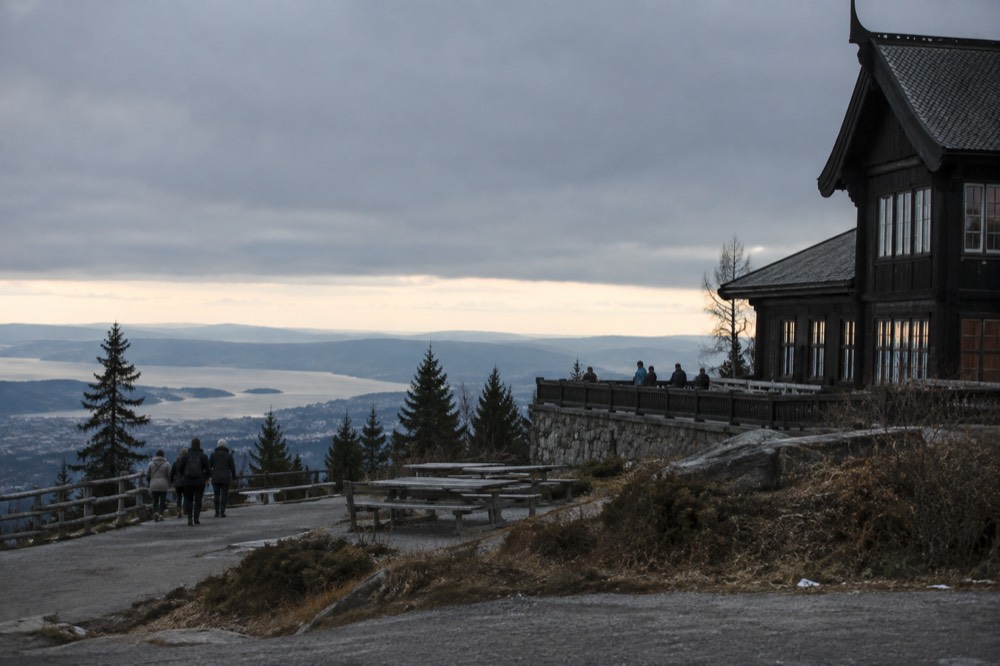
The trails from here are the easy end of Nordmarka: wide gravel forest roads, well marked, with options from a short loop to a half-day walk down to Sognsvann, the popular lakeside trailhead on the other side of the hills, which has its own metro access on line 5. Walking one way and taking the metro back the other is the standard local move. For the full picture of routes, seasons and what each trailhead offers, see our hiking near Oslo guide and the Sognsvann page.
In winter the same forest hosts groomed cross-country tracks maintained by Skiforeningen, the association that publishes live trail and snow reports on its own site, and the Holmenkollen area is one of the main access points. If you want instruction rather than self-guided sliding, Oslo is unusual among European capitals in offering a learn-to-ski experience as a half-day activity with pickup in the city, and the snowshoeing version covers the same forest for non-skiers.
How Does Holmenkollen Fit Into the Rest of an Oslo Trip?
Pair it with Vigeland Park, which sits on the same metro line going back toward the center, is free and open 24 hours a day year-round. Do Holmenkollen in the morning, ride line 1 back to Majorstuen, walk to the park, and you have covered Oslo's two most-visited landmarks in one half-day for one metro ticket plus the museum price. Add the National Museum or the opera roof in the afternoon and the day is complete.
The geography makes this pairing almost automatic. Line 1 runs from the city center up through Majorstuen, the transport hub that also serves Frogner, to Holmenkollen and Frognerseteren. Coming down the hill you exit at Majorstuen or one stop further, and Vigeland Park is a short walk from the Majorstuen side. The park's 200-plus sculptures are the city's most visited sight, entry is genuinely free, and the gates never close, so there is no timing pressure.
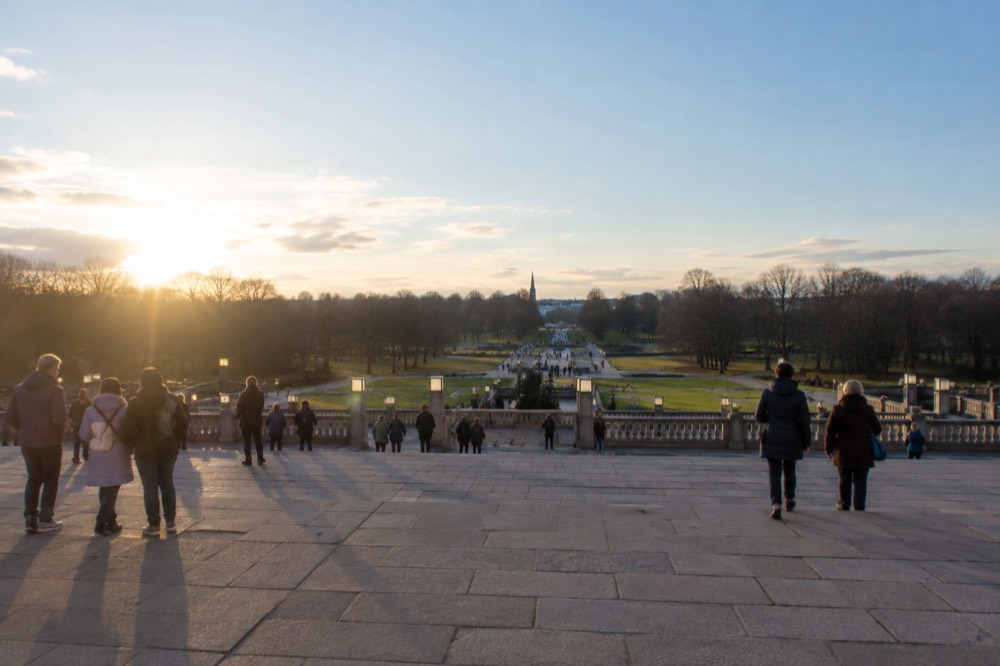
Since the park is free, the guided art walk is the only bookable product that spends money on it well: a specialist guide who can read the sculpture and the sculptor's intent turns an open park into an actual tour.
For the rest of the plan, the pairing forks by season. In summer the natural third stop is the Oslofjord: the fjord cruise guide covers the boat options, from the silent electric cruise to the traditional wooden sailing ship, and the contrast between hilltop forest and open water is the point of an Oslo day. In winter, the city center museums, from the National Museum to MUNCH at 280 NOK adult entry, fill the dark afternoon. If you are weighing the whole picture of how many days to give the city, our how many days in Oslo breakdown puts Holmenkollen in its slot.
Every itinerary on this site, including the ones that skip the hills entirely, starts from the same Oslo Travel Guide planning base, and Holmenkollen is the piece that most first-time visitors are glad they did not skip.
Common Questions About Holmenkollen
How do I get to Holmenkollen from central Oslo?
Metro line 1 runs direct from Oslo S and Nationaltheatret to Holmenkollen station, roughly 15 to 20 minutes from Nationaltheatret. The trip is inside Ruter zone 1, so an ordinary zone 1 ticket covers it. The station is a short uphill walk from the ski jump.
Is Holmenkollen free to visit?
The grounds, the jump exterior and the forest trails are free and open year-round. The Ski Museum and the tower elevator require a ticket, 195 NOK for adults on the museum's current pricing.
Can you go up the Holmenkollen ski jump?
Yes, as part of the museum ticket. An elevator inside the structure rises to a viewing platform at the top of the jump, with a panorama over the city and the Oslofjord. The view depends entirely on the weather, so go when the sky is clear.
Is Holmenkollen worth visiting in winter?
Yes, arguably most of all. The forest around the jump becomes groomed cross-country ski terrain, the museum fills the short daylight hours, and the tower view of the lit city is atmospheric. Dress for the hills, which run colder than the center.
Can I combine Holmenkollen and Vigeland Park in one trip?
Yes, and the metro makes it easy. Both sit on line 1's corridor: do Holmenkollen in the morning, ride back down to Majorstuen, and walk to Vigeland Park, which is free and open 24 hours. A half-day covers both comfortably.