Sognsvann: Oslo's Lake at the Edge of the Forest
Sognsvann is a small lake at the northern edge of Oslo, one metro stop from the end of line 5, where the city simply stops and the protected forest of Nordmarka begins. It is the most accessible piece of wild Norway in the capital.
Short answer
Sognsvann is a lake and recreation area in north Oslo, reached in about 25 minutes by metro from the city center. The lake has a flat loop trail, a swimming beach with a diving tower in summer, groomed ski trails in winter, and a cafe. Entry is free, and it is open year-round.
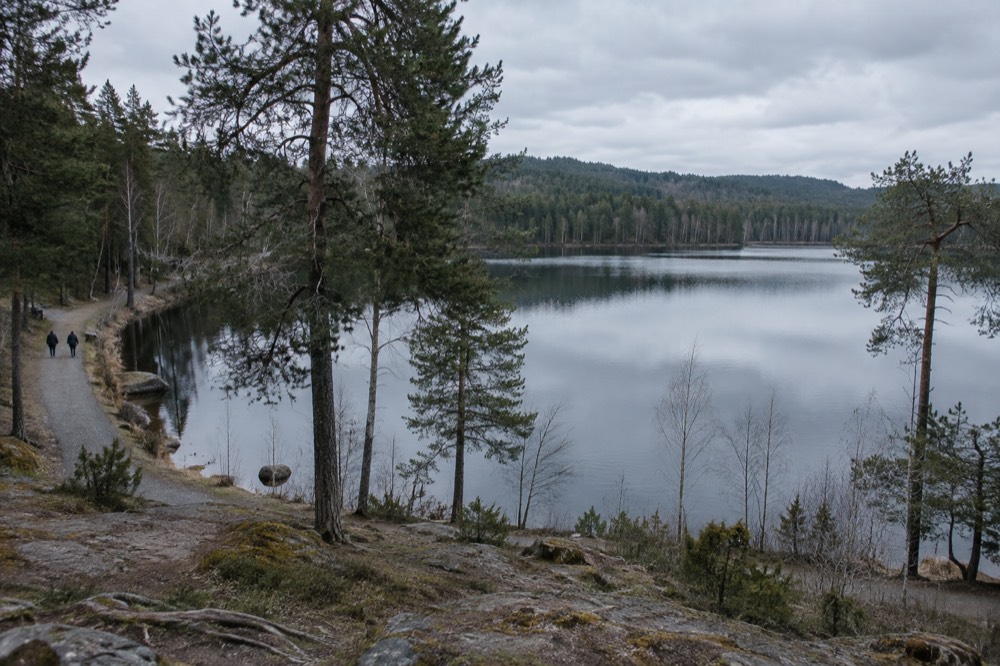
Sognsvann is the lake where Oslo stops pretending to be a city. The metro climbs north from the center, the apartment blocks thin out, and at Sognsvann station the doors open onto water and pine. Everything north of the shoreline belongs to Nordmarka, the protected forest that covers the top of the municipality, and everything south is still Oslo. That line, drawn by a lake, is what makes this place unusual among European capitals.
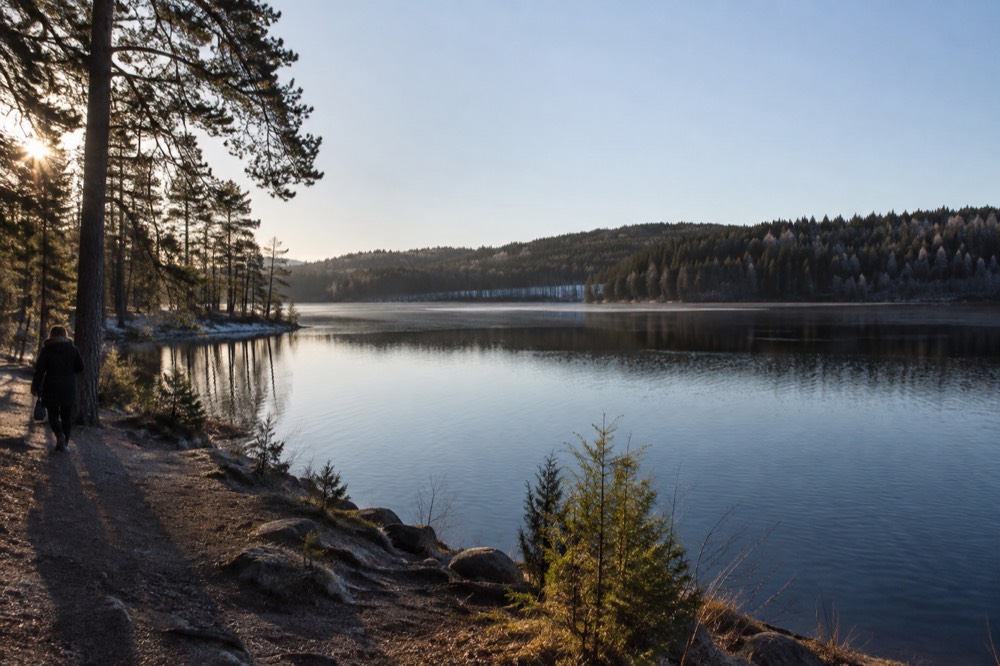
The lake is not dramatic and it is not trying to be. It is a small body of water with a flat gravel trail all the way around it. What it offers is access: to swimming in summer, to groomed cross-country ski trails in winter, to hiking routes that continue deep into Nordmarka, and to a sauna culture that has grown up on its shores. All of it free to enter, all of it reachable on an ordinary metro ticket.
This is also the kind of place that rewards knowing a little before you go. There is no ticket desk, no opening hours sign, no visitor center handing out maps. The lake simply is, and the people who enjoy it most are the ones who arrive understanding what season they are in and what the water, the trails and the light will be doing. This guide covers all of that: how to get there, what the loop is really like, when to swim, what winter looks like, and how to decide whether it belongs on your itinerary at all.
What Is Sognsvann and Where Is It?
Sognsvann is a lake and public recreation area at the northern edge of Oslo, in the Nordre Aker district, at the southern gateway to the Nordmarka forest. It sits at the end of the Sognsvann branch of metro line 5, about 25 minutes from the city center, and the walk from the platform to the shoreline takes about two minutes.
The name refers to both the lake itself and the immediate area around it. In everyday Oslo usage, "Sognsvann" means the whole recreation zone: the lake, the loop trail, the beaches, the cafe, the parking, and the trailheads that fan out northward into the forest. The lake is the practical southern boundary of Marka, the protected forest belt that surrounds Oslo on three sides and is one of the reasons the city bills itself as an outdoor capital.
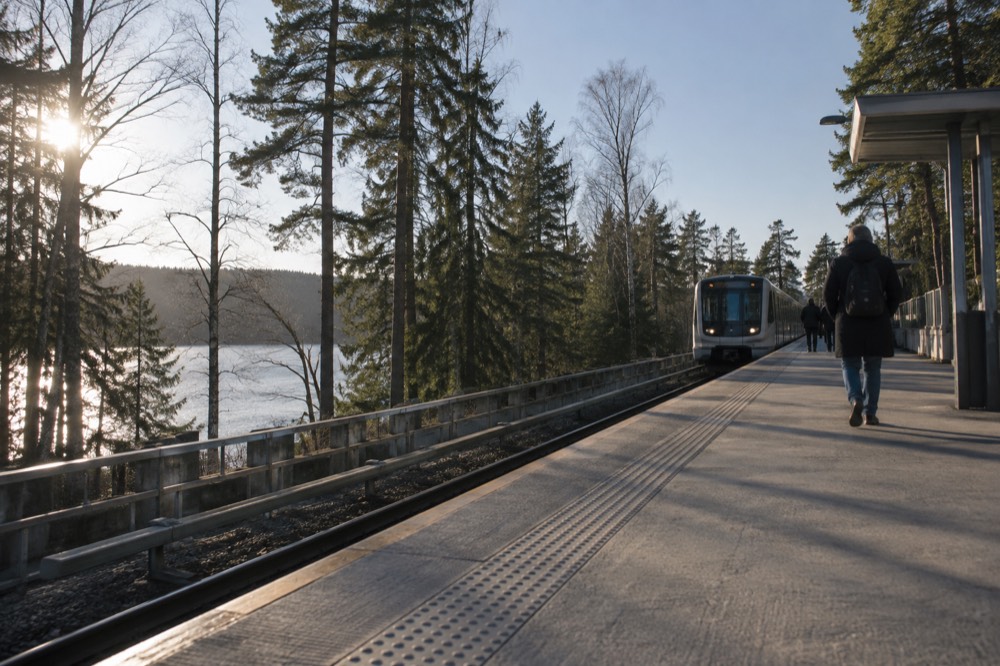
The station is the reason this lake works the way it does. Oslo's metro network is entirely inside Ruter zone 1, which means an ordinary single ticket or day pass covers the trip. You board at a downtown station, ride line 5 toward Sognsvann, and the terminus deposits you at the water. No car, no tour, no planning beyond knowing which line to take.
For orientation once you arrive: the lake runs roughly north to south. The station and the main beach area are at the southern end. The loop trail circles the shoreline. Trailheads into Nordmarka, toward Ullevålseter and beyond, leave from the northern and eastern shores. The cafe sits near the station side, and it is the natural meeting point if you are coordinating with anyone.
The geology is worth one sentence because it explains the swimming. The lake sits in a hollow carved by ice age activity, like most of the depressions in this forest belt, which is why the water is clear and the shores drop away quickly rather than shelving gently for hundreds of meters. The pine that surrounds it is typical of the dry, sandy soils that cover this part of Nordre Aker.
How Do You Get to Sognsvann?
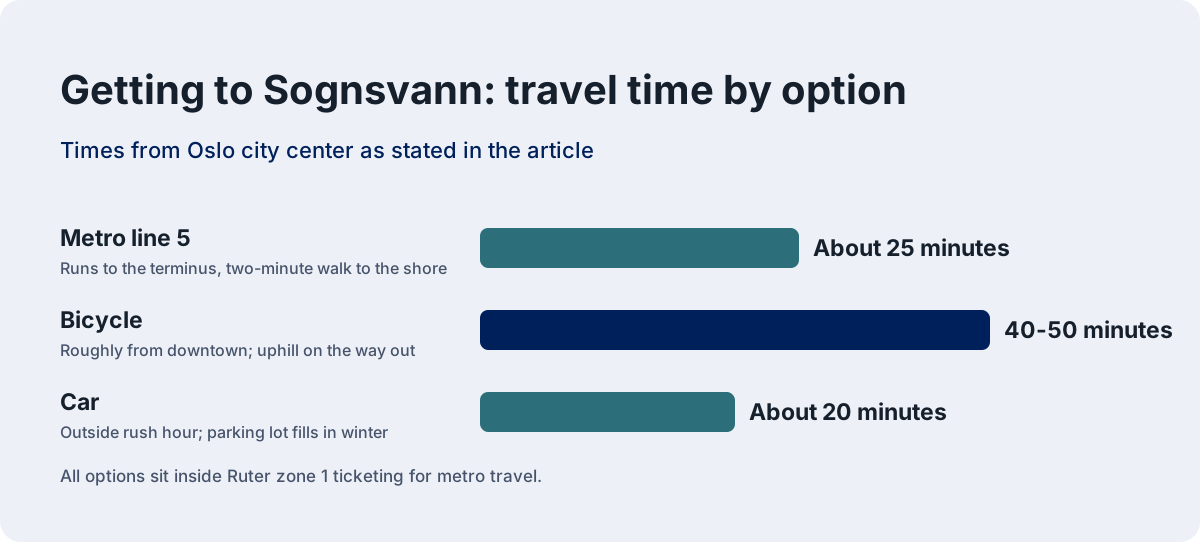
Take metro line 5 toward Sognsvann and ride to the end of the line; the station is about 25 minutes from the center and the lake is a two-minute walk from the platform. The trip is inside Ruter zone 1, so a standard ticket or pass covers it, and the same line serves both weekday commuters and weekend crowds.
Line 5 is the only line that reaches the lake. It runs frequently through the day and less so in the late evening, so check the Ruter app for the last departure back if you are staying for a sunset swim or an evening ski. The app is also the cheapest place to buy a ticket, since buying on board costs more, a rule Ruter states plainly on its own ticketing pages.
Cycling is a real alternative. Oslo's bike infrastructure reaches the area, and many locals ride up in summer. In winter, when the ski trails are groomed, the parking lot fills with cars, but the metro keeps running and the trails stay busy with skiers who never touched a car.
Here is how the main options compare:
| Option | Time from center | Cost basis | Notes |
|---|---|---|---|
| Metro line 5 | About 25 minutes | Ordinary Ruter zone 1 ticket | Runs to the terminus, two-minute walk to the shore |
| Bicycle | Roughly 40-50 minutes from downtown | Free, or bike-share pricing | Uphill on the way out, downhill coming home |
| Car | About 20 minutes outside rush hour | Parking lot, fills in winter | Least useful option; the metro is the point |
| On foot from Sognsvann station | Two minutes | Included | Flat, paved, obvious |
For visitors planning a wider circuit of the city, the same zone 1 ticket that brings you here also covers the trams, buses and island ferries, a point worth understanding before you buy anything. Our page on getting around Oslo by public transport breaks down the ticket system, and the Oslo Pass explained covers when the pass makes sense for a visitor. The pass includes Ruter transport in zones 1, 2, 3, 4V and 4N, so a pass holder rides to the lake for nothing extra.
If your day pairs the lake with the city, a guided option can carry the context. These three are the strongest picks for a first visit:
What Can You Do at Sognsvann?
The lake supports swimming with a beach and diving tower in summer, an easy flat walking loop year-round, trailheads into Nordmarka for longer hikes, groomed cross-country ski trails in winter, and a lakeside sauna scene, all free to access except the saunas and the cafe.
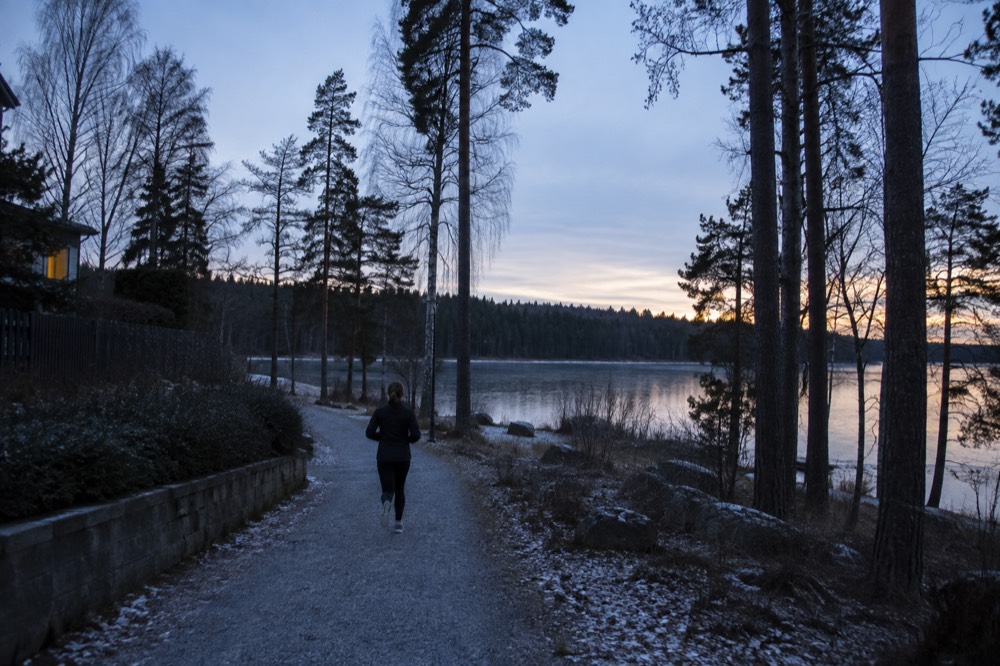
The loop trail is the default activity. It is flat, wide, gravel-surfaced and maintained, which makes it doable for strollers, wheelchairs in dry conditions, small children and anyone who wants a walk rather than a hike. Most people finish it in under an hour at a relaxed pace. Locals use it for jogging laps before work, and on a weekday morning you will pass more runners than tourists by a wide margin.
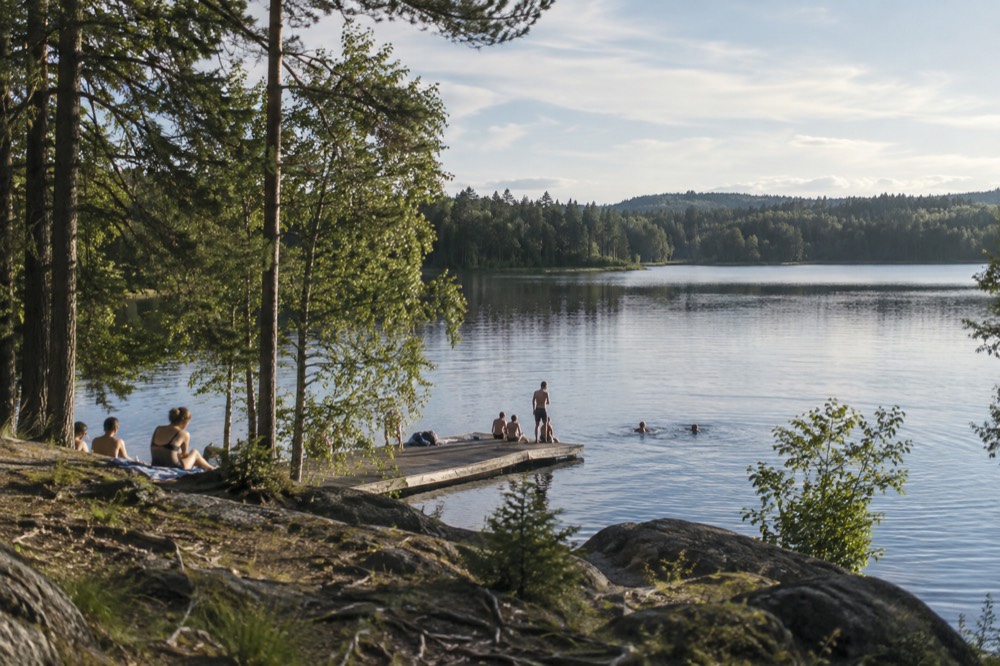
Swimming is the summer draw. The water is cool rather than warm, as you would expect at this latitude, but the beach area is genuinely used, and the diving tower gets busy on warm July evenings. There is no entry fee and no gate; the lake is a public asset in the most literal sense.
Winter turns the whole area into a ski base. The trails around the lake and heading north into the forest are groomed for classic and skate cross-country skiing, and the lake itself, when the ice is safe, becomes part of the landscape. This is ordinary Oslo life, not a resort experience: people ski here after work under floodlights on the lit trails.
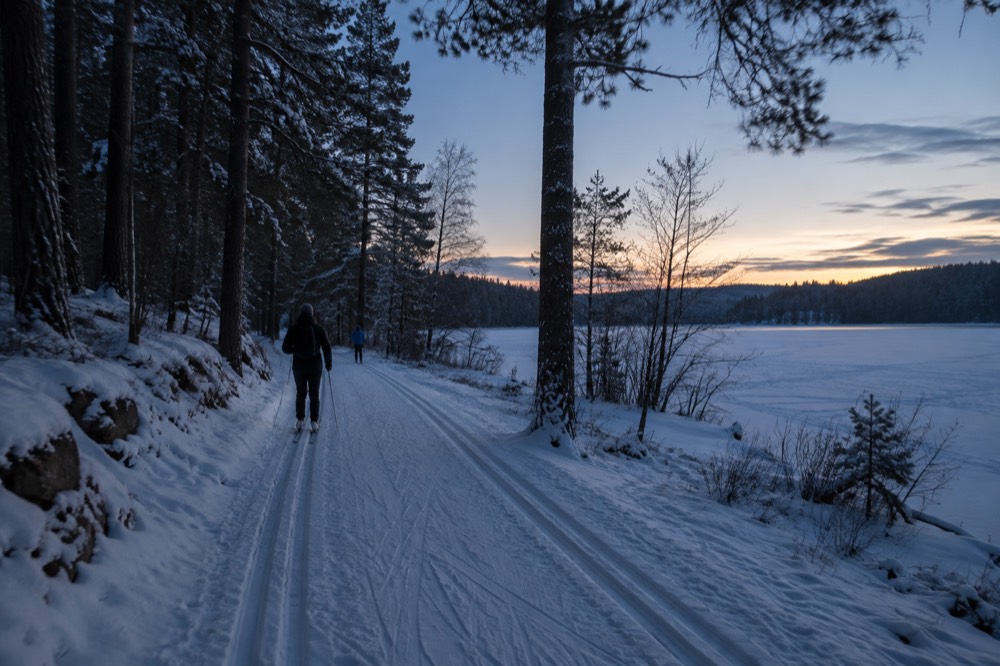
Here is how the year at the lake shapes up:
| Season | Main activity | What to expect |
|---|---|---|
| Summer (Jun-Aug) | Swimming, jogging, picnics | Busy on warm days, especially evenings; water is cool but swimmable |
| Autumn (Sep-Oct) | Walking, color season | Quieter, crisp air, the loop trail at its most photogenic |
| Winter (Dec-Feb) | Cross-country skiing, ice walking | Groomed trails, lit loops after dark, cafe open for warming up |
| Spring (Mar-May) | Hiking into Nordmarka | Snow melting northward, trails opening progressively |
Beyond the loop, the lake is a trailhead. Routes head north to Ullevålseter, a farm and cafe stop several kilometers into the forest, and connect to the wider Nordmarka network. If you are building a bigger outdoor plan, our hiking near Oslo and skiing near Oslo guides cover the options in depth.
The sauna scene deserves its own mention, with one honest caveat: sauna sessions at the lake are sold directly by the operators, not through any booking platform, so this site does not sell them. What we can say is that the combination of a cold-water plunge in a forest lake and a hot sauna is a Norwegian ritual that has spread far beyond Norway in recent years, and Sognsvann is one of the places in Oslo where it is practiced properly. Our Oslo sauna guide covers the scene in editorial depth.
A budget central walking tour is another way to see the contrast between the forest edge and the city core, and it costs about the same as a lunch:
How Long Is the Walk Around Sognsvann?
The loop around Sognsvann is short, flat and well maintained, and most walkers complete it in 40 to 60 minutes at a relaxed pace, or around 20 minutes if running. The trail is gravel, kept in condition year-round, and suitable for children, strollers and anyone who wants an easy circuit rather than a hike.
The distance is modest enough that you can extend it without committing to a full day. The common extension is to continue past the northern shore onto the forest trails, either toward Ullevålseter for a longer outing or onto one of the shorter loops that climb the low hills east of the lake. The loop itself never leaves the shoreline, so you always know where you are, which is exactly why families like it.
For runners, the loop is a measured circuit that locals use for interval training. For families, it is contained: a child cannot get lost on it, and the cafe and station are always visible from some point on the trail. For anyone with limited mobility, the flat gravel surface is among the most accessible nature experiences in the city, though in winter snow and ice can change that calculation. Our Oslo accessibility guide covers the city's overall record on this front.
One planning note that matters more than the distance: the light. Oslo's daylight swings enormously across the year, from under six hours in late December to nearly nineteen in late June, because the city sits at 59.91 degrees north. A walk you start after work in January will be in darkness by mid afternoon, while the same walk in June can begin at ten in the evening in full twilight. Plan the loop, and everything else in Oslo, around that fact.
Can You Swim in Sognsvann?
Yes, swimming in Sognsvann is free, unsupervised and popular, with a beach area and a diving tower at the southern end near the station. The water is cool, typical summer temperatures in Oslo's swimming spots run around 15 to 20 °C, and there are no lifeguards or extensive changing facilities.
The lake is one of Oslo's established bathing spots, though it is a freshwater forest lake rather than a fjord beach. The swimming culture here is less sunbathing and more quick dips: you will see people swim laps along the shoreline in the morning, and on warm evenings the docks fill with people cooling off after a run. More of these guides are collected on Oslo Travel Guide. More of these guides are collected on Oslo Travel Guide.
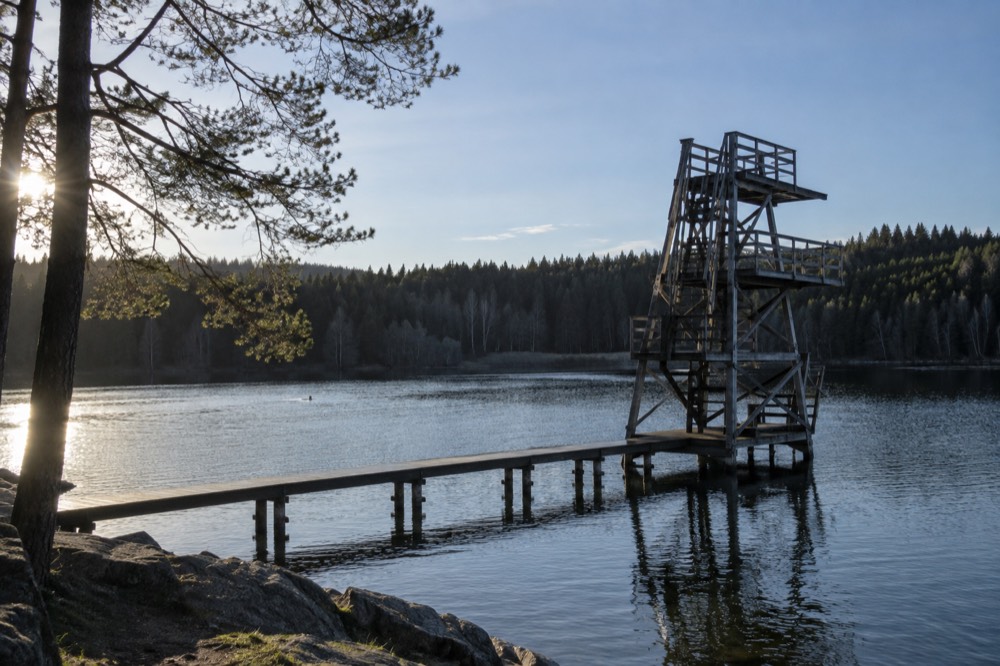
The practical notes are simple. There is no lifeguard. The bottom drops off fairly quickly in places, which is worth knowing if you are swimming with children. Water quality in Oslo's lakes is generally good, and the city publishes bathing water test results in summer. If you prefer salt water, the Oslofjord beaches and the island swimming spots are the alternative, covered in our Oslo beaches guide and the Oslo islands page.
A quick comparison of the two swimming experiences:
| Sognsvann | Oslofjord beaches and islands | |
|---|---|---|
| Water | Freshwater, forest lake | Salt water, fjord |
| Access | Metro line 5, about 25 minutes | Island ferries from Aker brygge, or buses to Bygdøy |
| Ticket | Ordinary Ruter zone 1 ticket | Ordinary Ruter zone 1 ticket on the island ferries |
| Character | Cool, quiet, pine-scented | More social, more facilities, sea air |
| Best for | A dip after a forest walk | A half day of sun and swimming |
Note the ticket detail in that table, because it is one of the facts Oslo guides most often get wrong: the public island ferries are ordinary Ruter services covered by a normal ticket, while the Bygdøy museum ferry is a separate seasonal operator that does not accept Ruter tickets at all, though the Oslo Pass does cover it. Two different piers, two different systems, and mixing them up strands people.
Is Sognsvann Good in Winter?
Yes, winter is arguably when Sognsvann is at its most Oslo: the trails are groomed for cross-country skiing, the lit loops run after dark, the frozen lake becomes part of the landscape, and the cafe becomes a warming hut. Skiforeningen, the association that maintains Nordmarka's trails, publishes live trail and snow conditions.
Cross-country skiing inside a capital city is a real thing here, not a gimmick. The metro line that brings commuters to work also brings skiers to the trailhead. On a January evening the lit trails around the lake carry a steady stream of people on skis, and the lake sits dark and frozen beside them.
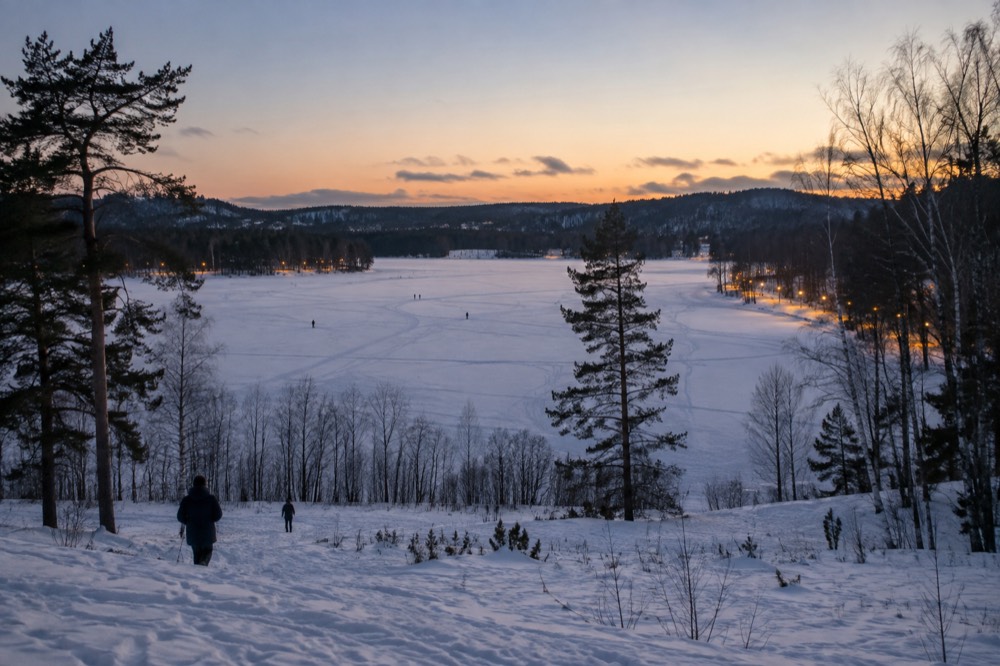
You do not need to own skis to enjoy it. Walking the loop in winter is common, and the flat trail is usually walkable even in snow. For context on the season itself, including daylight hours and temperatures, see Oslo in winter. The honest version of winter here is that it is dark and cold, with January normals around minus two degrees Celsius and only a few hours of daylight, but that is precisely what makes the lit trails and the warm cafe feel earned rather than decorative.
Winter also raises the question of what else the cold season offers in this city, and the answer is more than most visitors expect: snowshoeing in Nordmarka, a torchlit forest walk with a campfire, and even a learn-to-ski half-day, all inside or on the edge of the city limits. The guided snowshoeing option in particular starts from the same forest that begins at this lake's northern shore.
For visitors who prefer their winter indoors, the museum circuit is the alternative, and the Kon-Tiki Museum, the best-reviewed museum ticket in Oslo, anchors a Bygdøy day that pairs naturally with the Fram Museum next door.
What Else Is Near Sognsvann?
The immediate area is residential and forest rather than sightseeing, but the metro line back toward the center passes within reach of the Holmenkollen ski jump area, and the lake itself is the gateway to Nordmarka, Oslo's largest outdoor asset. Most visitors treat Sognsvann as the destination and pair it with something central afterward.
The honest answer is that you come to Sognsvann for the lake, not for surroundings. The neighborhoods south of the lake are pleasant and unremarkable. The attraction is north: the forest, the trails, and the sense of leaving a European capital on foot within minutes of its metro map.
That said, the return metro ride passes the Holmenkollen area, and the Holmenkollen ski jump is the natural pairing if you want two sides of Oslo's outdoor identity in one day: the sport monument and the working forest. The best views in Oslo guide collects the viewpoints worth the detour.
A sensible day built around the lake looks like this:
| Time | Activity | Notes |
|---|---|---|
| Morning | Metro to Sognsvann, walk the loop | Freshest light, fewest people on weekdays |
| Midday | Coffee at the lake cafe, or extend into Nordmarka | Ullevålseter if you want a longer forest leg |
| Afternoon | Metro back, stop at Holmenkollen | Same line, no extra planning |
| Evening | Fjord cruise or dinner at Aker Brygge | The water again, but salt this time |
If the afternoon turns to city sightseeing instead, the classic Bygdøy museums are a contrast: indoor, historic and bookable. The evening alternative is the fjord, and the silent electric boat with audio commentary is the single best-reviewed activity in the city, a calm way to end a day that began in pine forest.
Should You Visit Sognsvann?
Visit Sognsvann if you want to see the Oslo that locals actually use, have a free half-day, or want an easy outdoor activity that requires no car, no booking and no gear. Skip it if you are in the city for one or two days and only have time for the major museums, the fjord and the center.
The case for going is authenticity of a specific kind. This is not a tourist attraction with a ticket and a queue. It is a functioning part of Oslo life that happens to be beautiful, and it shows you something the center cannot: how this city relates to its forest. For anyone curious about what Oslo is known for, the lake is half the answer, and the fjord is the other half.
The case against is time. If your visit is short, the fjord, Vigeland Park and the Bygdøy museums deliver more per hour. The lake rewards the unhurried visitor, the repeat visitor, and anyone who has already seen the highlights. It also rewards the visitor on a budget, since the only unavoidable cost is the metro ticket, a point our free things to do in Oslo page builds on: between Vigeland Park, the Opera House roof and this lake, a genuinely good Oslo day can cost almost nothing beyond transport.
For a first visit that balances the outdoor and the essential, these three cover the ground well:
Common Questions About Sognsvann
How do I get to Sognsvann from central Oslo?
Take metro line 5 toward Sognsvann and ride to the terminus. The trip takes about 25 minutes, is inside Ruter zone 1, and the lake is a two-minute walk from the platform.
How long is the walk around Sognsvann?
The loop trail around the lake is flat and gravel-surfaced. Most people complete it in 40 to 60 minutes at a walking pace.
Can you swim in Sognsvann?
Yes. Swimming is free and popular in summer, with a beach area and a diving tower near the station. The water is cool, and there is no lifeguard.
Is Sognsvann worth visiting in winter?
Yes. The trails around the lake are groomed for cross-country skiing, the lit loops run after dark, and the cafe serves as a warming stop. Skiforeningen publishes live trail conditions.
Is there an entrance fee for Sognsvann?
No. The lake, the loop trail and the beaches are free and open year-round. Only the cafe and any sauna operators charge.