Best Photography Spots in Oslo: Locations, Light and Timing
Oslo rewards photographers who plan around its light rather than its landmarks. This guide covers the locations worth carrying a camera to, when each one is at its best, and how the city's extreme seasonal swing changes every shot you take.
Short answer
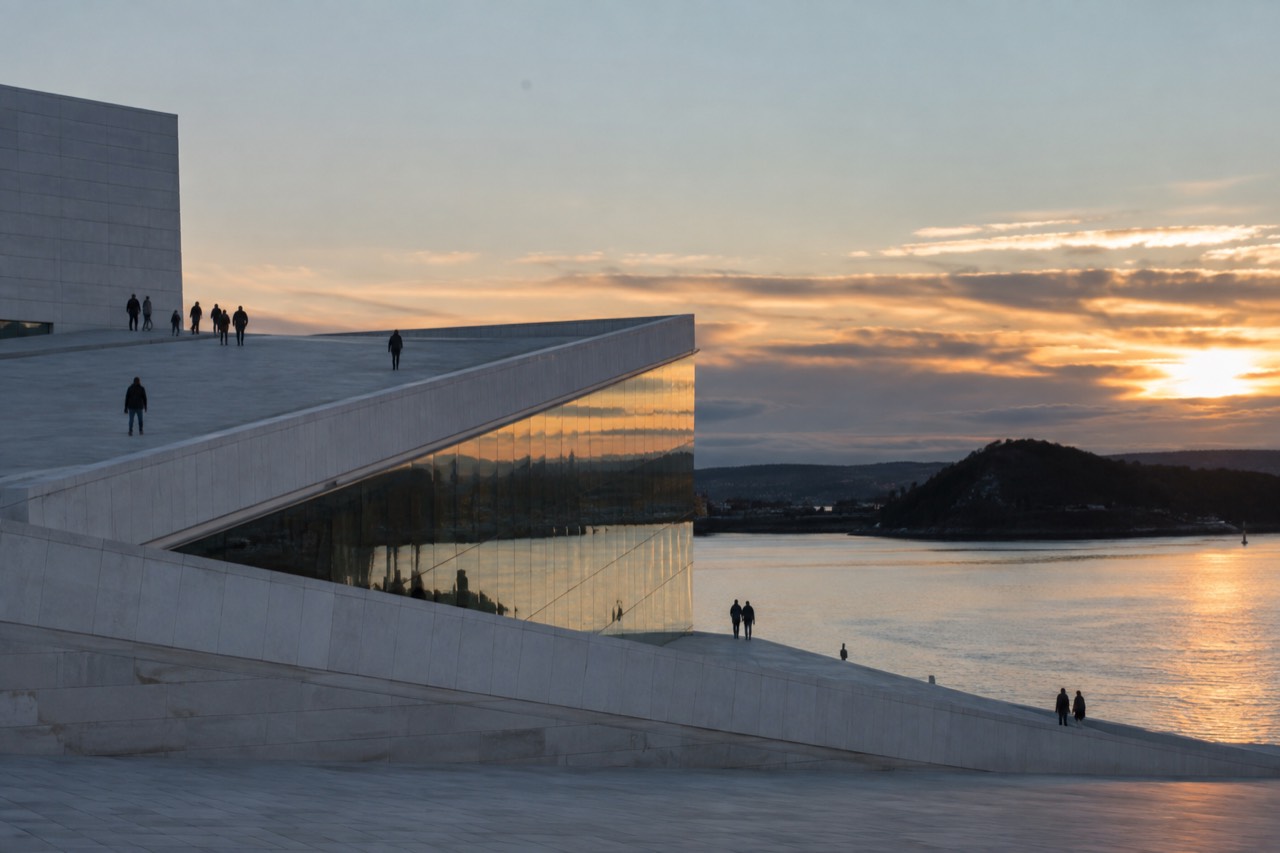
Oslo's strongest photography spots are the Opera House roof, Sørenga seawater pool, Ekebergparken's hillside viewpoint, Vigeland Park's granite monolith, Aker Brygge's waterfront and the Hovedøya island ruins. Timing matters more than location: sunset shifts from 15:11 in December to 22:43 in June, so plan each spot around a light window that changes by hours, not minutes.
What Are the Best Photography Spots in Oslo?
The best photography spots in Oslo are the Opera House roof, Sørenga, Ekebergparken, Vigeland Park, Aker Brygge, the Akershus Fortress ramparts and the Hovedøya island ruins, and each one has a specific hour at which it outperforms every other hour of the day. Oslo is a low-rise waterfront capital built around a fjord and a ridge, which means the city offers two things photographers travel for: clean sightlines across water and elevated ground you can actually reach on foot or by metro. The locations below are grouped by what they deliver, not by district, because a photographer's day in Oslo is built around light and transport, not neighborhoods.
Start with the geometry. The city center sits at the innermost end of the Oslofjord, facing south across open water. Behind it, ridges rise to the north and east, and the T-bane metro climbs them in minutes. That combination, a flat waterfront with a bowl of hills around it, gives you reflections in the morning, backlit water in the evening and elevated skyline shots whenever the clouds break. The Opera House anchors most of it: its sloping marble roof is a public walkway, free and open at all hours, and it frames the Barcode towers, the fjord and the ferries in almost every direction you point a lens.
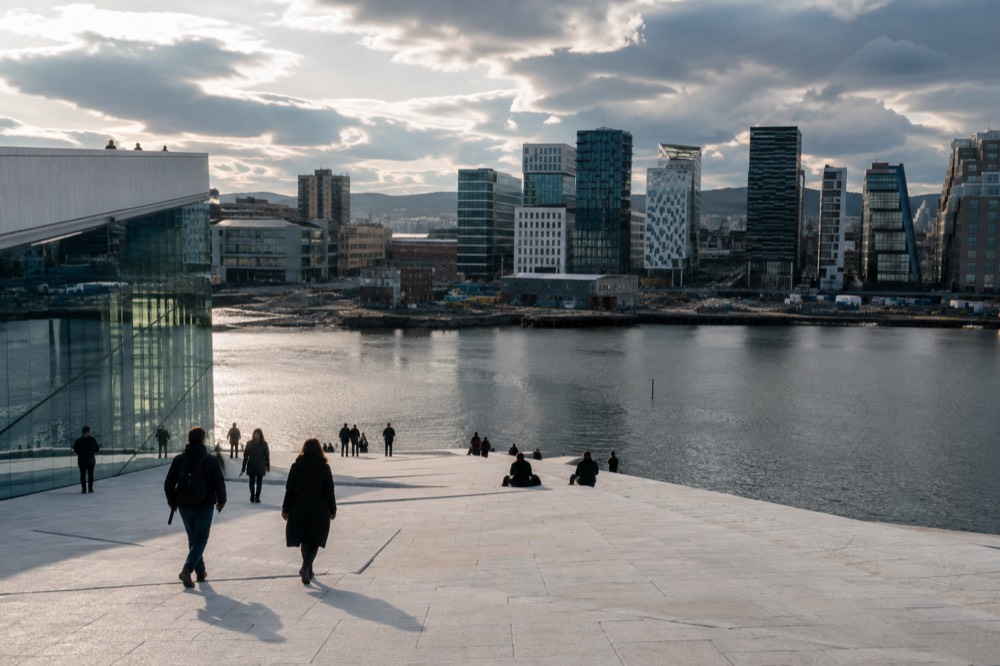
For a fuller rundown of elevated viewpoints, our guide to the best views in Oslo covers the panorama locations in more depth, and the Opera House guide goes deep on the building most photographers end up shooting first.
Which Waterfront Locations Give the Strongest Shots?
Aker Brygge, the Sørenga seawater pool, the Akershus Fortress ramparts and the Opera House roof form a walkable waterfront circuit that produces the core of most strong Oslo portfolios, and the whole loop takes under two hours on foot. Each location answers a different photographic problem. Aker Brygge gives you the classic postcard of the fortress reflected in the harbor with boats in the foreground. Sørenga, the seawater promenade at the end of the Bjørvika fill, gives you the skyline across the water with swimmers and boardwalk life in the frame. The fortress ramparts give you height over the harbor without leaving the center, and the Opera House roof gives you geometry that no other Nordic capital has.
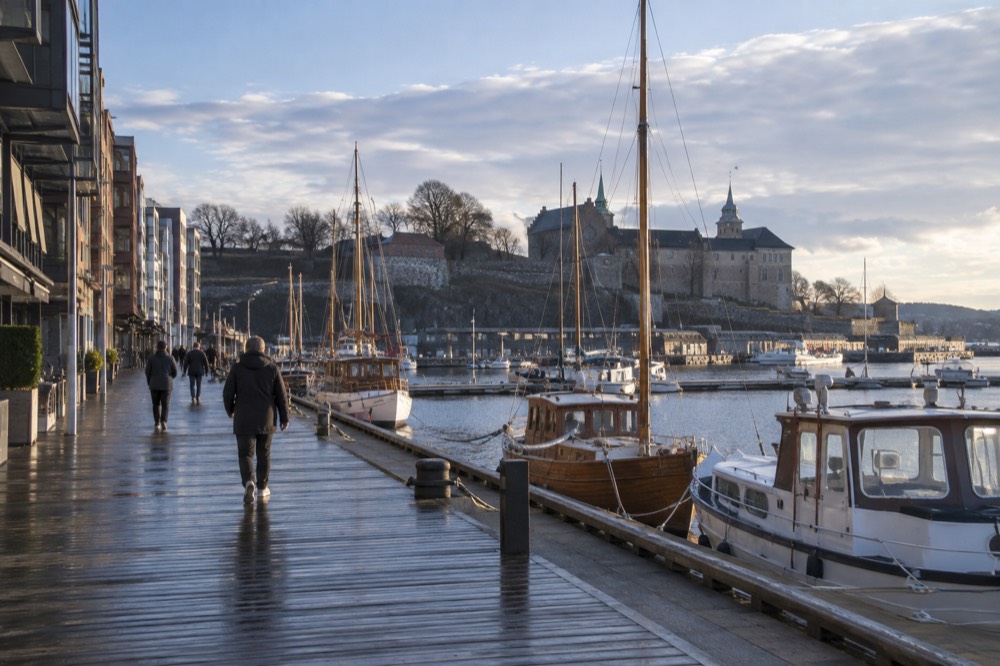
The practical detail that makes this circuit work is the light direction. The harbor faces south and west, so late afternoon into sunset is when the water goes warm and the city skyline behind Sørenga catches the last sun. Morning shooters get the opposite benefit: still water for reflections before the ferries and kayaks churn it up, and empty boardwalks before the restaurant terraces fill. The table below sums up what each spot delivers and when to be there.
| Location | Main subject | Best light | How to reach |
|---|---|---|---|
| Opera House roof | Marble geometry, Barcode towers, fjord | Late afternoon to sunset | Walk from Oslo S, 10 minutes |
| Sørenga | Skyline across water, boardwalk life | Sunset, blue hour | Walk or tram to Bjørvika |
| Aker Brygge | Fortress reflection, boats, street life | Morning for calm water | Tram to Aker Brygge stop |
| Akershus ramparts | Harbor from height, castle walls | Midday to afternoon | Walk from City Hall, 5 minutes |
| Hovedøya ruins | Stone abbey, overgrown frames | Any daylight in summer | Ruter ferry B1 from Aker brygge |
| Ekebergparken | Full skyline from the ridge | Sunset, autumn haze | Bus or tram to Ekebergparken |
The Akershus Fortress walls are free to walk and open most of the day, and the fortress guide covers which sections face which way. If you want the skyline from the water instead, the fjord cruise products below put you on a boat with the whole city frontage in frame, which is the one angle you cannot get from land.
How Does Oslo's Light Change Through the Year?
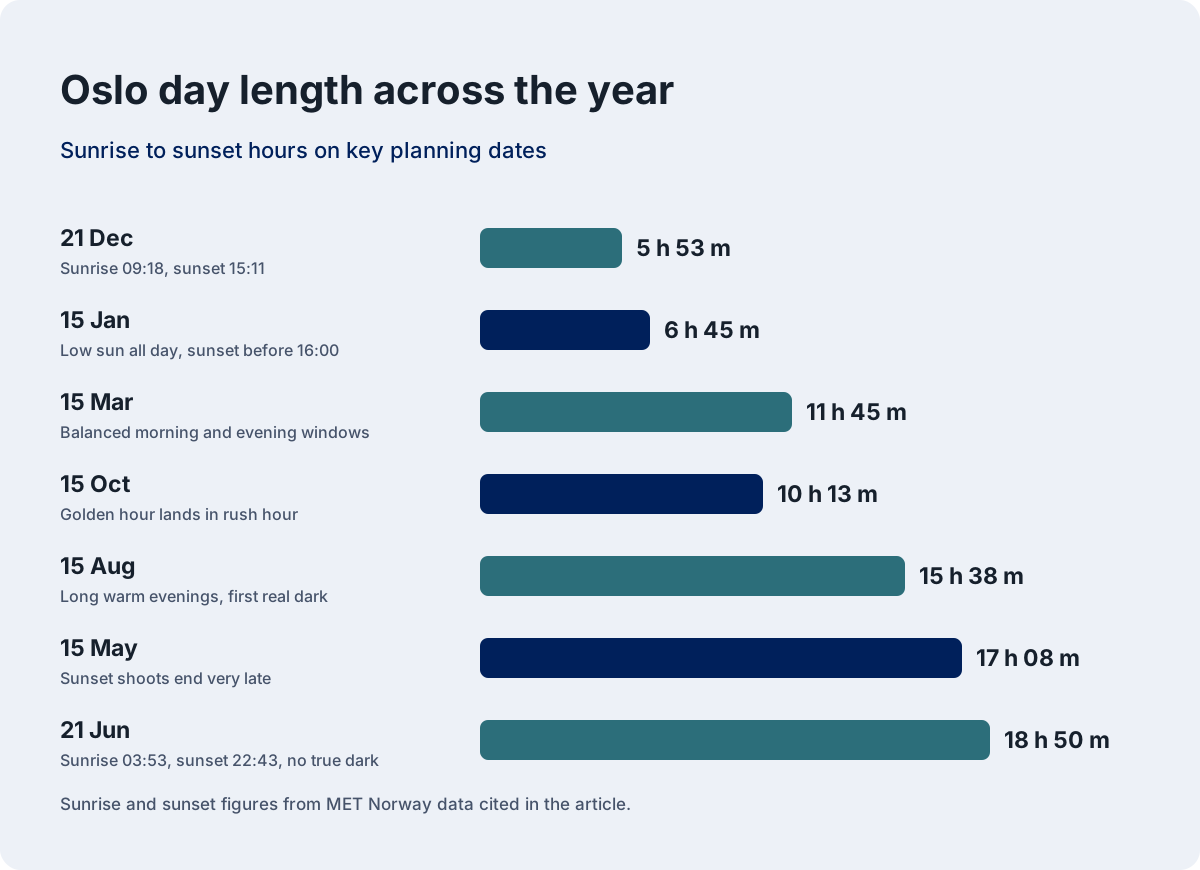
Oslo's day length swings from 5 hours 53 minutes on 21 December to 18 hours 50 minutes on 21 June, a factor of more than three, and this swing dictates when you shoot far more than any weather forecast does. MET Norway's sunrise data for the city puts the winter solstice sunrise at 09:18 and sunset at 15:11, while the summer solstice sun rises at 03:53 and sets at 22:43. In June the hours between are deep twilight rather than true night, so blue hour stretches toward midnight and never fully ends in darkness. In December the sun barely clears the rooftops, and every daylight hour is low, warm and short.
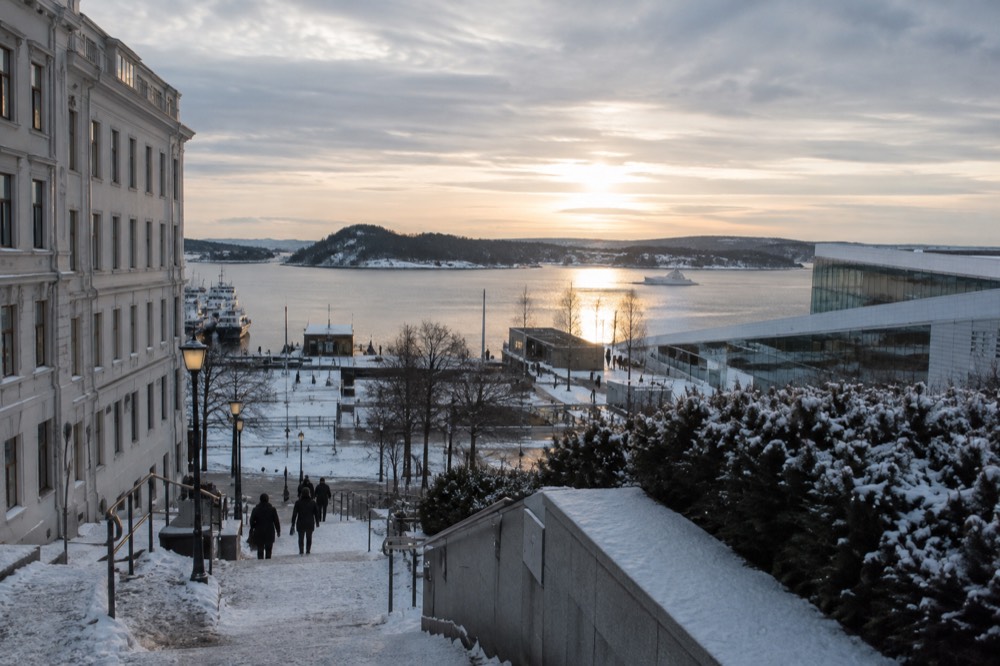
For photographers this is a gift in both directions. Winter gives you a sun that sits at golden-hour altitude for most of the day, soft raking light across the fortress walls and the opera marble, and early sunsets that let you shoot blue hour at 16:00 and be at dinner by 17:00. Summer gives you a horizon that glows until nearly midnight, with the trade-off that true darkness never arrives, so star and aurora work is off the table. There is no midnight sun in Oslo, the city sits at 59.91 degrees north, well south of the Arctic Circle, but midsummer nights stay bright enough to keep shooting without a tripod.
| Date | Sunrise | Sunset | Day length | Shooting implication |
|---|---|---|---|---|
| 15 Jan | 09:04 | 15:49 | 6 h 45 m | Low sun all day, sunset before 16:00 |
| 15 Mar | 06:34 | 18:19 | 11 h 45 m | Balanced morning and evening windows |
| 15 May | 04:40 | 21:48 | 17 h 08 m | Sunset shoots end very late |
| 21 Jun | 03:53 | 22:43 | 18 h 50 m | Twilight all night, no true dark |
| 15 Aug | 05:31 | 21:09 | 15 h 38 m | Long warm evenings, first real dark |
| 15 Oct | 07:55 | 18:08 | 10 h 13 m | Golden hour lands in rush hour |
| 21 Dec | 09:18 | 15:11 | 5 h 53 m | Six usable hours, sun near horizon |
The full breakdown by month, including the shoulder dates photographers use for planning, is in our Oslo daylight hours guide. One planning note that surprises visitors: August is Oslo's wettest month on the 1991 to 2020 climate normals, at 103 mm, so the classic late-summer visit carries the highest rain risk of the year. October is nearly as wet. If you are chasing reflections and clear skies, the February to April window is statistically drier and gives you snow on the rooftops into March.
Where Do You Shoot the Oslofjord Itself?
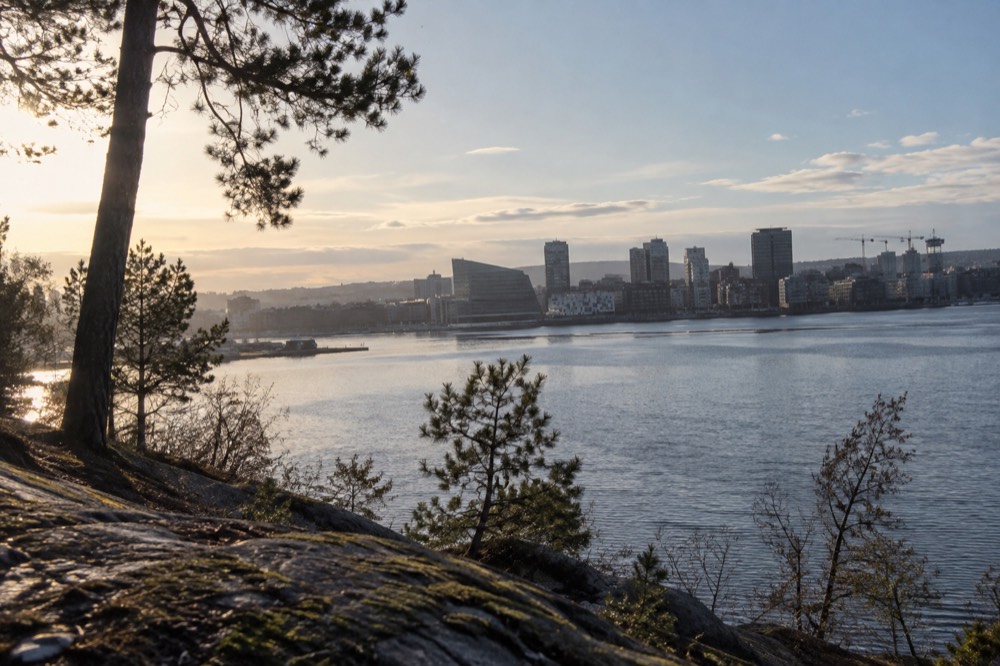
The fjord photographs best from three positions: from the water on a boat, from the islands on the Ruter ferry lines, and from the Ekeberg ridge above the harbor, and each position needs a different lens and a different time of day. From the water, the city's entire southern frontage, the Opera House, the Barcode towers, the fortress and Aker Brygge, stacks into one frame, which is why the sightseeing boats produce so many of the images that end up selling the city. From the islands, you shoot back toward the skyline with open water in the foreground. From Ekebergparken, you get the whole panorama with the fjord arms reaching behind it.
The island ferries are the budget photographer's secret. Lines B1, B1X and B2 run from Aker brygge on an ordinary Ruter ticket, no surcharge, and Hovedøya's ruined Cistercian abbey gives you weathered stone, arches and overgrowth ten minutes from the center. These are not the Bygdøy museum ferry, which is a separate seasonal operator from Rådhusbrygge 3 with its own ticket and its own season from mid-March to early October. Getting the two piers mixed up is the single most common transport error visitors make in Oslo, and it costs a shoot. More of these guides are collected on Oslo Travel Guide. More of these guides are collected on Oslo Travel Guide.
The Oslofjord cruise guide covers the boat options in detail, and the islands guide breaks down what each island offers. If you would rather have someone else handle the crossing and the route, the silent electric sightseeing boat is the fjord product most photographers end up on, precisely because the boat is quiet enough that you hear the shutter, not the engine.
The electric boat runs 90 minutes with audio commentary, and the operator's listing carries the current from-price and rating. For a full treatment of the fjord as a destination rather than a photo subject, our fjord cruise guide compares every format on the water, from the wooden sailing ship to the island-hopping walks.
Which Neighborhoods Work for Street Photography?
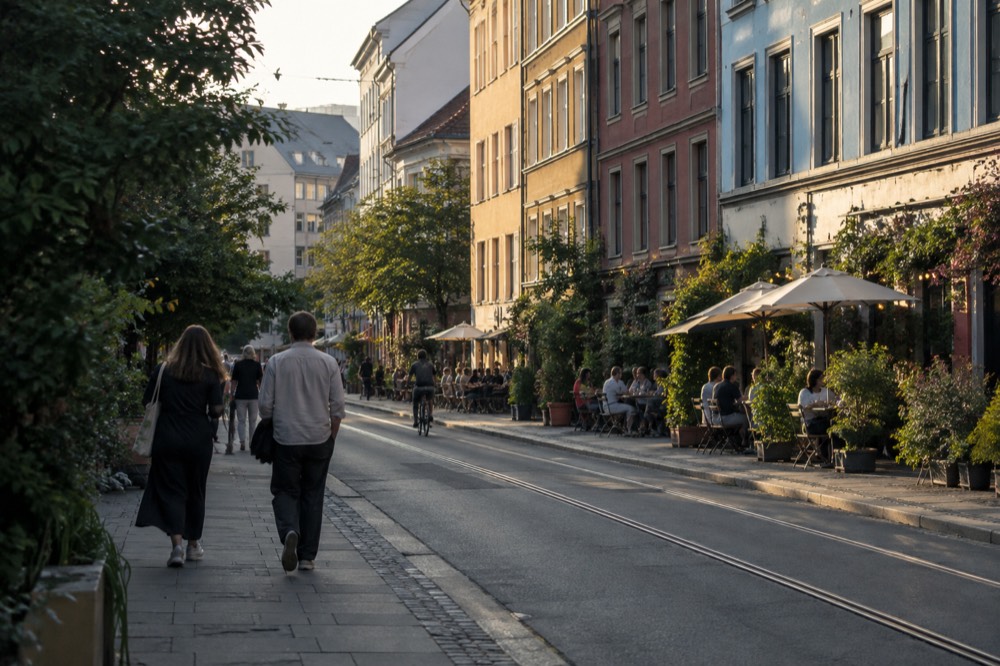
Grünerløkka, Tøyen and Vulkan form the east-side street photography circuit, and they outperform the city center because the light falls across painted timber facades rather than glass, and the street life is denser, slower and far more generous to a camera. Grünerløkka is the old workers' district turned creative quarter, a grid of low buildings, murals, cafés and the Akerselva river running through the middle of it. The river itself is the spine: the Akerselva drops through a series of small waterfalls between Grünerløkka and the city center, and each one is a long-exposure subject a short walk from a tram stop.
Vulkan, the former industrial site by the Mathallen food hall, gives you contemporary architecture, a footbridge over the river and the contrast of old red brick against new glass. Tøyen adds the Botanical Garden, which is free to enter and gives you palm-house interiors and seasonal planting. The Grünerløkka guide covers the district street by street, and the Vulkan guide handles the riverside architecture. For a broader orientation, the Oslo neighborhoods guide maps which districts reward a camera and which are just housing.
The working method on the east side is simple: follow the river. The Akerselva runs roughly north to south, and walking its length from Grünerløkka down to the city hall area passes waterfalls, murals, old factory buildings converted to studios and the MUNCH museum at the bottom. The river walk takes about an hour without stops, longer with a camera, and it connects to the MUNCH guide territory at Bjørvika, where the building's angular facade is a subject in its own right.
Where Are the Best Elevated and Skyline Shots?
The best elevated photography positions in Oslo are the Ekebergparken ridge, the Holmenkollen ski jump tower area, the Akershus ramparts and the upper floors reached by the T-bane's line 1, and each one gives a genuinely different skyline rather than a different angle of the same one. Ekebergparken, the sculpture park on the ridge southeast of the center, is the classic full-skyline position: the city spreads below with the fjord behind it, and the park's own sculptures give you foreground interest that most skyline shots lack. The Ekebergparken guide covers the collection and the trails.
Holmenkollen is the other pole. The ski jump sits above the treeline of Nordmarka, and from the tower area the whole city and fjord system open up, with the additional benefit that the metro ride up is itself photogenic, single-track forest line, and the Holmenkollen guide covers what else is up there. The catch is reachability as a set: Ekebergparken, Holmenkollen and Vigeland Park sit on three different sides of the city, and doing all three in one day on public transport eats half your shooting hours. That is exactly the gap the half-day bus tour exists to close, and it is the tour most photographers visiting on a short trip end up taking.
The tour's listing carries the current price, duration and rating figures, and it pairs the two hard-to-reach photo locations, Holmenkollen and Vigeland Park, in one three-hour run. Vigeland Park deserves the stop regardless of how you arrive: the monolith plateau, the granite figures and the symmetry of the bridge are the most photographed stone in Norway, entry is free, and the park is open 24 hours a day all year. The Vigeland Park guide covers the layout and the individual sculptures.
What Should You Know About Shooting in Winter?
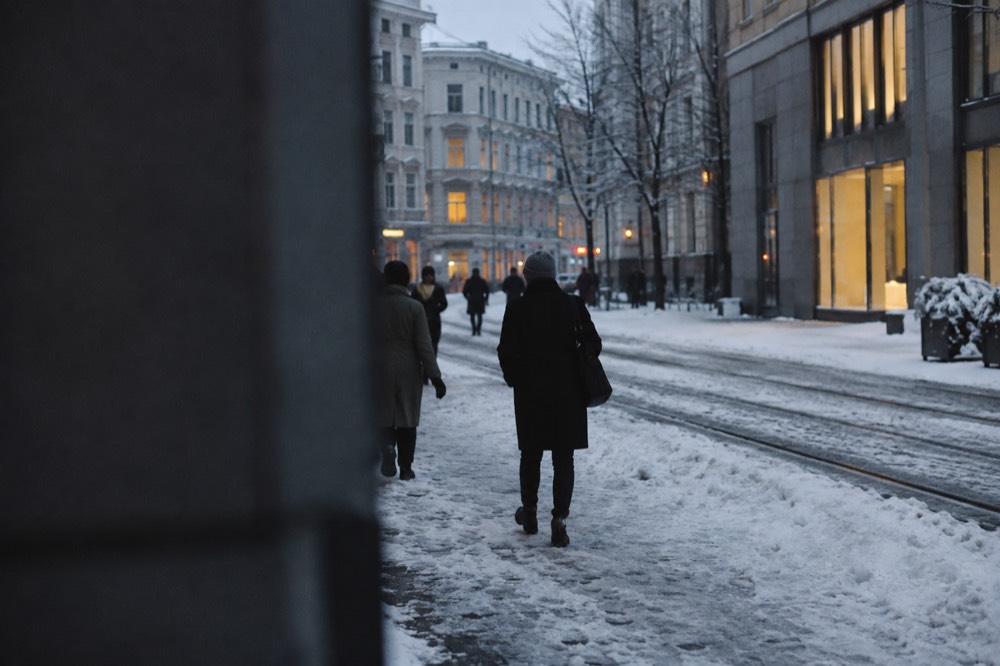
Winter photography in Oslo means working a six-hour daylight window, snow on the ground from most of December through March, and low-contrast flat light that rewards detail work over wide panoramas, with the compensation that every golden hour lasts for hours. The December sun rises at 09:18 and sets at 15:11, and because it barely clears the horizon, the light stays at the warm, raking angle that other cities get for twenty minutes a day. Snow reflects it upward into faces and facades, and the marble of the Opera House takes on a blue cast at midday that is worth the trip on its own.
Cold-weather camera handling is the practical constraint. Batteries drain fast below freezing, so carry spares in an inside pocket, and let glass acclimatize slowly when you move between heated interiors and the street to avoid fogging. Oslo's winter normals sit at a mean of minus 2.3 degrees Celsius in January, with an observed low of minus 17.2 in the 2025/26 season, so the city is cold but rarely brutal by Norwegian standards. The Oslo in winter guide covers the full seasonal picture, and the Oslo snow guide addresses what snow cover to actually expect, since the normals tables measure precipitation, not snow depth.
| Season | Mean temp | Light character | Best subjects |
|---|---|---|---|
| Dec to Feb | −2.3 to −1.4 °C | Low sun, long blue hour | Snow scenes, window light, blue-hour waterfront |
| Mar to May | 1.3 to 11.4 °C | Lengthening days, clear spells | Snow-to-spring contrast, river waterfalls |
| Jun to Aug | 15.3 to 17.7 °C | Twilight past 22:00 | Midnight blue hour, islands, street life |
| Sep to Nov | 12.2 to −1.4 °C | Rapidly shortening days | Autumn color in October, first snow in Nov |
What Are the Rules and Etiquette for Photographing in Oslo?
Photography in public spaces in Oslo is broadly permitted, with the practical exceptions of commercial drone use, tripods blocking crowds on the Opera House roof at peak times, and photographing individuals who ask you not to, and Norwegians' expectation of personal space extends to lenses. The Opera House roof is public and free at all hours. Vigeland Park is public and open around the clock. The fortress grounds are open to walkers. Inside museums, the rule varies by venue: MUNCH and the National Museum each publish their own photography policy, and the safest approach is to check the venue's own site before assuming flash or even handheld shooting is welcome.
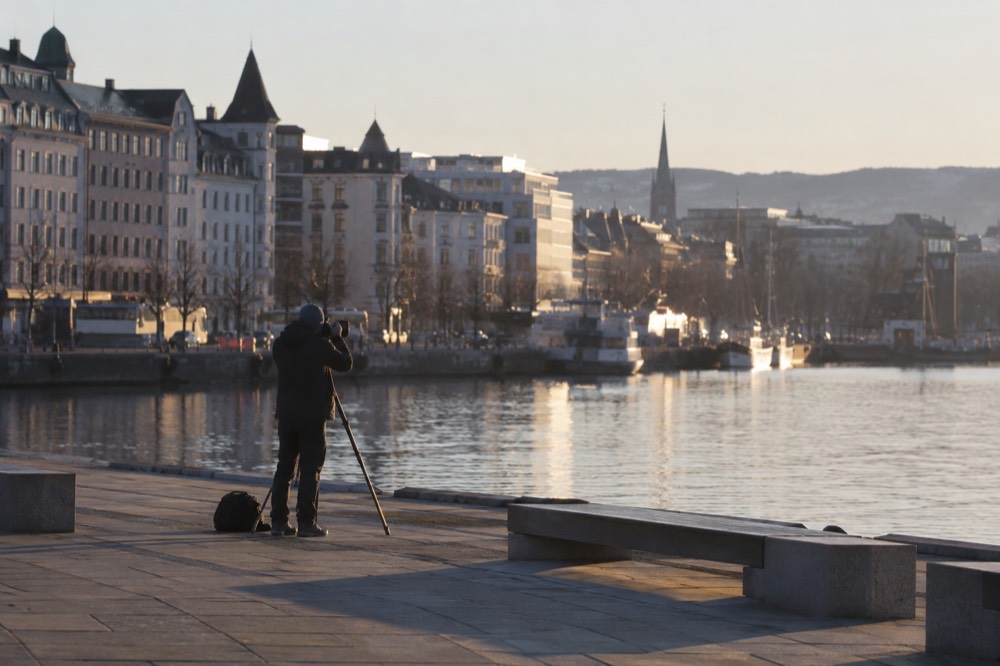
Two specific cautions. First, the royal palace grounds and guard ceremonies have their own published rules about distance and equipment. Second, drone flying over central Oslo is restricted by airspace rules around the city center and the airport corridors, and the rules change often enough that checking the current Civil Aviation Authority guidance before flying is the only reliable approach. For people photography, Norwegians are private by default: a smile and a gesture toward the camera gets consent more often than it fails, but shooting strangers without it will get you a hard stare at minimum.
Can a Guided Tour Improve Your Photography Day?
A guided tour improves an Oslo photography day when the locations are far apart or when the guide controls the timing, and the two cases that matter are the Holmenkollen and Vigeland half-day bus tour and the full-day bus plus fjord combo, both of which solve transport problems rather than photographic ones. The half-day tour covers the two elevated and outlying photo subjects in three hours. The full-day combo adds a fjord leg, putting you on the water with the skyline in frame. The third product worth knowing is the guided fjord-view hike, a forest walk that ends at a chef-cooked waffle stop, which is the strongest option for landscape shooters who want the forested ridges above the fjord rather than the city itself.
For photographers who prefer to move under their own power, the three-hour highlights bike tour covers the waterfront circuit faster than walking, and the bike tour coverage compares it against the bus and walking formats. The free walking tours, covered in the free walking tours guide, are less useful for photography since they move at a group pace, but they are a sound way to scout locations on a first day before returning with a camera.
Common Questions About Oslo Photography Spots
What are the best photography spots in Oslo?
The Opera House roof, Sørenga, Ekebergparken, Vigeland Park, Aker Brygge, the Akershus Fortress ramparts and the Hovedøya island ruins are the core set. Each has a specific best hour, and the light window changes by hours between winter and summer.
When is golden hour in Oslo?
It moves dramatically with the season. Around the June solstice the sun sets at 22:43 and the twilight never fully ends, while around the December solstice sunset is at 15:11 and the low sun behaves like extended golden hour for most of the six-hour day.
Is the Opera House roof free to photograph?
Yes. The roof is a public walkway, free to access and open at all hours, and it is one of the most photographed pieces of architecture in the Nordic countries. Expect crowds at midday in summer and near-empty conditions early and late.
Can you photograph the northern lights in Oslo?
Realistically, no. Oslo sits at 59.91 degrees north, well south of the auroral zone, and a sighting requires a strong geomagnetic storm, a clear sky and a dark spot away from city light. Tromsø is the honest destination for aurora photography.
Which Oslo neighborhood is best for street photography?
Grünerløkka, with the Akerselva river walk and the Vulkan area as the connecting spine. Painted facades, murals, waterfalls and café life give denser material than the glass-heavy city center.
Do you need a tripod in Oslo?
In winter, yes for blue hour, which arrives before 16:00 in December. In summer the twilight lasts past midnight, so handheld work is viable nearly all night. Tripods are fine in parks and on the waterfront, but avoid blocking the Opera House roof at peak times.