Vulkan Oslo: A Local's Guide to the River District
Vulkan is the small industrial peninsula where the Akerselva river turns, and in the space of a decade it has become the most food-obsessed few blocks in Oslo. Here is what it is, how to reach it, and what is worth your time.
Short answer
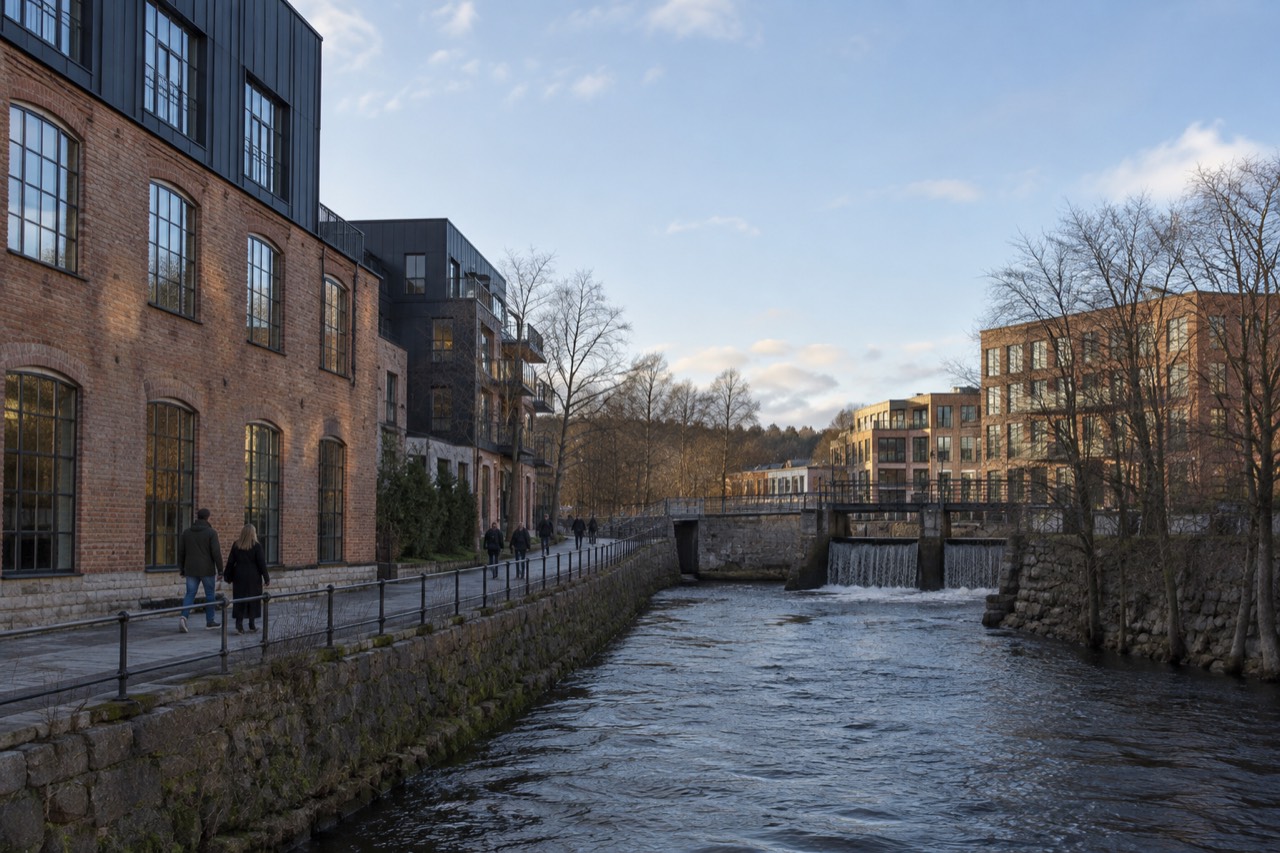
Vulkan is a redeveloped industrial area on the Akerselva river in Grünerløkka, northeast of central Oslo. Its anchors are Mathallen food hall, Dansens Hus and a cluster of hotels and breweries, all within a 15 minute walk of the city center. Most visitors combine it with a river walk or a Grünerløkka food tour.
What Is Vulkan in Oslo?
Vulkan is a compact former industrial site on the east bank of the Akerselva river, at the northern edge of Grünerløkka, about a 15 minute walk from Oslo city center. Iron works once occupied the peninsula; today it holds the city's densest cluster of food, dance and design, including Mathallen food hall, Dansens Hus, a microbrewery, restaurants and two hotels. You can cross it end to end in under ten minutes.
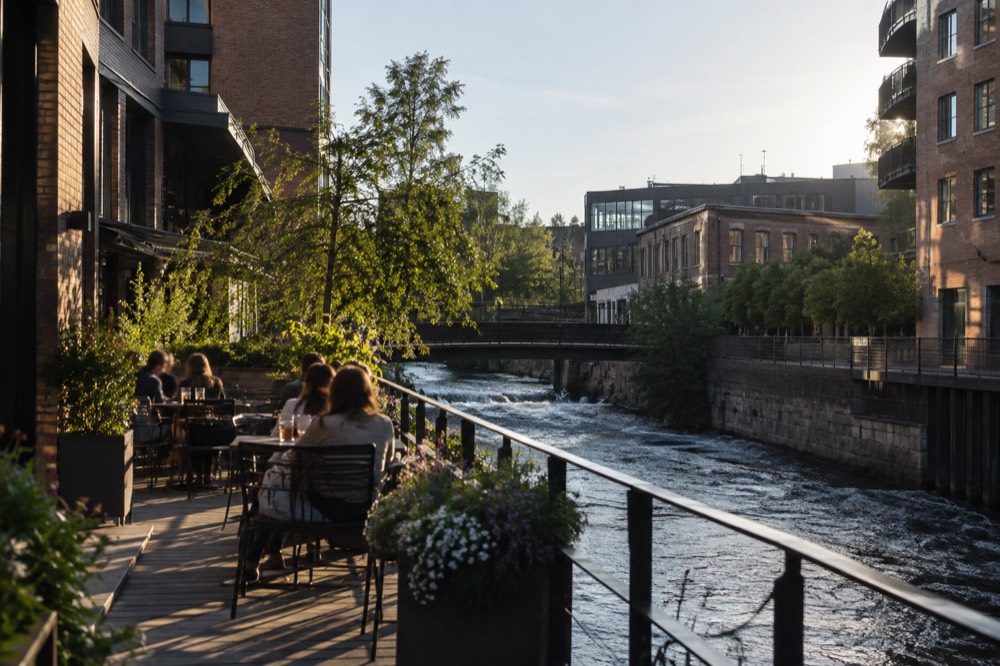
That smallness is the point. Oslo's better known districts sprawl, Grünerløkka alone runs for over a kilometer along the river, but Vulkan is walkable in the time it takes to decide where to eat. The name comes from the iron works that operated here, and the brick shells of those works are what you are looking at when you stand in the main courtyard. The conversion kept the industrial bones: steel trusses, tall windows, the river channel running past the door.
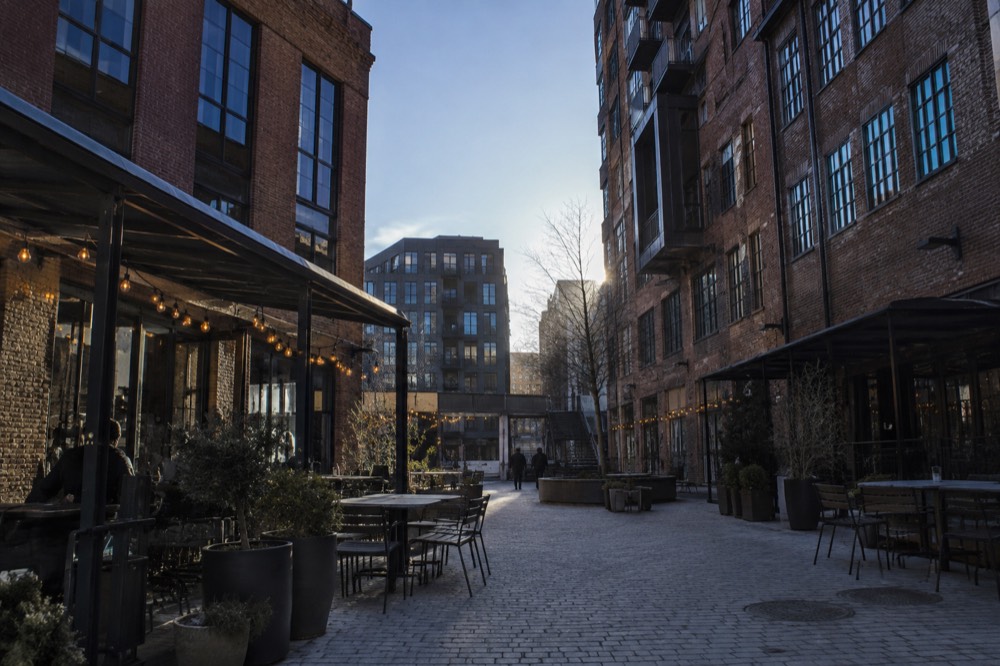
For most visitors Vulkan works as a half-day stop inside a bigger Grünerløkka plan, not a destination on its own. The honest itinerary is this: arrive along the river path, spend an hour or two in Mathallen grazing, walk one loop of the peninsula, then continue downstream into Grünerløkka proper or upstream toward the greener stretches above the district. Trying to fill a full day inside Vulkan alone would leave you repeating yourself by mid afternoon.
The district also earns its place on a budget itinerary. The river path costs nothing, the street art is free to walk past, and Mathallen can be as cheap or as expensive as you make it, since a food hall lets you pick your own price point per stall. Our overview of free things to do in Oslo places the Akerselva walk near the top for exactly that reason.
How Do You Get to Vulkan?
Vulkan sits in Ruter zone 1, so any ordinary central Oslo ticket covers the trip: the metro to Grünerløkka station, a tram to Olaf Ryes plass, or buses along Storgata. Most people simply walk, because the district is 10 to 15 minutes from Oslo S and the route runs beside the river the whole way. From the airport, the Oslo Pass covers Vy's train but not Flytoget, which costs 268 NOK adult one-way.
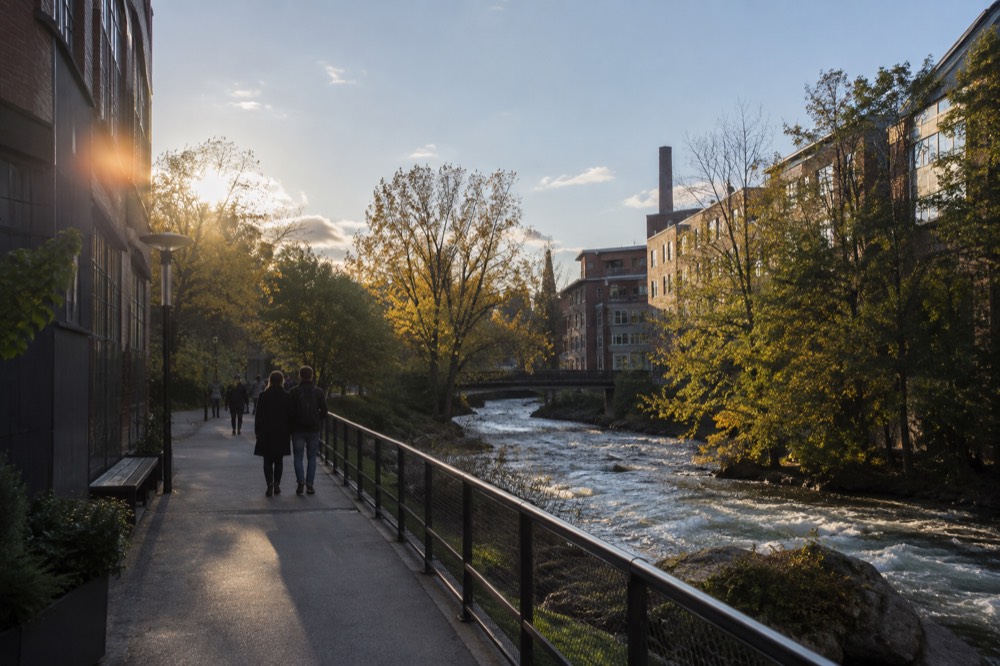
The walk from the center is the version we would point most visitors toward. Leave Oslo S or the Opera House, head up Akerselva past the old industrial buildings of Grønland, and the river does the navigation for you. The path is paved, lit at night, and continuous: you cannot get lost following water downhill toward the fjord, and Vulkan sits at the point where the river makes its sharpest bend.
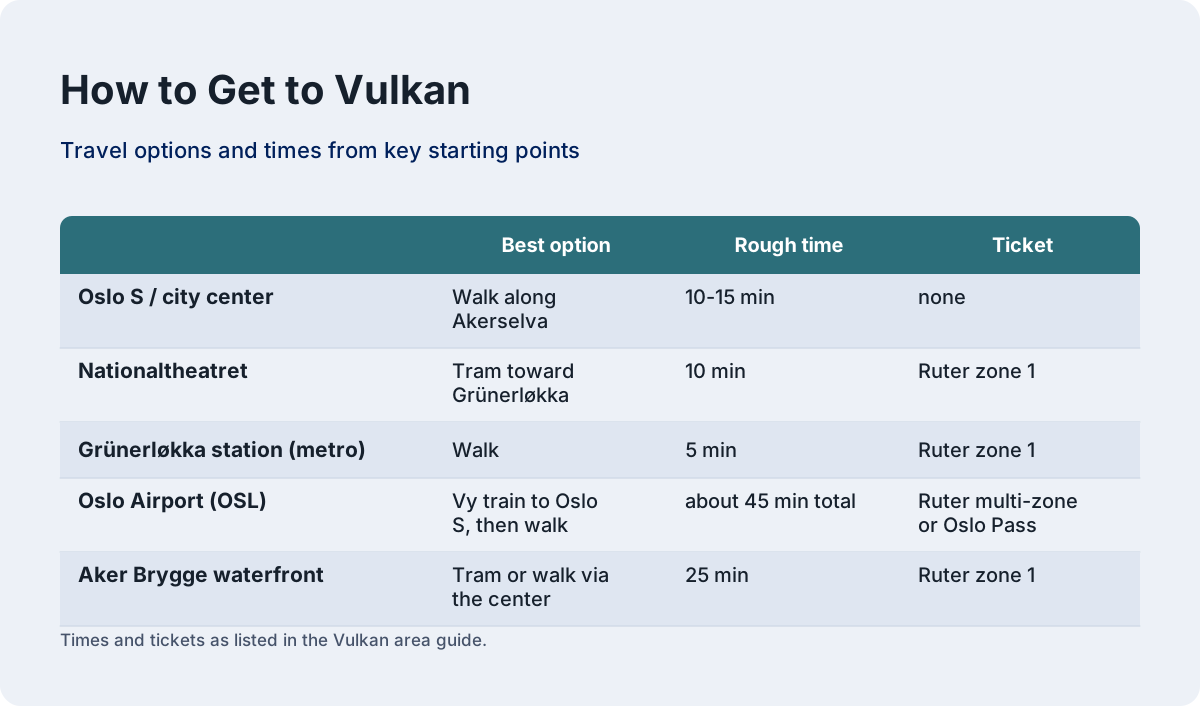
If you are riding instead, the practical options look like this:
| From | Best option | Rough time | Ticket |
|---|---|---|---|
| Oslo S / city center | Walk along Akerselva | 10-15 min | none |
| Nationaltheatret | Tram toward Grünerløkka | 10 min | Ruter zone 1 |
| Grünerløkka station (metro) | Walk | 5 min | Ruter zone 1 |
| Oslo Airport (OSL) | Vy train to Oslo S, then walk | about 45 min total | Ruter multi-zone or Oslo Pass |
| Aker Brygge waterfront | Tram or walk via the center | 25 min | Ruter zone 1 |
One transport note that catches visitors out: the airport connection. The Oslo Pass includes Vy's trains to and from Gardermoen but excludes Flytoget, so if you are holding a pass the Vy train is the airport leg that costs you nothing extra. Our page on Oslo airport to the city center breaks down the full comparison, including why the Vy train takes only about three minutes longer than the express.
Before you set off, it can help to anchor the day with a guide who knows the layout. The budget central walking tour is the cheapest credible guided walk in the city and covers the core first, which leaves you oriented for a self-guided afternoon up the river.
A free alternative exists too, and it is large: the free highlights walk is tip based and runs about two hours, and it is a sensible pick if you would rather save the money for Mathallen. Between the paid budget walk, the themed food walk and the free options, the trio above covers the three price points most visitors want from a first day. Whichever you choose, book the morning slot if one is offered, since an orientation walk lands better before the food hall crowds build.
What Should You Actually Do in Vulkan?
The four things worth doing in Vulkan are eating at Mathallen food hall, walking the river path on both banks, looking at the street art and converted architecture, and catching a performance or an open rehearsal at Dansens Hus if anything is on. Add a brewery stop if you drink beer, since one of Oslo's established microbreweries pours here. Everything else in the district is scenery, and good scenery, but you will see it on the walk between the other stops.
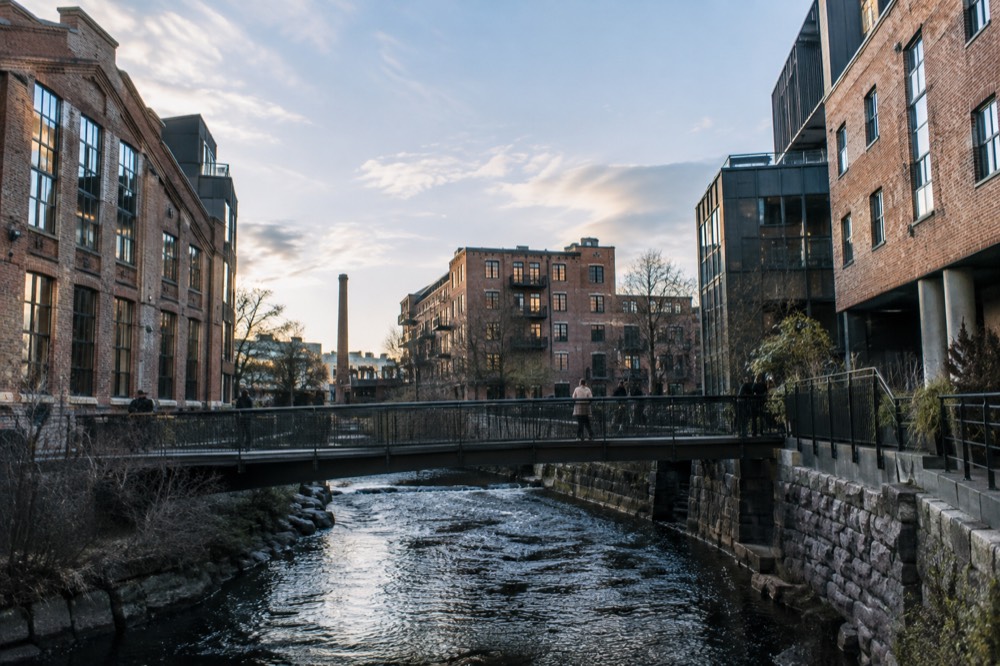
Start in the main courtyard, the one the iron works used to occupy. From there the district reads as a loop: cross the footbridge to the west bank, walk downstream with the river on your right, recross at the next bridge, and come back up the east bank to where you started. The loop takes 20 unhurried minutes and passes every building of note.
Dansens Hus deserves a specific mention because most English-language guides skip it. It is Norway's national venue for dance, and its programming ranges from contemporary companies to more experimental work; if a performance does not fit your evening, the building itself, a converted industrial hall, is worth a look from the foyer. Check the schedule on its own site rather than relying on a summary, because programs change monthly.
The street art is the free surprise. Grünerløkka as a whole is Oslo's densest area for murals and paste-ups, and the Vulkan riverbanks hold a good share of them, particularly along the underpasses and gable walls. Photographers tend to lose an hour here without noticing. If that is you, our guide to photography spots around Oslo lists the river path among the locations that reward a slow walk with a camera.
For families, the honest answer is that Vulkan is a short stop rather than a day out. Children like the river, the bridges and the ice cream at Mathallen, but the district's real appeal is adult: food, coffee, design shops and sitting by the water. Pair it with something bigger from our Oslo with kids page if you are traveling with children, and treat Vulkan as the lunch stop.
What Is Mathallen Oslo Food Hall?
Mathallen is Oslo's main food hall, opened inside a converted iron works building at Vulkan, containing a few dozen stalls and shops selling seafood, meat, cheese, baked goods, coffee, beer and takeaway dishes. It is the single biggest reason visitors come to Vulkan, and it works as a lunch stop, a grazing walk or a place to buy Norwegian picnic supplies. Prices are food-hall prices: mid range for Oslo, which is to say not cheap.
The building is the old transformer hall of the works, and the conversion kept the industrial volume: high ceilings, exposed steel, a central spine of seating. Stalls line both sides. The mix changes over time, which is why we will not list individual stall names here, but the categories are stable: a fishmonger, a butcher, cheese counters, bakeries, coffee roasters, a beer bar and a rotating set of hot-food stalls covering everything from Norwegian to Asian kitchens.
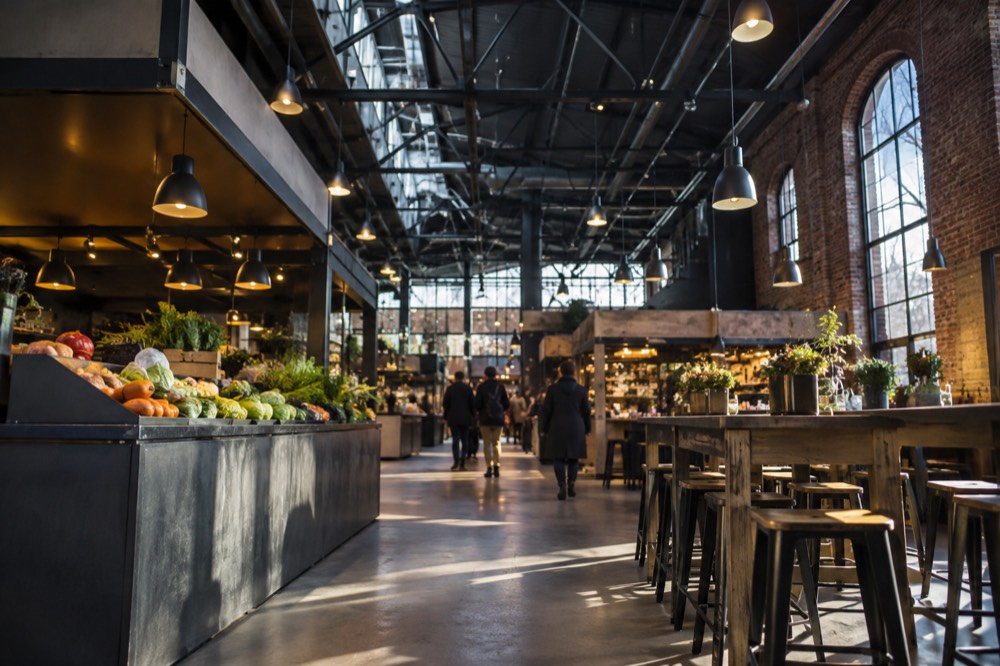
Our full page on Mathallen Oslo covers the hall in depth, stall categories and how to plan a visit around the crowds. Two practical points belong in this guide as well. First, go at off-peak hours if you can: weekend middays are the busiest, and weekday late afternoons are calmer. Second, Mathallen is one of the better places in the city to assemble a picnic, because the cheese, bread and cured-meat counters sell in the quantities you actually want for two people by the river.
For the cost picture, the honest framing comes from Statistics Norway rather than a menu: food and non-alcoholic drinks in Norway run about 33 percent above the European average, and the country ranks sixth most expensive in Europe overall. A food hall does not escape that, but it does let you control the spend, since nothing stops you buying a pastry instead of a full plate. Our Oslo on a budget guide applies the same logic across the city.
Alcohol has its own Norwegian rules, and Vulkan is a good place to learn them. Supermarkets sell beer and cider only up to 4.7 percent ABV, and only until an evening cut-off; anything stronger, plus all wine and spirits, is sold only through Vinmonopolet, the state monopoly, which closes early on Saturdays and is shut on Sundays. The beer bar inside Mathallen operates under a restaurant license, so it can pour later in the evening, but if you want a bottle of wine for the riverbank, the monopoly is the only route.
If you would rather have the neighborhood's food explained than discovered, the Grünerløkka food and culture walk spends two and a half hours in exactly this district and the streets around it, with tastings built in. It is the strongest food product in the area and pairs naturally with a Mathallen visit on a separate day. Keep the two on different days if your budget is tight, since the walk and a full food-hall lunch in one afternoon is a lot of eating.
How Does the Akerselva River Walk Connect Vulkan?
The Akerselva river path runs the length of the river, from the northern lakes down to the Oslofjord at Grønland, and Vulkan sits roughly at its midpoint. Walking downstream you pass waterfalls, old mill buildings and reach the Munch Museum at Bjørvika in about 25 minutes; walking upstream you follow the green corridor toward Sagene. The path is paved, free, lit at night and open all year.
The river is the reason Vulkan exists at all. Industry needed water power, so the works lined the banks, and when the industry left, the river became the district's best asset. The walk downstream is the one most visitors should take first, because it ends at the water and at MUNCH, which ties Vulkan into a bigger day: food hall at lunch, river walk in the afternoon, museum before it closes.
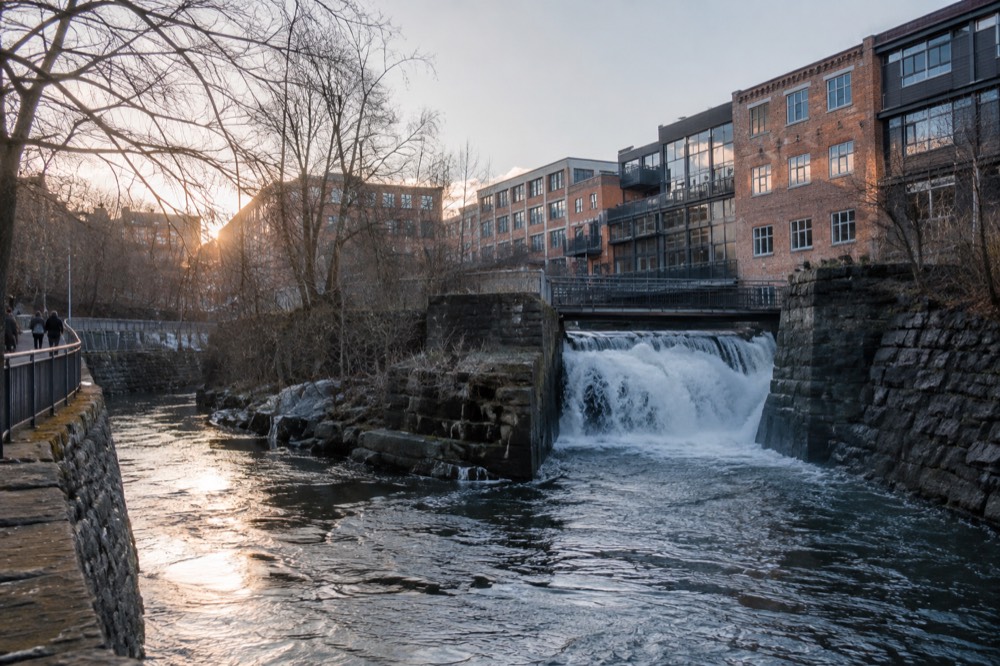
The stretch in both directions, briefly:
| Direction | Landmarks in order | Time at walking pace |
|---|---|---|
| Downstream from Vulkan | Waterfalls and old mill buildings, Grønland, MUNCH at Bjørvika | 25-35 min |
| Upstream from Vulkan | Grünerløkka's gable murals, the Sagene stretch, forested banks to the north | 30-40 min to Sagene |
| Full north end | The lakes at the river's source | half a day round trip |
The path stays busy in both directions, with runners, commuters and families sharing it, which is part of why it feels safe later in the evening than most urban riverside routes. Do not plan a trip around any single sight on it; the walk itself is the attraction, and the falls are the punctuation. On a warm evening the banks fill with people sitting against the stone walls with takeaway cups, which is as close to a local ritual as this city gets.
The upstream walk connects to our hiking near Oslo options if you want to extend it, and the downstream end lands you in Barcode and Bjørvika, the museum district. Either way, the river is the corridor that makes a car-free day in this part of the city work.
Where Should You Eat and Drink in Vulkan?
Mathallen is the main answer, but around it Vulkan offers a small cluster of its own: the microbrewery on the riverbank, restaurants in the converted works buildings, coffee roasters, and, a short walk into Grünerløkka, one of the densest concentrations of casual restaurants in Oslo. For an evening, the district holds its own; for variety, walk five minutes south to Markveien and Thorvald Meyers gate.
Inside Vulkan itself the choice is deliberately compact. The brewery pours its own beers with bar food; the restaurants range from Nordic-inspired to more informal kitchens; the coffee is taken seriously, in line with the city's reputation, which our Oslo coffee guide covers across the whole city. What Vulkan does not have is a wide spread of cheap eats: for that, the street-food scene a tram ride away is the better bet, and our street food in Oslo page maps it.
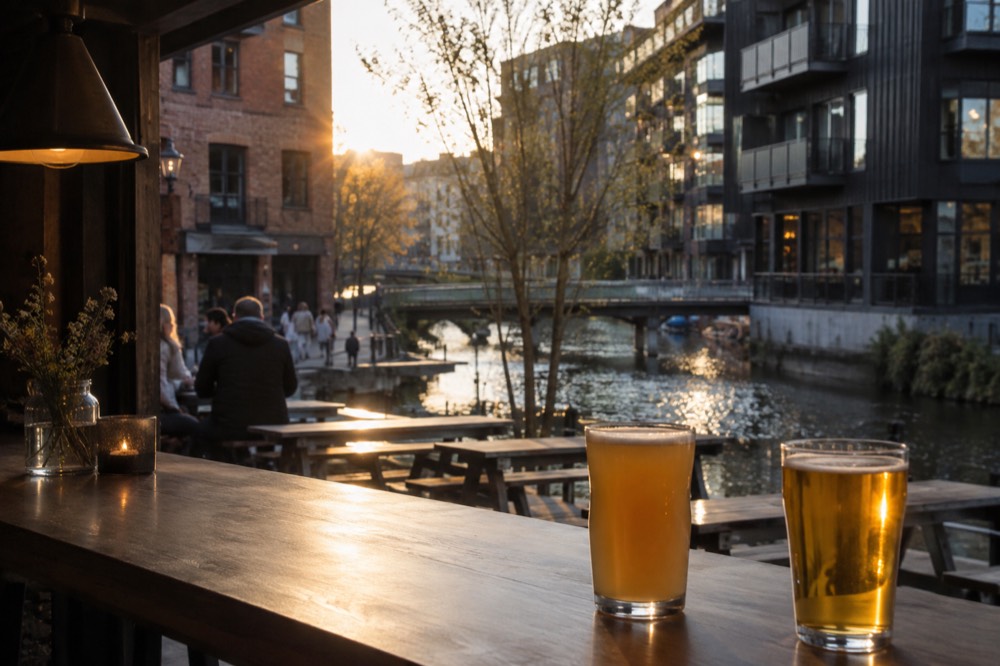
A realistic eating plan for the district:
| Meal | Where | What to expect |
|---|---|---|
| Breakfast | Coffee roaster in Vulkan | Espresso drinks, pastries, quick |
| Lunch | Mathallen stalls | Grazing across counters, mid-range prices |
| Picnic | Mathallen counters, eaten by the river | Cheese, bread, cured meat, the cheapest good option |
| Dinner | Vulkan restaurants or Grünerløkka | Book ahead on weekends |
| Evening drink | The brewery taproom | House-brewed beer, riverside terrace in summer |
Tipping, since it comes up at every Oslo table: service is included in prices, and tipping is not expected. Rounding up or leaving something for good service is common and voluntary, and card terminals may prompt, but nobody will think twice about an empty tip line. Our tipping in Oslo page states the same norm in more detail.
If food is the reason you are in this part of the city at all, the guided option is worth weighing against going alone. The city-center Norwegian food walk covers hidden-gem eateries across the core, while the Grünerløkka walk stays in this neighborhood; both run around three hours and two and a half hours respectively, with tastings included.
A guided walk also solves the Vinmonopolet problem for the evening, since a licensed venue can serve what the supermarkets cannot. If you skip the tour, plan the drinking part of your Vulkan evening around the taproom or a restaurant rather than a shop. Either way, book the food walk for the start of your trip, not the end, so the neighborhood knowledge is still useful to you.
Where Should You Stay Near Vulkan?
Vulkan itself has two hotels on the peninsula, both mid-range and both aimed at design-conscious travelers, and the surrounding streets of Grünerløkka add more budget and boutique options than almost anywhere else in Oslo. Staying here puts you a 15 minute riverside walk from the center, inside the city's best food and nightlife district, and on the metro and tram network. Expect Grünerløkka prices, which sit below the waterfront hotels of Aker Brygge but above the far suburbs.
The trade-off is noise and weekend energy. Grünerløkka is where Oslo goes out, so Friday and Saturday nights are lively well past midnight on the main streets; the Vulkan peninsula itself is calmer, set off the party streets across the water. Ask for a room facing the river if the choice exists.
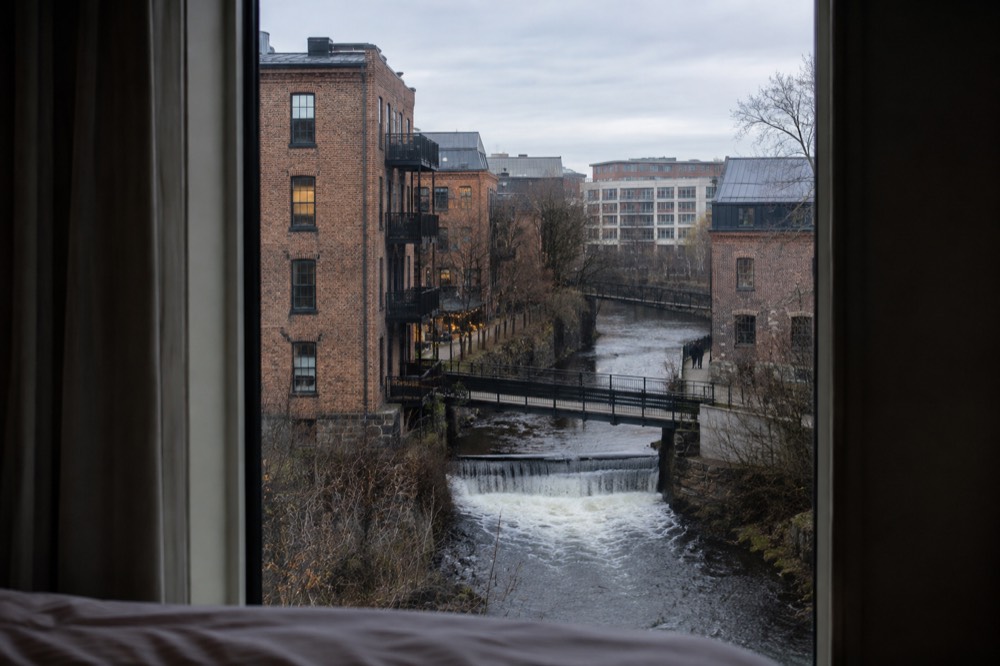
How the nearby areas compare:
| Area | Character | Walk to Vulkan | Best for |
|---|---|---|---|
| Vulkan peninsula itself | Design hotels, quiet by night | on the spot | Food-first stays |
| Grünerløkka | Cafes, bars, boutiques | 5 min | Nightlife and atmosphere |
| Oslo Sentrum | Central, practical | 15 min | First-time visitors |
| Tøyen | Cheaper, museums, greener | 20 min | Budget stays |
| Aker Brygge | Waterfront, pricier | 30 min | Fjord views |
Our full where to stay in Oslo guide covers every district with the trade-offs spelled out, and it treats Grünerløkka and Vulkan as one decision. The short version: pick this side of the river if food and atmosphere outrank fjord views on your list, and pick the center if this is a one-night stop and you want everything walkable.
One way to use a stay here well is to book an orientation walk for your first morning. The budget central walking tour covers the core in about two hours, costs less than a Mathallen lunch, and leaves the afternoon open for the river path and the food hall in whatever order suits the weather.
That first-morning pattern matters more in winter than in summer, because daylight is the scarce resource from November through January. A guided walk that finishes by early afternoon still leaves you the whole usable day for Vulkan, whereas a late start burns it. In summer the order hardly matters, since the light lasts until nearly 23:00 in June.
When Is the Best Time to Visit Vulkan?
Vulkan is at its best from May through September, when the riverbank terraces are open, Mathallen's courtyard fills up and the river path is at its greenest. July and August are the warmest months, and midsummer daylight stretches past 22:00, with the sun setting at 22:43 on 21 June. Winter works too, since the food hall and brewery are indoors, but December days give you under six hours of daylight, from sunrise at 09:18 to sunset at 15:11.
The seasonal shape of the district is real. Summer Vulkan is an outdoor place: the footbridge, the riverbank steps and the courtyard tables all become the attraction, and the evening light lasts until almost 23:00 in June. Winter Vulkan contracts into its buildings, which is fine, because its buildings are the reason it exists. The brewery and the food hall are genuinely pleasant in a snowfall, and the river partially freezes in cold spells, which is its own sight.
One planning fact that inverts expectations: August, not November, is Oslo's wettest month on the official 1991 to 2020 normals, at 103 mm. Summer visitors should pack for rain as seriously as winter ones do. And the daylight swing is extreme, from 5 hours 53 minutes on the winter solstice to 18 hours 50 minutes on the summer one, which matters more for this riverside district than for anywhere indoors. Our Oslo weather by month and daylight hours pages carry the full tables.
Whenever you come, the free walking tour is a strong opener for the whole city, and it runs year-round: about two hours, tip based, and it finishes close enough to the river that you can walk yourself up to Vulkan afterward along the water.
The free walk also fits the tightest budgets on this page, since the only cost is the tip and the walk ends within reach of everything Vulkan offers. Pair it with a Mathallen picnic and the river loop and you have a genuinely good Vulkan day for the price of groceries. It is the combination we would point a first-time visitor toward before anything paid.
If you are still assembling the wider trip, the three products above cover the three ways most people experience this district: a cheap guided orientation, a food-focused deep dive and a free walk that leaves the budget for the food hall. Pick one, not all three, and spend the saved time on the riverbank.
Common Questions About Vulkan in Oslo
What is Vulkan Oslo known for?
Vulkan is known for Mathallen food hall, Dansens Hus, its microbrewery and its converted industrial architecture on a bend of the Akerselva river. It is the food and design anchor of northern Grünerløkka.
How far is Vulkan from Oslo city center?
About a 10 to 15 minute walk from Oslo S, and the walking route follows the Akerselva river for most of the way. By tram or metro it is a few minutes from the center.
Is Vulkan worth visiting?
Yes, as part of a Grünerløkka or river-walk itinerary rather than as a standalone destination. Mathallen alone justifies the trip if you care about food, and the riverbanks are among the nicest free walking terrain in the city.
What is the best way to get to Vulkan?
Walk along the river from the center, or take a tram to Olaf Ryes plass or the metro to Grünerløkka station. All of it is Ruter zone 1, so any ordinary central ticket covers the ride.
Is Mathallen open on Sundays?
Mathallen's stalls generally operate through the weekend, but individual stall hours vary and some close early on Sundays or Mondays. Check the hall's own site for current hours before you go, and remember that Vinmonopolet, for wine and spirits, is closed on Sundays entirely.
Can you walk from Vulkan to the Munch Museum?
Yes. Follow the river path downstream for about 25 minutes and you reach Bjørvika, where MUNCH sits on the waterfront. The walk passes waterfalls and old mill buildings and is one of the nicer short walks in the city.
Whether Vulkan ends up as your lunch stop, your hotel base or just a stretch of the river walk, it earns its place on the itinerary. For the wider picture of the city around it, start with our things to do in Oslo overview, or let Oslo Travel Guide's neighborhood pages map the rest of the trip.