Oslo Sentrum: What to See, Eat and Skip in the City Center
Sentrum is the grid of blocks between the Royal Palace and the Oslofjord waterfront, and almost every first visit to Oslo happens inside it. Here is what the area actually contains, what it costs, and where its edges are.
Short answer
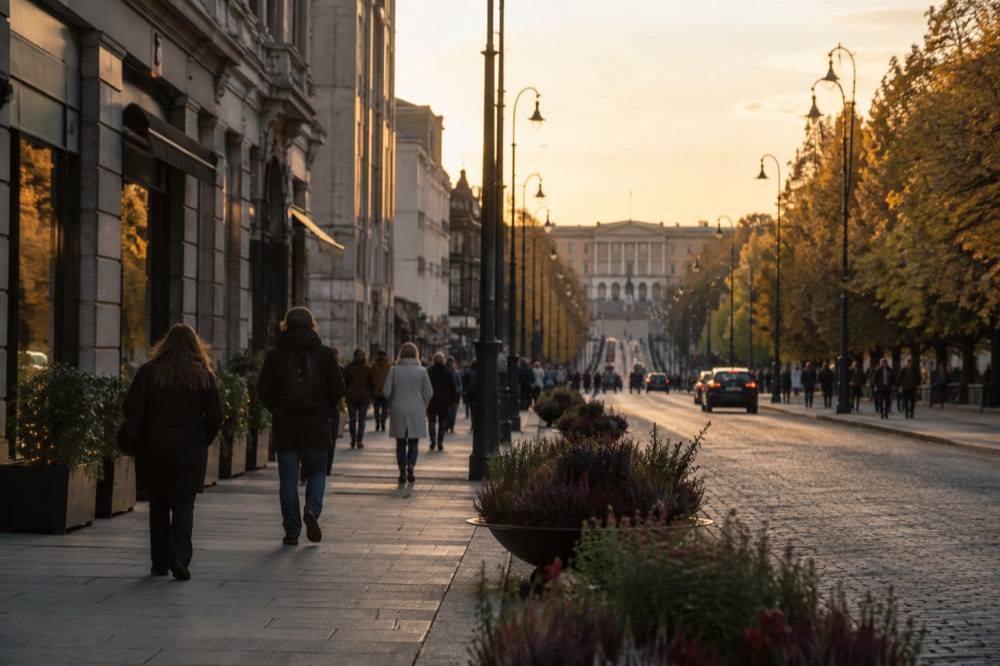
Oslo Sentrum is the compact city center stretching from the Royal Palace at one end of Karl Johans gate down to the fjord at Aker Brygge. Most of it walks end to end in 20 to 30 minutes. It holds the National Museum, the Opera House waterfront, City Hall, the Parliament and the main shopping streets, with a 24-hour Oslo Pass at 580 NOK covering transport and over 30 museums.
Sentrum is not a large place. The whole district fits between the Royal Palace gardens at the top of the hill and the water at Aker Brygge at the bottom, a walk of roughly 20 minutes from end to end, and nearly everything a first-time visitor names when they name Oslo sits inside that rectangle or on its edge. The parliament, the National Museum, City Hall, the Opera House roof, the main shopping streets and the pier where the fjord boats leave are all here.
That density is the area's whole argument. It is also its limitation, and this guide is honest about both. What follows is what Sentrum contains, what it costs, how it connects to everywhere else, and where its edges sit, because knowing the edges is what stops a visitor spending three days in six blocks and calling it Oslo.
What Exactly Is Oslo Sentrum?
Sentrum is Oslo's central business and visitor district, the roughly rectangular area bounded by the Royal Palace park at the west, Akershus Fortress at the south-east, the Oslofjord waterfront at the south and the Grünerløkka neighborhoods across the river to the north-east. Locals use it loosely, but it always means the blocks around Karl Johans gate, Stortinget and the City Hall waterfront. Practically every hotel named "Central" or "City" in Oslo is inside it or one block outside it.
The spine of the whole area is Karl Johans gate, the street that runs from Oslo Central Station up the hill to the Royal Palace. It is the city's ceremonial street, and it carries the Parliament building, the National Theatre, the university's historic facade and the palace itself along a single straight line. Karl Johans gate deserves its own deep dive, but the short version for area planning is that everything north and south of it is Sentrum, and the street works as a compass needle: palace at one end, station at the other, and you are never lost while you can see either.
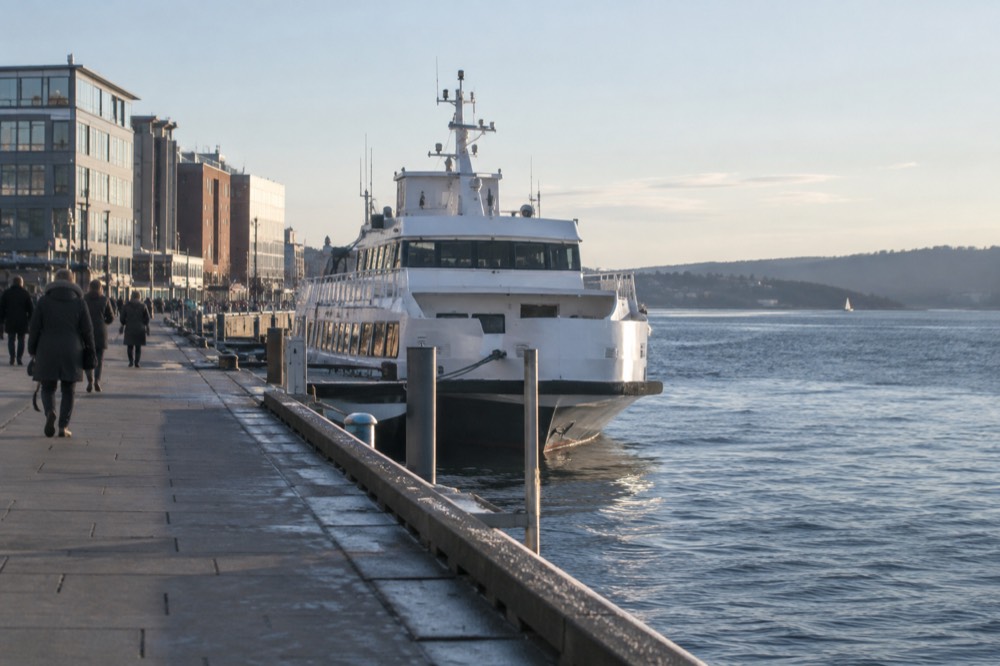
The second landmark that defines the area is water. The southern edge of Sentrum is the Oslofjord itself, and the waterfront has been rebuilt over the past two decades into a continuous promenade from Aker Brygge, the former shipyard turned restaurant district, past the City Hall pier and around to the Opera House at Bjørvika. Aker Brygge and the Barcode district are both technically their own little zones now, but on foot they read as the eastern and western halves of one waterfront.
For orientation, the numbers that matter are small ones. The palace-to-station walk is about 15 minutes. The station-to-Opera House walk is under 10. Aker Brygge to the Opera House along the water is about 25 minutes at a visitor's pace. Nothing in Sentrum requires transit, which is the single most useful fact about it.
What Are the Main Sights in Sentrum?
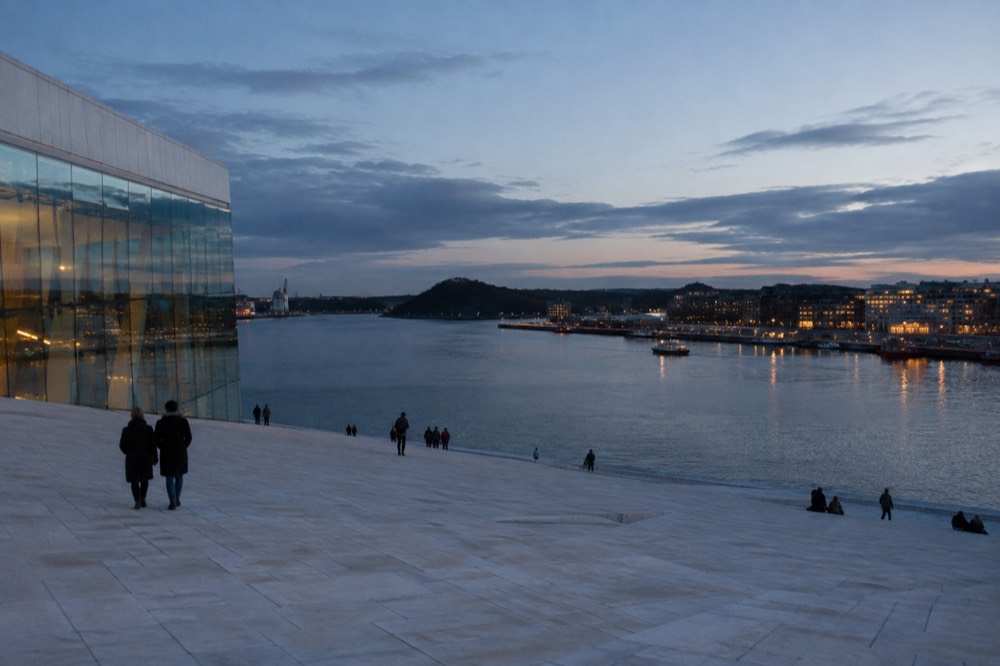
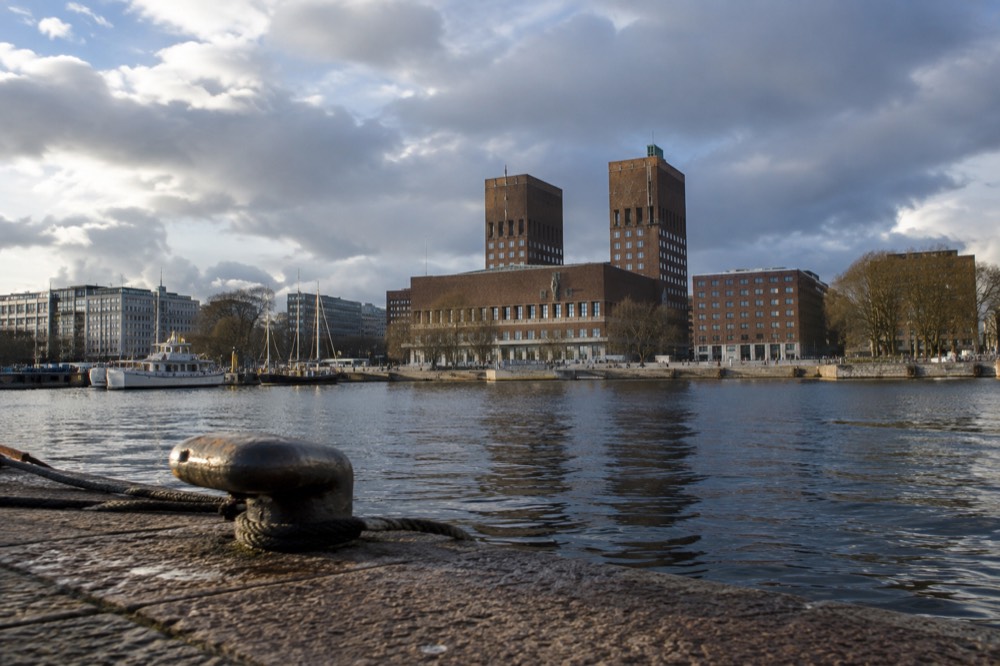
The headline sights inside Sentrum are the Royal Palace and its grounds, the Parliament building on Karl Johans gate, Oslo City Hall, the National Museum with The Scream, the Opera House and its walkable roof, and Akershus Fortress at the south-east corner. All of them are free to see from the outside, and several are free inside too: the palace park, the fortress grounds and the Opera House roof cost nothing at all.
The sights sort into two groups: the free exteriors and the paid interiors. The free group is genuinely generous. The Royal Palace park is open to the public year-round, the changing of the guard happens daily on the palace forecourt, and the Opera House roof is a public marble slope you simply walk onto, no ticket, no queue. Akershus Fortress grounds are a public park with medieval walls and fjord views, and Oslo City Hall opens its murals and main hall to visitors outside ceremony days.
The paid group is dominated by the National Museum, which holds Edvard Munch's The Scream among its collection and sits right on the waterfront at the bottom of Karl Johans gate. The Nobel Peace Center is a few minutes further west at Aker Brygge. For the paid sights the arithmetic changes with the Oslo Pass, which is worth doing on numbers rather than instinct, and the pass question has its own full breakdown.
Here is the sight-by-sight picture for planning:
| Sight | Location in Sentrum | Entry | Time to allow |
|---|---|---|---|
| Royal Palace and park | West end of Karl Johans gate | Park free; palace tours in summer | 20-30 min |
| Parliament (Stortinget) | Mid Karl Johans gate | Exterior any time; guided tours on set days | 10 min exterior |
| Oslo City Hall | Waterfront by Fridtjof Nansens plass | Free on open days | 30-45 min |
| National Museum | Bottom of Karl Johans gate, waterfront | Paid; Oslo Pass covers | 2 hours |
| Nobel Peace Center | Aker Brygge | 180 NOK adult; under-18s free | A brief visit |
| Opera House roof | Bjørvika, east end | Free, always open | 20-30 min |
| Akershus Fortress | South-east corner | Grounds free; museums paid | 1-2 hours |
One warning that belongs in every Sentrum paragraph: the Museum of the Viking Age on Bygdøy is closed and will reopen in 2027, so no itinerary that promises Viking ships in 2026 is honest. The closure explained properly covers what still exists, and the short answer is Viking-age objects at the Historical Museum plus Viking Planet in the city center as the bookable substitute.
If your day in Sentrum is a single day, the strongest structure is palace-to-water: morning on Karl Johans gate and the palace park, the National Museum after lunch, then the waterfront promenade, City Hall, and the Opera House roof for late-afternoon light over the fjord. That route is the backbone of our one day in Oslo itinerary, and it works because Sentrum's geography runs downhill, so you finish at the water rather than climbing back up it.
Where Should You Eat and Drink in Sentrum?
Sentrum's food runs from cheap bakery and street-food options on and around Karl Johans gate up to some of the most expensive restaurant seats in Norway at Aker Brygge, with the mid-range concentrated around the streets behind the National Theatre. Norway's prices run 33 percent above the European average for food and more than double for alcohol, so the spread inside one district is enormous. The practical answer is bakery and cafeteria lunches, and one proper waterfront dinner rather than three.
The honest cost framing comes from Statistics Norway's 2025 price-level survey: Norwegian household prices sit 28.6 percent above the EU average overall, food and non-alcoholic drink 33 percent above, and alcohol and tobacco more than double the European average. That is why the restaurant terraces at Aker Brygge feel like a different country's prices from the bakery two streets inland, and why the budget eating guide and the street food guide exist as separate pages.
For a first visit, three eating situations cover Sentrum. The first is the bakery-and-coffee layer, which the city does seriously and which the Oslo coffee guide maps in detail. The second is the casual dinner layer around the streets between Karl Johans gate and the water, where taco, burger and pizza places keep prices nearer the national norm. The third is the waterfront layer at Aker Brygge and Tjuvholmen, where you are paying partly for the fjord view and should know that going in.
| Eating layer in Sentrum | Typical spots | What to expect |
|---|---|---|
| Bakery and coffee | Karl Johans gate side streets, Stortorvet | Cheapest real meal; coffee culture is strong |
| Casual dinner | Streets behind the National Theatre | Mid-range, menus in English everywhere |
| Waterfront restaurants | Aker Brygge, Tjuvholmen | Highest prices in the district, fjord-side tables |
| Food halls and markets | Vulkan area, just across the river | Mathallen Oslo and the market stalls around it |
Alcohol deserves one paragraph of straight talk. Wine and spirits are sold only through Vinmonopolet, the state monopoly, which closes every Sunday and all public holidays and closes early on Saturdays, with hours varying by store. Supermarkets sell beer and cider only up to 4.7 percent ABV, with a legally mandated evening cut-off on sales. A restaurant beer is where the "more than double the European average" figure becomes personal, and the price of beer in Oslo page exists because it is the single most-asked cost question about the city.
The one eating experience that justifies its price is a guided food walk, because it converts the confusing parts, the monopoly rules, the bakery culture, the immigrant food shops, into something you understand for the rest of the trip. The strongest of these starts across the river in Grünerløkka, the neighborhood that most Sentrum visitors can see from the bridge but never actually cross. The full index of guides sits on Oslo Travel Guide.
The Grünerløkka food and culture walk runs about two and a half hours through the district's market halls, bakeries and food shops, and it is the best-reviewed food tour in that part of the city. It pairs naturally with a Sentrum base: you walk ten minutes east, eat your way through the afternoon, and walk back.
The same operator logic applies to the city-centre food walk if the river crossing does not fit your schedule, but the Grünerløkka version is the one that shows you a neighborhood rather than a shopping street, and that is usually the better trade for a first visit.
Which Museums Can You Walk to from Sentrum?
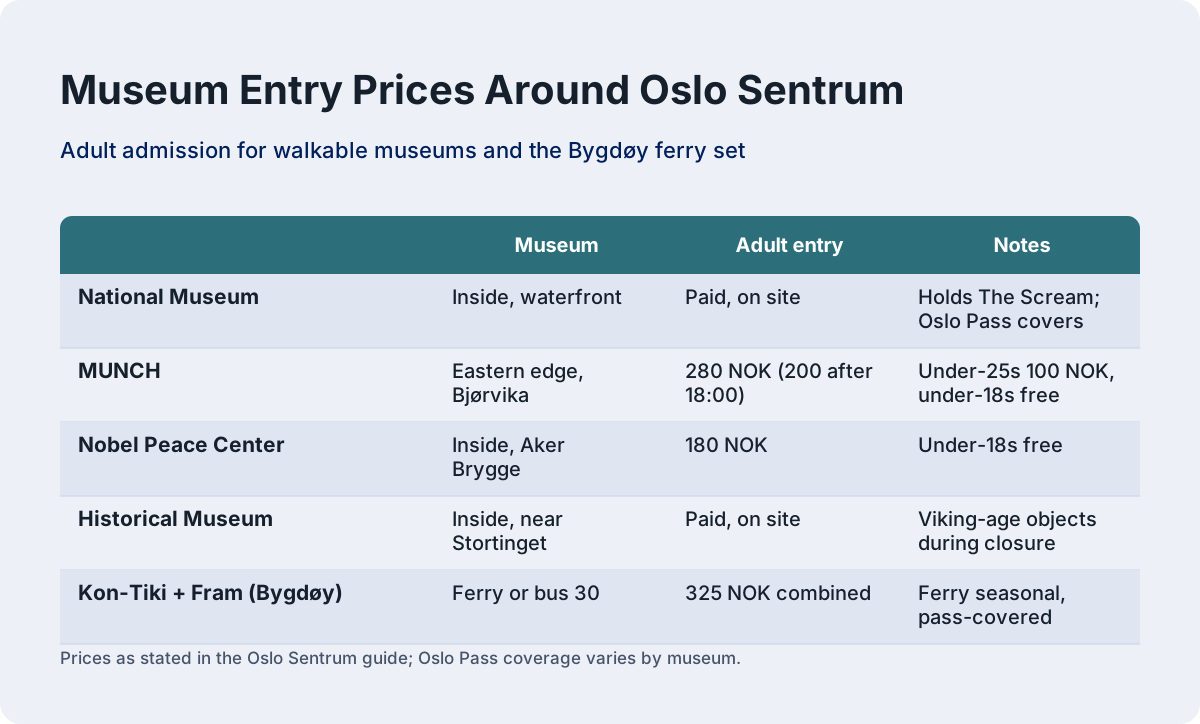
From anywhere in Sentrum you can walk to the National Museum, the Nobel Peace Center, the Historical Museum, the National Theatre's public spaces and the Akershus Fortress museums in under 25 minutes. The Bygdøy peninsula museums, Kon-Tiki, Fram and the cultural history museum, are a seasonal ferry or a bus 30 ride away. MUNCH at Bjørvika sits at the area's eastern edge, and costs 280 NOK adult, 200 NOK after 18:00, with under-25s at 100 NOK and under-18s free.
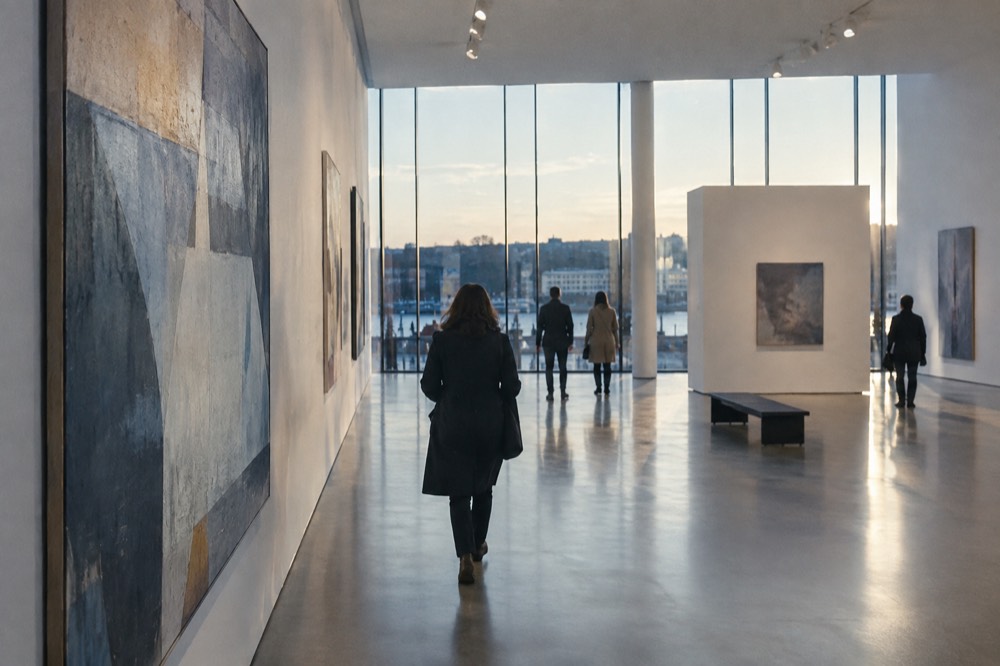
The walkable set is the reason a museum day in Sentrum needs no transit at all. The National Museum holds The Scream and the rest of the national collection. The Nobel Peace Center is at Aker Brygge, adult entry 180 NOK with under-18s free. The Historical Museum sits just north of the parliament end of Karl Johans gate and currently carries Viking-age objects while the Bygdøy building is closed. MUNCH, the museum that now brands itself with the single word, is at Bjørvika by the Opera House: 280 NOK adult, 200 NOK for entry after 18:00, 100 NOK for under-25s, and free for 17 and under, open every day of the year except 1 May.
The ferry-dependent set is Bygdøy, and this is where Sentrum's geography pays off, because the museum ferry leaves from Rådhusbrygge 3, the City Hall pier, which is inside the district. The ferry runs seasonally, in 2026 from 14 March to 4 October, roughly every 20 minutes, and the Oslo Pass covers it while ordinary Ruter tickets do not. Out of season, bus 30 runs year-round to the same museums on an ordinary ticket. The Bygdøy guide covers the peninsula in full, and the Kon-Tiki and Fram pages cover the two museums most visitors pair, with a combined ticket at 325 NOK adult.
| Museum | Distance from Sentrum core | Adult entry | Notes |
|---|---|---|---|
| National Museum | Inside, waterfront | Paid, on site | Holds The Scream; Oslo Pass covers |
| MUNCH | Eastern edge, Bjørvika | 280 NOK (200 after 18:00) | Under-25s 100 NOK, under-18s free |
| Nobel Peace Center | Inside, Aker Brygge | 180 NOK | Under-18s free |
| Historical Museum | Inside, near Stortinget | Paid, on site | Viking-age objects while Bygdøy rebuilds |
| Kon-Tiki + Fram (Bygdøy) | Ferry or bus 30 | 325 NOK combined | Ferry seasonal, pass-covered |
For a fuller museum strategy across the whole city, including the rainy-day options, the Oslo museums overview and the rainy day in Oslo pages do that job, and Sentrum is where most of those plans start because most of the museums are reachable from here on foot or one ferry.
What Is Shopping in Sentrum Actually Like?
Sentrum holds Oslo's densest shopping: the pedestrian stretch of Karl Johans gate with its chain stores and souvenir shops, the upscale streets around Egertorget and Stortorvet, and the department stores clustered near Oslo Central Station. For design, homeware and the things Norway is actually good at, the interesting shops sit a river-crossing away in Grünerløkka or in the Grünerløkka area guide's independent stores. Sentrum is where you buy practical things and souvenirs, not where you find the interesting ones.
The shopping geography is honest about itself. Karl Johans gate's pedestrian middle is chain retail plus souvenir shops, and it is at its best during the 17 May parade and the Christmas market season, when the street itself becomes the attraction. The Oslo Christmas market and 17 May in Oslo pages cover those two windows, which are genuinely the times the street is worth a special trip. The rest of the year it is a useful street rather than a destination one. The full index of guides sits on Oslo Travel Guide.
For souvenirs with some integrity, the Oslo souvenirs guide sorts the real from the generic, and the Oslo shopping overview covers the whole city including the malls at the station end. The one Sentrum-specific shopping note worth keeping: Norwegian design shops, the wool, the ceramics, the homeware that people actually come home with, are concentrated in Grünerløkka and Vulkan rather than Sentrum proper, so budget a half-day across the river if design is on your list.
How Do You Get Around from Sentrum?
Sentrum is the transport hub of the entire region: Oslo Central Station and the Nationaltheatret station sit at its two ends, the T-bane metro, trams, buses, the airport trains and the fjord ferries all converge here, and central Oslo plus the whole metro network sits inside Ruter zone 1. A single zone 1 ticket is valid for 60 minutes from activation, and the Oslo Pass covers all of it plus the airport Vy trains. You never need a car in Sentrum.
The two rail stations define the area's connectivity. Oslo Central Station, which locals call Oslo S, anchors the east end and carries the long-distance trains, the airport trains and the east-west metro lines; the station guide explains the building itself. Nationaltheatret sits under the street of the same name near the palace end and carries the same lines plus the western metro. Between them and around them run the trams, which are the pleasant way to move, and the buses, which are the practical one.
The ticketing is the part visitors get wrong, and it is simple once stated plainly. Everything public inside the city is Ruter, bought cheapest in the app, with a single zone 1 ticket valid 60 minutes from activation and 30 extra minutes for each additional zone. The airport at Gardermoen is zone 4N, and the Vy trains there ride on an ordinary multi-zone Ruter ticket or on the Oslo Pass; Flytoget, at 268 NOK adult one-way, is a separate company and is not covered by either. That single distinction is the highest-value transport fact in the city, and the Flytoget vs Vy and Ruter tickets pages carry it in full. Parking in the center is the priciest in the city, which is one more reason the car stays at home.
| From Sentrum to | Best option | Rough time | Ticket |
|---|---|---|---|
| Anywhere in central Oslo | Walk | 5-25 min | None |
| Bygdøy museums | Ferry from Rådhusbrygge 3 (seasonal) or bus 30 | 10-15 min | Pass covers ferry; Ruter covers bus |
| Oslofjord islands | B1/B2 ferries from Aker Brygge | 10-25 min | Ordinary Ruter ticket |
| Oslo Airport (OSL) | Vy train from Oslo S | ~23 min | Ruter multi-zone or Oslo Pass |
| Holmenkollen / Nordmarka | T-bane line 1 from any central station | 15-35 min | Zone 1 |
The island ferries deserve their own sentence because they are the cheapest fjord experience in the city: ordinary Ruter tickets, lines B1 and B2 from Aker Brygge, out to Hovedøya's ruined abbey and the swimming beaches of Langøyene. The Oslo islands and Oslo ferries pages map them, and the getting around Oslo overview ties the whole system together.
If you would rather have the fjord explained while you ride it, the sightseeing boats leave from piers inside or beside Sentrum itself. The silent electric fjord cruise with audio commentary is the city's single best-reviewed activity, running 90 minutes from a central pier, and the traditional wooden sailing ship covers a similar route in two hours with a completely different feel, sails, deck and engine-off quiet. Both are decisions the Oslofjord cruise guide compares properly.
Where Does Sentrum End, and What Lies Just Outside It?
Sentrum's practical edges are the river Akerselva to the north-east, the fortress and Bjørvika to the east, and the palace park and Frogner to the west. Cross any of them and you change character fast: Grünerløkka's cafes and street art across the river, the Opera House and MUNCH district at Bjørvika, and the residential, embassy-lined calm of Frogner uphill from the palace. Every one of these border neighborhoods is a 10 to 20 minute walk from the middle of Sentrum.
The river crossing is the one most worth making. Grünerløkka, the old workers' district turned into the city's most self-consciously stylish neighborhood, starts the moment you cross the Akerselva at Nybrua or Grünerbrua, and the contrast with Sentrum's chain-store polish is the point. The Grünerløkka area guide covers it street by street, and the Vulkan and Mathallen Oslo pages cover the food market cluster at its river end, which is the closest thing Sentrum-adjacent Oslo has to a destination food hall.
West of the palace the ground rises into Frogner, the calm, expensive district whose public face is Vigeland Park, the free, always-open sculpture park that is simultaneously one of Oslo's most visited sights and one of its genuinely free ones. The Frogner area guide covers the neighborhood around it. East along the water, Bjørvika's Opera House, MUNCH and the Barcode towers read as a separate waterfront district, covered by the Barcode page.
For the full picture of how the city's districts differ and which one suits which trip, the Oslo neighborhoods overview is the map-level page, and the where to stay in Oslo guide answers the practical version of the same question.
Is Sentrum the Right Place to Base Your Trip?
Sentrum is the right base for first-time visitors, anyone on a one or two day trip, cruise passengers with a single port day, and travelers who want to walk everywhere. It is the wrong base for anyone chasing nightlife, local food culture or lower prices, which live across the river. Hotels here cost more per night than anywhere else in the city, and that premium buys walkability, not atmosphere.
The honest trade is straightforward. Staying in Sentrum means every headline sight, both rail stations, the airport trains and the fjord boats are within a 25 minute walk, and your daily transport budget can be close to zero. It also means chain restaurants, tourist pricing and quiet streets after the shops close, because Sentrum is a business district that empties in the evening. The Oslo at night and best bars in Oslo pages make clear how much of the city's evening life sits elsewhere.
The alternatives each solve one problem. Grünerløkka solves atmosphere and food. Frogner solves calm and proximity to Vigeland Park. Majorstuen solves transit convenience without business-district prices. The where to stay in Oslo guide compares all of them properly, and the weekend in Oslo and how many days in Oslo pages frame the length-of-stay question that usually sits behind the where-to-stay one.
For cruise passengers the answer is even simpler: you dock at the edge of Sentrum, and the Oslo cruise port day itinerary is designed around exactly that geography. For budget travelers the arithmetic points elsewhere, and the Oslo on a budget and free things to do in Oslo pages list how much of Sentrum itself, the palace park, the fortress grounds, the Opera House roof, the waterfront, costs nothing at all.
If you want the center explained rather than just walked, a guided introduction is worth the first morning of a trip. The central Oslo walking tour with a local guide is the cheapest credible guided walk in the city at roughly two hours from the middle of Sentrum, and it covers the parliament, the fortress exterior and the waterfront stories that plaques do not tell you. The free, tip-based highlights walk is the larger budget alternative with the same starting geography.
By the second or third day, most visitors are ready to trade some of Sentrum's convenience for the fjord itself, and the two classic moves are the sightseeing boats from the central piers and the island ferries from Aker Brygge. Between the electric and wooden-ship cruises, the food walks across the river and the free walking tours of the center, the guided options that start in or beside Sentrum cover most tastes and budgets, and the picks below are the three that fit this area most naturally.
Common Questions About Oslo Sentrum
Is Oslo Sentrum walkable?
Completely. The district runs about 20 minutes end to end, the palace-to-station spine is roughly 15 minutes, and every headline sight inside it is reachable on foot. The only Sentrum-area attractions that need transport are the Bygdøy museums, reached by a seasonal ferry or bus 30, and the Oslofjord islands, reached by ordinary Ruter ferries from Aker Brygge.
Is Sentrum the same as downtown Oslo?
Yes, in everyday usage. Sentrum literally means center, and locals use it for the blocks around Karl Johans gate, the Parliament and the City Hall waterfront. Official district borders are slightly narrower and exclude Bjørvika and Aker Brygge, but for a visitor, downtown, the city center and Sentrum all point at the same rectangle of streets.
How many days do you need for Sentrum?
Two full days covers the area properly: one for Karl Johans gate, the palace park, the National Museum and the waterfront, and one for the fortress, City Hall, the Opera House and a fjord boat. A third day is better spent crossing the river to Grünerløkka or ferrying to the islands than staying inside Sentrum itself.
Is it expensive to stay in Sentrum?
It is the most expensive hotel district in the city, and Norway overall runs 28.6 percent above the EU price average with food 33 percent above. The offset is transport: with both rail stations, the airport trains and the ferries inside or beside the district, a Sentrum base can push your daily transport cost close to zero, especially with a 580 NOK 24-hour Oslo Pass covering museums too.
What is free in Oslo Sentrum?
More than most capital centers: the Royal Palace park and the changing of the guard, the Akershus Fortress grounds, the Opera House roof, the waterfront promenade from Aker Brygge to Bjørvika, and City Hall on its open days all cost nothing. The National Museum, MUNCH and the Nobel Peace Center are the paid interiors, and the Oslo Pass covers the major ones.
Can you see the fjord from Sentrum?
Yes, the Oslofjord is the district's southern edge. The waterfront promenade runs the full length of it, the museum ferry and sightseeing boats leave from piers inside the area, and the island ferries to Hovedøya and Langøyene depart from Aker Brygge on ordinary Ruter tickets. For a deeper fjord itinerary, the Oslofjord cruise guide on this site covers every boat option.