Nobel Peace Center Oslo: Tickets, Exhibits, and How to Plan Your Visit
The Nobel Peace Center sits on the City Hall square facing the Oslofjord, and it is the one Oslo museum where the subject is an idea rather than a collection. Here is what a ticket costs, what is inside, and how to fit it into a day.
Short answer
The Nobel Peace Center costs 180 NOK for adults, 100 NOK for students, and is free for children 17 and under. It faces Oslo City Hall on the waterfront, a short walk from the National Theatre tram and metro stops. Allow 60 to 90 minutes, and check the venue's own site for current hours before you go.
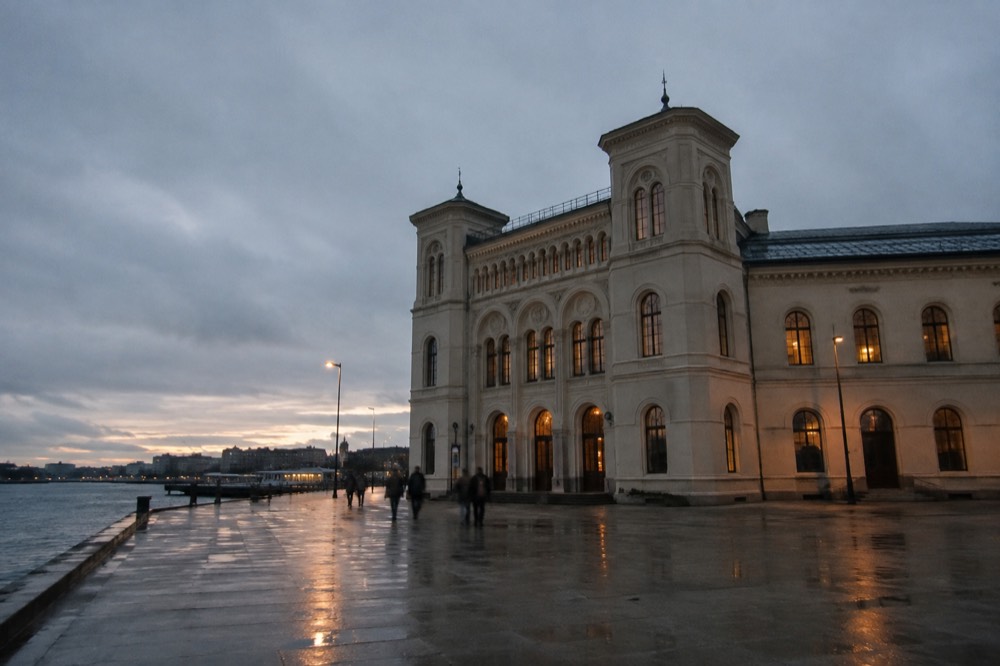
The Nobel Peace Center is the face the Nobel Peace Prize shows the public. The prize itself is awarded across the square in Oslo City Hall every 10 December, but the Center is where the story is told every other day of the year: the laureates, the conflicts they confronted, and the arguments about what peace actually requires. It occupies an old railway station building, the former Oslo Vestbanestasjon, and its architects kept the stone shell while gutting the interior for exhibition space.
It is a small museum with an outsized subject, and it divides visitors cleanly. Some come out having had one of the more thought-provoking 90 minutes in Oslo. Others find it thin compared with the city's object-heavy museums. Which camp you fall into depends almost entirely on knowing what you are buying a ticket for, so this guide leads with the practical facts: the price, the layout, the time it takes, and the honest pairing advice for the rest of your day.
What Is the Nobel Peace Center, and What Makes It Different from Oslo's Other Museums?
The Nobel Peace Center is an exhibition and visitor center for the Nobel Peace Prize, not the building where the prize is awarded: the ceremony happens across the square in Oslo City Hall. It holds no permanent collection of artifacts in the way the Fram or Kon-Tiki museums do. Instead it runs a rotating program of exhibitions about the laureates, the prize's history, and current conflicts, so two visits a year apart can feel like two different museums. That makes it the most contemporary-minded museum in the city and also the least predictable.
The distinction matters because most of Oslo's museum muscle is elsewhere. The Fram Museum and the Kon-Tiki Museum on the Bygdøy peninsula are object museums, built around ships you can walk aboard. The National Museum is an art museum anchored by The Scream. The Peace Center is none of these things. Its raw material is photography, film, testimony, and interactive installations, and its subject matter is deliberately uncomfortable in places. The Nobel Committee awards the prize to people who are usually in the middle of a live conflict, and the exhibitions do not soften that.
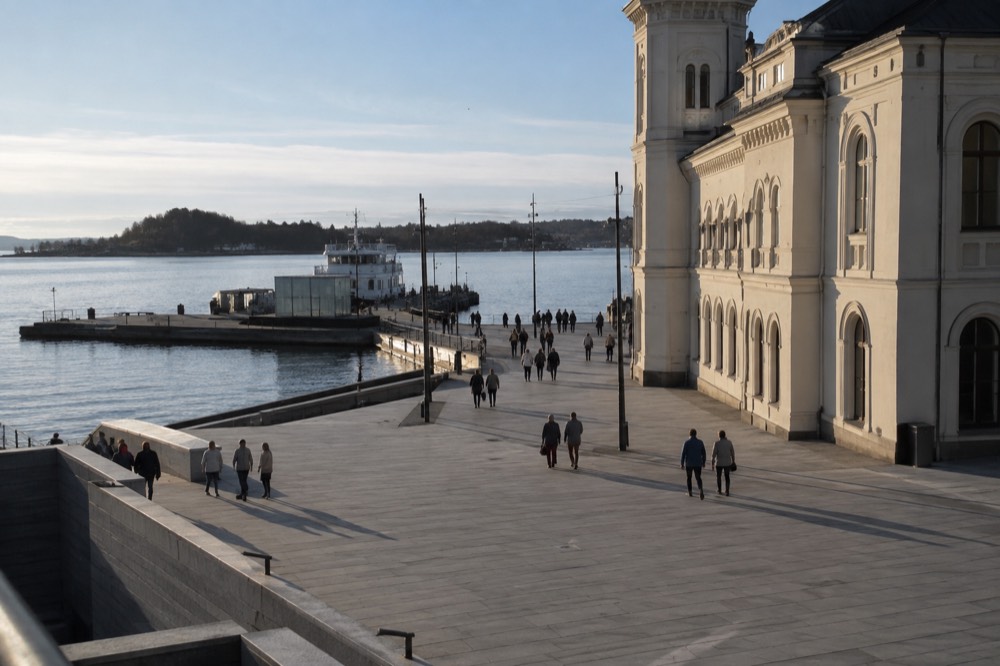
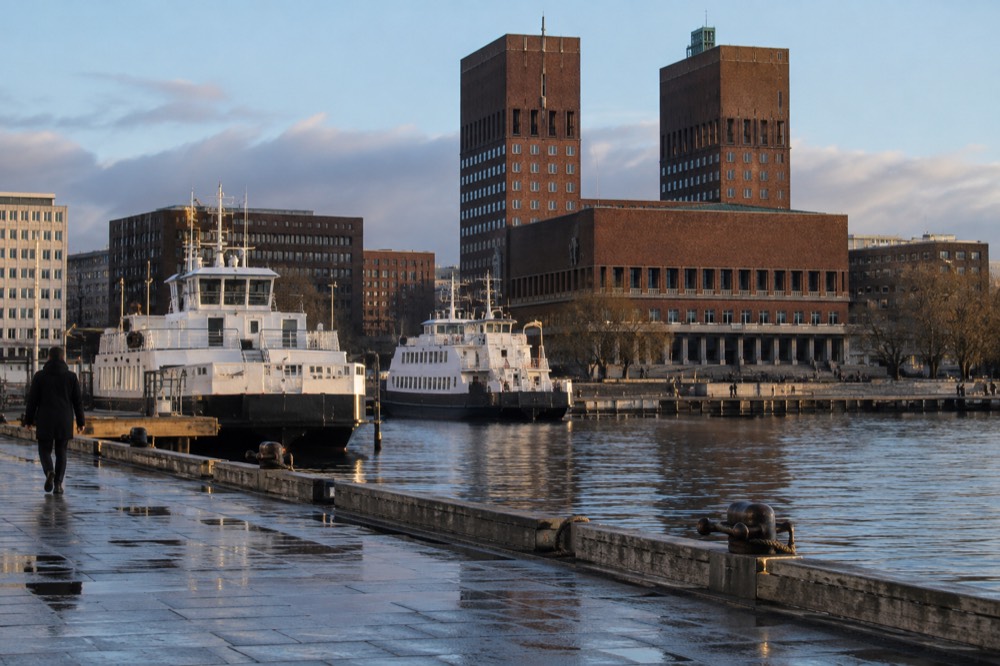
The building itself carries history too. The Oslo Vestbanestasjon was one of the city's main railway terminals before it closed as a station and waited out its conversion. Its two towers still flank the entrance facing Rådhusplassen, the City Hall square, and the waterfront side looks straight out over the inner Oslofjord toward Akershus Fortress. If you have read that Oslo's museums cluster on Bygdøy, this is the exception: the Peace Center is dead central, a two minute walk from the Aker Brygge waterfront and the ferry piers.
Is the Nobel Peace Center Worth the Ticket Price?
For most visitors, yes, with one condition: go when the temporary exhibition interests you. The permanent material, the laureates' room and the prize's history, is well done but compact, and on its own it can feel like a short visit for the money. The temporary exhibitions are where the Center earns its reputation, and they change regularly, so the honest advice is to check what is currently showing on the venue's own site before you commit your afternoon. Visitors who arrive cold report the widest spread of opinions of any Oslo museum.
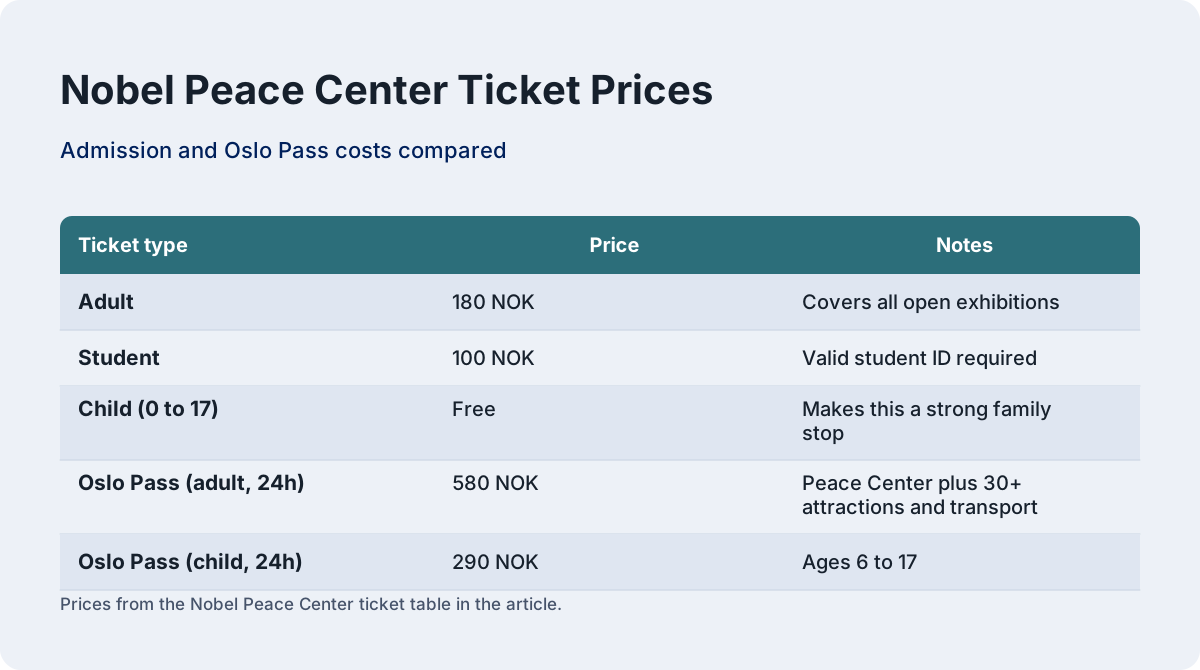
The price itself sits in the middle of Oslo's museum range, and by the standards of a European capital it is not a painful one. Adult admission is 180 NOK, students pay 100 NOK, and children 17 and under enter free, which makes it one of the better value family tickets in the city. For context, the Kon-Tiki Museum and the Fram Museum each charge 180 NOK adult, the Norsk Folkemuseum charges 200 NOK, and the Ski Museum plus Holmenkollen jump tower charges 195 NOK. The Oslo Pass covers the Peace Center along with more than 30 other attractions, and the pass now costs 580 NOK for 24 hours, so a pass holder doing three or four museums in a day is already ahead.
It is also worth being direct about who the museum does not suit. If your Oslo days are short and you want Vikings, polar ships, or The Scream, spend your time on Bygdøy and at the National Museum first. The Peace Center rewards visitors with a spare half day in the center, an interest in current affairs, or a rainy afternoon that needs filling within walking distance of everything. For that rainy-afternoon use case, it ranks alongside the Paradox Museum as a central indoor option.
If you are building a fuller day around the waterfront, these three bookable options all start within a few minutes' walk of the front door:
How Much Does the Nobel Peace Center Cost, and What Do Tickets Include?
Adult admission is 180 NOK, students pay 100 NOK with valid ID, and children aged 17 and under enter free, which makes this one of the better value family tickets in the city. The ticket covers the whole building, both the permanent laureate displays and whatever temporary exhibitions are running, with no separate special-exhibition fee and no timed entry in normal conditions. The Oslo Pass includes entry along with more than 30 other attractions, and the pass also covers public transport across Ruter zones 1, 2, 3, 4V and 4N, including the Vy trains to and from Gardermoen airport.
| Ticket type | Price | Notes |
|---|---|---|
| Adult | 180 NOK | Covers all open exhibitions |
| Student | 100 NOK | Valid student ID required |
| Child (0 to 17) | Free | Makes this a strong family stop |
| Oslo Pass (adult, 24h) | 580 NOK | Covers the Peace Center plus 30+ attractions and Ruter transport |
| Oslo Pass (child, 24h) | 290 NOK | Ages 6 to 17 |
One caution that applies to every price in this table: promotional banners come and go. When the venue's own page was last checked it carried a time-limited half-price offer running from early September to mid-December, and a visitor who read that banner out of season might expect a discount that no longer exists. Treat the figures above as the standard full prices and confirm the live price on the venue's site or at the desk. The same discipline applies to opening hours: the Center runs seasonal and day-of-week variations, and the current schedule belongs on the venue's own pages, not in a guide that ages badly.
For travelers counting the whole budget, this is also where to say plainly that Oslo is not uniformly expensive. Statistics Norway's 2025 price-level survey puts Norwegian household prices 28.6 percent above the EU average and food 33 percent above, with alcohol and tobacco more than double the European average. But museums are the cheap corner of a Norwegian trip: 180 NOK is modest by capital-city standards, and the Peace Center, Vigeland Park (free, open 24 hours), and the Opera House roof (free) are the proof that the expensive reputation comes from bars and restaurants, not from culture.
What Will You Actually See Inside the Peace Center?
The core of the museum is the Nobel Peace Prize laureates: every winner in the prize's history, presented through photography, film, and interactive displays, alongside rotating temporary exhibitions on live conflicts and peace work. There is no single marquee object to walk around. The experience is built from media, and the strongest permanent element is the presentation of the laureates themselves, with the citation text and the reasoning the Nobel Committee gave for each award.
The temporary exhibition program is what changes the visit. Past programs have covered nuclear disarmament, migration, climate conflict, and individual laureates in depth, and the Center's curators lean toward subjects that are in the news the week you are standing there. This is the museum's greatest strength and its main risk: a temporary show on a subject you care about makes the visit memorable, and one that does not grab you leaves the permanent material carrying the whole ticket. The venue's own site lists current and upcoming exhibitions, and a two minute check before you leave your hotel is the highest-value planning step for this attraction.
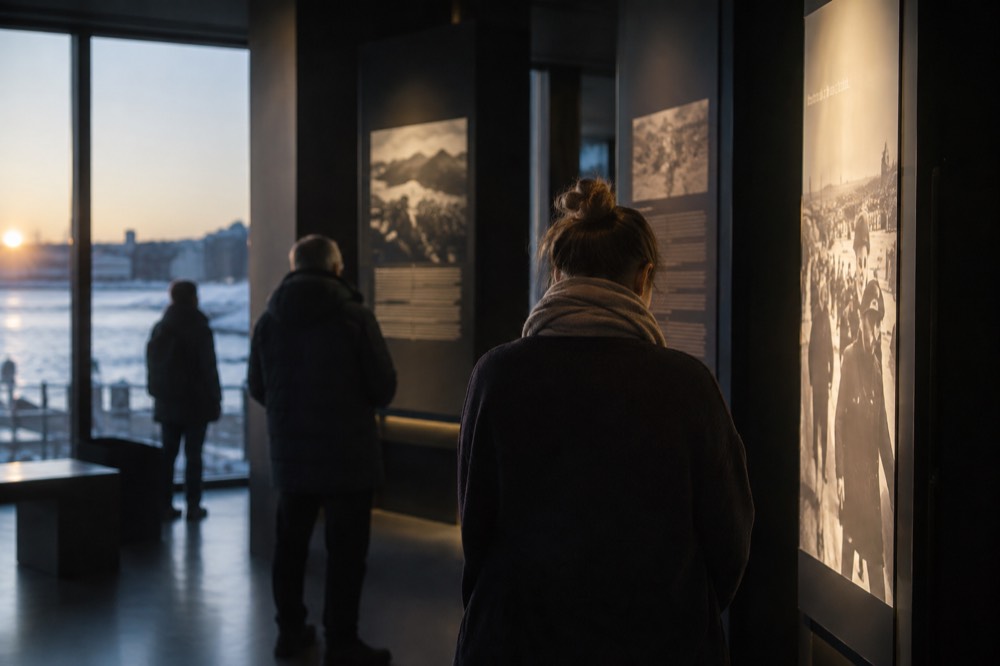
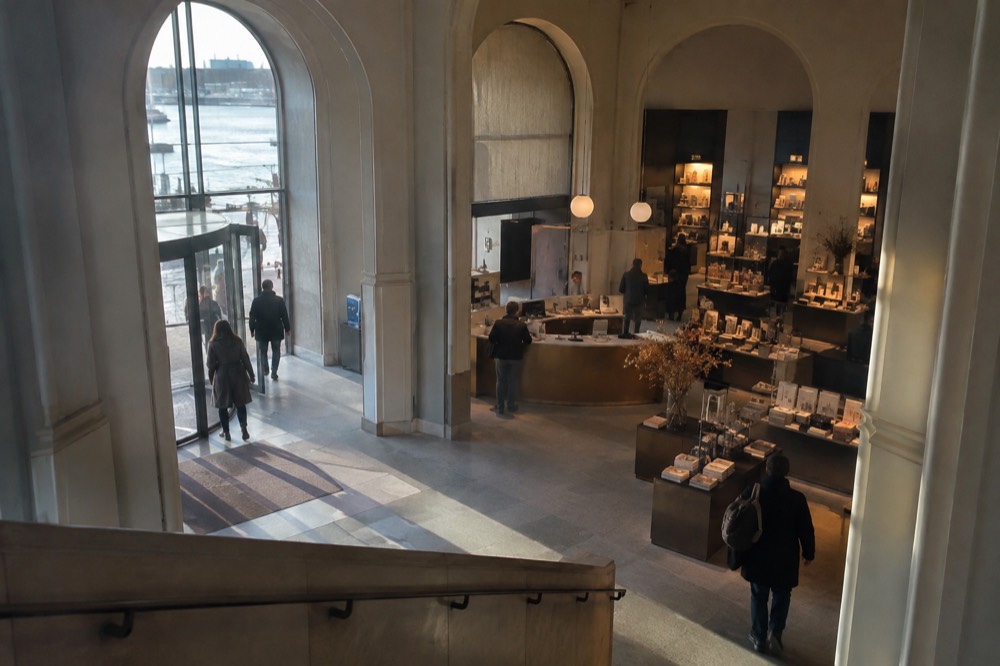
The building's layout is simple. Exhibition space spreads over the ground floor and lower level of the old station, with the shop and cafe area near the entrance facing the square. Most text is presented in Norwegian and English, and the interactive installations are language-light by design, so international visitors are not stuck reading translations all afternoon. Photography is generally permitted in the permanent areas, though temporary exhibitions sometimes carry restrictions, and the desk will tell you the current rule.
For travelers who want the peace-and-history thread continued elsewhere in the city, two nearby stops complete it. The Norway's Resistance Museum inside Akershus Fortress covers the occupation years, the era that shaped modern Norway's civic identity, and the Akershus Fortress grounds around it are free to walk. Between the Peace Center, the fortress, and a fjord cruise, you can build a full day inside a very small radius.
How Long Does a Visit Take, and When Is the Best Time to Go?
Plan on 60 to 90 minutes for a full visit, or about 45 minutes if you read selectively and skip the film material. The building is not large, and there is no route that takes half a day. Visitors who linger over every panel and watch the film rooms in full sit at the top of that range. If your Oslo time is tight, this is one of the few major museums that fits comfortably into a gap between other plans, which is exactly why it works as a cruise-port or layover stop.
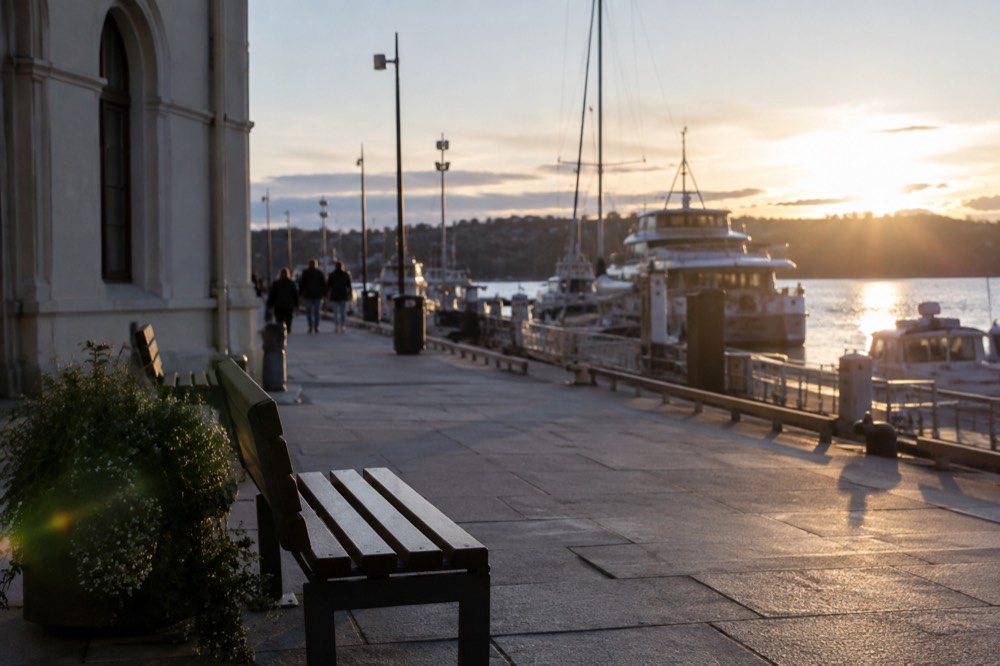
The best time of day is the late afternoon, and for a practical reason: the Peace Center sits at the foot of the Karl Johans gate corridor and beside the Aker Brygge waterfront, so the surrounding area is at its most crowded between late morning and mid-afternoon when tour groups move through the square. Later in the day the square empties, the light on the fjord improves, and you can walk out of the museum straight into the evening waterfront. In summer, Oslo's daylight runs to 18 hours 50 minutes at the solstice, with sunset at 22:43, so a 6pm museum exit still leaves you a full evening outdoors.
Seasonally, the December period is the one time the museum's calendar and the city's calendar align. The prize is awarded in Oslo City Hall on 10 December, the anniversary of Alfred Nobel's death, and in the days around it the laureate is in the city, the international press is on the square, and the Peace Center runs its most pointed programming of the year. The trade-off is crowds and the year's shortest days: 5 hours 53 minutes of daylight on 21 December, with sunrise at 09:18 and sunset at 15:11, and the Christmas market and winter-city context around that week deserve their own planning.
The rest of the year is quieter. August is worth a special mention because it is Oslo's wettest month on the official 1991 to 2020 normals, at 103 mm against November's 85 mm, a fact that surprises most visitors and inverts the usual Scandinavian assumption. A wet August afternoon is a good Peace Center afternoon.
Where Is the Nobel Peace Center, and How Do You Get There?
The Nobel Peace Center faces Rådhusplassen, the City Hall square, at the western end of the inner harbor, a short walk downhill from the National Theatre metro and tram interchange. From Oslo Central Station it is roughly a fifteen minute walk, or a couple of tram stops. The building's two towers make it easy to spot from the square, and the entrance is on the side facing City Hall, beside the ferry piers.
| From | Method | Time |
|---|---|---|
| National Theatre (metro, tram) | Short walk downhill | 5 to 7 min |
| Oslo Central Station | Walk across the center | About 15 min |
| Oslo Central Station | Tram toward Aker Brygge | A few stops |
| Aker Brygge waterfront | Walk | 2 min |
| Bygdøy museums (in season) | Bygdøy ferry from Rådhusbrygge 3 | 10 min to first stop |
Two ferry facts matter here, and confusing them is the most common transport error on this stretch of waterfront. The Bygdøy museum ferry leaves from Rådhusbrygge 3, a one minute walk from the Peace Center's door, and runs seasonally, 14 March to 4 October in 2026, roughly every 20 minutes. Ruter tickets are not valid on it, though the Oslo Pass covers it. The island ferries to Hovedøya, Gressholmen, and Langøyene are a completely different system: they are Ruter lines B1, B1X, and B2, they take ordinary Ruter tickets, and they leave from the Aker Brygge side, not the City Hall pier. If you plan to pair the Peace Center with the Kon-Tiki Museum or the Fram Museum on Bygdøy, the ferry from Rådhusbrygge 3 in season, or Ruter bus 30 year-round, is the route.
Out of ferry season, bus 30 runs year-round from the National Theatre side to the Bygdøy museums on an ordinary Ruter ticket, about 15 minutes. And if you are arriving in the city that morning, the airport note that saves the most money: the Oslo Pass covers trains to and from Gardermoen, but only the Vy trains, not Flytoget, which charges 268 NOK adult one-way. The Vy run takes about 23 minutes against Flytoget's 20, and rides on the ordinary Ruter zone system, with the airport in zone 4N. Our getting around Oslo guide carries the full breakdown.
Is the Nobel Peace Center Good for Kids and Teenagers?
Yes for teenagers, selectively for younger children, and free either way, since everyone 17 and under enters at no cost. The interactive installations and the film material hold attention better than glass-case museums do, and the subject matter, people who took risks to change something, lands well with school-age visitors. The youngest children get the least from it: there is no play area and no handling collection, and the tone of the temporary exhibitions can be sobering, so families with under-eights should treat it as a short stop rather than a destination.
The free child entry changes the math for families. A family with teenagers pays only the adults' tickets here, while at the Norsk Folkemuseum children are also free but adult admission is 200 NOK each and the visit runs much longer. Our Oslo with kids guide ranks the Peace Center as a short central stop that pairs well with the Paradox Museum for interactive fun or with a fjord cruise for the boat ride every child actually wants. The climbing park day ticket is the outdoor alternative when the weather cooperates.
For a family building a single waterfront day, the sequence that works is the Peace Center first, the Bygdøy ferry or bus second, and the museums there in the afternoon, with the one day in Oslo itinerary as the template. The Kon-Tiki ticket below is the highest-rated museum entry in the city and the natural afternoon anchor on Bygdøy.
What Should You Pair with the Nobel Peace Center on the Same Day?
The strongest pairings are Oslo City Hall next door, the Aker Brygge waterfront and Tjuvholmen to the west, and Akershus Fortress to the east, all within a short walk of the front door. The museum sits at the junction of central Oslo's two best walking corridors, so it slots into almost any itinerary without backtracking. City Hall is the literal partner, the building where the prize is awarded every December, and Aker Brygge is the restaurant and pier strip just to the west.
Beyond the waterfront, Tjuvholmen adds the Astrup Fearnley museum and the sculpture beach at the point, and the harbor walk east runs to the fortress. The pairing table below lays out the options by direction and walking time.
| Pairing | Direction from the Peace Center | Walk | Best for |
|---|---|---|---|
| Oslo City Hall | Across the square | 1 min | The ceremony building |
| Aker Brygge | West along the water | 3 min | Food, piers, people-watching |
| Tjuvholmen and Astrup Fearnley | West, past Aker Brygge | 10 min | Modern art and the beach point |
| Akershus Fortress and Resistance Museum | East along the harbor | 12 min | History and harbor views |
| Bygdøy museums | Ferry from Rådhusbrygge 3, or bus 30 | 10 to 15 min | Kon-Tiki, Fram, Folkemuseum |
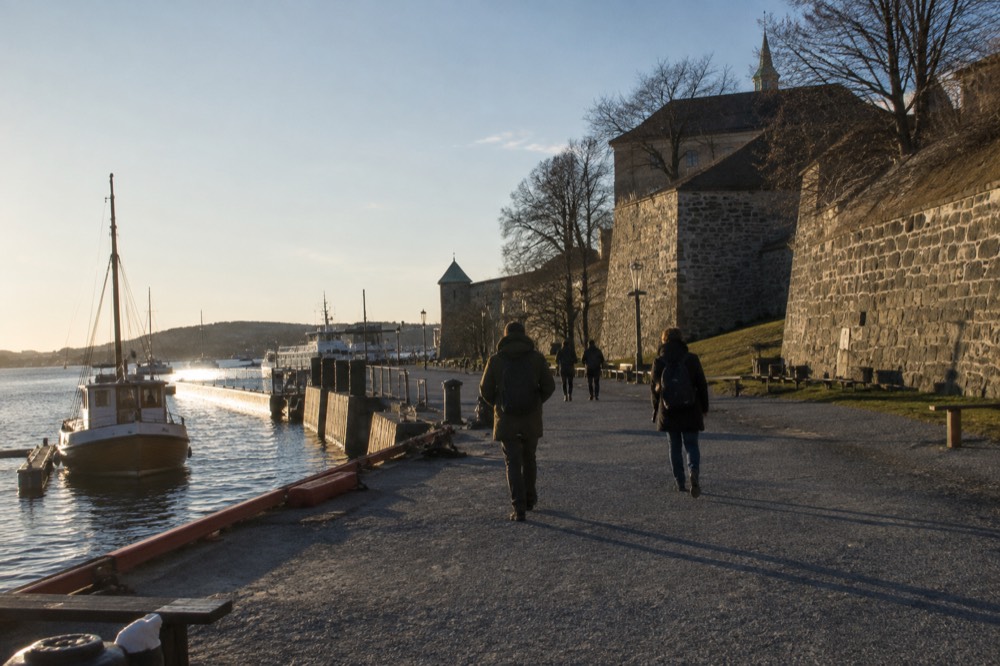
The eastern walk deserves more attention than it gets. The promenade from Rådhusplassen to Akershus runs along the water with the fortress walls above you, and it is one of the few central Oslo walks that feels historic rather than retail. Inside the fortress grounds, the Resistance Museum covers the occupation years in a space small enough to finish in under an hour, and the grounds themselves cost nothing. If your day is museum-heavy, that free outdoor hour balances the ticket spend nicely, and the free things to do in Oslo guide lists more of the same.
The third direction is the water itself. The silent electric fjord cruise departs from the piers minutes from the museum's door and is the single best-reviewed activity in Oslo, a 90 minute loop with audio commentary that shows you the islands and the shoreline you have been looking at from land all day. It is the natural end to a Peace Center afternoon: the museum gives you the ideas, the cruise gives you the geography.
Practical Tips: Hours, Tickets, Accessibility, and Common Mistakes
Buy at the door or online through the venue's own channel, allow 60 to 90 minutes, and check the current hours on the venue's site before you go, because the schedule varies by season and weekday. The Center is central enough that you do not need to plan around it the way you do Bygdøy, but the hours point matters more here than at the peninsula museums, because the temporary exhibition schedule and occasional event closures shift the calendar through the year. The venue's own pages are the source to trust over any guide, including this one.
A few mistakes recur in reviews and are easy to avoid. First, expecting a collection: this is a media museum, and visitors who arrive expecting Viking swords or ships leave disappointed. Second, skipping the exhibition check: the temporary shows are the reason to go, and they rotate. Third, mixing up the piers: the Bygdøy ferry is at Rådhusbrygge 3 and takes no Ruter ticket, the island ferries are at Aker Brygge and take ordinary ones. Fourth, paying full price for a family when children enter free anyway. Fifth, going at noon on a tour-group day when the late afternoon is quieter and the surrounding square is better in the evening light anyway.
Accessibility is straightforward: the building is step-free at street level with an internal lift between floors, and the central location means paved, flat approaches from every direction. English coverage is complete, so language is no barrier.
The Peace Center is the rare Oslo attraction whose value depends on the calendar rather than the square footage. Check the exhibition list, pick a late afternoon, and let the rest of the waterfront day arrange itself around it, from City Hall to the fortress walls to a silent boat out on the Oslofjord. If you would rather have a local guide shape the whole center in one walk, the budget walking tour below covers the core sights in a couple of hours and starts close by.
For the wider picture of how the city's museums stack up against each other, and whether a pass pays off across your whole itinerary, the planning desk at Oslo Travel Guide carries the comparisons. Whichever way you build the day, these three bookable options are the ones that pair most naturally with a Peace Center afternoon:
Common Questions About the Nobel Peace Center
How much does the Nobel Peace Center cost?
Adult admission is 180 NOK, students pay 100 NOK with valid ID, and children aged 17 and under enter free. The Oslo Pass includes entry alongside more than 30 other Oslo attractions and the city's public transport.
Is the Nobel Peace Center worth visiting?
Yes, if you go when the temporary exhibition interests you and you know it is a media-based museum rather than a collection of artifacts. Check the current exhibition on the venue's own site before you go, and allow 60 to 90 minutes.
Where is the Nobel Peace Center located?
It faces Rådhusplassen, the City Hall square, on the Oslo waterfront, a short walk from the National Theatre metro and tram interchange. It is a two minute walk from the Aker Brygge piers and roughly a fifteen minute walk from Oslo Central Station.
How long does a visit take?
Plan on 60 to 90 minutes for a full visit, or around 45 minutes if you read selectively. There is no route through the building that takes half a day, which is exactly why it pairs well with other central stops.
Is the Nobel Peace Prize awarded in the Nobel Peace Center?
No. The prize ceremony takes place across the square in Oslo City Hall every 10 December, the anniversary of Alfred Nobel's death. The Center is the exhibition and visitor venue that tells the story of the prize and the laureates the rest of the year.
Is the Nobel Peace Center good for children?
Teenagers get the most from it, younger children less, since there is no play area or handling collection. Entry is free for everyone 17 and under, so a family visit carries no risk beyond the time spent.