Oslo vs Bergen: Which Norwegian City Fits Your Trip Better
Oslo is the capital, the transport hub and the museum city. Bergen is the postcard, the rain and the fjord gateway. Choosing between them comes down to what kind of Norway you actually want, and this guide compares them on the things that decide a trip: cost, weather, fjord access, sightseeing and time.
Short answer
Oslo wins on museums, transport connections and free outdoor space, and it is the city you will likely fly into. Bergen wins on fjord proximity and atmosphere, with the Flåm railway and the western fjords on its doorstep. Many visitors do both, using the roughly seven-hour train link between them.
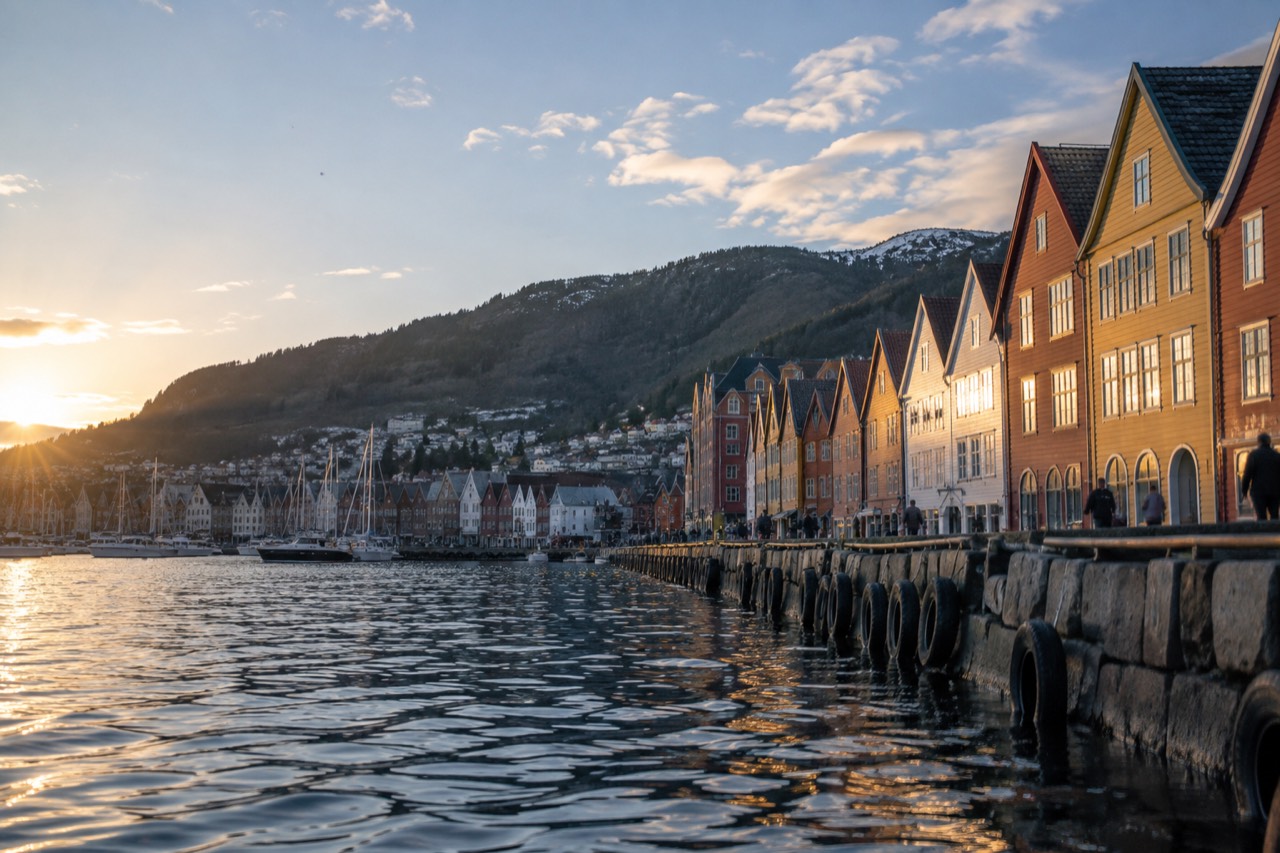
Norway's two most visited cities do completely different jobs, and the mistake travelers make is treating them as interchangeable. Oslo is a capital built around a fjord, a harbor opera house and one of Europe's strongest museum scenes. Bergen is a Hanseatic port town wedged between mountains, famous for its wooden wharf, its rain and its position as the front door to the western fjords.
The comparison is worth doing properly because most American itineraries touch both, and the order you visit them in, and how many days you give each, shapes the whole trip. The Oslo to Bergen train is itself one of Europe's great rail rides, so the two cities are usually linked rather than chosen between. Still, if your time is short, or your budget is tight, one of them earns your days more than the other, and it depends on what you came to Norway for.
Oslo vs Bergen: Which City Should You Visit First?
Visit Oslo first if you are flying into Norway, because almost every long-haul route land at Oslo Airport Gardermoen, and the capital holds the country's deepest museum and transport connections. Visit Bergen first only if the fjords are the single reason for your trip and you have already booked a flight into Bergen's smaller airport. For a first visit to Norway that mixes city and scenery, Oslo first, then Bergen by train, is the sequence that wastes the least time.
The logic is simple geography. Oslo is the hub. The Bergen Railway, the routes to Stockholm and Copenhagen, and the airport express all converge there, so a first stop in Oslo means every later leg of the trip starts from the place with the most connections. Bergen is a spoke. It is superb for the fjords and thin for everything else, and its airport handles mainly domestic and European short-haul.
There is also a pacing argument. Oslo rewards energy: you move between museums, neighborhoods and the waterfront, and the city's free outdoor sights, like the Vigeland sculpture park, sit in the middle of that motion. Bergen rewards slowness: the wharf, the fish market and the Fløibanen funicular fill a day easily, and after two days most visitors are ready to leave town for the water. Doing Oslo first means your trip accelerates rather than decelerates, which suits a short itinerary.
How Do Oslo and Bergen Compare at a Glance?
Oslo is bigger, drier in summer, flatter to explore and far richer in museums, while Bergen is smaller, wetter, dramatically sited and unbeatable as a fjord base. Oslo's attractions are spread across a walkable capital core and the Bygdøy museum peninsula; Bergen's are compressed into a compact center under seven mountains. Neither city is cheap, but Oslo's costs concentrate in food and drink, while Bergen's concentrate in tours and transport out of town.
The table below is the short version of every other section in this guide. Read it as a decision grid rather than a scorecard, because the two cities are not competing on the same axes.
| Factor | Oslo | Bergen |
|---|---|---|
| Population | Norway's capital and largest city | A mid-sized regional port city |
| Setting | At the head of the Oslofjord, gently rolling | Between mountains and a fjord, steep terrain |
| Summer climate | Mild, July normal of 17.7 °C, moderate rain | Mild, but among Europe's rainiest cities |
| Signature sights | Opera House roof, Vigeland Park, MUNCH, Bygdøy museums | Bryggen wharf, Fløibanen funicular, fish market |
| Museum depth | Over 30 museums, several world-class | A handful, led by the Hanseatic museum |
| Fjord access | Oslofjord islands in the city, western fjords a long day trip | Western fjords and Flåm railway within a day |
| Transport hub status | National rail and air hub | Regional hub, end of the Bergen Railway |
| Best for | Museums, design, food, city life | Scenery, atmosphere, fjord excursions |
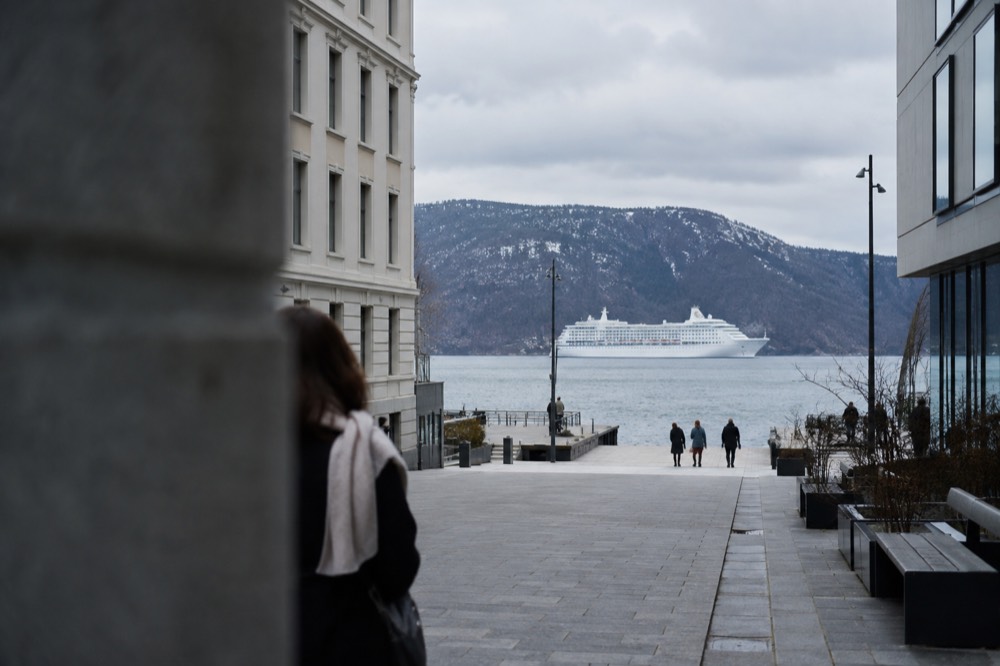
One nuance the table cannot show: Oslo's fjord is not the fjord people picture when they book Norway. The Oslofjord is a wide, island-dotted arm of water with swimming beaches 20 minutes from the center, pleasant rather than dramatic. Bergen's back garden is the hard-edged western fjord country of postcards. If scenery is the point, Bergen is closer to the version of Norway you imagined, and the Oslofjord cruise options from Oslo are a different, gentler product.
If your heart is set on western fjord scenery but your flights and hotel are in Oslo, you are not stuck. There are bookable ways to reach the Sognefjord country from the capital in a single day, and one of them, a private round trip that includes the Flåm railway, is covered later in this guide. The question of whether that is smarter than repositioning to Bergen is genuinely close, and it comes down to cost and how many days you have.
Which City Is Better for a First Trip to Norway?
For a first trip of a week or less, Oslo is the safer base, because it carries the country's history, art and transport in one place and you can build a full three or four days there without running out. Bergen is the better first trip only when the fjords are the trip's declared purpose and the city is your launch pad. A first-timer who wants a rounded picture of Norway should start in Oslo and end in Bergen, not the reverse.
Oslo gives a first-time visitor the country in miniature. The National Museum holds The Scream. The Fram and Kon-Tiki museums on Bygdøy carry the polar exploration story that defines Norwegian self-image. The Akershus Fortress and the city's older core carry the medieval and wartime layers. Add a sauna culture, a food scene that runs from Michelin rooms to street food, and a metro line that ends in a forest, and the capital explains Norway to you as you go.
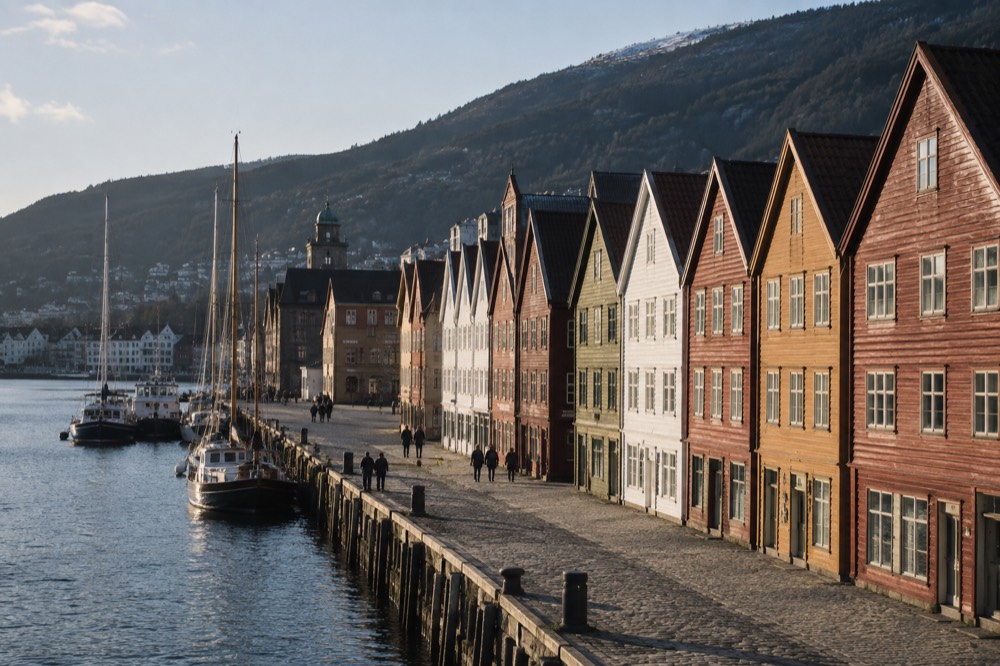
Bergen is more focused. Bryggen, the Hanseatic wharf, is a UNESCO World Heritage site and genuinely beautiful in any weather. The funicular to Mount Fløyen gives one of the country's best city views within six minutes of the center. But beyond those, the museum list thins fast, and the honest Bergen itinerary is two city days plus excursions: Flåm, the hardangerfjord, or the coastal steamer. That is a superb trip, it is just a different trip, one where the city is a base camp rather than the destination.
The first-timer's tiebreaker is contingency. Oslo has more rainy-day depth, more evening options and more transport redundancy if a plan collapses. Bergen in two days of rain, which is statistically unremarkable there, can feel finished early. Plan for the weather you are likely to get, not the weather in the brochure.
Oslo vs Bergen Cost: Where Does the Money Actually Go?
Neither city is cheap, because Norway is the sixth most expensive country in Europe on Statistics Norway's 2025 price-level survey, with household prices 28.6 percent above the EU average and alcohol more than double the European level. The difference between the cities is small: Oslo runs slightly higher on restaurants and nightlife, Bergen slightly higher on excursions, because in Bergen you are constantly paying to leave town.
The useful way to compare costs is not city against city but category against category, because the national price level dominates and the local differences sit on top of it. Food and non-alcoholic drink runs 33 percent above the European average across Norway, and that applies in both cities. What genuinely differs is where a visitor's money leaks out.
| Cost category | Oslo reality | Bergen reality |
|---|---|---|
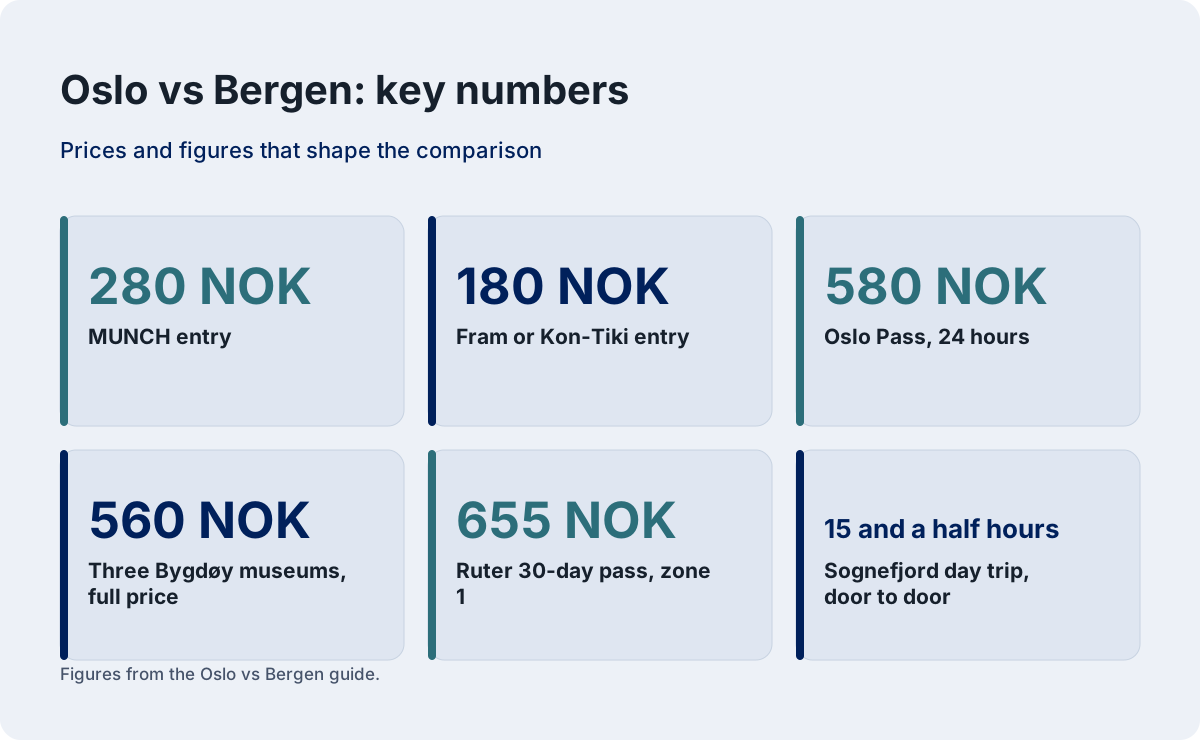
| Museum entry | MUNCH at 280 NOK, Fram and Kon-Tiki at 180 NOK each, or the Oslo Pass bundling over 30 sites | Fewer paid sites, so museum spend is naturally lower |
| City transport | Ruter zone 1 covers metro, trams, buses and island ferries; 30-day pass is 655 NOK | Compact center means mostly walking; funicular is the main paid ride |
| Getting out of town | Fjord day trips are long and priced accordingly | Fjord and railway excursions are shorter but multiply quickly |
| Eating out | Full range from street food to Michelin, upper end is expensive | Smaller scene, similar price level, fewer budget tiers |
| Alcohol | The national price level applies; state monopoly for wine and spirits | Same rules, same monopoly, same prices |
Two structural facts matter more than any city comparison. First, the Oslo Pass at 580 NOK for 24 hours can break even on three Bygdøy museums alone, since full-price entry to Kon-Tiki, Fram and the cultural history museum already totals 560 NOK, and the pass also carries you there and back on the museum ferry. Bergen has no equivalent bundle with that density of covered attractions. Second, alcohol is the single cost category that shocks visitors in both cities, and it is a national policy, not a local quirk: wine and spirits are sold only through the Vinmonopolet monopoly, which closes on Sundays and early on Saturdays, and supermarket beer stops at 4.7 percent ABV.
For a deeper breakdown of the capital's numbers, including what a realistic day of eating and transport costs, see the site's Oslo trip cost guide. The short version: a visitor who eats one restaurant meal a day, uses public transport and visits two paid attractions spends comfortably in both cities, and the difference between them is smaller than the difference between two travel styles.
Which City Has Better Access to the Fjords?
Bergen wins on proximity: the Flåm railway, the Sognefjord and the hardangerfjord are all reachable as day trips from Bergen, while the same scenery from Oslo means a very long day or an overnight. But Oslo's own fjord product is real and underrated, with silent electric boats and island-hopping walks inside the city, and for a visitor based in the capital the private Sognefjord round trip with the Flåm railway is the one bookable way to see western fjord country and sleep in Oslo the same night.
Be precise about what "fjord" means in each place, because the word covers two different landscapes. The Oslofjord is a broad inlet with wooded islands, swimming beaches and ruins, a metropolitan fjord you use rather than gaze at. The western fjords around Bergen are the deep, cliff-walled channels of the postcards. If your image of Norway involves vertical rock and waterfalls, only the west delivers it.
From Bergen, the classic loop is the "Norway in a Nutshell" routing: train to Myrdal, the spectacular Flåm railway down to sea level, a fjord cruise on the Aurlandsfjord, and buses or trains back. Every leg is a scheduled public service, so it can be done independently or guided, and it fits in a day from Bergen with moderate effort. The hardangerfjord, with orchards and the Steinsdalsfossen waterfall, is an easier day still.
From Oslo, the same scenery is a commitment. The private full-day round trip to the Sognefjord including the Flåm railway runs about 15 and a half hours door to door, which is a serious day but a real option for visitors who cannot or do not want to reposition to the west coast. It is also the best-reviewed same-day answer to the question every Oslo visitor asks.
For travelers who stay in Oslo and want the water without the marathon, the city's own products are strong. The silent electric boat cruise with audio commentary is the single best-reviewed activity in Oslo, and the ferry-and-foot island hopping tour, which walks Hovedøya with its ruined abbey and the swimming islands, is something the fjord makes possible in Oslo and nowhere else in this set.
There is a sibling site in this portfolio that covers Oslofjord cruising in depth, including which fjord is closest and which month suits the water best, so this guide deliberately stops at the decision rather than re-answering those questions. The short decision: Bergen for the postcard fjords as a base, Oslo for a fjord you can swim in before lunch.
How Do the Weather and Daylight Compare?
Bergen is one of the wettest cities in Europe, with rain on a large share of days year-round, while Oslo has a drier, more continental pattern with cold, stable winters and warm summers, and August is actually Oslo's wettest month on the 1991 to 2020 normals at 103 mm. Daylight is nearly identical at both cities' latitude, swinging from under six hours in late December to nearly nineteen hours in late June, with no midnight sun anywhere in the south.
The rain contrast is the practical one. Bergen's position between mountains and sea means orographic rainfall on an almost industrial scale; the city markets umbrellas as souvenirs and means it. Oslo's normals are moderate, but the distribution surprises people: August leads the year at 103 mm, ahead of November, so a wet August day in Oslo is normal weather, not bad luck. Bergen's totals sit well above Oslo's in every season.
| Month | Oslo normal mean °C | Oslo normal precip mm | Daylight in Oslo |
|---|---|---|---|
| January | −2.3 | 58 | About 6 h 45 m mid-month |
| April | 6.2 | 48 | About 14 h 34 m mid-month |
| July | 17.7 | 87 | About 18 h mid-month |
| August | 16.5 | 103 | About 15 h 38 m mid-month |
| October | 6.6 | 93 | About 10 h 13 m mid-month |
| December | −1.4 | 54 | 5 h 53 m at the solstice |
Daylight deserves its own planning note because it is the most under-used fact in Norwegian travel. On 21 June the sun rises at 03:53 and sets at 22:43 in Oslo, and the gap between is twilight rather than true night, so midsummer evenings feel endless. On 21 December the sun comes up at 09:18 and is gone by 15:11, which means December sightseeing must be scheduled around a six-hour window. Bergen's figures differ by minutes, not hours. Neither city has midnight sun: that requires latitude above the Arctic Circle near 66.5 N, and both cities sit near 60 N, a fact worth holding onto because plenty of itineraries quietly imply otherwise. The site's Oslo daylight hours guide carries the full monthly table.
What this means for the comparison: Bergen's weather punishes rigid plans, so build indoor fallbacks, the aquarium, the Hanseatic museum, coffee houses, into every Bergen day. Oslo's weather is more predictable, and its winter is genuinely cold and often clear, which is what makes Oslo in winter a real season for activities rather than a season to avoid.
Which City Has More to Actually Do?
Oslo has far more sightseeing depth, with over 30 museums including several of national significance, a stronger food and nightlife scene, and free outdoor landmarks like the Opera House roof and Vigeland Park that cost nothing. Bergen has fewer attractions but higher per-hour charm, and its best experiences, the wharf, the funicular, the fish market, are concentrated inside a walkable core. Two full days exhausts Bergen's city list; four days in Oslo still leaves things undone.
Start with the museums, because that is the clearest gap. Oslo's Bygdøy peninsula alone stacks the Kon-Tiki Museum, the Fram polar ship museum, the Norwegian Museum of Cultural History and the Maritime Museum, reachable by a seasonal boat from City Hall. In the center, the National Museum holds The Scream and MUNCH carries the painter's own legacy at 280 NOK adult entry. The MUNCH museum guide covers that building in detail. Bergen's museum scene is led by the Hanseatic Museum on the wharf and a good aquarium, and it is honest to say the city's case does not rest on them.
Food tilts to Oslo too, in range if not in charm. The capital runs from the Mathallen food hall and a strong coffee culture through to Michelin-starred rooms, and the best restaurants in Oslo span every budget tier the city offers. Bergen's fish market and seafood tradition are real and pleasant, but the scene is smaller and the price level is the same national one.
Nightlife, shopping and neighborhoods all follow the same pattern: Oslo has more of everything, including the Grünerløkka district's bars and vintage shops, while Bergen's center is compact enough that evening options thin out early in the week. Bergen's counterweight is atmosphere, and it is not a small one. Bryggen's wooden gables, the harbor light, the mountains closing the view at every street end, produce a sense of place that Oslo's flatter, newer cityscape works harder for. Travelers who remember cities as moods often remember Bergen more fondly than Oslo, and travelers who remember cities as itineraries remember Oslo.
How Many Days Should You Give Each City?
Give Oslo three or four days and Bergen two, for a first combined trip of five to seven nights. Two days in Oslo covers the core, the Opera House, the center and one museum cluster, but shortchanges Bygdøy and the islands. Two days in Bergen is the natural fit, one for the city and one for a fjord or railway excursion. If you must cut one, cut a Bergen day before an Oslo day, because Oslo's depth degrades more slowly.
The arithmetic works like this. Oslo's headline sights split into four clusters: the waterfront and center, the Bygdøy museums, the Vigeland and Frogner side, and the Oslofjord islands. Each cluster is half a day to a day, and travel between them is real time even with the excellent metro. A visitor on two days sees the center and one museum cluster and leaves with a partial picture. The site's how many days in Oslo analysis goes deeper, but three days is the honest floor for the capital.
Bergen compresses. Day one is the wharf, the fish market, the funicular and the Hanseatic quarter, all inside a walkable square kilometer. Day two is the excursion, and the excursion is the reason you are in Bergen at all. A third Bergen day is only worth it if you are doing a second fjord or the coastal steamer, at which point you are really on a western Norway trip that happens to start in Bergen.
The rail link between the two takes about seven hours and is a sight in its own right, crossing the Hardangervidda mountain plateau at altitude. Treat the transfer day as a sightseeing day rather than dead time, and the two-city itinerary stops feeling rushed.
Oslo vs Bergen with Kids or in Winter: Do the Answers Change?
With kids, Oslo pulls ahead, because the city's family infrastructure, the climbing park, the island beaches, the interactive museums and free entry for children at most major museums, is broader than Bergen's. In winter, the two split by purpose: Oslo offers skiing, snowshoeing and a torchlit forest walk inside the city limits, while Bergen is a grey, wet winter base best used as a launch pad. Winter visitors chasing snow should choose Oslo; winter visitors chasing fjords should reconsider the season entirely.
The kids' case is concrete. Children enter the Norwegian Museum of Cultural History free, 17 and under enter MUNCH free, and the Oslo with kids guide lays out a full family itinerary that barely touches a paid adult attraction beyond transport. Add the Paradox Museum's interactive illusions as the strongest rainy-day family ticket in the city, and a family week in Oslo fills easily. Bergen's aquarium and the funicular's forest playground are good, but the city's steep terrain and rain wear on younger children faster.
Winter is where the cities genuinely diverge. Oslo sits at the edge of Nordmarka, a forest with groomed cross-country trails reached by metro, and the city is the only European capital where a learn-to-ski half-day is a bookable product. Snowshoeing and the torchlit forest walk with a campfire run from the city center. Bergen in winter averages above freezing with rain, and the famous view is often inside a cloud. The honest winter verdict: Oslo for snow and city together, Bergen only as a waypoint toward the northern lights country, and the site's northern lights in Oslo page explains why neither southern city is an aurora destination.

Oslo vs Bergen: The Honest Verdict
Choose Oslo if your trip is about Norway itself, its art, its history, its food and its polar story, or if you are flying long-haul and want the city with the connections. Choose Bergen if your trip is about landscape and you will measure it in fjord days. For most first-time visitors with five or more days, the answer is both, Oslo first, Bergen second, linked by the railway, and the real decision is only how many days each city gets.
The pattern this site's own planning pages keep confirming is that Oslo is the working city and Bergen is the postcard. Oslo is where you understand the country; Bergen is where you photograph it. Neither is a wrong answer, and the travelers who end up disappointed are the ones who brought a Bergen expectation to Oslo, expecting dramatic scenery from a gently rolling capital, or a capital's museum density to a small Hanseatic port town.
One final practical note from the transport desk, and it is the kind of fact that saves real money: if you land at Oslo Airport and ride the train into the city, the airport express is not the only option. Ordinary Vy trains cover the same run in about three minutes more, and the Oslo Pass explicitly includes Vy trains to and from Gardermoen while excluding the express. The Flytoget vs Vy comparison breaks down the full 268 NOK gap. Small decisions like that one, made before you travel, are what keep a two-city Norway trip inside its budget, and this site, Oslo Travel Guide, exists to make them easier.
Common Questions About Oslo vs Bergen
Is Oslo or Bergen better for a first trip to Norway?
Oslo is the better first base for a rounded trip, because it holds the country's main museums and transport links and can fill three or four days. Bergen is better only when the fjords are the trip's declared purpose. Most first-timers do both, Oslo first, then Bergen by train.
Is Bergen cheaper than Oslo?
Not meaningfully. Norway is the sixth most expensive country in Europe on the 2025 price-level survey, and that level applies in both cities. Oslo runs slightly higher on restaurants and nightlife, Bergen slightly higher on excursions, because in Bergen you pay repeatedly to leave town for the fjords.
How many days do you need in Oslo compared to Bergen?
Give Oslo three or four days and Bergen two. Oslo's sights split into four clusters that each take half a day or more, while Bergen's city core fits in one day plus one excursion day.
Can you see the fjords from Oslo as well as from Bergen?
No. The Oslofjord is a wide, island-dotted metropolitan inlet, pleasant for boats and swimming, while the cliff-walled western fjords sit near Bergen. From Oslo, the western fjord country is a long day trip, including a private round trip with the Flåm railway; from Bergen it is a standard excursion.
Which city has better weather?
Oslo, on balance. Bergen is among Europe's rainiest cities year-round, while Oslo has a drier, more continental pattern, though August is Oslo's wettest month on the 1991 to 2020 normals at 103 mm. Daylight is nearly identical at both cities' latitude.
Is the train between Oslo and Bergen worth taking?
Yes. The roughly seven-hour Bergen Railway crosses the Hardangervidda mountain plateau and is one of Europe's great rail rides. Treat the transfer as a sightseeing day rather than lost travel time.