Luggage Storage in Oslo: Every Option Compared
Oslo rewards travelers who drop the bags and move light, and the city gives you more ways to do that than most European capitals. This guide compares every storage route, from station lockers to hotel hold-over, and pairs them with a luggage-free day plan.
Short answer
Oslo's main luggage storage options are self-service lockers and staffed left-luggage desks at Oslo Central Station, hold-over at your hotel before check-in and after checkout, free cloakrooms at most major museums, and storage services at Gardermoen airport. There is no single city-run network, so the best choice depends on whether you are between trains, between hotel and flight, or off a cruise ship.
Luggage Storage in Oslo: Every Option Compared
Oslo is a city you experience on foot and on the water, and neither works well with a suitcase in tow. The Opera House roof is a walk, Vigeland Park is a wander, the Bygdøy museums involve a ferry or a bus, and the Oslofjord islands involve a boat where a large bag is genuinely in the way. The good news is that Oslo gives you several credible ways to drop luggage, and this guide walks through all of them: station lockers, hotel hold-over, museum cloakrooms, the airport, and what to do on a cruise-port day when the ship is your storage problem.
One framing note before the detail. Norway is not a tipping-your-way-through-problems country, and it is not a haggling country either. Storage here is standardized, mostly automated, and priced plainly. If a locker machine quotes you a price, that is the price, and the machines take card. Cash is close to useless in Oslo generally, which is one of the reasons the Oslo currency and cash guide is worth a read before you arrive.
Where Can You Store Luggage in Oslo?
The four realistic routes are self-service lockers and staffed left-luggage at Oslo Central Station, hold-over at your hotel around check-in and checkout times, free or cheap cloakrooms at most major museums, and storage at Gardermoen airport for layover days. A scattering of app-based storage points around the center covers the gaps, mostly in shops and hotels near the station. No single pass or ticket covers storage, so you pay per item, per day, at whichever point you use.
That is the short version. The slightly longer version is that the right choice depends on your day's shape. If you are between a morning train and an evening flight, the station is the obvious answer because everything in Oslo converges there. If you have a hotel booked, even for that night, the front desk is often the cheapest answer of all, and many Oslo hotels will hold bags both before check-in and after checkout as a matter of course. If you are off a cruise ship for one day, the ship itself is your locker and the question becomes how to structure the day around it. And if you have a long layover at Gardermoen, the airport's own storage facilities mean you can pop into the city without dragging anything.
What Oslo does not have is a dense network of human-staffed left-luggage offices the way some older European capitals do. The city leans automated: lockers, machines, cards, and clear signage. That is generally a plus, because automated storage does not close for lunch, but it does mean you should plan around the size of your bag rather than around a person's willingness to take it.
Does Oslo Central Station Have Luggage Lockers?
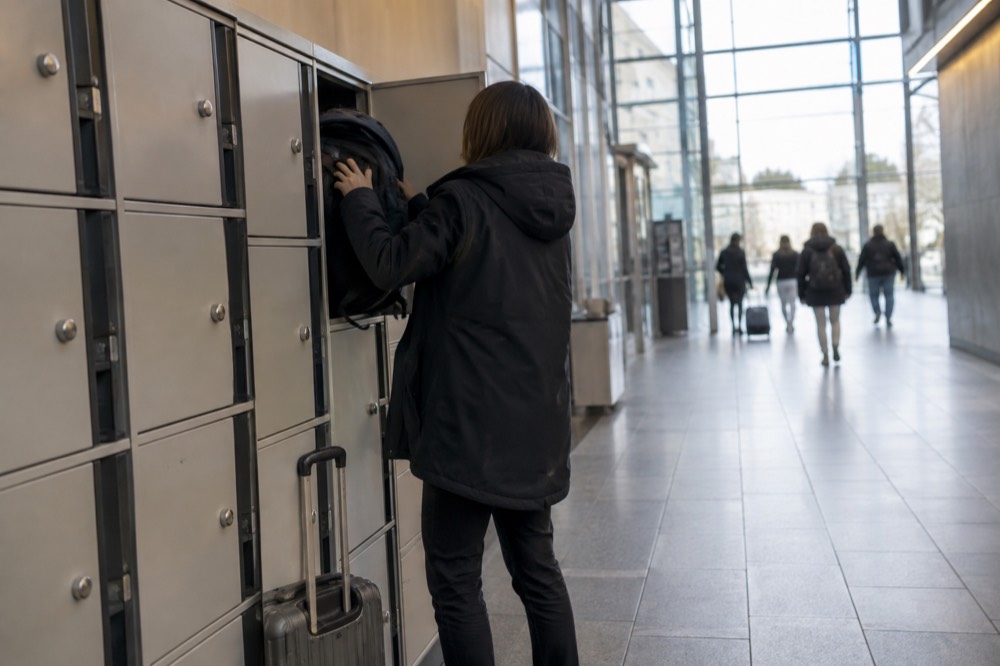
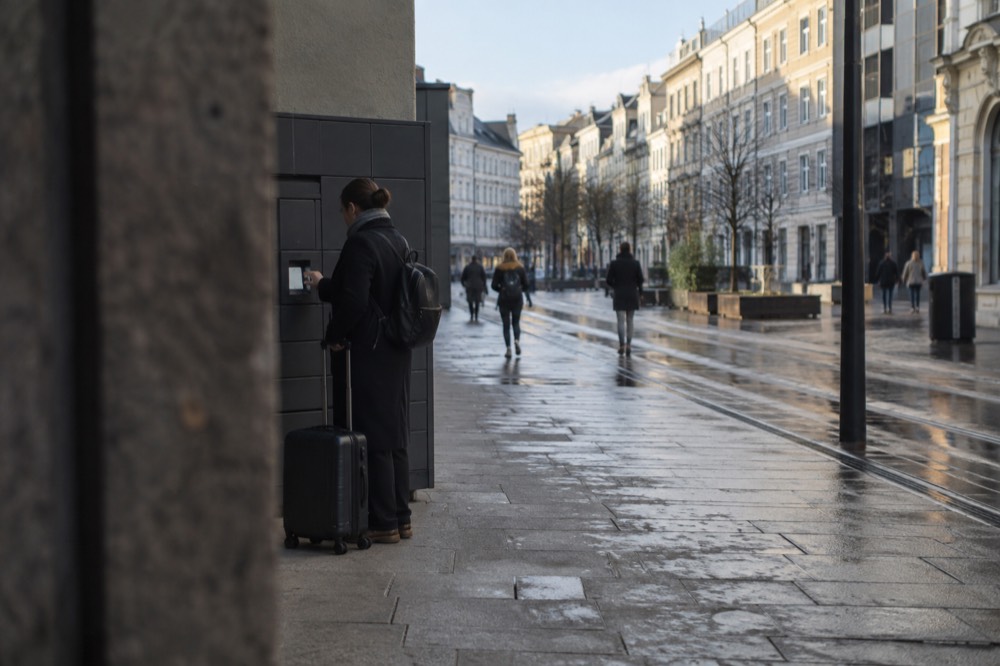
Yes, Oslo Central Station has self-service lockers, and it is the single most useful storage point in the city because every metro line, most trams, the airport trains, and the long-distance trains meet there. Lockers are paid per locker per period, with prices and size limits posted at the machines, and payment is by card. The station is open through the day and evening, and the locker area is inside the paid-zone boundary, so you need a valid ticket to reach some platforms.
Oslo S, as locals call it, is not just a station, it is the city's circulation system. The entire metro network sits inside Ruter zone 1, and the station anchors it. That matters for luggage logistics more than you might expect, because a locker at Oslo S effectively gives you a locker at the center of every possible day trip. Drop the bags, ride Line 1 to Frognerseteren for the forest, come back, collect, continue. The station's role as the hub is covered properly in the Oslo Central Station guide, including the difference between Oslo S and Nationaltheatret, the second central station that confuses a lot of first-time visitors.
A few practical notes on using the lockers. Sizes vary, and the machine display tells you which sizes are free before you pay, which saves the awkward discovery that your suitcase fits nothing. Payment is card-only in practice, consistent with most of Oslo. Access hours follow the station's opening, and the station is one of the few places in Oslo that genuinely never sleeps in terms of passenger flow, though staffed services inside it close overnight. If you are planning an early start, say a 06:00 departure for a fjord day, check that the locker area is reachable at that hour, because parts of the concourse are gated outside peak times.
The station also has a practical advantage for the cruise-port crowd and the airport crowd alike. The Flytoget airport express and the Vy regional trains both terminate at Oslo S, so a locker there is a natural first stop for anyone landing at Gardermoen before their hotel is ready. The full comparison between those two trains, including the price gap that most guides get wrong, is in Flytoget vs Vy, and it is worth reading before you assume the express is the only option.
The lockers at Oslo S pair naturally with the city's best short activities, because the best of them start within a fifteen-minute walk of the station. The silent electric fjord cruise departs from the pier area by City Hall, the Kon-Tiki Museum is a ferry or bus ride away on Bygdøy, and the Grünerløkka food walk starts across the river in the neighborhood most visitors otherwise miss. All three are better without a suitcase, and all three are bookable with free cancellation, which means you can plan the luggage-free day before you have confirmed every detail of your trip.
Can You Leave Bags at Your Hotel Before Check-in or After Checkout?
Yes, and this is usually the cheapest storage in Oslo, often free, because nearly every hotel in the city will hold luggage behind the front desk both before check-in and after checkout as a standard courtesy. The limits are capacity and liability rather than price: small hotels can run out of rack space in peak season, and no hotel treats hold-over as insured storage, so valuables should stay with you.
The pattern to exploit is the checkout-day shape. Oslo hotel check-out times cluster in the late morning, and most flights out of Gardermoen leave in the afternoon or evening, which leaves a five-to-eight-hour gap that is exactly one good Oslo day. Drop the bags at the desk, and the day is yours. This is also the answer for early arrivals: overnight flights from North America land at Gardermoen in the morning, hotel rooms are rarely ready before the afternoon, and the front desk will take your bags while you go into the city properly rather than sitting in a lobby.
Two honest caveats. First, hold-over is a courtesy, and at a small property with a single bell stand it can genuinely fill up on cruise-changeover days in summer. If your day depends on it, ask at check-in, not at checkout. Second, the desk holds bags, not responsibility. Passports, medication, and electronics should ride in a daypack that stays with you, which is good practice at every storage point in this guide and not just hotels.
The hotel route also solves the awkward middle of a multi-stop Norway trip. If you are doing Oslo then Bergen, the standard advice in Oslo vs Bergen is to give each city full days, and the train between them, covered in the Oslo to Bergen train guide, leaves from Oslo S. A hotel hold-over plus a short walk or metro ride to the station turns a travel day into a half travel day and a half city day, which in a country as expensive as Norway is real money recovered.
Which Oslo Museums Have Cloakrooms?
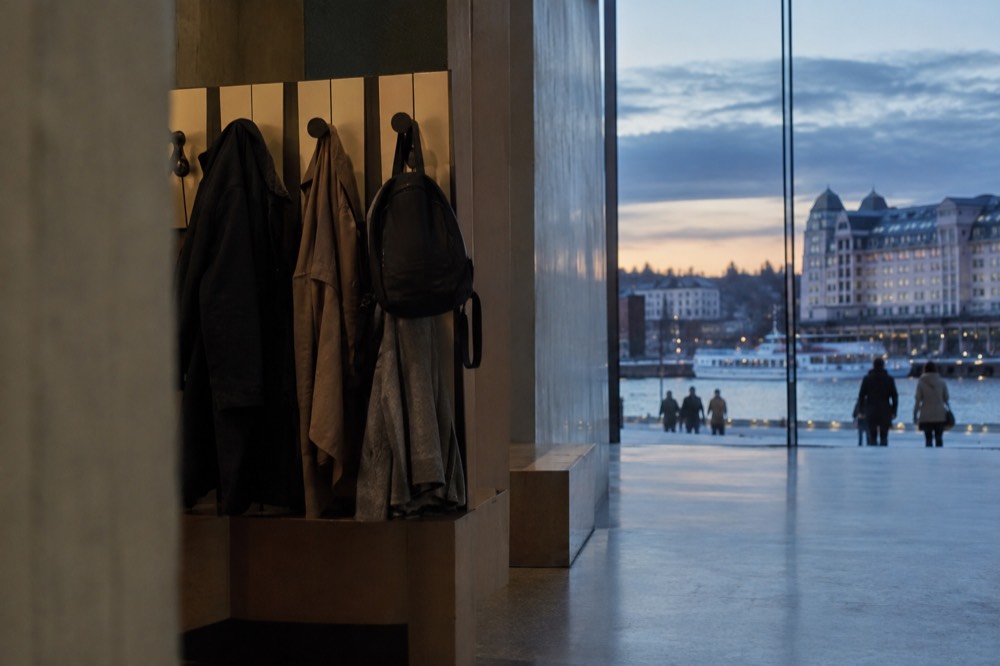
Most major Oslo museums have free or low-cost cloakrooms, and at the big institutions, MUNCH, the National Museum, the Fram Museum, the Kon-Tiki Museum, and Norsk Folkemuseum among them, a bag drop is a normal part of arrival rather than an extra you pay for. Rules on suitcase-size bags vary by venue, and the largest rolling suitcases are the ones most likely to be refused, so lockers or the hotel remain the better home for those.
The museum cloakroom is the quiet workhorse of Oslo luggage logistics, because the city's core indoor attractions are also its biggest time commitments. You do not want to carry anything through three floors of MUNCH, and the building, covered in the MUNCH museum guide, is designed around movement between galleries. The same logic applies at the National Museum, which holds The Scream and enough else to fill half a day, and at Bygdøy's cluster where the Kon-Tiki Museum and the Fram Museum sit a short walk from each other.
| Venue | Bag drop | Notes for large luggage |
|---|---|---|
| MUNCH | Cloakroom on arrival | Daypack-friendly; rolling suitcases best avoided |
| National Museum | Cloakroom and lockers | Large bags may be refused at busy times |
| Kon-Tiki Museum | Storage area | Pairs with Fram, plan for both in one stop |
| Fram Museum | Cloakroom | Small lockers, coat storage |
| Norsk Folkemuseum | Cloakroom | Open-air site, you walk between buildings |
| Vigeland Park | None needed | Outdoor and free, open around the clock |
The Bygdøy row deserves a special note because of how the peninsula works. The museums sit at two clusters around the Dronningen and Bygdøynes piers, and you walk between buildings outdoors. There is no single bag drop for the whole peninsula, so the practical pattern is one museum's cloakroom at a time, or better, no big bag on Bygdøy at all. Getting there is its own topic: the seasonal ferry from Rådhusbrygge 3 and the year-round bus 30 have different ticket rules, which the Bygdøy guide untangles in full.
One pairing that solves the cloakroom question entirely is the museum-plus-boat day. The silent electric fjord cruise departs from the central pier area, runs ninety minutes with audio commentary, and returns you to within a short walk of the City Hall pier for the Bygdøy ferry. If your bags are at the hotel or in a station locker, that sequence, fjord cruise, then Bygdøy museums, then back to collect luggage, is about as clean as an Oslo day gets. The cruise is the city's single best-reviewed activity on the platforms this site tracks, and the free-cancellation terms mean the plan survives a weather change. The full index of guides sits on Oslo Travel Guide. The full index of guides sits on Oslo Travel Guide.
What Do You Do with Luggage on a Cruise-port Day in Oslo?
On a cruise day your ship is your storage, and the real question is the shape of the day ashore, because most Oslo cruise passengers get roughly eight hours and the city's best sights split into a compact harbor cluster and a Bygdøy peninsula cluster that are one ferry ride apart. Disembark with a small daypack only, start from the central pier area, and structure the day as harbor sights, one boat, one museum cluster, then back to the ship.
The cruise-port day is where Oslo's geography works in your favor. The passenger terminals sit close to the mouth of the inner harbor, and the walk from the ship into the center passes the Opera House, whose roof is free to walk on and needs no ticket, then Akershus Fortress, then the City Hall piers. That entire sequence is luggage-free by definition because you left everything aboard, and it is the spine of the Oslo cruise port day guide, which lays out full timings for a single day ashore.
The decision that matters is the boat. With a limited day, the fjord cruise is the highest-value use of harbor time, and the electric silent boat is the one to pick for a port day because it is short, centrally departed, and quiet enough that the commentary is actually audible. It is also, unlike some harbor products, one you can book with a free-cancellation window, which matters when a ship's schedule can shift. The full decision between the fjord products, the electric boat, the wooden sailing ship, the island ferries, and the dinner cruise, is covered in the Oslofjord cruise guide.
| Port-day block | Time on foot or water | Works with a daypack |
|---|---|---|
| Opera House roof and harbor walk | 45-60 min | Yes, fully |
| Electric fjord cruise | 1 h 30 m | Yes, small bags aboard |
| Bygdøy ferry plus two museums | 3-4 hours | Yes, cloakrooms at each |
| Akershus Fortress grounds | 1 hour | Yes, outdoor |
| Central pier to ship | 15-25 min walk | Yes |
A note on the fortress, since it is on every port-day route: the grounds are open and free to walk, while the museums inside, including the Resistance Museum covered separately, have their own tickets and hours. The Akershus Fortress guide explains what is inside the walls and what is not, which is worth knowing when your time is counted in hours.

Can You Store Luggage at Oslo Airport Gardermoen?
Yes, Gardermoen has luggage storage, which makes the airport a workable base for layover days and for the fly-out evening when you want hours in the city after hotel checkout. The airport sits about 50 km from the center, roughly 20 minutes by the Flytoget airport express and about 23 by Vy's trains, so an airport-storage day costs you the round-trip train time but nothing in convenience. Prices and size limits are posted at the storage point in the terminal.
The layover case is the strongest one. If your connection at Gardermoen is six hours or more, storing bags at the airport and riding into Oslo for the middle of the day is a genuinely good use of the time, and the Oslo layover guide works out the timings, including the awkward question of how far you can realistically get and still make the gate. The train is the deciding factor: with departures roughly every ten minutes on the express, the city is close enough that a four-hour window in central Oslo is achievable from a six-hour layover.
The checkout-day case is subtler. Storing at the airport after checkout works, but it usually loses to a hotel hold-over or a station locker, because both of those put the storage where your day already is. The airport version only wins when your day ends at the airport anyway and your hotel is far from a convenient line, which in Oslo is rare given how dense the metro is. The full picture of the airport-to-city transfer options, including the price gap between the two trains that most guides state wrongly, is in the Oslo airport to city centre guide.
That Vy-versus-Flytoget gap matters for the airport-storage day specifically, because you will ride it twice. The express costs 268 NOK adult each way; Vy's regional trains cover the same distance in about 23 minutes against the express's 20, at roughly half the price, and a Ruter ticket covering the zones, the airport sits in zone 4N, is valid on them. Ride the cheap train twice and the airport-storage day stops carrying a penalty.
How Much Does Luggage Storage Cost in Oslo?
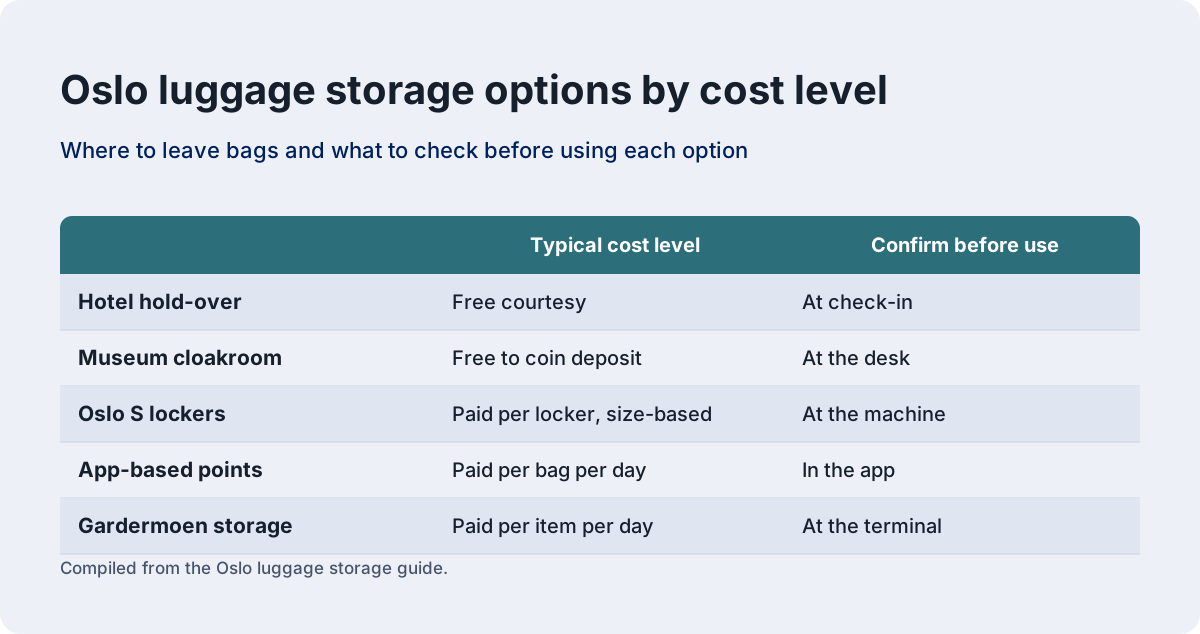
There is no verified city-wide price list for Oslo luggage storage, and any guide quoting exact locker prices is guessing, so treat every figure below as a planning range to confirm on arrival. As a rule, hotel hold-over is free or near-free, museum cloakrooms are free or a small coin deposit, station lockers cost more per day and scale with locker size, and app-based storage points sit between hotels and lockers. Storage is a minor line item in an Oslo budget next to food and drink.
That honesty about the numbers is deliberate. Norway's cost problem is concentrated in restaurants, alcohol, and accommodation, not in the small mechanical services. Statistics Norway's price-level survey, the strongest sourced comparison available, puts food and non-alcoholic drinks 33 percent above the European average and alcohol and tobacco at more than double, while the things that make Oslo work, public transport, the outdoors, most museum admission, are not extreme by regional standards. The full breakdown is in is Oslo expensive and the itemized version in the Oslo trip cost guide.
| Storage route | Typical cost level | Confirm before use |
|---|---|---|
| Hotel hold-over | Free courtesy | At check-in |
| Museum cloakroom | Free to coin deposit | At the desk |
| Oslo S lockers | Paid per locker, size-based | At the machine |
| App-based points | Paid per bag per day | In the app |
| Gardermoen storage | Paid per item per day | At the terminal |
The budget conclusion is that storage should not shape your Oslo plan. Even the priciest locker for a full day costs less than a single main course at a mid-range Oslo restaurant, and the free routes, hotel and most cloakrooms, cover the majority of real itineraries. Where money genuinely leaks on an Oslo day is the waterfront restaurant terrace and the second beer, and the price of beer in Oslo guide explains exactly why, with the Vinmonopolet monopoly and its Sunday closures as the backdrop.
What Is the Best Luggage-free Day in Oslo?
The best luggage-free day in Oslo starts at a station locker or hotel desk, takes the silent electric fjord cruise from the central piers in the late morning, crosses to Bygdøy by ferry for the Kon-Tiki and Fram museums in the afternoon, and finishes with a walk back through the harbor past the Opera House before collecting the bags. It works because every step starts and ends within a short walk of where your luggage sits, and nothing in it requires a car or a large bag.
The morning belongs to the water. The electric fjord cruise is the city's best-reviewed activity, 4.5 across more than six thousand reviews, and its ninety-minute length is exactly right for a day that has more in it afterward. The audio guide commentary covers the harbor, the fortress, and the islands as you pass, which quietly doubles as orientation for the rest of the day. Because the boat is electric and near-silent, the trip is calm rather than windy-loud, and the departure point by the City Hall piers is a short walk from Oslo S, so the locker-to-boat transfer is trivial.
The afternoon belongs to Bygdøy. From the central piers the seasonal ferry runs to Dronningen and Bygdøynes, where the Kon-Tiki and Fram museums sit together, and both are covered by the Oslo Pass if you are carrying one. The Kon-Tiki Museum holds Thor Heyerdahl's balsa raft and the papyrus boats from his later expeditions, and the Fram holds the strongest ship in the world, the actual vessel that carried Nansen and later Amundsen into the polar ice. You can board her. Two museums is a full afternoon, and the cloakrooms at each mean even a daypack can be set down while you walk the decks.
The evening belongs to the walk. The ferry back lands you at the piers again, and from there the harbor promenade runs past City Hall and up to the Opera House, whose marble roof is free, open, and at its best in the long summer light. In late June the sun sets at 22:43 and it never gets properly dark, a swing from the five hours and fifty-three minutes of daylight at midwinter that the Oslo daylight hours guide charts month by month. Collect the bags, ride the airport train, and the day is complete without the suitcase having touched a single attraction.
If your luggage-free day is your only day, the full-day bus and fjord combination is the alternative shape: it bundles the city sightseeing and the fjord cruise into one booked product, which removes every transfer decision. It is a long day at seven and a half hours, and it suits first-timers and cruise passengers whose time is bounded.
Whichever shape you choose, the storage principle is the same: park the bags once, at the start, and never think about them again until the day is over. Oslo's compact center makes that easy, and the trio below covers the three ways most visitors spend the freed-up hours.
Common Questions About Luggage Storage in Oslo
Does Oslo Central Station have luggage lockers?
Yes. Oslo S has self-service lockers paid by card, with sizes and prices posted at the machines. The station's role as the hub of the metro, tram, airport and long-distance rail networks makes it the most useful single storage point in the city.
Can I leave my bags at an Oslo hotel after checkout?
In almost every case, yes, and usually free. Hotels hold luggage behind the front desk both before check-in and after checkout as a standard courtesy. Ask at check-in rather than at checkout in peak season, and keep valuables with you.
Do Oslo museums have cloakrooms?
Most major museums do, including MUNCH, the National Museum, Kon-Tiki, Fram and Norsk Folkemuseum, and most are free or take a small deposit. Very large rolling suitcases may be refused, so big luggage is better left in a locker or at your hotel.
Can I store luggage at Oslo Airport Gardermoen?
Yes, the airport has storage facilities, which makes it a workable base for layover days. The train to the center takes about 20 minutes on the airport express and about 23 on Vy's trains, so a six-hour layover can include several hours in Oslo.
Is luggage storage expensive in Oslo?
No. Relative to the rest of an Oslo budget, storage is a minor line item, and the two most common routes, hotel hold-over and museum cloakrooms, are usually free. Norway's genuine cost pressure is in restaurants, alcohol and accommodation, not in small mechanical services.
What should I do with luggage on a cruise day in Oslo?
Leave it on the ship. Oslo's cruise terminals sit within walking distance of the harbor cluster, and the best port-day plan, harbor sights, one fjord cruise, one Bygdøy museum cluster, works entirely from a small daypack.