Brunch in Oslo: What to Order, Where to Go and What It Costs
Brunch in Oslo is a different institution from the avocado-toast version you know. It starts with the Norwegian breakfast table, runs on coffee and cinnamon buns, and clusters in a handful of neighborhoods you can plan around.
Short answer
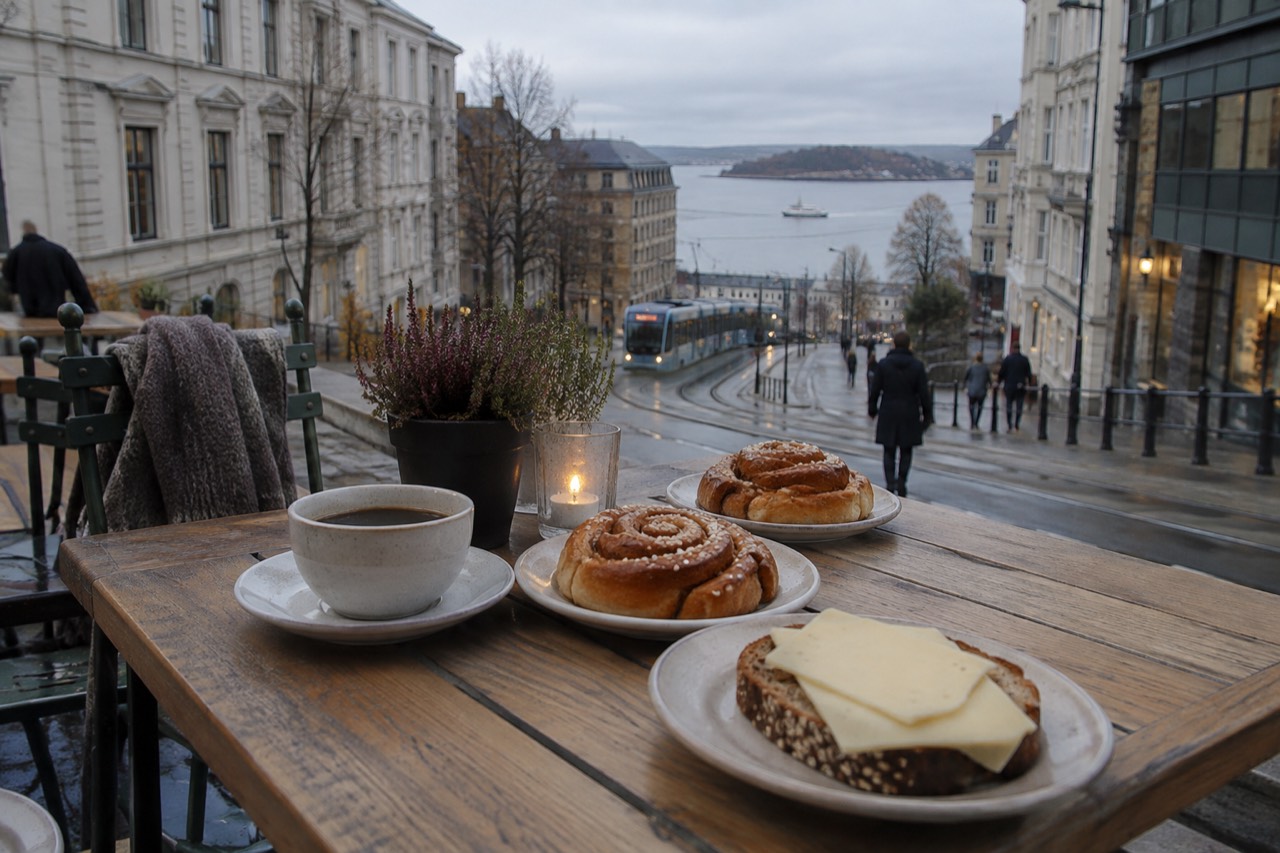
Oslo brunch is built on the Norwegian breakfast table: brown cheese, mackerel, crispbread and eggs, plus strong coffee and a cinnamon bun. Grünerløkka and Vulkan are the weekend brunch districts. Expect prices around a third above the European food average, so a sit-down weekend brunch is a splurge in a city where groceries and coffee shops stretch further.
Brunch is not a Norwegian word, but the meal behind it is one of the most Norwegian things you can sit down to in this city. The breakfast table that Oslo builds every morning, brown cheese and bruisost, smoked mackerel, crispbread, boiled eggs, strong black coffee, is the base layer the weekend brunch scene grew out of. Add the national addiction to cinnamon buns and a café culture that took off around the harbor and the eastern neighborhoods, and you have a brunch town that works differently from London or New York.
This guide covers what an Oslo brunch actually is, which neighborhoods carry the weekend scene, how coffee and bakery culture shape the day, what you will pay, and how the brutal seasonal swing in daylight changes when and how you eat. There is a full coffee guide here, and the neighborhood overview helps if you are still deciding where to base yourself.
What Does a Typical Oslo Brunch Actually Look Like?
A typical Oslo brunch is a stretched version of the Norwegian breakfast table rather than a sweet American plate. Expect bread or rolls with brown cheese, cured or smoked fish, boiled eggs, jam, crispbread, vegetables, and plenty of filter coffee, often served buffet style on weekends, and often eaten late, after a morning ski, hike or swim. The egg benedict and pancake plates exist but sit at the edges of a table built around bread, dairy and fish.
The heart of it is the bread course. Norwegian bread is dense, sourdough-leaning, often full of seeds and whole grains, and it arrives as a basket with everything on the side. You build open-faced slices yourself. The toppings define the meal: brown cheese (brunost), a caramel-sweet whey cheese that is genuinely national, white mysost, cured meats, mackerel in tomato, smoked salmon, liver pâté, and the sweet corner with jam and cheese slicers.
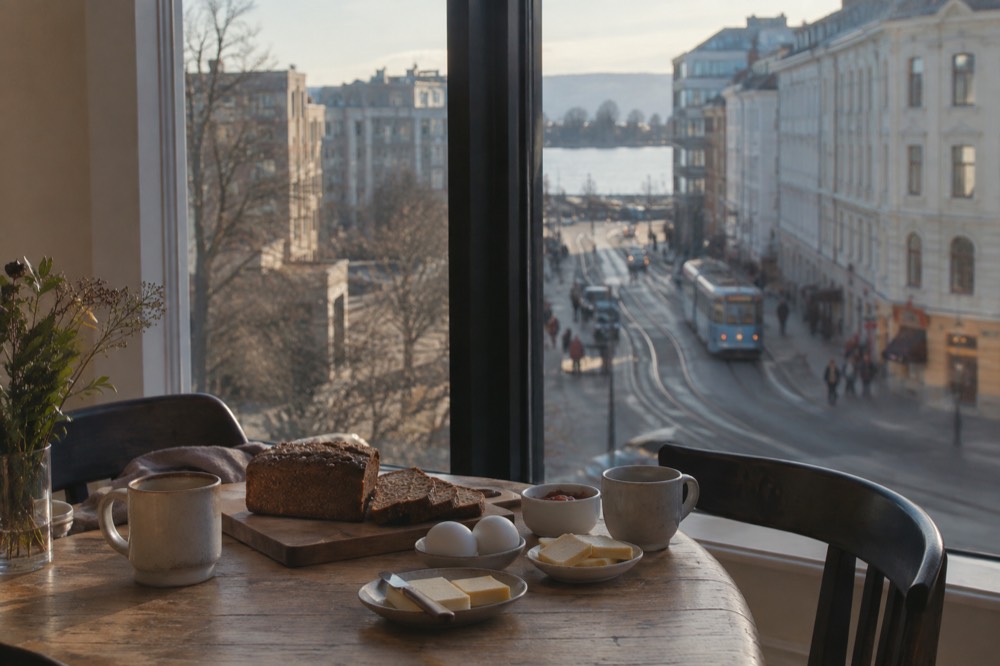
Weekend brunch in the café sense means restaurants that turn their breakfast table into a buffet, or a menu of plates that mixes the traditional items with international additions. Shakshuka, granola and sourdough pancakes appear in the brunch-heavy neighborhoods. The tradition underneath stays visible, though: fish on the table, brown cheese in the cheese slicer, and coffee that keeps coming.
Two practical notes shape the experience. Norwegians eat their main meal early compared with southern Europe, and brunch sits between late breakfast and lunch, so the kitchen often winds down mid afternoon. And the weekend scene concentrates in a few districts, which is where to book. The table below maps the components you will actually meet.
| Component | What it is | Where you meet it |
|---|---|---|
| Brunost | Caramel-sweet brown whey cheese, sliced thin with a cheese slicer | Every breakfast table and most brunch buffets |
| Knekkebrød | Crisp rye crackers, seeded and dry | Buffets, hotel breakfasts, health-forward cafés |
| Mackerel in tomato | Canned smoked mackerel, a pantry staple | Breakfast tables, some brunch spreads |
| Smoked salmon | Cold-smoked, often Norwegian farmed | Hotel breakfasts and upmarket brunch |
| Kanelboller | Yeasted cinnamon buns, cardamom-forward | Every bakery, all day |
| boiled eggs and flatbrød | Soft-boiled eggs with paper-thin crisp flatbread | Traditional tables |
Which Neighborhoods Are Best for Brunch in Oslo?
Grünerløkka is the capital of Oslo brunch, with the densest strip of bakeries, coffee bars and brunch cafés in the city, and the adjacent Vulkan area adds the food hall and market halls. Aker Brygge and Tjuvholmen carry the waterfront version, pricier and oriented to the harbor view, while Frogner and Majorstuen lean classic and quieter. Pick your neighborhood by the kind of morning you want, not by the menu, because the menus converge.
Grünerløkka is where the weekend scene peaks. This former working-class district east of the river, once mill workers' housing, is now the city's café and bar strip, and a Saturday late-morning walk down its main streets passes more brunch options than most visitors can use. The Grünerløkka food and culture walking tour is the shortcut for anyone who wants the neighborhood's food explained rather than discovered by trial, and it is this site's pick for the area. The full Grünerløkka area guide covers the rest of the district, from vintage shops to the river walk along the Akerselva.
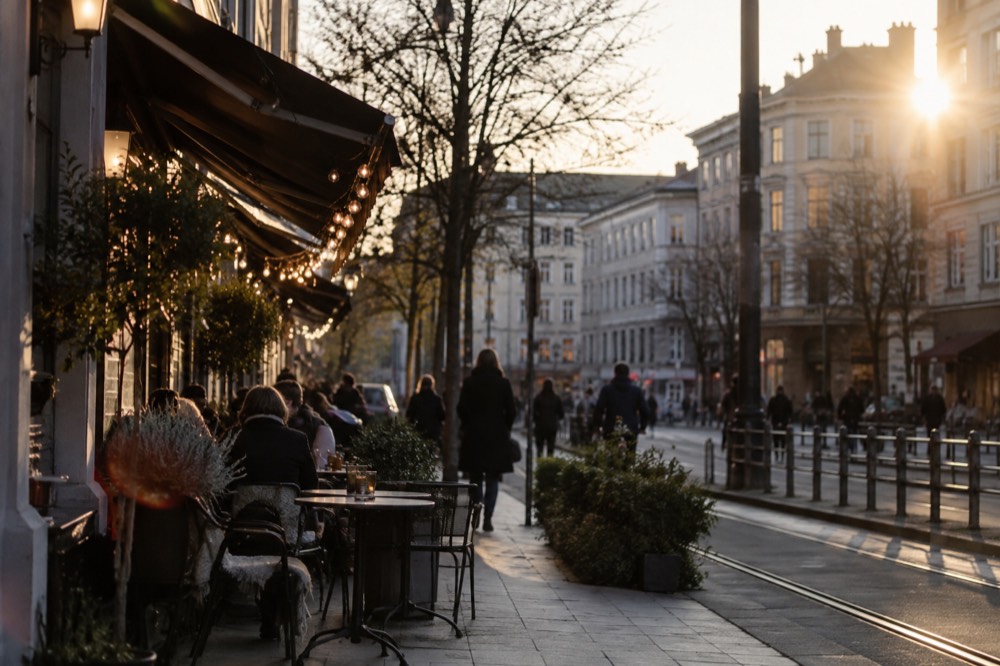
Vulkan, immediately north of Grünerløkka, is the newer food cluster: a food hall, a food-focused hotel and a cluster of producers in converted industrial buildings, all beside the river. The Vulkan area guide has the detail. Mathallen, the market hall there, doubles as a brunch supply stop and a grazing lunch, which is the other way to brunch in Oslo: buy smoked fish, bread, cheese and a cinnamon bun, and eat by the river. The Mathallen guide covers what the stalls carry.
The waterfront carries the upscale version. Aker Brygge and Tjuvholmen put brunch beside the Oslofjord, with the plate priced for the view. Frogner and Majorstuen, west and calmer, run classic bakery-and-newspaper mornings. If your day plan heads to a museum, note that the big institutions are covered in the Oslo museums guide, and a brunch in Frogner pairs naturally with the free Vigeland Park.
If you want your eating guided rather than self-directed, these three are the strongest food and drink experiences in the city.
Is Grünerløkka Worth the Brunch Trip?
Yes, and it is not close. Grünerløkka has the highest density of independent bakeries, coffee roasters and brunch cafés in Oslo, all walkable in a compact grid, and the food-culture walking tour there is one of the best-reviewed food products in the city. The district also gives you the Akerselva river walk, the food hall at Vulkan and Oslo's best people-watching, so the trip buys a whole morning, not just a table.
The district works for brunch because everything is on foot. The grid of streets between the river and the main road holds bakery after bakery, and the Saturday scene spills onto the sidewalks whenever the weather permits. The river walk along the Akerselva, with its waterfalls and old mill buildings, is the classic pre-brunch stroll; the alternative version of that morning is on the water, a kayak or packraft trip down the same river, described in the unusual things to do guide.
The guided option suits visitors who want context with the cardamom. The Grünerløkka food culture walking tour runs about two and a half hours through the neighborhood's food identity, and it consistently draws strong reviews from travelers who wanted the district decoded. It is the related pick for this page precisely because brunch in Grünerløkka is easiest to appreciate with someone explaining what you are tasting.
For a different angle on the same neighborhood, the city-centre Norwegian food walk covers the traditional foods that end up on the brunch table, fish, cheese and baked goods, in the heart of the city rather than the east side. It runs three hours and is the stronger pick if Norwegian food culture as a whole is what you want explained.
Between the two, the choice comes down to geography and depth. The Grünerløkka walk stays in one district and reads it closely, the city-centre walk ranges wider and ties the foods back to the national table. Both run rain or shine, and both end within walking distance of a bakery, which is not a coincidence in this city.
What Role Do Coffee and Cinnamon Buns Play?
Coffee is the structural beam of the Oslo day, not a side order, and the cinnamon bun, kanelbolle, is the mid-morning institution built around it. Norway sits among the world's highest per-capita coffee consumers, Oslo's coffee bars are world-class roasters rather than chains, and the bun stop is the pause Norwegians build into every morning, including brunch. Plan your brunch around a coffee bar you actually want to sit in.
The coffee scene here rewards attention. Oslo roasters have a genuine international reputation, and the city's best coffee bars are small, counter-service places where filter coffee is treated like wine. The breakfast coffee at home is strong and black, often brewed on a stovetop or a simple filter, and the café version scales that up. The Oslo coffee guide goes café by café.
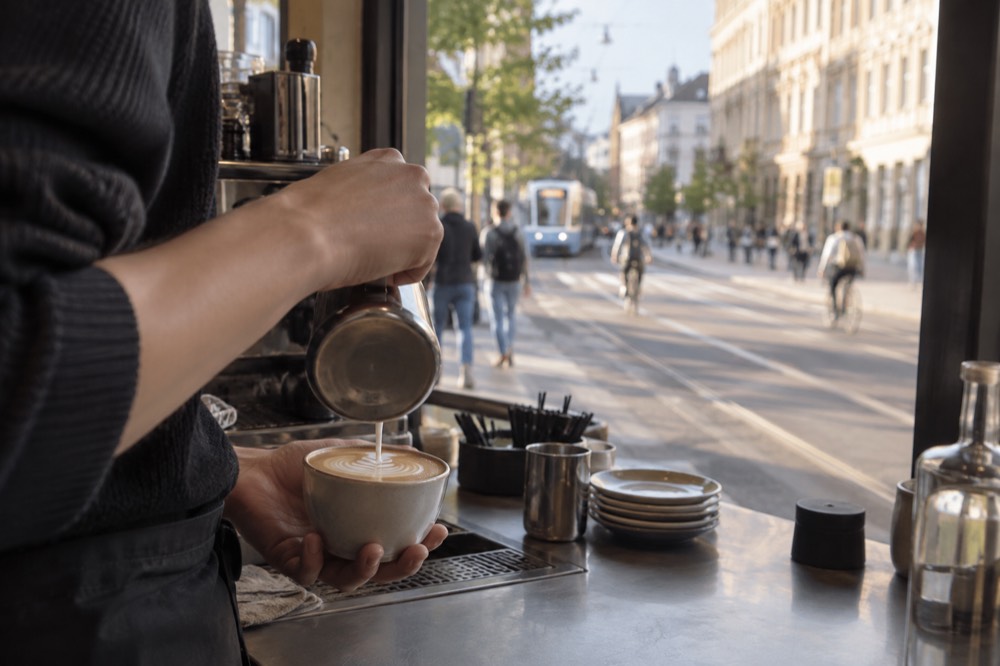
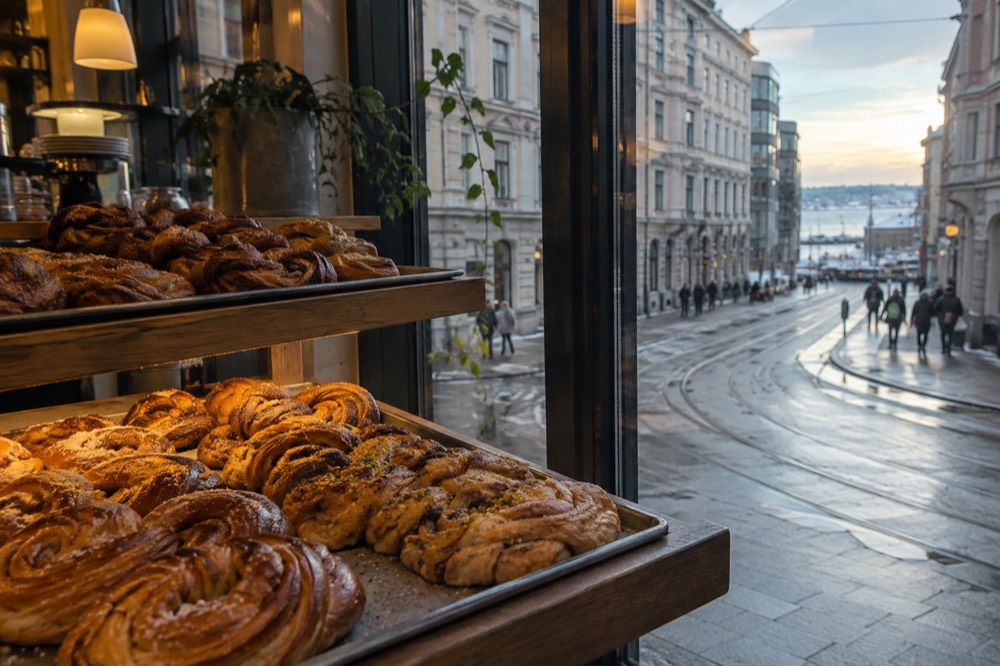
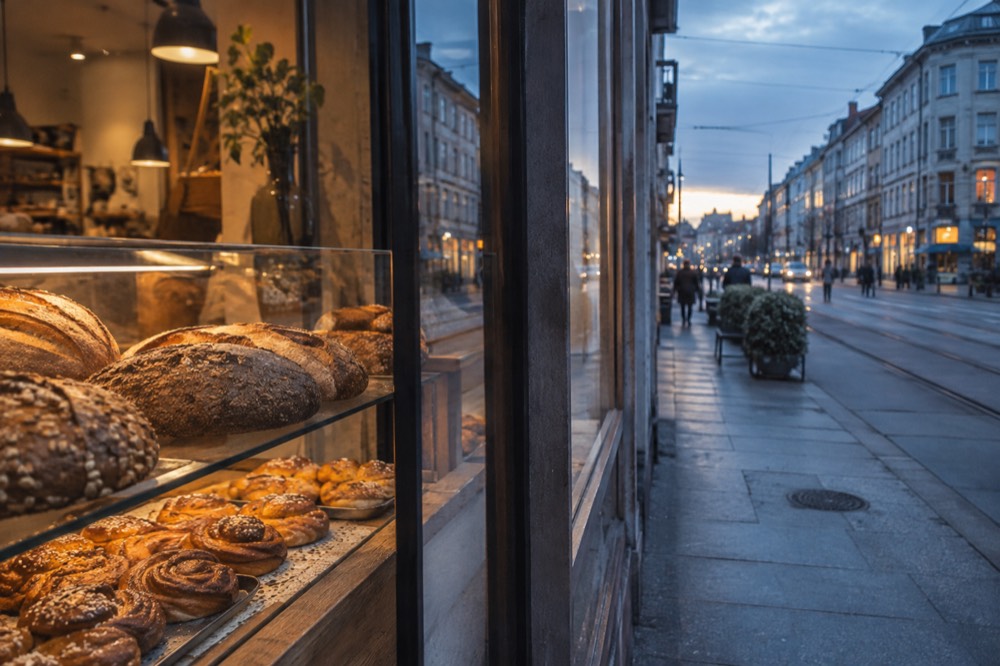
The kanelbolle deserves its own planning. Cardamom is the Norwegian signature, the spice that separates a Norwegian cinnamon bun from the Swedish kanelbulle, and buns appear at every bakery from opening to sell-out. Saturday mid-morning is peak demand, and the best bakeries empty their trays by early afternoon, so a late brunch start in Grünerløkka can genuinely mean no buns. Go early for the bun, late for the table. The wider set of guides lives on Oslo Travel Guide. The wider set of guides lives on Oslo Travel Guide.
The bakery stop and the brunch table are related but separate rituals. Locals do both: the bakery or coffee bar mid-morning, the long sit-down brunch on weekends or special occasions. Visitors with a tight schedule should pick the version that fits the day, since a bun and a filter coffee on a bench along the Akerselva costs a fraction of a waterfront brunch table and, on a sunny morning, beats it.
How Much Does Brunch in Oslo Cost?
Brunch in Oslo costs noticeably more than in most European cities, because Norway is the sixth most expensive country in Europe on the 2025 price-level comparison, with food running 33 percent above the European average and alcohol more than double it. A full weekend brunch buffet is a splurge, while bakery coffee and a cinnamon bun stay comparatively cheap, and the grocery version of a breakfast table is the budget answer.
The honest framing comes from Statistics Norway's 2025 purchasing-power-parity survey, published June 2026. Household prices sit 28.6 percent above the EU average overall, food and non-alcoholic drinks are 33 percent above, and alcohol and tobacco are more than double the European average. That last figure shapes brunch directly: a beer or a brunch cocktail in Oslo costs what a main course costs elsewhere. The deeper cost analysis, including how Oslo's spending splits across hotels, food and transport, is in the is Oslo expensive guide and the trip cost breakdown.
| Brunch format | What it is | Cost character |
|---|---|---|
| Bakery stop | Cinnamon bun plus filter coffee at a counter | The cheap end; a fraction of a sit-down brunch |
| Café brunch plate | Single plate, eggs or pancakes, plus coffee | Mid-range, café-dependent |
| Weekend brunch buffet | The full breakfast table, fish, eggs, breads, often timed sittings | The splurge, weekend pricing |
| Waterfront brunch | Aker Brygge or Tjuvholmen, harbor view | Highest, you pay for the view |
| Grocery breakfast | Supermarket bread, cheese, fish eaten in a park | The budget answer, cheapest by far |
Two structural facts soften the bill. Norway's tipping culture is built into prices, so the number on the menu is the number you pay, and rounding up a small amount is voluntary rather than expected, as the tipping guide explains. And the cheap end of Oslo eating is genuinely good: the bakery counter, the market hall and the supermarket breakfast table all deliver a real Norwegian breakfast for a fraction of a restaurant sit-down. The budget playbook, including the cheapest ways to eat well in the city, is in the Oslo on a budget guide and the cheap eats roundup.
Can You Drink with Brunch in Oslo?
You can, but Norway's alcohol rules make it a different proposition from brunch anywhere south of here. Wine and spirits are sold only through the state monopoly Vinmonopolet, which is closed on Sundays and public holidays and closes early on Saturdays, supermarkets sell only beer and cider and stop at a fixed evening cut-off, and brunch drinks in restaurants are priced at more than double the European average. A brunch beer is easy; a brunch bottle of wine is a deliberate spend.
The monopoly shapes the whole weekend. Vinmonopolet stores close every Sunday, close early on Saturday, and vary by store, so a Saturday brunch plan that includes wine at home needs the shop visited Friday. Supermarket beer has its own rules: limited strength, a fixed end-of-evening cut-off, and nothing at all on Sundays. A guided beer walk is one way around the puzzle, because the guide handles where and what; the Beer and Culture Walk in the food-and-drink category covers exactly that ground.
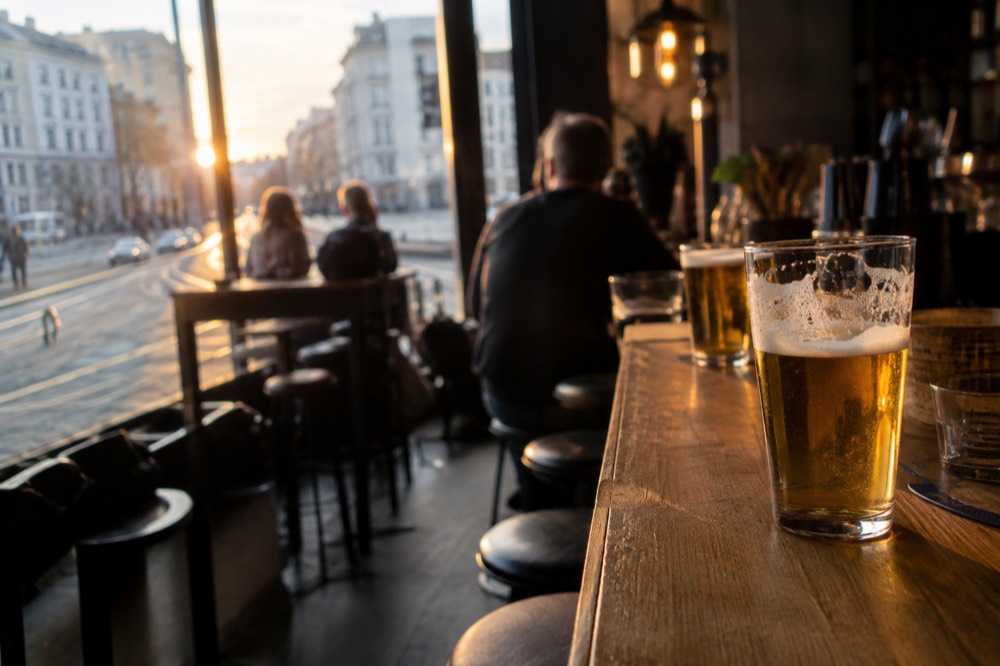
The restaurant side is simpler: brunch venues that serve alcohol price it the way all Norwegian venues price it, at the level the SSB survey captures, alcohol at more than double the European average. Many brunch cafés do not serve it at all, and the ones that do treat a brunch beer or a mimosa as a proper line item. The one genuinely Norwegian move is to skip the mimosa and order a shrimp-buffet evening cruise instead, which pairs the fjord, the shellfish and the evening light into the dinner slot, after a day that started with coffee and buns.
For the full picture of what drinking costs, the price of beer in Oslo guide has the dedicated analysis.
How Does Daylight Change Brunch in Oslo?
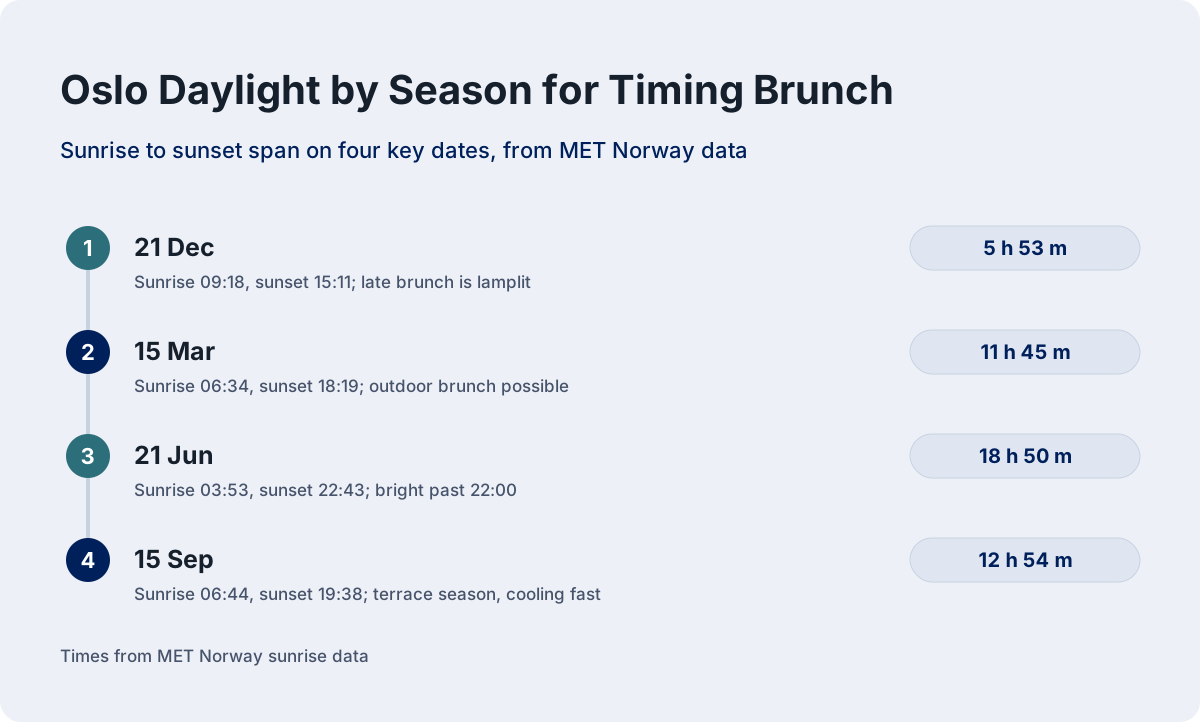
Daylight swings Oslo brunch hard, because the city runs from 18 hours 50 minutes of light on the summer solstice to 5 hours 53 minutes on the winter solstice, and Oslo never has midnight sun. In summer brunch happens outdoors in bright evening light at 21:00, and in December a 10:00 brunch is a lamplit event with the sun rising after 09:00. Book and time your brunch around the season, not around habits from home.
The numbers come from MET Norway's sunrise data. On 21 June the sun rises at 03:53 and sets at 22:43, and the hours between are deep twilight rather than true night. On 21 December the sun rises at 09:18 and sets at 15:11. Mid-March and mid-September sit between the extremes. That swing, a factor of more than three, changes what a brunch morning feels like more than any menu does.
| Date | Sunrise | Sunset | Day length | Brunch timing note |
|---|---|---|---|---|
| 21 Dec | 09:18 | 15:11 | 5 h 53 m | Late brunch means lamplit comfort food; the day is short |
| 15 Mar | 06:34 | 18:19 | 11 h 45 m | Balanced day; brunch outdoors becomes possible |
| 21 Jun | 03:53 | 22:43 | 18 h 50 m | Bright past 22:00; brunch can slide to dinner |
| 15 Sep | 06:44 | 19:38 | 12 h 54 m | Late-summer terrace season, cooling fast |
The seasonal brunch playbooks diverge completely. In the long days from May to August, the morning swim comes first, at the harbor pools or the islands, and brunch follows as the recovery meal; the swimming and beaches guide covers where. On the dark winter weekends, brunch becomes the outing itself, a long, warm sit-down while the sun barely clears the rooftops, often combined with a sauna session, which the Oslo sauna guide covers as an editorial topic. The weather by month guide fills in the rest of the calendar.
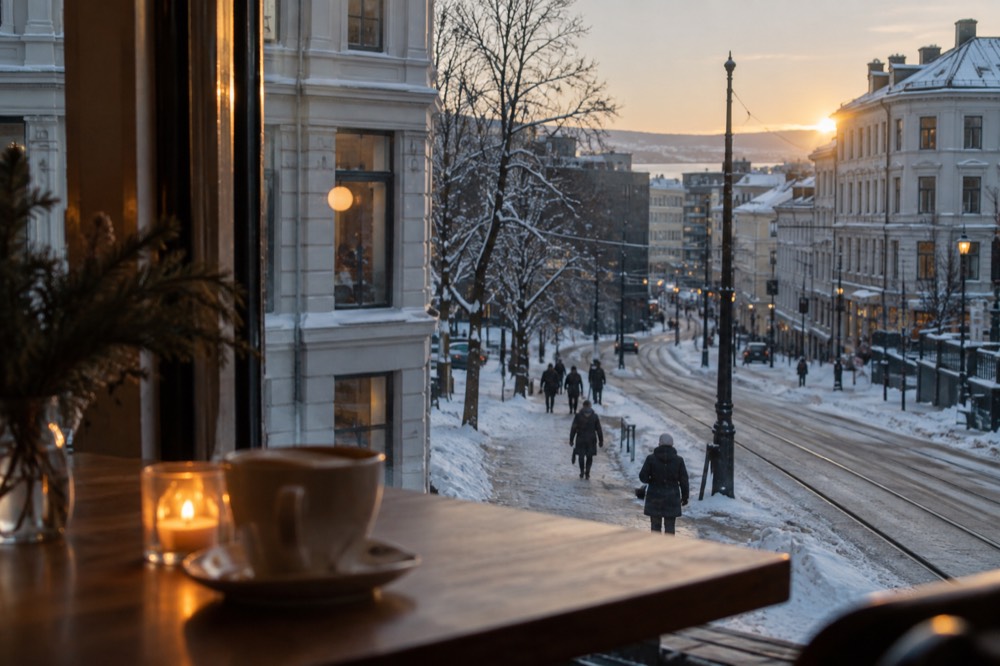
One more planning note: August is Oslo's wettest month on the official 1991 to 2020 normals, at 103 mm, with October third at 93 mm, so a summer terrace brunch plan needs a rain option in the bag. The neighborhood choice matters here, because Grünerløkka's cafés are dense enough that a rain burst costs you one doorway, while the waterfront leaves you exposed to a longer walk.
What Should a Visitor Order at an Oslo Brunch?
Order the brown cheese first, then the fish, then the bun. If the brunch is a buffet, build open-faced slices on the bread rather than assembling a closed sandwich, take the smoked or canned mackerel, and finish with coffee and a kanelbolle rather than dessert. If it is menu-based, look for eggs with fish, anything with brown cheese, and the local bread; skip imported brunch staples you can get at home.
The brown cheese is the test. It is sweet, caramel-ish and unlike any cheese a first-time visitor has met, and it is the single item that makes an Oslo breakfast table Norwegian. Sliced thin with the ostehøvel, the Norwegian cheese slicer, on dense bread, it is the flavor most travelers remember. Pair it with the other anchor, fish: smoked salmon, mackerel in tomato, or the cured and smoked whitefish that appears on traditional tables.
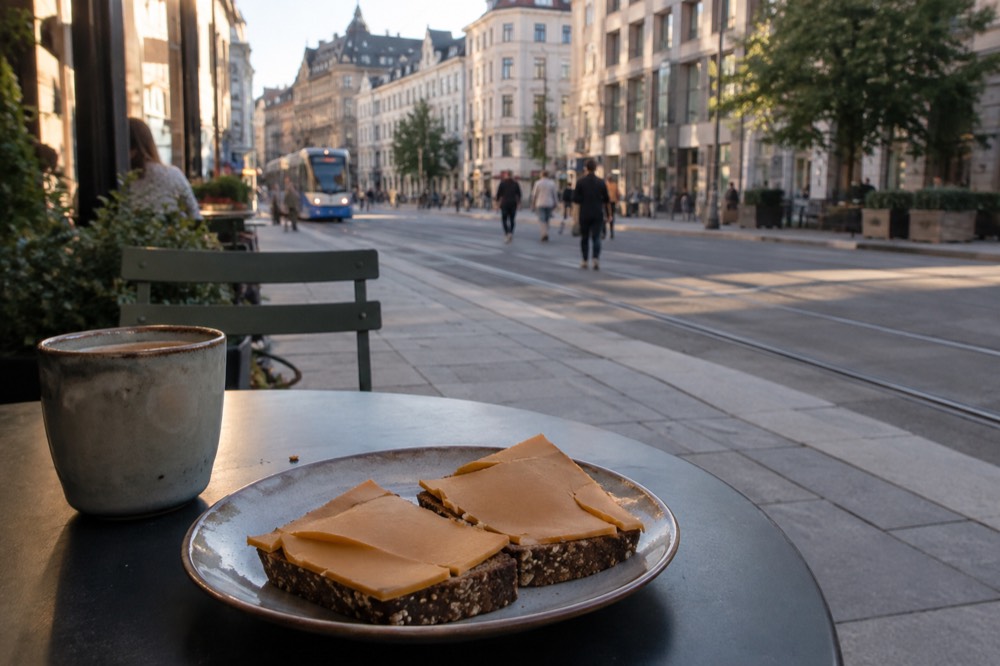
The rest of the ordering is structural. Norwegian breakfast and brunch are build-it-yourself meals, even in restaurants: the components arrive and you assemble. Lean into it rather than asking for a sandwich, because the open-faced slice is how the meal is meant to work. Cardamom is the spice to watch for, in the buns and in pastries generally; ask what is fresh if the counter is unlabeled, and expect the answer to be in fluent English, as the English in Oslo guide confirms is the norm city-wide.
Dietary needs are manageable. Vegetarian and vegan versions of the breakfast table are now standard in the brunch cafés of Grünerløkka and the city centre, the crispbread-and-dairy table translates easily, and gluten-free bread is common. Fish is everywhere, so allergies need flagging, but Norwegian kitchens are used to the request.
Before the final questions, the three experiences below round out a food-first weekend in Oslo, from the neighborhood walk to the fjord dinner to the beer culture.
Common Questions About Oslo Brunch
What time do Oslo cafés serve brunch?
Weekend brunch sittings in Oslo typically run from mid-morning to mid afternoon, with kitchens winding down earlier than in southern Europe. Bakeries open early and sell out of buns by early afternoon on Saturdays, so the coffee-and-bun stop is a morning thing and the sit-down brunch a late-morning one.
Is brunch in Oslo expensive?
Yes, by European standards. Statistics Norway's 2025 price-level survey puts food 33 percent above the European average, and a full weekend brunch buffet is a splurge. The bakery counter and the supermarket breakfast table are the budget answers, and they are genuinely good.
What is brown cheese and should I try it?
Brunost is a caramel-sweet whey cheese, sliced thin with a Norwegian cheese slicer onto dense bread. It is the most Norwegian item on any brunch table, tastes unlike any other cheese, and is the single food most visitors remember from an Oslo breakfast.
Which Oslo neighborhood is best for brunch?
Grünerløkka, with the adjacent Vulkan food hall, has the densest weekend brunch scene in the city. Aker Brygge and Tjuvholmen carry the pricier waterfront version, while Frogner and Majorstuen are quieter and more classic.
Can I get alcohol with brunch in Oslo?
Some brunch cafés serve beer and wine, priced at more than double the European average for alcohol generally. Note that wine and spirits for home consumption are sold only at the state monopoly, which is closed on Sundays and closes early on Saturdays, and supermarkets sell only beer and cider with a fixed evening cut-off.
Do Oslo brunch spots take reservations?
The busy weekend brunch cafés in Grünerløkka and the waterfront do book out, and the buffet formats often run timed sittings, so a reservation is worth making in high season and on holiday weekends. Walk-ins work on weekdays and at off-peak hours.