Oslo Airport (OSL): The Complete Arrivals and Transfers Guide
Oslo Airport at Gardermoen is 50 km north of the city, and the choice you make at the arrivals exit decides whether the trip in costs around 134 NOK or 268 NOK per person. This guide covers every option with verified prices.

Short answer
Oslo Airport (OSL) is at Gardermoen, 50 km from central Oslo and Ruter zone 4N. The Flytoget express train costs 268 NOK adult and takes about 20 minutes; Vy regional trains take about 23 minutes and cost roughly half. The Oslo Pass covers the Vy train but not Flytoget.
Oslo Airport, known locally as Oslo lufthavn Gardermoen and coded OSL, sits 50 km northeast of the city it serves, which makes the journey in from the runway a real decision rather than a formality. The airport is Norway's largest and one of the busier gateways in the Nordics, and almost every visitor's first Norwegian price shock happens right here, at the ticket machines. Avinor, the state airport operator, publishes the transport options plainly, and the spread between them is roughly four to one in price for the same 20-odd minutes of travel.
The single most valuable thing to know before you land: the Oslo Pass covers a train to and from this airport, but only the Vy-opererved one, not the Flytoget express that most arriving passengers queue for. VisitOSLO's own wording is that the pass includes public transport in zones 1, 2, 3, 4V and 4N, "including transport to and from Oslo Airport Gardermoen with public trains operated by VY." Flytoget is a separate company at 268 NOK adult. That one sentence saves a family real money, and most guides get it wrong or skip it entirely.
How Far Is Oslo Airport from the City Center?
Oslo Airport is 50 km north of central Oslo, in the municipality of Ullensaker, and the trip to Oslo Central Station takes between 20 minutes and an hour depending on what you choose. The express train does it in about 20 minutes, Vy regional trains in about 23, the airport coach in roughly 45 to 65 minutes depending on traffic, and a car or taxi around 40 minutes in normal conditions. Nothing you can book makes the airport close; you are choosing speed, price and comfort, not distance.
The distance matters for planning in two ways. First, a layover or an early departure is not a quick hop back into town, it is a 50 km round trip, so budget the travel time as well as the check-in time. Second, the airport sits in Ruter fare zone 4N, not in the central zone, which is why a multi-zone ticket or an Oslo Pass is the mechanism that makes the cheap train work. Entur, Norway's national transport data platform, records Gardermoen as tariff zone RUT:TariffZone:4N, and an ordinary Ruter ticket covering zone 1 through 4N is valid on the Vy trains that call there.

For a full breakdown of every option with prices, see the companion page on getting from Oslo Airport to the city center, and for the wider picture of arriving in Norway by every mode, the getting to Oslo guide covers trains from Sweden, ferries from Denmark and driving routes.
What Are the Ways to Get from Oslo Airport to Central Oslo?
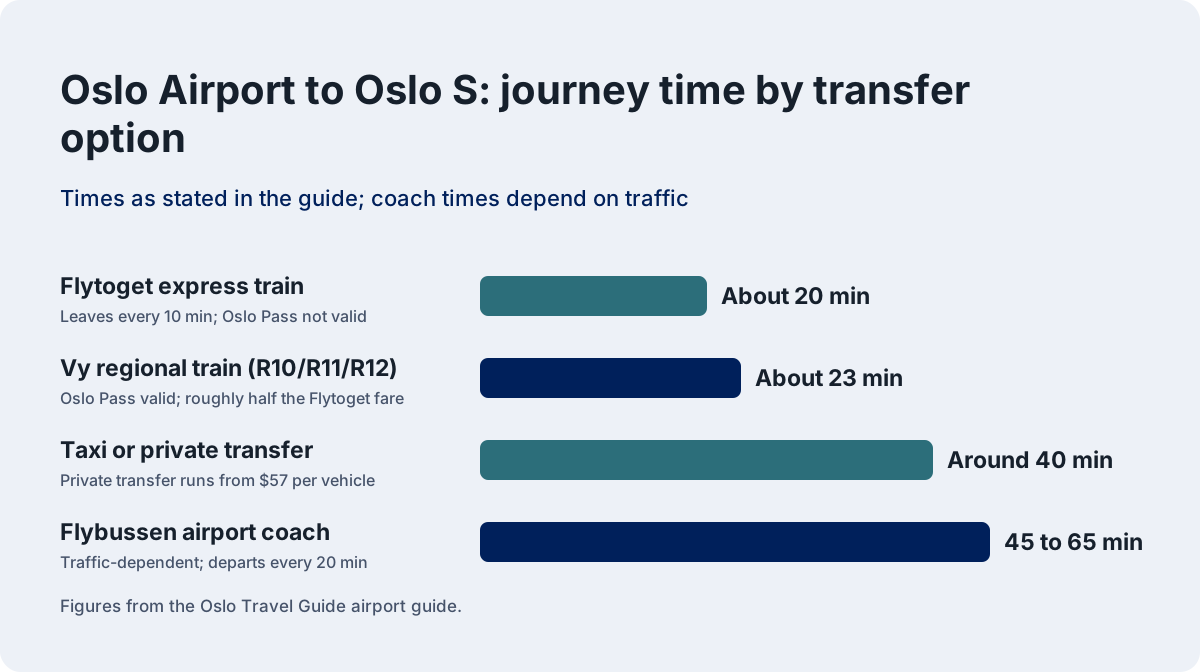
There are four realistic options: the Flytoget airport express train at 268 NOK adult one-way, Vy regional trains at roughly half that fare, the Flybussen airport coach, and a taxi or pre-booked private transfer. The express train leaves every 10 minutes and takes about 20 minutes to Oslo S. Vy trains take about 23 minutes and are the budget answer. A private transfer is the comfort answer, and the coach is the slow middle option that still beats a taxi on price.
The table below lays out the four options side by side. Prices marked as ranges or described without a number are ones where no verified figure exists, and this site does not publish guessed numbers.
| Option | Adult price | Journey time | Frequency | Notes |
|---|---|---|---|---|
| Flytoget express train | 268 NOK one-way | About 20 min | Every 10 min | Separate company; Oslo Pass not valid |
| Vy regional train (R10/R11/R12) | Roughly half the Flytoget fare | About 23 min | Frequent | Ordinary Ruter-zone train; Oslo Pass valid |
| Flybussen airport coach | Check the operator's live site | 45–65 min, traffic-dependent | Every 20 min | Slower, price not verified here |
| Taxi or private transfer | Varies by operator and destination | Around 40 min in normal traffic | On demand | Fares regulated per operator; pre-book for a fixed price |
The choice usually comes down to trains, and the honest framing comes from Vy itself: its trains take about three to four minutes longer than the express, but usually cost about half the price. For two people the saving is a restaurant main each. For a family it is a museum entry. The mechanism that guides miss is that the Vy trains are ordinary Ruter-zone trains, so a multi-zone Ruter ticket covers them, and the Oslo Pass covers them outright with no supplement at all.

If your trip is short and you plan to buy an Oslo Pass anyway, the arithmetic can make the pass pay for itself before you have seen a single sight. The is the Oslo Pass worth it guide runs the full break-even maths against real museum prices.
Flytoget or Vy: Which Airport Train Should You Take?
Take Flytoget if you want the fastest, most frequent ride and do not mind paying 268 NOK for it. Take the Vy train if you want to pay roughly half, have an Oslo Pass, or are traveling beyond central Oslo on a Ruter ticket anyway. The time difference is only about three minutes, 20 against 23, so the real difference is price and ticketing, and for most visitors the Vy train is the better buy.
Flytoget runs every 10 minutes, reaches Oslo S in about 20 minutes, and continues to Nationaltheatret, Lysaker and some destinations further west. Its adult single is 268 NOK, with senior, student, youth and child singles at 134 NOK, and tickets are valid for 90 days from purchase, which is useful if your return date is not fixed yet. It is a genuinely good product: comfortable, punctual and dead simple.
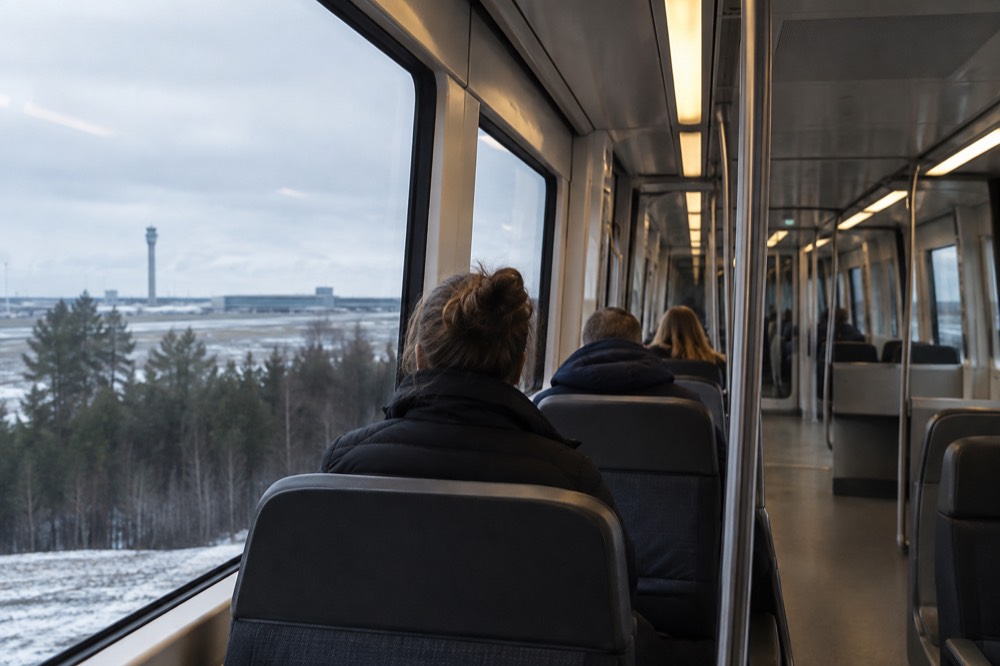
The Vy alternative is the one that takes a little more thought and pays you back for it. The R10, R11 and R12 trains all call at Oslo Airport on their way to and from Oslo S, and Vy's own airport page states the run at 23 minutes. Because these are ordinary public trains inside the Ruter zone system, a Ruter ticket covering zone 1 through zone 4N is valid on them. Buying Vy's own point-to-point fare at the machine is the expensive way to take the cheap train; the multi-zone Ruter ticket in the app is the cheap way. The dedicated Flytoget vs Vy comparison page goes deeper on this than a general airport guide can.
There is one trap worth naming. The two train systems use the same station building at the airport but their tickets are not interchangeable, and an Oslo Pass that is perfectly valid on the Vy platform buys you nothing on the Flytoget platform. Check which train is actually departing before you tap through the gates.
Is a Taxi or Private Transfer from Oslo Airport Worth It?
A taxi from Oslo Airport to central Oslo is the most expensive option by a wide margin, with fares regulated per operator and no single verified price, so this site will not quote one. A pre-booked private transfer costs from $57 per vehicle and takes the guesswork out entirely: a driver meets you in arrivals, handles the luggage, and drops you at an address rather than a station. For groups, families with small children, late arrivals and anyone with mobility needs, it is the rational choice.
The private transfer on this site's roster runs from $57, carries a 4.3 rating across 89 reviews, and takes about an hour door to door. That per-vehicle price, not per person, is what makes it competitive: split three or four ways it lands in the same territory as the express train, and unlike the train it ends at your actual door rather than at Oslo S with a connection still to figure out. You can check availability for an Oslo Airport private transfer and read the details on the operator's live listing.
Taxis at Oslo Airport are metered and regulated per operator, which means there is no single honest number this page could print. What is safe to say: expect it to be the priciest option, agree on a fixed price or confirm the estimate before the doors close, and remember that Norway is the sixth most expensive country in Europe on Statistics Norway's 2025 price-level survey, with prices facing households 28.6% above the EU average. Airport taxi rides are exactly where that gap shows up.
For travelers heading onward rather than into the city, the Oslo Central Station guide covers the national rail network that radiates from Oslo S, including the long-distance trains to Bergen and Stockholm.
What Are the Terminals and Layout at Oslo Airport?
Oslo Airport has one main terminal with two piers, with domestic and Schengen departures on the west side and most non-Schengen international traffic on the east, and everything is under one roof and walkable. Walk times from security to the furthest gates run around 10 to 15 minutes. Arrivals, the train station and all ground transport sit centrally, so there is no shuttle between terminals to build into your schedule.
The terminal was expanded with a new north pier, and the result is a single connected building where you never need to exit and re-enter security to reach a gate. The railway station is integrated into the terminal complex directly below the arrivals hall, which is why the train is the default: you step off the aircraft, walk to baggage reclaim, and the platform is a few minutes further with escalators and lifts the whole way. The rest of the planning pages sit on Oslo Travel Guide. The rest of the planning pages sit on Oslo Travel Guide.

Signage is bilingual, Norwegian and English, and the airport's own wayfinding is genuinely clear. If you are connecting rather than arriving, note that Norway is in the Schengen Area but not in the European Union: it is an EFTA state party to the EEA Agreement, in Schengen through a separate association agreement, outside the EU customs union and outside EU VAT. That is why duty-free allowances apply even when you connect from an EU country, and why the currency at the kiosks is the Norwegian krone, not the euro. The Oslo currency and cash guide covers what that means at ground level.
What Can You Do at Oslo Airport During a Layover?
Oslo Airport has a solid layover offer: a wide range of shops and restaurants in both the public and airside areas, airline and pay-in lounges, free unlimited Wi-Fi, and fast rail access into Oslo itself if your layover is four hours or more. With a five-hour window you can realistically be on Karl Johans gate in central Oslo for 90 minutes and still be back in time for boarding, because the express train is 20 minutes each way and runs every 10 minutes.
The threshold that matters is four hours. Below that, stay at the airport. Above it, the arithmetic of a 20-minute train each way, plus a comfortable buffer for security on the way back, leaves you a real window in the city center. The Oslo layover guide is the dedicated page for exactly this situation, with itineraries sized to connection lengths.
| Layover length | Realistic plan | Why |
|---|---|---|
| Under 2 hours | Stay airside; food, shops, lounge | No safe margin for the 50 km round trip |
| 2 to 4 hours | Stay at the airport; public-area restaurants and rest zones | Train is possible but the buffer is thin |
| 4 to 6 hours | Express train in, 60 to 90 minutes in central Oslo | 20 min each way plus security buffer still fits |
| 6 hours or more | A half-day in the city; the Opera House roof and waterfront are nearest the station | Free sights within walking distance of Oslo S |
If you do head in, the things to do in Oslo page is the full menu, and the sights closest to Oslo S, the Opera House roof, the Barcode district and the waterfront at Bjørvika, are the ones that fit a layover best. The Opera House roof is free public access with no ticket, which makes it the single best layover sight in the city for value and proximity combined.
Are There Other Airports Near Oslo?
Yes, two. Oslo Airport Gardermoen is the main one, but Sandefjord Airport Torp, coded TRF, is about 110 km south of the city and is served by some low-cost carriers, and Moss Airport Rygge, which once carried the Oslo name too, closed to passenger traffic. If your ticket says Oslo, check which airport code it actually uses, because the transfer time and cost from Torp are entirely different from Gardermoen.
Torp is a real airport with a real flow of budget flights, and it connects to Oslo by a coach transfer timed to departures plus a rail link from the nearby station. It is workable, but it is not a 20-minute express train, and the total door-to-door time is closer to two hours than to half an hour. The dedicated Oslo Torp and Sandefjord guide covers the transfer options and prices in full, and it is worth reading before you book a bargain fare that lands 110 km from where you thought you were going.

The naming is the trap. Both airports have marketed themselves with Oslo in the name, and tickets bought through aggregators sometimes show the city name rather than the airport. Gardermoen is OSL. Torp is TRF. One letter of difference, an hour and a half of travel.
How Early Should You Arrive at Oslo Airport for Departure?
For a Schengen flight, two hours before departure is the standard recommendation, and for most departures it is comfortably enough. For a non-Schengen international flight, allow two and a half hours. If you are starting from central Oslo, add the train time on top: the express is 20 minutes but you should be at the platform 10 minutes before departure, so leave the city center about an hour before your intended airport arrival.
Security at Gardermoen is efficient by international standards, and the airport publishes live waiting times, but peak morning and Sunday-evening waves can still build queues. The walk from security to the furthest gates in the north pier is long enough that a tight connection deserves attention: budget 15 minutes of pure walking at a brisk pace, more with children or reduced mobility.

On the way back out of the city, the same train logic applies in reverse. The Vy train from Oslo S to the airport is the cheap option again, the Oslo Pass covers it again if yours is still valid, and the airport's own station is directly under departures, so there is no transfer gap at the top end. The Ruter tickets guide explains how the zone system prices that journey and how to buy in the app before you travel.
Where Should You Stay Near Oslo Airport?
Most visitors should not stay near the airport at all: the train makes central Oslo a 20-minute ride, and the city's hotels are where you actually want to wake up. An airport hotel only earns its keep on a very early departure, a late arrival with a dead-tired family, or a long overnight connection. For those cases there are hotels at or within a short shuttle of the terminal, and the walk-in option attached to the terminal itself is the one that removes all transfer risk.
The arithmetic is simple. A night near the airport saves you perhaps 30 minutes of morning travel and costs you an evening in the city plus a transit fare each way. Unless your flight leaves before about 07:00, when the first trains are still warming up, central Oslo wins on every count. The where to stay in Oslo guide breaks down the neighborhoods, and the blog post on which part of Oslo is best to stay in answers the same question in short form.

If you are overnighting in the city before an early flight, the practical pattern is to stay near Oslo S or Nationaltheatret, where both trains and the airport express stop, so your morning journey is a single ride with no connections. That single decision removes more stress from an early departure than any airport hotel does.
What Should You Do in Your First Hours in Oslo After Landing?
Get the train sorted first, then let the airport's position work for you. Both trains deliver you to Oslo S, which sits at the foot of everything: the Opera House is a five-minute walk, the waterfront at Bjørvika surrounds it, and Karl Johans gate runs from the station up to the Royal Palace. If you land in the morning, drop bags and spend the first afternoon on the waterfront and the Opera House roof, which is free and needs no ticket.
The station-to-sights geography is unusually kind here. Many capitals put their airport line into a station on the edge of things; Oslo's central station is the middle of the map. The one day in Oslo itinerary is built around exactly this landing-and-wandering pattern, and the free things to do in Oslo guide lists the no-cost sights, including the Opera House roof and the always-open, always-free Vigeland sculpture park.
| First-hour sight | Distance from Oslo S | Cost | Why it fits a landing day |
|---|---|---|---|
| Opera House roof | About a 5-minute walk | Free, no ticket | Walkable roof with harbor views, zero planning needed |
| Barcode district | About a 10-minute walk | Free to wander | Striking architecture directly east of the station |
| Bjørvika waterfront | Starts at the station | Free | The whole waterfront promenade begins at Oslo S |
| Karl Johans gate | Starts at the station | Free to walk | Main street running up to the Royal Palace |
| Akershus Fortress | About a 15-minute walk | Grounds free | Historic walls and harbor views near the water |
If you would rather have the city explained to you than find it on foot, a hop-on hop-off bus is the low-effort first afternoon, and a full-day bus-plus-fjord package covers the whole first-timer checklist in one booking. Both pair naturally with a landing day because they start from the city center you have just arrived into.
For a fuller first day, the grand sightseeing combination pairs a city bus tour with a fjord cruise, which is the standard package for cruise passengers and anyone whose Oslo time is measured in hours rather than days.
Common Questions About Oslo Airport
How far is Oslo Airport from the city center?
Oslo Airport at Gardermoen is 50 km north of central Oslo. The express train covers it in about 20 minutes, Vy trains in about 23, and a car or taxi in around 40 minutes in normal traffic.
How much does the airport train cost in Oslo?
The Flytoget airport express costs 268 NOK for an adult single, with concession singles at 134 NOK. Vy regional trains cost roughly half the express fare and are covered by a multi-zone Ruter ticket or an Oslo Pass.
Does the Oslo Pass cover the train from Oslo Airport?
Yes, but only the Vy-operated trains. VisitOSLO states the pass includes transport to and from Gardermoen with public trains operated by Vy, and it does not cover Flytoget or the Flybussen coach.
Which airport does Oslo have besides Gardermoen?
Sandefjord Airport Torp, coded TRF, about 110 km south of Oslo, serves some low-cost carriers. Moss Airport Rygge closed to passenger traffic. Always check whether your ticket says OSL or TRF.
Is a taxi from Oslo Airport expensive?
Yes, it is the most expensive option. Fares are regulated per operator and no single verified price exists, so agree a fixed fare before setting off, or consider a pre-booked private transfer is priced per vehicle rather than per person, which is often cheaper for groups.
How early should I arrive at Oslo Airport?
Two hours for Schengen flights and about two and a half for non-Schengen international departures. If starting from central Oslo, leave the city center about an hour before your intended arrival at the terminal.