Winter Day Trips from Oslo: Snow, Museums and Fjord Days
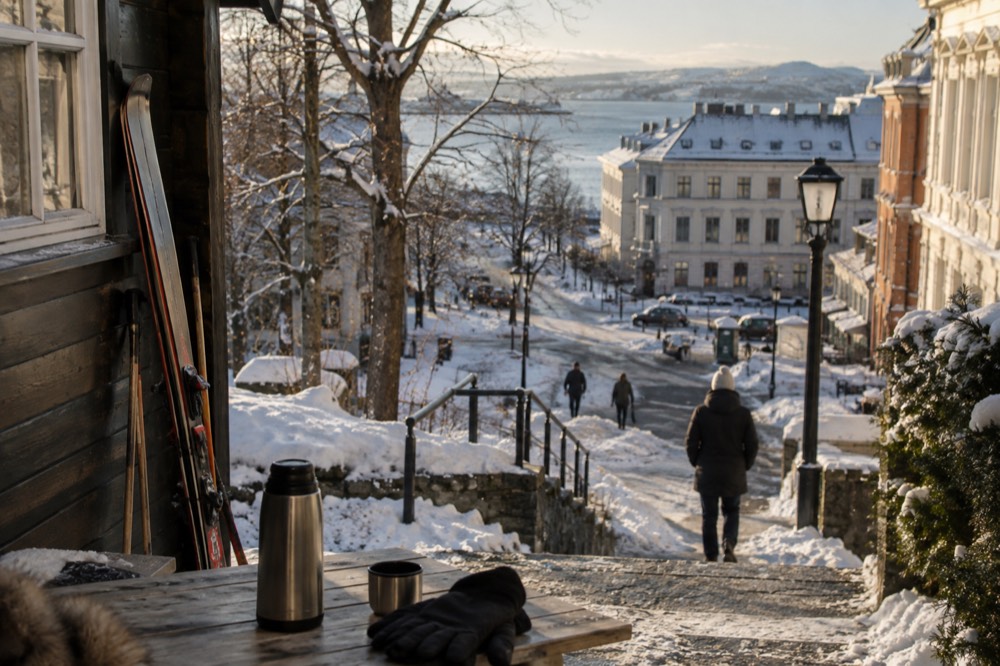
Oslo is one of very few capitals where a genuine winter day trip sits inside the city's own transport zones: Nordic forest, museum peninsulas and fjord islands, all on a regular ticket. This guide sets out what actually works from December to March, what it costs, and how little daylight you have to fit it into.
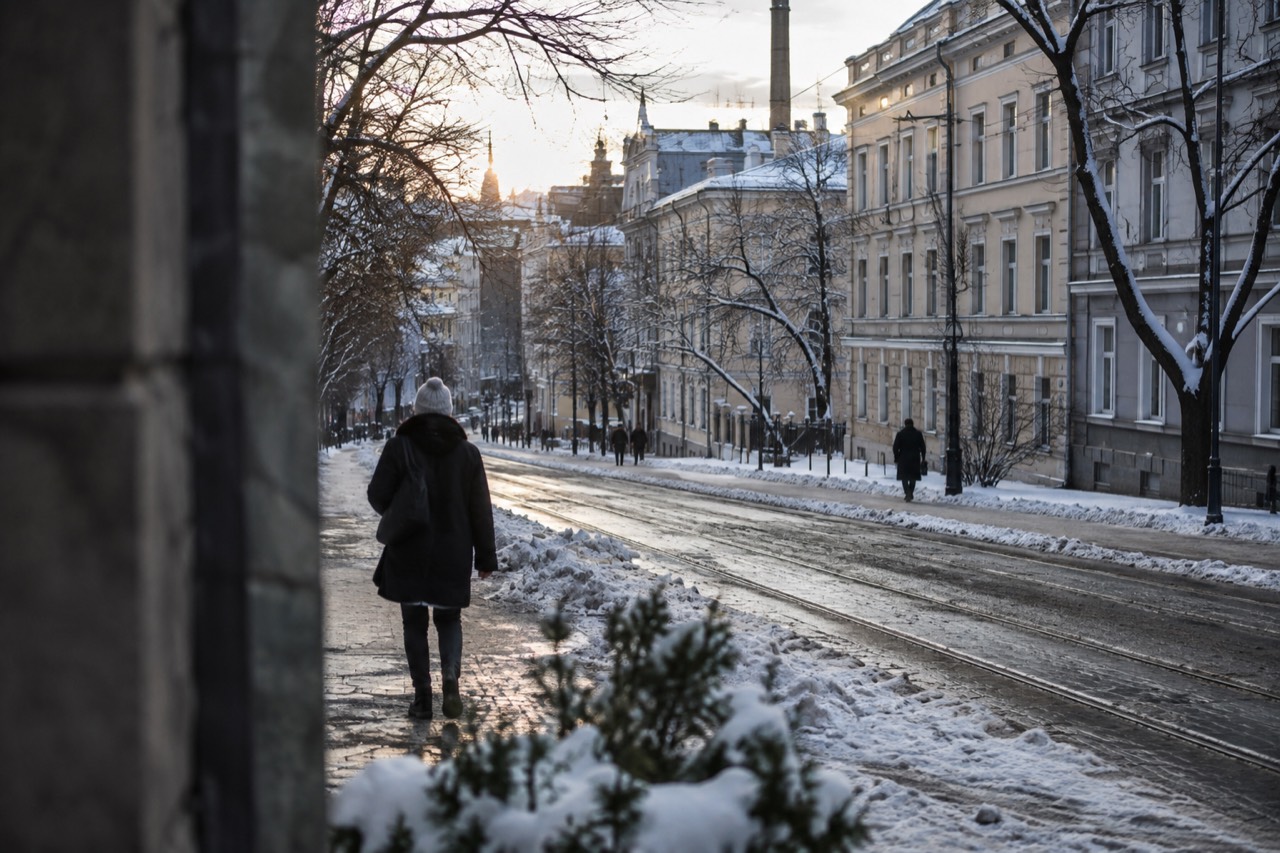
Short answer
The best winter day trips from Oslo are Nordmarka's groomed ski trails and guided snowshoeing, a learn-to-ski half-day in the city's own hills, and the Bygdøy museum peninsula on bus 30. The Oslo Pass covers the museums and all Ruter transport in zones 1, 2, 3, 4V and 4N, and winter daylight runs as short as 5 h 53 m, so plan one anchor activity per day.
What Counts as a Winter Day Trip from Oslo?
A winter day trip from Oslo is any outing you can start after breakfast in the city center and finish before the mid-afternoon dark, using ordinary tickets rather than a rental car. That definition matters here more than anywhere else in Europe: Oslo's metro, trams and buses already reach groomed ski trails, museum peninsulas and fjord islands inside the fare zones. The constraint is not distance, it is daylight, which bottoms out at 5 h 53 m on 21 December.
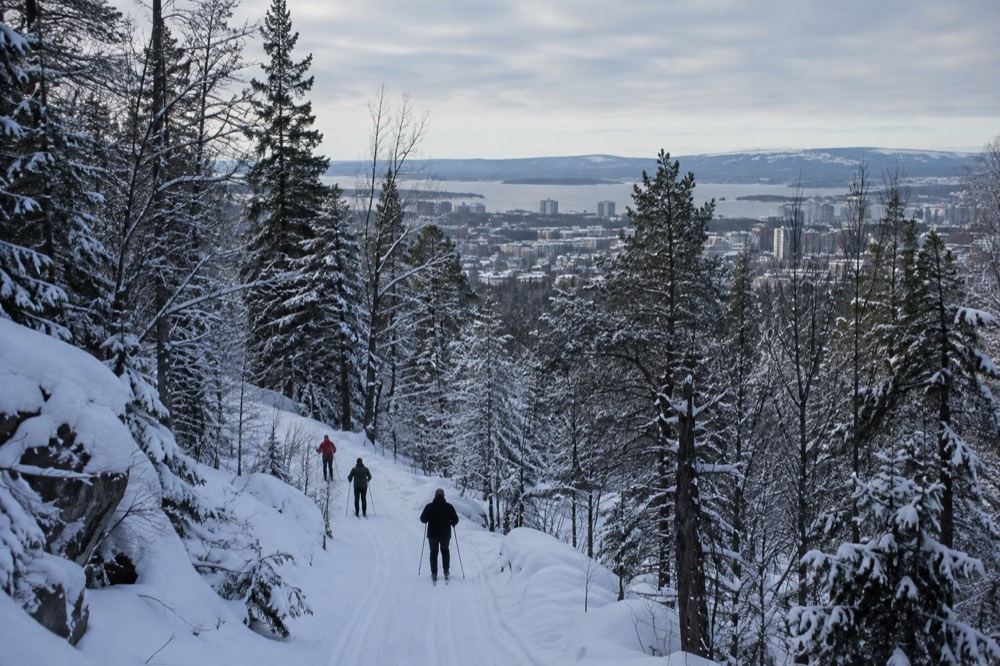
Most European capitals treat winter as something to escape. Oslo does the opposite. The city's own tourism machinery leans into the cold months, because the forest above the metro line, Nordmarka, holds groomed cross-country trails maintained by Skiforeningen, and the residents who fill the weekend T-bane cars are going skiing, not sightseeing. A visitor can join that flow with nothing more than a Ruter ticket and warm layers.
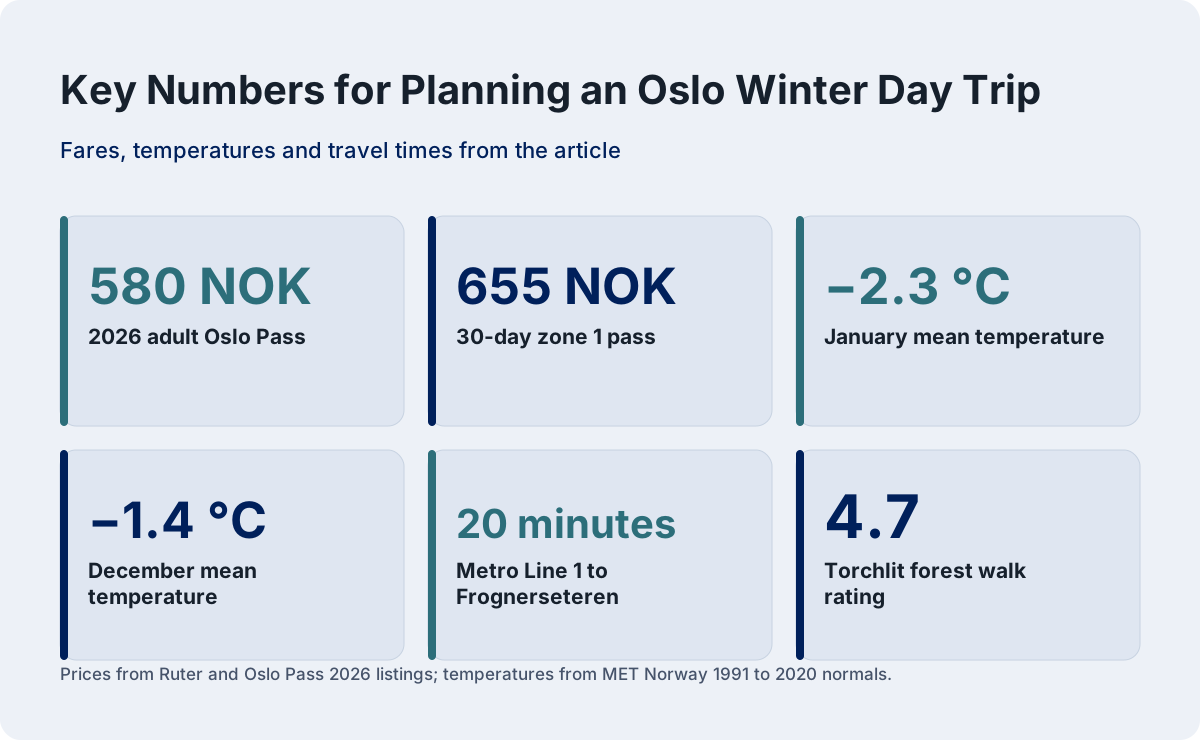
The honest scope of this page: trips you can actually take between December and March. Winter in Oslo is real winter. MET Norway's 1991 to 2020 normals put January at a mean of −2.3 °C (roughly 28 °F) and December at −1.4 °C, and observed lows in recent winters have reached −17.2 °C at the Blindern station. Snow on the ground in the city is not guaranteed; snow in the forest above it usually is.
That temperature frame changes what "day trip" means. You do not need to leave the Oslo region to find winter, so this guide stays mostly inside the transport zones, with one long-haul exception, and it flags every cost in NOK. Norway is in Schengen but not in the EU, it uses the krone and not the euro, and prices reflect it: Statistics Norway's 2025 price-level survey puts Norwegian household prices 28.6% above the EU average. The good news is that the winter outdoors itself is free.
For the full city-side picture, our guide to Oslo in winter covers what to pack and what stays open, and the general day trips from Oslo page handles the summer-season options this page deliberately skips.
Can You Do These Day Trips Without a Car?
Yes, completely. Every trip in this guide runs on Ruter's metro, tram, bus and ferry network, plus one private tour bus option. Ruter's zone system means a single ticket covers the T-bane to Frognerseteren at the edge of Nordmarka, bus 30 to the Bygdøy museums, and the island ferries from Aker Brygge, and the Oslo Pass includes all of it in zones 1, 2, 3, 4V and 4N. A car adds only a parking problem and studded-tyre anxiety.
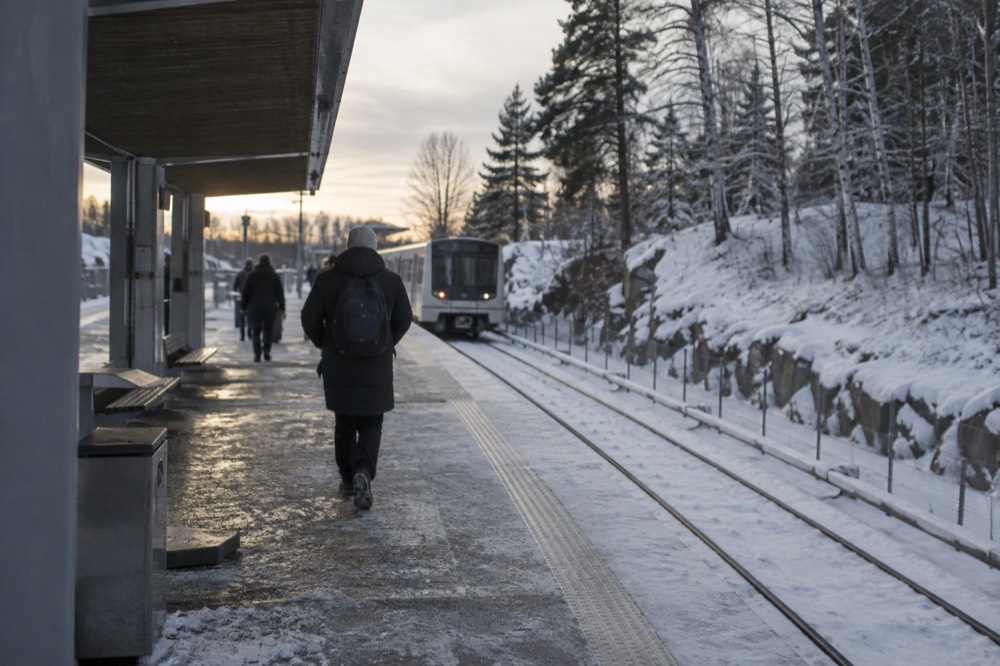
This is the quiet superpower of an Oslo winter trip. Metro Line 1 terminates at Frognerseteren, roughly 20 minutes from Nationaltheatret, and puts you at the trailhead of Nordmarka's ski network. Bus 30 runs year-round to Bygdøy's museum cluster. The B1 island ferry keeps a reduced winter schedule from Aker Brygge on an ordinary zone 1 ticket, though the summer-only B2 to Langøyene does not run, and the separate Bygdøy ferry from Rådhusbrygge 3 stops running after its 4 October season end.
Two ticket facts do the heavy lifting. First, the 30-day zone 1 pass fell from 805 to 655 NOK from 3 May 2026, which tells you nothing about a three-day visit except that Ruter's pricing is actively maintained, so check current single and day fares in the Ruter app rather than trusting a number printed in a guide. Second, the Oslo Pass is bluntly good value for the museum-heavy days: 2026 adult prices are 580 NOK for 24 hours, 845 for 48 and 995 for 72, and that includes the Bygdøy museums plus all that transport.
For visitors who would rather not read a timetable on holiday, guided products solve the transport question outright. The torchlit forest walk picks up in the city and drives you to the snow; the ski lesson handles equipment and venue in one price; the museum ticket covers the Bygdøy anchor sight. Our page on car-free day trips from Oslo details the same logic for the rest of the year.
| Day trip | Transport | Car-free? | Winter note |
|---|---|---|---|
| Nordmarka ski trails | Metro Line 1 to Frognerseteren | Yes, ordinary zone 1 ticket | Trails groomed by Skiforeningen, live reports online |
| Snowshoe or torchlit forest walk | Guided, pickup in city center | Yes, included in the tour | Runs October to March season |
| Bygdøy museums | Bus 30, year-round | Yes, ordinary Ruter ticket | Bygdøy ferry off-season until mid-March |
| Oslofjord islands | Ferry B1 from Aker Brygge | Yes, ordinary zone 1 ticket | Reduced winter frequency, B2 not running |
| Learn-to-ski half-day | Guided, transport included | Yes | Oslo is one of few capitals where this exists |
What Winter Activities Can You Actually Book?
The bookable winter products from Oslo are guided snowshoeing in Nordmarka, a learn-to-ski half-day with gear and instruction, a torchlit forest walk with a campfire, and the indoor anchors like the Kon-Tiki and Fram museums for days the weather closes in. No northern lights tour exists from Oslo, and no husky sledding either: both are Tromsø products, and any listing implying otherwise should be treated with suspicion.
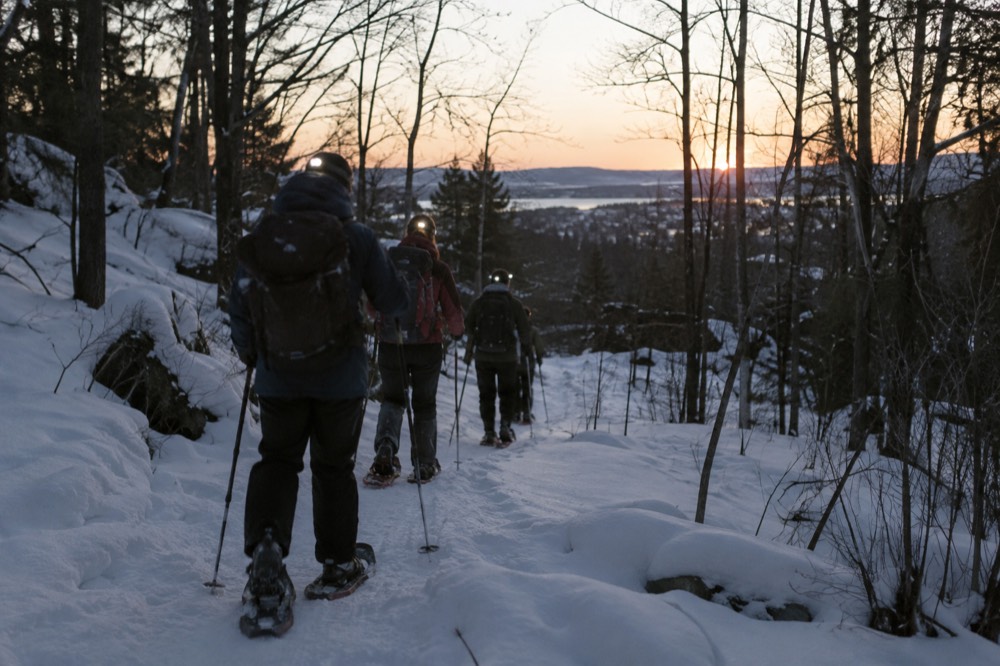
Start with the signature one. The torchlit forest walk with a campfire runs about three and a half hours and is rated 4.7 across 280 reviews. It is the product that most directly answers "what does winter in Oslo feel like": dark forest, snow underfoot, a fire at the end. Because pickup, guiding and the fire stop are bundled, it is also the winter option least exposed to transport mishaps on an icy evening.
Then there is the skiing question. Oslo is, remarkably, one of the only European capitals where a visitor can book a learn-to-ski experience as a half-day city activity, with instruction and equipment, rather than a full resort holiday. The product carries a perfect 5.0 rating across its review base and takes about three and a half hours. It exists because Oslo Vinterpark at Tryvann sits above the city on the metro line, and because Norwegians treat skiing as a life skill taught near home, not a holiday luxury.
For the planning around it, skiing near Oslo lays out the resort and trail options in full, including lift-pass costs at Oslo Vinterpark, which are sold direct per season. The guided lesson is simply the easiest first contact with all of it.
Between those poles sit the themed walks. An evening myths-and-legends walking tour runs about two hours through central Oslo and is rated 4.8 across 510 reviews; it is designed for exactly the October-to-March window when dark comes early and the city's stories land better by lamplight. And on genuinely cold snaps, the guided snowshoeing product in Nordmarka, three and a half hours and rated 4.8 across 191 reviews, turns the forest from a skier's domain into anyone's.
| Winter product | Duration | Kind | What it solves |
|---|---|---|---|
| Torchlit forest walk with campfire | 3 h 30 m | Guided forest experience | Winter atmosphere with zero planning |
| Learn-to-ski half-day | 3 h 30 m | Ski instruction | First-time skiing without a resort trip |
| Guided snowshoeing in Nordmarka | 3 h 30 m | Guided forest experience | Deep-snow access when trails are soft |
| Evening myths and legends walk | 2 h | Themed city walk | Dark-season evenings in the center |
| Kon-Tiki Museum ticket | 1 h | Museum entry | The bad-weather Bygdøy anchor |
One more booking note, because it saves real disappointment: the Oslo Pass does not sell on tour platforms, and the former Viking Ship Museum on Bygdøy is closed until it reopens as the Museum of the Viking Age in 2027. Our Museum of the Viking Age page covers what is happening and what to see instead.
How Much Daylight Do You Get?
On the shortest day, 21 December, Oslo gets 5 h 53 m of daylight, sunrise 09:18, sunset 15:11. By 21 June that swings to 18 h 50 m, sunrise 03:53, sunset 22:43, more than a threefold change across the year. There is no midnight sun at Oslo's latitude of 59.91 N, but in deep winter the practical consequence is harsher: any trip involving distance, snow or walking needs to start in the morning, because mid-afternoon is dusk.
Plan around the sun, not against it. MET Norway's sunrise data, the source of the table below, shows the recovery is faster than most visitors expect: by 15 February the day is already 9 h 14 m long, and by mid-March it exceeds 11 h 45 m. February is the sweet spot many travelers miss, cold but bright, snow still solid in the forest, and daylight long enough for a museum after the trail. Everything else covered here is indexed on Oslo Travel Guide. Everything else covered here is indexed on Oslo Travel Guide.
The other half of the equation is weather. August, not November, is Oslo's wettest month on the 1991 to 2020 normals at 103 mm, but winter has its own trap: January precipitation of 58 mm falls mostly as snow, and the normals say nothing about depth or days of cover, which vary year to year. Skiforeningen publishes live trail and snow-depth reports for Nordmarka, and yr.no carries the forecast. Check both the evening before any forest day.
| Date | Sunrise | Sunset | Day length | Planning implication |
|---|---|---|---|---|
| 15 Jan | 09:04 | 15:49 | 6 h 45 m | One outdoor anchor, museums after |
| 15 Feb | 07:54 | 17:08 | 9 h 14 m | Full forest day possible |
| 15 Mar | 06:34 | 18:19 | 11 h 45 m | Trail plus city, comfortably |
| 15 Dec | ~09:10 | ~15:15 | ~6 h | Torchlit or indoor afternoon |
| 21 Dec | 09:18 | 15:11 | 5 h 53 m | Shortest day; start at first light |
The full monthly breakdown, including how twilight stretches the usable evening in one direction and eats the morning in the other, is in our Oslo daylight hours guide, and the month-by-month planning context sits in the best time to visit Oslo.
What Does a Winter Day Trip from Oslo Cost?
A self-guided winter day runs from roughly 200 NOK, for transport inside the zones plus one modest stop, up to the 580 NOK 24-hour Oslo Pass on a museum-heavy day. Guided products cost more, from about $43 per person for the evening history walk to over $100 for snowshoeing or a ski lesson, but they include gear and transport. The expensive parts of Oslo are restaurants and alcohol, not transport or museums, so a day built on the outdoors stays reasonable.
Break it down the way the cost actually falls. The 24-hour Oslo Pass at 580 NOK covers more than 30 museums plus zones 1 through 4N of transport, including Vy trains to and from Gardermoen airport, though not Flytoget, which costs 268 NOK on its own. At the museum end of the scale: Fram Museum is 180 NOK adult, Kon-Tiki is 180 NOK with children 6 to 17 at 70, and the Kon-Tiki plus Fram combination ticket is 325 NOK adult. Three Bygdøy museums at full price total 560 NOK, against which the pass at 580 NOK already looks close to break-even before counting any transport at all.
The Skiforeningen trails themselves are free to use; what costs money in Nordmarka is equipment rental and the forest cafés, and both are worth it. On the statistical scale, Statistics Norway's 2025 comparison puts food and non-alcoholic drink 33% above the European average and alcohol and tobacco more than double, so the place a winter day trip quietly ruins a budget is the après-ski beer, not the trail pass.
For the guided side, pricing is displayed on each live listing at checkout, and this site's approach is to let the booking panel show it rather than freeze it in prose. The lesson here:
Our broader Oslo trip cost and is Oslo expensive pages carry the full budget breakdown, including the alcohol and restaurant numbers that dominate a night out. For cheap food that survives winter, the Oslo cheap eats guide covers the under-the-radar options.
What If the Weather Turns: Indoor Day-Trip Swaps
The reliable bad-weather swaps are the Bygdøy museum peninsula by bus 30, the National Museum and MUNCH in the center, and the Paradox Museum for families. Every major Oslo museum is indoors, heated and open through winter, and the city has no verified seasonal closures at Fram, Kon-Tiki, Norsk Folkemuseum, the National Museum or Holmenkollen's ski museum in the current season. Winter rain in the city often means snow in the forest, so "bad" weather is sometimes the opposite for a snowshoe day.
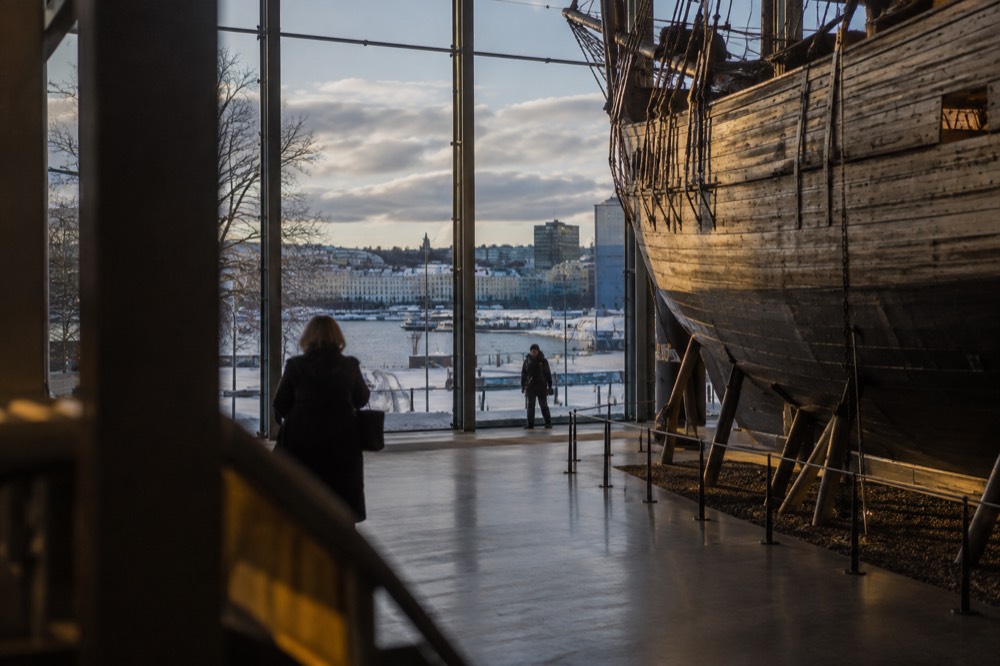
The classic swap is Bygdøy. Kon-Tiki, Fram and the Norwegian Maritime Museum sit together at Bygdøynes, walkable between them in a few minutes, and in winter you take bus 30 rather than the seasonal ferry. Fram is a genuine half-day object: you can board the ship, and the polar-ship museum anchors the strongest pairing with Kon-Tiki. The Fram ticket is 180 NOK adult, and its hours run 10:00 to 17:00 from October to April and 09:30 to 18:00 from May to September.
The city-center pair is just as weatherproof. MUNCH, which brands itself exactly that way now, sits on the waterfront at Bjørvika and costs 280 NOK for a daytime adult ticket, dropping to 200 NOK after 18:00, with under-25s at 100 and 17-and-under free. The National Museum holds The Scream and is the flagship art stop; its hours run long on the same late-closing pattern. Both are covered by the Oslo Pass.
Families get a further fallback in the Paradox Museum of interactive illusions, and the rainy day in Oslo page maps the whole indoor roster, which in winter doubles as the storm roster. For the deeper museum picture, our Oslo museums guide ranks the lot.
| Indoor swap | Adult price | Hours (winter) | Best for |
|---|---|---|---|
| Fram Museum | 180 NOK | 10:00–17:00 | Expedition history, boarding a real ship |
| Kon-Tiki Museum | 180 NOK | Open all year | Raft and expedition story, kids 6–17 at 70 |
| MUNCH | 280 NOK (200 after 18:00) | Sun-Tue to 18:00, Wed-Sat to 21:00 | One painter, one building |
| Paradox Museum | Check the listing | Indoor, interactive | Families, illusions |
| Norsk Folkemuseum | 200 NOK | 10:00–17:00 | Open-air history, children free |
How Far Can You Go and Still Get Back Same Day?
Within Norway, the realistic same-day winter trips are the long private fjord round trips and little else; the museums, forest and ski hills are all inside the Oslo fare zones. The best-reviewed same-day fjord option from Oslo is a private Sognefjord and Flåm Railway round trip running about 15 and a half hours, which works in winter but consumes the entire day.
Cross-border winter day trips to Sweden's shopping towns also run, and the Oslofjord islands make a half-day winter outing on the year-round B1 ferry.
Be honest about the arithmetic. A 15-hour day in December means leaving before the 09:18 sunrise and returning well after the 15:11 sunset, which is exactly why that product suits travelers with one free day and a fjord ambition, not families. Our Norway in a Nutshell and Flåm Railway pages cover the route itself in depth, and the wider set of options lives on the main day trips from Oslo guide.
Closer in, the islands are the underrated winter half-day. The B1 ferry from Aker Brygge runs year-round to Hovedøya, where the ruined Cistercian abbey sits in low winter light, and the crossing on an ordinary zone 1 ticket takes minutes. It is cold, spare and completely different from the same islands in July. The Hovedøya page has the details, and Oslo at night covers what to do with the long evening after.
| Same-day winter trip | Time needed | Season note |
|---|---|---|
| Oslofjord islands on ferry B1 | Half day | Reduced winter frequency from Aker Brygge |
| Nordmarka trails from Frognerseteren | Half to full day | Groomed while snow lasts, live reports online |
| Bygdøy museum peninsula | Half day | Bus 30 year-round, ferry off until mid-March |
| Sognefjord and Flåm private round trip | ~15 h 30 m | Runs in winter; a full-day commitment |
| Sweden border shopping towns | Full day | Cross-border runs, check winter schedules |
One honest limit worth repeating: there is no northern lights day trip from Oslo. The aurora oval only reaches this latitude under strong geomagnetic storms, a handful of times a year, and no operator sells a tour from the city because none would deliver. The honest version is Tromsø, as a separate trip, and our northern lights in Oslo page explains exactly why.
Common Questions About Winter Day Trips from Oslo
Are day trips from Oslo in winter worth it?
Yes, if you pick the right ones. Oslo is one of few capitals where groomed ski trails, guided snowshoeing and museum peninsulas sit inside the ordinary transport zones, so winter trips cost little beyond a ticket. The limiting factor is the 5 h 53 m of daylight on the shortest day, so plan one anchor activity per day and finish indoors.
Can you ski as a day trip from Oslo?
Yes, two ways. The self-guided way is metro Line 1 to Frognerseteren, where Skiforeningen's groomed Nordmarka trails start; trails are free, rentals and forest cafés are not. The guided way is a learn-to-ski half-day with instruction and equipment included, about three and a half hours, which exists in Oslo because the ski hill sits above the city.
Is the Bygdøy ferry running in winter?
No. The Bygdøy ferry from Rådhusbrygge 3 runs seasonally, 14 March to 4 October, and Ruter tickets are not valid on it even in season, though the Oslo Pass is. In winter, take Ruter bus 30 to the museums on an ordinary ticket; it runs year-round and takes about 15 minutes from the center.
How cold does Oslo get on winter day trips?
MET Norway's normals put January at a mean of −2.3 °C and December at −1.4 °C, with observed recent lows reaching −17.2 °C in the city. The forest above the metro line runs colder than the center. Layers, windproof outerwear and proper shoes matter more than the thermometer suggests, because you will be standing still at viewpoints.
Does the Oslo Pass help in winter?
Yes. The 2026 adult pass costs 580 NOK for 24 hours and covers more than 30 museums plus Ruter transport in zones 1, 2, 3, 4V and 4N, including Vy trains to and from Gardermoen but not Flytoget. Three Bygdøy museums alone total 560 NOK at full price, so the pass pays for itself on one serious museum day.
Can you see the northern lights on a day trip from Oslo?
No, and no tour from Oslo sells one. At 59.91 N, Oslo sits well south of the auroral zone and sightings need a strong geomagnetic storm, a clear sky and a dark spot, a combination that arrives a handful of times a year. The honest aurora trip is Tromsø, planned as its own journey, not a day excursion.