Day Trips from Oslo Without a Car: Trains, Ferries and Buses That Do the Work
Oslo is one of the few European capitals where the best day trips run on ordinary trains, metro lines and ferries. Here is what you can reach without renting a car, what each trip costs, and where the ticket rules trip people up.
Short answer
You can reach Bygdøy, the Oslofjord islands, Holmenkollen, Nordmarka, Drøbak, Fredrikstad, Hadeland Glassverk and even Flåm from Oslo without a car. A Ruter ticket or an Oslo Pass from 580 NOK for 24 hours covers most local trips, and Vy trains handle the longer ones.
Oslo is a city that quietly solves a problem most capitals create. The museums sit on a peninsula served by a boat. The forest begins at the end of a metro line. The islands in the fjord are on the ordinary city ticket. A visitor who arrives without a car loses almost nothing, and on several of these trips a car would actively be the worse choice, because the parking is scarce, the roads are pointless, or the destination is an island.
This page covers the day trips you can genuinely do on public transport, with the ticket rules that catch people out. The short version: one Ruter ticket covers the city, the metro and the island ferries; the Oslo Pass covers those plus the museums; Vy trains handle everything beyond. The long version is below, and it is worth reading, because the two ferry systems in this city are not the same system, and getting that wrong is how people end up paying twice.
Can You Really Do Day Trips from Oslo Without a Car?
Yes, and comfortably. Oslo's metro, buses, trams and ferries are run by Ruter on a single zone-based ticket, the T-bane reaches both the forest edge at Frognerseteren and Sognsvann, Ruter's own ferries serve the Oslofjord islands on an ordinary ticket, and Vy's trains reach Drøbak connections, Fredrikstad, Lillehammer and the Flåm branch line. The only popular destinations that need planning are Bygdøy's seasonal museum ferry, which is a separate operator, and the long fjord runs. A car adds nothing to any of them.
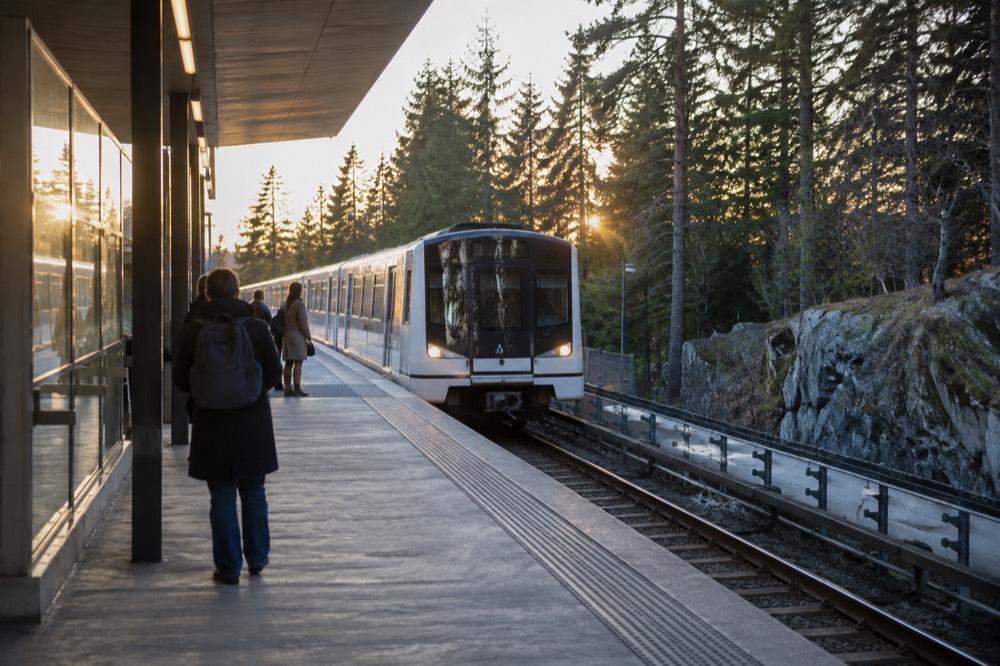
The reason this works is structural. Oslo is a compact capital sitting at the top of a fjord with a forest directly north of it, and a century of Norwegian transport policy has pushed rail and metro out to the edges of all three. The T-bane's Line 1 terminates at Frognerseteren, high above the city at the lip of Nordmarka. Line 5 reaches Sognsvann, the lake that anchors the northern forest trails. The island ferries leave from Aker brygge on the same ticket you use for a tram ride across town.
The zone system matters more than the map. Central Oslo including the whole metro network is zone 1, and a single ticket for one zone is valid for 60 minutes from activation, with 30 minutes added for each further zone you buy. If a day trip stays inside zone 1, and several of the best ones do, you are riding on the cheapest ticket Ruter sells. The Ruter app is the cheapest place to buy; tickets bought on board a bus or boat cost more.
For anything beyond the city, Vy is the operator, and Vy's regional trains fan out from Oslo S to the south, north and west. The airport line is the famous one, but the same logic applies to every day trip in this guide: check whether the train is an ordinary Ruter-zone service or a Vy point-to-point fare before you buy, because the difference is real money on some routes. Our Oslo airport to city centre guide covers that exact mechanism in detail.
Bygdøy: The Museum Peninsula, by Bus or Seasonal Ferry
Bygdøy is the easiest car-free day trip in Oslo, and the one with the ticket trap. Ruter bus 30 runs there year-round from Nationaltheatret in about 15 minutes on an ordinary ticket, while the passenger ferry from Rådhusbrygge 3 runs only from mid-March to early October, is not covered by a Ruter ticket, and is included in the Oslo Pass. The museums themselves cluster around two stops within walking distance of each other.
Start with the ferry, because it is the trip most visitors picture. It departs Rådhusbrygge 3, Platform F, every 20 minutes, takes about 10 minutes to the first stop and roughly 30 minutes for the full circle. The season runs 14 March to 4 October in 2026, which means anyone visiting outside that window is a bus passenger, full stop. The one-way fare is around 70 NOK bought onboard, slightly less in advance, and the operator's own page states plainly that Ruter tickets are not valid on it. The Oslo Pass is.
The two ferry stops split the peninsula. Dronningen serves the Norwegian Museum of Cultural History and Oscarshall. Bygdøynes serves the Kon-Tiki Museum, the Fram Museum and the Norwegian Maritime Museum, which sit together in one walkable cluster. The paths between the two piers take roughly 15 to 25 minutes on foot, so the honest plan is one pier in, the other out, and walk the peninsula between them. Bus 30 stops at the museums too, year-round, which is the fallback for every winter visit.
What the museums cost, at the door, is where the Oslo Pass earns its keep. Kon-Tiki and Fram are each 180 NOK adult, and the two-museum combination ticket is 325 NOK; adding the Maritime Museum brings the triple to 485 NOK. Three Bygdøy museums at full price is 560 NOK against a 24-hour adult pass at 580 NOK that also carries you there and back, which is about as clean a break-even case as the pass ever produces. Our Bygdøy guide has the full museum-by-museum breakdown, and the Kon-Tiki Museum page covers the best-reviewed ticket in the set.
| Option | Runs | Ticket | Notes |
|---|---|---|---|
| Ruter bus 30 | Year-round | Ordinary Ruter ticket | From Nationaltheatret, stops at the museums |
| Bygdøy ferry from Rådhusbrygge 3 | 14 Mar to 4 Oct 2026 | Not Ruter; Oslo Pass included | Every 20 min, Dronningen then Bygdøynes |
| On foot between piers | Always | Free | 15 to 25 min along peninsula paths |
One closure to plan around: the Museum of the Viking Age is shut for rebuilding and will reopen in 2027, per the museum's own statement, with no month attached. Viking-age objects are viewable at the Historical Museum in the city center in the meantime, and our Museum of the Viking Age page tracks the reopening as the museum states it.
The Oslofjord Islands: A Day Trip on the City Ticket
The Oslofjord islands are the day trip that costs least, because the ferries are ordinary Ruter services. Lines B1, B1X and B2 leave from Aker brygge, not the City Hall piers, and a normal zone 1 ticket covers the crossing with no surcharge. Hovedøya has a ruined Cistercian abbey, Langøyene has the best beaches and swimming, and the whole trip can be done in a half day or stretched to a full one.
This is the fact that separates the two boat systems, and it is worth saying twice because so many guides merge them. The Bygdøy ferry is a private operator and rejects Ruter tickets. The island ferries are Ruter line services, painted and timetabled like the rest of the network, and the Ruter page says it directly: with a regular public transportation ticket or an Oslo Pass you can get on and off any of them. Different piers, different rules, different boats. The island ferries leave from the Aker brygge side of the harbor.
The seasonal shape matters. B1 runs year-round on a circle route taking in Hovedøya, Lindøya, Gressholmen, Bleikøya and Nakholmen, though off-summer frequency drops. B2, which calls at Langøyene, is a summer line, and the 2026 summer timetable runs 4 July to 30 August, with an autumn timetable to 18 October. If your trip falls in June or late September, check the Ruter app for which lines are actually running that week rather than trusting a blog's summer snapshot.
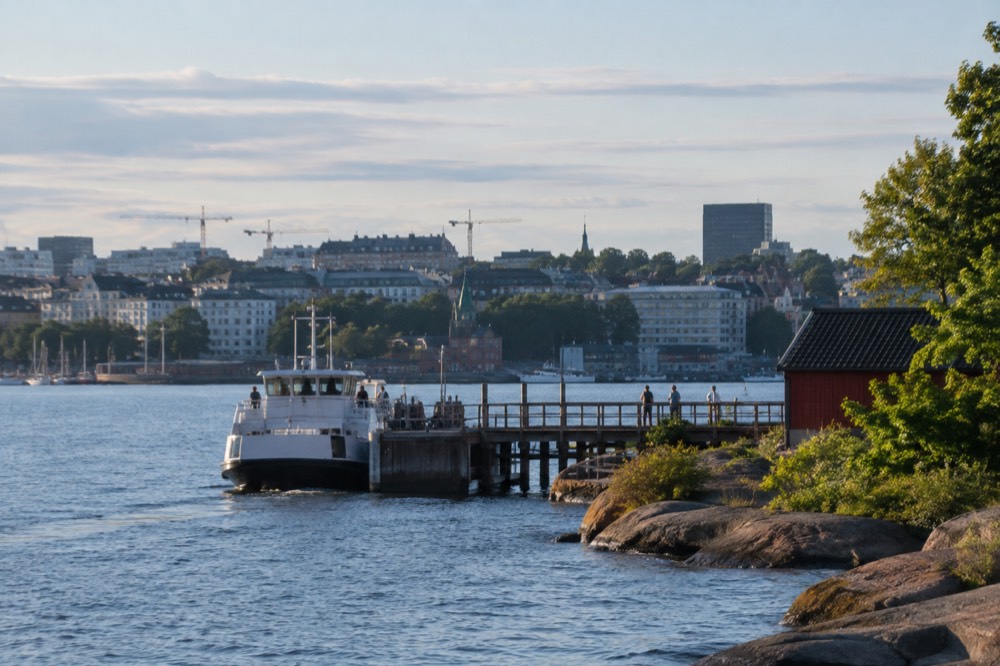
What you do out there depends on the island. Hovedøya is the history stop, with monastery ruins a short walk from the pier and easy forest paths around the shore. Langøyene is the swimming and picnic island, with the best beaches in the set. Gressholmen and the others are quieter, nature-first stops. Our Oslo islands guide covers each island in turn, including the abbey on Hovedøya and the beaches on Langøyene.
| Ferry line | Islands served | Season | Ticket |
|---|---|---|---|
| B1 | Hovedøya, Lindøya, Gressholmen, Bleikøya, Nakholmen | Year-round, reduced off-summer | Ordinary Ruter zone 1 |
| B1X | Aker brygge to Hovedøya | Summer extra, every 20 min | Ordinary Ruter zone 1 |
| B2 | Hovedøya, Gressholmen, Langøyene | Summer timetable 4 Jul to 30 Aug 2026 | Ordinary Ruter zone 1 |
For visitors who would rather have a guide handle the islands, there is a bookable ferry-and-foot island hopping tour that covers the logistics and the interpretation, which pairs well with a day when you want the fjord without the timetable. More on that in the tour section below.
Holmenkollen and Nordmarka: The Forest at the End of the Metro
The forest north of Oslo is inside the ordinary city ticket, which is the single most surprising transport fact in this guide. T-bane Line 1 terminates at Frognerseteren at the edge of Nordmarka, Line 5 reaches Sognsvann, and both are zone 1 rides from the center in well under half an hour. Holmenkollen ski jump and museum sit on Line 1 at their own stop, and the ski museum and tower cost 195 NOK adult.
Frognerseteren is the destination that makes Oslo unusual among capitals. The station sits at altitude, the restaurant at the top is a landmark in its own right, and the trail network of Nordmarka begins immediately behind it. Skiforeningen grooms the ski trails in winter and publishes live trail and snow-depth reports, so a winter visitor can check conditions before committing. In summer the same trails are hiking routes, and the views back over the city and the fjord are the best that do not require a boat.
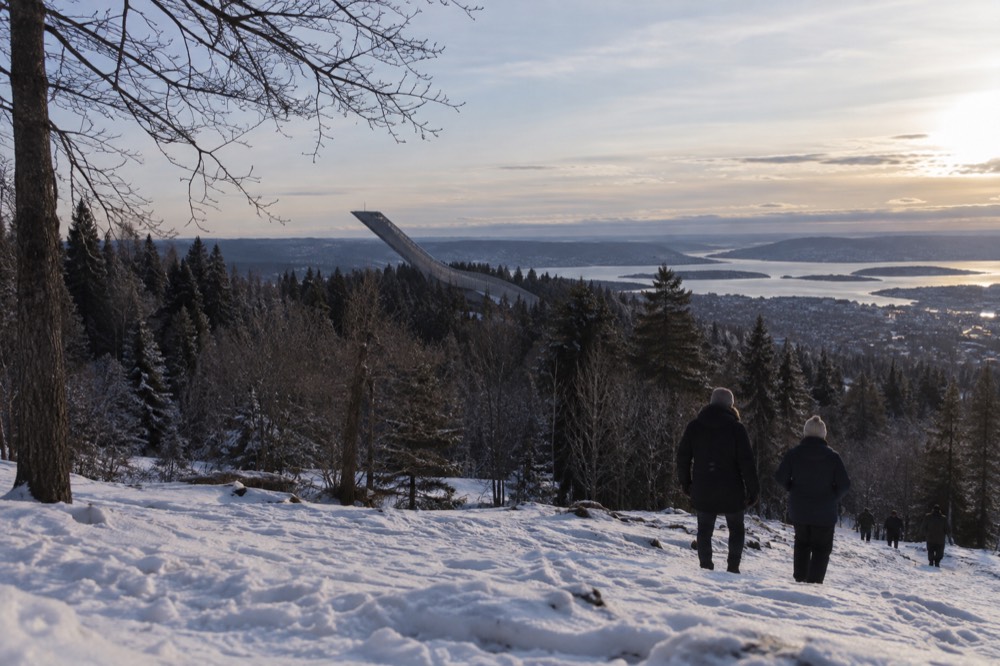
Holmenkollen itself deserves the stop on the way up or down. The ski museum and jump tower combination is 195 NOK adult, and the tower's viewing level looks straight down the jump. Note for bookers: there is no standalone Holmenkollen ticket sold on the platforms this site works with, so a guided combination product is the only honest booking route, which is exactly why our Holmenkollen ski jump page recommends the half-day tour rather than a ticket link. More on that tour below.
Sognsvann, at the end of Line 5, is the flatter, easier forest entry point, a lake with a level path around it that suits families and runners more than summit-seekers. The wider Nordmarka guide covers both entries in depth. In deep winter there is also a torchlit forest walk with a campfire that runs as a bookable evening experience, which turns the forest from a daytime trip into a full winter day.
The guided half-day covers Holmenkollen and Vigeland Park together, which is the pairing that is genuinely awkward on public transport because they sit on different sides of the city with a transfer in between. Doing both solo is entirely possible, the metro does the work, but it eats half a day in rides and waits, and the tour collapses that into one loop with commentary.
Drøbak and Fredrikstad: South Along the Fjord by Bus and Train
South of Oslo, two towns make straightforward car-free day trips. Drøbak, on the west side of the Oslofjord, is reached by bus from Oslo and is the home of the Christmas House and the narrow strait where the German warship Blücher was sunk in 1940. Fredrikstad, further south, is a Vy train ride and has Europe's best-preserved fortified old town, a star-shaped grid of ramparts, moats and timber houses you can walk in an afternoon.
Drøbak is the shorter trip and the more casual one. The town sits on the Drøbaksundet strait, the narrowest point of the inner Oslofjord, and its place in the war is the reason the fortifications at Oscarsborg exist. The Christmas House, open year round, is the town's odd second claim to fame, and the waterfront is small enough that a half day covers it. Buses run from Oslo on Ruter tickets because Drøbak is inside the Ruter zone system, which makes it one of the cheapest full day trips on this page. The full index of guides sits on Oslo Travel Guide.

Fredrikstad is the more substantial destination and the better full-day choice. The fortified old town, Gamlebyen, survives as a complete walled district with workshops, cafés and museums inside the ramparts. Vy's regional trains run there from Oslo S, the ride is well under an hour and a half, and the station is a short walk or bus hop from the fortress. Our Fredrikstad day trip guide has the full plan, and the Drøbak guide covers the bus routes and the Oscarsborg ferry option.
| Destination | Reach it by | Ticket type | Best for |
|---|---|---|---|
| Drøbak | Ruter bus | Ruter zone ticket | Half day, waterfront, Christmas House |
| Oscarsborg fortress | Ferry from Drøbak | Separate boat fare | War history, the 1940 sinking |
| Fredrikstad Gamlebyen | Vy regional train | Vy fare | Full day, fortress old town |
| Hadeland Glassverk | Vy train plus local bus | Vy fare | Glassblowing, family shopping day |
The practical note for both is timing. Norwegian towns outside the capital quiet down early, and Fredrikstad's old-town workshops in particular keep shorter hours than Oslo visitors expect. Plan the outbound leg in the morning, treat the return as flexible, and check the last Vy departure home in the app before you sit down for a long dinner.
Hadeland Glassverk and Lillehammer: Longer Train Days North
North of Oslo, the Dovre line serves two day trips of very different weights. Hadeland Glassverk, a working glassworks with exhibitions and a workshop village, is a half-day-plus trip combining a Vy train with a local bus. Lillehammer, the Winter Olympics town with its open-air museum Maihaugen and the main street from the Games, is a full-day trip by Vy train, and the sort of destination where the train ride itself is part of the point.
Hadeland Glassverk is the gentler of the two and the better family option. The glassworks has operated on its site for generations, visitors can watch glassblowing, and the surrounding village has shops and a café landscape that fills an easy afternoon. The routing is a Vy train from Oslo S toward the Hadeland area plus a local connection on the final stretch, so it is a trip to plan in Entur or the Vy app rather than one you improvise at the platform. Our Hadeland Glassverk page has the step-by-step.

Lillehammer is the commitment. The town hosted the Winter Olympics, still trades on them, and adds Maihaugen, one of Norway's largest open-air museums with more than a hundred historic buildings. The Vy ride up the lake country of Mjøsa is scenic enough that many visitors treat it as the excursion. Book Vy tickets in advance for the cheaper fares, and go early: this is a dawn-train, late-return day. Our Oslo to Lillehammer guide covers it in full.
The Flåm Railway and Norway in a Nutshell: The Long Day Trip
The most famous day trip from Oslo is the fjord run to Flåm, and it works without a car, but it is a long day. The route combines Vy's Bergen line to Myrdal with the Flåm branch line down to the fjord village, and the same-day round trip runs to roughly 15 and a half hours door to door. The train does all the work if you are willing to give it a whole day.
The Flåm railway is the stretch people come for, a steep branch line dropping from the mountain plateau at Myrdal to sea level at Flåm through switchbacks, tunnels and a waterfall stop. The Bergen line that feeds it crosses the Hardangervidda plateau, and the two together are the reason the phrase "Norway in a Nutshell" exists. Our Norway in a Nutshell guide and the Flåm railway page cover the routing, the direction question, which side to sit on, and whether the classic itinerary should be done in one day or split with a night in Flåm.
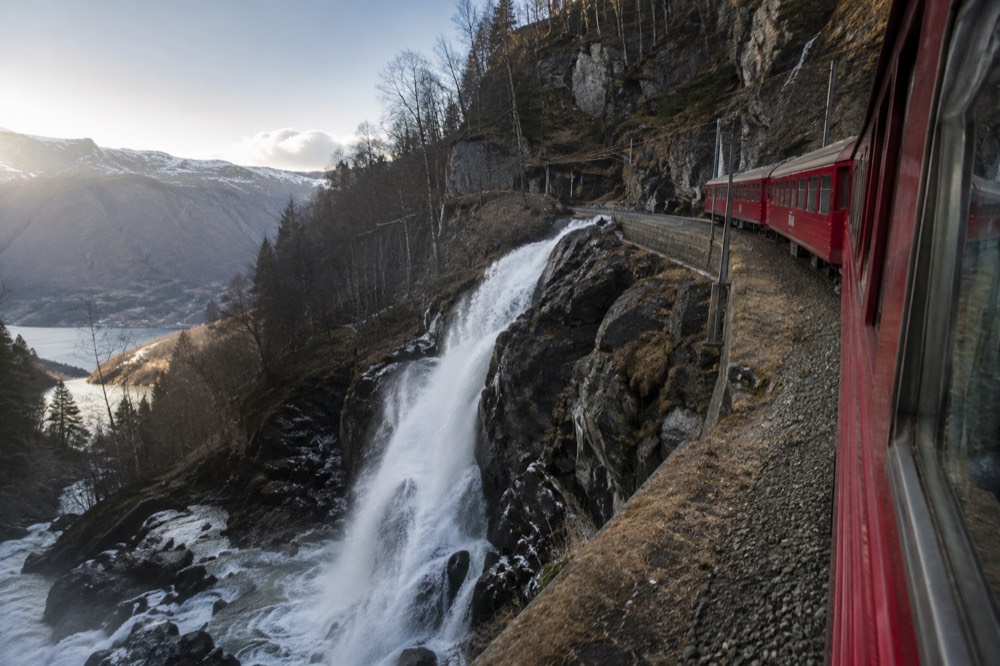
The decision to make is not whether the trip is possible, it is whether it is wise. Fifteen and a half hours is a long day by any standard, and the scenery is not rationed: the Bergen line alone justifies the ticket. If your dates are fixed and you only have one shot at it, the same-day version works and the private round trip that includes the Flåm railway is the best-reviewed way to lock it in. If you can spare the night, splitting it is the better trip.
For visitors weighing Oslo against more time on the coast, the same logic applies to the west generally. The full Oslo to Bergen crossing is the natural extension if the Nutshell day leaves you wanting the rest of the line, and it runs on the same trains from the same station.
What Each Day Trip Costs, and When to Buy a Pass
Most of these day trips ride on either a Ruter zone ticket or a Vy fare, and the Oslo Pass at 580 NOK for 24 hours pays off on exactly one pattern: a Bygdøy museum day, where three museums plus the ferry and the transport to reach them outruns the pass price on its own. For the islands, the forest and the metro, a plain Ruter ticket is cheaper, and for the train day trips the pass is irrelevant because Vy's long fares are separate.
The pass arithmetic is worth doing out loud because it is the most common money question after "is Oslo expensive". Three Bygdøy museums at the door is 560 NOK, the 24-hour adult pass is 580, and the pass also includes the Bygdøy ferry and all Ruter transport in zones 1 through 4N. That is the pattern where it wins. A day on the islands costs one ordinary Ruter ticket and nothing at the far end, because the islands are free to walk. A Holmenkollen day costs the metro fare plus the 195 NOK museum, and the pass covers the museum but so does buying it directly.
| Day trip | Transport cost | Entry costs at the door | Pass worth it? |
|---|---|---|---|
| Bygdøy museums | Bus 30 on Ruter, or ferry at ~70 NOK one way | Kon-Tiki 180, Fram 180, combo 325, triple 485 | Yes, the strongest case |
| Oslofjord islands | Ordinary Ruter zone 1 ticket | Free, islands are public | No, plain ticket is cheaper |
| Holmenkollen | T-bane Line 1, zone 1 | Ski museum and tower 195 | Marginal |
| Nordmarka from Frognerseteren | T-bane Line 1, zone 1 | Free trails | No |
| Drøbak | Ruter bus, zone ticket | Varies by attraction | Often, if museums are on the plan |
| Fredrikstad | Vy regional train | Old town free, museums extra | No, Vy is outside the pass |
| Flåm day trip | Vy fares plus Flåm railway ticket | Railway fare is the cost | No |
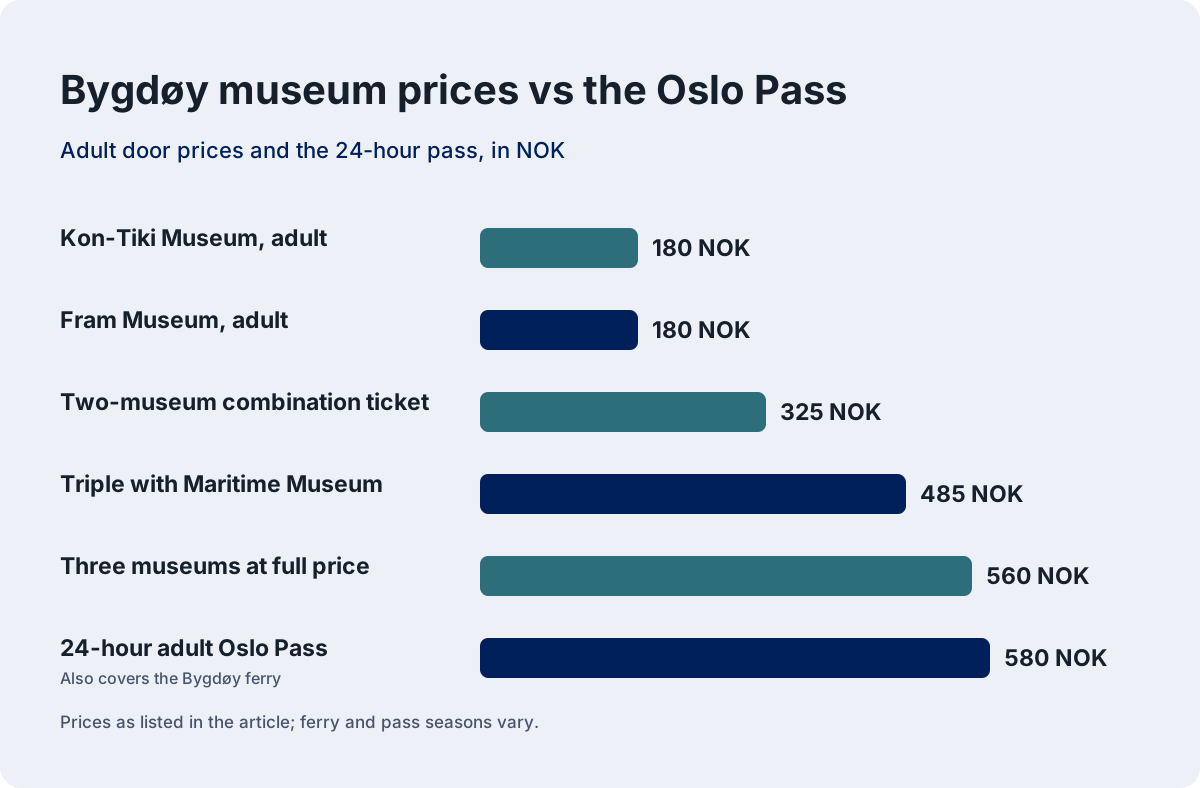
Two ticket rules close the loop. The Oslo Pass covers the Vy trains to and from Gardermoen airport, which makes it a genuine airport-to-airport instrument, but it does not cover Flytoget, which runs at 268 NOK adult against roughly 134 for the Vy alternative. And the pass covers both the Bygdøy ferry and the island ferries while a Ruter ticket covers only the islands, which is the asymmetry this whole page keeps returning to. Our is the Oslo Pass worth it analysis runs the full numbers.
Guided Options When You Would Rather Not Read a Timetable
Every destination on this page can be done independently, and most are better that way, but three bookable tours solve real problems: the Holmenkollen and Vigeland half-day collapses an awkward cross-city pairing, the island hopping tour handles the ferry logistics and interpretation, and the fjord cruises from the center give you the water without any transport thinking at all. Book the ones that remove friction, not the ones that merely repackage a metro ride.
The honest framing is that Oslo's public transport is good enough that a guided tour is a choice, not a necessity. The exception is the cross-city pairing: Holmenkollen and Vigeland Park sit on different lines with a transfer between, and the half-day tour that chains them is the product that earns its price. The islands are easy solo but a guided island hopping walk adds the history and the naturalist detail that the signboards do not. And the fjord cruises, electric or wooden sailing ship, are experiences rather than transport, which is a different category from everything else here.
For the fjord itself, the choice is between the silent electric boat with audio commentary, the highest-volume and best-reviewed activity in the city, and the traditional wooden sailing ship, which is a slower, rigged, more atmospheric two hours at nearly the same price. The evening shrimp buffet cruise is the dinner-boat version if you want the water at the end of the day rather than in the middle of it.
One thing this site will not sell you is a northern lights tour from Oslo, because none exists. Oslo is at 59.9 degrees north, well south of the auroral zone, and the aurora reaches this latitude only under strong geomagnetic storms a handful of times a year. Tromsø is the separate trip for that. For everything else on this page, the trains, ferries and metro do the work, and Oslo Travel Guide exists to point you at the ones worth the ticket.
Common Questions About Day Trips from Oslo Without a Car
Can you do day trips from Oslo without a car?
Yes. Bygdøy, the Oslofjord islands, Holmenkollen, Nordmarka, Drøbak, Fredrikstad, Hadeland Glassverk, Lillehammer and the Flåm railway are all reachable by public transport, using Ruter tickets inside the city and Vy trains beyond it.
Is the Bygdøy ferry included in the Oslo Pass?
Yes, the Oslo Pass includes the Bygdøy ferry, but ordinary Ruter tickets are not valid on it. The ferry runs seasonally, 14 March to 4 October in 2026, from Rådhusbrygge 3. Outside the season, Ruter bus 30 serves the museums year-round.
Do Ruter tickets cover the Oslofjord island ferries?
Yes. The island ferries B1, B1X and B2 are ordinary Ruter services leaving from Aker brygge, and a normal zone 1 ticket covers them with no surcharge. They are a different system from the Bygdøy ferry, which rejects Ruter tickets.
What is the best day trip from Oslo by train?
The Flåm railway day trip is the most famous, combining the Vy Bergen line to Myrdal with the branch line down to Flåm, but it is a long day at roughly 15 and a half hours round trip. Fredrikstad, with its star-shaped fortified old town, is the easier full-day train trip.
Is the Oslo Pass worth it for day trips?
It is worth it on a Bygdøy museum day, where three museums at the door cost 560 NOK against a 580 NOK 24-hour pass that also includes the ferry and all Ruter transport. For the islands, the forest and the train trips, ordinary tickets are cheaper.
Can you get to Nordmarka without a car?
Yes, the forest is inside the ordinary city ticket. T-bane Line 1 terminates at Frognerseteren at the edge of Nordmarka, and Line 5 reaches Sognsvann, both zone 1 rides from the center.