TusenFryd: Oslo's Amusement Park, Explained for Visitors
TusenFryd is Norway's largest amusement park, sitting about 15 km south of central Oslo. It is the one big-ticket family day out in the Oslo area, sold direct by the park itself rather than through tour platforms, and this page explains how to plan it without wasting money.
Short answer
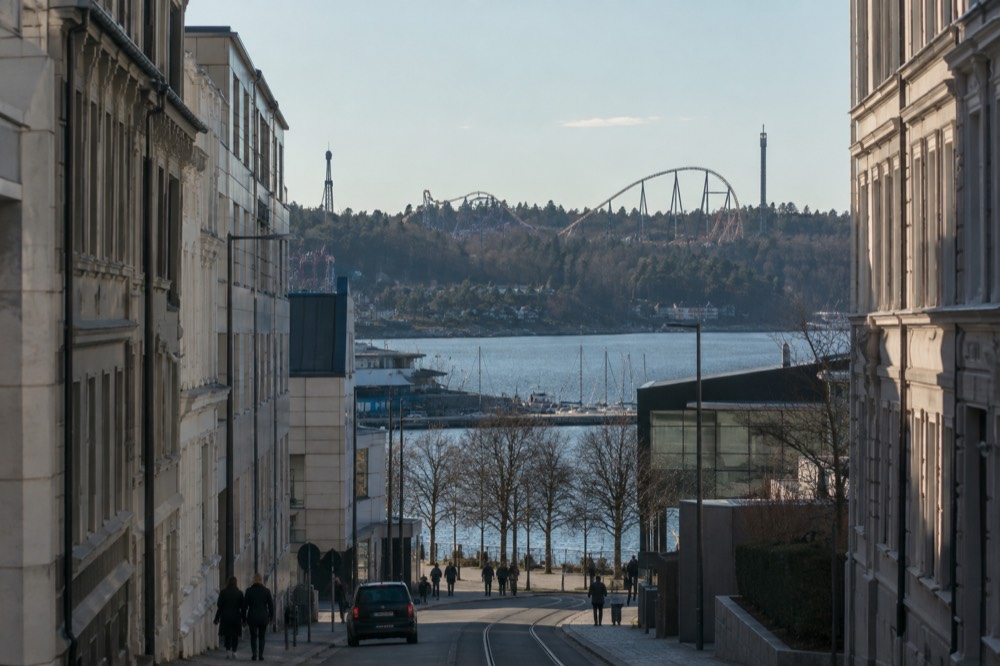
TusenFryd is Norway's biggest amusement park, a 20-minute drive or short bus ride south of central Oslo near Vinterbro. It runs roughly May through October, with summer the peak season. Tickets are sold direct by the park, not through tour platforms, so buy from the park's own site for the current price and season dates.
What Is TusenFryd?
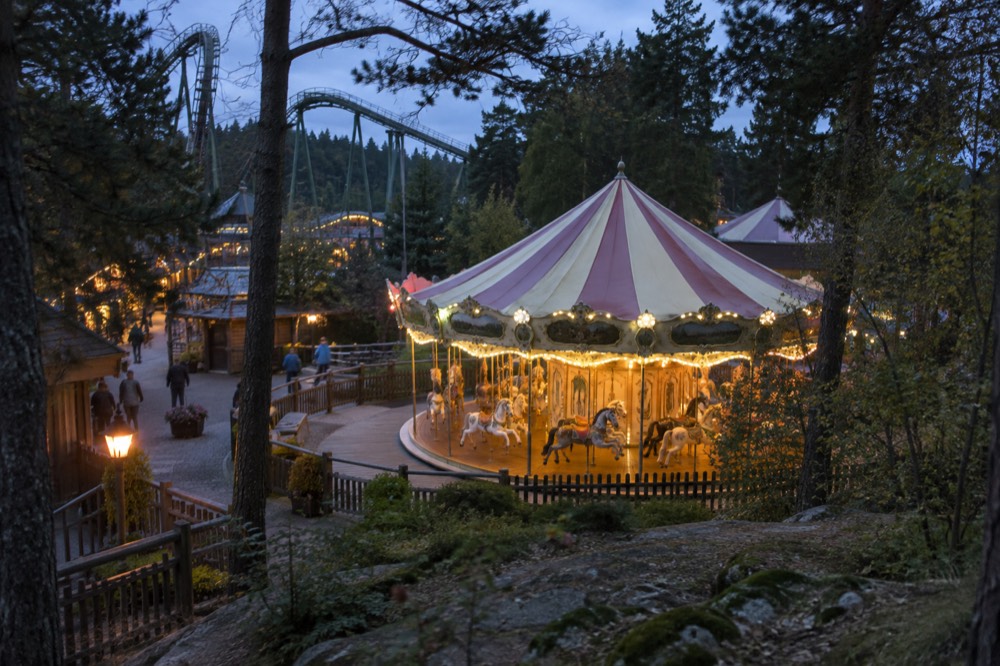
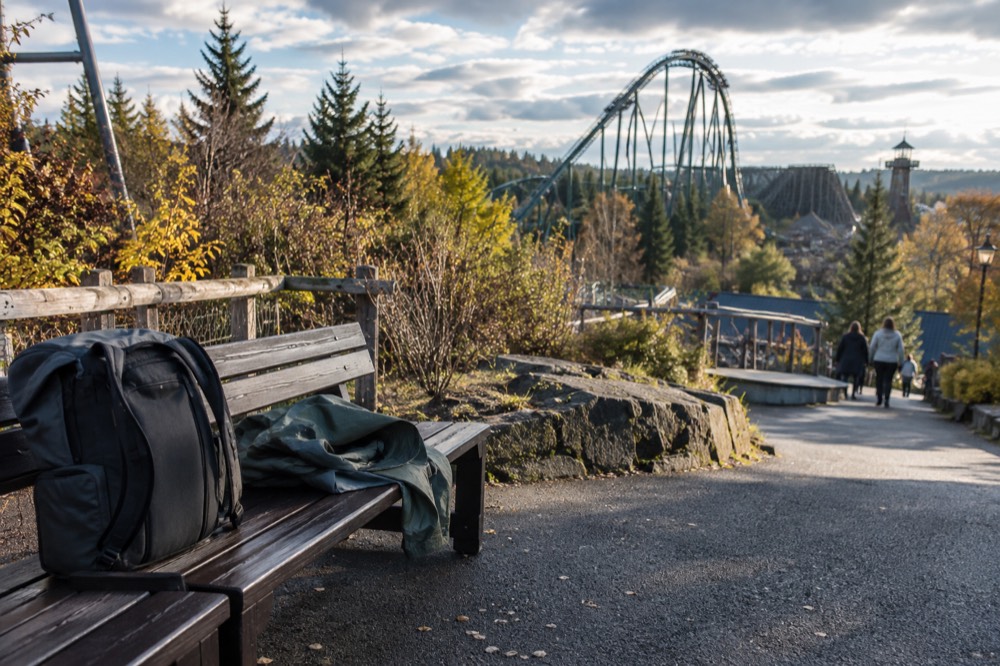
TusenFryd is Norway's largest amusement park, located at Vinterbro about 15 km south of central Oslo, and it is the closest thing the Oslo region has to a full-scale theme park. The name literally means "a thousand joys" in Norwegian, and the park delivers the standard mix of roller coasters, water rides, family zones, and carnival food. It sits on a wooded hillside above a fjord inlet, which surprises visitors who expect a flat fairground, and it is genuinely popular with Norwegians themselves rather than being a tourist trap.
The park is a relatively young institution in a city whose headline attractions are medieval fortresses and polar ships. That matters for planning: TusenFryd is a seasonal, weather-dependent, ticket-at-the-gate business, unlike the Museum of the Viking Age or the National Museum, which run on fixed indoor hours. A day here is a bet on the weather, and Oslo's weather deserves respect, as the numbers later in this page show.
One point of honesty before anything else: this site does not sell TusenFryd tickets, and neither do the tour platforms this site works with. The park sells direct through its own website, and that is the correct place to buy. This page is the planning layer around that decision: transport, seasons, costs in context, and whether the park fits your particular trip.
How Do You Get to TusenFryd from Central Oslo?
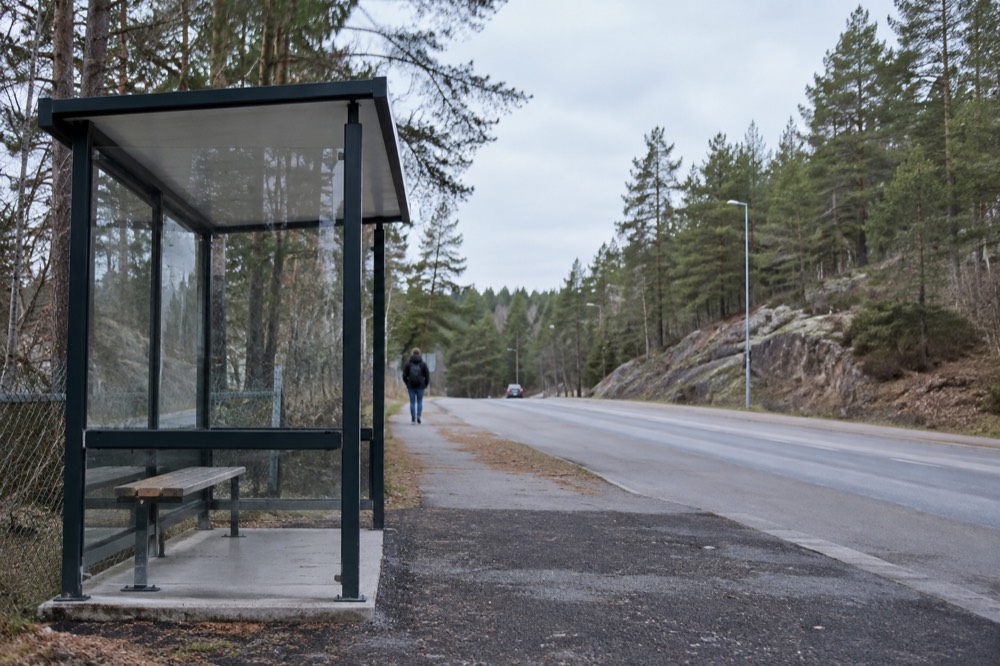
TusenFryd sits about 15 km south of central Oslo, and the practical options are a public bus, a car or taxi, or an organized transfer; the park's own website lists the current bus connections. The park is not inside the Ruter zone 1 core that covers the entire Oslo metro network, so a standard central-Oslo ticket will not necessarily carry you all the way there.
Check the zone in the Ruter app or the journey planner before you board, because Oslo's transport is zoned, and guessing zones is how visitors end up paying fines or buying duplicate tickets.
The transport detail worth internalizing is the zone system. Central Oslo, including every T-bane line, is zone 1. Oslo Airport Gardermoen is zone 4N, a fact this site has verified against Entur's own tariff-zone records, and points south of the city sit in their own zones. The general rule from Ruter is simple: do not count zones by hand, let the journey planner price the trip. That rule holds whether you are heading to the airport, the islands, or an amusement park in the southern suburbs.
For most visitors without a car, the bus is the answer. The park publishes its recommended connections each season, and these can change with the operating calendar, so treat the park's directions page as the live source rather than any guide's frozen route number. Driving takes roughly 20 minutes from the center, and the park has its own parking.
If you are relying on public transport for your whole trip, the getting around Oslo guide covers the ticket types, and the Ruter tickets guide explains what each ticket actually covers.
If you are planning a broader sightseeing day rather than a full park day, a guided option can make more sense than a self-directed trip south. These are the three walks and tours that pair best with an Oslo base:
What Rides and Areas Does the Park Have?
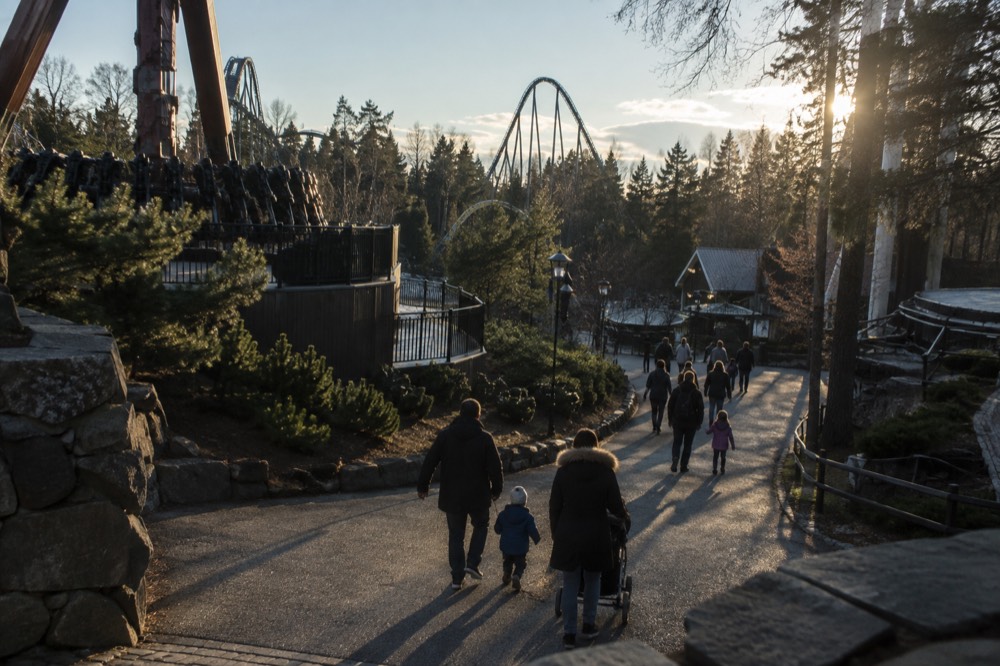
TusenFryd packs roller coasters, water rides, a dedicated children's zone, and thrill rides onto one steep hillside site, which means the layout involves real walking and some climbing. The headline coasters are what Norwegians travel for, and the park's marketing leans on them hard. But the structure that matters for planning is the split between the thrill area, the family area, and the water rides, because a family with a six-year-old and a fourteen-year-old will spend their day in different corners of the park.
The water rides are the ones that punish a cold day: you will get wet, and in a Norwegian spring that is not a small thing.
The children's zone is the reason many Oslo families hold season passes. It is fenced, shaded by trees, and dense with small rides, which lets parents of small children actually sit down. The thrill end of the park is where the queues concentrate on sunny summer weekends, and the standard theme-park logic applies: hit the big coasters early, eat outside peak hours, and save the family zone for the afternoon slump.
What the park does not have is an indoor backup plan on the scale of a city museum. If the forecast turns, the honest answer is to swap the day entirely, and Oslo is unusually well built for that swap. The rainy day in Oslo guide lists the indoor options, and the Paradox Museum, with its interactive illusions, is the strongest family ticket in the city center when the weather cancels a park day.
When Is TusenFryd Open, and What Does a Ticket Cost?
TusenFryd operates a seasonal calendar, roughly late spring through autumn, with daily opening in the summer holidays and weekends-only shoulders; the park's own site publishes the exact season dates and current prices. This site does not print a TusenFryd ticket price, and the reason is deliberate: the park sells direct, runs frequent campaigns, and reprices by season, so any figure a guide prints is stale within months.
The park's website is the live source for both the calendar and the price, and buying online ahead of the gate is the standard saving. What can be stated firmly is the shape of the season: closed in winter, weekends in spring, daily in July, and a Halloween-flavored close in autumn.
The seasonal shape is not a marketing choice, it is climate. Oslo's normal mean temperature in January is −2.3 °C (about 28 °F) and the sun is up for under six hours a day in late December. An outdoor park running through that would be empty. The summer normals, 15.3 °C in June and 17.7 °C in July, are what the whole business is built around, and MET Norway's 1991 to 2020 normals, read from the Blindern station, show the full picture:
| Month | Normal mean temp | Normal precip | What it means for a park day |
|---|---|---|---|
| Apr | 6.2 °C | 48 mm | Cold rides, thin crowds |
| May | 11.4 °C | 60 mm | Weekend season begins |
| Jun | 15.3 °C | 80 mm | Full season, long evenings |
| Jul | 17.7 °C | 87 mm | Peak: daily opening, peak queues |
| Aug | 16.5 °C | 103 mm | Wettest month of the year |
| Sep | 12.2 °C | 82 mm | Quiet, cooler, shorter days |
That August column deserves a second look. August is Oslo's wettest month on the 1991 to 2020 normals at 103 mm, not November, a fact that inverts most visitors' intuition. A family planning an August park day should pack real rain gear, not a token hood, and should treat the forecast as the deciding factor rather than the calendar.
Is TusenFryd Worth It for Families with Kids?
For families with children between roughly six and sixteen, TusenFryd is the most reliable full-day kid-pleaser in the Oslo region, and it beats any single museum for sustained enthusiasm. Oslo is unusually generous to children in other ways, many of its museums let children in free, Norsk Folkemuseum charges nothing for ages 0 to 17, and the Vigeland sculpture park is free to everyone at any hour.
But free does not mean exciting, and a child who has done three museums in two days will meet a roller coaster with a different facial expression. The honest framing is that TusenFryd is the paid, high-thrill counterweight to a city that is otherwise rich in free, calm, cultural outings. The wider set of guides lives on Oslo Travel Guide. The wider set of guides lives on Oslo Travel Guide.
The Oslo with kids guide lays out the full family itinerary, and the balance it strikes is the right one: free parks and harbor swims on most days, one big paid blowout if the children have earned it and the weather holds. The age question matters more here than at a museum. Toddlers get a fenced zone and not much else, teenagers get the coasters and a day they will actually remember, and parents get a bill that scales with the gate price times the family. Check the park's own height and age restrictions for the big rides before promising them to a nine-year-old, because the restrictions are enforced without sentiment.
For teenagers specifically, the park competes less with museums than with the city itself. But a warm July day with a group of friends and a season's worth of coaster credits is a genuinely Norwegian teenage ritual, and the park is where it happens.
How Does a TusenFryd Day Fit an Oslo Budget?
A TusenFryd day is one of the most expensive single days out in the Oslo area, in a city where the default pleasures, parks, swimming, the Opera House roof, are free. Norway is the sixth most expensive country in Europe on Statistics Norway's 2025 purchasing-power-parity survey, with household prices 28.6 percent above the EU average and food 33 percent above. None of that stops you enjoying Oslo, because the expensive categories are alcohol, restaurants, and hotels, while the outdoors and most museum entries are not extreme.
A theme park day, though, stacks every expensive category at once: a full-price ticket per person, theme-park food at Norwegian prices, and probably a taxi or extra transport zones on top.
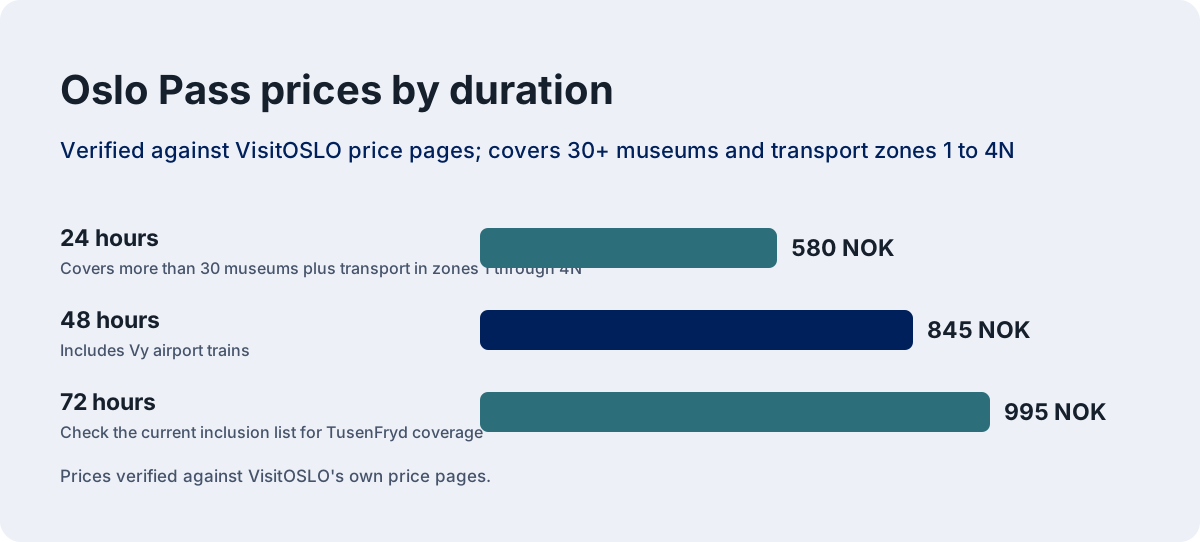
The useful comparison is the Oslo Pass, which this site has verified against VisitOSLO's own price pages: 580 NOK for 24 hours, 845 for 48, 995 for 72, covering more than 30 museums plus public transport in zones 1 through 4N, including the Vy airport trains. Whether the pass covers TusenFryd is a question for the pass's current inclusion list, not for a guide's memory, so check the VisitOSLO page before assuming. What is certain is the arithmetic of a museum-heavy alternative day:
| Day plan | What it costs | What you get |
|---|---|---|
| TusenFryd family day | Gate price per person, check the park's site | Coasters, water rides, park food |
| Oslo Pass museum day | 580 NOK adult 24h | 30+ museums, transport, Bygdøy ferry |
| Free Oslo day | 0 NOK | Vigeland Park, Opera roof, islands ferry on a Ruter ticket |
| Guided walking day | From the listings linked on this site | A guide, context, a route |
The Oslo on a budget guide and the free things to do in Oslo page are the counterweight to a park day, and the honest advice is not to choose one or the other but to budget for both: two free days and one paid blowout is a better trip than four identical middling days. If a guided experience is your preferred way to spend, the Vigeland art walk below is the best-reviewed guided walk in the city and costs a fraction of a family park day.

What Is the Best Time of Day and Season to Visit?
Go on a weekday in late June or early August if you can, arrive at opening, and treat July weekends as the queue maximum; the season's best combination of warmth, daylight, and thin crowds is a weekday either side of the school-holiday peak. Oslo's daylight is the hidden variable in that calculation. On 21 June the sun rises at 03:53 and sets at 22:43, 18 hours 50 minutes of light, verified against MET Norway's sunrise data for Oslo's coordinates.
By 15 September that has fallen to 12 hours 54 minutes, and by late October the park would be closing in dusk. Long evenings are a real planning asset: a summer park day can run late without anyone getting dark on the rides home.
| Date | Sunrise | Sunset | Day length |
|---|---|---|---|
| 15 May | 04:40 | 21:48 | 17 h 08 m |
| 21 Jun | 03:53 | 22:43 | 18 h 50 m |
| 15 Jul | 04:21 | 22:23 | 18 h 02 m |
| 15 Aug | 05:31 | 21:09 | 15 h 38 m |
| 15 Sep | 06:44 | 19:38 | 12 h 54 m |
There is no midnight sun in Oslo, despite what some itineraries imply: that needs latitude above the Arctic Circle, and Oslo sits at 59.91 N. What the city gets instead is deep twilight rather than true night in late June, which is its own kind of magic on a ride home at 22:00. The best time to visit Oslo guide covers the full seasonal logic, and the Oslo in summer guide is the season this park lives in.
One scheduling note that catches visitors out: Norwegians take their summer holidays seriously, and July is both the school holiday and the traditional vacation month. That means the park is at full daily operation in July but also at full domestic attendance. Late June, before the holidays fully land, or August after they end, buys you the same weather with fewer people in every queue.

What Should You Know Before You Go?
Buy from the park's own website, dress for the weather rather than the season name, bring your own water bottle, and plan the transport zones before you leave the center. Oslo's tap water is excellent and free, so a bottle refilled at the park beats buying drinks at Norwegian prices, where alcohol and restaurant categories run at double the European average on SSB's survey. Food inside any theme park is priced for a captive audience, and in Norway that captive pricing lands on top of an already expensive base.
A packed lunch, where the park's rules allow it, is the single biggest saving available on the day, and it is a saving most families never make.
Clothing is the other lever. The water rides are not optional weather-wise: you will get soaked, and a July normal of 17.7 °C means you dry slowly. A cheap poncho or a change of clothes in a locker turns a miserable hour into a joke. In May and September the same rides in the same state are genuinely cold, and the parents who suffer most are the ones dressed for the calendar rather than the forecast. Check yr.no, MET Norway's own weather service, the morning of, not the week before.
Finally, keep the day in proportion to the trip. Oslo rewards spread: a harbor swim at Aker Brygge, an evening on the islands, a morning at the Fram Museum. A single high-intensity park day is a fine spice, and a poor main course. The 3 days in Oslo itinerary shows how a park day slots into a fuller plan, and this site's things to do in Oslo page is the master list to balance it against.
If your trip leans toward evenings rather than coasters, the myths and legends walk below is the dark-season product Oslo genuinely does well, a two-hour themed walk through the city's stranger history, and it runs when the park cannot.
How Does TusenFryd Compare with Other Oslo Days Out?
TusenFryd is the only large amusement park in the Oslo region, so its real competition is not another park but the city's own free and low-cost days: museums, islands, forests, and guided walks. That comparison is worth making honestly rather than defensively. The park wins on pure thrill and on children's delight.
The city wins on cost, on weather resistance, and on the things you cannot get anywhere else, the silent electric boats on the Oslofjord, the Viking-age objects at the Historical Museum while the Museum of the Viking Age stays shut until 2027, and the free 24-hour sculpture park at Frogner. A week in Oslo that includes one park day and four city days is a well-built week.
The comparison also depends on who is traveling. Solo visitors and couples without children usually get more from a fjord cruise or a food walk than from six hours of coaster queues, and the Vigeland Park page is a better starting point than this page for that kind of traveler. Families are the park's natural audience, and for them the decision is mostly weather and budget, both of which this page has given you the real numbers for.
For travelers who want a structured day with a guide rather than a self-directed one, these are the three options that best replace or complement a park day, all bookable through this site's tour listings:
Common Questions About TusenFryd
Is TusenFryd open in winter?
No. The park runs a seasonal calendar, roughly late spring through autumn, with daily opening in the summer holidays and reduced schedules on the shoulders. Winter in Oslo means a January normal of −2.3 °C and under six hours of daylight in late December, which no outdoor park can work against. Check the park's own site for the current season dates.
Can you buy TusenFryd tickets through a tour platform?
No. TusenFryd sells direct through its own website, and this site deliberately does not carry a booking link for it. Buying from the park's own site gets you the live price, the current campaign offers, and the correct season calendar in one place.
How do you get to TusenFryd without a car?
A public bus from central Oslo serves the Vinterbro area, and the park's directions page lists the current connections. Because the park sits outside the central zone, check the zones and price in the Ruter app or journey planner before boarding rather than assuming a central ticket covers it.
Is TusenFryd good for small children?
Yes, within limits. The park has a dedicated fenced children's zone with small rides, which suits roughly ages three to eight. The big coasters carry height and age restrictions that are enforced, so check the park's own restrictions page before promising the headline rides to a younger child.
What is the best month to visit TusenFryd?
Late June or early August on a weekday. You get summer warmth, full season operation, and thinner crowds than the July holiday peak. August is Oslo's wettest month on the 1991 to 2020 normals at 103 mm, so check the forecast on the day and pack real rain gear.
Is TusenFryd covered by the Oslo Pass?
Check VisitOSLO's current inclusion list before planning on it. The pass covers more than 30 museums and public transport in zones 1 through 4N at 580 NOK for 24 hours, but attraction inclusions change, and the live list on VisitOSLO's own pages is the only safe source.