Romantic Things to Do in Oslo: A Couple's Day from Fjord to Rooftop
Oslo is a compact, walkable capital where the fjord sits at the end of the main street, and that geography does most of the romantic work for you. This itinerary pairs the city's genuinely intimate experiences, a silent fjord cruise, a twilight sculpture park, a shrimp-buffet evening boat, with the practical numbers that decide which ones are worth booking.
Short answer
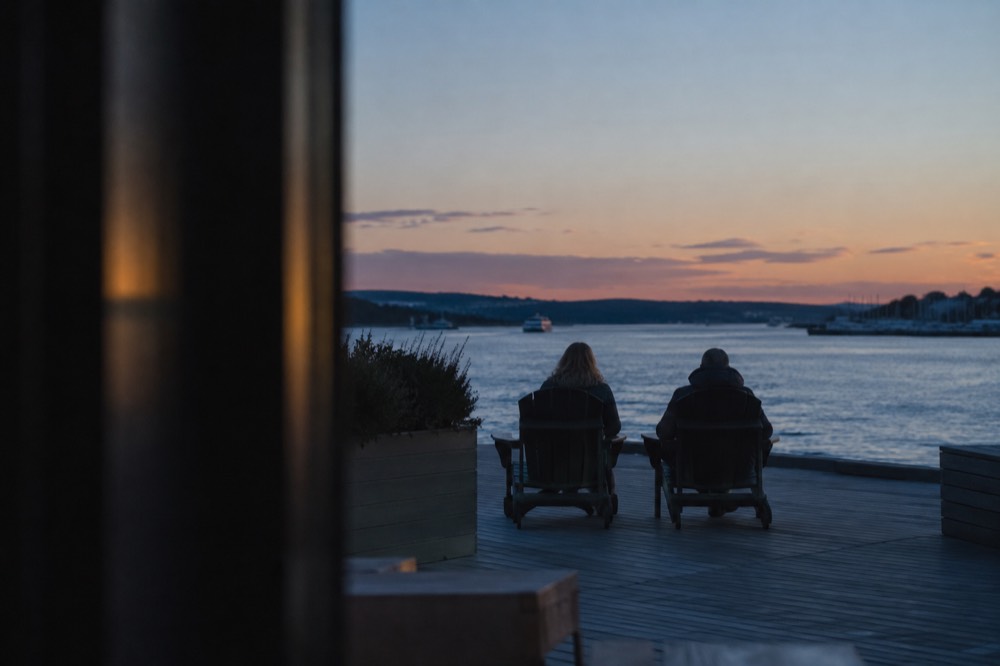
The most romantic things to do in Oslo are the fjord cruise at golden hour, Vigeland Park at dusk (free, open 24 hours), the Opera House roof at sunset, and a slow evening in Grünerløkka. The day scales from almost nothing, since the park, the roof and the waterfront walk are all free, up to the cruise tickets: the silent electric fjord cruise starts from $46.29 per person and the shrimp-buffet evening cruise from $90.22.
Oslo does romance differently from Paris or Venice. The city's most intimate moments are mostly free or cheap, a sunset on the Opera House roof costs nothing, Vigeland Park stays open all night, and the fjord that most capitals would fence off is a 20-minute boat ride from the main square. What Oslo does not do is candlelit cliché; the romance here is low light on water, forest inside a tram ride, and dinners that start late because the evening lasts until 22:43 in June.
This guide lays out a full romantic day, plus evening options for each season, with the real costs attached. Two rules shaped the route. First, everything is reachable by foot or a single transit ticket, because a city that has to be fought through with a map in one hand stops being romantic the moment the logistics take over. Second, the expensive items are the ones worth paying for, and the free ones are genuinely world-class, so the day scales to any budget. For the wider sightseeing picture, see things to do in Oslo, and for a general first-visit plan, the one day in Oslo itinerary covers the ground this page deliberately skips.
What Makes Oslo Romantic in the First Place?
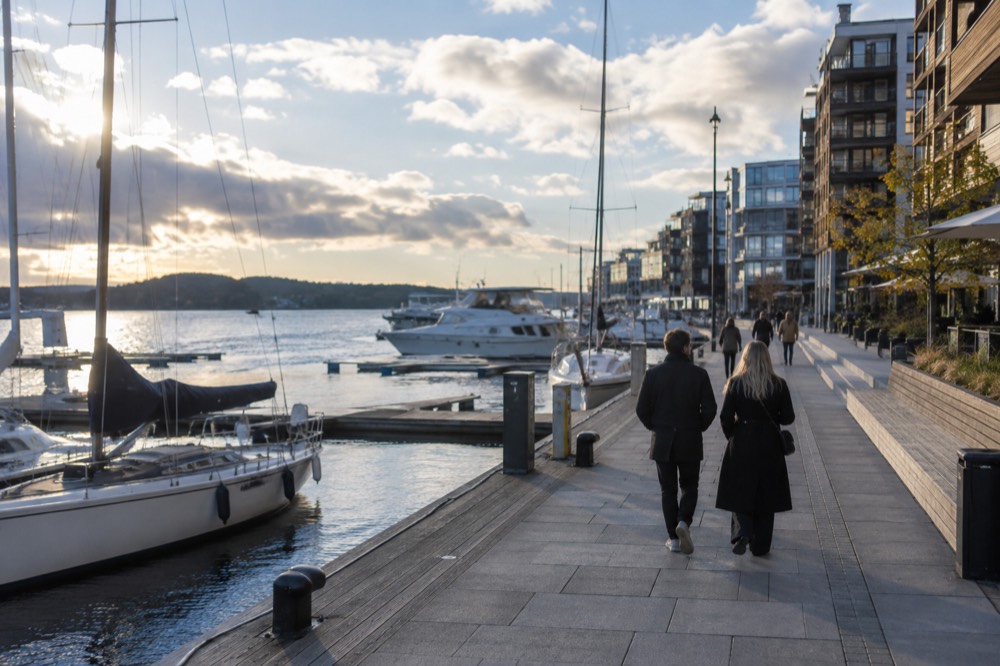
Oslo's romance comes from geography rather than architecture: the Oslofjord reaches the city center, forest begins inside the metro zone, and June evenings stay light until nearly 23:00. Add compact scale, safe late-night walking and a café culture built around long conversations, and the city quietly outperforms its reputation as a design-and-museums destination for couples.
The setting does the heavy lifting. The city center ends at the water, so the fjord is not an excursion, it is the backdrop to dinner at Aker Brygge and the reason the light is so good in the evening. Behind the city, Nordmarka's forest line begins at Frognerseteren, the last stop on metro line 1, which means a sunset above the treeline is a 20-minute ride from the Nationaltheatret. Very few capital cities offer both at that distance.
Then there is the scale. Oslo's core, from the Royal Palace to the Opera House, is a 25-minute walk end to end. Couples who try to see everything in Rome spend their day on transport; couples in Oslo walk. The crime rate is low enough that late-evening walks along the waterfront are normal local behavior, and the is Oslo safe guide covers the specifics if you are planning to be out after midnight.
The seasons change the flavor rather than the substance. Summer romance in Oslo is boats and swimming spots; winter romance is firelight, snow on Frogner Park's sculptures and the Oslo in winter dark-season rituals. The itinerary below marks which stops change character when the temperature drops.
The One-Day Romantic Route (with Real Costs)
The core romantic day is: morning coffee in Grünerløkka, the free-walking-tour orientation loop before noon, Vigeland Park in afternoon light, the Opera House roof at sunset, and a fjord cruise as the evening's centerpiece. The free layer of the day, the walk, the park and the roof, costs nothing at all, and the paid centerpiece is the cruise, from $46.29 per person on the silent electric boat.
Here is the shape of it, with the money attached:
| Stop | Time | Cost | Why it works for couples |
|---|---|---|---|
| Coffee and pastries, Grünerløkka | 09:00 | Modest; set by each café | Slow start, people-watching, shared cardamom bun |
| Free highlights walking tour | 10:00 | Free, tip based | Shared orientation beats arguing over a map |
| Vigeland Park, slow loop | 13:00 | Free | 200+ sculptures, open 24 hours, no ticket |
| Opera House roof at sunset | 19:00 (summer) | Free | Climb the marble slope; the fjord view is the payoff |
| Silent electric fjord cruise | 20:00 | From $46.29 per person | Golden hour on the water, audio guide you can ignore |
| Dinner, Aker Brygge or Grünerløkka | 21:30 | Varies by restaurant | Waterfront or candlelit back-street, both work |
Two notes on those numbers. The cruise figure is the listed from-price per person and the live listing shows the current exact figure; product prices are always shown at the token, not estimated here. Dinner pricing deserves a paragraph of its own, later in this guide, because SSB's price-level survey explains where an Oslo dinner budget actually goes, and it is not where most visitors expect.
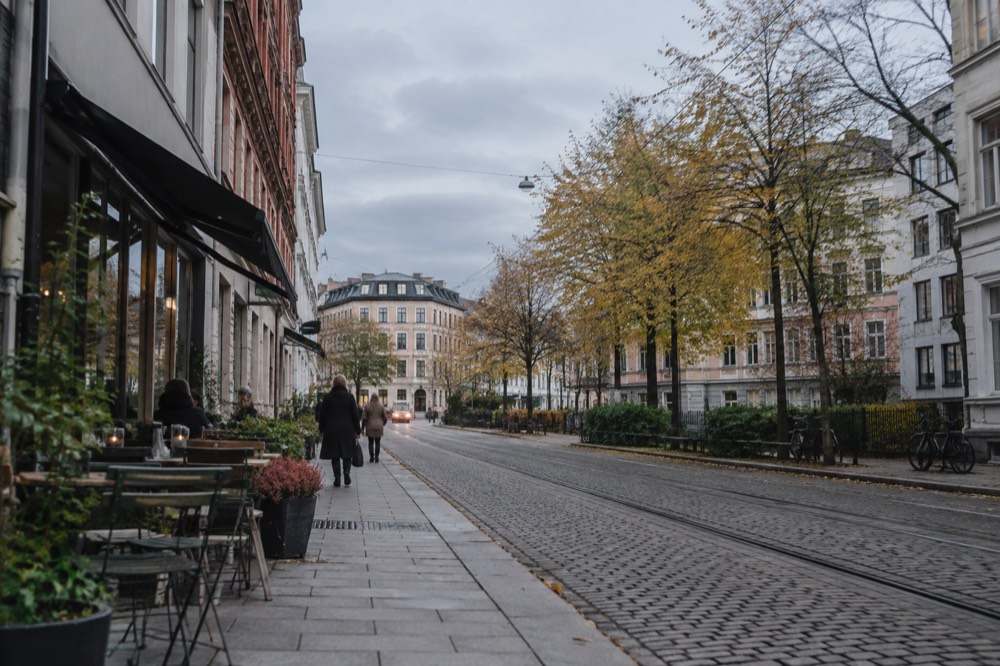
The morning deserves a slower start than most itineraries allow. Grünerløkka, Oslo's former workers' district turned café quarter, is at its best before noon: the bakery queues are short, the river path along the Akerselva is quiet, and the neighborhood's character, covered in full in the Grünerløkka area guide, is essentially a long sequence of places to sit together.
The free walking tour in the late morning is a deliberate inclusion, and it is not about the facts. A shared orientation loop means the rest of the day runs without a phone in one hand and a map in the other. It runs about two hours per the listing, it is tip-based, and with 2,150 reviews it is the largest free walk in the city.
Afternoon belongs to Frogner Park. Vigeland's sculpture arrangement is free, open 24 hours a day all year, and holds more than 200 figures, and the Monolith at its center is the kind of thing you stand under together in silence. The couples-and-relationship themes in Vigeland's work are not a stretch; the sculptor built the entire park around human life stages. The Vigeland Park guide covers what you are actually looking at, and the separate Vigeland Museum, at 120 NOK, is a paid add-on if the weather turns.
Which Fjord Cruise Should a Couple Book?
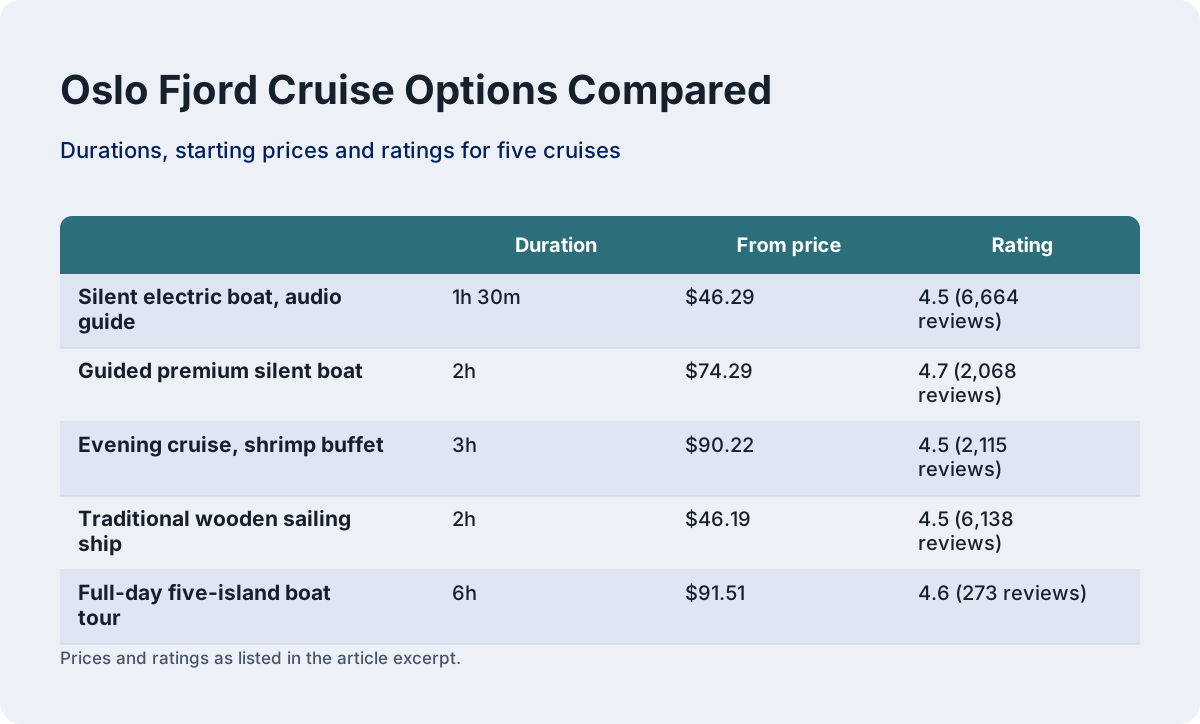
For a romantic evening, the silent electric boat with audio guide is the default choice: 90 minutes on the water, the best-reviewed activity in Oslo, from $46.29 per person. Upgrade to the 2-hour guided premium silent boat (from $74.29) for a host and smaller feel, or the 3-hour evening cruise with shrimp buffet (from $90.22) if you want dinner on the water as well as the view.
The differences between these boats are real, not cosmetic. The electric boats are genuinely quiet, which is the entire point of a romantic cruise: no diesel drone under the conversation. The traditional wooden sailing ship, from $46.19 for two hours, is the alternative character, canvas, timber and a sense of occasion the electric boats deliberately lack. A couple that wants the fjord's silence takes the electric boat; a couple that wants photographs takes the ship. The Oslofjord cruise guide breaks down all seven boat products this site tracks.
| Cruise | Duration | From price | Rating | Romantic profile |
|---|---|---|---|---|
| Silent electric boat, audio guide | 1h 30m | $46.29 | 4.5 (6,664 reviews) | The default; quiet, golden-hour friendly |
| Guided premium silent boat | 2h | $74.29 | 4.7 (2,068 reviews) | Hosted, slower, best for a one-off evening |
| Evening cruise, shrimp buffet | 3h | $90.22 | 4.5 (2,115 reviews) | Dinner and the fjord in one booking |
| Traditional wooden sailing ship | 2h | $46.19 | 4.5 (6,138 reviews) | Photogenic, character over comfort |
| Full-day five-island boat tour | 6h | $91.51 | 4.6 (273 reviews) | A whole-day commitment for fjord-focused couples |
The shrimp-buffet evening cruise deserves its reputation. It is a Norwegian institution rather than a generic dinner boat, and the 3-hour format means the sun sets while you are still on the water, which in June means a very long golden hour indeed. As a full evening for two, it bundles dinner and the cruise into a single booking, which often works out kinder to the budget than a mid-range restaurant plus a separate boat.
Where to Watch the Sunset Together (Free)
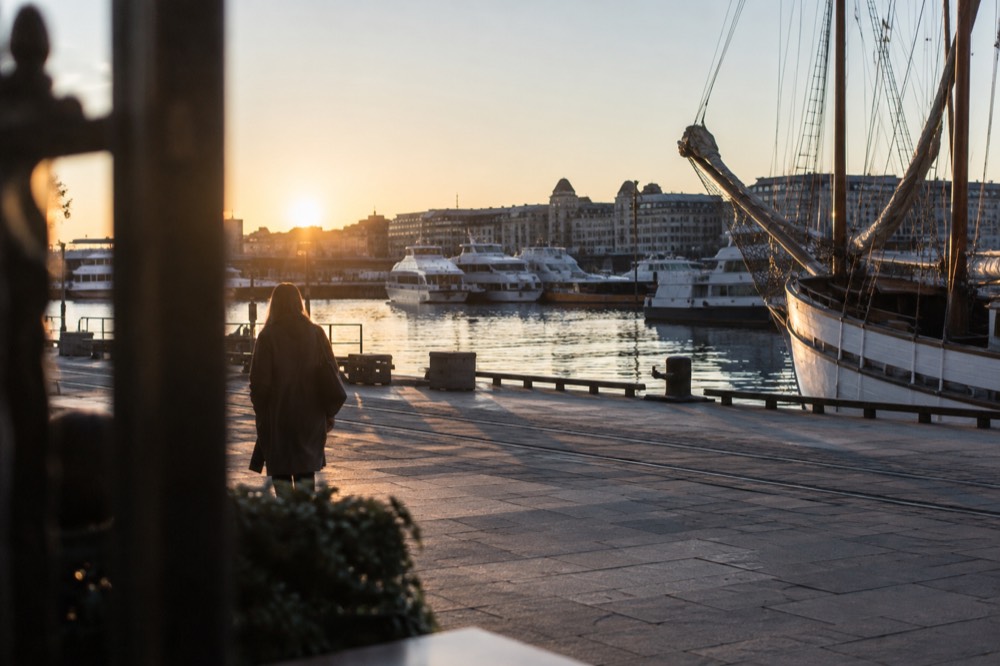
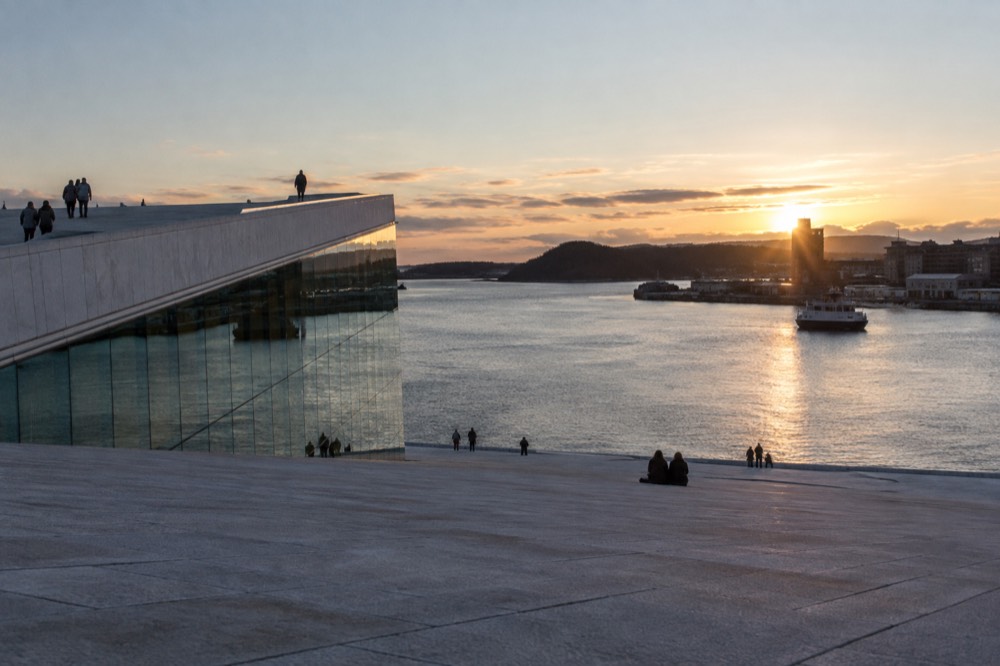
The best free sunset spots in Oslo are the Opera House roof, the Akershus Fortress ramparts, and the Sørengabadet seawater pool at Sørenga, all reached on foot or one transit ticket. The Opera House slope is the signature: a marble roof you simply walk up, facing directly down the Oslofjord, with no ticket, no gate and no closing time.
The Opera House is the one that surprises people. The building's roof is a public pedestrian surface, angled down toward the water, and the Oslo Opera House guide explains how the architecture works. At sunset in summer, the marble holds the day's warmth and half the city seems to be up there with a bottle of something. In winter the same slope at 15:00 catches the low sun before the 15:11 sunset in late December, and the fjord turns the color of cold steel.
Akershus Fortress costs nothing to walk and gives you the classic view back over the city, harbor lights, City Hall, the barcode towers, from a medieval military terrace above the water. The fortress grounds stay open to walkers in the evening, and the Akershus Fortress guide covers the museums inside if you want the history with the view.
For a swimming sunset, Sørenga's seawater pool sits at the end of the waterfront promenade, and July and August water temperatures in the Oslofjord typically run 15 to 20 °C, which is brisk rather than brutal. The swimming spots are covered in the Oslo beaches guide. Locals do it; visitors mostly watch, and both are defensible positions.
One planning fact that changes all of this: the daylight swing. In late June the sun sets at 22:43 and rises at 03:53, and the gap between is twilight rather than true darkness, so a "sunset" evening in June runs for hours. In late December the day is 5 hours 53 minutes long and the sun sets before most people finish work. MET Norway's sunrise data for Oslo drives the table below; plan the romantic walk around it, not around habits imported from further south. Everything else covered here is indexed on Oslo Travel Guide. Everything else covered here is indexed on Oslo Travel Guide.
| Date | Sunset | Notes for the evening |
|---|---|---|
| 21 Jun | 22:43 | Twilight all night; dinner can start at 21:00 outdoors |
| 15 Aug | 21:09 | Golden hour after dinner; still light for the park |
| 15 Oct | 18:08 | Sunset before dinner; roof walk then restaurant |
| 21 Dec | 15:11 | Sunset at afternoon coffee; evening belongs to firelight |
A Rainy-Day Romance Plan
When Oslo rains, the romantic fallback is MUNCH in the afternoon, the National Museum's Edvard Munch room in the late afternoon, and dinner in the Grünerløkka back streets. MUNCH's adult ticket is 280 NOK, 200 NOK after 18:00, nothing for ages 17 and under, or the whole museum layer is covered by the Oslo Pass at 580 NOK for 24 hours. The Paradox Museum, from $30.04, is the playful alternative.
Rain in Oslo is not an edge case: August, the wettest month on the 1991 to 2020 normals, averages 103 mm, ahead of November's 85 mm. A couple visiting in August should have this plan ready. The museums are the obvious answer, and Oslo's are strong enough that a rain day is a genuinely good day rather than a consolation.
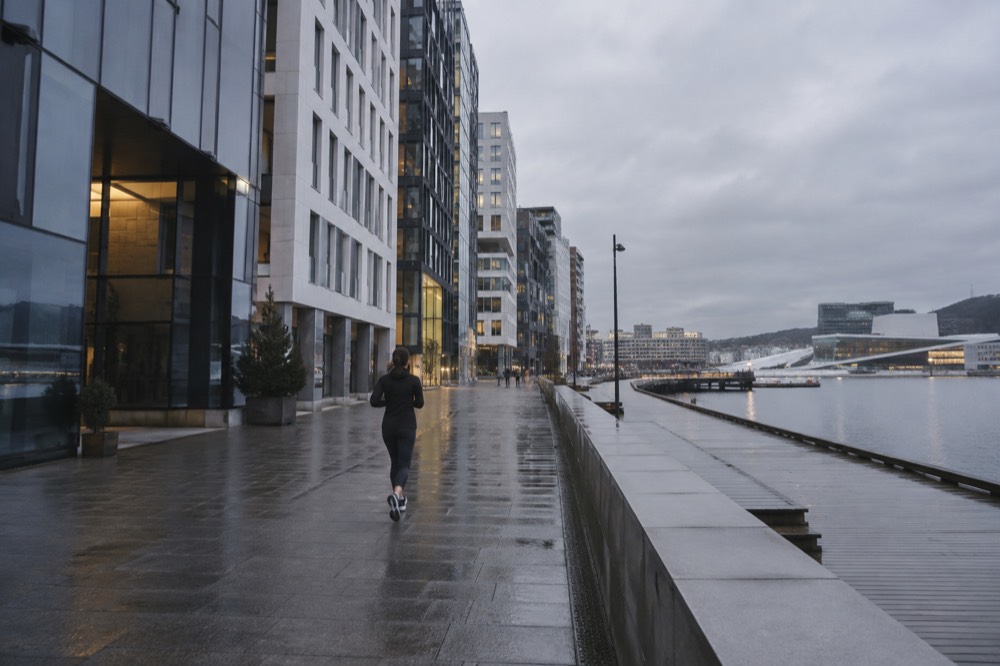
MUNCH, the museum at the water's edge in Bjørvika, costs 280 NOK for an adult, 200 NOK after 18:00, and nothing for ages 17 and under; under-25s pay 100 NOK. The MUNCH museum guide covers why the building itself, with its shoreline location and the tall gallery built for The Scream, is worth the walk even in the rain. The National Museum, which holds the other major Munch works, sits across the water; its adult price was not confirmed in this site's research pass, so check the live ticket page rather than trusting a number from a search result.
The Oslo Pass changes the maths. At 580 NOK for 24 hours it covers MUNCH and more than 30 other museums plus all Ruter transport, and the is the Oslo Pass worth it page runs the break-even sums in detail. For a rain day built around two or three museums, it usually pays for itself.
The Paradox Museum is the wildcard: interactive illusions, an hour of laughing at each other's distorted reflections, and a from-price of $30.04 with an 876-review rating of 4.3. It is the strongest indoor option for couples who have had enough of looking quietly at paintings, and a reminder that a rainy afternoon in Oslo does not have to be solemn.
Romantic Dinners: Where the Money Goes
SSB's price-level survey puts Norway sixth in Europe overall, with alcohol and tobacco more than double the European average, which is why the wine list, not the food, is where an Oslo dinner gets expensive. The workarounds are the evening-cruise shrimp buffet, wine at Vinmonopolet prices in a picnic, and the city's strong casual and street-food layer.
The dinner budget is the one place couples consistently underestimate Oslo. The food itself is expensive but fair; the alcohol is the outlier, and it is structural, not a tourist tax. Wine above 4.7% ABV is only sold through Vinmonopolet, the state monopoly, which is why a restaurant wine mark-up here starts from a high base. A practical couples' strategy: buy the wine at Vinmonopolet (closed Sundays, Saturdays until early afternoon, hours vary by store), and spend the dinner budget on food.
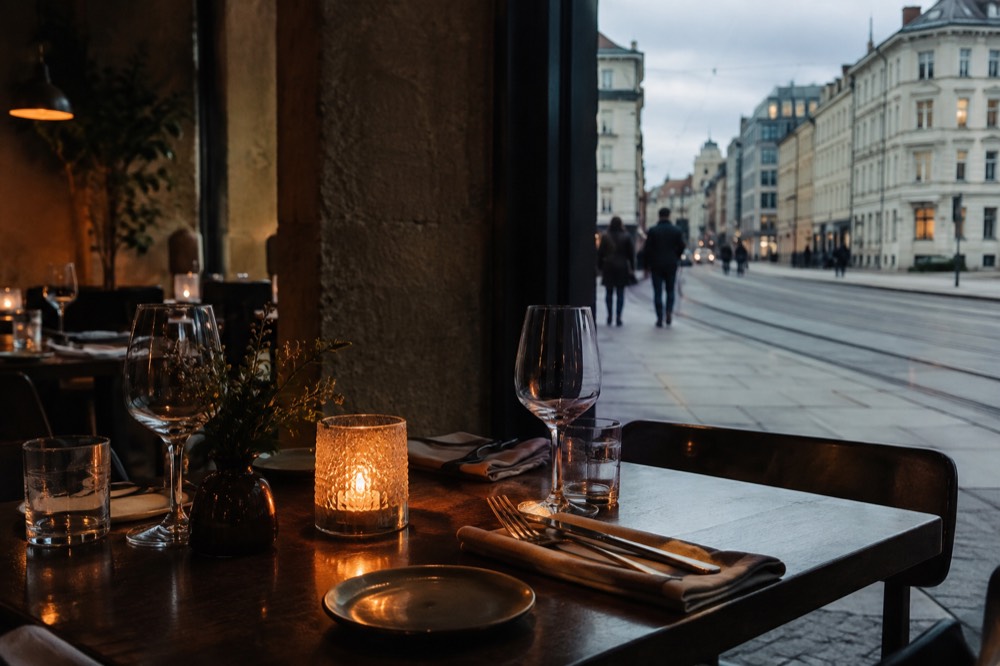
The city's eating geography splits neatly. Aker Brygge is the waterfront option, terrace dining with boats passing, at waterfront prices. Grünerløkka is the back-street option, candlelit and cheaper, and the Grünerløkka food walk from $175.47 is a way to turn the neighborhood's eating into a guided shared experience. The where to eat in Oslo and best restaurants in Oslo guides carry the full detail, and the price of beer in Oslo page covers the drinking numbers honestly.
Tipping, for the avoidance of doubt, is not the budget item visitors fear: service is included in Norwegian prices, and rounding up or something small for good service is a norm rather than an obligation. The tipping in Oslo guide covers the local etiquette.
The Overnight Version: Two Days as a Couple
For a two-day romantic trip, give day one to the city (free walk, Vigeland Park, Opera House roof, fjord cruise) and day two to the water or the forest: island-hopping to Hovedøya on an ordinary Ruter ticket, or the fjord-view hike with a waffle stop from $72.78. Two days is enough for a genuinely romantic Oslo trip; three allows a slow day for museums and Grünerløkka without rushing either.
Day two is where the choices diverge, and they are honest choices rather than a ranked list. The island option costs almost nothing: the B1 ferry to Hovedøya, with its ruined Cistercian abbey, is an ordinary Ruter ferry from Aker brygge, and a regular ticket covers it with no surcharge. Pack the Vinmonopolet picnic. The Oslo islands guide covers Hovedøya, Gressholmen and the swimming island Langøyene in full.
The forest option is the more memorable spend. The fjord-view hike with a chef-cooked waffle stop runs 3 hours 30 minutes from $72.78 and holds a perfect 5.0 across 211 reviews, which for a hiking product is close to unheard of. Winter couples have the guided snowshoeing in Nordmarka from $103.24, or the torchlit forest walk with a campfire from $91.64, which is the signature dark-season product of the whole city and a genuinely intimate thing to do at 16:00 in November.
Couples who want the day built around them rather than around a group have the private walking tour, from $69.60 for two to six hours, rated 4.6 across 287 reviews. It is the middle path between the free group walk and a fully planned itinerary, and for an anniversary or a proposal-adjacent day, a local guide who can be told the agenda is worth the premium.
Common Questions About Romantic Things to Do in Oslo
What is the most romantic thing to do in Oslo?
For most couples it is the evening fjord cruise: the silent electric boat at golden hour, or the 3-hour shrimp-buffet evening cruise if you want dinner included. On land, the free answer is the Opera House roof at sunset, followed by a slow dusk walk through Vigeland Park, which stays open 24 hours.
Is Oslo good for couples?
Yes, and more so than its reputation suggests. The city is compact and walkable, the fjord reaches the center, June evenings stay light until nearly 23:00, and the expensive parts of Oslo, alcohol and restaurants, can be managed around, while the romantic core of the city, the park, the roof, the waterfront, is free.
What does a romantic day in Oslo cost?
The free layer, the walking tour, Vigeland Park, the Opera House roof and the waterfront walk, costs nothing. The paid centerpiece is the fjord cruise, from $46.29 per person on the silent electric boat or $90.22 for the shrimp-buffet evening version. Dinner is the variable item: SSB's price-level survey puts Norwegian food prices 33% above the European average and alcohol more than double, so budget accordingly and see the dinner section above for the workarounds.
Where should a couple stay in Oslo?
The Oslo Sentrum area puts the Opera House, the waterfront and the cruise piers within a short walk, which matters for the evening parts of this itinerary. Grünerløkka is the characterful alternative, cafés and candlelit streets at the cost of a tram ride to the fjord. The where to stay in Oslo guide covers the neighborhoods in full.
What is the most romantic time of year to visit Oslo?
June, for the 22:43 sunset and twilight that never goes fully dark. February is the dark-season alternative, snow on the Frogner Park sculptures, firelight and the torchlit forest walk. Avoid late December if light matters to you: the day shrinks to 5 hours 53 minutes.
One closing thought from the practical side. The couples' days that work in Oslo are the ones that book the one big thing, the cruise or the evening walk, and leave the rest loose, because the city's free layer is strong enough to fill every gap. Plan the sunset, book the boat, and let the cardamom buns take care of the morning.