Things to Do in Oslo at Night
Oslo after dark is a different city from the one in the daytime brochures: late museum evenings, a fjord that never fully darkens in June, and bar streets that fill late. Here is what actually works at night, with real hours and real costs.
Short answer
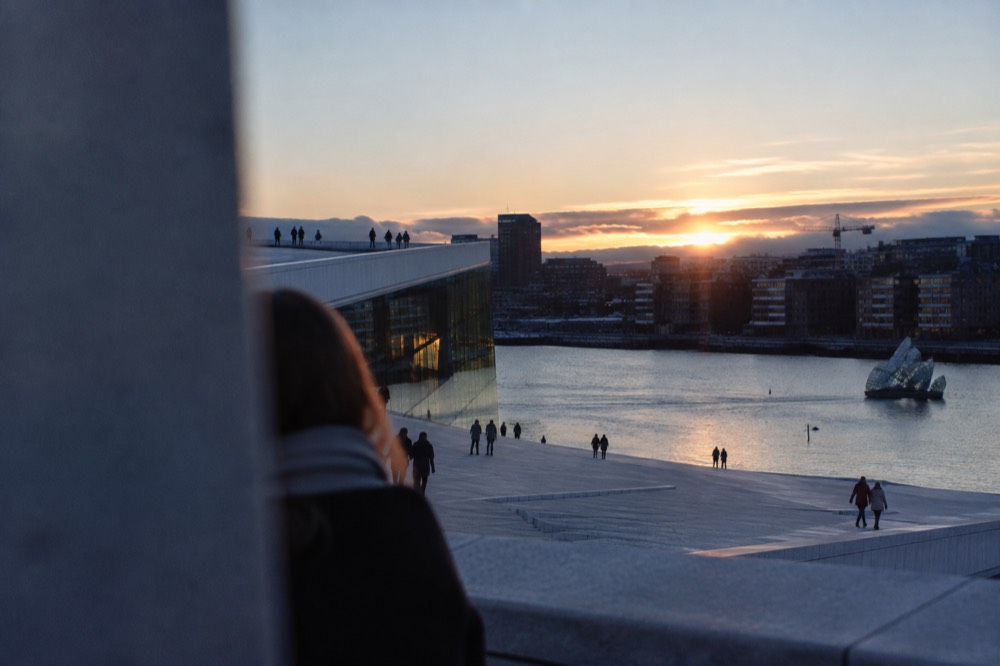
Oslo's best night options are the evening fjord cruise with a shrimp buffet, a myths and legends walking tour, and MUNCH's late openings until 21:00 on Wednesday to Saturday. Bars fill from around 21:00, the Vigeland Park and Opera House roof stay free and open, and summer twilight lasts past 22:40 in June.
What Is There to Do in Oslo at Night?
Oslo at night runs on three engines: the fjord, the late museum openings, and a bar scene that starts late and runs later. The evening shrimp-buffet cruise leaves the pier for three hours on the water, MUNCH stays open until 21:00 four nights a week, and the myths and legends walk turns the dark months from October to March into an asset. Add a free, always-open sculpture park and a walkable opera roof, and a visitor with no plan still has a full evening.
The mistake most first-time visitors make is treating Oslo like a city that shuts at six. Parts of it do: Vinmonopolet, the state alcohol monopoly, closes early on Saturdays and is shut all day Sunday, and most shops pull their shutters in the early evening. But the things a traveler actually wants at night, boats, museums, bars and lit-up public space, keep going, and in summer the sky refuses to go dark at all. On 21 June the sun sets at 22:43 and rises at 03:53, and the hours between are twilight rather than true night, according to MET Norway's sunrise data for the city.
That daylight swing shapes everything about an Oslo evening. In late December the sun is up for 5 hours 53 minutes and sets at 15:11, so "night" starts before most people have eaten lunch and the evening is genuinely long. In June it barely starts. The same itinerary does not work in both halves of the year, and this guide splits them where it matters.
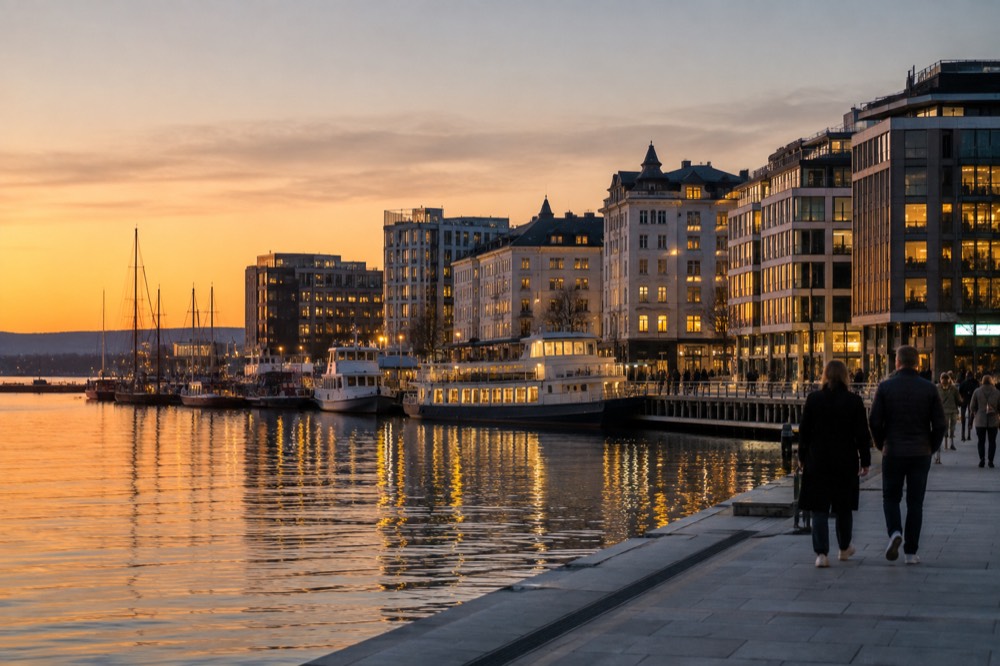
Start with the obvious anchor. The Oslo Opera House roof is free to walk on at any hour, angled marble slabs rising straight out of the water, and it is the city's default evening hangout in summer. Two minutes away, Aker Brygge puts restaurants and bars on the water with the Barcode towers lit behind them. That whole stretch, from the opera to City Hall, is the spine of a first evening in Oslo, and it costs nothing to walk.
If you want the fuller daytime-plus-night picture, our things to do in Oslo page covers the rest of the city; this page is only about the hours after the sun goes down, or the hours it refuses to.
Which Evening Tours in Oslo Are Worth Booking?
Three evening products stand out from the verified roster: the fjord evening cruise with a shrimp buffet, a 2-hour myths and legends walking tour rated 4.8, and the Beer and Culture Walk, which exists because Norway's alcohol rules genuinely confuse visitors. Each solves a different night-out problem, one is on the water, one is on foot in the dark season, and one is a guided route through the bar scene, so pick by mood rather than by rating alone.
The evening cruise is the Norwegian institution of the three. Three hours on the Oslofjord with a shrimp buffet on board, departing in the evening so the city lights are on the water on the way back in. It is a dinner and a sightseeing trip in one, which matters in a city where restaurant prices run high: SSB's 2025 European price comparison puts Norwegian food prices 33% above the EU average, so a boat that feeds you while it shows you the fjord is doing real work. The fjord cruise guide covers the daytime versions if you would rather eat on land.
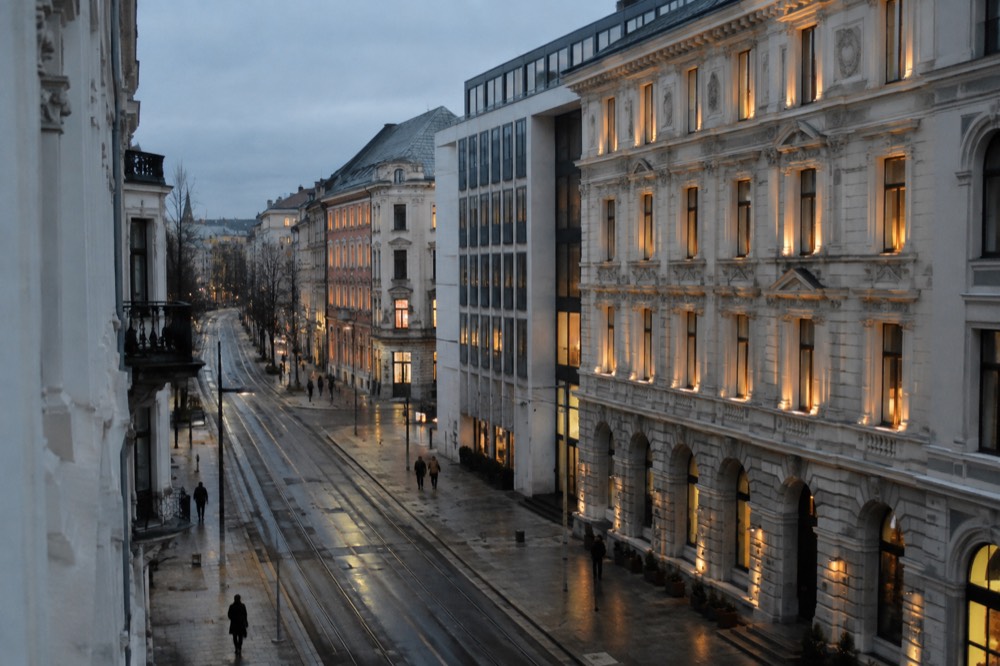
The myths and legends walk is the dark-season product. Two hours of Oslo's darker history on foot, in the evening, rated 4.8 across 510 reviews. From October to March, when the sun sets mid-afternoon and the streets are dark by five, a themed evening walk is exactly what the city is built for: lamplight, old buildings and stories that do not need daylight.
The Beer and Culture Walk is the one that needs the most explaining, because it exists only because of Norwegian law. Wine and spirits are sold exclusively through Vinmonopolet, the state monopoly, which is closed Sundays and public holidays and closes early on Saturdays. Supermarkets sell beer only, and only up to a limited strength, with a fixed evening cut-off on sales. A visitor who does not know this walks into a supermarket at nine at night and finds the beer fridge locked. A guided walk through the bar culture, with someone who knows where the doors are and when they close, turns that confusion into the evening itself.
Here is how the three compare on the basics, with prices and ratings:
| Evening tour | Format | Duration | Best season |
|---|---|---|---|
| Evening cruise, shrimp buffet | Dinner boat on the Oslofjord | 3h | May to September |
| Myths and legends walk | Themed walking tour | 2h | October to March |
| Beer and Culture Walk | Guided bar and culture walk | 3h | Year round |
For the beer walk, the honest pitch is simple: the Beer and Culture Walk is the only guided product in the city built around Norway's alcohol rules, and it runs three hours. Check availability
Is Oslo Safe to Walk Around at Night?
Oslo is one of the safer European capitals after dark, with a compact, well-lit center and a public transport system that runs late on weekends, but the normal city rules still apply: the area around the central station and the tail end of Karl Johans gate get rowdier after bar closing, and the harbor piers are quiet and dim once the last ferry leaves. Solo walkers and families are common on the waterfront all evening.
Norway's capital does not have a no-go district, and the areas a visitor is likely to be in at night, Oslo Sentrum, Aker Brygge, Grünerløkka, are busy and lit. The eastern end of Karl Johans gate near Oslo S is where most of the late-night friction concentrates, mostly around the last bars emptying, and the "Nye Oslo S" redevelopment now in public consultation may reshape that whole station district over the coming years. If you want the fuller picture, our is Oslo safe page covers it in detail.
Two practical notes. First, distances are short: central Oslo is walkable end to end in well under an hour, so a night out rarely strands you far from a tram. Second, taxis are expensive, as they are across Norway, and the tram or metro is the default way home, not a fallback.
Where Should You Eat and Drink in Oslo at Night?
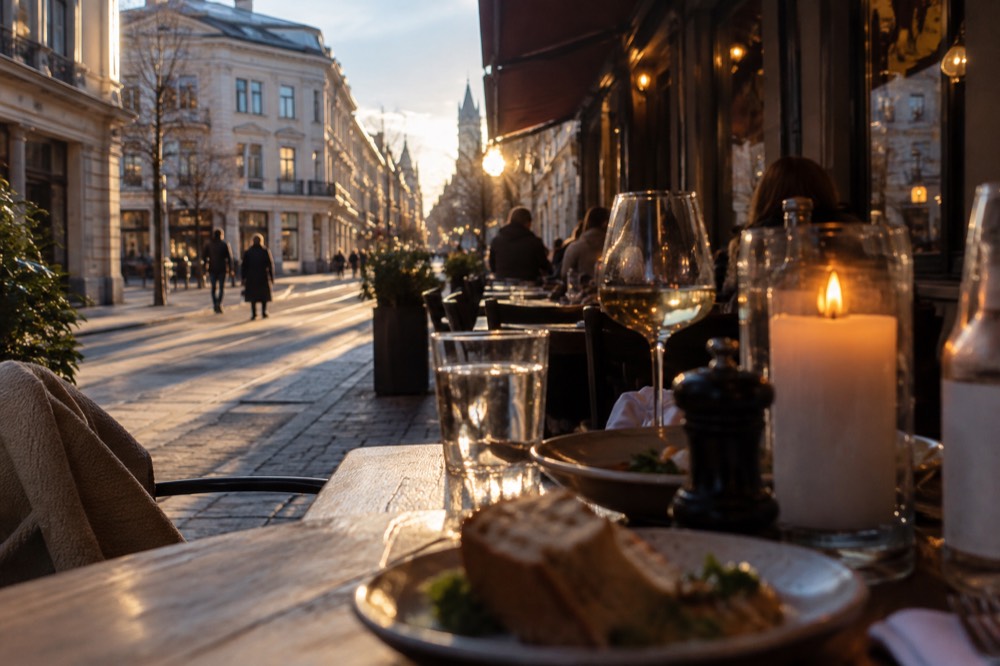
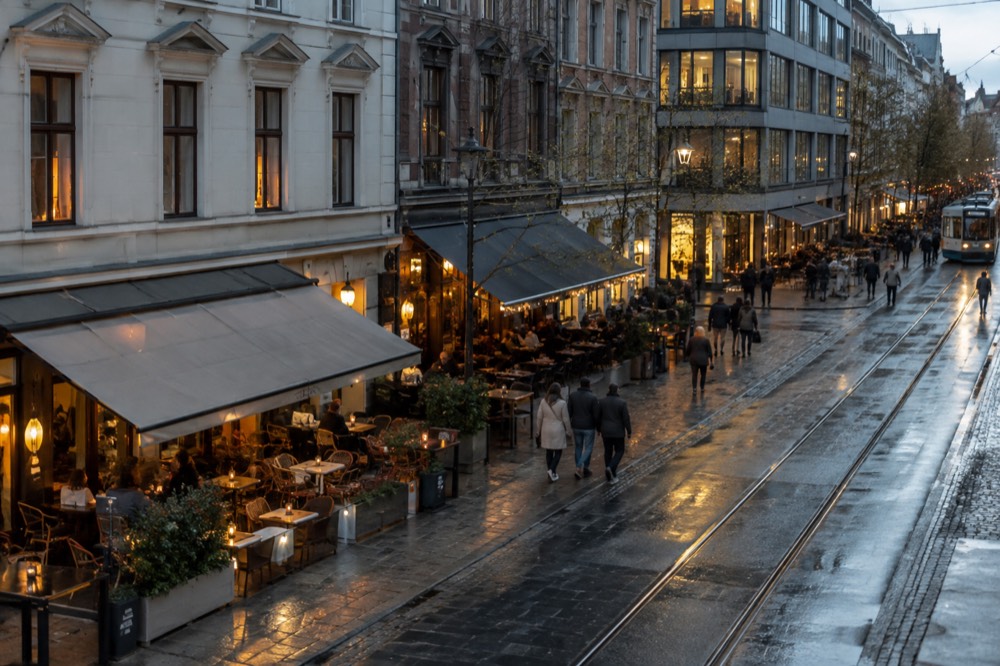
Dinner in Oslo starts earlier than the bar scene: kitchens typically serve until 21:00 or 22:00, while bars fill from around 21:00 and run to the small hours on weekends. The two areas that matter are Grünerløkka for neighborhood bars and restaurants, and Aker Brygge for eating on the water, and the single most useful thing to know is that the cheapest drinks are bought at Vinmonopolet before it closes, not at any bar.
The cost logic is stark, and it comes from Statistics Norway's 2025 price-level survey: alcohol in Norway costs more than double the European average. That one number explains the whole evening drinking culture. Norwegians pre-drink at home, go out later, and treat a bar beer as an event rather than a default. Visitors who skip the pre-game and order freely all night feel it on the card the next morning.
The rules, stated once and plainly:
| Where | What is sold | When it stops |
|---|---|---|
| Vinmonopolet | All wine and spirits, plus stronger beer | Closed Sundays and public holidays; Saturdays close early; weekday hours vary by store |
| Supermarkets | Beer and cider only, up to the legal strength limit | Fixed evening cut-off on sales |
| Bars and restaurants | Full range, served on licensed premises | Kitchen usually earlier than the bar; bars latest in the center and Grünerløkka |
For food, the honest structure of an Oslo dinner out is covered on our where to eat in Oslo page, with the budget end on Oslo cheap eats. The night-specific advice is narrower: eat earlier than you might in Madrid or Lisbon, because kitchens close earlier; and if you want a genuinely Norwegian evening rather than a generic one, the shrimp-buffet cruise is the dinner that comes with a view included.
What Are the Best Views of Oslo After Dark?
The Opera House roof and the harbor promenade are the free default, the Aker Brygge waterfront puts you at water level with the city lit behind you, and the money option is the evening fjord cruise, which gives you the whole skyline from the water. In winter, the torchlit forest walk adds a campfire in Nordmarka, and the ski-jump tower at Holmenkollen sits above the city lights, though its evening opening is limited.
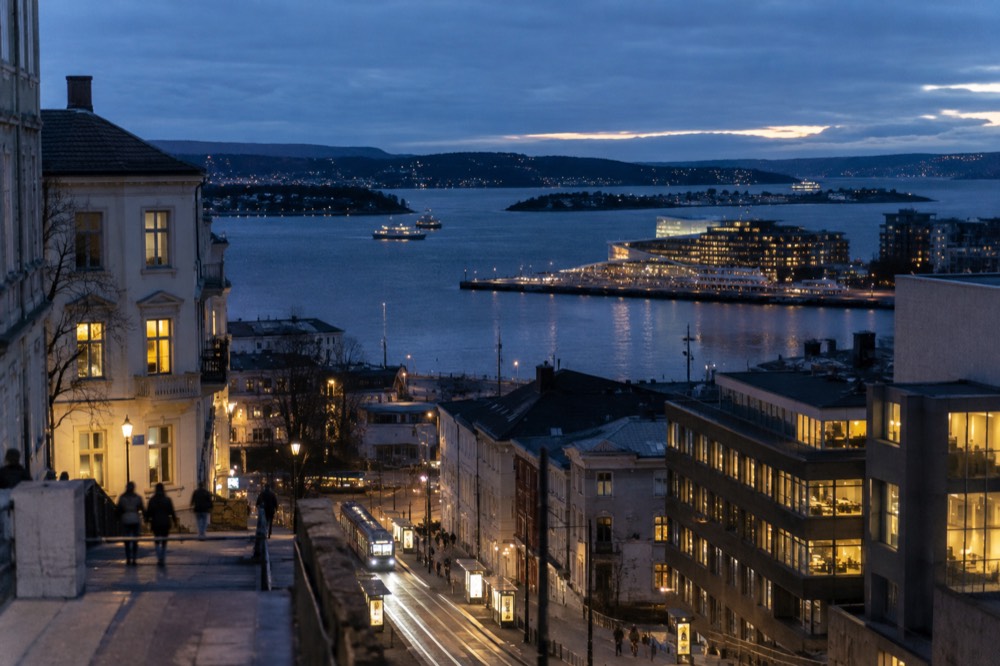
The opera roof costs nothing and never closes. The marble slopes are public space, lit from below in the darker months, and in June you can stand up there at 22:00 in full twilight with the fjord still visible. The full best views in Oslo guide ranks the daytime options; at night the shortlist is shorter, because most viewpoints need daylight to pay off.
On the water, the evening cruise is the view that moves. Three hours out on the Oslofjord with the city shrinking behind you, then the lights of Aker Brygge and the Barcode towers on the return leg, with dinner served on board. It is the one product where "night" and "view" are the same purchase rather than two separate plans. The wider set of guides lives on Oslo Travel Guide.
In the dark half of the year, the torchlit forest walk is the alternative view: three and a half hours in the forest north of the city, by torchlight, ending at a campfire. It is a winter product in every sense, and it works precisely because Oslo's winter nights are so long. Our Oslo in winter page has the rest of that season's toolkit.
One thing not to chase at night: the northern lights. Oslo sits at 59.91 N, well south of the auroral zone, and a sighting from the city needs a strong geomagnetic storm, a clear sky and a dark spot all at once, a combination that comes around a handful of times a year. There is no aurora tour from Oslo because there is nothing to reliably show you; the honest answer is in our northern lights in Oslo page, and it points north to Tromsø as a separate trip.
What Time Do Things Close in Oslo at Night?
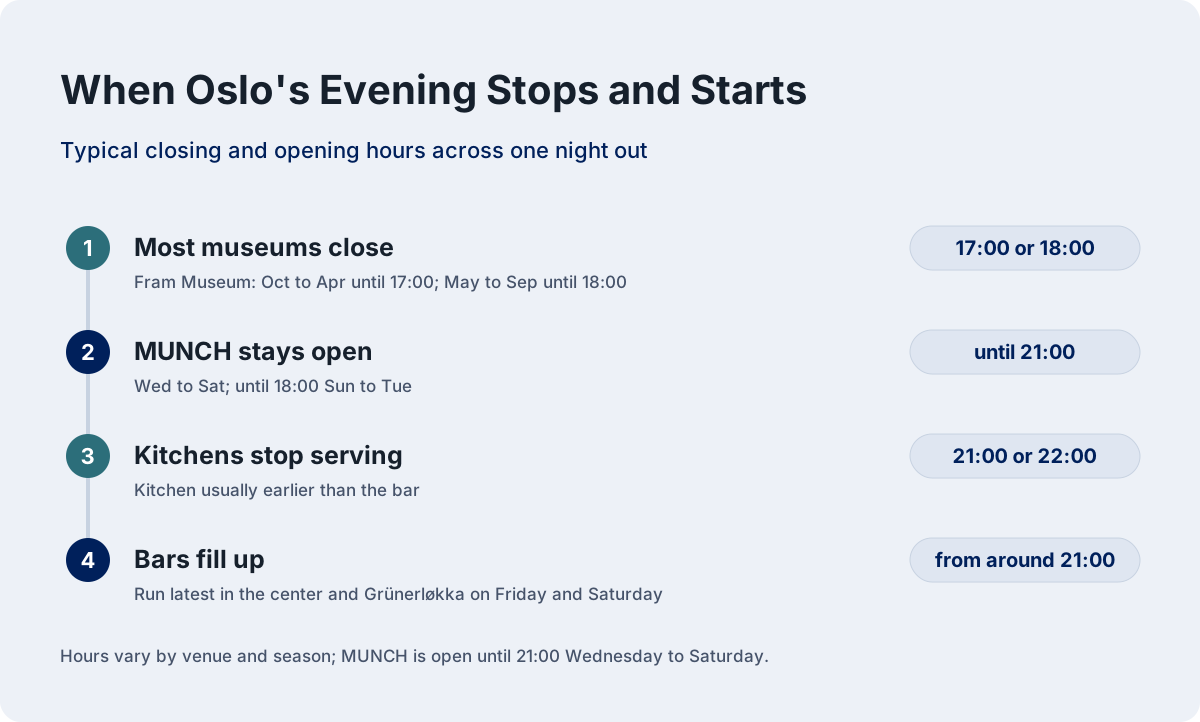
The hard stop is Vinmonopolet and supermarket beer, which end the evening's cheap drinking hours before the bars even fill; museums mostly close at 17:00 or 18:00 with MUNCH the big exception until 21:00 on Wednesday to Saturday; kitchens typically stop serving around 21:00 to 22:00; and bars in the center and Grünerløkka run latest on Friday and Saturday. Public transport runs late on weekend nights.
The single most useful table for planning an Oslo evening, built from the venues' own published hours:
| What | Last hours of the day | Notes |
|---|---|---|
| MUNCH | Until 21:00, Wed to Sat; until 18:00 Sun to Tue | Open every day of the year except 1 May |
| Fram Museum | Oct to Apr until 17:00; May to Sep until 18:00 | Bygdøy museums close with daylight |
| Kon-Tiki Museum | Open all year, daytime hours | Pair with Fram for a museum afternoon, not night |
| Vinmonopolet | Weekday evenings, early close Saturday | Closed Sunday and public holidays |
| Supermarket beer | Fixed evening cut-off | Strength-limited beer and cider only |
| Vigeland Park | Never closes | Free, 24 hours, all year |
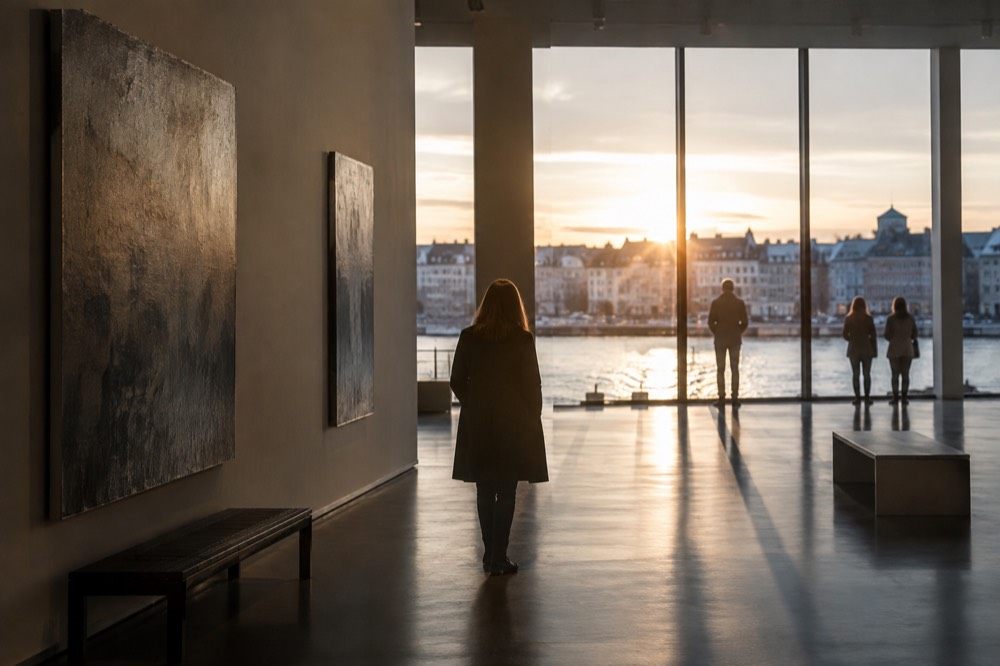
MUNCH is the night owl of the set, and it prices for it: 280 NOK in the daytime, dropping to 200 NOK for entry after 18:00, with under-25s at 100 NOK and 17-and-under free. Those figures come from the museum's own ticket page. The MUNCH museum guide covers what you actually see inside; the point here is that a Wednesday evening art visit is a real Oslo night out, not a compromise.
One warning that catches people every year: the Bygdøy museum peninsula is a daytime destination. The ferries there stop running in the early evening, the museums close with them, and the peninsula goes quiet and dark. Do not plan a museum night on Bygdøy; plan it at MUNCH or at the National Museum, and check its hours on the museum's own site before you go.
How Does the Season Change a Night Out in Oslo?
In summer the night barely exists, with sunset at 22:43 on 21 June and twilight instead of darkness until the sun rises at 03:53, so evening activity moves onto the water and into parks; in winter the sun sets mid-afternoon and the city leans on lamplight, museums, bars and the dark-season walking tours. The two seasons are effectively two different cities after 18:00, and the same plan will fail in one of them.
The numbers, from MET Norway's sunrise data for Oslo:
| Date | Sunset | What the evening feels like |
|---|---|---|
| 21 Jun | 22:43 | Twilight all night, never properly dark |
| 15 Aug | 21:09 | Long light evenings, dark by midnight |
| 15 Oct | 18:08 | Dark before dinner, long evening ahead |
| 21 Dec | 15:11 | Sun down mid-afternoon, 5h 53m of daylight total |
Summer nights in Oslo are outdoor nights. The harbor fills, the opera roof stays populated past midnight, and the island ferries run late enough on the summer timetable that an evening trip to Hovedøya or Langøyene is a real plan, on an ordinary Ruter ticket from Aker brygge. Note the two piers if you do this: the island ferries leave from Aker brygge and take ordinary Ruter tickets, while the Bygdøy museum ferry leaves from Rådhusbrygge 3, runs only from mid-March to early October, and does not take Ruter tickets at all, though the Oslo Pass covers it.
Winter flips the whole evening earlier. Bars matter more, the myths and legends walk comes into its own, and the torchlit forest walk with its campfire becomes the signature night out. The temperature normals are mild rather than brutal for the latitude, a January mean of −2.3 °C (about 28 °F) at Blindern, but the dark is the real feature: plan around it rather than against it. Our Oslo in December page is the deep dive for the darkest month.
How Much Does a Night Out in Oslo Cost?
A night out in Oslo is expensive where Norway is expensive, alcohol and restaurants, and cheap where Norway is cheap, public space, museums and transport. A late MUNCH entry is 200 NOK, the Oslo Pass that covers transport and over 30 museums starts at 580 NOK for 24 hours, and the beer you buy at Vinmonopolet costs a fraction of the same beer at a bar, because alcohol runs at more than double the European average.
The structural picture from SSB's 2025 survey: Norway is the sixth most expensive country in Europe, with overall prices 28.6% above the EU average, food 33% above, and alcohol and tobacco more than double. But museums are not unusually expensive by European standards, public transport is reasonable, and the outdoors is free. A night built on a late museum slot, a walk on the opera roof and the lit harbor promenade costs almost nothing beyond dinner.
| Night-out item | Typical cost in NOK | What you get |
|---|---|---|
| MUNCH after 18:00 | 200 | All galleries until 21:00, Wed to Sat |
| MUNCH daytime rate | 280 | Same museum, daytime hours |
| Oslo Pass, 24h adult | 580 | Over 30 museums plus Ruter transport in zones 1, 2, 3, 4V and 4N |
| Vigeland Park | 0 | Over 200 sculptures, open 24 hours |
| Opera House roof | 0 | Public space, never closes |
| Island ferry (Ruter ticket) | Ordinary zone fare | Evening sailings on the summer timetable |
The Oslo Pass math works best on museum-heavy days rather than pure nights, but it has one night-relevant trick: it includes the Vy trains to and from Oslo Airport Gardermoen, not Flytoget, which is the single most valuable money fact on this site. If your night in Oslo ends with an early train to the airport, the pass can carry you there. The full breakdown is on our is the Oslo Pass worth it page, and the wider budget picture is on Oslo on a budget.
For the guided nights, prices and ratings sit rather than in this table, because they move. What does not move is the shape of the choice: the myths and legends walk is the cheapest of the three big evening products, the shrimp-buffet cruise sits in the middle and includes dinner, and the full-day packages that bundle daytime sightseeing with a fjord leg are a different purchase entirely, covered on our Oslo guided tours page.
One currency note that trips up first-time visitors: Norway is in the Schengen Area but not in the European Union, and it uses the krone, not the euro. Cards are accepted almost everywhere, including street food stalls and transit, so cash is largely unnecessary, but the prices you see are NOK and the mental conversion is yours to do. Our Oslo currency and cash page covers the details.
Putting an Oslo Evening Together
A reliable first evening is the harbor walk from the opera roof to Aker Brygge, dinner in that stretch, and then one booked product: the shrimp-buffet cruise in summer, the myths and legends walk in winter, or the Beer and Culture Walk when the plan is bars rather than views. Budget roughly 200 NOK for a late museum alternative, eat before 21:00, and buy anything you want to drink at Vinmonopolet before it closes.
Oslo Travel Guide builds itineraries like this one from verified opening hours and published prices, and the evening is where the verification matters most: the city's rhythm after dark is not obvious, the alcohol rules are genuinely strange to visitors, and the season changes everything. Build the night around one anchor, keep the free stuff, the opera roof, the harbor, Vigeland Park, as filler, and the evening takes care of itself.
Common Questions About Oslo at Night
What is there to do in Oslo at night?
An evening fjord cruise with a shrimp buffet, the myths and legends walking tour, MUNCH's late openings until 21:00 on Wednesday to Saturday, the free and always-open Opera House roof and Vigeland Park, and the bar streets of Grünerløkka and the center. In summer, twilight lasts past 22:40 in June, so outdoor evenings stretch late.
Is Oslo safe at night?
Yes, Oslo is one of the safer European capitals after dark, with a compact, well-lit center and late weekend public transport. The area around Oslo S and the eastern end of Karl Johans gate gets rowdier when the last bars empty, but there is no district a visitor needs to avoid outright.
What time do bars close in Oslo?
Bars in central Oslo and Grünerløkka typically run latest on Friday and Saturday nights, filling from around 21:00 and closing in the small hours. Kitchens stop serving earlier, usually between 21:00 and 22:00, so eat before you drink if dinner is part of the plan.
Can you buy alcohol at night in Oslo?
Not from shops. Supermarkets sell only strength-limited beer and cider, with a fixed evening cut-off, and Vinmonopolet, the state monopoly that sells all wine and spirits, closes early on Saturdays and is closed all day Sunday. After those hours, licensed bars are the only option, and they are expensive.
Does it ever get dark in Oslo in summer?
Only briefly. On 21 June the sun sets at 22:43 and rises at 03:53, and the hours between are deep twilight rather than true night. There is no midnight sun in Oslo, the city is too far south at 59.91 N, but it never gets properly dark in late June either.
Is the evening fjord cruise worth it?
It is the one evening product that combines dinner, the fjord and the city lights in a single three-hour trip, which matters in a city where restaurant prices run high. The shrimp buffet is a Norwegian institution rather than a tourist gimmick, and the return leg gives you the lit skyline from the water.