Free Walking Tours in Oslo: What to Expect, What to Tip, and Which Walk to Pick
Free walking tours are the cheapest credible introduction to Oslo, a city where almost everything else costs money. Here is how the tip-based model works in Norway, what a fair tip actually is, and how to choose between the walks on offer.
Short answer
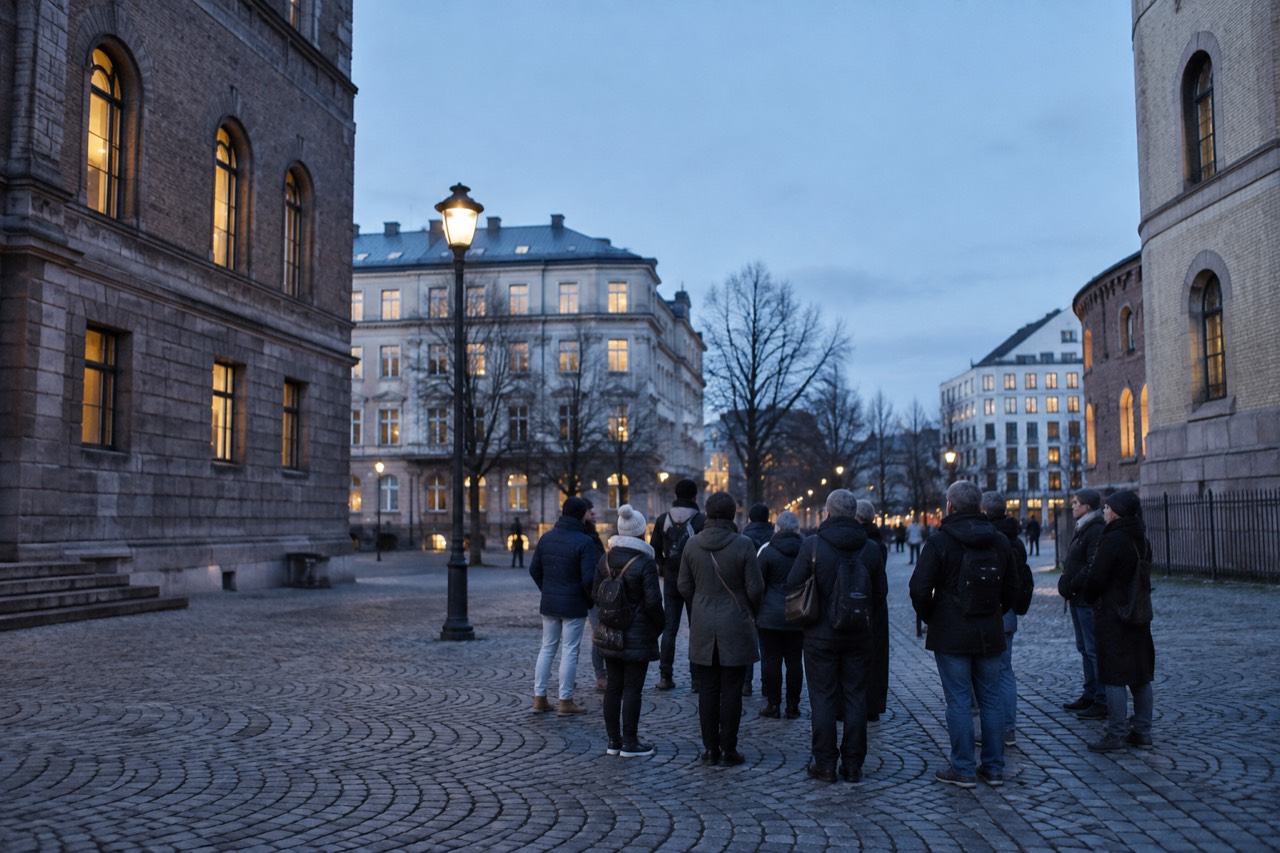
Oslo has several free, tip-based walking tours of roughly two hours, all covering the city center's main sights. You book a spot, join the group, and tip the guide in cash or by card at the end. A fair tip in Norway is around 100 to 200 NOK per person. The largest operator's walk is the default choice; smaller themed walks suit a second day.
Oslo is one of the most expensive capitals in Europe, and the free walking tour is the one product category where the city genuinely undercuts everywhere else. You pay nothing to join, you walk the center with a guide, and you decide at the end what it was worth. That model works especially well here because Oslo's core is compact, walkable, and dense with stories that a map will not tell you: a fortress that has never been taken by siege, a cathedral that crowns kings, and a main street that doubles as a national parade route.
This guide explains how the tip-based system actually works in Norway, what a fair tip is in local currency, which walks exist, and where a paid tour earns its price. It is written by Oslo Travel Guide, an editorial desk that has researched every product on this site against its live listing.
How Does a Free Walking Tour in Oslo Actually Work?
A free walking tour is a booking you make for zero upfront cost, with a guide who is paid entirely from tips collected at the end of the walk. You reserve a place online, turn up at the meeting point, walk for roughly two hours, and then tip what you choose, in cash or increasingly by card. The model is legal, established, and in Oslo it is the single cheapest way to get an orientation of the city center.
The mechanics are simple. You pick a date and a start time, book a spot, and receive a meeting point, usually a landmark in the very center such as outside the Oslo Cathedral or by a statue on Karl Johans gate. Groups can be large in summer, sometimes several dozen people, because there is no price signal to hold numbers down. The guide works for tips, which means the good ones are genuinely good: their income depends on the walk being worth money to you at the end.
Tipping happens in the last five minutes. The guide will typically say so plainly, and in Norway nobody finds that awkward, because service workers do not depend on tips the way they do in the United States. You hand over cash, or in most cases the guide will have a card reader or a QR code, because almost nobody in Oslo carries cash. If you have no Norwegian kroner at all, card tipping solves it.
One thing to be clear about: "free" means free to book, not free in spirit. The social contract is that if the walk was worth something to you, you pay something. What that something is, in a country where a restaurant main can outprice a museum ticket, is a fair question, and the next section answers it with real numbers.
What Is a Fair Tip for a Free Walking Tour in Oslo?
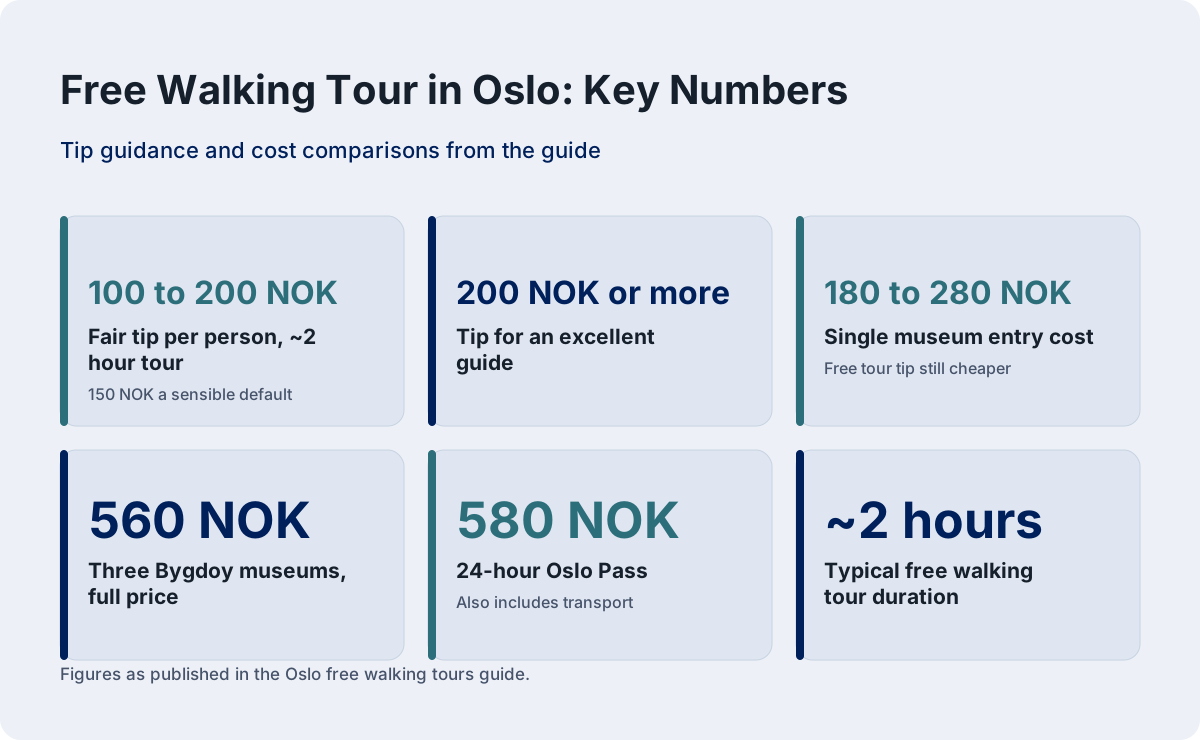
A fair tip for a two-hour free walking tour in Oslo is roughly 100 to 200 NOK per person, with 150 NOK a sensible default for a good guide and 200 NOK or more for an excellent one. Couples often tip together at the higher end of that range. In a city where a single museum entry costs 180 to 280 NOK, a tip in this band still makes the walk the cheapest guided product in Oslo by a wide margin.
The logic is local purchasing power. Norway is the sixth most expensive country in Europe on Statistics Norway's 2025 price-level comparison, with prices facing households 28.6 percent above the EU average, so a tip that feels generous in euros or dollars can land thin in kroner. The walk itself is two hours of a professional's time in one of Europe's dearest labor markets.
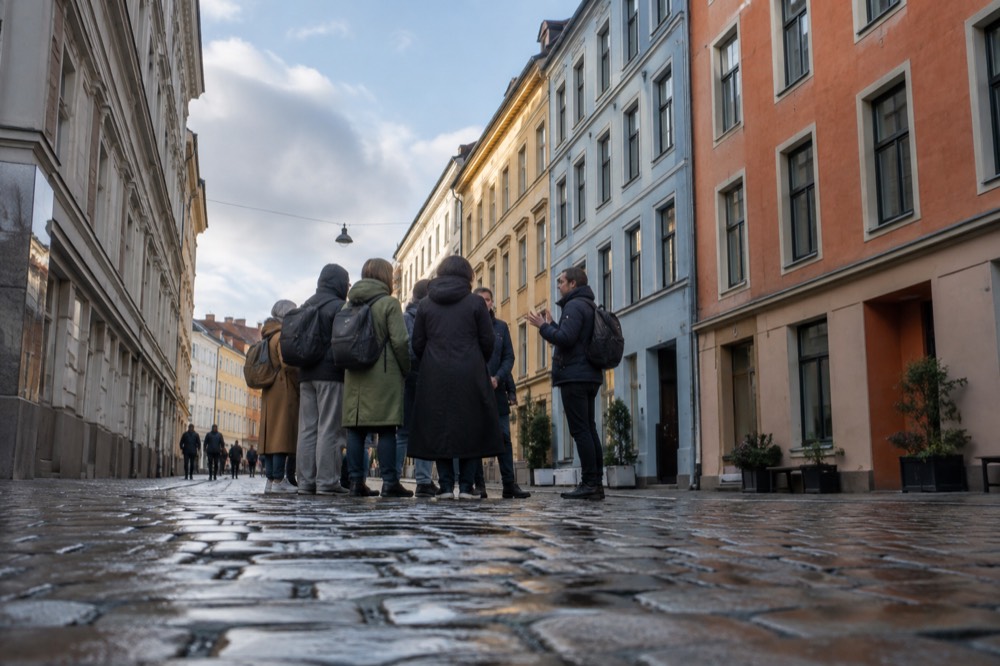
Here is how the tip compares against the other ways to spend a guided two hours in Oslo, using the products verified on this site's roster:
| Product | Upfront cost | Model | Typical duration |
|---|---|---|---|
| Free highlights walking tour | 0 NOK, tip based | Pay what you choose | ~2 hours |
| Free themed contrasts walk | 0 NOK, tip based | Pay what you choose | ~2 hours |
| Budget central guided walk | Fixed from-price in USD | Prepaid ticket | 2 hours |
| Small-group walk, max 10 | Fixed from-price in USD | Prepaid ticket | 3 hours |
| Private walk with a local | Fixed from-price in USD | Prepaid ticket | 2 to 6 hours |
The pattern is visible immediately: the tip-based walks are the floor of the market, the fixed-price group walk costs roughly what a decent tip would, and everything above that buys smaller groups or exclusivity. If you want to see the full paid landscape, our Oslo guided tours overview compares every format in the city.
Which Free Walking Tours Operate in Oslo?
Oslo has four bookable free walking tours on this site's verified roster: a large highlights walk, a themed contrasts walk covering rich and poor Oslo, a locals-led alternative, and a smaller orientation walk that pairs the tour with a written local guide. All run about two hours, all are tip based, and all cover the city center with different angles. The highlights walk is the default first choice by a wide margin on review volume.
The differences between them are real, and they matter more on a second day than a first. Here is the honest breakdown of the four:
| Walk | Angle | Best for | Group character |
|---|---|---|---|
| Free Highlights Walking Tour | The classic center loop: history, landmarks, orientation | First-time visitors on day one | The largest groups, most departures |
| Free Themed Contrasts Walk | East and west Oslo, wealth and grit, how the city divides | A second walk, or anyone past the basics | Smaller, more conversational |
| Free Walk Led by Locals | Resident guides, neighborhood flavor | Travelers who dislike big-operator feel | Small groups |
| Free Orientation Walk Plus Local Secrets Guide | The walk plus a takeaway written guide | People who want notes to keep | Small groups |
The highlights walk is the workhorse. It is by far the most-reviewed free walk in the city on its live listing, and it exists to do one job: hand you the map of Oslo in your head. Fortress, cathedral, main street, harbor, opera house, and enough history to make each one mean something. If you only do one walk, it is this one.
The contrasts walk is the one worth knowing about even if you skip it, because it covers something the big loop does not: Oslo is a divided city, west and east, and the walk makes that visible on the ground. For travelers who find classic highlights walks thin, it is the more interesting hour pair in the city, and it pairs well with reading our Grünerløkka neighborhood guide, which covers the east side's most visitable district in depth.
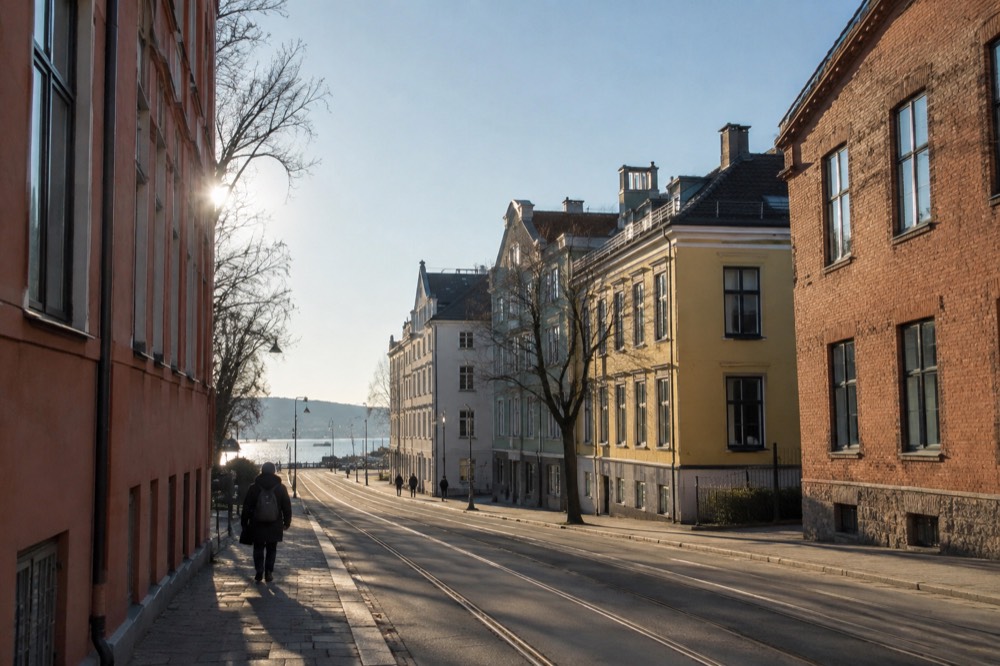
The locals-led walk and the orientation walk with the written guide are both smaller operations, and that is their whole pitch. Fewer people, more questions, a guide who lives in the city rather than reciting a script. The orientation walk's printed local-secrets guide is the only free walk on the roster that sends you away with something in your pocket, which is genuinely useful in a city where the good stuff is spread across neighborhoods.
What Do the Free Walking Tours of Oslo Actually Show You?
The standard free tour route covers central Oslo's core cluster: Karl Johans gate, the Oslo Cathedral, the Stortinget parliament building, Akershus Fortress from the outside, the harbor front at Rådhusbrygge, and the Opera House roof. Expect history and orientation rather than museum interiors, because entry is not included anywhere. The route is flat, roughly two to three kilometers end to end, and walkable at any pace the group sets.
Karl Johans gate, lowercase "gate" because it simply means street, is the spine of every center walk. It runs from the central station up to the Royal Palace, and along it sit the cathedral, the parliament, and the National Theatre. Guides use it to explain what Oslo is: a city that was rebuilt in brick after repeated fires, renamed Christiania under Danish rule, and grew rich in the nineteenth century from shipping. If the shipwreck of names confuses you, our blog piece on what Oslo was called before it was Oslo untangles it.
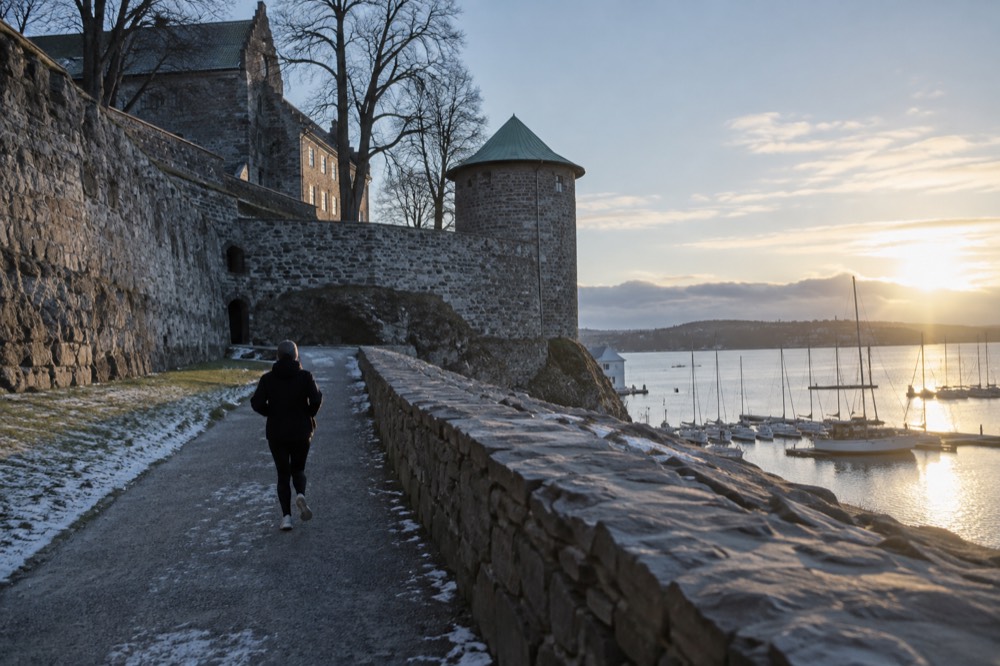
Akershus Fortress is the stop where most guides earn their tip. The castle and fortress have guarded the harbor since the medieval period, never taken by siege, later a prison, later still the site of executions under the WWII occupation years. Free walks cover the grounds and the story from outside; going inside the castle or the Resistance Museum is a separate, paid visit, and our Akershus Fortress guide covers what entry buys.
The harbor end of the walk usually finishes at the modern waterfront: Aker Brygge's converted shipyards, the City Hall with its twin towers and Nobel Peace Prize ceremony hall, and the Opera House slope, which is free to walk up with or without any tour. The Opera House roof is one of the city's genuine free pleasures, marble and angled like a glacier rising out of the water, and it makes a natural end point where guides collect tips with the fjord behind them.
When Is a Paid Walking Tour Worth It Instead?
A paid walk earns its price when you want a small group, a fixed itinerary, a specialist theme, or a guide whose time is contractually yours. The cheapest credible paid walk in Oslo costs about what a generous free-tour tip would, and from there the market steps up through small-group and private formats. If you found the free tour's group too big to ask questions in, that is the moment to pay.
The honest comparison is not free versus expensive, it is what each increment buys. The budget central walk is a fixed-price group tour of the center with a local guide, and its live listing makes it the entry point to paid guiding. The small-group walk caps attendance at ten people and stretches to three hours, which is enough time to go beyond the center loop. The private walk is fully flexible, two to six hours, built around what you want to see.
| Situation | Best pick | Why |
|---|---|---|
| First day, tight budget | Free highlights walk | Orientation at tip cost |
| Want to ask questions | Small-group walk, max 10 | Capped group, longer route |
| Specialist interest, e.g. WWII or art | Themed paid walk | Depth the free loop skips |
| Family or accessibility needs | Private walk or chauffeured tour | Your pace, your route |
| Second or third visit | Themed contrasts walk or food walk | Beyond the basics |
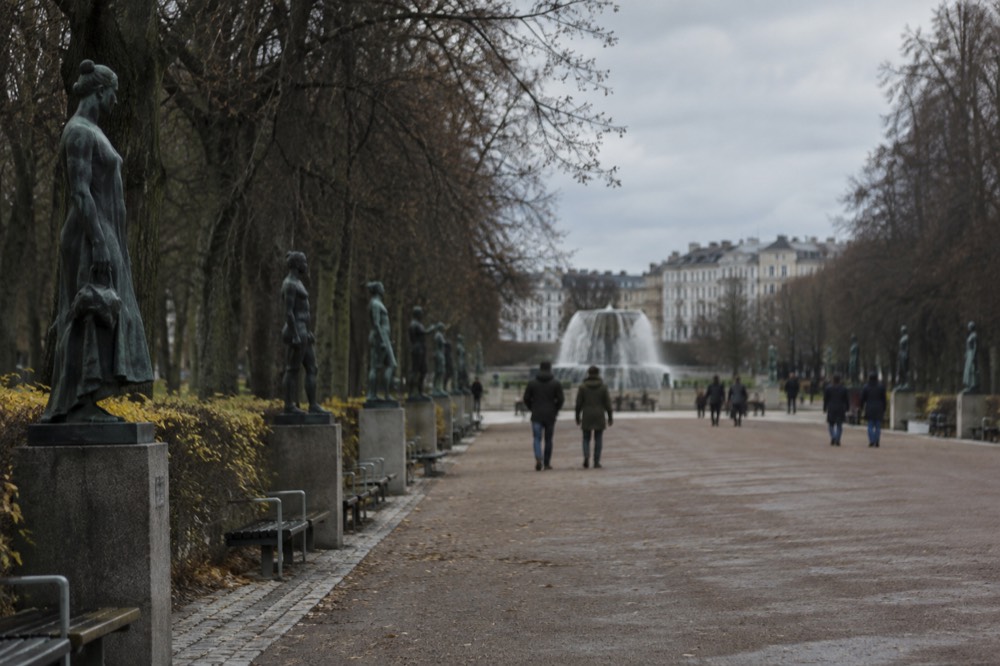
Themed paid walks fill gaps the free tours leave open. The evening myths-and-legends walk is built for the dark half of the year, when Oslo has under eight hours of daylight and evening entertainment matters. The occupation-history walk covers the WWII years in detail most general walks skip entirely. And the Vigeland Park art walk turns Oslo's most visited sight, a sculpture park that is free to enter, into something a guide can actually explain, because 200-plus granite figures by one sculptor are much more interesting with context.
For the full paid landscape, including bus and bike formats, see our Oslo guided tours guide, which compares every category sold in the city.
When Do Free Walking Tours Run, and Do You Need to Book?
The large free tours in Oslo run daily in the high season from late spring through early autumn, with reduced schedules in the shoulder months and a winter operation that depends on weather and demand. Booking is free but genuinely required: guides cap group sizes, and popular summer departures fill. Reserve online, and if your plans change, cancel rather than simply not showing, because no-shows block a spot someone else could have used.
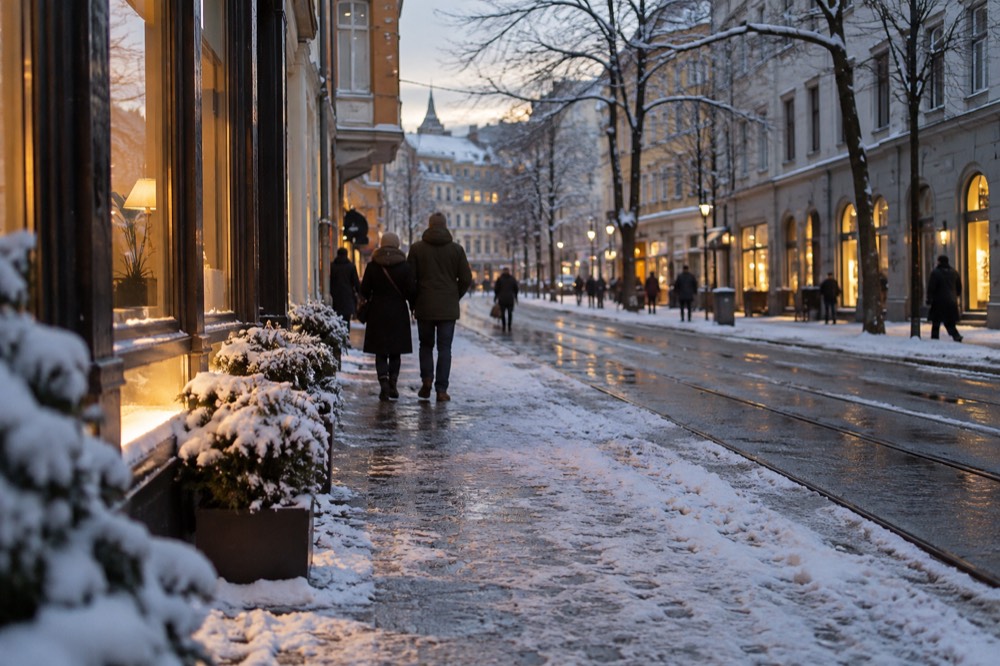
Seasonality in Oslo is stronger than in most European capitals, and it comes from daylight. In late June the sun sets at 22:43 and the evening is twilight rather than dark, so an 18:00 departure is a pleasant walk in full light. In late December the sun rises at 09:18 and sets at 15:11, so a winter afternoon walk happens entirely in dusk and darkness, with the city's Christmas lights doing the scenery work. Our Oslo daylight hours guide has the full month-by-month table.
Weather matters less than visitors expect. Oslo's July normal is a mild 17.7 degrees Celsius, and August, not November, is the city's wettest month on the official 1991 to 2020 normals at 103 millimeters of rain. A summer walk can be damp; a winter walk is usually dry, cold, and bright if you catch a clear day. Dress in layers, wear real shoes, and the walk happens.
How Do Free Tours Fit Into a Budget Oslo Itinerary?
A free walking tour is the anchor of a cheap Oslo day: pair the morning walk with the city's genuinely free sights, the Opera House roof, Vigeland Park, and the harbor front, and buy only food and transport. On a two-day budget trip, do the highlights walk on day one and the contrasts walk or a museum on day two, using the Oslo Pass only if the museum math beats it.
The arithmetic is worth doing once. Oslo's paid museums cluster between 120 and 280 NOK at the door, and three Bygdøy museums at full price total 560 NOK against a 24-hour Oslo Pass at 580 NOK that also includes transport. A traveler whose day is one free walk plus free sights spends almost nothing beyond a tip. Our Oslo on a budget guide and our free things to do in Oslo list build full days on this logic, and our is the Oslo Pass worth it breakdown runs the break-even numbers for museum-heavy itineraries.
The walk also functions as a scouting trip. Guides point at neighborhoods, restaurants, and viewpoints as they go, and a notebook or a marked map from the first morning will steer the next two days better than any list. The written local-secrets guide that comes with one of the smaller free walks is designed exactly for this, which is why it earns its slot on the roster despite modest review volume.
What Should You Bring and Know Before Joining?
Bring comfortable shoes, a water bottle, weather layers, and either some Norwegian kroner or a payment card for the tip. Book ahead, arrive five minutes early at the exact meeting point, and check the cancellation policy if your plans might move. Oslo's center is flat and compact, so fitness is not a barrier, but two hours outdoors in Scandinavian weather is two hours outdoors in Scandinavian weather.
A few practicalities specific to this city. Tap water in Oslo is excellent and free, so a bottle saves the cost of café drinks, which our Oslo tap water guide covers in detail. Public toilets are scarce and occasionally paid, so use one before the walk starts. Card payment is near universal, including for tips, but a small cash reserve in NOK is never wasted in Norway.

Getting to the meeting point is simple: the walks start in the center, which is Ruter zone 1, and every metro line, most trams, and the central station funnel into it. If you are arriving from Gardermoen airport, remember that the Oslo Pass covers the Vy train in but not Flytoget, and that the airport sits in zone 4N, not the zone a careless planner might assume. Our Oslo airport to city centre guide lays out all three options with real fares.
One cultural note that surprises American visitors: Norway is in the Schengen Area but not in the European Union, an EEA state through EFTA, and it uses the krone, not the euro. Prices are quoted in NOK everywhere, cards work everywhere, and nobody expects a tip outside the tip-based tour economy, which is exactly why the free-walk model sits a little oddly and a little charmingly in Norwegian life.
Is the Free Walking Tour the Best First Thing to Do in Oslo?
For most first-time visitors, yes: a free highlights walk on the first morning is the most efficient orientation in the city, it costs a tip, and it ends at the harbor or the Opera House with the whole day left. The exceptions are travelers with specialist interests, who should go straight to a themed paid walk, and anyone who finds large groups unbearable, who should book the small-group or private format from the start.
The walk buys something no article can: a human who answers your specific questions. Where to eat tonight, whether the fortress is worth the entry, which island ferry to take on a sunny afternoon, whether the Viking museum is open, and the answer to that last one is no, it is closed until 2027, as our Museum of the Viking Age guide explains. A good guide will know all of this and more, and the tip is partly payment for the questions as much as the walk.

For the days that follow, the free walk is a foundation rather than a finish. The itineraries on this site, from one day in Oslo through three days in Oslo, all assume you have done an orientation walk first and then spend your remaining time in the neighborhoods and museums the loop only pointed at.
Whatever you choose, book the walk before you land rather than on the morning of. Summer departures in a city that receives a cruise ship most days fill, and the alternative, turning up unannounced, risks standing at the meeting point while a full group walks away without you.
Common Questions About Free Walking Tours in Oslo
Are free walking tours in Oslo really free?
They are free to book and free to join, with guides paid entirely from tips collected at the end. The expectation is that you tip what the walk was worth, roughly 100 to 200 NOK per person for a two-hour tour. Nothing is charged upfront and no minimum tip is enforced.
How much should I tip on a free walking tour in Oslo?
Around 100 to 200 NOK per person is the fair band, with 150 NOK a sensible default for a good guide. Norway is one of Europe's most expensive countries, so a tip that feels generous in another currency can land thin in kroner. Card tipping is usually available.
Do I need to book a free walking tour in advance?
Yes. Group sizes are capped and popular summer departures fill, especially on cruise-ship days. Booking is free and takes a minute; if your plans change, cancel the reservation so someone else can take the spot.
What sights does the free tour of Oslo cover?
The standard route covers Karl Johans gate, the Oslo Cathedral, the Stortinget parliament, the outside of Akershus Fortress, the City Hall and harbor front, and the Opera House. Museum interiors are not included; entry is bought separately where you want it.
Do free walking tours run in winter in Oslo?
The main tours operate through winter on reduced schedules, and the walks happen in daylight that shrinks to under six hours in late December. Wrap up warm, check the listing for winter departure times, and consider the evening myths-and-legends walk, which is designed for the dark season.
What is the difference between the free tours and a paid guided walk?
Group size, depth, and guarantees. The free tours are large-group orientation walks; paid walks offer smaller groups, fixed itineraries, specialist themes, and a guide whose time is contractually committed. The cheapest paid walk costs roughly what a generous free-tour tip would.