Frogner, Oslo: What to See, Where to Eat and How to Plan the Visit
Frogner is Oslo's west-side showcase district: the city's grandest apartment blocks, its embassy rows, its best-known park and a museum quarter that most visitors reach without ever learning the neighborhood's name.
Short answer
Frogner is the upscale district immediately west of Oslo city center, and its main draw is Vigeland Park, a free sculpture park open 24 hours a day with more than 200 works by Gustav Vigeland. The paid Vigeland Museum next door costs 120 NOK. The district also covers the Bogstadveien shopping street and quiet, villa-lined streets that sit inside Ruter zone 1.
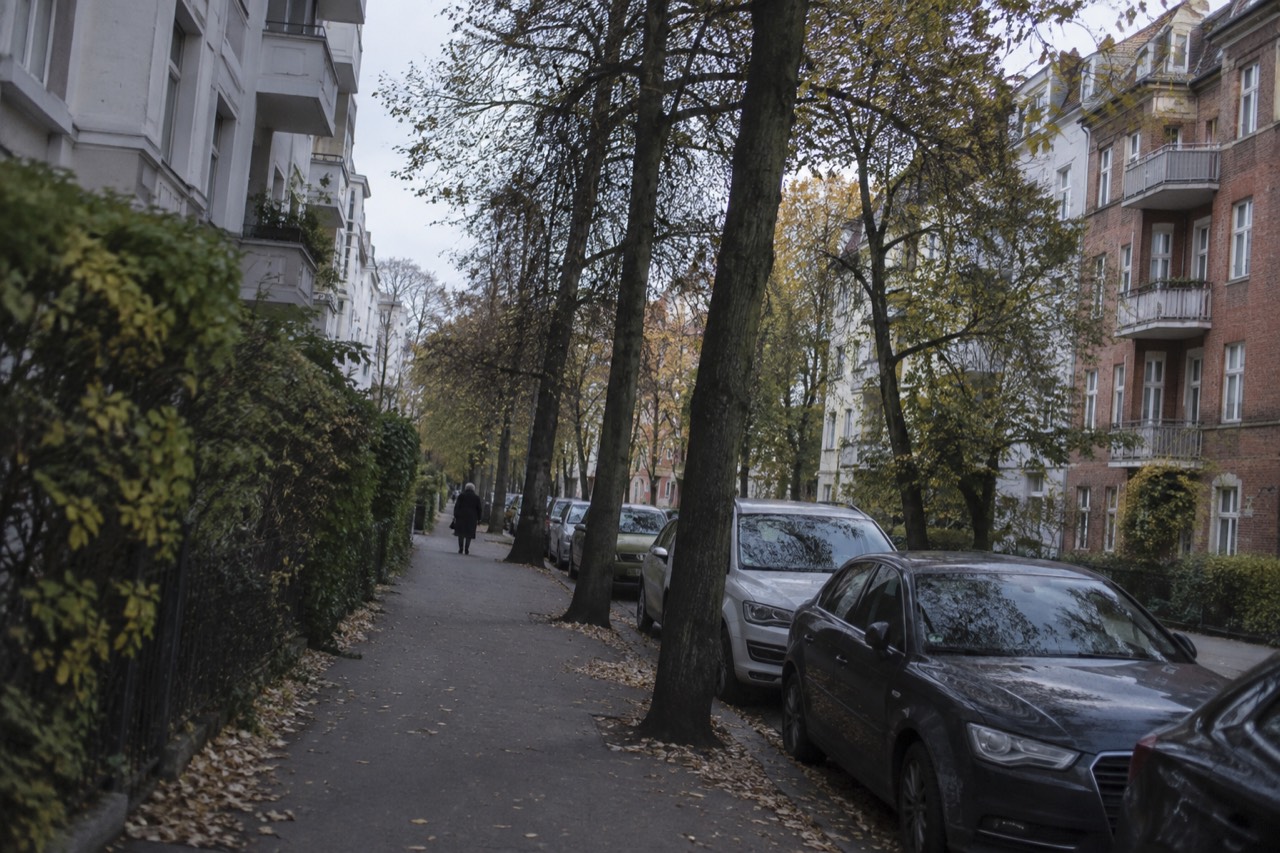
Frogner is the district most Oslo visitors spend half a day in without ever naming. The walk west from the Royal Palace, the long green slope of Frogner Park, the column of writhing stone figures that shows up in every photograph of the city: all of that is Frogner. It is also a neighborhood of consulates, brick apartment blocks from the early twentieth century and one of the city's most walked shopping streets, and it sits close enough to the center that you will likely arrive on foot or on an ordinary zone 1 ticket.
This guide covers what Frogner actually contains, how to get there, what the park costs, where to eat and how to fold the district into the rest of an Oslo trip. The short version: the park is free and always open, the museum beside it is 120 NOK, and the rest of the district rewards slow walking more than any ticketed attraction.
What Is Frogner?
Frogner is Oslo's established west-side district, stretching from the Royal Palace and the National Theatre area west toward Majorstuen, and its identity rests on three things: Frogner Park with the Vigeland installation, a stock of ornate early-20th-century apartment buildings, and the shopping street Bogstadveien. It sits inside Ruter zone 1, so every tram, bus and metro ride that touches it runs on the cheapest ticket the city sells. Most first-time visitors arrive for the sculptures and leave surprised by the streets around them.
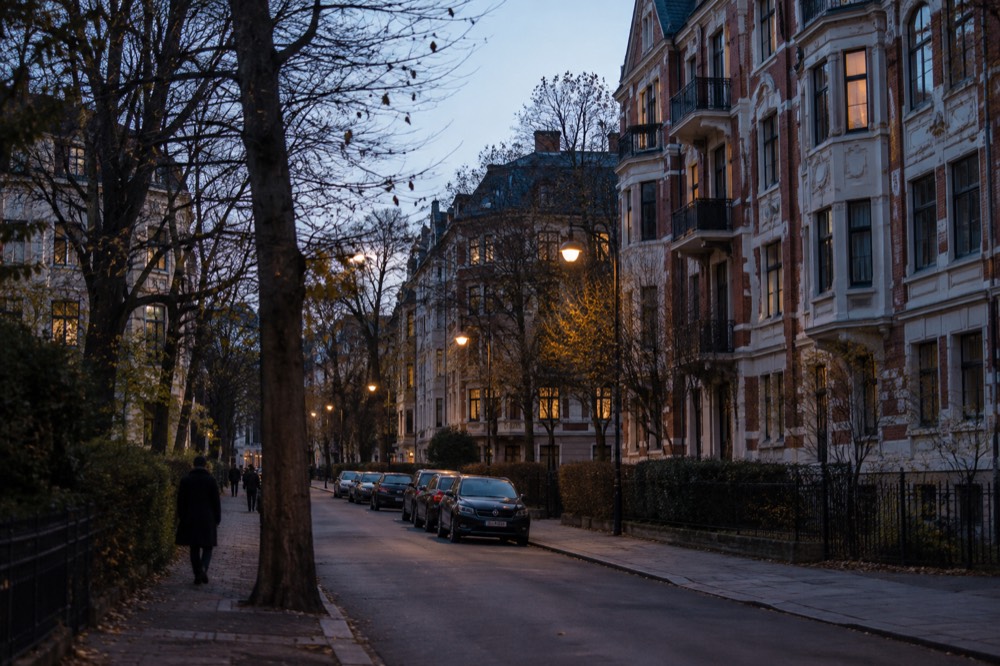
The name is older than the neighborhood you see now. Frogner was originally a farm and manor estate, and the manor house still stands inside the park's grounds, housing the Oslo City Museum. The district grew rapidly in the decades around the turn of the twentieth century, when Oslo was absorbing wealth from shipping and trade and the west side became where that wealth built its apartment blocks. That history explains the look of the place: stone facades, turrets, bay windows and carved doorways on streets that were designed to be impressive and still are.
The east-west split that locals talk about is real and Frogner is firmly on the wealthy west side. A themed free walking tour in the city covers exactly those contrasts, and Frogner is the west-side exhibit. You feel it in prices, in the density of embassies and consulates, and in how quiet the side streets get once you leave Bogstadveien behind.
Practically, treat Frogner as a half-day. The park alone can absorb two hours at walking pace, the museum adds an hour, and the shopping street and café scene fill whatever remains. If you are building a bigger plan, our one day in Oslo itinerary slots Frogner into the afternoon slot after the city center.
Where Is Frogner and How Do You Get There?
Frogner lies immediately west of Oslo city center, roughly a 15 to 20 minute walk from the Royal Palace along Henrik Ibsens gate, and the whole district is inside Ruter zone 1, the central zone that also contains the entire metro network. Trams and buses cross the district on ordinary tickets, and no special fare or pass is needed to reach it. Visitors staying anywhere in the center will likely walk there without noticing they have left it.
The walking route is simple. From the National Theatre or the Royal Palace, head west and the park appears in front of you; the main gates sit at the end of the processional path. Coming from further afield, the district is served by tram and bus lines that stop along its edges, and Majorstuen, the transport hub on the metro network, sits at the park's northwest corner. Since the entire T-bane network sits inside zone 1, a single central ticket covers any metro leg of the journey.
One transport fact worth carrying: Ruter cut the zone 1 adult 30-day pass from 805 to 655 NOK on 3 May 2026, which matters mainly to longer stays, while short-visit tickets follow the standard zone structure. Buy in the Ruter app rather than on board, because on-board purchases are more expensive.
If you are deciding between walking and riding, walk. The route from the palace passes the Nobel Peace Center area's architecture, crosses into the villa streets, and delivers you at the park gates with a sense of the district's scale that a tram skips. For a wider picture of the system, see our guide to getting around Oslo.
| From | Best option |
|---|---|
| Oslo S / Central Station | Tram, or a half-hour walk via the Royal Palace |
| Royal Palace | Walk along the processional route |
| Aker Brygge waterfront | Walk or tram |
| Majorstuen (metro) | Any T-bane line to Majorstuen, then walk in from the park's northwest corner |
| Grünerløkka | Tram with a change, or metro to Majorstuen |
For visitors who prefer a guided structure over self-direction, a small-group or budget city walk that covers the center can be paired with a park visit on the same day. These are the three walks that pair most naturally with a Frogner afternoon:
Is Vigeland Park Really Free?
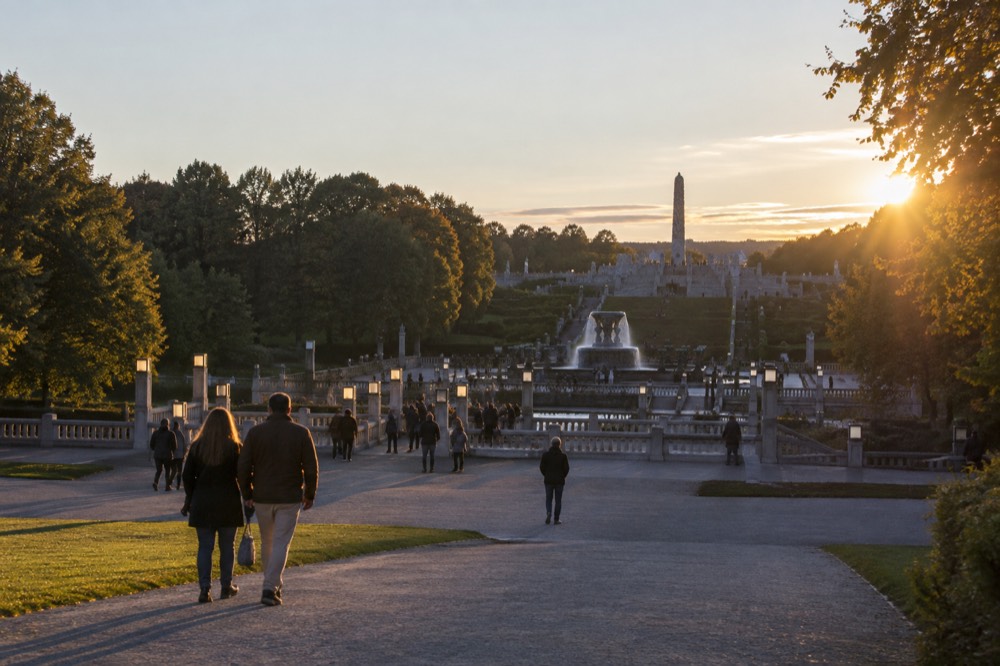
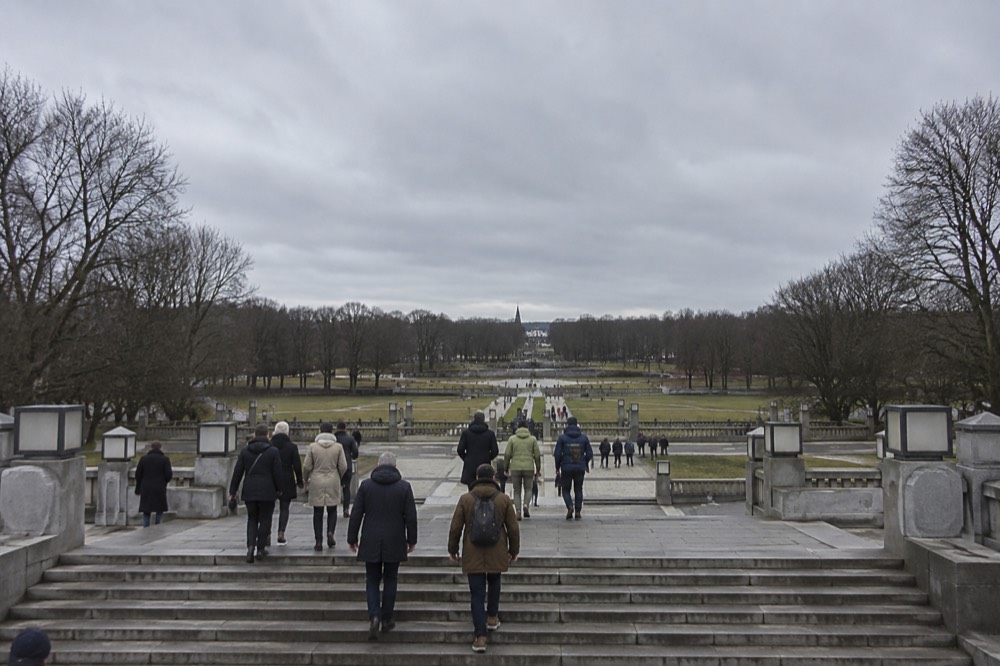
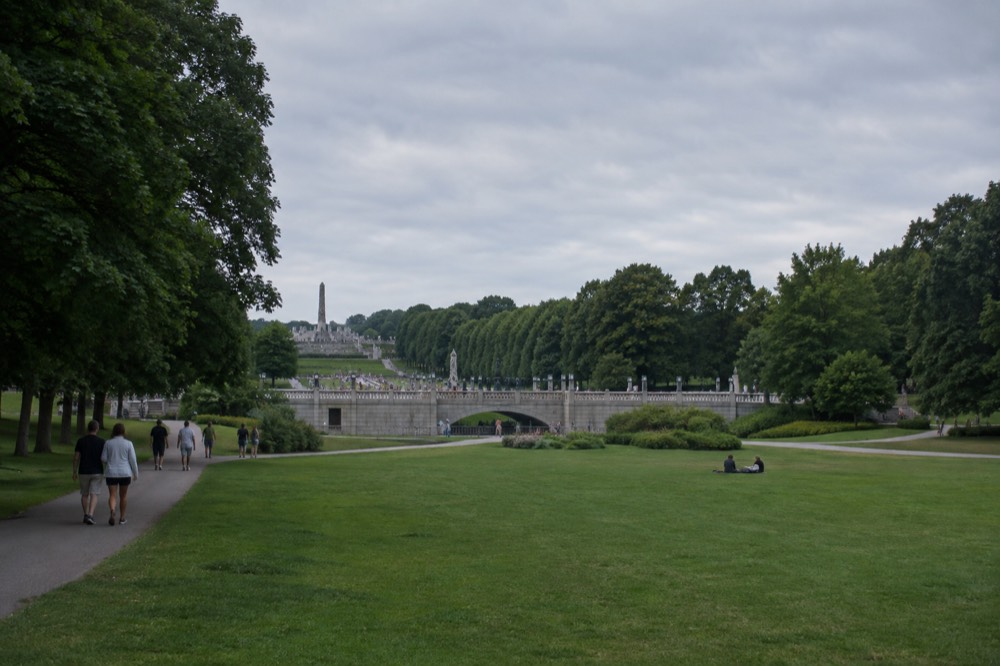
Yes. The Vigeland sculpture installation inside Frogner Park, often called Vigelandsparken, is free to enter, open 24 hours a day, all year, with no ticket and no gate. It contains more than 200 sculptures by Gustav Vigeland across bronze, cast iron and granite, including the 17-meter Monolith at its center. The only paid element in the park is the separate Vigeland Museum, which costs 120 NOK. Free, always open, no catch: this is one of the genuine no-cost highlights of Oslo.
The park is the most visited sight in Norway, and the reason it costs nothing is ownership. It is a public municipal park, and the sculpture installation was given to the city. That makes it one of the strongest answers to the question of free things to do in Oslo, and unlike most free sights it is substantial enough to fill a long visit on its own.
The layout rewards knowing what you are looking at. The installation runs along a central axis: the Main Gate in wrought iron, the Bridge with its 58 bronze figures including the famous Sinnataggen, the angry bronze baby, then the Fountain, the labyrinth of granite figures, and finally the Monolith, carved from a single block of stone and surrounded by circular stairways. The figures are human bodies in every stage of life, and reading them is the whole point of the visit.
Because the park is unguided, the one bookable product built around it is an art walk, and it exists precisely because the sculptures do not explain themselves. The guided walk runs about 90 minutes and covers the installation's meaning rather than transport or logistics:
If a guided walk appeals, it is worth booking ahead for the same reason as everything else in this city: timed slots in peak summer fill first. The operator's live listing carries the current price and departure times.
What Can You See at the Vigeland Museum?
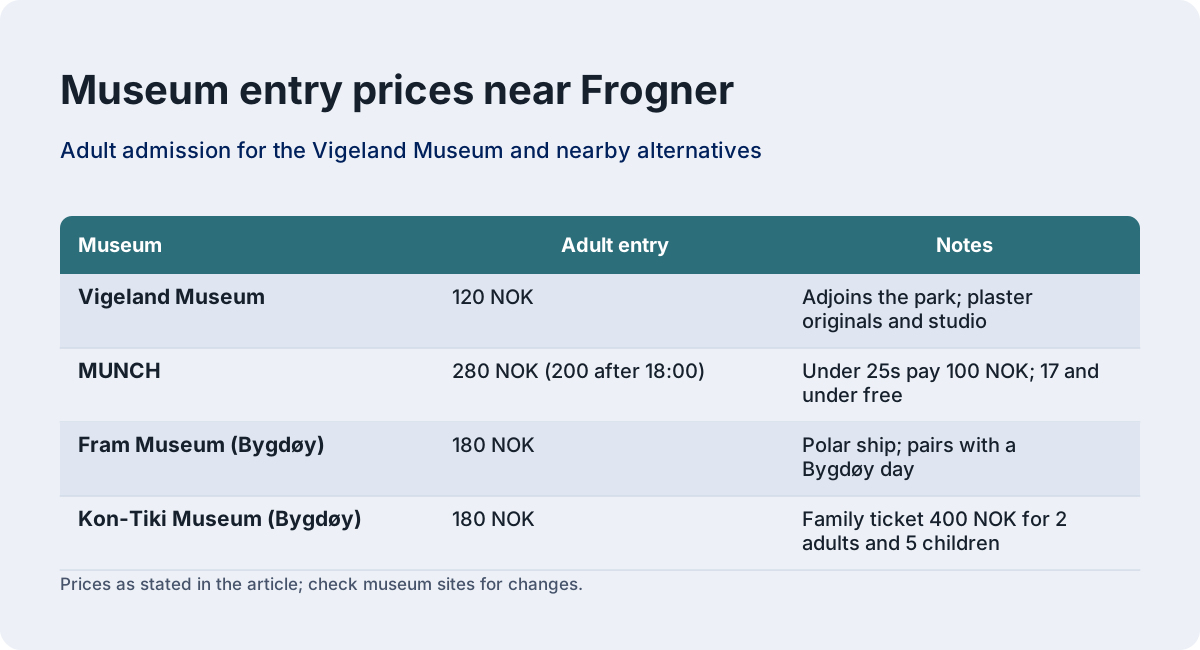
The Vigeland Museum, adjoining the park's south side, costs 120 NOK for adults and holds Gustav Vigeland's working studio, plaster originals for the park's sculptures, and earlier works including his woodcuts and drawings. It is the only place to see how the park's granite and bronze figures were actually developed, since the park shows finished work and the museum shows everything that came before it. An hour covers it comfortably, and it makes the park itself more legible afterward.
The museum building is the studio, workshop and home that Vigeland agreed to leave the city in exchange for the arrangement that produced the park. The plaster models on display are the direct ancestors of the bronzes outside: same figures, same poses, rendered in the fragile material that the foundry and the stone carvers worked from. Seeing the plasters first, then walking back into the park, turns the installation from a photo opportunity into something you can read.
For visitors building a museum-heavy trip, the museum is a natural pairing with the city's larger institutions. The National Museum holds The Scream and the Norwegian canon, MUNCH holds the Edvard Munch collection, and the Vigeland rounds out the trio with the sculptor who defined the city's public art.
| Museum | Adult entry | Notes |
|---|---|---|
| Vigeland Museum | 120 NOK | Adjoins the park; plaster originals and studio |
| MUNCH | 280 NOK (200 after 18:00) | Under 25s pay 100 NOK; 17 and under free |
| National Museum | Not confirmed in our research | Check the museum's own site before visiting |
| Fram Museum (Bygdøy) | 180 NOK | Polar ship; pairs with a Bygdøy day |
| Kon-Tiki Museum (Bygdøy) | 180 NOK | Family ticket 400 NOK for 2 adults and 5 children |
The Oslo Pass covers the Vigeland Museum along with more than 30 other museums and attractions, and the 2026 adult prices are 580 NOK for 24 hours, 845 NOK for 48 hours and 995 NOK for 72 hours. Whether the pass pays off depends on your museum tempo; our is the Oslo Pass worth it page runs the numbers properly.
What Else Is in Frogner Park Beyond the Sculptures?
Frogner Park is considerably larger than the Vigeland installation alone: it contains the Frogner Manor and its grounds, the Oslo City Museum housed in the manor, wide lawns, ponds, a rose garden and the park's famous open-air bathing history, and the surrounding Frognerparken landscape is where locals actually spend their time. Most tourists walk the sculpture axis and leave, which means the lawns, the manor and the museum are the quiet parts. The park covers around 45 hectares in total.
The manor at the park's northwest corner is the district's oldest structure, and the Oslo City Museum inside it tells the story of Oslo's growth, with the park's own history as a bathing and recreation ground woven through it. The surrounding lawns are where the neighborhood lives in summer: picnics, games, and the barefoot sunbathing on the slopes below the Monolith that has been a Frogner habit for generations. In winter the same slopes carry sleds.
Season matters here. The park in July and the park in January are different experiences, and the city's daylight swing is extreme: MET Norway's data puts the summer solstice at 18 hours 50 minutes of daylight against 5 hours 53 minutes at the winter solstice. There is no midnight sun at Oslo's latitude of 59.91 N, but late June evenings stay light past 22:43, and the park fills accordingly.
Is Frogner a Good Place to Stay?
Frogner is one of the best-regarded places to stay in Oslo for visitors who want quiet, walkable elegance close to the center: it is residential, safe, full of good cafés and within walking distance of the palace and the waterfront, and its trade-offs are fewer nightlife options and higher prices than the east side. It suits couples and repeat visitors better than backpackers or groups chasing bars. The district's hotels and apartment rentals sit mostly on the quiet streets between the park and Bogstadveien.
The honest framing is that Oslo's west side is expensive because Oslo is expensive. Statistics Norway's 2025 European price comparison puts Norwegian household price levels 28.6 percent above the EU average, food and non-alcoholic drink 33 percent above, and alcohol and tobacco more than double the European average. Frogner sits on the upper end of an already expensive city, and that shapes both hotel rates and restaurant bills. Everything else covered here is indexed on Oslo Travel Guide. Everything else covered here is indexed on Oslo Travel Guide.
What you get for it is a neighborhood that works on foot. From most Frogner addresses you can walk to the park, to Bogstadveien, to the Royal Palace and to the Aker Brygge waterfront in under half an hour. For a fuller comparison of districts, our where to stay in Oslo guide covers the alternatives.
| If you want | Frogner fits? | Better alternative |
|---|---|---|
| Quiet, upscale base near the center | Yes, this is the district's core offer | Frogner itself |
| Nightlife and late bars | Weak | Grünerløkka or the city center |
| Cheapest beds | No | East side of the city |
| Family space and parks | Yes, the park is next door | Frogner or Majorstuen |
| Waterfront hotels | Edge of the district | Aker Brygge |
Where Do You Eat and Drink in Frogner?
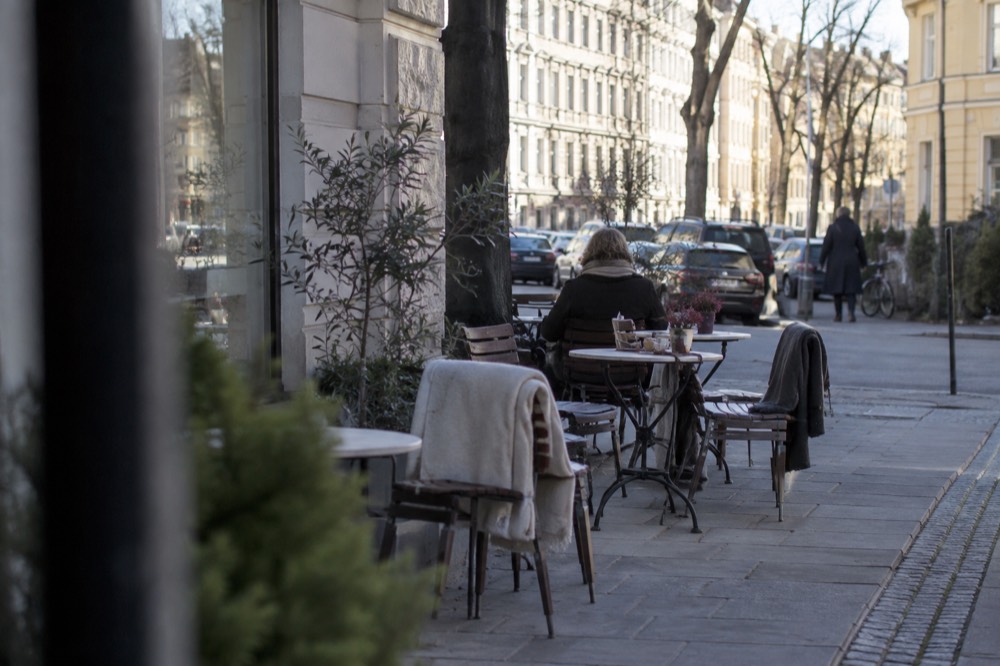
Frogner's food scene runs to solid neighborhood bistros, classic bakeries, wine bars and café-brasseries along and around Bogstadveien and Frognerstranda's nearby streets, rather than the street-food energy of the east side, and prices reflect the district: this is restaurant Oslo at full Norwegian rates, where alcohol in particular carries the cost. The reliable strategy is café breakfasts, a bakery stop mid-morning and one proper sit-down dinner. Our restaurant guides name the specific venues worth booking.
Alcohol deserves its own paragraph because it is the single biggest budget item in Norwegian dining. Wine and spirits are sold only through Vinmonopolet, the state monopoly, which closes every Sunday and public holiday and closes early on Saturdays, with hours varying by store. Supermarkets sell beer and cider only up to 4.7 percent ABV. Restaurants charge accordingly. A guided beer and culture walk exists in the city partly because these rules genuinely confuse visitors.
For venue-level recommendations, see our best restaurants in Oslo and where to eat in Oslo guides, which cover Frogner's tables alongside the rest of the city. If the budget is tight, eating cheaply in this district takes planning that the east side does not require.
Tipping follows the national norm: service is included in prices, and rounding up or something in the region of 5 to 10 percent for good service is common but voluntary. Card terminals may prompt; nobody is obliged to accept the prompt.
What Is There to Shop for on Bogstadveien?
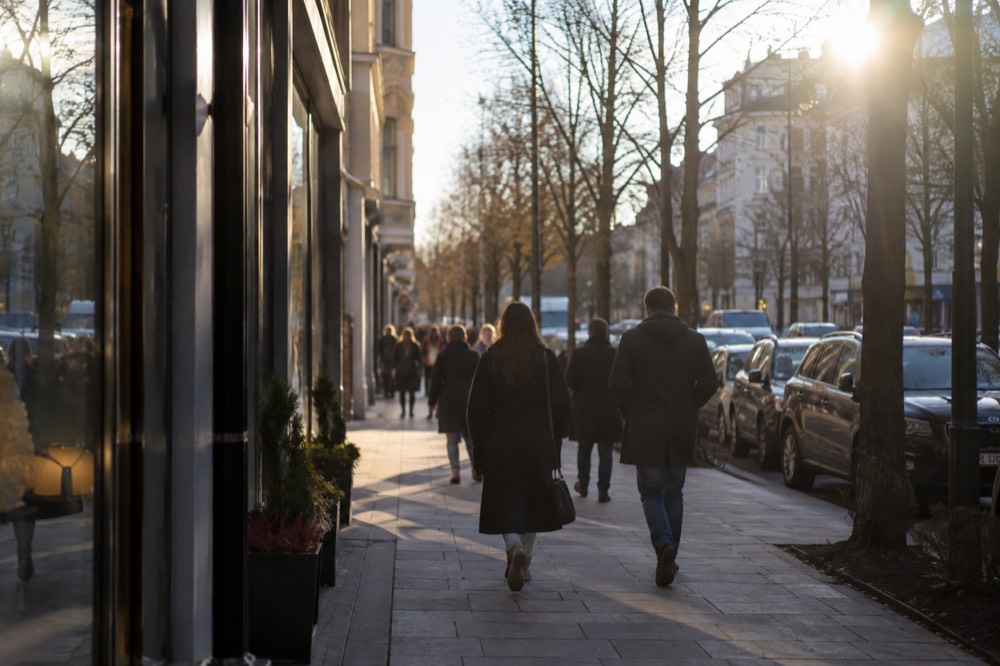
Bogstadveien is the district's main shopping street, a straight, walkable stretch of Norwegian and international fashion chains, homeware, sportswear and beauty retailers running from Frogner toward Majorstuen, and it is the closest thing west-side Oslo has to a high street. It is not a bargain street and not a design district; it is dependable retail, well kept, and pleasant to walk even if you buy nothing. Saturday is its busiest day, and Sunday closing applies to most Norwegian shops.
Norwegian shopping hours are regulated by law, and Sunday trading is largely closed, which catches visitors out every weekend. Saturday is therefore the compressed shopping day, and Bogstadveien's Saturday crowd is a local ritual. If your trip spans a weekend, do the street on Saturday and the park on Sunday, when the car-free calm of the park suits the day better anyway.
For souvenirs, the street's mix of Norwegian design and outdoor brands makes it more useful than the airport. Wool knitwear, outdoor equipment and the classic Norwegian grocery souvenirs are all easier to find here than at a departure gate, and the selection is better than the airport's.
How Does Frogner Fit Into an Oslo Itinerary?
Frogner works best as a half-day block placed after a morning in the city center: walk from the Royal Palace, spend two hours in the park, an hour in the museum if it appeals, then finish along Bogstadveien toward Majorstuen, which puts you on the metro network for wherever comes next. It pairs naturally with the same-day options around it, including the Holmenkollen ski jump to the northwest on metro Line 1. Trying to combine Frogner with Bygdøy's museum peninsula in one day is possible but rushed.
The classic pairing is Frogner plus Holmenkollen. Both sit on the west side, and the ski jump is a short metro ride from Majorstuen at the park's corner. The jump's museum and tower entry is 195 NOK, and the half-day bus tour that combines the jump with the park is the car-free way to do both in one structured outing:
For visitors with more days, our longer itineraries slot Frogner in differently: the 2 days in Oslo plan gives it a full half-day, and the 3 days in Oslo version pairs it with a slower museum pace. Cyclists can cover the district on wheels; the city's highest-reviewed bike tour sweeps the major sights including the park in a single three-hour loop:
| Itinerary style | Time in Frogner | Natural pairing |
|---|---|---|
| One day in Oslo | 2 hours, park only | City center morning, Frogner afternoon |
| Two days | Half-day | Holmenkollen on metro Line 1 |
| Three days | Half-day plus museum | Aker Brygge and Tjuvholmen evening |
| Rainy day | Museum plus Bogstadveien | Indoor cafés and the shopping street |
| Winter trip | Park in daylight hours | Torchlit forest walk or ski trails |
When Is the Best Time to Visit Frogner?
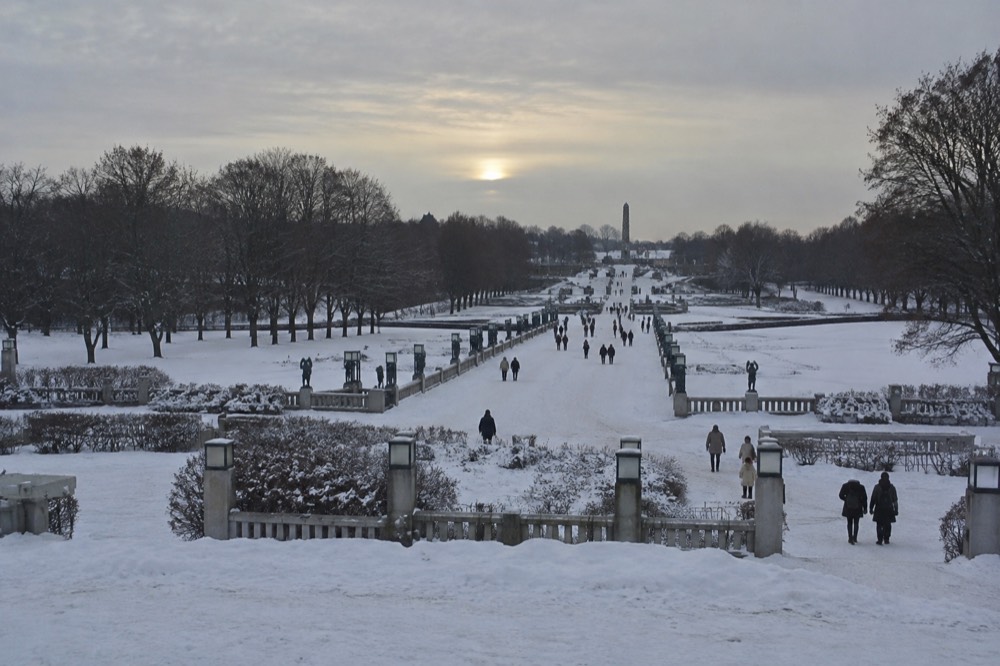
Frogner is at its best from May through September, when the park's lawns are in use, the roses are out and daylight runs from 15 to nearly 19 hours, with the July normal temperature at 17.7 °C; winter visits trade that for a stark, often snow-dusted park under as little as six hours of daylight, which photographs beautifully but compresses the day. August is worth a caution: it is Oslo's wettest month on the 1991 to 2020 normals, at 103 mm, not November as many assume.
The seasonal logic is daylight. In late June the sun sets at 22:43 and rises at 03:53, so an evening park visit costs you nothing and the light stays usable all evening. In late December the sun rises at 09:18 and sets at 15:11, so the park visit needs to be the day's centerpiece rather than an afterthought.
Winter Frogner has its own case: the sculptures carry snow, the crowds vanish, and the city's winter products, from snowshoeing in Nordmarka to a torchlit forest walk, sit within reach of the same metro network. Our Oslo in winter guide covers that version of the city properly.
What Does a Frogner Visit Actually Cost?
A bare Frogner visit can cost nothing at all: the park is free, the streets are free and a zone 1 ticket covers transport, so the minimum spend is a coffee. A fuller version, with the Vigeland Museum at 120 NOK, a café lunch and a restaurant dinner, runs into the same price territory as the rest of Oslo, where food is 33 percent above the European average and alcohol more than double it. The district's costs are concentrated almost entirely in food, drink and shopping rather than in sights.
That last point is the useful one. Unlike Bygdøy, where the museums stack up ticket after ticket, Frogner's headline attraction asks for nothing. The money you spend in the district is money you choose to spend on a table, a glass of wine or a shop, and every one of those can be moderated without changing the visit itself. For the full-city picture, the is Oslo expensive page itemizes where the money actually goes.
For planning, this site, oslotravelguide.com, keeps the verified prices on file so the numbers above stay the ones you can budget against.
Before the final word, here again are the three walks that pair best with a Frogner visit, from the park's own art walk to the budget central tour and the big free highlights walk:
Common Questions About Frogner
Is Vigeland Park free to enter?
Yes. The park is a public municipal space, open 24 hours a day all year, with no ticket and no gate. The only paid element is the separate Vigeland Museum at 120 NOK.
How do I get to Frogner from Oslo city center?
Walk. From the Royal Palace it is roughly a kilometer to the park gates along the processional route, about 15 minutes. Trams and buses serve the district on an ordinary Ruter zone 1 ticket, and the Majorstuen metro hub sits at the park's northwest corner.
What is Frogner in Oslo known for?
Three things: the Vigeland sculpture installation in Frogner Park, its stock of ornate early-20th-century apartment buildings and embassy streets, and the Bogstadveien shopping street. The park is the most visited sight in Norway.
Is Frogner a good area to stay in Oslo?
For quiet, walkable elegance near the center, yes. It suits couples and repeat visitors; nightlife is thin and prices are high, so groups chasing bars and budget travelers usually do better on the east side or in Grünerløkka.
How much time do I need in Frogner?
Plan a half-day: two hours for the park at walking pace, an hour for the Vigeland Museum if it appeals, and the remainder along Bogstadveien. The park alone can fill a longer visit in summer, when the lawns are in use.
When is the best time to visit Frogner Park?
May through September for lawns, roses and long daylight, with July's normal temperature at 17.7 °C. Note that August is Oslo's wettest month on the 1991 to 2020 normals at 103 mm. Winter offers a stark, snow-covered park under as little as six hours of daylight.