Oslo City Museum: What to See at Frogner Manor
The Oslo City Museum sits inside Frogner Manor, one of the oldest surviving buildings in the city, right next to the Vigeland sculpture park. Here is what to expect, how to get there, and how to fit it into a day in the Frogner district.
Short answer
The Oslo City Museum tells the story of Oslo through paintings, photographs, models and everyday objects, from a manor house on the edge of Frogner Park. It is a quiet, indoor counterweight to the sculpture park outside, easy to reach on the Frogner park bus, and best combined with a half-day in the Frogner district.
What Is the Oslo City Museum?
The Oslo City Museum is the museum that tells the story of Oslo itself: how a small medieval trading town grew into a modern capital, documented through paintings, photographs, city models, costumes and everyday objects. It is housed in Frogner Manor, a historic building on the edge of Frogner Park, a few minutes' walk from the Vigeland sculptures. The museum operates today as part of Oslo Museum, which also runs the theatre museum and the intercultural museum.
That last point matters more than it sounds. Many older guides treat the Oslo City Museum as a standalone institution, and in a sense it once was. Today it is the flagship site of Oslo Museum, the umbrella organisation that also includes the Theatre Museum and the Intercultural Museum, so a visit here is a visit to the city's memory in the widest sense: theatre history, immigration history and urban history under one roof.
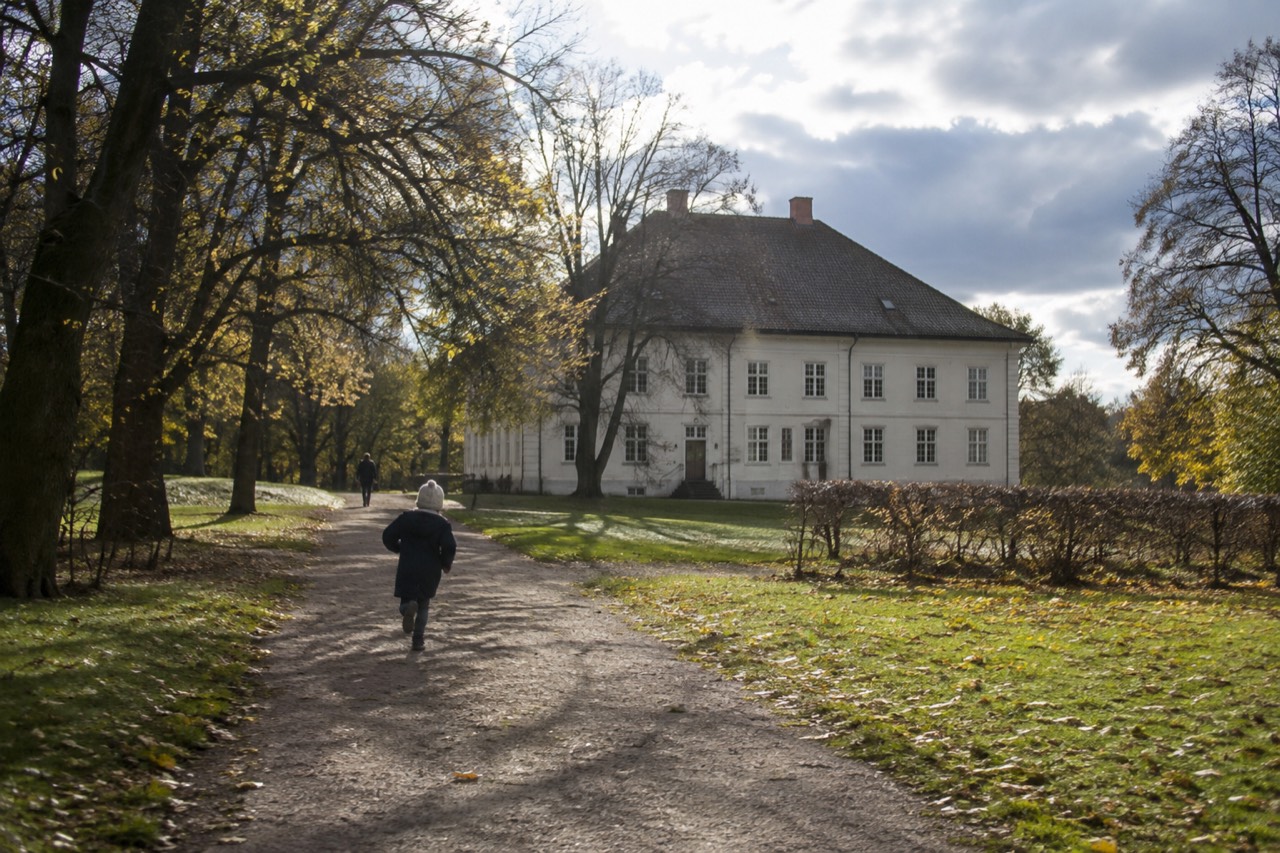
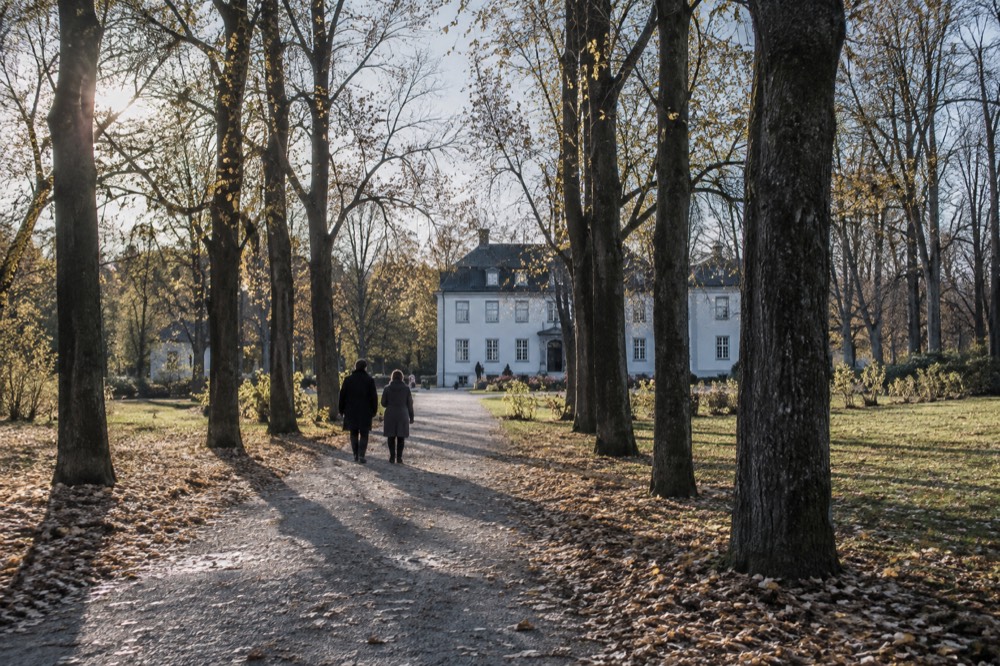
The setting is half the reason to come. Frogner Manor is one of the oldest surviving buildings in Oslo, a cream-colored manor house that predates almost everything around it. The surrounding parkland was once the manor's estate before the city transformed it into Frogner Park, the grounds that Vigeland would later fill with sculptures. Standing at the museum's front door, you are looking at the layer cake of Oslo's history: a farm estate, a public park, and a sculpture park, all in one frame.
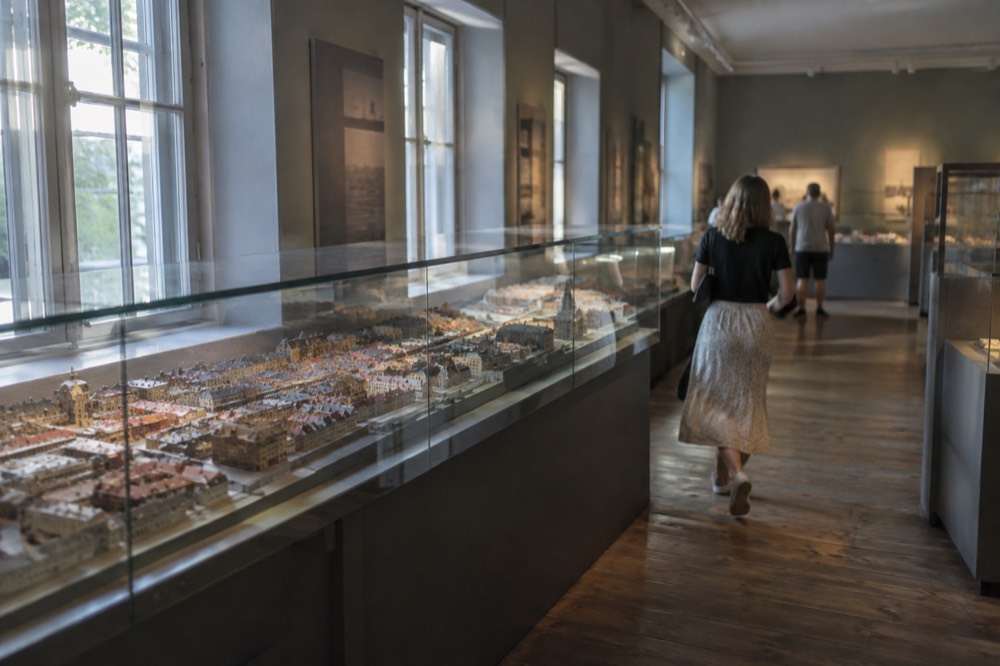
The museum's collection leans on the visual. Cityscapes by painters who documented Oslo street by street, photographic series that show the same corner across a century, models of the city at different periods, and room settings that reconstruct how Oslo households lived. It is a museum for people who have already walked the city centre and want to know what they were walking through.
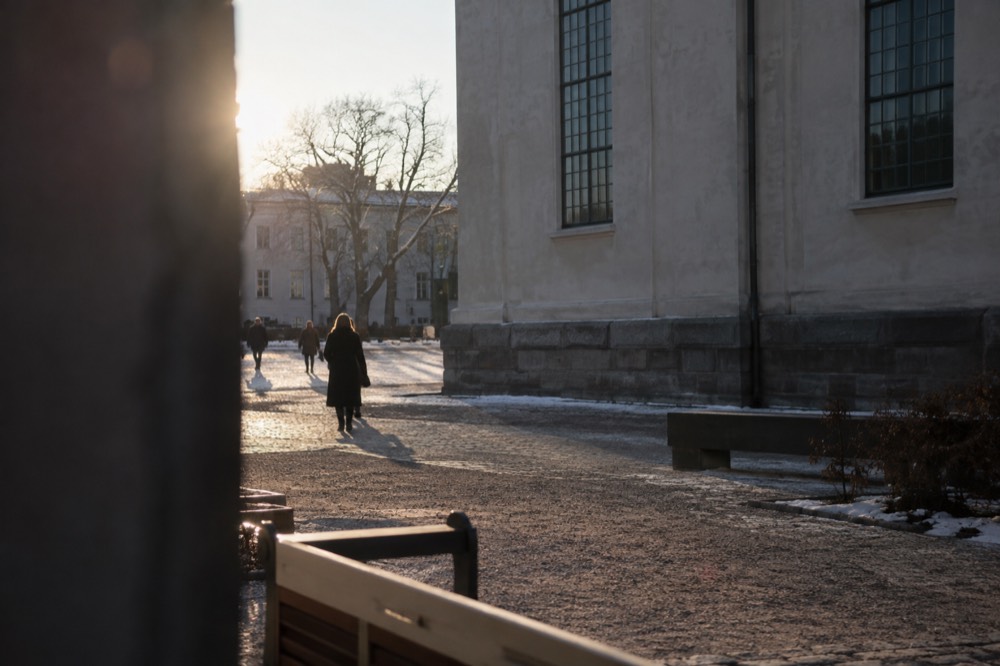
For visitors, the honest framing is this: the Oslo City Museum is not the MUNCH, and it is not the National Museum. It is smaller, quieter and more local, and that is exactly its appeal. On a rainy afternoon, or after you have done the sculpture park and want somewhere warm to sit and read, it earns its place on the itinerary.
Where Is the Oslo City Museum and How Do You Get There?
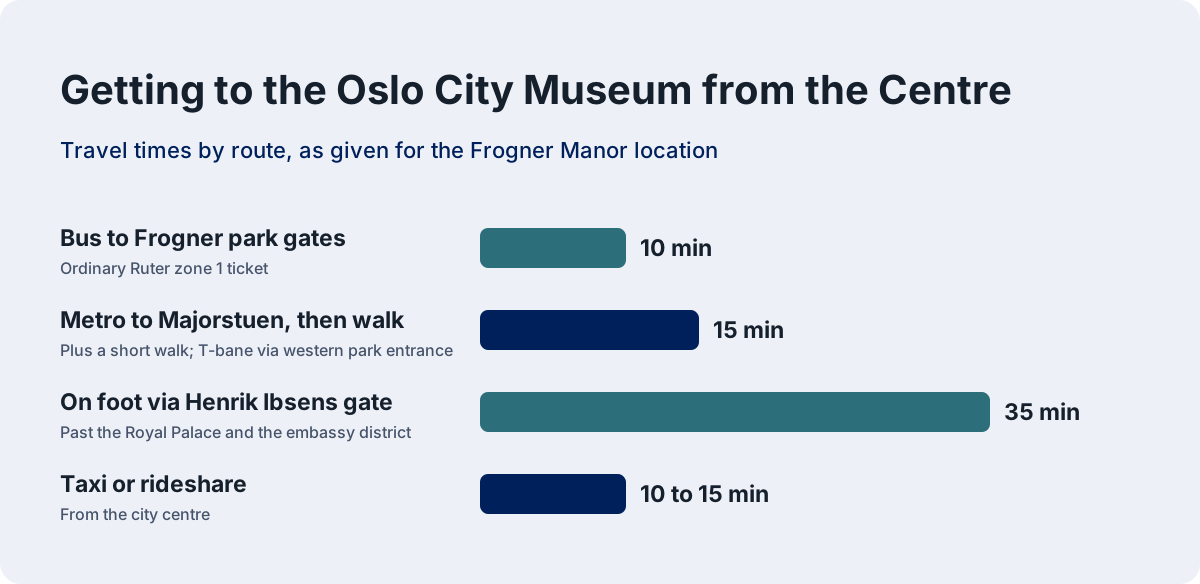
The Oslo City Museum is at Frogner Manor, on the western edge of Frogner Park in the Frogner district, roughly 3 km from the city centre. The simplest public transport route is the bus that stops beside the park gates, with the journey from the centre taking about ten minutes. Walking from the Nationaltheatret area takes around 35 minutes and passes through the embassy district.
The museum's position is its transport advice. You are not going there as a destination in isolation; you are going to Frogner Park, and the museum happens to be at one end of it. That shapes how you plan the visit, because the sensible route is to arrive at one end of the park, walk through the sculptures, and finish at the manor, or the reverse.
Getting there is straightforward on the Ruter network. Buses serve the Frogner park area from the centre of town, and the metro to Majorstuen puts you a short walk away. The Ruter app plans the whole journey, and the fare is an ordinary zone 1 ticket, the same one you would use anywhere in central Oslo. If you are staying in the Oslo Sentrum area, read our guide to getting around Oslo by public transport for the full picture on tickets and zones.
| Route | From | Roughly | Notes |
|---|---|---|---|
| Bus to Frogner park gates | City centre | 10 min | Ordinary Ruter zone 1 ticket |
| Metro to Majorstuen, then walk | City centre | 15 min plus a short walk | T-bane, then through the western park entrance |
| On foot via Henrik Ibsens gate | Nationaltheatret | 35 min | Past the Royal Palace and the embassy district |
| Taxi or rideshare | City centre | 10 to 15 min | See our Oslo taxis and rideshare guide |
One thing worth knowing before you set off: Frogner Park is large, and the museum sits at its western end, away from the main sculpture axis. If your legs are tired after the walk up through the park, the manor is a good place to stop, because the next stretch of sightseeing is a tram or bus ride away rather than another walk.
If you are building a full Frogner day, our guide to the Frogner district covers the neighborhood's cafés, streets and architecture beyond the park itself, and our Vigeland Park guide covers the sculptures in depth.
What Will You Actually See Inside?
The museum's permanent displays cover the growth of Oslo from medieval foundations through the great building booms to the modern city, using city models, paintings, photographs and reconstructed interiors. Temporary exhibitions rotate through themes from Oslo's cultural and social history. The scale is manageable: most visitors spend between one and two hours inside, which makes it one of the shorter museum visits in the city.
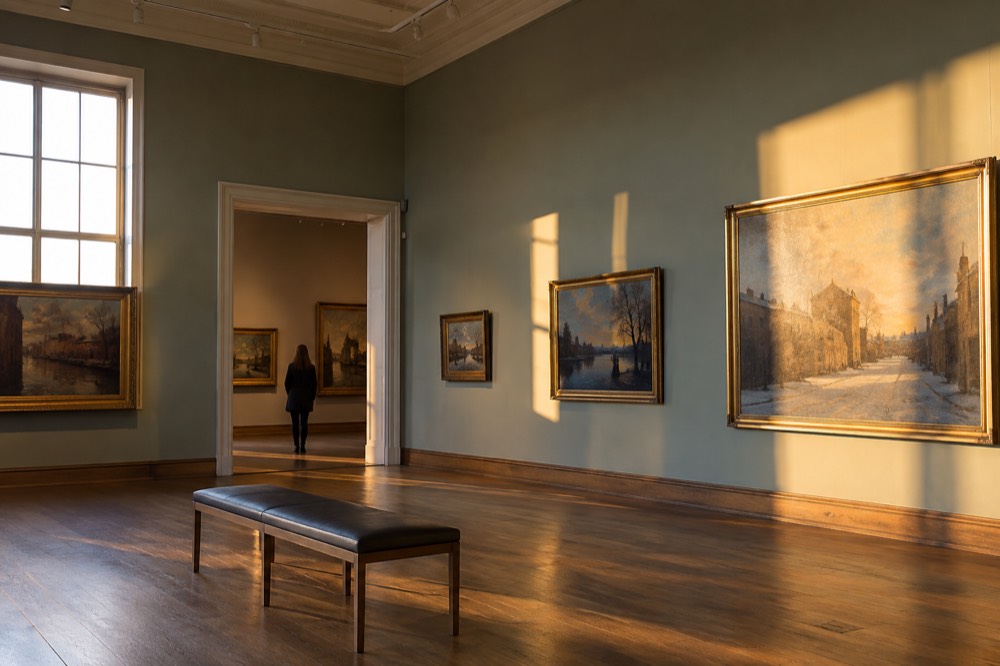
The core of the collection is the city itself as a subject. Paintings of Oslo's streets and harbor hang in the manor's rooms, and the photographic archive is where the museum earns its keep for curious visitors: seeing the same street corner in the nineteenth century and the twentieth century does more for understanding the city than any timeline plaque.
City models are the other anchor. Oslo has been rebuilt, expanded and re-planned repeatedly, and the models make those changes physical. For visitors who have just walked the grid of the centre, seeing how little of that grid existed a few centuries ago reframes the whole trip.
The manor house itself is an exhibit. The building's history as the seat of a farm estate, later owned by the city, is part of the story the museum tells, and the rooms carry the architecture of that past. The contrast between the manor's age and the sculpture park outside is the quiet theme of the whole site: old Oslo and ambitious Oslo in one place.
| What you see | What it covers | Time to allow |
|---|---|---|
| City history displays | Oslo's growth from medieval town to capital | 45 to 60 min |
| Paintings and photographs | The city and its people across centuries | 20 to 30 min |
| Temporary exhibitions | Rotating cultural and social history themes | 20 to 30 min |
| The manor building itself | One of Oslo's oldest surviving buildings | Included in the walk-through |
For families, the museum is a mixed proposition. The content is text-heavy in places and there is no equivalent of the interactive floors you find at the Paradox Museum, which is the strongest rainy-day family ticket in the city. Children who like models and old paintings will enjoy it; children who need buttons to press will not.
If a rainy day is what brought you indoors, our rainy day in Oslo guide ranks the indoor options across the city, and the Paradox Museum is usually the answer for families with younger children.
What Are the Opening Hours and Ticket Prices?
Opening hours for the Oslo City Museum follow the standard pattern of Oslo's mid-sized museums: weekday and weekend openings with a late closing on at least one day, but the schedule shifts between seasons and around public holidays, so the museum's own website is the authority to check before you travel. Admission pricing is likewise published on the museum's site, and the Oslo Pass covers entry to a wide range of Oslo museums.
The honest position on hours and prices is that we do not print a number we have not read off a live primary source. Museum schedules in Oslo move with the seasons, and a figure copied from an older guide is worse than no figure at all. What we can say is how the museum fits into the practical patterns of an Oslo visit.
The Oslo Pass is the city tourist board's product, and it includes free entry at over 30 museums and attractions plus public transport in zones 1, 2, 3, 4V and 4N, including the Vy trains to and from Oslo Airport Gardermoen, though not the Flytoget airport express. Whether the Oslo City Museum is on the pass's current list is something to confirm on the VisitOSLO pass page when you buy, because the list is maintained by the tourist board and changes. Our Oslo Pass guide and our is the Oslo Pass worth it analysis cover the maths in detail.
| Practical question | Where the answer lives |
|---|---|
| Current opening hours | The museum's own website |
| Admission prices and concessions | The museum's own website |
| Whether the Oslo Pass covers it | The VisitOSLO Oslo Pass list |
| Group and school visits | Contact the museum directly |
A note on the pass maths for this part of town. If you are spending a day in Frogner, the paid items are few: the park is free, the museum is modestly priced, and the main costs of the day are transport and coffee. The pass pays for itself fastest on the dense museum days, above all on Bygdøy, where the Kon-Tiki and Fram museums sit together and the combination tickets add up quickly. A Bygdøy museum day is a better pass day than a Frogner day.
Is the Oslo City Museum Worth Visiting?
For most visitors, the Oslo City Museum is worth visiting if you are already going to Frogner Park and want an indoor hour that explains the city you are standing in. It is not worth crossing town for on a short trip if you have not yet seen the National Museum, MUNCH, or the Bygdøy museums. As a third or fourth museum in a longer stay, it is a quiet pleasure, and the manor setting alone justifies the detour from the sculpture park.
The decision comes down to what kind of traveler you are. If your Oslo list is the Opera House roof, the Vigeland sculptures, the Akershus Fortress and one big museum, the city museum is a skip. If you are the kind of visitor who likes small local history museums, who reads every plaque, and who wants to understand why Oslo looks the way it does, this is one of the better hours in the city. The rest of the planning pages sit on Oslo Travel Guide. The rest of the planning pages sit on Oslo Travel Guide.
The museum rewards a slower pace of travel. It is never crowded in the way the headline attractions are, and the manor's rooms give you a sense of the city's scale before the skyscrapers, which is a useful corrective after days of modern Oslo.
One more angle worth weighing: the weather. Oslo's daylight swings from under six hours in late December to nearly nineteen in late June, and August is the wettest month on the 1991 to 2020 normals at 103 mm of precipitation. A museum you can enter on short notice, without a timed slot, is a useful thing to hold in reserve on a wet afternoon, and this is one of them.
How Do You Combine the Museum with Vigeland Park?
The natural visit is a single half-day: start at the main gate of Frogner Park, walk the sculpture axis to the monolith, then continue west to Frogner Manor for the museum, roughly a 20 to 30 minute walk end to end. In summer, allow the whole afternoon and finish in the park's open lawns. In winter, do the museum second so you warm up after the sculptures.
The two sites belong together in every itinerary sense. The manor predates the park, the park surrounds the manor, and the sculptures that made the park famous were installed long after the estate became public land. Doing one without the other is doing half the story.
The walking route through the park is the famous part. The bridge with its angry boy statue, the fountain, the monolith plateau: the sequence is well documented in our Vigeland Park guide, and the park is free, open 24 hours a day, all year, with no ticket required. That last fact is worth repeating because it shapes the whole day: your only fixed cost in Frogner is the museum and the transport.
| Time of year | Suggested Frogner half-day |
|---|---|
| Summer (June to August) | Park first in late afternoon light, museum before closing, lawns after |
| Autumn (September to November) | Museum first while warm, sculptures while the light lasts |
| Winter (December to February) | Short daylight: sculptures at midday, museum to warm up |
| Spring (March to May) | Park in blossom, museum as the indoor anchor |
If you want the sculptures explained rather than just seen, there is a guided option: the Vigeland Park art walk, a 90-minute guided tour of the sculpture park, which is the only bookable way to get a guide around Oslo's most visited sight, since the park itself is free and unguided.
What Is the History of Frogner Manor?
Frogner Manor is one of the oldest surviving buildings in Oslo, a farm estate whose main house dates from the era when this whole district was farmland outside the town walls. The estate later passed into civic ownership, and the farmland became Frogner Park in the nineteenth century. The city museum moved into the manor in the twentieth century, putting Oslo's history inside one of the few buildings old enough to have witnessed much of it.
The manor's story is the district's story. Before Frogner was embassies and apartment blocks, it was farms, and the manor was the seat of the largest of them. As Oslo grew westward in the 1800s, the estate was bought by the city and the grounds were laid out as a public park, with the manor preserved at its western edge.
The sculpture park came later still. Gustav Vigeland's arrangement with the city, which gave the park his name and his work, turned a pleasant municipal park into the most visited sight in Norway, and the manor found itself sitting beside one of the world's great open-air sculpture collections.
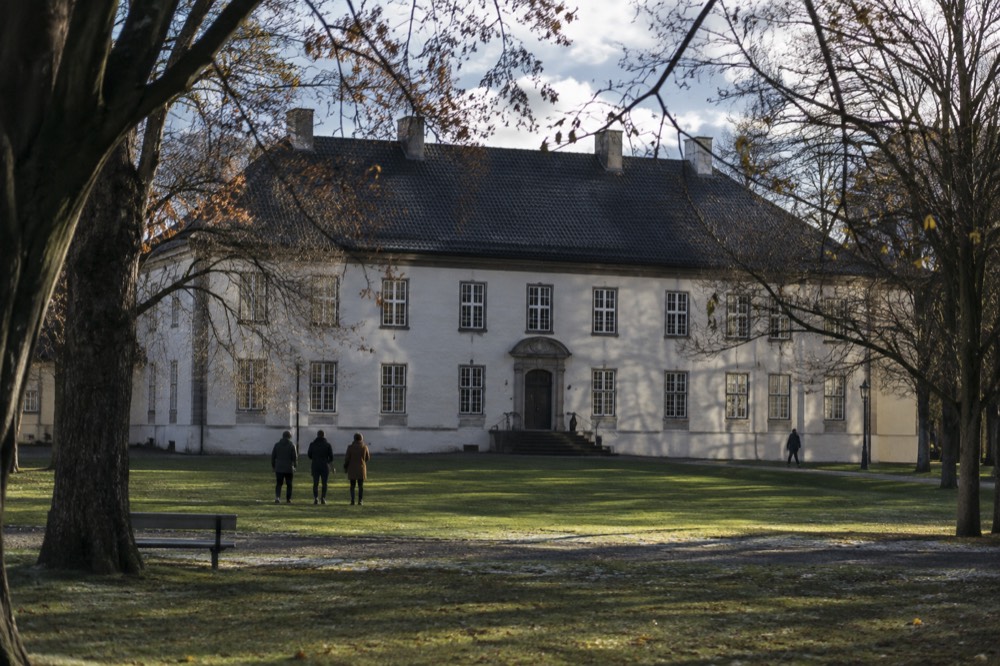
For the museum, the building is an asset no new construction could replicate. A city history museum inside a building that is itself a piece of that history is a coherence most city museums never achieve, and the curators use it: the rooms, the outbuildings and the surrounding parkland all form part of the visit.
The wider sweep of the city's past, from its medieval core to its modern rebuilds, is covered in our Oslo history guide, which is good background reading before a visit here.
What Else Is Near the Oslo City Museum?
Within walking distance of the museum you have the whole of Frogner Park and the Vigeland sculptures, the embassy district's architecture, and the cafés of the Frogner neighborhood. A short bus or tram ride away are the Royal Palace, Karl Johans gate and the National Museum. Bygdøy's museums are a longer ride south across the city.
Frogner rewards wandering. The streets between the park and the harbor hold some of Oslo's most consistent architecture, the functionalist blocks of the 1930s that give the district its character, and the café density is high by Norwegian standards. Our where to stay in Oslo guide covers Frogner as one of the neighborhoods worth considering for accommodation precisely because of this walkability.
| Nearby | What it is | Distance from the museum |
|---|---|---|
| Vigeland Park and the monolith | Free sculpture park, open 24 hours | On the doorstep |
| The Vigeland Museum | The sculptor's studio and works, paid entry | Beside the park's south side |
| Royal Palace and Palace Park | The monarch's residence, grounds open to the public | Short bus ride |
| Karl Johans gate | Oslo's main ceremonial street | Short bus or tram ride |
| Aker Brygge waterfront | Restaurants and harbor views | Tram ride |
If your museum appetite is bigger than one building, the question becomes which museum next. The strongest pairing with a Frogner day is on the other side of the city: Bygdøy, where the Kon-Tiki Museum and the Fram Museum sit beside each other, both covered by the Oslo Pass, and both reachable by bus 30 year-round or the seasonal ferry from Rådhusbrygge 3.
The Kon-Tiki Museum is the best-reviewed museum ticket in Oslo, holding Thor Heyerdahl's balsa-wood raft and the papyrus boat Ra II, and it anchors a Bygdøy day better than any other single ticket. If the city museum has whetted your appetite for Norway's seafaring and exploration history, that is the next stop.
For a different flavor of the city's past, the evening myths and legends walking tour runs through central Oslo after dark and covers the stories the daytime walks skip, which suits the darker half of the year when Oslo's daylight shrinks to under six hours.
And if you want a cheap guided introduction to the city before you specialize, the budget central walking tour is the entry point: a two-hour guided walk of central Oslo with a local guide, the cheapest credible guided walk in the city.
How Should You Plan a Half-Day Around the Museum?
Give the Frogner district a half-day: one to two hours for the sculpture park, an hour for the museum, and the rest for the walk between and the neighborhood around it. Arrive by bus to the park gates, walk the sculpture axis westward, finish at the manor, and return by bus or on foot through the embassy district. On a short trip, do this half-day in the afternoon and keep the morning for a headline attraction.
The sequencing advice is simple. The park is best in daylight, and the museum is best when you are tired of walking, so park first, museum second, in every season except deep winter, when you may want the museum first to warm up and the sculptures in the middle of the short day.
Timing against the crowds also matters less here than elsewhere. Frogner Park is Oslo's most visited sight, but it is large enough that it rarely feels packed outside the immediate monolith plateau, and the museum itself is one of the quieter museums in the city. You do not need a timed entry or a booking slot, which makes this the most flexible half-day in a typical Oslo itinerary.
For travelers fitting Oslo into a single day, the choice is starker: this half-day competes with Bygdøy, with the Opera House and the waterfront, and with the National Museum. Our one day in Oslo itinerary makes those trade-offs explicitly, and the honest answer for a one-day visitor is that Frogner's half-day is the usual pick for the afternoon.
For longer stays, our how many days in Oslo guide covers the pacing question, and a Frogner afternoon slots naturally into day two or three, once the headline attractions are done and the appetite for something quieter arrives.
Common Questions About the Oslo City Museum
What is the Oslo City Museum?
The Oslo City Museum is the museum of Oslo's own history, covering how the city grew from a medieval trading town into a modern capital through paintings, photographs, city models and everyday objects. It is housed in Frogner Manor beside Frogner Park and operates as part of Oslo Museum.
Where is the Oslo City Museum located?
The museum is inside Frogner Manor, on the western edge of Frogner Park in the Frogner district, roughly 3 km from the city centre. Buses serve the park gates from the centre in about ten minutes, and the walk from Nationaltheatret takes around 35 minutes.
How long does a visit to the Oslo City Museum take?
Most visitors spend between one and two hours inside. The museum is one of the shorter museum visits in Oslo, which makes it easy to combine with the sculpture park in a single half-day.
Is the Oslo City Museum worth visiting?
It is worth visiting if you are already going to Frogner Park and want an indoor hour that explains the city. On a short trip where you have not yet seen the National Museum, MUNCH or the Bygdøy museums, it is a skip; on a longer stay it is a quiet, rewarding stop.
Does the Oslo Pass cover the Oslo City Museum?
The Oslo Pass includes free entry at over 30 museums and attractions, and the current list is maintained by VisitOSLO on the pass's own pages. Confirm the museum's inclusion there when you buy, since the list changes.
Can you combine the Oslo City Museum with Vigeland Park?
Yes, and that is the natural way to do it. Walk the sculpture axis from the main gate to the monolith, then continue west to Frogner Manor, roughly 20 to 30 minutes end to end. The park is free and open 24 hours a day, all year.