Skiing in Oslo: Capital City Slopes, Cross-Country Trails and the Holmenkollen Ski Jump
Oslo is the only European capital where you can be on a lift or a groomed trail less than half an hour from the city centre, and where children learn to ski as a school subject. This guide covers the resort, the forest, the jump and the honest limits of a snow trip here.
Short answer
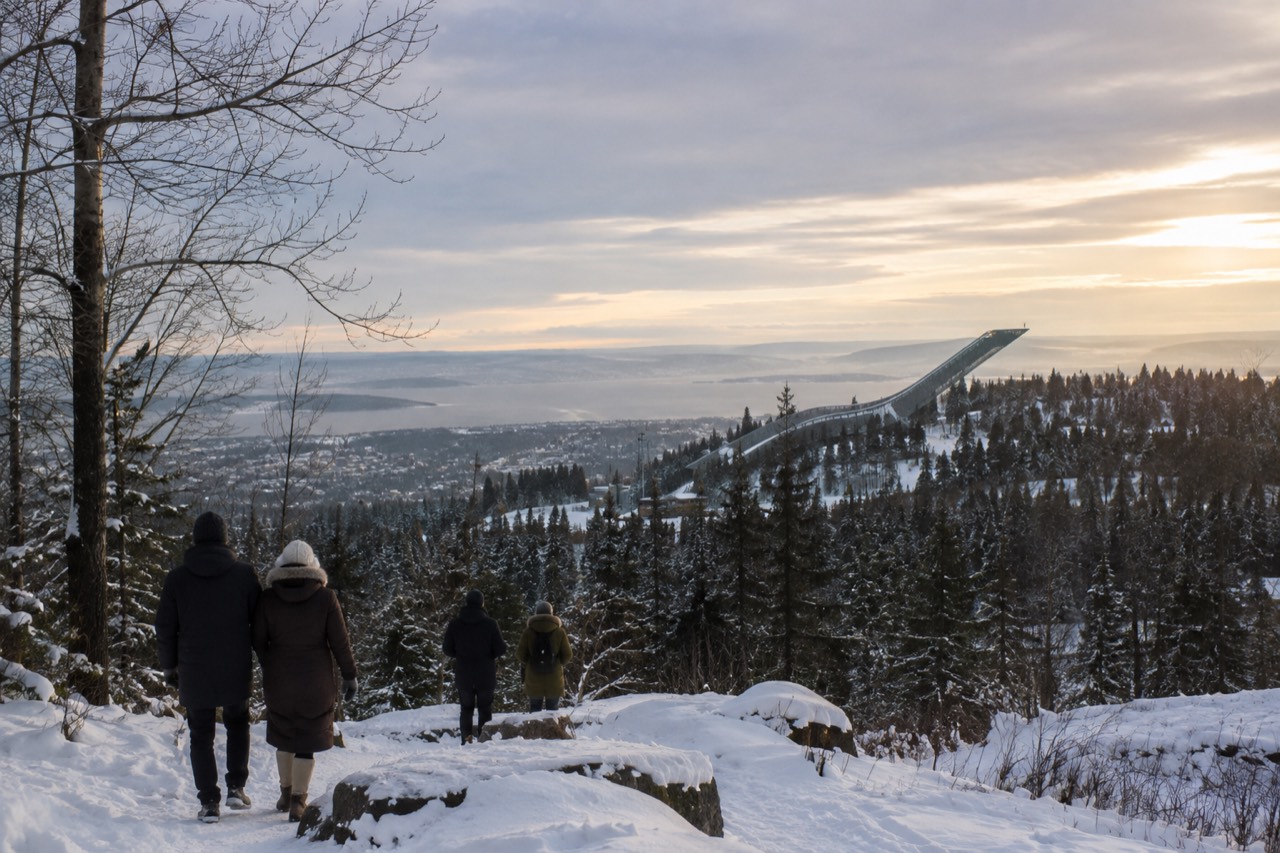
Yes, Oslo works as a ski destination, with one catch. Oslo Vinterpark at Tryvann has lifts and slopes inside the city limits, roughly 30 minutes from the centre by metro, and Nordmarka's groomed cross-country network starts at Frognerseteren. Alpine skiers get a small hill, not a mountain; cross-country skiers get one of the best urban networks in the world.
Skiing in Oslo is not a day trip you arrange from the city. It is something the city does. A vast network of marked ski trails surrounds the capital, the metro runs to the edge of the forest, and the ski museum under the Holmenkollen jump tower sells tickets all year. Children in Oslo have cross-country skiing on the school timetable, which tells you how ordinary the sport is here. The catch is scale: the alpine hill inside the city is small, and anyone chasing long vertical descents needs to look beyond the capital.
This guide covers what skiing in Oslo actually is, how to reach the snow without a car, what the famous ski jump is really for, and which winter products are worth booking if you would rather someone else handled the gear. The short version: cross-country is world class, the family slope is genuinely convenient, and the Holmenkollen ski jump is a landmark with a museum inside it.
Is Oslo Good for Skiing?
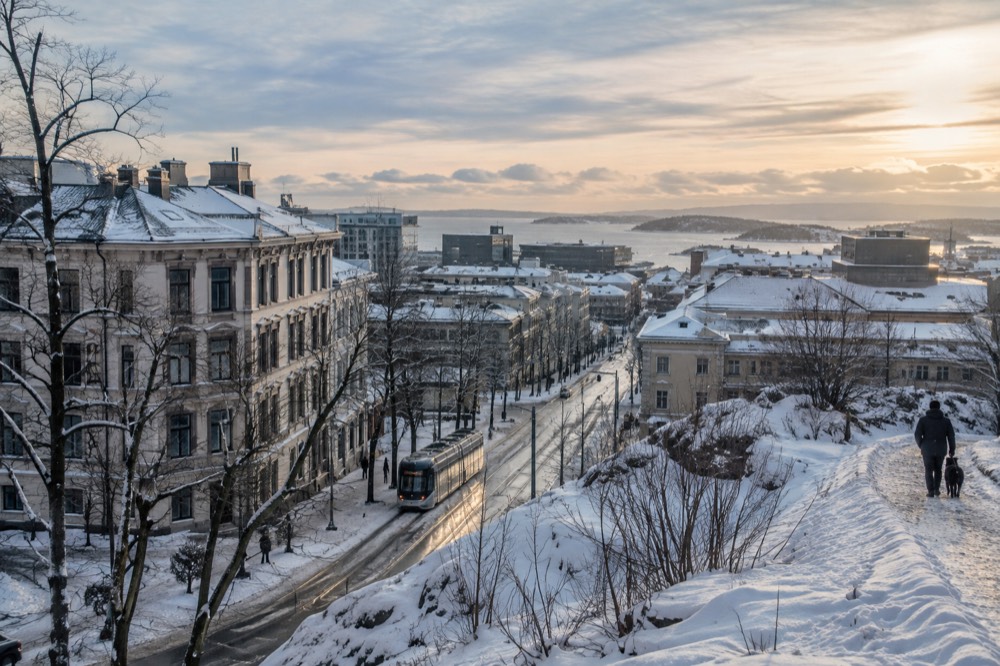
Oslo is excellent for cross-country skiing and honest but limited for alpine skiing. The city sits inside one of the largest groomed trail networks in the world, reachable by metro, while its one in-city alpine resort, Oslo Vinterpark at Tryvann, offers a compact set of slopes rather than a mountain. For a visitor who wants snow, atmosphere and a half-day on skis without logistics, it works very well. For a week of serious downhill, it does not.
The distinction matters more in Oslo than in most ski cities, because the two kinds of skiing live in different places and attract different crowds. Cross-country skiing, or langrenn, is the national sport and the reason the forest is criss-crossed with groomed tracks. The trails are maintained by Skiforeningen, the forestry association, which publishes live trail and snow-depth reports on its own site, so you can check conditions before you even leave your hotel. The trail network stretches across Nordmarka, the forested hills north and west of the city, and the whole thing starts at the end of metro Line 1.
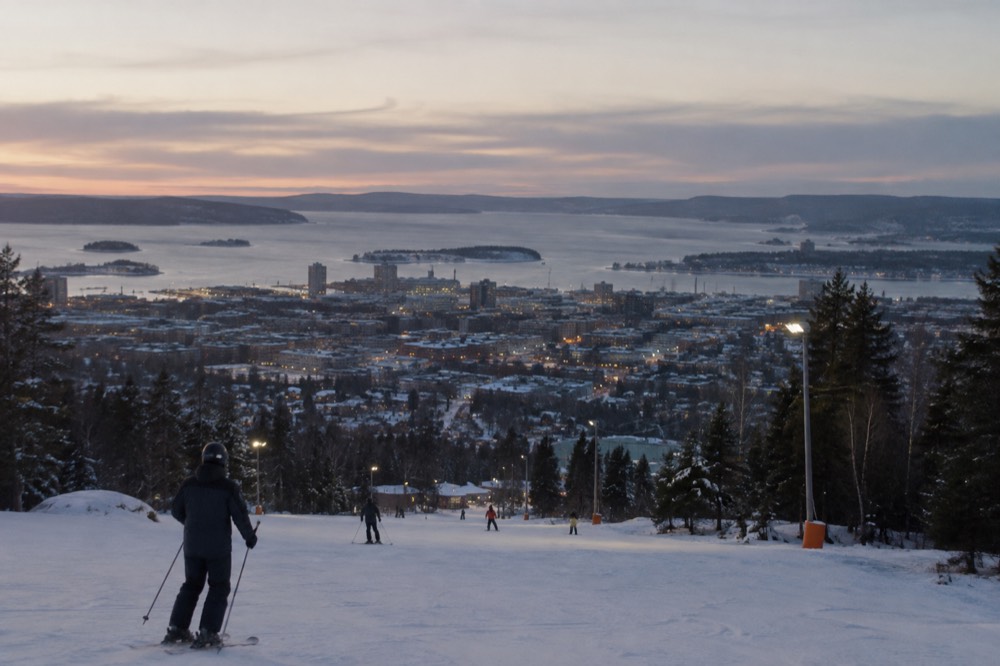
Alpine skiing is a different story. Oslo Vinterpark at Tryvann sits inside the city limits, reachable on the same metro line, with lifts and slopes that serve locals on weekday evenings as much as weekend visitors. It is a genuine resort, with snowmaking, night skiing and rental gear, but it is a city hill. Norwegians who want big vertical head to the mountain resorts several hours away, and that is the honest framing for any visitor planning a trip around downhill.
The third kind of skiing Oslo offers is the one almost no other capital can: a learn-to-ski experience that fits in a half day, because the hill and the forest are inside the city boundary. That is the slot the guided products on this page fill, and it is the reason a first-timer can plausibly leave Oslo having skied.
| Type of skiing | Where in Oslo | Who it suits | Realistic reach |
|---|---|---|---|
| Cross-country (classic and skate) | Nordmarka, from Frognerseteren or Sognsvann | Fitness skiers, beginners, families | Metro to trailhead, no car needed |
| Alpine and snowboard | Oslo Vinterpark at Tryvann | Beginners to intermediates, evening skiers | Metro Line 1 to Tryvann |
| Tobogganing | Korketrekkeren, from Frognerseteren | Anyone, no skills needed | Metro Line 1 to Frognerseteren |
| Ski jumping (watching) | Holmenkollen, competition weekends | Spectators | Metro Line 1 to Holmenkollen |
If you are weighing Oslo against the classic mountain destinations, the honest comparison is in the Oslo vs Bergen guide, which covers which city suits a winter-first itinerary. And if your trip is short, the 3 days in Oslo itinerary shows where a ski day fits alongside the museums.
What Ski Resort Is Closest to Oslo?
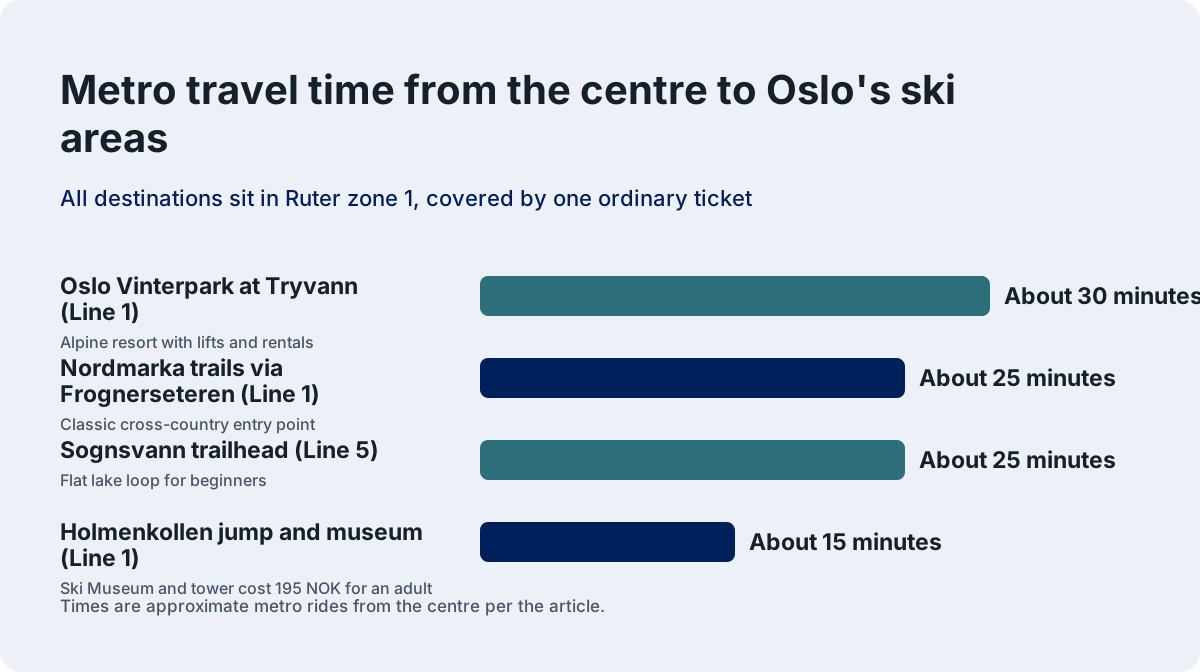
The closest ski resort to Oslo is Oslo Vinterpark at Tryvann, which is not near the city but inside it, about 30 minutes from the centre on metro Line 1. It is the capital's own alpine resort, with lifts, slopes, snowmaking and rental equipment, sitting inside the city boundary at the edge of Nordmarka. No other European capital has an equivalent.
Tryvann works because of the metro, not despite it. Line 1, the Holmenkollen line, terminates at Frognerseteren, one stop past the resort's own station, and the ride from Nationaltheatret in the centre takes roughly 20 minutes. That means a visitor can be standing at a lift with rented skis less than an hour after leaving a downtown hotel, which is the whole argument for the place. Locals use it on weekday evenings under the floodlights; the resort runs night skiing through the dark months, when Oslo has under six hours of daylight.
The resort itself is modest by Alpine standards. Expect a set of short-to-medium slopes, terrain parks, a beginner area and full rental facilities rather than long descents. Lift passes are priced per season and per time slot, and the operator publishes current prices on its own site, so check there before you go rather than trusting a figure in a guide. The same goes for opening dates: the season depends on conditions and snowmaking, and in a mild winter the natural snow arrives late.
| Getting to the snow | Transport | Rough time from the centre | Ticket needed |
|---|---|---|---|
| Oslo Vinterpark at Tryvann | Metro Line 1 to Tryvann | About 30 minutes | Ordinary Ruter zone 1 ticket |
| Nordmarka trails | Metro Line 1 to Frognerseteren | About 25 minutes | Ordinary Ruter zone 1 ticket |
| Sognsvann trailhead | Metro Line 5 to Sognsvann | About 25 minutes | Ordinary Ruter zone 1 ticket |
| Holmenkollen jump and museum | Metro Line 1 to Holmenkollen | About 15 minutes | Ordinary Ruter zone 1 ticket |
The entire metro network sits inside Ruter zone 1, so a single ordinary ticket covers every one of these trips. The practical detail is that Ruter's own site is the authority on fares and the app is the cheapest place to buy, as covered in the Ruter tickets guide. The Oslo Pass also includes Ruter transport in zones 1, 2, 3, 4V and 4N, so if you are museum-hopping as well as skiing, the pass can carry you to the trailhead and back.
For skiers who want a full mountain rather than a city hill, the options sit well outside the capital, and the skiing near Oslo guide covers the realistic day-trip radius. The trade-off is simple: every hour further from the city buys vertical and loses the metro ticket.
If you would rather not rent gear and figure out a beginner slope alone, a guided learn-to-ski half-day exists that handles the equipment and the instruction. It is the product that makes a first ski experience in Oslo bookable rather than improvised.
One thing worth knowing before you plan around deep powder: Oslo's snow is coastal snow, and the amount of it varies sharply year to year. The city's latitude, 59.91 N, guarantees cold winters on average, with January normals around minus 2.3 C, but the snowpack in the forest depends on each season. Skiforeningen's live reports are the honest check, and the Oslo snow guide covers what the climate record actually shows.
What Is the Famous Ski Jump in Oslo?
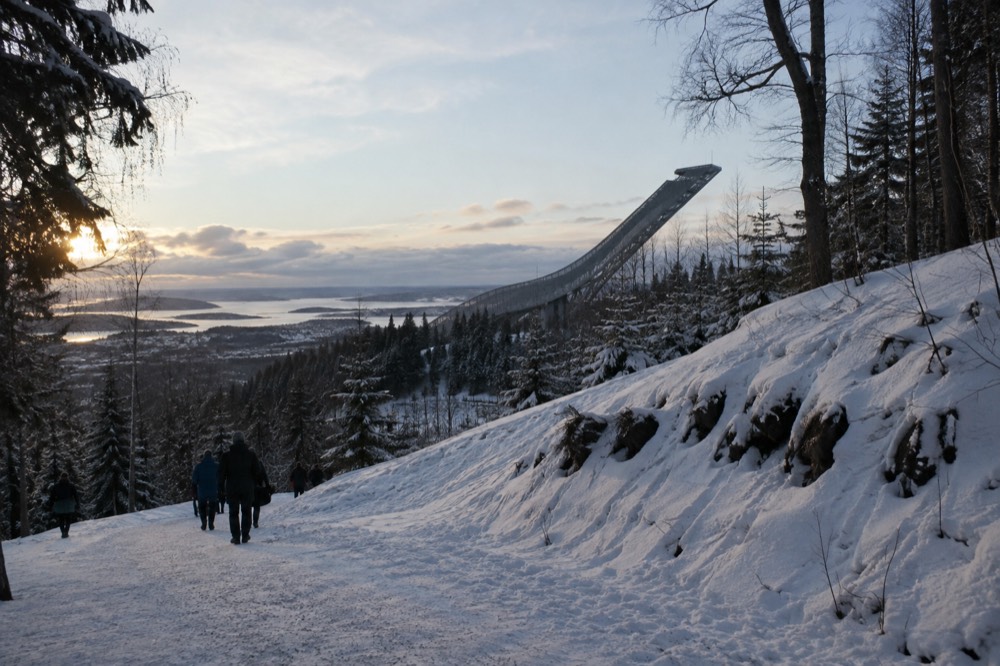
The famous ski jump in Oslo is the Holmenkollen ski jump, the national arena that towers above the city at the Holmenkollen metro stop. A jump has stood on this hill for well over a century, and the arena hosts the Holmenkollen Ski Festival, the most attended winter sports event in Norway. A ski museum is built into the base of the tower, and the jump tower is open to visitors.
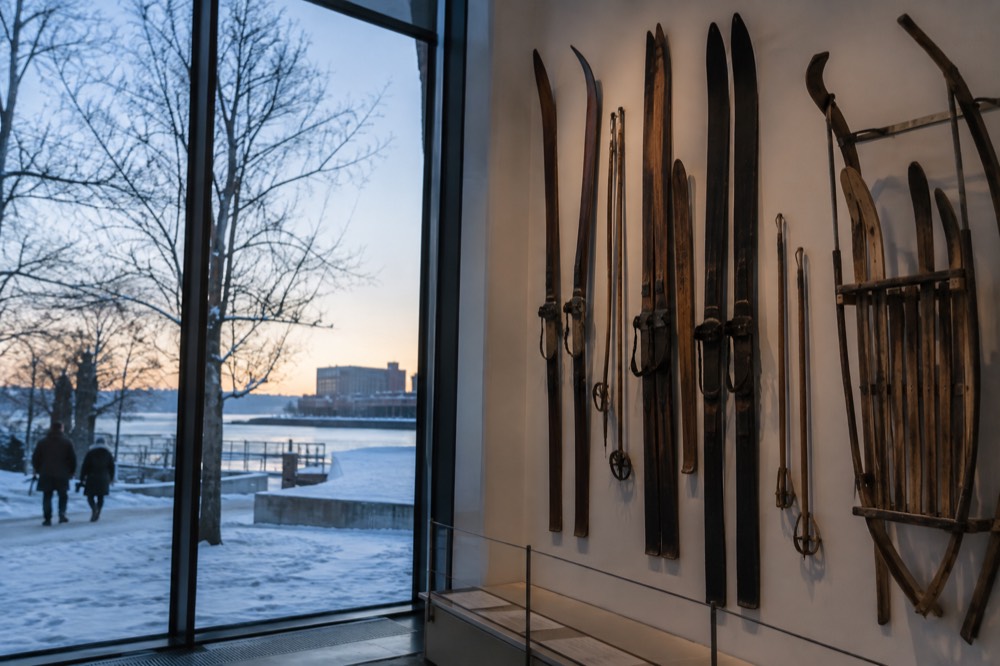
Holmenkollen is to Norwegian winter sport what Wembley is to English football. The arena sits at the top of the Holmenkollen line, roughly 15 minutes by metro from the centre, and the tower is visible across much of the city, a steel spine with a viewing platform at the top. The ski museum inside the base claims to be the oldest of its kind in the world and covers thousands of years of skiing history, from prehistoric skis found in Norwegian bogs to the modern Olympic era.
The hill has hosted the Holmenkollen Ski Festival since the event's early years, and the festival draws enormous crowds every March, when the stands fill for the ski jumping and the cross-country races in the surrounding trails. Oslo has twice staged the Winter Olympics, and the earlier of the two used the Holmenkollen hill. The structure visitors see today is a modern steel rebuild, which is why it looks nothing like the older concrete towers in photographs.
For visitors, the practical facts are these. The Ski Museum and jump tower together cost 195 NOK for an adult, per the operator's own site, and the hours run daily through the winter season, 10:00 to 16:00 from October to April. The metro ride up is part of the experience: Line 1 climbs through villas and forest, and the Holmenkollen stop leaves a short walk to the arena. There is no standalone jump-tower-only ticket sold through the booking platforms this site works with, so the museum-and-tower combination is the honest way in.
The museum is also where the story of Norwegian skiing becomes visible rather than abstract. The exhibits run from rock carvings of skiers to the equipment of modern champions, and they explain why a country that is mostly mountains and dark winters turned sliding on planks into a national identity. If you are visiting Oslo with kids, the tower's viewing platform and the nearby family skiing options combine well into one metro trip.
Where Do Locals Actually Ski, and How Do You Join Them?
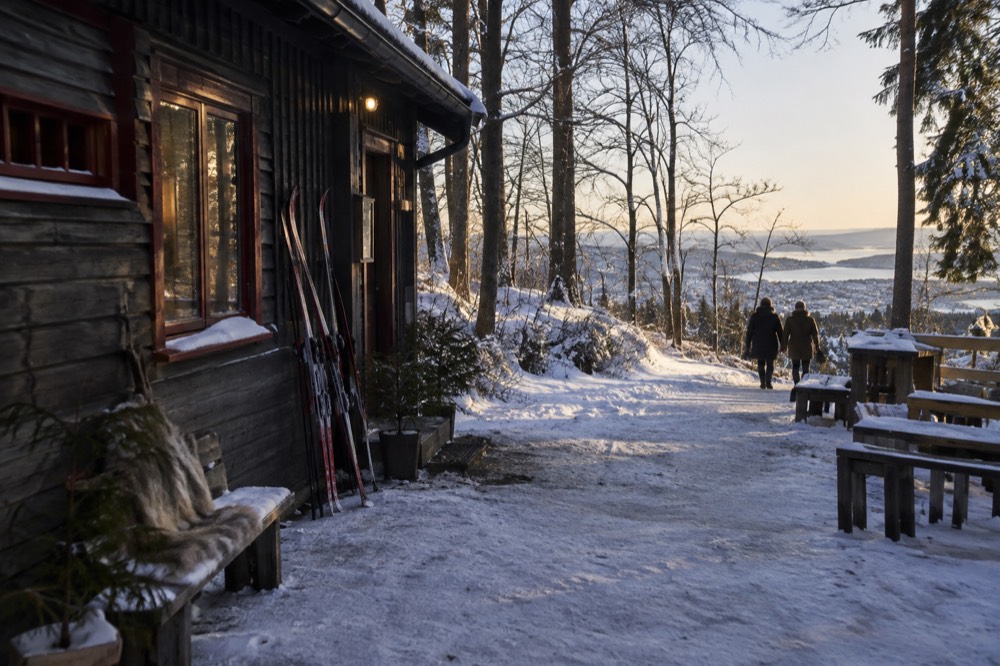
Most Oslo skiers head into Nordmarka, the protected forest that begins at the end of the metro lines, where Skiforeningen grooms a large network of track through the winter. The two classic entry points are Frognerseteren at the end of Line 1 and Sognsvann at the end of Line 5. Both are ordinary metro rides on an ordinary ticket, and both put you on skis within minutes of leaving the platform.
Nordmarka is the reason Oslo can call itself a ski city with a straight face. The forest covers the hills north and west of the urban area, and in winter the network of prepared trails, marked with the familiar blue signs, becomes the city's real recreational infrastructure. Frognerseteren, the terminus of Line 1, sits high enough that the trails from the station are usually in better condition than anything in the valley. Sognsvann, at the end of Line 5, is the flatter, friendlier option, with a lake-side loop that suits beginners and families. Everything else covered here is indexed on Oslo Travel Guide. Everything else covered here is indexed on Oslo Travel Guide.
The culture around this is worth understanding before you join it. Norwegians treat a Sunday trail outing the way other cities treat a jog in the park: ordinary clothes, ordinary effort, thermos of coffee in the backpack. Nobody cares about your technique. What locals do care about is trail etiquette, keeping to the right, letting faster skiers pass, and not walking on the groomed tracks in street shoes. The wax room at the trailhead, where people prepare their skis before setting off, is a social institution in itself.
| Trailhead | Metro line | Character | Best for |
|---|---|---|---|
| Frognerseteren | Line 1 | High, hilly, classic Holmenkollen terrain | Intermediate skiers |
| Sognsvann | Line 5 | Flat lake loop, wide and gentle | Beginners and families |
| Holmenkollen | Line 1 | Arena trails and lit tracks | Short evening outings |
| Korketrekkeren start | Line 1 to Frognerseteren | Toboggan run, not ski trail | Non-skiers and kids |
Rental gear is available in the city rather than at the trailheads, so plan to pick up skis before boarding the metro. Several shops around the centre rent cross-country packages by the day, and the resort at Tryvann rents alpine gear on site. If you have never skied at all, the guided learn-to-ski half-day covers equipment and instruction together, which removes the two hardest parts of a first outing.
For non-skiers, Korketrekkeren deserves its own mention. The toboggan run drops from near Frognerseteren back down toward the mid-station, and it is public, generally free to use with your own sled, with rentals available near the top in season. It is the single most joyful winter activity in Oslo that requires no skill whatsoever, and it shares the same metro ride as everything else on this page.
When Is the Ski Season, and How Bad Is the Dark?
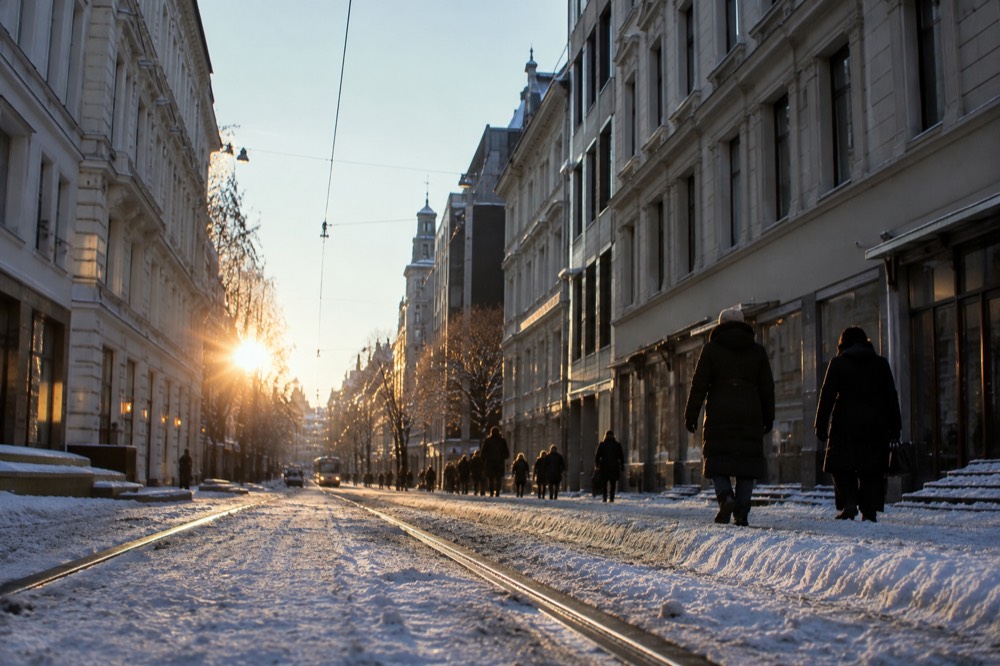
The Oslo ski season typically runs from December through March, with the most reliable conditions in January and February. The dark is the real constraint: in late December the city gets under six hours of daylight, with sunrise at 09:18 and sunset at 15:11, so skiers plan around the middle of the day. By late February the days stretch past ten hours and the floodlit evening trails fill the gap.
The daylight swing at 59.91 N is enormous, from 5 hours 53 minutes on 21 December to 18 hours 50 minutes on 21 June, a factor of more than three. For a ski trip this cuts both ways. Midwinter skiing means short days, but it also means the lit trails matter: Skiforeningen maintains floodlit loops that run into the evenings, and Oslo Vinterpark's night skiing keeps the slopes open after work. The full picture of how the light changes month by month is in the Oslo daylight hours guide.
Temperature-wise, the winter normals are milder than visitors expect. January averages minus 2.3 C and February minus 2.0 C at the Blindern station, cold enough for snow but not brutal, and observed extremes in the recent record run down to minus 17.2 C. Snow depth varies by season, and no verified long-term snow-cover statistic for the city is published in a form worth quoting, so the honest answer is to check Skiforeningen's live reports for current conditions rather than trusting a guide's average.
| Month | Normal mean temp | Daylight on the 15th | Ski season reality |
|---|---|---|---|
| December | −1.4 C | Around 6 hours | Early season, lit trails |
| January | −2.3 C | 6 h 45 m | Most reliable snow, shortest days |
| February | −2.0 C | 9 h 14 m | Peak season, days lengthening fast |
| March | 1.3 C | 11 h 45 m | Late season, Holmenkollen festival month |
| April | 6.2 C | 14 h 34 m | Forest trails often still open early in the month |
March deserves a special word. It is the month of the Holmenkollen Ski Festival, when tens of thousands of spectators climb the hill for the jumping and cross-country races, and it is arguably the best time to visit Oslo as a winter-sports spectator. The days are long, the sun has real warmth, and the snow in the forest usually holds. The trade-off is that hotel demand spikes around the festival weekend, so book ahead if your dates are flexible.
What Should You Book, and What Should You Skip?
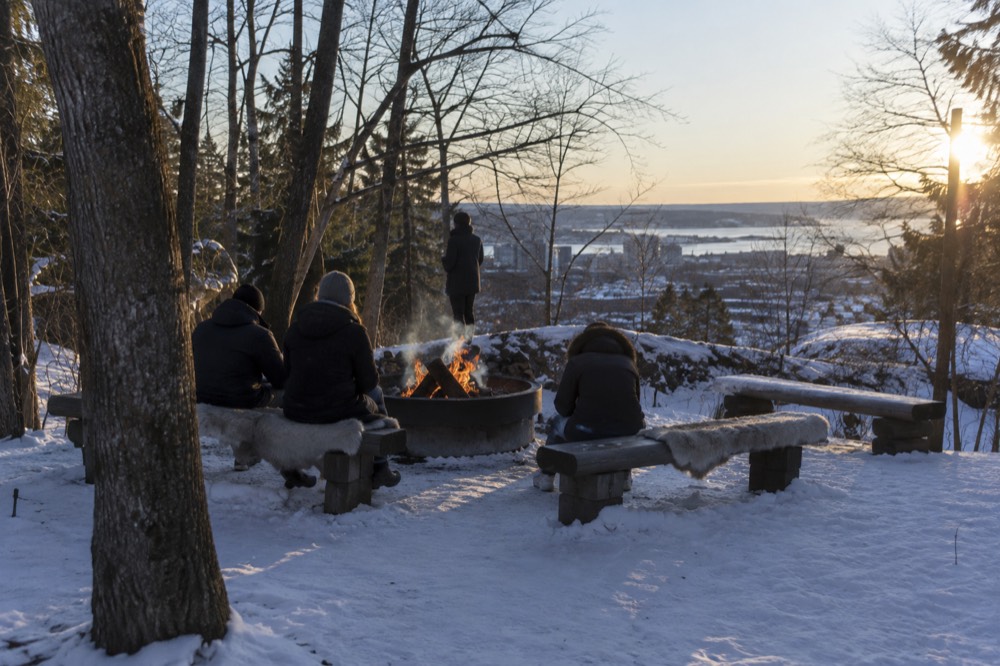
Book a guided winter product if you want instruction, equipment or a structured experience; skip booking anything for the free public layers of Oslo skiing. The metro, the trails, the toboggan run and the forest itself need no tour, and no product exists that should. What is genuinely worth booking is a learn-to-ski session with gear and a guide, and, for the evenings, a torchlit forest walk with a campfire, which is the signature non-ski winter product in the city.
The honest inventory matters here, because Oslo's winter is surrounded by things you cannot book through any platform. There are no northern lights tours from Oslo, because the aurora is genuinely rare at this latitude and the honest position is covered in the northern lights in Oslo guide. There are no husky sledding trips from the capital either; that is a Tromso product. Fjord sauna sessions are sold direct by operators, not through booking platforms. What remains is a short, strong list.
| Winter product | Format | Skills needed | Bookable through this site |
|---|---|---|---|
| Learn-to-ski half-day | Guided, equipment included | None | Yes |
| Torchlit forest walk with campfire | Guided, 3.5 hours | None | Yes |
| Guided snowshoeing in Nordmarka | Guided, 3.5 hours | None | Yes |
| Cross-country on your own | Self-guided | Basic skiing | No booking needed |
| Korketrekkeren toboggan | Public run | None | No booking needed |
The torchlit walk deserves its own paragraph because it is the product that best captures the Norwegian winter without requiring you to ski. A guide leads a small group through the forest by torchlight, ending at a campfire, and the whole thing runs inside the city limits. Reviews put it among the best-rated winter experiences in Oslo, and it works on the same dark evenings that make the ski trails atmospheric.
Snowshoeing is the third leg of the guided winter offering. A guided snowshoe session in Nordmarka covers the forest without the learning curve of skis, and it reaches terrain that a first-time cross-country skier would find punishing. It suits anyone whose knees have opinions about downhill.
One booking note that trips people up: the Holmenkollen jump tower has no standalone ticket on the platforms this site works with, and the Ski Museum entry is bought on site or through the museum's own channel. The combination products that include Holmenkollen sightseeing with other stops are the only bookable route that touches the area, and the Holmenkollen ski jump attraction page covers that in detail.
How Much Does a Ski Trip to Oslo Cost?
A ski day in Oslo costs far less than a ski day in the Alps, because the mountain is public. The trail network is free, the toboggan run is free with your own sled, the metro fare is an ordinary zone 1 ticket, and the museum and jump tower at Holmenkollen cost 195 NOK for an adult. The real costs are gear rental, lift passes at Oslo Vinterpark and food, and food is where Norway's price level bites hardest.
The cost structure of Oslo skiing is unusually favorable at the bottom and normal at the top. Everything public is cheap or free: the trails, the lake loops at Sognsvann, the walk up to the Holmenkollen arena, the view from the jump's base. Everything commercial follows Norwegian price levels, and Norway is the sixth most expensive country in Europe, with household prices 28.6 percent above the EU average and food 33 percent above it, per Statistics Norway's 2025 comparison. Alcohol and tobacco run at more than double the European average, which is why a beer at the trailhead cafe costs what a lunch costs elsewhere.
Lift passes at Oslo Vinterpark are set per season and published on the operator's site, so treat any figure in a guide with suspicion and check the live price. Rental gear in the city rents by the day for cross-country packages and by the day or session for alpine. The museum-and-tower ticket at Holmenkollen, at 195 NOK adult, is fixed and published, and it is the one hard number in a typical ski day.
| Item | Typical cost | Notes |
|---|---|---|
| Cross-country trails | Free | Groomed by Skiforeningen, open to all |
| Metro to the trailhead | Ordinary Ruter zone 1 fare | App is the cheapest purchase |
| Ski Museum and jump tower | 195 NOK adult | Published on the operator's site |
| Korketrekkeren toboggan | Free with your own sled | Rentals near the top in season |
| Oslo Vinterpark lift pass | Set per season | Check the operator's live price |
| Gear rental | Daily rate in the city | Reserve ahead in high season |
The overall budget picture for a city break, including what a museum-heavy winter day adds up to, is covered in the Oslo trip cost guide. The short version for a ski-focused day: transport and trails are nearly free, the guided products cost what a guided half-day costs anywhere in Scandinavia, and the restaurant bill is the item that surprises people.
Common Questions About Skiing in Oslo
Is Oslo good for skiing?
Oslo is excellent for cross-country skiing and modest for alpine skiing. The city sits inside a vast groomed trail network reachable by metro, while its in-city resort, Oslo Vinterpark at Tryvann, is a compact hill rather than a mountain. For a half-day of snow without logistics, it is superb; for a week of serious downhill, look further afield.
What ski resort is closest to Oslo?
Oslo Vinterpark at Tryvann, which is not near the city but inside it, roughly 30 minutes from the centre on metro Line 1. It has lifts, slopes, snowmaking, night skiing and rental gear, all inside the city boundary at the edge of Nordmarka.
What is the famous ski jump in Oslo?
The Holmenkollen ski jump, the national arena at the Holmenkollen metro stop. A jump has stood on the hill for well over a century, and a ski museum is built into the base of the tower. Adult entry to the museum and tower is 195 NOK.
Can you ski in Oslo without a car?
Yes, completely. Metro Line 1 serves Holmenkollen, Tryvann and Frognerseteren, and Line 5 serves Sognsvann, all on an ordinary zone 1 ticket. Every major ski entry point in the city is a public transport ride away.
When does the ski season run in Oslo?
Roughly December through March, with the most reliable snow in January and February and the Holmenkollen Ski Festival in March. Midwinter days are short, under six hours of daylight in late December, but floodlit trails and night skiing extend the usable hours.
Can beginners learn to ski in Oslo?
Yes, and it is one of the city's genuine strengths. Sognsvann offers flat beginner terrain, Oslo Vinterpark has a learner area with rentals, and a guided learn-to-ski half-day with equipment and instruction is bookable, which removes the setup burden entirely.