Oslo Midnight Sun: What Summer Light in Oslo Really Looks Like
Oslo is too far south for the sun to stay above the horizon all night, but its June evenings still deliver nearly nineteen hours of daylight and a twilight that never fully fades to black.
Short answer
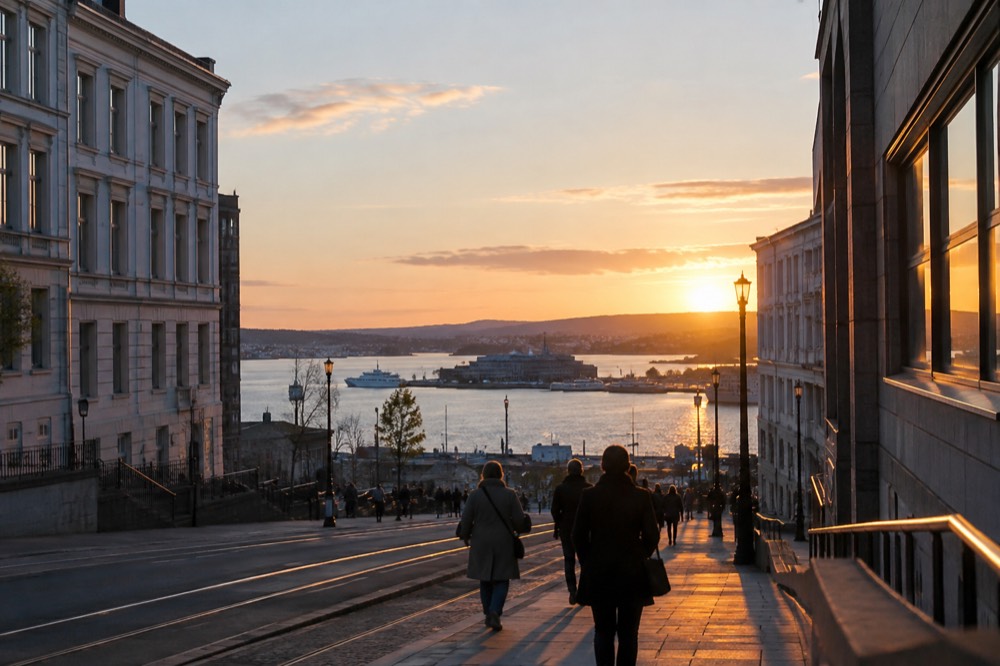
No, Oslo does not have midnight sun. At 59.91 degrees north the city sits well below the Arctic Circle, so the sun always sets, even in late June. What Oslo does have is an enormous seasonal swing: 18 hours 50 minutes of daylight on 21 June, with the sun setting at 22:43 and rising again at 03:53, and only twilight in between.
Oslo Midnight Sun: What Summer Light in Oslo Really Looks Like
Searches for the Oslo midnight sun spike every spring, and the honest answer is the one most guides dodge: there is no midnight sun in Oslo. The city sits at 59.91 degrees north, well south of the Arctic Circle, and the sun always dips below the horizon here, every single night of the year. What Oslo offers instead is a genuinely extreme daylight swing, from under six hours of light in late December to nearly nineteen in late June, and summer nights where the sky never gets properly dark. This guide covers what that actually looks like, hour by hour, and what to do with evenings that refuse to end.
The distinction matters for planning. Travelers who book an Oslo trip expecting the midnight sun of Tromsø, where the sun genuinely does not set between late May and late July, arrive expecting something the latitude cannot deliver. Travelers who arrive knowing they will get a 22:43 sunset and a bright, usable evening until well past midnight tend to love the place. The long-light version of Oslo is one of the city's best products, and it costs nothing.
Does Oslo Have Midnight Sun?
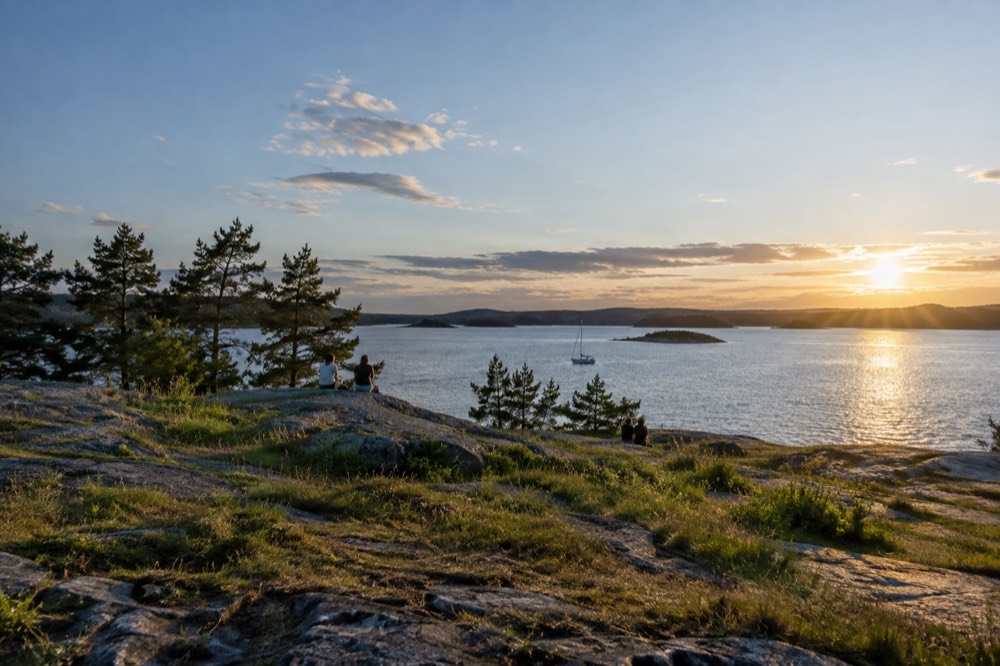
No, Oslo has no midnight sun, and no tour, viewpoint or clear sky can change that. Midnight sun requires a latitude north of roughly 66.5 degrees, the Arctic Circle, and Oslo sits at 59.91 degrees north, far too far south. On the longest day of the year, 21 June, the sun still sets in Oslo at 22:43 and rises again at 03:53. The roughly five hours between are twilight rather than true night, but the sun does set.
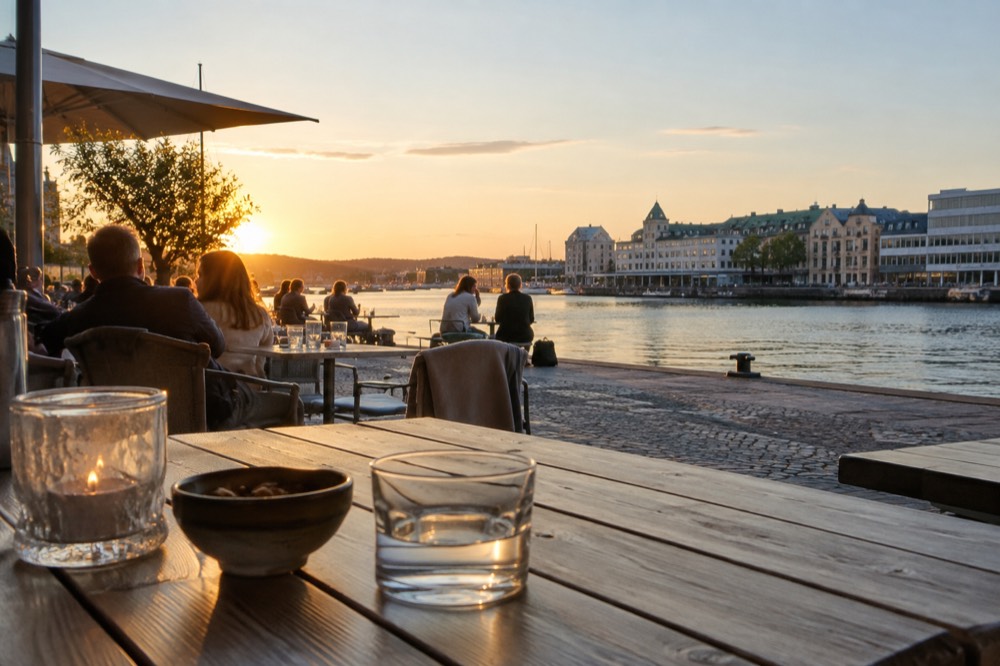
That twilight is the part worth understanding. Because the sun never drops far below the horizon in June, Oslo never reaches astronomical darkness in high summer. The sky glows deep blue and gold through the small hours, bright enough to read a map outdoors at midnight, and the city's parks and waterfront stay populated long after a southern European city would have emptied. Photographers call this quality of light exceptional; the Norwegians just call it June.
The comparison that clarifies it fastest is Tromsø, which sits above the Arctic Circle and has genuine midnight sun from around 20 May to around 22 July. If the all-night sun is the specific experience you are chasing, the honest advice is to plan it as a separate trip. Our guide to getting from Oslo to Tromsø covers the flights and the timing, and Tromsø is also where the northern lights live in winter, a season when Oslo offers almost the exact opposite problem.
How Much Daylight Does Oslo Get in Summer?
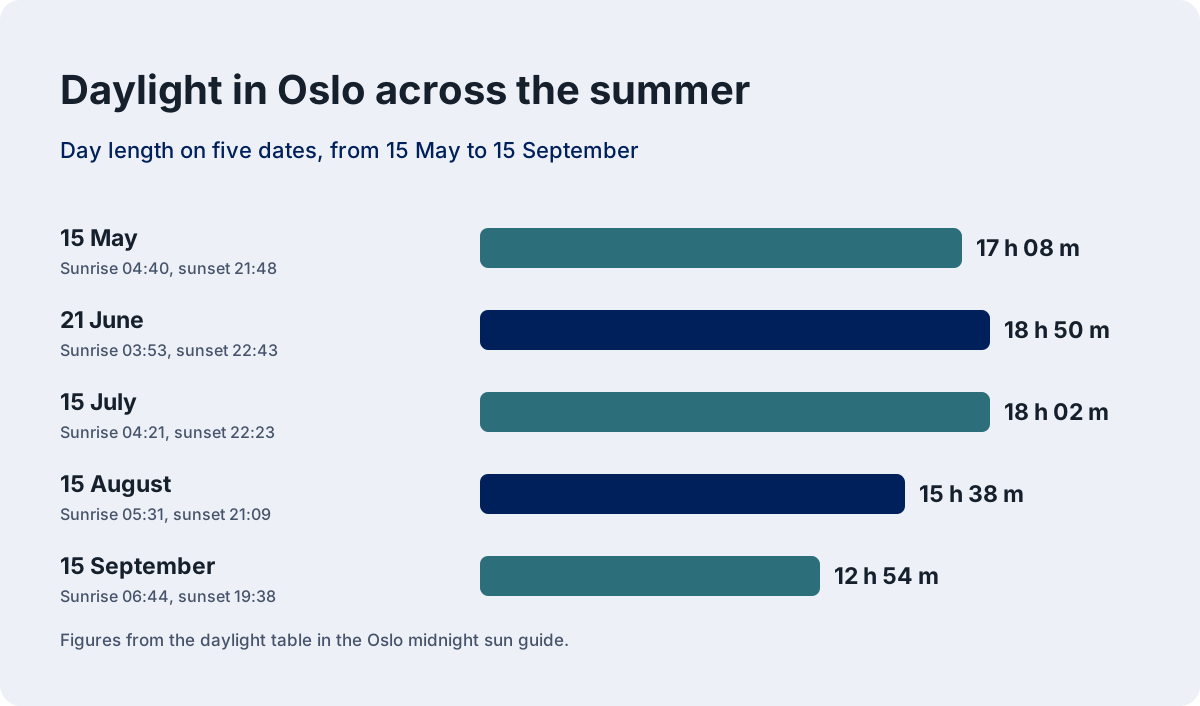
Oslo gets between roughly 15 and 19 hours of daylight across the summer half of the year, peaking at 18 hours 50 minutes on 21 June. In mid-August that has already fallen to about 15 hours 38 minutes, and by mid-September to about 12 hours 54 minutes. The practical effect is that from May through early August, Oslo evenings stay bright and usable far later than most visitors expect, with usable light often past 22:00.
The numbers below come from MET Norway's own sunrise data for Oslo's coordinates, and they are worth reading closely because the change is fast at the edges of the season. Oslo gains and loses daylight at a rate of several minutes per day in spring and autumn, which means a two-week shift in your travel dates can move your sunset by close to an hour. If you want the bright-evening version of the city, aim for the second half of June or the first half of July.
| Date | Sunrise | Sunset | Day length |
|---|---|---|---|
| 15 May | 04:40 | 21:48 | 17 h 08 m |
| 21 June | 03:53 | 22:43 | 18 h 50 m |
| 15 July | 04:21 | 22:23 | 18 h 02 m |
| 15 August | 05:31 | 21:09 | 15 h 38 m |
| 15 September | 06:44 | 19:38 | 12 h 54 m |
Notice the shape of that table: the peak is a plateau, not a spike. Mid-July still gives over eighteen hours of daylight, and the difference between late June and mid-July in felt terms is small. What you trade for the two fewer minutes of light in July is slightly warmer water in the fjord and the full summer ferry schedule on the islands, which is a good trade for most visitors. Our Oslo in summer guide covers what else the season adds.
The plateau also means booking is less knife-edge than people assume. You do not need to hit the exact solstice week to get the long-light experience; anything from early June to mid-July delivers substantially the same evenings. That flexibility matters when you are choosing between the tours below, several of which are built specifically around the bright evening hours.
When Does It Get Dark in Oslo in June?
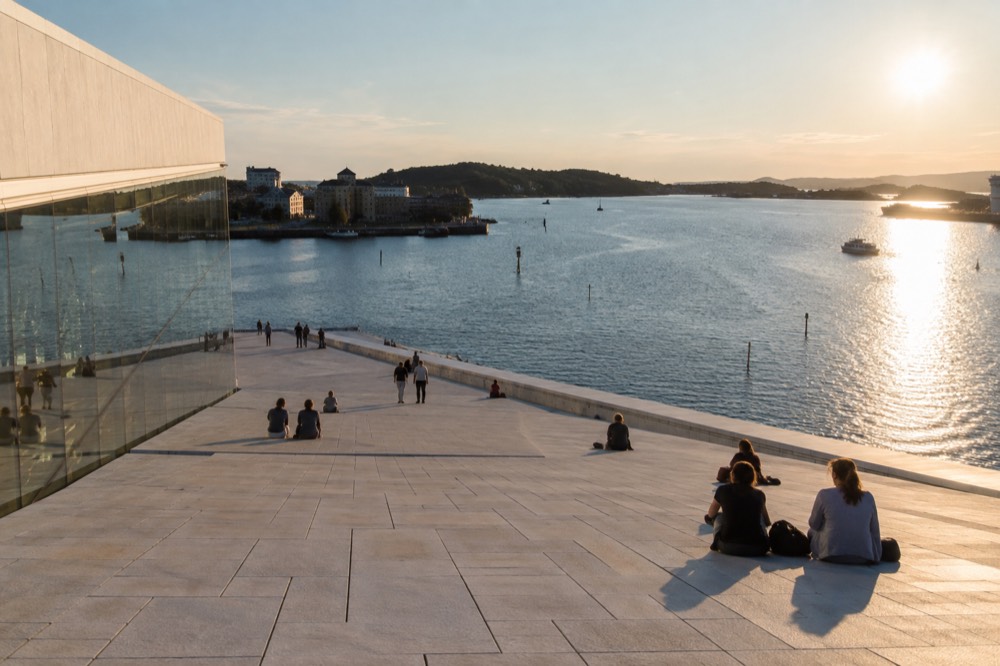
In late June it effectively does not get properly dark in Oslo at all. The sun sets at 22:43 on 21 June, and the roughly five hours before the 03:53 sunrise are continuous twilight, with the sky holding a deep blue glow rather than going black. You could walk the waterfront at 01:00 without a headlamp and read a map without artificial light, and street lighting is mostly redundant.
Norwegian has a word for this that English lacks the exact equivalent of: the bright summer night is simply part of how the year works here, and locals plan around it. Bedrooms need blackout curtains or eye masks, and most hotels in Oslo provide them as standard because guests otherwise sleep badly. If you are a light sleeper, pack an eye mask regardless; the twilight coming through a curtain at 03:00 is bright enough to wake some people.
The sleep disruption is real and worth planning for, but it cuts both ways. The same light that steals sleep gives you evening hours that feel like a bonus day. A 20:00 dinner is still in full daylight, a 21:30 walk on the Opera House roof is in golden light, and a 22:00 swim at Sørenga is entirely reasonable. Visitors who adapt their schedule later, eating at 20:00 and staying out until midnight, get the best of the city in summer.
One practical note on time itself: Norway uses Central European Time, shifting to summer time in late March like most of the continent. Quoting a summer event time an hour wrong is the classic mistake here, so double-check whether a listing's start time is already in local summer time when you plan your evening. The Oslo daylight hours guide carries the full month-by-month breakdown if you are planning outside the peak.
Where Are the Best Places to Enjoy the Late Light in Oslo?
The best places for Oslo's late evening light are the waterfront and the western hills: the Opera House roof, the Aker Brygge and Tjuvholmen piers, the Sørenga seawater pool, the Huk beach on Bygdøy, and the viewpoints at Frognerseteren and Ekebergparken. All are free to access, and all face either the fjord or the low northern sky where the twilight glow sits strongest.
The fjord-facing spots win because the light at 22:00 in June comes from the north and west across the water, and the Oslofjord's inner basin is oriented to catch it. The Opera House roof is the most accessible of these, a sloping marble terrace that is free to walk on and stays open late, and it puts you directly over the water. Further out, Huk at the tip of Bygdøy gives you the horizon and a beach, and the ferry or bus ride home is part of the evening.
The hills give the other half of the picture. Frognerseteren, at the top of metro line 1, sits high enough that you look down over the fjord and the entire city bathed in low gold light, and the ride up takes about half an hour from the center. Ekebergparken, the sculpture park on the eastern side, faces back across the harbor toward the city, which is the classic postcard angle of Oslo in evening light. Our best views in Oslo guide maps the full set.
| Spot | What you get | Getting there | Evening character |
|---|---|---|---|
| Opera House roof | Marble terrace over the fjord | Walk from Oslo S, 5 min | Bright, social, busy until late |
| Aker Brygge and Tjuvholmen | Harbor promenade, restaurants | Walk from the center | Dinner-and-stroll territory |
| Sørenga | Seawater pool and boardwalk | Walk or tram from the center | Late swimmers, saunas nearby |
| Huk, Bygdøy | Beach and open horizon | Bus 30, or summer ferry | Quieter, best sky |
| Frognerseteren | Panorama over city and fjord | Metro line 1, terminus | Golden hour from above |
| Ekebergparken | Sculpture park facing the city | Tram, short walk | Views with art |
The evening cruise is the version of this that requires no planning of your own route, and it is the product that most directly monetizes the late light: three hours on the water in the hours when the fjord looks its best, with a shrimp buffet that is a Norwegian institution rather than a generic dinner boat. It runs into the evening precisely because the light makes that the best time to be out.
What Can You Do in Oslo on a Bright Summer Evening?
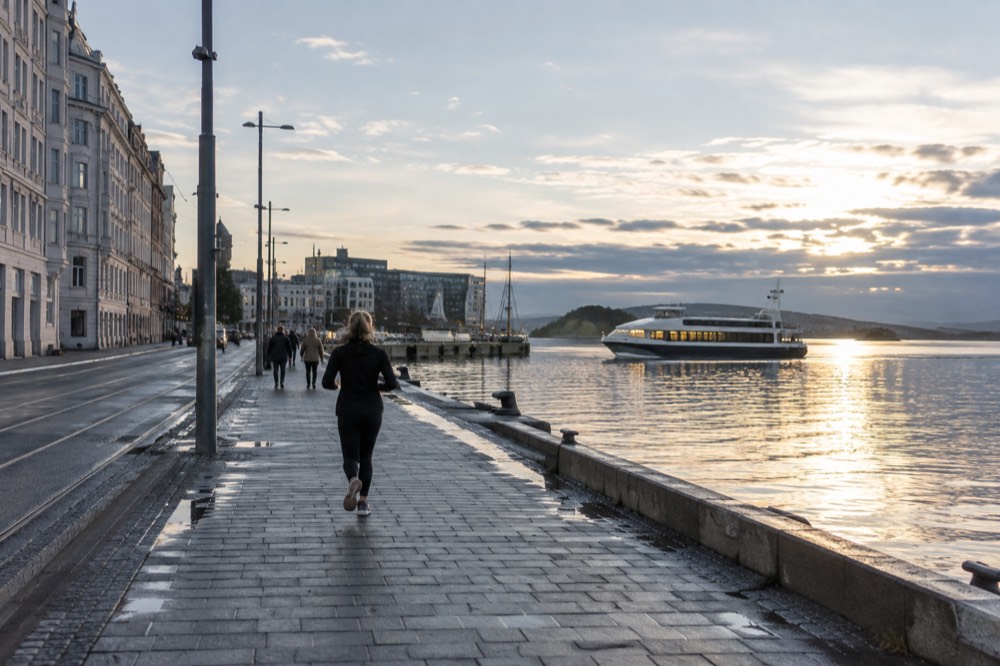
Oslo's bright summer evenings open a longer activity menu than the city has at any other time of year: evening fjord cruises, themed history walks that start at 19:00 or later, swimming at the islands, late terrace dining, and the free outdoor life of the parks. Several bookable tours are built around the evening hours specifically, because that is when the light and the city are at their best.
The island ferries are the sleeper option. The public lines B1 and B2 run from Aker Brygge out to Hovedøya, Gressholmen and Langøyene on ordinary Ruter tickets, and on a bright June evening a ferry-and-beach trip costs almost nothing. Langøyene is the swimming island, with grass and small beaches facing the open fjord. Check the seasonal schedule before you go, because the summer timetable runs only through the peak weeks, and the last sailings back matter when you are on an island at 22:00. Our Oslo islands guide covers each one.
The guided evening products deserve their own mention. The myths-and-legends walk is a two-hour themed history tour that runs in the evening, and it is the format that suits the bright-night atmosphere best: Oslo's older streets, the stories behind them, and light that makes 21:00 feel like late afternoon. It is also the product the city genuinely needs in the opposite season, from October to March, when the dark evenings make a lit, guided walk the comfortable way to see the center.
For a completely different register, the beer-and-culture walk pairs the evening light with Norway's peculiar drinking culture, which is genuinely useful context rather than a novelty. Alcohol in Norway is expensive by any European measure, the state monopoly Vinmonopolet closes early on Saturdays and all day Sunday, and supermarkets sell only weak beer with a fixed evening cutoff. A guided walk that explains the rules while you sit outside in daylight at 22:00 is one of the more honest ways to encounter the culture. The price of beer in Oslo guide carries the full cost picture.
Where in Norway Can You Actually See the Midnight Sun?
The real midnight sun in Norway happens north of the Arctic Circle, roughly 66.5 degrees latitude, and the standard destinations are Tromsø, the Lofoten Islands, Nordkapp and the coast of Finnmark. Tromsø, the most reachable of these from Oslo, has continuous daylight from around 20 May to around 22 July. Nordkapp, the northernmost point on the European mainland, keeps the sun up from mid-May into late July.
None of these are day trips from Oslo. Tromsø is roughly a two-hour flight north, and the train does not go there at all; the rail network ends far south of the Arctic Circle. This is why the honest structure for a Norway trip built around the midnight sun is two stops: Oslo for the city, the fjord and the museums, then a flight north for the actual all-night sun. Our Oslo to Tromsø guide covers the flight options and timing in detail.
| Place | Position | Midnight sun window | Getting there from Oslo |
|---|---|---|---|
| Oslo | 59.91 N, south of the Arctic Circle | None, sun always sets | n/a |
| Tromsø | Well above the Arctic Circle | ~20 May to ~22 July | ~2 h by air |
| Lofoten Islands | Above the Arctic Circle | Late May to mid-July | ~2.5 h by air |
| Nordkapp | Norway's northernmost point | Mid-May to late July | ~2.5 h by air |
There is a symmetry worth noticing. Tromsø has the midnight sun in summer and the northern lights in winter; Oslo has neither, sitting too far south for the all-night sun and too far south, and too brightly lit, for reliable aurora. What Oslo has instead is the enormous swing between the two, plus a compactness that makes both its bright evenings and its dark afternoons easy to use. If aurora is your goal, the northern lights in Oslo guide explains the honest odds and why Tromsø is again the answer.
What Is the Opposite Extreme in Oslo's Winter?
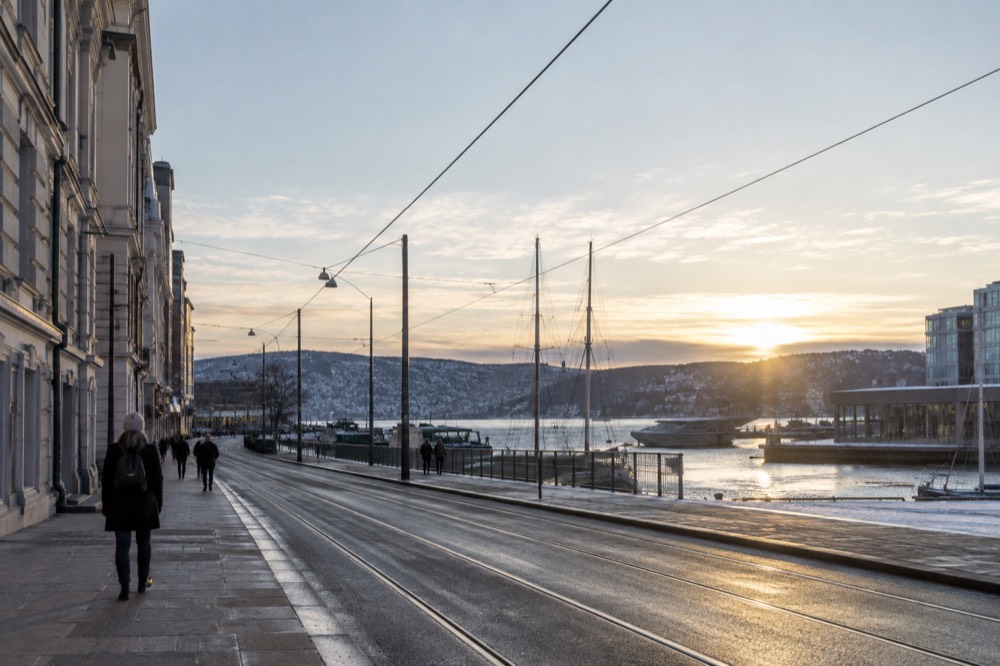
The opposite of Oslo's bright June is a late December with 5 hours 53 minutes of daylight: sunrise at 09:18, sunset at 15:11, on 21 December. The sun sits low all day, the light is blue-toned, and by the time most people finish work it is dark. The swing between the year's shortest and longest day is nearly thirteen hours, one of the largest of any European capital.
That swing is the single most under-explained Oslo planning fact, and it should shape your packing and your itinerary more than the temperature does. Winter Oslo is not brutally cold by continental standards, with a January normal mean of minus 2.3 degrees Celsius, but it is dark, and the darkness compresses sightseeing into a short window. Museums, which close in the late afternoon, need morning slots; outdoor sightseeing wants the hours around noon.
Summer planning inverts every one of those constraints, which is the point of laying them side by side. In June you can put museums in the morning, rest in the afternoon, and still have six hours of bright evening left for the fjord, the parks and a late dinner. The Oslo in winter guide covers the dark-season version of the city, including the torchlit forest walks and snowshoeing that make those short days worth booking.
| Season | Day length | Character of light |
|---|---|---|
| Late June | 18 h 50 m | Twilight all night, never truly dark |
| Mid-August | 15 h 38 m | Proper darkness returns after midnight |
| Late September | ~12 h | Evenings dim by 20:00 |
| Late December | 5 h 53 m | Sun up 09:18 to 15:11, low all day |
How Should You Plan Around Oslo's Summer Light?
Plan Oslo summer days on a late schedule: sightsee in the morning, rest or museum-hop through the midday hours, and keep the fjord, the parks and dinner for the evening, which is the city's best-lit and most atmospheric stretch. Book evening tours and cruises early for June and July, pack an eye mask for the twilight, and do not schedule anything that depends on darkness, like stargazing, at all.
The eye mask advice is not a joke. Hotel blackout curtains in Oslo are usually good, but the twilight at 02:00 is bright enough to read by, and travelers who sleep with even a sliver of curtain open report waking at four convinced it is morning. The flip side is jet lag working for you: if you are arriving from North America, the bright evenings make it genuinely pleasant to stay awake until a normal local bedtime, which is the fastest way onto local time.
Booking timing matters more than date timing. The evening products, especially the fjord cruises and food walks, fill their June and July departures first because everyone wants the light. The trio below covers the three formats that use the evenings best, and all of them can be booked with free cancellation, so locking a date early costs you nothing if your plans shift.
One last planning note that the daylight table implies but does not state: the light changes fast at the edges of the season. A trip in the first week of August still gives bright 21:00 evenings; a trip in the last week of August does not, and the difference is close to an hour of sunset. If the long-light experience is the reason you are going, err toward June and early July, and treat late August as a shoulder-season trip with a different character. That is the same logic this site applies across its seasonal guides, and it is why Oslo Travel Guide keeps a separate page for the best time to visit Oslo rather than pretending one answer fits all trips.
Common Questions About the Midnight Sun in Oslo
Does Oslo have midnight sun?
No. Oslo sits at 59.91 degrees north, well below the Arctic Circle, so the sun always sets. On 21 June it sets at 22:43 and rises at 03:53, with twilight in between rather than true darkness.
How many hours of daylight does Oslo get in June?
Oslo gets 18 hours 50 minutes of daylight on 21 June, the year's longest day. Mid-July still has over 18 hours, and mid-August about 15 hours 38 minutes.
Does it ever get fully dark in Oslo in summer?
Around midsummer, no. The sun never drops far enough below the horizon for astronomical darkness in late June, so the night hours are continuous twilight, bright enough to read outdoors at midnight.
Where is the closest place to Oslo with real midnight sun?
Tromsø, roughly a two-hour flight north, where the sun stays above the horizon from around 20 May to around 22 July. The Lofoten Islands and Nordkapp are the other standard destinations, all requiring a flight.
What time does the sun set in Oslo in summer?
The latest sunset of the year is 22:43 on 21 June. By mid-August sunset is at 21:09, and by mid-September at 19:38, so the bright evenings fade quickly from August onward.
Is Oslo's midnight sun worth planning a trip around?
Not the midnight sun itself, which does not exist here, but the long bright evenings absolutely are. Nearly nineteen hours of June daylight, a waterfront city and evening tours on the fjord make Oslo a strong summer-light destination on its own terms.