Oslo to Tromso: Planning the Trip from the Capital to the Arctic
Tromso is the place Norwegians mean when they talk about going north: above the Arctic Circle, inside the auroral zone, and a world away from the Oslofjord. Here is how the two cities actually compare, and how to decide whether the trip belongs in your plans.
Short answer
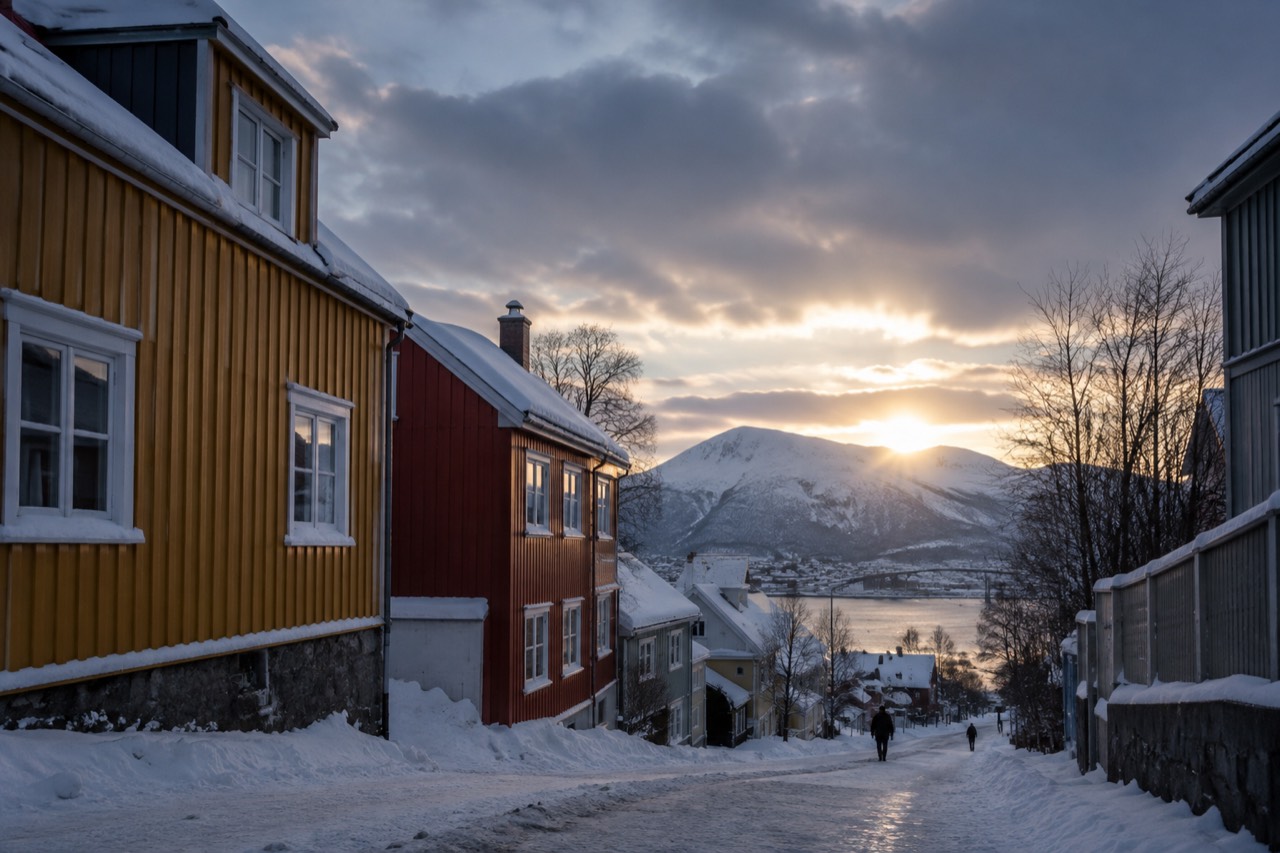
Tromso sits above the Arctic Circle, roughly a thousand kilometers north of Oslo, and there is no railway that far north, so the practical route is a domestic flight. Oslo gives you museums, the fjord and 18 h 50 m of midsummer daylight; Tromso gives you the aurora and the midnight sun. Most visitors fly north for two or three nights in winter.
Tromso is the answer to a question Oslo cannot ask of itself. The capital sits at 59.91 N, far enough south that the aurora is a rare guest and the midnight sun never arrives at all. Tromso sits above the Arctic Circle, inside the band where both are ordinary facts of the calendar. Travelers arrive in Oslo, look at a map of Norway, and immediately want to know whether the north is worth the detour. This guide takes that question seriously: what the trip involves, when it makes sense, what it costs, and what to do instead when the arithmetic does not work out.
One framing note before anything else. This is a planning page about the decision, written by an editorial desk that reports what operators, tourist boards and weather services publish. Nothing here is a first-person account of a flight taken or an aurora watched. Where a number appears, it comes from a verified source, and where a tour is mentioned, the live listing carries the current price and rating.
How Far Is Tromso from Oslo, and How Do You Get There?
Tromso lies well over a thousand kilometers north of Oslo, past the Arctic Circle, and no railway reaches it, so the realistic options are a direct domestic flight or a long overland journey staged through Trondheim and beyond. The flight is the version almost every visitor takes, because Norway's own geography makes the alternative a multi-day project rather than a day trip in any sense. Treat the journey as a separate leg of the trip, not as a commute.
Norway is a long country, and the length runs north to south. Oslo sits at the bottom of that length, on the Oslofjord; Tromso sits deep inside it, on the coast of Troms county. The Arctic Circle sits at roughly 66.5 degrees north, and everything that makes Tromso famous, the midnight sun in summer and reliable aurora in winter, depends on being north of that line. Oslo at 59.91 N misses both, which is not a flaw in Oslo, it is simply latitude doing its work.
The practical consequence is that "Oslo to Tromso" is not a day trip. There is no high-speed rail link, no coastal motorway sprint and no ferry shortcut that gets you there and back inside a weekend. Visitors who want the north build it in as its own leg, usually two or three nights, and the rest of this guide is about how to decide whether that leg belongs in your itinerary.
For readers who want the full transport breakdown, fares and step-by-step routing, we cover that question in detail on our page about the best way to travel from Oslo to Tromso. The short version for planning purposes: fly, and book early for winter dates, because aurora season fills the planes.
Can You Take a Train from Oslo to Tromso?
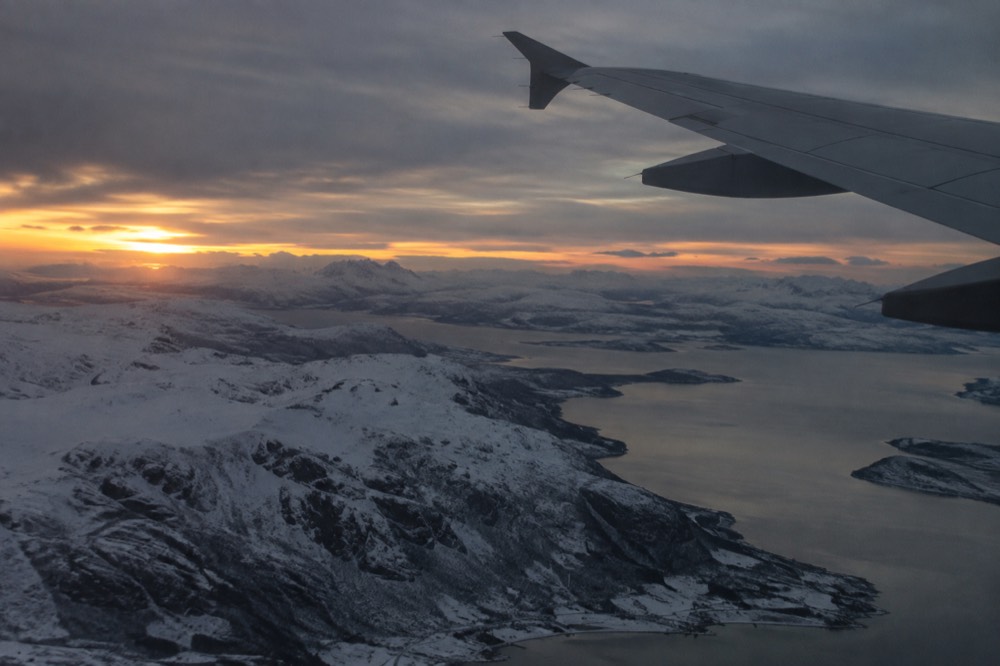
No. Tromso has no railway station and never has, so the Norwegian rail network ends long before you reach it, and a rail-based journey means taking the line toward Trondheim and then switching to air or road for the final stretch. Travelers who love Scandinavian train travel can still get real value on the way north, but the train is a component of the trip, not the trip. Anyone promising a direct Oslo to Tromso train is selling something that does not exist.
This surprises people, because Norway's trains are genuinely good and the Oslo to Bergen line in particular is one of Europe's great rides. But the network serves the south. The northernmost reaches of the system stop far short of Tromso, and the final approach to the city is by air or by road through some of the least densely populated landscape in Europe.
If train travel is part of the appeal, the honest structure is a hybrid: ride the rails as far as they usefully go, then fly the remaining distance. Our guide to the Oslo to Bergen train covers the flagship rail experience, and the day trips from Oslo page collects the destinations that genuinely work without flying. Tromso is not on that list, and pretending otherwise is how itineraries collapse on day one.
A useful comparison for what a long Norwegian train day can look like, without ever leaving the south: the private full-day round trip to the Sognefjord and the Flam railway leaves Oslo in the morning, threads the mountains to the fjord, rides the famous Flam line down to sea level, and returns to the capital the same night. It is the same country, the same vertical scenery, compressed into something that fits an Oslo-based itinerary. Check availability if that structure appeals.
Is Tromso Worth the Trip from Oslo?
For the northern lights, yes, unambiguously: Tromso sits inside the auroral zone, where the lights are a normal winter occurrence rather than a rare event, and Oslo does not. For everything else, museums, city life, fjord boats and design, Oslo holds its own or wins, so the trip is worth it exactly to the extent that the Arctic is what you came to Norway for. Two nights in Tromso is the standard, sensible dose.
The aurora argument deserves precision, because most guides blur it. Oslo sits well south of the auroral oval. The oval only reaches that far south when geomagnetic activity is high, so an Oslo sighting needs a strong storm, a clear sky and a dark spot away from city light, a combination that comes around a handful of times a year and cannot be booked. Tromso sits under the oval, where ordinary geomagnetic conditions put the lights overhead on clear winter nights. That difference is the entire reason to fly north.
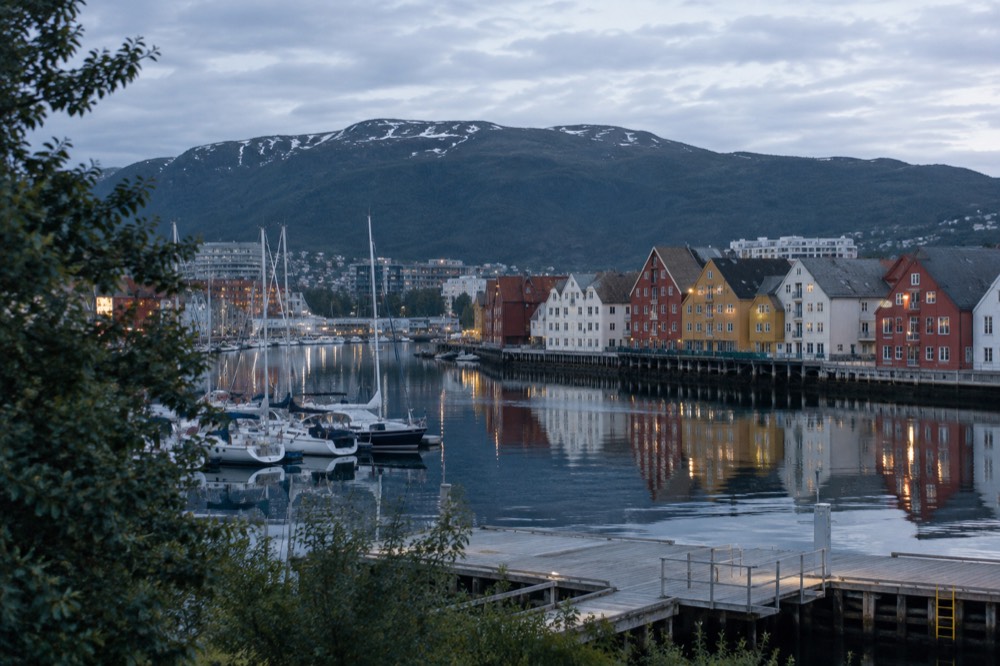
The rest of the ledger is more balanced than the marketing suggests. Tromso is a small city of wooden houses, a stubby Arctic cathedral and a lively student population, with excellent whale and wilderness tours in season. Oslo is a capital: the National Museum with The Scream, MUNCH, the Opera House roof you can walk on for free, Akershus Fortress, and a fjord full of islands a regular ferry ticket away. If your trip is a week, splitting it four nights Oslo and two or three Tromso is the shape most travelers end up happy with.
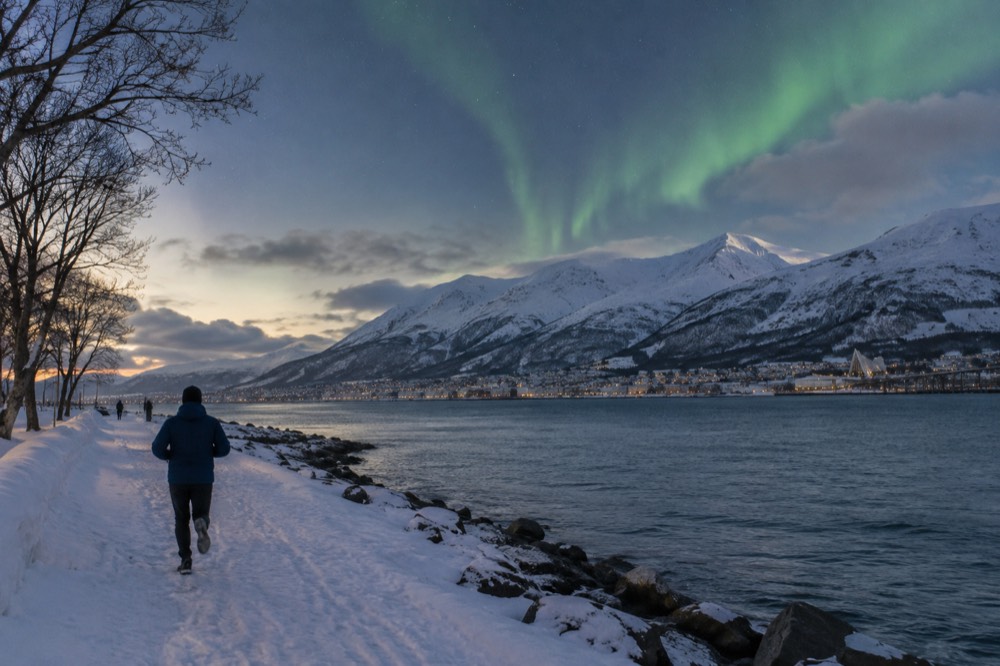
Seasonality matters as much as latitude. In deep winter Tromso offers the aurora and the polar night, with the sun not rising at all around the winter solstice; in summer it offers the midnight sun and hiking, but no lights. Oslo in the same months offers a functioning city either way. Our best time to visit Oslo page works through the capital's calendar, and the same logic applies in the north with the dials turned further.
When Is the Best Time to Go from Oslo to Tromso?
For the northern lights, late September through March, with the darkest weeks around the solstice offering the longest windows but the shortest days. For the midnight sun and hiking, June through August, when the sun never sets at all above the Arctic Circle. The shoulder months trade aurora darkness against usable daylight, and April and May are the quietest, cheapest and least recommended for a first Arctic trip.
The daylight math is the planning fact most visitors underestimate, and it operates in both cities, just at different amplitudes. In Oslo the swing runs from 5 h 53 m of daylight on 21 December to 18 h 50 m on 21 June, a factor of more than three. In Tromso the same swing crosses zero: around midwinter the sun does not rise, and around midsummer it does not set. Arriving in polar night expecting to sightsee on foot all day is the classic first-timer error.
The table below shows Oslo's verified daylight by mid-month, from MET Norway's own sunrise data for 59.9139 N. Read it as the floor: everything further north is more extreme.
| Date | Sunrise | Sunset | Day length |
|---|---|---|---|
| 15 Jan | 09:04 | 15:49 | 6 h 45 m |
| 15 Mar | 06:34 | 18:19 | 11 h 45 m |
| 15 May | 04:40 | 21:48 | 17 h 08 m |
| 21 Jun | 03:53 | 22:43 | 18 h 50 m |
| 15 Sep | 06:44 | 19:38 | 12 h 54 m |
| 21 Dec | 09:18 | 15:11 | 5 h 53 m |
Two seasonal notes worth carrying. There is no midnight sun in Oslo; it requires latitude north of the Arctic Circle, and Oslo is a long way short. And August is Oslo's wettest month on the 1991 to 2020 normals at 103 mm, not November, which matters if you are sequencing a south-then-north itinerary and hoping to dodge rain somewhere along it.
What Does a Tromso Trip Cost Compared with Staying in Oslo?
The flight north is the visible cost, but the real difference is what each city does to a budget on the ground: Tromso's tours and transfers add up fast, while Oslo's headline sights skew surprisingly cheap, with Vigeland Park free around the clock, the Opera House roof free to walk, and world-class museums clustered inside a compact, walkable center. Norway is expensive in both places, and the honest planning move is to budget for the country, not the city.
The verified anchor for "Norway is expensive" is Statistics Norway's 2025 price-level survey. Norway is the sixth most expensive country in Europe; prices facing Norwegian households run 28.6% above the EU average; food and non-alcoholic drink sit 33% above the European mean; and alcohol and tobacco cost more than double the European average. Those are national figures, and they apply in Tromso at least as hard as in Oslo, with the added weight of Arctic logistics on top.
| Category | Norway vs EU average |
|---|---|
| Overall household price level | +28.6% |
| Food and non-alcoholic drink | +33% |
| Alcohol and tobacco | More than double |
| European price ranking | 6th most expensive country |
Where the two cities genuinely diverge is the price of the experiences themselves. Oslo's best sights are cheap or free: Vigeland Park is free, open 24 hours a day, all year, no ticket; the Opera House roof is public space. Tromso's best experiences are almost all paid tours, whale watching, husky sledding, aurora chases, and those products are priced for a market of people who flew a long way to do exactly one thing. If money is the constraint, Oslo stretches much further per day.
One cost note that cuts the other way: alcohol. Norway's state monopoly, Vinmonopolet, is the only place to buy wine and spirits, it closes every Sunday and all public holidays, and Saturdays it closes early. Supermarkets sell beer and cider only up to 4.7% ABV with a legally mandated evening cut-off. Whether you are in Oslo or Tromso, the bar bill is the line item that shocks American visitors, and it is the one place where the two cities are equally unforgiving.
What Can You Do in Oslo Instead of Flying North?
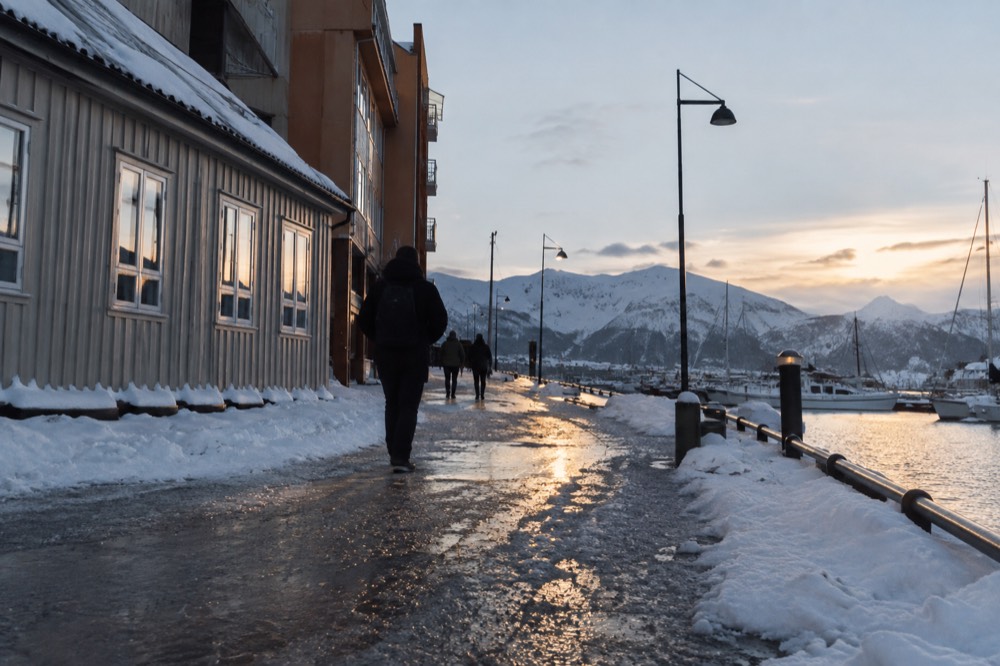
A surprising amount of the Arctic checklist has a southern substitute: winter forest walks by torchlight, snowshoeing in Nordmarka, a learn-to-ski half-day inside the city limits, and saunas and fjord swims that Oslo does in its own mild key. The two things Oslo cannot substitute are the aurora and the midnight sun, and the honest page says so plainly rather than selling a northern lights tour that does not exist.
Start with the hard truth, because it is the most valuable sentence on this page: there are no northern lights tours from Oslo. None exist on any platform this site works with. Oslo is at 59.9 N and the aurora is genuinely rare here; a sighting needs a strong geomagnetic storm, a clear sky and darkness, and even then it is a handful of nights a year. Guides that imply otherwise are selling weather that is not for sale. If the lights are the reason for the trip, fly to Tromso, and our northern lights in Oslo page explains the honest odds in full.
Husky sledding is the same story: it is a Tromso product, not an Oslo one, and no listing in the capital offers it.
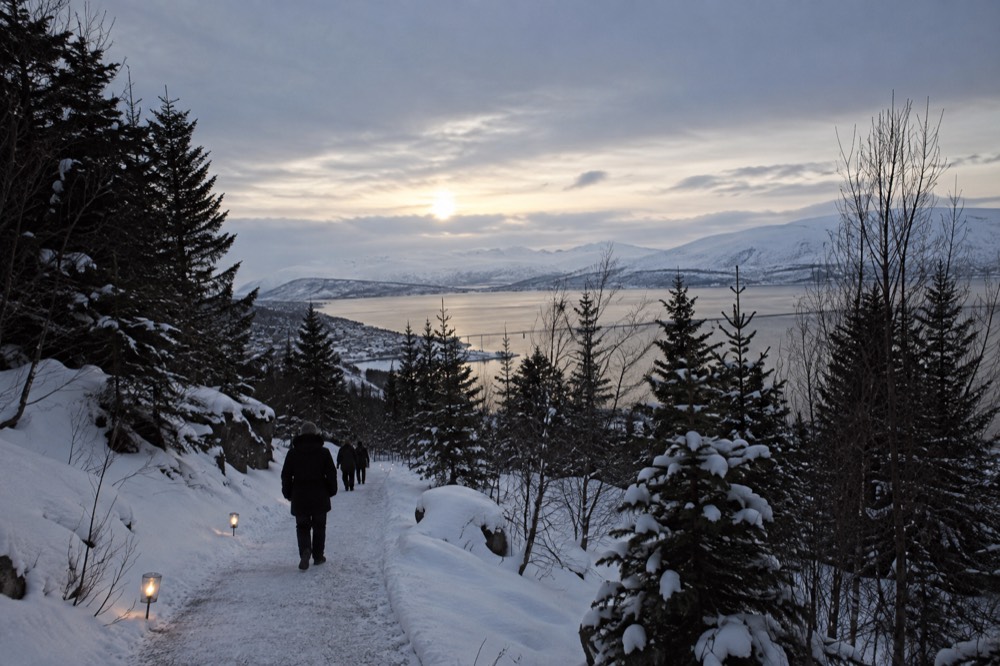
What Oslo does have, in winter, is a genuinely strong cold-weather lineup. The torchlit forest walk with a campfire runs three and a half hours into the woods outside the city, with the fire and the darkness doing the atmosphere work that the aurora cannot. Snowshoeing in Nordmarka covers similar ground with more effort and more daylight. And the learn-to-ski half-day is the product that surprises people most: Oslo is the only European capital where learning to ski is a half-day activity, with a perfect rating across its review base.
For visitors who want the fjord rather than the forest, the island-hopping tour by ferry and foot is the Oslo-specific thing the fjord makes possible: Hovedøya's ruined abbey, the swimming beaches of Langøyene, all on ordinary public ferries with a guide. It is the product that most makes the point that Oslo is a coastal city, not just a cold one.
The winter products on this site's roster, with the durations the listings publish, make the comparison concrete:
| Oslo winter product | Format | Duration |
|---|---|---|
| Torchlit forest walk with campfire | Guided winter walk | 3 h 30 m |
| Snowshoeing in Nordmarka | Guided snowshoe hike | 3 h 30 m |
| Learn-to-ski experience | Ski lesson, gear included | 3 h 30 m |
| Evening myths and legends walk | Themed city walk | 2 h |
| Silent electric fjord cruise | Heated boat, audio guide | 1 h 30 m |
None of it is the Arctic. All of it is bookable from a hotel in central Oslo without an airport in the middle, and for a short trip that arithmetic often wins.
How Do You Split a Week Between Oslo and Tromso?
The shape that works for most first-time visitors is Oslo first, Tromso second: three or four nights in the capital doing museums, the fjord and neighborhoods, then a flight north for two or three nights of aurora hunting or midnight sun, returning home from Tromso or via Oslo. Reversing the order works too, but front-loading the city and saving the Arctic for last means the trip ends on its most memorable note rather than its most crowded.
The sequencing logic is simple. Oslo is where the logistics are easy: the airport train connection is fast, the center is walkable, and the museums cluster within a compact area. Tromso is where the weather is in charge, and building buffer nights there, so one cloudy evening does not cost you the only reason you flew, matters more than an extra half-day anywhere else. Aurora chasers in particular should plan at least two, ideally three, nights in the north, because clear skies are a probability game even above the Arctic Circle.
Inside Oslo itself, the practical backbone is the Oslo Pass, and its airport coverage is the fact most guides get wrong. The pass includes public transport in zones 1, 2, 3, 4V and 4N, including transport to and from Oslo Airport Gardermoen on the public trains operated by Vy, but not the Flytoget airport express and not the airport coach. The 2026 adult prices are 580 NOK for 24 hours, 845 NOK for 48 hours and 995 NOK for 72 hours, and the pass also covers the Bygdøy museum ferry and entry at over 30 museums.
| Oslo Pass (adult) | Price | Covers |
|---|---|---|
| 24 hours | 580 NOK | Museums, Ruter transport, Vy airport train |
| 48 hours | 845 NOK | Same, plus Bygdøy ferry |
| 72 hours | 995 NOK | Same, best value for 3+ museum days |
For the Oslo leg of the trip, our one day in Oslo and weekend in Oslo itineraries do the hour-by-hour work, and the Oslo in winter page covers the cold-season version if your Tromso trip is an aurora trip.
One more planning fact that belongs in any Oslo-based itinerary: Norway is in the Schengen Area but is not a member of the European Union. It is in the EEA through EFTA, it uses the krone rather than the euro, and it sits outside EU VAT, which is why non-resident visitors can claim a VAT refund on qualifying purchases. None of that changes between Oslo and Tromso, but it changes what your card bill looks like compared with a trip to Stockholm or Copenhagen.
Common Questions About Traveling from Oslo to Tromso
Can you do a day trip from Oslo to Tromso?
No, and any itinerary promising one is not honest with you. Tromso is well over a thousand kilometers north, there is no railway, and even by air the sensible minimum is an overnight stay, with two or three nights being the standard for aurora season. Treat it as its own leg of the trip.
Is there a train from Oslo to Tromso?
No. Tromso has no railway station and never has. The Norwegian rail network serves the south of the country; the northernmost useful rail component of an Oslo to Tromso journey ends far short of the city, and the final stretch is by air or road.
Can you see the northern lights in Oslo instead of flying to Tromso?
Rarely, and not on a schedule you can book. Oslo sits well south of the auroral oval, so a sighting needs a strong geomagnetic storm, a clear sky and a dark spot away from city light, a combination that comes around a handful of times a year. Tromso sits under the oval, where the lights are an ordinary winter occurrence. There are no northern lights tours from Oslo because there is nothing reliable to tour.
How many nights should you spend in Tromso?
Two is the minimum for an aurora trip and three is safer, because clear skies are a probability game even above the Arctic Circle. For a summer trip built around the midnight sun and hiking, three or four nights is more common, since the endless daylight makes the days genuinely long.
Is Tromso more expensive than Oslo?
Both cities sit inside the same expensive country: Norway ranks sixth in Europe on price level, with households facing prices 28.6% above the EU average and alcohol more than double the European mean. Tromso adds Arctic logistics to that base, and its headline experiences are nearly all paid tours, while Oslo's best sights skew cheap or free, so a day in Oslo generally stretches further than a day in Tromso.
What is the best time of year to go from Oslo to Tromso?
Late September through March for the northern lights, with the darkest weeks around the solstice giving the longest viewing windows but almost no daytime. June through August for the midnight sun, hiking and the coast under full daylight. April and May are quiet and cheap but offer neither of the two headline phenomena.
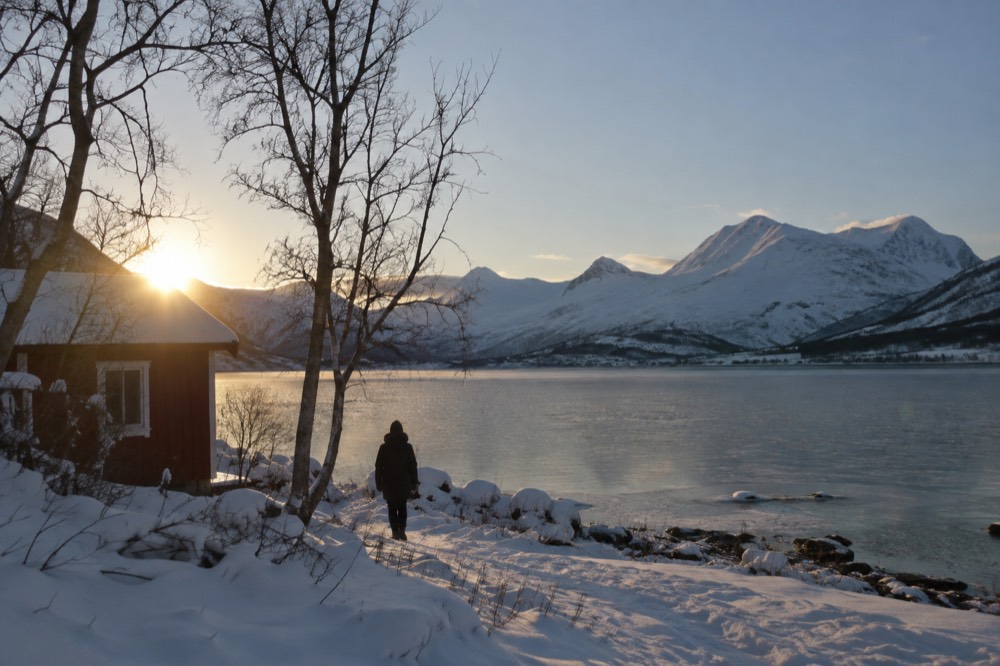
The honest summary is that Oslo to Tromso is not a transfer, it is a decision. Fly north if the aurora or the midnight sun is the reason you chose Norway, and give the north enough nights to let the weather cooperate. Stay south if your list is museums, fjord boats, forest walks and a capital that works in every season, and let Oslo Travel Guide carry the planning from there.