New Year in Oslo: Fireworks, Fjord Air and What's Actually Open
Oslo at New Year is a dark, cold, high-contrast city: fireworks over the fjord, museums shut, taxis scarce and a surprising amount of fun if you plan it.
Short answer
New Year in Oslo means fireworks across the city on 31 December, a public holiday on 1 January when most shops and museums close, about six hours of daylight, and normal daytime temperatures around -1.4 C. The city rewards planning: book dinner early, buy alcohol before New Year's Eve, and use the fjord and the hills rather than fighting the crowds downtown.
New Year in Oslo: Fireworks, Fjord Air and What's Actually Open
Oslo ends the year the way Norway ends most things: early, outside, and with a great deal of fireworks. The city sits at 59.91 degrees north, which means New Year's Eve gives you roughly six hours of daylight and a long, dark evening for the celebrations. It also means 1 January is a full public holiday, and a city that is quiet at the best of times becomes almost silent.
This guide covers the decisions that actually shape a New Year trip here: where to watch the fireworks, what you can realistically do on the day itself, what closes on 1 January, how cold and dark it gets, and what the whole thing costs. Everything here comes from official sources, the city's own published figures, and the verified product listings on this site's roster. Where a number is not confirmed, it says so.
What Is New Year in Oslo Actually Like?
Oslo's New Year is a private, decentralized affair rather than a single organized city event: residents set off their own fireworks from balconies, hills and the waterfront, the sky lights up across the whole basin of the Oslofjord, and there is no one official downtown fireworks show with a crowd and a stage. The city goes very quiet on the afternoon of 31 December, erupts at midnight, and then goes quiet again for the whole of 1 January. If you are used to a ticketed public display with barriers and a countdown screen, recalibrate: the Norwegian version is thousands of small displays at once, which is honestly better from a hill.
The rhythm of the day matters. Shops close early or entirely on 31 December, families have dinner at home, and the streets empty out until the fireworks begin. Visitors who assumed they would find a late-opening supermarket or a walk-in restaurant table are the ones who end the year hungry.
Two things follow from that. First, book dinner well ahead, because the restaurants that do open on New Year's Eve mostly run set menus and fill up. Second, plan your midnight viewpoint in daylight, because at 15:11 the sun is already down and the hills are dark underfoot.
For the wider winter context, including what the season does to the rest of a trip, read the complete Oslo in winter guide.
Where Should You Watch the New Year Fireworks in Oslo?
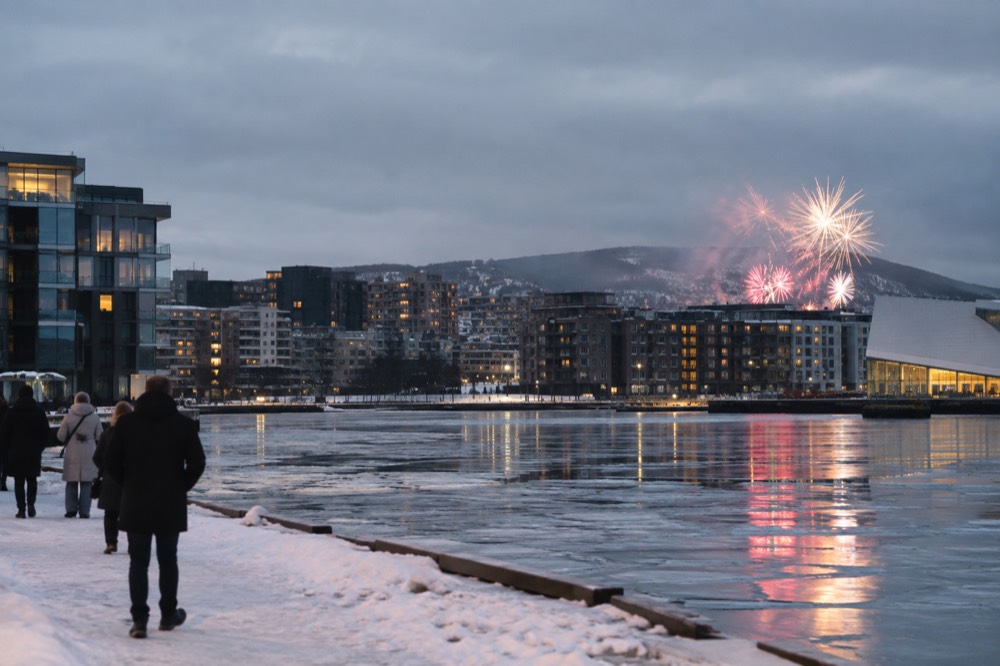
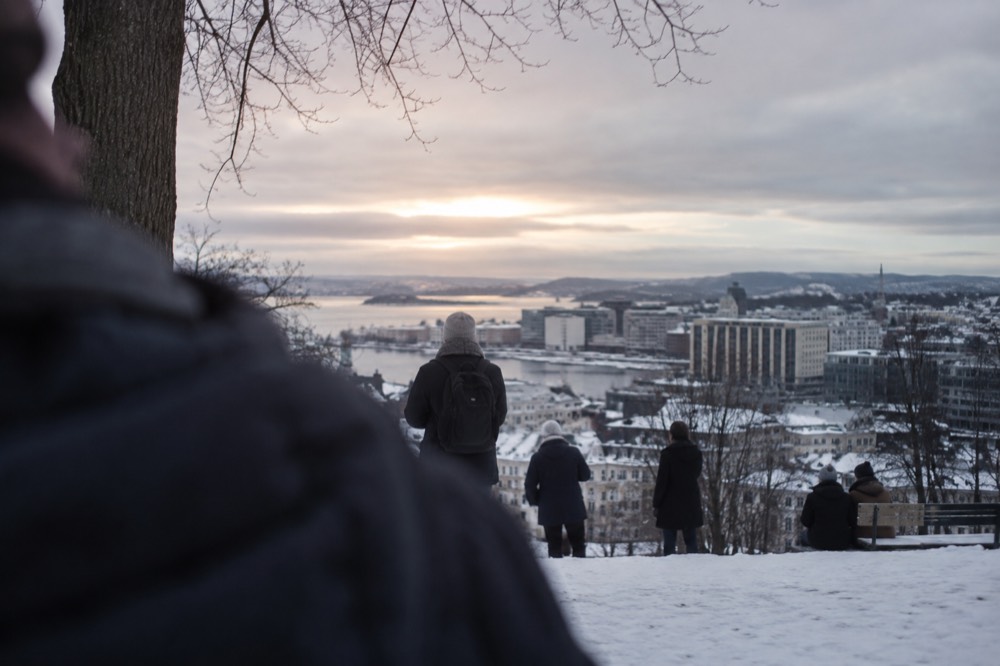
The best fireworks viewpoints in Oslo are the hills and high ground around the city basin: anywhere with an unobstructed line toward the fjord and the rooftops, reached on foot or by metro before midnight, because taxis become effectively unavailable after the display starts. Locals spread out rather than congregate, and the display comes from everywhere at once, so the goal is elevation and a clear view south and west, not proximity to any single launch site.
Practical points that make the difference:
- Dress for standing still outdoors at around -2 C for an hour or more. Hand warmers, real boots, a hat. Midnight in Oslo is not a mild experience.
- The metro runs a holiday timetable on 31 December, and getting down off a hill after midnight takes patience. Check the Ruter app on the day.
- The waterfront at Aker Brygge and Tjuvholmen works if you want the low, sea-level view of fireworks over the water, and it is flat and easy underfoot.
- Hills to the north and west of the center give the panorama. Pick one you can walk down from safely in the dark.
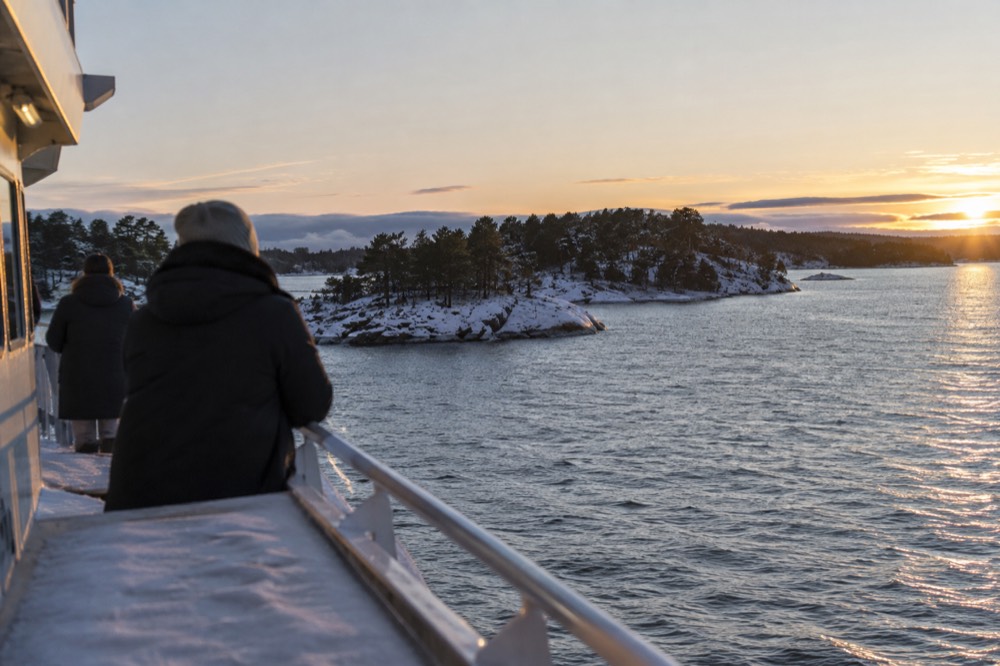
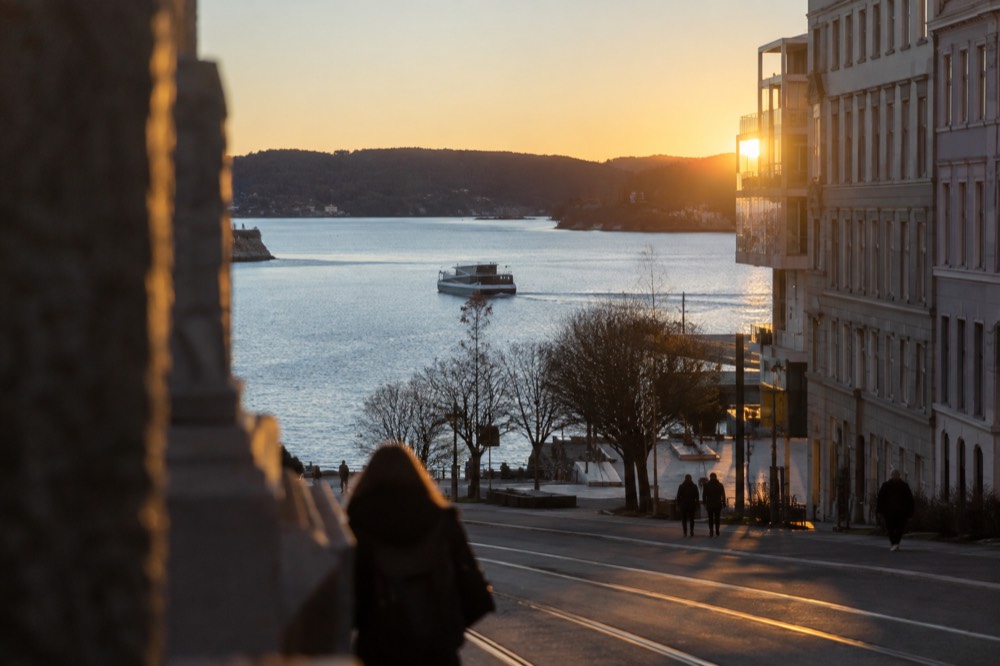
If fireworks are not your thing, the evening has another use: the fjord. A boat on the water on New Year's Eve is the calmest possible counterpoint to the noise, and the city's best-reviewed activity of any kind is exactly that.
The trio above spans the three formats that suit a New Year visit: a fjord cruise on the water, a museum ticket for the daytime hours, and a food walk for the evening before or after. The silent electric boat is the single best-reviewed activity in Oslo on either booking platform, with an audio guide doing the talking while the boat does almost nothing at all, which is the point of it.
What Can You Do on New Year's Eve Day in Oslo?
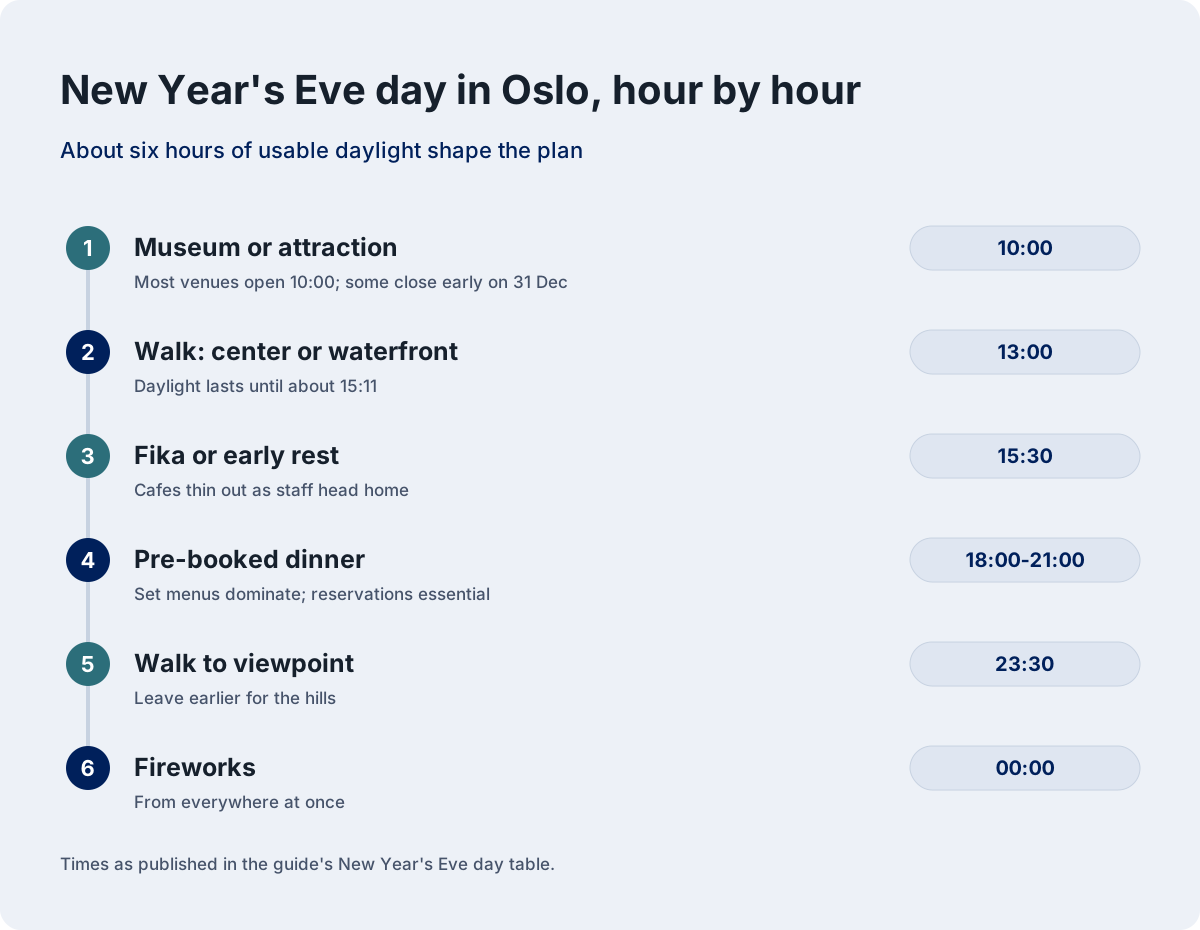
With about six hours of usable daylight, New Year's Eve day in Oslo is a morning-and-early-afternoon city: museums until mid-afternoon, a walk through the center while the light lasts, an early or pre-booked dinner, then your chosen viewpoint from around 23:30. Most attractions keep normal or near-normal hours on 31 December, but a significant number close early, and everything worth entering closes before the evening begins.
A realistic shape for the day:
| Time | What | Notes |
|---|---|---|
| 10:00 | Museum or attraction | Most venues open 10:00; some close early on 31 Dec |
| 13:00 | Walk: center or waterfront | Daylight lasts until about 15:11 |
| 15:30 | Fika or early rest | Cafes thin out as staff head home |
| 18:00-21:00 | Pre-booked dinner | Set menus dominate; reservations essential |
| 23:30 | Walk to viewpoint | Leave earlier for the hills |
| 00:00 | Fireworks | From everywhere at once |
Museums are the reliable daytime filler. The Kon-Tiki Museum ticket is the best-reviewed museum entry in the city, and the Fram Museum next door makes the natural pairing, both on the Bygdøy peninsula. Getting there in winter means bus 30, since the seasonal Bygdøy ferry stops running well before the holidays; the ferry season runs only from mid-March to early October. The details are in the Bygdøy museums guide.
For a city-center alternative, the National Museum holds The Scream and is the flagship art option, while MUNCH sits on the waterfront at Bjørvika with late opening on several evenings, though holiday hours apply and you should check the museum's own site for 31 December specifically.
An afternoon on the water before the evening noise is the move a lot of visitors arrive wishing they had made. The silent electric fjord cruise runs about an hour and a half with audio commentary, and it is the rare Oslo activity that is genuinely quiet on the loudest night of the year. Free cancellation is offered, so you can lock it in early without betting the whole plan on the weather.
Is Anything Open in Oslo on New Year's Day?
New Year's Day, 1 January, is a full public holiday in Norway: virtually all shops close, most museums close, public transport runs a Sunday timetable, and the city is at its quietest of the entire year, though the outdoors stays open as always. Do not plan a museum day or a shopping day for 1 January. Plan a walking day, a fjord day, or a slow-brunch-if-you-booked-it day.
What that means in practice:
| Category | 31 December | 1 January |
|---|---|---|
| Supermarkets | Reduced hours, many close early | Closed |
| Vinmonopolet | Early close, varies by store | Closed |
| Museums | Mostly open, some early close | Almost all closed |
| Restaurants | Open, set menus, reservations needed | Limited, hotel venues safest |
| Public transport | Holiday timetable | Sunday timetable |
| Vigeland Park | Open, free, 24 hours | Open, free, 24 hours |
The reliable New Year's Day activities are the free ones. Vigeland Park is genuinely open 24 hours a day, all year, with no ticket, and it is at its most atmospheric under snow. The Opera House roof is a free public walk whenever the building is open. The Oslofjord islands are reachable on the year-round B1 ferry line on an ordinary Ruter ticket, and Hovedøya with its ruined abbey is a stark, memorable place on a frozen January afternoon. The Oslo islands guide covers the routes and the ticket rules.
If you want a booked activity on 1 January, guided walks are the most likely to run, and the evening myths-and-legends walk is built for exactly this dark season, running as a two-hour themed walk through the city's darker stories. It is the strongest winter-evening product on the roster apart from the torchlit forest walk, which is a half-day commitment with a campfire at the end of it.
How Cold and Dark Is Oslo at New Year?
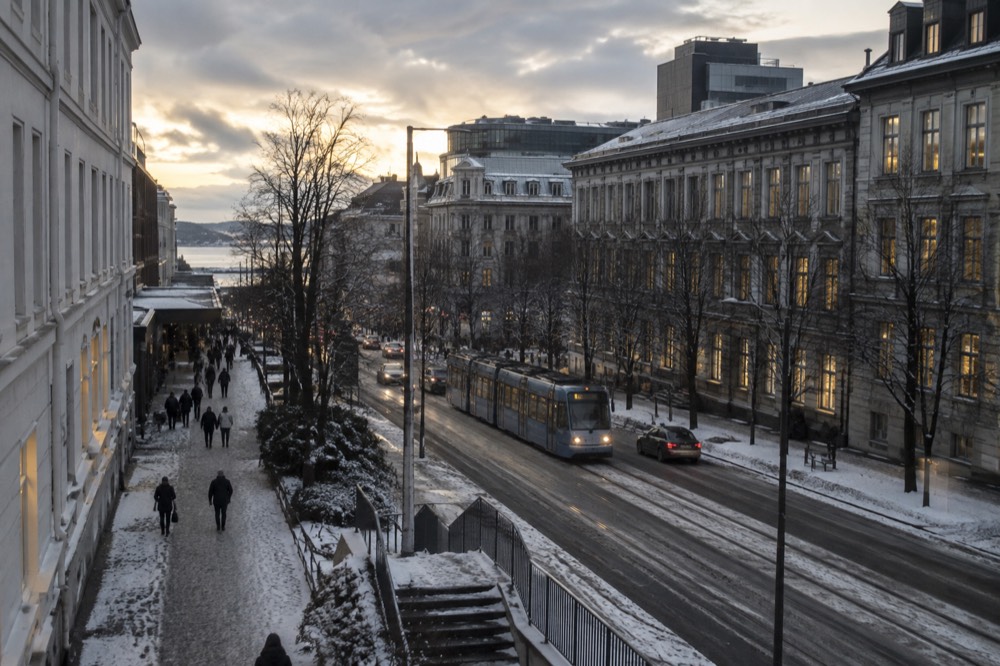
Oslo's late-December weather averages a mean temperature of -1.4 C with about 54 mm of precipitation across the month, and daylight runs from roughly 09:18 to 15:11, about five hours and fifty-three minutes, so the New Year period is the darkest and among the coldest of the year but far from extreme. Recent winters have swung widely: the observed low at Blindern in January 2026 was -17.2 C, while December 2025 averaged a mild +2.4 C. Pack for anything from thaw to serious freeze.
The daylight table is the planning fact most visitors underweight. These are the MET Norway figures for Oslo:
| Date | Sunrise | Sunset | Day length |
|---|---|---|---|
| 15 Dec | ~09:10 | ~15:20 | ~6 h 10 m |
| 21 Dec | 09:18 | 15:11 | 5 h 53 m |
| 31 Dec | ~09:15 | ~15:30 | ~6 h 15 m |
| 1 Jan | ~09:15 | ~15:35 | ~6 h 20 m |
| 15 Jan | 09:04 | 15:49 | 6 h 45 m |
Two things follow. First, there is no midnight sun issue here in reverse: the sky is properly dark by mid-afternoon, and fireworks at midnight happen against full night. Second, the long evenings are the whole character of the trip. Norwegians do not fight this; the city's candlelit cafes, dark-season walks and late-opening museums are built around it. The rest of the planning pages sit on Oslo Travel Guide.
For the full month-by-month picture, see the Oslo weather by month guide and the detailed daylight hours breakdown.
What Does New Year in Oslo Cost?
Oslo is the sixth most expensive country's capital in Europe by Statistics Norway's 2025 comparison, with household prices 28.6 percent above the EU average, food 33 percent above, and alcohol and tobacco more than double the average, so a New Year trip is shaped less by attraction prices, which are moderate, and more by dinner and drinks, which are not. Museums, transport and the outdoors are where Oslo is not unusually expensive; restaurants and alcohol are where it is.
The real budget lines for a New Year stay:
| Item | Typical cost | Notes |
|---|---|---|
| Museum entry (major) | 180-280 NOK | Kon-Tiki 180, Fram 180, MUNCH 280 |
| Bygdøy combo ticket | 325 NOK | Kon-Tiki + Fram adult |
| 30-day transport pass, zone 1 | 655 NOK | Cut from 805 NOK in May 2026 |
| Vigeland Park | Free | Open 24 hours, all year |
| New Year's Eve dinner | Set menu, book ahead | The single biggest variable |
| Alcohol | Buy before 31 Dec | Monopoly closed on holidays |
The alcohol point deserves its own sentence. Vinmonopolet, the state monopoly, is the only place to buy wine and spirits in Norway. It is closed every Sunday and on public holidays, closes early on Saturdays, and hours vary by store, so 31 December and 1 January are effectively write-offs for buying anything stronger than supermarket beer. Buy what you need on 30 December or earlier. The Oslo on a budget guide and the is Oslo expensive breakdown cover the rest of the money picture.
One cost that behaves well is food tours, which bundle a lot of expensive restaurant food into a single guided price. The Grünerløkka food walk covers the city's most characterful neighborhood for two and a half hours, and the city-center Norwegian food walk is the strongest non-neighborhood option.
Should You Buy an Oslo Pass for a New Year Trip?
An Oslo Pass usually pays for itself only if you are doing museum-heavy days, and at New Year the calculus is marginal: 1 January closes most of the museums the pass covers, so a pass makes sense mainly for the days before or after the holiday, when a three-museum day plus transport beats the pass price. The 24-hour adult pass costs 580 NOK against, for example, Kon-Tiki plus Fram plus the Maritime Museum at 485 NOK combined, with the pass adding all transport in zones 1 through 4N.
The full price table from VisitOSLO:
| Pass | Adult | Senior 67+ | Child 6-17 |
|---|---|---|---|
| 24 hours | 580 NOK | 465 NOK | 290 NOK |
| 48 hours | 845 NOK | 675 NOK | 420 NOK |
| 72 hours | 995 NOK | 795 NOK | 495 NOK |
What the pass includes, in the tourist board's own words: free entry at over 30 museums and attractions, and public transport in zones 1, 2, 3, 4V and 4N, including transport to and from Oslo Airport Gardermoen with public trains operated by Vy. That airport clause is the highest-value fact on this site: the pass covers the Vy train from Gardermoen but not Flytoget, which costs 268 NOK on its own. The Flytoget versus Vy guide works through the arithmetic.
For New Year specifically, the honest advice is to skip the pass if your trip is 31 December to 1 January only, and consider the 48-hour version if you are staying through 2 January, when museums reopen and a full museum day becomes possible again.
Practical Rules for New Year in Oslo: Transport, Alcohol and Taxis
Three practical rules dominate a New Year trip: buy alcohol by 30 December because the monopoly closes for the holidays, expect taxis to be scarce from around 23:00 on 31 December, and check the Ruter app on the day because holiday timetables replace the normal schedules on both 31 December and 1 January. Norway is in Schengen but not in the EU, uses the krone rather than the euro, and card payment is close to universal, so cash is unnecessary.
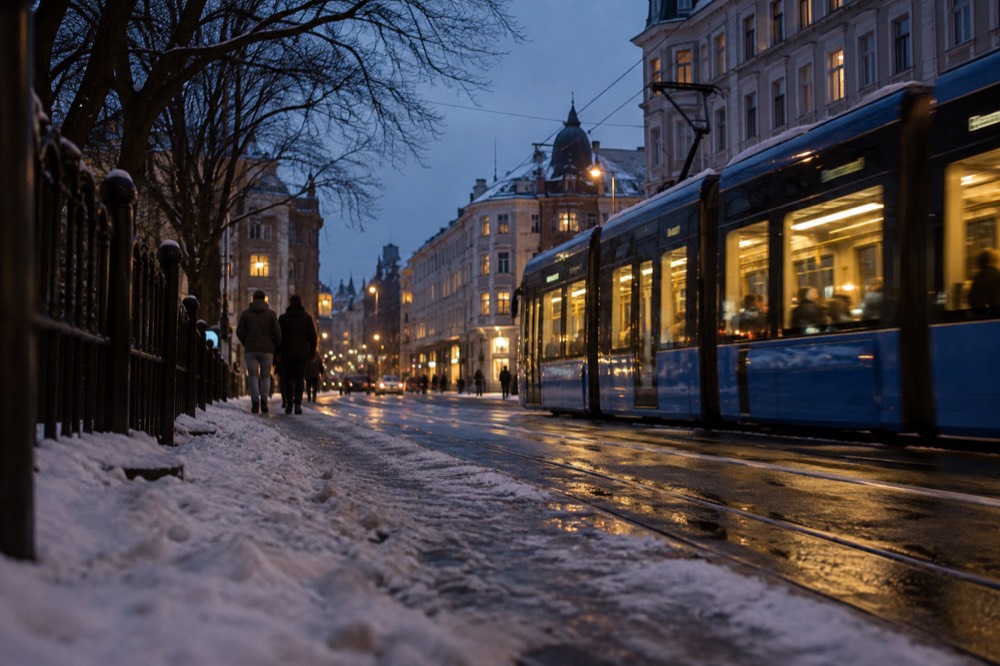
Transport on the night itself is the one that catches people. The metro and trams run a reduced holiday service, demand spikes after midnight, and the queue at a hillside station can be long and cold. Walking back into the center from most viewpoints takes 30 to 45 minutes and is often the better call.
A few more things worth knowing before the night:
- Tipping is not expected in Norway; service is included, and rounding up or a small gratuity for good service is a voluntary norm rather than a rule.
- Supermarkets sell beer and cider only up to 4.7 percent ABV, and sales stop at a fixed evening time; anything stronger requires the monopoly.
- The visitor levy question is settled for now: Norway's national framework took effect in July 2026, but Oslo has not adopted a charge, so there is no tourist tax on your hotel bill.
- The Opera House roof and Vigeland Park cost nothing and never close, which makes them the default 1 January plan.
For everything on getting around the rest of the year, the getting around Oslo guide is the full reference, and the Ruter tickets explained page covers the fare system in detail.
What If You Want a Quieter New Year Alternative?
If fireworks crowds do not appeal, the strongest alternative is the forest: Oslo is one of very few capitals where a torchlit walk with a campfire, or guided snowshoeing in Nordmarka, is a bookable half-day experience inside the city limits, and both run through the dark season that New Year sits in the middle of. The metro's line 1 to Frognerseteren puts you at the edge of Nordmarka in about twenty minutes from the center, and the marked forest trails are maintained for skiing and walking all winter.
The torchlit forest walk is the signature winter product on this site's roster: three and a half hours, ending at a campfire, with a rating that places it among the most reliable winter experiences in the city. Snowshoeing covers similar ground with more physical effort. Both need booking ahead for the holiday period.
And if you would rather be on water than in forest, the silent electric boat remains the pick of the entire roster for a New Year visit: the best-reviewed activity in Oslo, an hour and a half on the fjord, and quiet enough to hear the city rather than be deafened by it. As the publisher of this site, Oslo Travel Guide keeps exactly one recommendation at the top of the fjord category, and this is it.
Common Questions About New Year in Oslo
Is New Year's Day a public holiday in Oslo?
Yes. 1 January is a full public holiday across Norway. Shops, most museums and many restaurants close, and public transport runs a Sunday timetable. The outdoors, including Vigeland Park and the fjord islands, remains open and free as always.
Where can I watch fireworks in Oslo on New Year's Eve?
Oslo has no single official downtown display; fireworks are set off across the city by residents. The best views come from hills and high ground with a clear line toward the fjord, or from the waterfront at Aker Brygge and Tjuvholmen for a sea-level view over the water. Pick your spot in daylight.
Can I buy alcohol in Oslo on New Year's Eve?
Only beer and cider up to 4.7 percent ABV from supermarkets, and even those sales stop at a fixed evening time. Wine and spirits are sold only by Vinmonopolet, the state monopoly, which closes early on 31 December and is closed on 1 January. Buy by 30 December.
Is the Oslo Pass worth it for New Year?
Usually not for a 31 December to 1 January stay, because most covered museums close on New Year's Day. A 48-hour pass at 845 NOK makes sense if you stay through 2 January and do museum-heavy days, especially since the pass includes the Vy airport train and all transport in zones 1 through 4N.
How dark is Oslo at New Year?
Very. Around the winter solstice Oslo gets about five hours and fifty-three minutes of daylight, with sunrise at 09:18 and sunset at 15:11. By New Year's Eve the day has stretched back to roughly six and a quarter hours. Fireworks at midnight happen against full darkness.
What is there to do in Oslo on 1 January?
Plan around the closures. Vigeland Park is free and open around the clock, the Opera House roof is a free public walk, the year-round B1 ferry runs to the Oslofjord islands on an ordinary ticket, and a handful of guided walks and hotel restaurants operate. Museums and shops are mostly shut.