Fun Things to Do in Oslo for Teens and Young Adults
Oslo is one of the few European capitals where teenagers can burn energy, swim in the fjord, ride public transport alone and eat well on a student budget, all inside the city limits.
Short answer
Oslo works for teens because the fun is physical and cheap: a fjord-side climbing park, island ferries on an ordinary ticket, free sculpture parks, and the Opera House roof to walk on. A 24-hour Oslo Pass at 580 NOK covers over 30 museums plus buses, trams, metro and the island ferries, which makes a packed day affordable.
What Makes Oslo Genuinely Fun for Teenagers?
Oslo is unusual among European capitals because its best activities for teenagers are outdoors, physical and mostly free or cheap, from swimming off Hovedøya island to walking on the Opera House roof. The city is compact, safe and easy to navigate on public transport, so teens can move around independently. The expensive parts of Norway, restaurants and alcohol, are exactly the parts teenagers skip anyway, which makes the city far more affordable for this age group than most families expect.
The mistake families make is treating Oslo like a museum city. It is, partly, and we will get to the museums that actually hold a teenager's attention. But the city sits at the top of a fjord with forest wrapped around it, and the things young visitors remember are usually the water, the hills and the late summer evenings.
Read the numbers on what the city costs before you build the itinerary. Norway is the sixth most expensive country in Europe on Statistics Norway's 2025 comparison, with household prices 28.6 percent above the EU average and alcohol and tobacco more than double. That sounds alarming until you notice where the money actually goes: restaurants and drink. Museums, transport and the outdoors, the three things teenagers do most, sit at or below what you would pay in London or Paris.
Money matters here in another way too. Norway is in Schengen but not in the EU, it is an EEA state through EFTA, and the currency is the krone, not the euro. Card payment works everywhere, and visitors from outside the EU can claim a VAT refund on qualifying purchases, worth knowing if a teen's souvenir budget includes anything substantial.
If you are planning the trip around school holidays, the best time to visit matters more than the itinerary itself: daylight in Oslo swings from 5 hours 53 minutes in late December to 18 hours 50 minutes in late June, so summer days feel endless and winter ones need front-loading. That swing is when this itinerary works best.
The Best Active Things to Do in Oslo for Teens
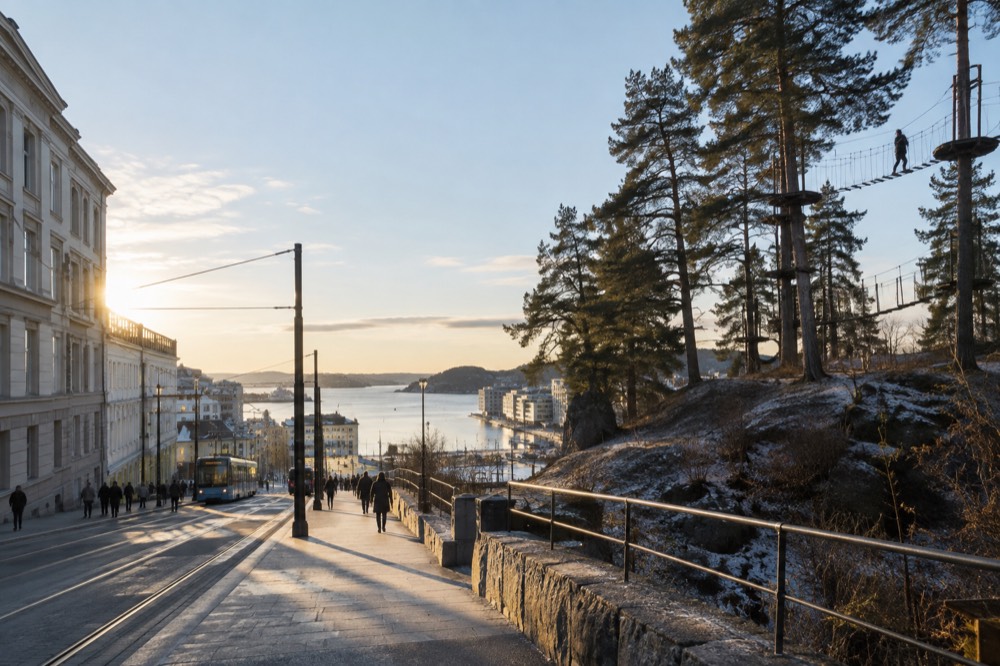
The single best bookable activity for teenagers in Oslo is a day ticket to the city's favorite climbing park, a fjord-side course of ziplines and high ropes that rates 4.7 across its review base and costs about what a family pays for one museum each. Beyond it, the honest active shortlist is short and strong: swimming and island ferries, the 3-hour highlights bike tour, kayaking the Akerselva river, and skiing or snowshoeing in Nordmarka in winter. All of it sits inside the city limits.
The climbing park is the anchor. It is a day ticket rather than a guided tour, so there is no fixed start time and no group to keep up with, which suits teenagers who do not want a schedule imposed on them. The park is the highest-rated family-outdoor product in the city and the one thing on this list that reliably fills an entire afternoon. Bring clothes you do not mind getting rope-burned.
If your group would rather be on two wheels, the 3-hour highlights bike tour is the best-reviewed bike product in the city and covers the Opera House, Akershus Fortress and the waterfront car-free paths in one loop. It is a warm-season product; Oslo's July normal temperature is a mild 17.7 °C, so bring a layer even in midsummer.
For something genuinely unusual, the Akerselva river packraft and kayak tour paddles straight through the middle of the city, past waterfalls and old industrial buildings, an urban-nature mix that exists in very few capitals. Winter brings its own set: a torchlit forest walk with campfire, guided snowshoeing in Nordmarka, and even a learn-to-ski half-day, something no other European capital offers as a half-day city activity.
Here is how the main paid options compare:
| Activity | Format | Duration | Best for |
|---|---|---|---|
| Climbing park day ticket | Self-guided, all-day access | Full day | Teens who want to run their own schedule |
| Island hopping tour | Guided, ferry and walking | 195 min | Mixed ages, first fjord trip |
| Highlights bike tour | Guided group | 3 h | Warm season, confident cyclists |
| Akerselva packraft or kayak | Guided, small group | 1 h 30 m | Adventurous older teens |
| Snowshoeing in Nordmarka | Guided | 3 h 30 m | Winter visitors |
The trio below is the short version of the decision, the active anchor, the fjord day and the museum ticket most teens actually enjoy:
Free and Cheap Things to Do on a Teen Budget
The cheapest good day in Oslo costs almost nothing: Vigeland Park is free and open 24 hours, the Opera House roof is free to walk on, the island ferries ride on an ordinary transport ticket, and swimming spots like Huk and Sørenga are public. A free tip-based walking tour covers the center in about two hours. The only unavoidable costs are transport and food, and both can be kept low with a supermarket lunch.
Start at Vigeland Park, because it is the most visited sight in Norway and it costs nothing. Over 200 granite and bronze sculptures, many of them strange enough to keep teenagers interested for an hour, in a park that never closes and never charges. Keep it separate in your head from the Vigeland Museum, which is paid at 120 NOK; the park itself needs no ticket.
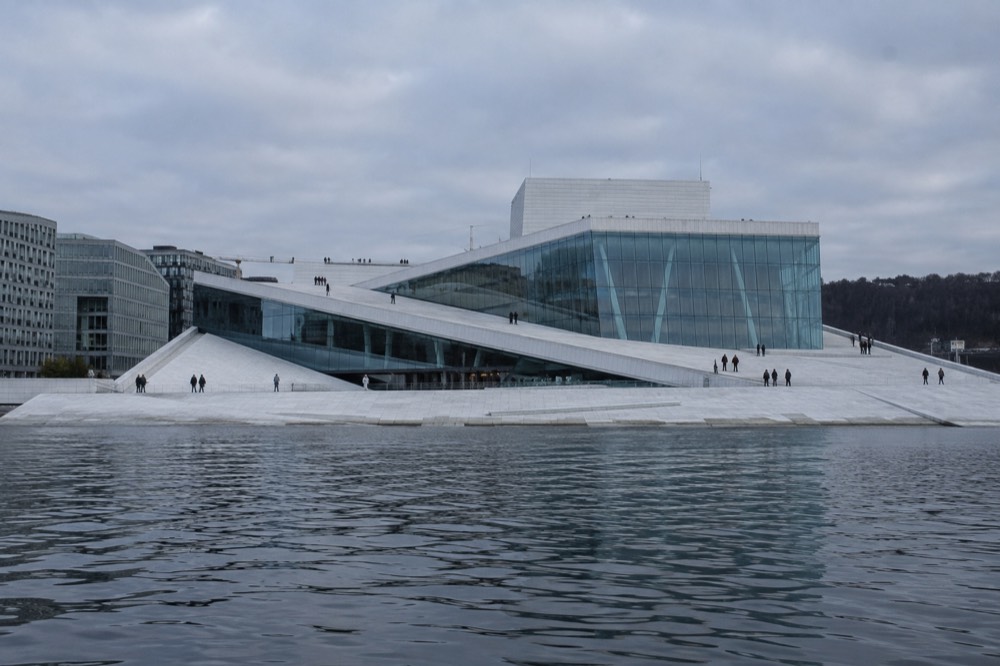
Then walk ten minutes to the Opera House. The sloping marble roof is a public space, free to walk up, with the Oslofjord on one side and the Barcode towers on the other. It is the single most photographed free thing in the city, and it is genuinely fun to climb at sunset.
The big free walks are worth booking too. The highlights free walking tour is the largest in the city by review count and covers the center in about two hours on a tip basis. For more ideas at zero cost, the free-things-to-do and budget angles are covered elsewhere on oslotravelguide.com, and the short version is this: everything in the table below is either free or rides on a ticket you were buying anyway.
Here is the honest cost picture for a teen day:
| Item | Typical cost | Notes |
|---|---|---|
| Vigeland Park | Free | Open 24 hours, all year |
| Opera House roof | Free | Public space, no ticket |
| Island ferry (Ruter) | Ordinary transport ticket | Lines B1 and B2 from Aker Brygge |
| Swimming at Huk or Sørenga | Free | Public bathing spots |
| Free walking tour | Tip based | About 2 hours |
| Supermarket lunch | Budget-level | Far cheaper than any café |
Museum Days That Teenagers Actually Enjoy
Not all Oslo museums work for teens, but three do: Kon-Tiki, with its raft and papyrus boats, is the best-reviewed museum ticket in the city; Fram lets you walk onto a full-size polar ship; and the Paradox Museum is an interactive illusion space built almost entirely for this age group. The National Museum holds The Scream if your teen wants the one famous painting. All of them are covered by the Oslo Pass.
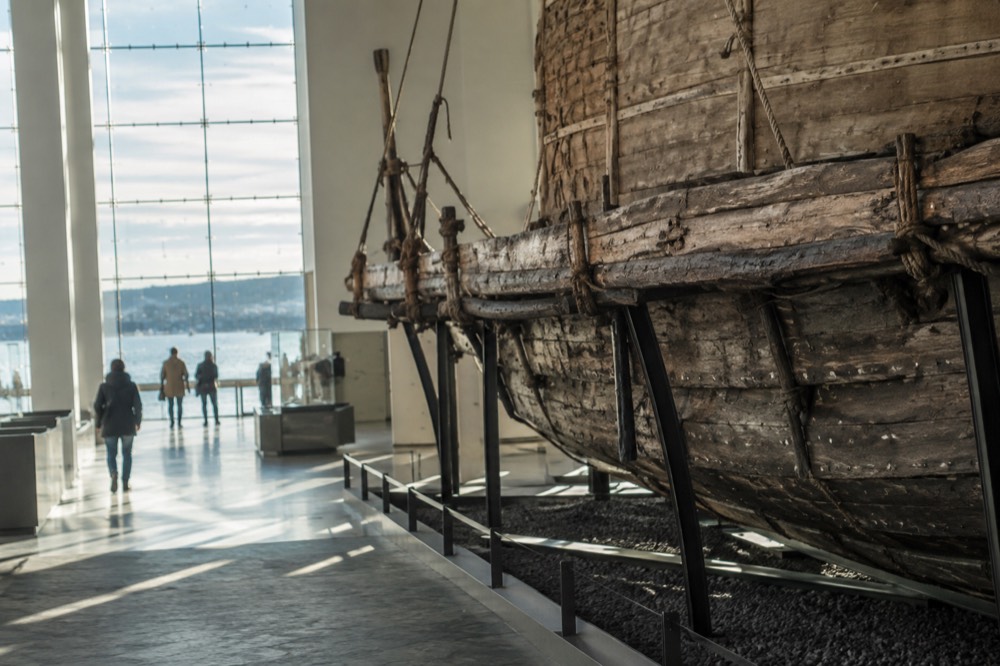
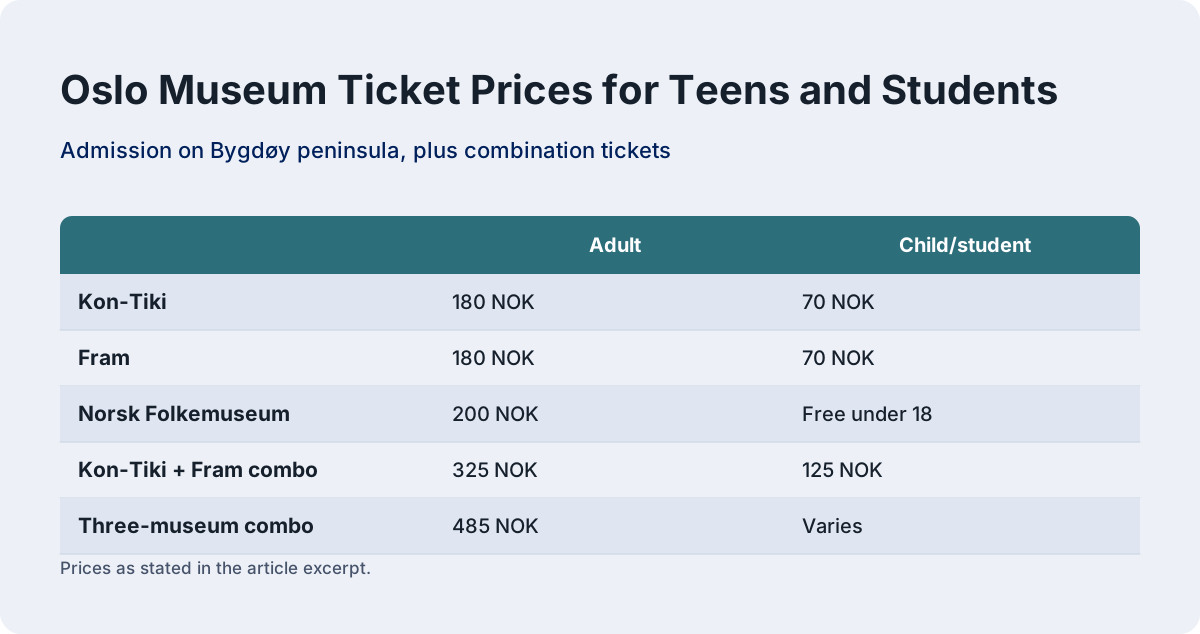
Bygdøy peninsula is the museum day. The Kon-Tiki Museum holds Thor Heyerdahl's balsa raft from the Pacific crossing and the reed boats from later expeditions, and it is the strongest museum ticket on either platform in this city. Next door, the Fram Museum is the complete polar ship, which you can actually board, with the aurora and polar exhibits around it. The two museums sell a combination ticket at 325 NOK for both, and a three-museum version including the Maritime Museum at 485 NOK.
One warning that matters: the Museum of the Viking Age is closed, and has been since 2021, with reopening planned for 2027. Search results and some listings still point at the old Viking Ship Museum building. The honest substitute is Viking Planet, a VR-based Viking experience that is bookable, or the Viking-age objects at the Historical Museum in central Oslo. Our Museum of the Viking Age page explains the closure in full.
For rainy days and younger teens, the Paradox Museum is the strongest interactive ticket in the city, a set of optical illusions and rooms that photograph extremely well. And if your teenager only wants the one masterpiece, the National Museum holds The Scream and is covered by the pass.
Here is the Bygdøy admission picture at full price:
| Museum | Adult | Child/student |
|---|---|---|
| Kon-Tiki | 180 NOK | 70 NOK (6–17) |
| Fram | 180 NOK | 70 NOK |
| Norsk Folkemuseum | 200 NOK | Free under 18 |
| Kon-Tiki + Fram combo | 325 NOK | 125 NOK |
| Three-museum combo | 485 NOK | Varies |
At those prices the pass maths works fast: Kon-Tiki plus Fram at full price is a large share of a 580 NOK 24-hour pass that also includes over 30 museums and all city transport. Getting to the peninsula, the seasonal ferry runs from Rådhusbrygge 3 and is included with the Oslo Pass, though Ruter tickets are not valid on it. Out of season, bus 30 runs year-round.
Island Hopping in the Oslofjord
The Oslofjord islands are the most Oslo-specific fun in the city: Hovedøya with its ruined abbey, Gressholmen's rocky coves, and Langøyene, the swimming and camping island. The ferries are ordinary Ruter services from Aker Brygge, so a normal transport ticket covers them, and the Oslo Pass covers them too. This is the one activity that genuinely cannot be done anywhere else.
The practical details matter here because guides routinely get them wrong. The island ferries, lines B1, B1X and B2, are public Ruter services departing from Aker Brygge, and a regular ticket covers the whole loop with no surcharge. This is a different system from the Bygdøy museum ferry, which runs seasonally from Rådhusbrygge 3 and does not accept Ruter tickets. Two piers, two operators, two ticket rules. The wider set of guides lives on Oslo Travel Guide. The wider set of guides lives on Oslo Travel Guide.
B1 runs year-round to Hovedøya, Lindøya, Gressholmen, Bleikøya and Nakholmen. B2 to Langøyene and the B1X express are summer services, with the peak timetable running through July and August. Swimwear is worth packing: the official swimming spots on the islands are free, and the July and August water in the fjord typically sits between 15 and 20 °C, which is cool but genuinely swimmable for teenagers.
Hovedøya is the closest island, ten minutes out, with the ruins of a Cistercian abbey to explore and forest paths around the shore. Langøyene is the one with the best beaches and the free-tent camping allowance in season. If you want the logistics done for you, the ferry-and-foot island hopping tour is the highest-rated fjord product in the city, and there is a full-day five-island version for visitors with a whole day to give it.
Our Oslo islands guide covers each island in detail, and the mainland swimming spots like Sørenga and Huk are listed in the beaches guide if the weather is on your side.
Evening and Nighttime Oslo for Young Adults
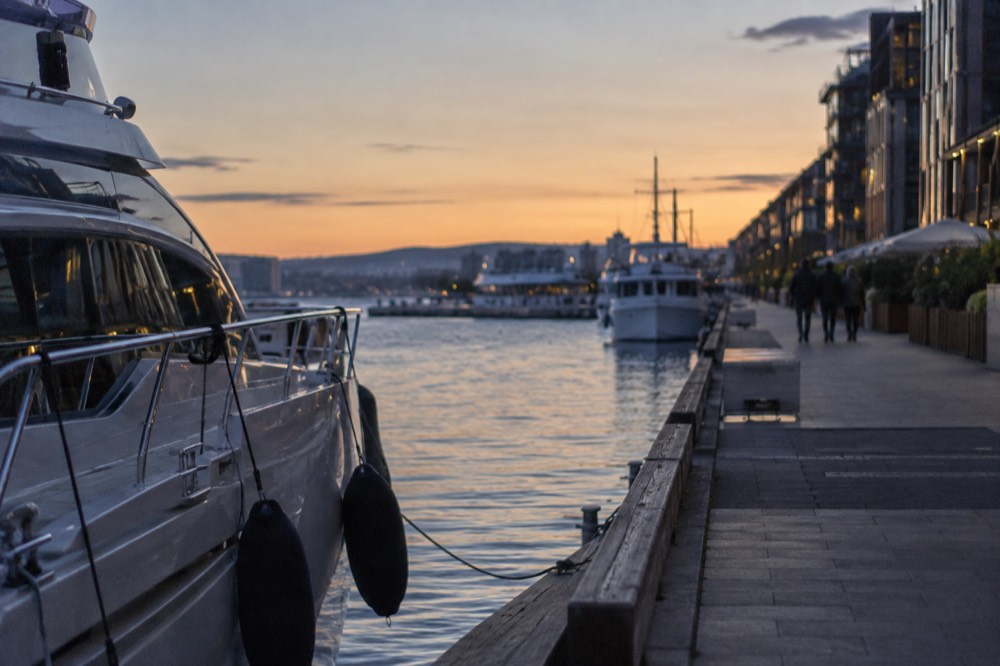
Evenings in Oslo are safe and social, and in summer they are long: the sun sets at 22:43 in late June and it never gets properly dark, so the waterfront stays busy past midnight. A fjord evening cruise with a shrimp buffet is the classic booked evening. For something cheaper, the Opera House roof, Aker Brygge quays and free evening walks cover the waterfront on foot.
The daylight is the thing to plan around. In mid-June the sun is up from 03:53 to 22:43, and the gap between is twilight rather than night, so an evening on the water feels like a second afternoon. In December the reverse: the sun sets at 15:11, and evening activities need to start by 15:00 or move indoors. The month-by-month daylight table lives in our Oslo daylight hours guide.
The booked evening options split by mood. The evening cruise with shrimp buffet is a Norwegian institution, three hours on the fjord with a peel-your-own shrimp buffet, and it is the best evening product in the city for families with teens. For older young adults, the myths and legends evening walk is a two-hour storytelling walk through the dark center, the product Oslo genuinely needs from October to March.
The free version of an Oslo evening costs nothing. Walk the Aker Brygge quays, climb the Opera House roof for the last light, and follow the waterfront to Tjuvholmen. The city is safe enough that this is a normal thing for local teenagers to do alone.
Shopping, Food and Hangouts in Grünerløkka
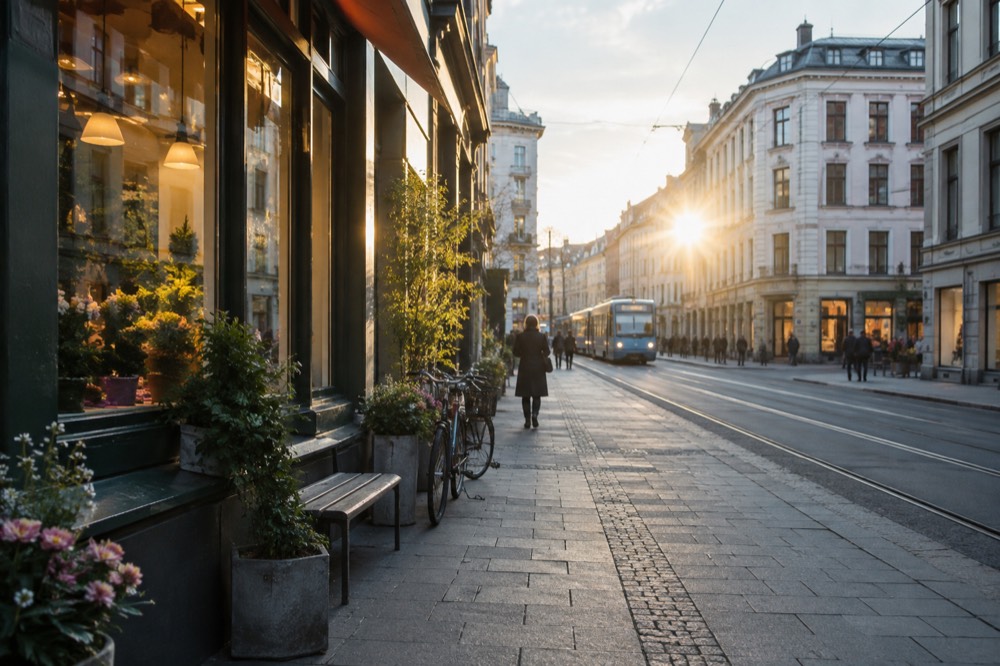
Grünerløkka is Oslo's young district, a grid of cafés, vintage shops, record stores and street art east of the river, and it is where the city's students actually spend their evenings. Food there ranges from food halls to some of the best cheap eats in Oslo. For teenagers it is the one neighborhood that feels built for them rather than for their parents.
Our Grünerløkka guide covers the district street by street. The headline stops for this age group are the Vulkan food hall area with Mathallen Oslo for grazing, the vintage and second-hand shops along Markveien and Thorvald Meyers gate, and the river path itself, which runs the length of the district with waterfalls and graffiti.
Food is where Norway's prices bite, so plan it. Statistics Norway puts food and non-alcoholic drink 33 percent above the European average, and restaurants higher still. The workaround that locals use: buy picnic food at a supermarket, eat the main meal at lunch rather than dinner when many places are cheaper, and treat street food as the affordable restaurant option.
If food itself is the entertainment, the street-food walking tour is the format teenagers tend to prefer, casual and walkable, and the city-centre Norwegian food walk is the strongest general food product in the city for groups who want the full sit-down tasting version.
Putting It Together: A Three-Day Plan for Teens
Three days is the sweet spot for Oslo with teenagers: one day for the center and Bygdøy museums, one for the fjord and islands, and one for climbing, Grünerløkka and the evening waterfront. Buy a 72-hour Oslo Pass at 995 NOK per adult if you will use the museums and transport hard, or pay as you go with a transport ticket if the museums will not happen. In summer, front-load the active days because the evenings are usable.
Day one is orientation and the center. Take the free walking tour in the morning, climb the Opera House roof, walk Karl Johans gate to the Royal Palace, and spend the afternoon on Bygdøy, ferrying out from Rådhusbrygge 3 in season or taking bus 30 out of it. Kon-Tiki plus Fram fills two hours easily.
Day two is the fjord. Ferry from Aker Brygge to Hovedøya in the morning, swim or walk the island, hop onward to Gressholmen or out to Langøyene if it is summer, and be back at Aker Brygge by late afternoon. Older teens with energy left can add the evening shrimp cruise.
Day three is Grünerløkka and the climbing park, or in winter the snowshoe or ski half-day, plus the Paradox Museum if the weather turns. Finish with food hall grazing and the waterfront at dusk.
| Day | Morning | Afternoon | Evening |
|---|---|---|---|
| 1 | Free walking tour, Opera roof | Bygdøy: Kon-Tiki and Fram | Waterfront walk |
| 2 | Ferry to Hovedøya | Islands, swimming | Shrimp cruise or quays |
| 3 | Climbing park | Grünerløkka and Mathallen | Food hall and Tjuvholmen |
If three days is not your number, our 3 days in Oslo itinerary and the how many days in Oslo pages answer the length question directly.
Common Questions About Fun Things to Do in Oslo
What are the most fun things to do in Oslo for teenagers?
The climbing park day ticket, island hopping on the Oslofjord ferries, walking the Opera House roof, swimming at Huk or the islands, and the Kon-Tiki and Fram museums on Bygdøy. In winter, add snowshoeing in Nordmarka or the torchlit forest walk.
Is Oslo too expensive for young adults?
No, if you avoid the expensive parts. Restaurants and alcohol are where Norway costs double the European average, but museums, transport, the outdoors and swimming are cheap or free, and supermarket food keeps costs low. A 24-hour Oslo Pass at 580 NOK covers over 30 museums plus all city transport.
Can teenagers get around Oslo on their own?
Yes. The metro, trams and buses are safe, frequent and simple, the entire metro network is inside fare zone 1, and the island ferries run on ordinary tickets. The city is also compact and walkable in the center.
Can you swim in the Oslofjord?
Yes, at free public spots including Sørenga, Huk, Paradisbukta and the islands. July and August water temperatures typically sit between 15 and 20 °C, cool but swimmable. The city publishes bathing water quality results through the season.
What is there to do in Oslo at night for young adults?
In summer, the waterfront stays light past 22:00, so evening walks, the quays at Aker Brygge and the Opera House roof all work. The evening fjord cruise with shrimp buffet is the classic booked option, and the myths and legends evening walk runs all winter.