What's the Tipping Etiquette in Oslo Restaurants?
Tipping in Oslo restaurants is voluntary, not expected, because service is already included in the price. Here is what locals actually do, and when rounding up makes sense.
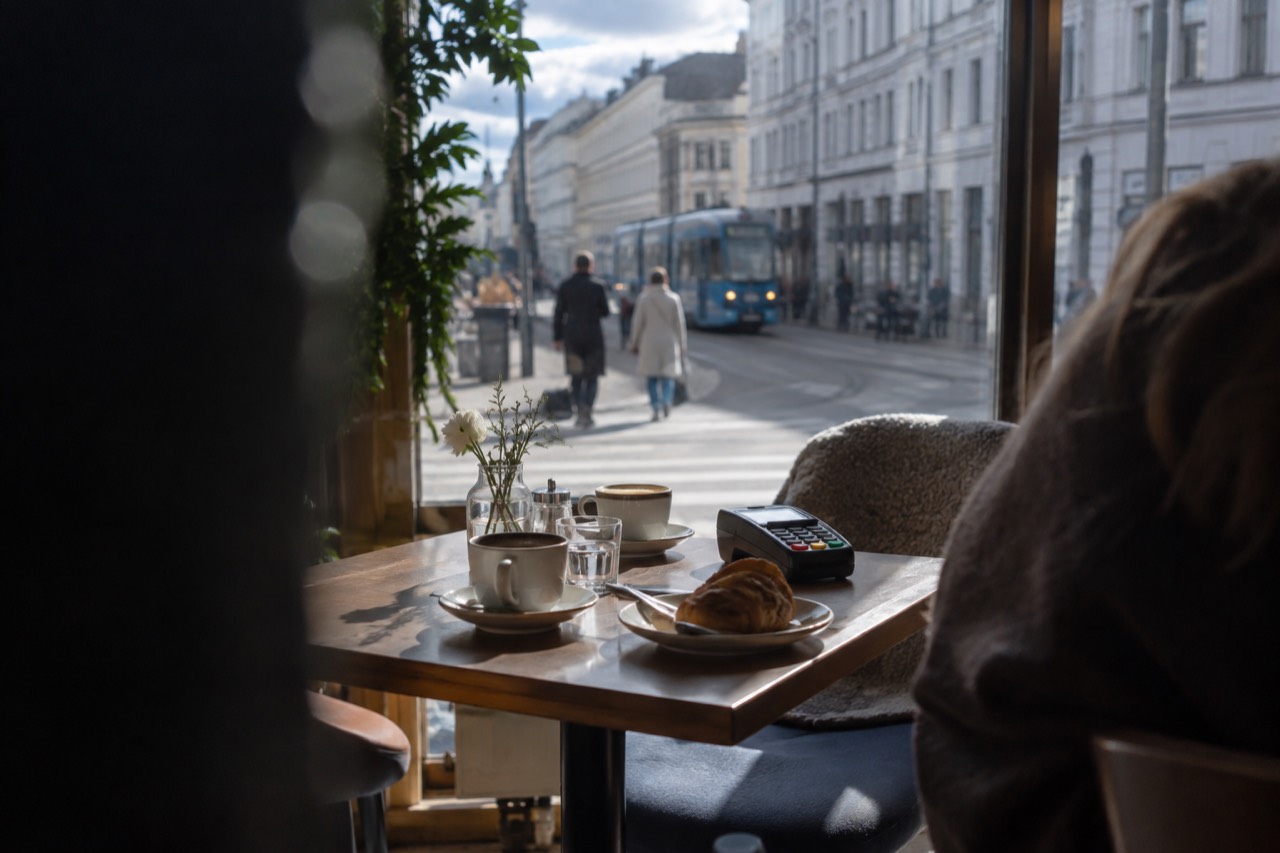
What's the Tipping Etiquette in Oslo Restaurants?
The short answer is that tipping in Oslo restaurants is voluntary and genuinely not expected. Service is included in the prices on Norwegian menus, waitstaff are paid proper wages, and nobody will chase you for a gratuity. If you round up the bill or add around 5 to 10 percent for genuinely good service, it is appreciated, but leaving nothing at all is completely normal and never rude.
That is the whole rule, but the interesting part is why it works this way, and what to do in the awkward moments: the card terminal that asks you a question in Norwegian, the taxi rank at 2 a.m., the hotel porter, and the tour guide at the end of a long walk. Norwegian tipping culture is not a smaller version of the American one. It is a different system built on the assumption that the price you see is the price you pay.
This matters more in Oslo than in almost any other European capital, because the restaurant bill itself is the shock. Norway is the sixth most expensive country in Europe on Statistics Norway's 2025 price-level comparison, with food and non-alcoholic drinks running 33 percent above the European average. A visitor who adds an automatic 20 percent tip on top of an already expensive meal is paying a Norwegian price and an American habit at the same time.
Is Service Charge Already Included in Norwegian Restaurant Bills?
Yes, always. Norwegian law and practice build service into the menu price, so the amount printed on your bill is the full amount for the food, the service and the VAT. There is no line item for service, no cover charge appearing at the end, and no expectation that the server's income depends on your generosity. Wages are set by contract, not by tips, which is the single fact that shapes every other part of Norwegian tipping etiquette.
This is the structural difference visitors from the United States trip over most often. In an American restaurant the menu price excludes both tax and the server's income, so a tip of 15 to 20 percent is effectively part of the bill. In Oslo the menu price already contains everything. Adding a large tip on top does not correct an injustice, because there is no injustice to correct, and it can quietly confuse the staff, who may wonder whether you misread the total.
What the bill does contain is VAT at the Norwegian rate, which is already inside the printed prices. You do not add it, you do not calculate it, and you do not see it appear as a surprise line at the end. The number at the bottom of the bill is what you owe. If you pay by card, that is the number that gets charged.
One practical note on the card terminals, because this is where the awkward pause happens. Handheld terminals are everywhere in Norway, and many will present a screen asking how much you want to pay, with the bill total pre-filled and options to round up or enter a custom amount. This is a prompt, not a demand. Tapping the pre-filled total and confirming is a completely standard thing to do, and the server will not register it as a slight. Norwegians do it constantly.
Do You Tip in Oslo Bars, Cafes and Taxis?
In bars and cafes, no, tipping is not part of the culture at all, and leaving coins on the counter is more likely to cause confusion than appreciation. In taxis, rounding up to a convenient amount is common and easy, especially late at night, but nothing beyond that is expected. Tour guides are the one group where a tip is genuinely customary, typically around 50 to 100 NOK per person for a good walk.
Bars are the clearest case. If you buy a beer in an Oslo bar, you pay exactly what the bartender asks and take your change. There is sometimes a tip jar near the till, and dropping a few coins into it is harmless, but nobody monitors it and nobody judges an empty one. The same applies to coffee shops, bakeries and fast food. The person behind the counter earns a fixed wage and is not working for gratuities.
Taxis sit in between. The fare is metered and regulated, and the driver is paid properly, but Norwegians often round the fare up to the nearest 50 or 100 NOK when paying cash, or add a small amount on the terminal, partly as a courtesy and partly because it simplifies the transaction. With a card it is entirely optional. If the driver has hauled luggage, helped with a stroller or driven you across town in a January snowstorm, a small round-up is a natural gesture.
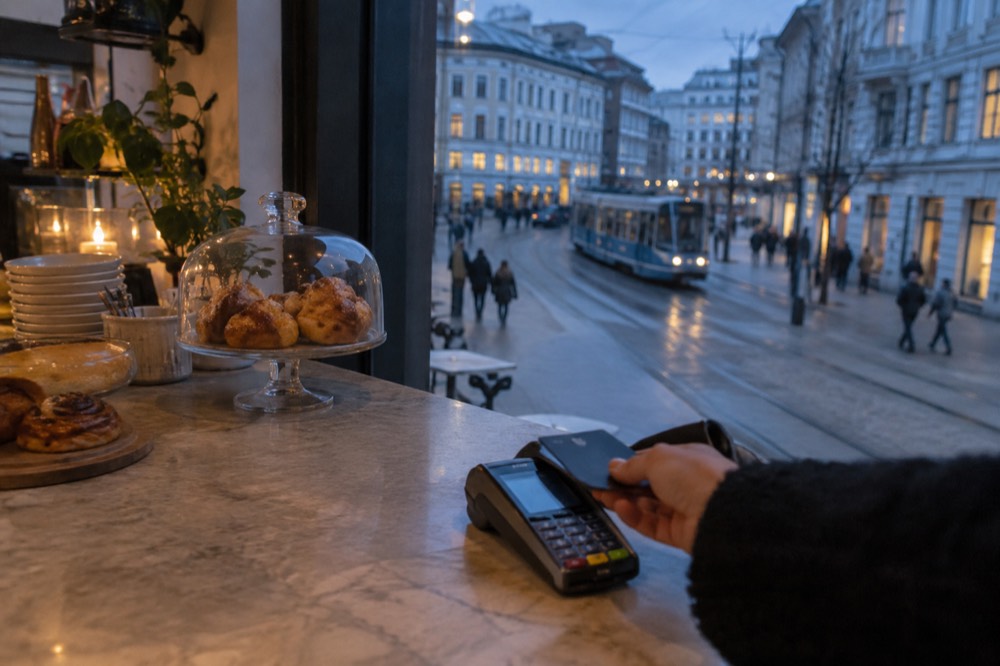
Tour guides are the real exception in Norwegian tipping culture, and the one worth remembering. Free walking tours, which are tip-based by design, work on the same logic as everywhere else in Europe: the guide's income is the tip, and 100 to 200 NOK per person is a normal contribution for a solid two-hour walk. For paid tours, a tip is not expected but is warmly received, and 50 to 100 NOK per person is a reasonable gesture if the guide was good. If you want to understand how the free-walk economy works in this city, the Oslo free walking tours overview breaks down the operators and the expectations.
Here is a quick reference for the situations you will actually run into:
| Situation | Expected tip | What locals do |
|---|---|---|
| Restaurant, table service | None required | Round up, or 5-10% for excellent service |
| Bar counter | None | Nothing, occasionally a tip jar |
| Cafe or bakery | None | Nothing |
| Taxi | None | Round up to a convenient amount |
| Paid tour guide | None | 50-100 NOK per person if good |
| Free walking tour guide | The guide's income | 100-200 NOK per person |
| Hotel porter | None | 20-50 NOK if you have small notes |
| Hotel housekeeping | None | Rarely anything |
If you would rather have someone else handle the food decisions entirely, a guided eating experience removes both the menu roulette and the tipping guesswork, because the guide's fee is settled when you book.
How Much Do Oslo Locals Actually Tip?
Most Norwegians either tip nothing or round the bill up to a convenient number, and a deliberate percentage tip is the exception rather than the rule. Where a percentage is used at all, 5 to 10 percent is the ceiling, applied only when the service was genuinely excellent. Tipping 15 or 20 percent, the American default, is almost unheard of in Norway and marks you as a visitor immediately, though nobody will be offended by it.
The rounding habit is worth explaining, because it is the most common Norwegian behaviour. If the bill comes to 685 NOK, a local paying cash might hand over 700 and wave away the change. On a card terminal, they might type 700 instead of 685. The amount is small, the logic is convenience as much as generosity, and there is no calculation involved. It is closer to leaving the small change than to tipping in the American sense.
A percentage tip appears in a narrower set of circumstances: a business dinner, a special occasion, a long evening where the server went substantially beyond the basics. Even then, 5 percent is a normal generous tip and 10 percent is a generous one. The idea that a server might rely on that money to reach a living wage does not exist here, because the wage system does not work that way.
There is also a habit worth knowing about before you sit down: Norwegians often check the menu prices before choosing a restaurant at all, precisely because the baseline is high. If you are doing the same, the where to eat in Oslo guide maps the city's eating neighborhoods and what a meal realistically costs in each, and the budget eating guide collects the genuinely affordable options.
One more thing that surprises visitors: because service is included, the total on the bill is the total. There is no mental arithmetic to do at the table, no adding a percentage while your companions wait, and no anxiety about whether the server will remember you badly. If you come from a tipping culture, the first few Oslo restaurant exits feel strangely unfinished. That feeling passes.
Why Is Alcohol So Expensive in Oslo, and Does That Change the Tip?
Alcohol and tobacco in Norway cost more than double the European average, according to Statistics Norway's 2025 price-level survey, and this is why an Oslo restaurant bill can feel startling. It does not change the tipping etiquette at all, though it does explain why locals drink less when they eat out and why the duty-free shop on arrival is a genuine money-saver for visitors.
The numbers behind this are worth knowing. On the SSB comparison, Norwegian households face prices 28.6 percent above the EU average overall, food and non-alcoholic drinks 33 percent above, and alcohol and tobacco more than double the European level. The driver is taxation, deliberately heavy, on alcohol specifically. That is why a single beer with dinner can cost as much as the dessert, and why so many Oslo restaurant bills feel disproportionate to what arrived on the plate. Everything else covered here is indexed on Oslo Travel Guide. Everything else covered here is indexed on Oslo Travel Guide.
The practical consequence for tipping is zero, but the practical consequence for your budget is large. If you are watching spending in Oslo, the effective levers are the drinks, not the gratuity. Skipping a second beer saves more than any tip decision costs. The state monopoly, Vinmonopolet, is the only place to buy wine and spirits for a picnic or hotel room, and it keeps short hours and closes all day Sunday, so a Saturday bottle run is a real deadline.
If you want the full picture of what a drink costs in this city and why, the price of beer in Oslo guide covers the numbers bar by bar, and the broader is Oslo expensive breakdown puts the whole cost structure, transport, museums, food and drink, side by side.
Do You Tip Hotel Staff, Hairdressers or Guides in Norway?
For hotel staff, tipping is not customary in Norway and porters and housekeeping are paid properly, so nothing is expected, though a small note for exceptional help is gracious. Hairdressers are sometimes rounded up by a few kroner. Tour guides, especially on free walks, are the one group where a tip is genuinely part of the economy, as covered above. Everywhere else the default is simply to pay the price.
Hotels deserve a specific word because international travellers arrive with the most habits here. The porter carrying bags, the concierge booking a table, the housekeeper who found a forgotten charger: none of them is working for tips, and offering one can produce a polite refusal. A small amount in cash, 20 to 50 NOK, is fine if you truly want to thank someone, but the more natural Norwegian gesture is simply to say thank you, clearly and by name if you can.
Hairdressers and personal services sit in the same rounding culture as taxis. Some clients round the bill up, many do not, and no stylist is tallying your generosity. The terminal prompt appears here too, and declining it is normal.
For guided experiences, the calculus changes because you have often spent three hours with one person who has shaped your whole impression of the city. On a paid tour the fee is settled, but a tip of 50 to 100 NOK per person is a kind and normal way to close a good afternoon. On a food walk, the same applies, and because you have been eating your way through a neighborhood with the guide's opinions steering every stop, the tip question tends to answer itself.
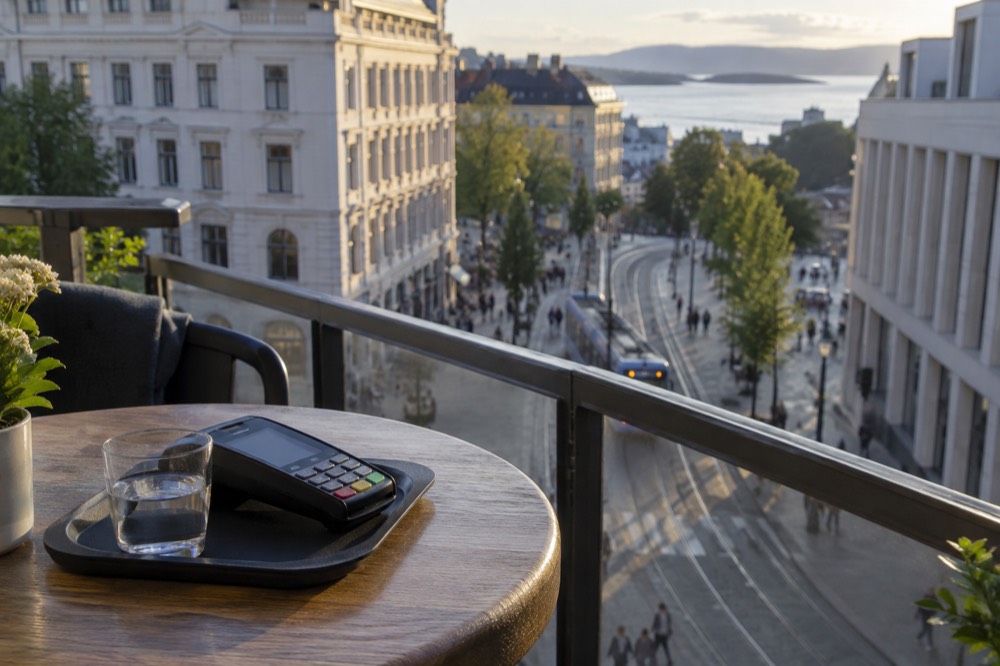
The Grünerløkka food culture walk is the strongest of these in the city: two and a half hours through Oslo's most food-obsessed neighborhood with a local guide, from the river at Akerselva through the markets and independent kitchens that define the district. It is the kind of afternoon where a tip at the end feels obvious rather than calculated.
What About the Rest of the Nordics, Is Norway the Same as Sweden and Denmark?
Broadly yes, the whole Nordic region runs on the same principle: service is included, wages are decent, and tipping is a voluntary gesture rather than a social debt. The differences are at the margins. Denmark is marginally more expensive than Norway on restaurants and hotels, Sweden slightly cheaper, and rounding up is the common gesture everywhere. A traveller who tips nothing anywhere in Scandinavia will offend nobody.
Norway sits in an interesting position on the price comparison: above Sweden, roughly level with Denmark on restaurants and hotels, and sixth overall in Europe. What distinguishes it from its neighbours is not the tipping culture, which is essentially shared, but the currency and the alcohol system. Norway is in Schengen but not in the European Union, it is in the EEA through EFTA, and it uses the krone rather than the euro. That matters at the table because you are always reading prices in NOK, and the mental conversion is where visitors either relax or panic.
The krone is also why rounding up feels different here. Rounding 685 NOK to 700 is a small gesture in a currency where a single coin can be worth several euros. Rounding a 485 NOK lunch bill to 500 is a rounding gesture of the same size relative to the bill. None of it is calculated as a percentage by locals, and none of it is expected from you.
If you are comparing the cities themselves rather than the tipping rules, the Oslo versus Bergen comparison and the Oslo versus Copenhagen matchup cover the food scenes, costs and character of each, and both note that the etiquette of the bill is one thing the Nordic capitals genuinely agree on.
Should You Tip at All in Oslo, Then?
Yes, tip when something earned it, in small amounts, and skip it entirely when nothing did. Round up the restaurant bill for good service, add 50 to 100 NOK for a guide who made your day better, and pay the printed price everywhere else without a second thought. The etiquette is not a formula to get right, it is a permission to stop calculating, which is honestly the most relaxing thing about eating out in this city.
There is a version of travel anxiety that centres on the tip, and Oslo is one of the places in the world where you can genuinely put it down. The server is paid. The price is the price. The terminal will ask, and you can answer with the number already on the screen. If the evening was special, add a little, and if it was not, do not, and neither choice will follow you out the door.
For visitors who want the full cost picture before they sit down anywhere, the Oslo trip cost breakdown itemises a realistic daily budget across food, transport and activities, and the restaurant guide covers where the money goes best. Between those two and the rule above, the financial side of eating in Oslo is fully mapped.
Common Questions About Tipping in Oslo Restaurants
what's the tipping etiquette in oslo restaurants?
Tipping is voluntary and not expected, because service is already included in the menu price. Rounding up or leaving 5 to 10 percent for excellent service is appreciated, but paying the exact bill is completely normal and never rude.
Do Oslo restaurants add a service charge to the bill?
No. Norwegian restaurant prices include service and VAT by law and practice, so the total printed on the bill is the full amount you owe. There is no cover charge or service line added at the end.
Is 10 percent a good tip in Oslo?
Yes, 10 percent is at the top of the generous range in Norway. Most locals either tip nothing or round the bill up to a convenient number, so 5 percent is a normal generous tip and 10 percent is a very generous one.
Do you tip bartenders in Oslo?
No, tipping bartenders is not part of Norwegian culture. Pay the price asked and take your change. A tip jar on the counter is harmless to use but nobody expects it.
Do you tip taxi drivers in Norway?
Tipping taxi drivers is optional. Locals often round the fare up to a convenient amount, especially late at night or with luggage, but the metered fare is the full price and nothing more is owed.
Do you tip tour guides in Oslo?
For paid tours, 50 to 100 NOK per person is a normal tip for a good guide but is not required. On free walking tours, which are tip-based by design, 100 to 200 NOK per person is the standard contribution.