Which Is Nicer, Oslo or Bergen?
An honest comparison of Oslo and Bergen for visitors: weather, cost, fjord access, museums and how to choose between Norway's two most-visited cities.
Which Is Nicer, Oslo or Bergen?
Ask ten Norwegians this question and you will get ten confident answers, most of them regional. The comparison is real because the two cities genuinely do different jobs: Oslo is the capital, spread across a fjord-facing plain and built around museums, neighborhoods and public life, while Bergen is a small west-coast port folded between mountains, closer to the big fjords and built around weather, fish and wooden houses. Neither is "nicer" in the abstract. One of them is nicer for the trip you are actually planning, and working out which one is a matter of matching the city to your dates, your budget and your tolerance for rain.
This comparison matters in practice because most visitors with one week in Norway have to choose, or have to split their days between the two. The cities are about seven hours apart by rail, connected by one of the most scenic train lines in Northern Europe, so combining them is common and rewarding but it costs time. This page compares them on the axes that actually decide the question: atmosphere, weather, cost, nature access, museums and logistics.
Which Is Nicer, Oslo or Bergen?
Bergen is nicer if your trip is about dramatic scenery, compact wandering and the classic postcard Norway of wooden houses and steep mountains, and you accept rain as part of the deal. Oslo is nicer if your trip is about museums, city life and long bright summer evenings, or if you are visiting in winter, when Bergen's weather closes in and Oslo's cultural indoor offer carries the day. For most first-time visitors the answer is both, with Oslo as the base and Bergen as the highlight reel.
The rest of this page earns that answer. The short version is that Bergen wins on setting and atmosphere, and it wins by a wide margin: the city sits in a bowl of mountains, the historic wharf is genuinely old, and the scale is small enough that you can walk across the center in half an hour. Oslo wins on almost everything operational. It has the country's flagship museums, the wider food scene, the better transport connections, and a climate that behaves more predictably across the year.
There is also a timing dimension that most comparisons skip. In July, both cities are at their best, and the choice is close to a coin flip weighted toward scenery. In November, the comparison stops being close: Bergen is wet and dark and Oslo is cold and dry-ish, and Oslo's indoor offer, from the National Museum to MUNCH, is simply deeper. Deciding when you are traveling is half of deciding where.
If you do base yourself in Oslo, the fjord question that draws people toward Bergen can be answered from the capital itself, at least in part. The three options above are the strongest of the city's own fjord products: a full-day private trip to the Sognefjord with the Flåm Railway, a ferry-and-foot island hopping tour in the Oslofjord, and the silent electric sightseeing cruise that is the single best-reviewed activity in the city. None of them replaces the western fjords, but together they cover a surprising amount of the same appetite.
What Is Each City Actually Like on the Ground?
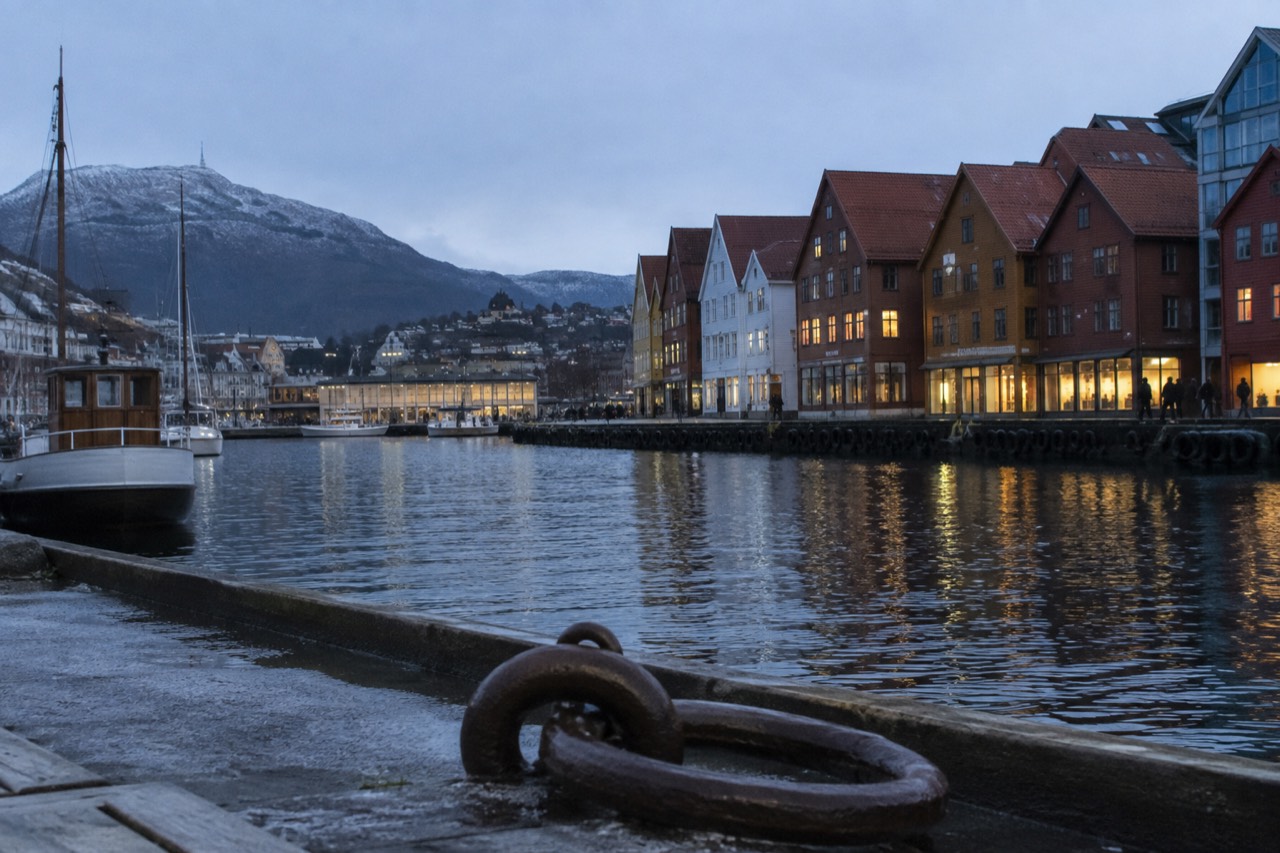
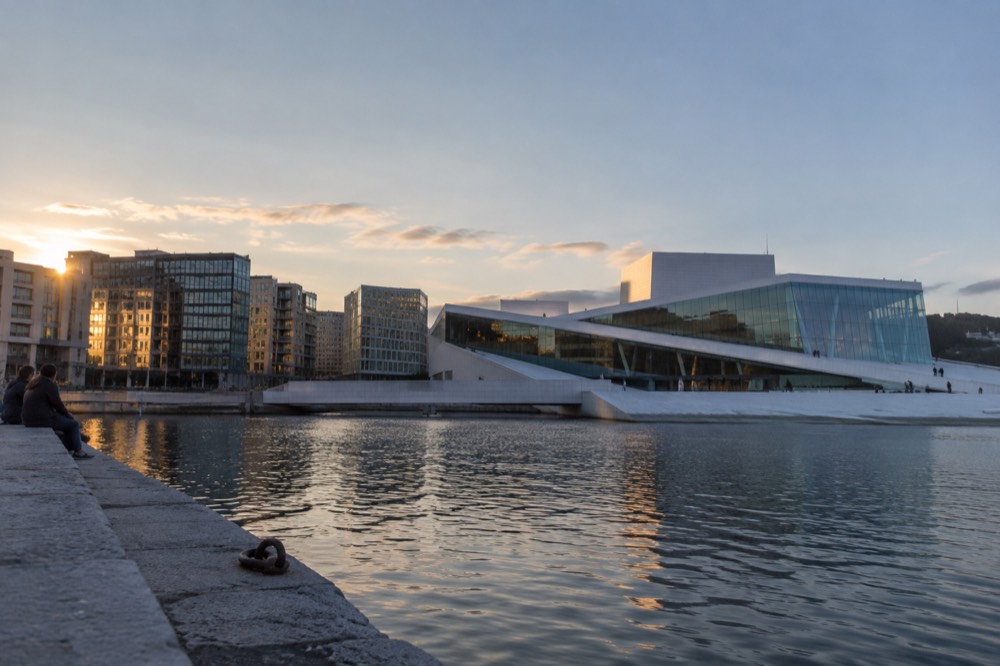
Oslo feels like a spread-out, confident capital that happens to sit at the head of a fjord: neighborhoods are distinct, distances are real, and the waterfront has been rebuilt into a modern district of glass, museums and saunas. Bergen feels like a large town wearing a city's coat: everything of interest sits within a fifteen-minute walk of the harbor, the buildings are wood and the mountains start where the streets stop. Oslo rewards a plan; Bergen rewards wandering.
Oslo's center runs from the Central Station down to the City Hall and the Opera House, but the city's character lives in its districts. Grünerløkka, on the east side of the Akerselva river, carries the cafés, vintage shops and food halls. Aker Brygge and Tjuvholmen, on the west side of the harbor, carry the modern waterfront, the Astrup Fearnley museum and the boat departures. Frogner and Majorstuen, further west, carry the older residential grandeur and Vigeland Park. Getting between them means trams, metro or honest walking, and a first visit usually needs three or four full days to feel unhurried.
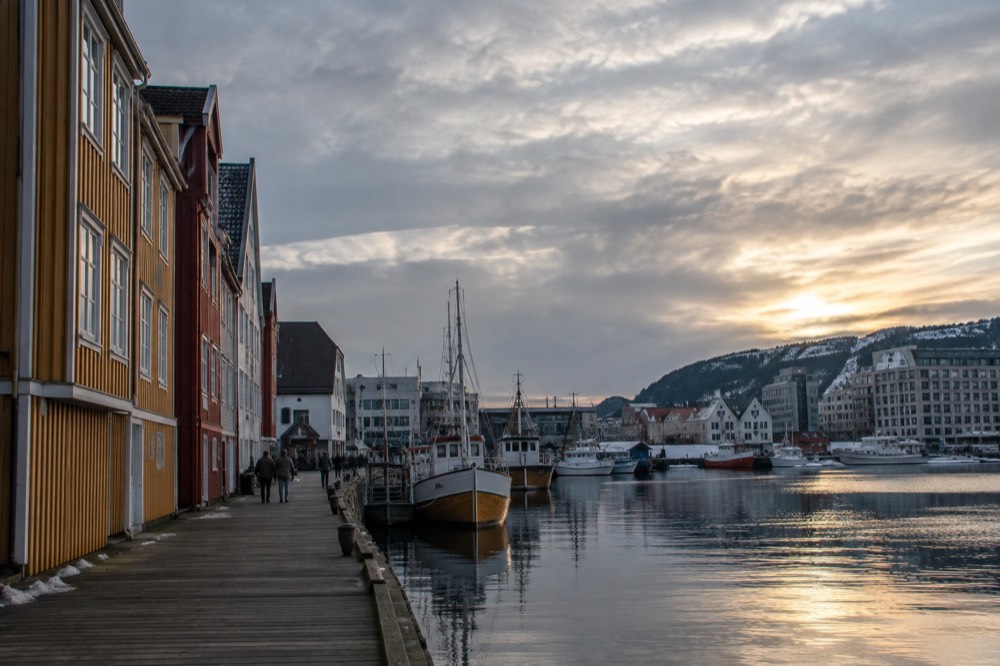
Bergen inverts that. The historic core, Bryggen, with its Hanseatic wooden warehouses, the fish market, the fløibanen funicular and the two mountains that flank the town all sit within a compact radius. A determined visitor can see the essentials in one very full day, and two days is comfortable. The trade-off is that Bergen's depth runs out sooner. Once you have done the wharf, the funicular, the fish market and a boat trip on the nearby fjord, you are into day trips by necessity, which, given what surrounds Bergen, is not much of a hardship.
The atmosphere difference is the one travelers remember longest. Oslo is a lived-in capital where tourism is one thread among many. Bergen's economy leans on visitors, and in high summer it feels like it: the wharf is busy, the funicular has queues, and the cruise ships dock right in the center. Outside July and early August, Bergen quietens dramatically and Oslo keeps humming, because Oslo's hum does not depend on you.
How Do Weather and Daylight Compare?
Bergen is one of the rainiest cities in Europe, with rain on a majority of days across the year, while Oslo's climate is drier, colder in winter and milder on paper in summer; Oslo's daylight swings from under six hours in late December to nearly nineteen in late June, and both cities share that extreme latitude, so neither escapes the dark season. In practical terms, Bergen's weather is the biggest argument against it and the source of its beauty.
The numbers for Oslo are documented precisely, and they are worth seeing laid out, because the swing surprises people. All figures are MET Norway's official 1991 to 2020 normals for the Blindern station in Oslo:
| Month | Mean temp | Precipitation |
|---|---|---|
| January | −2.3 °C | 58 mm |
| March | 1.3 °C | 41 mm |
| June | 15.3 °C | 80 mm |
| July | 17.7 °C | 87 mm |
| August | 16.5 °C | 103 mm |
| October | 6.6 °C | 93 mm |
| December | −1.4 °C | 54 mm |
Two details in that table run against expectation. August, not November, is Oslo's wettest month on the normals, at 103 mm, and July's mean of 17.7 °C is mild rather than hot. Oslo's summer is a long, bright, gentle thing, and its winter is the season with real teeth.
Bergen's equivalent picture is not documented in this site's verified research with the same precision, and it is better to say what is safe than to invent numbers: Bergen sits on the west coast, directly in the path of the North Atlantic weather systems, and rainfall there is both more frequent and heavier than in the capital. That is not a stereotype, it is the reason the mountains around the city are so green. Locals treat rain as infrastructure, not as an event. If you visit Bergen, pack for it seriously, and build one flexible indoor day into any short itinerary.
Daylight, by contrast, is nearly identical in the two cities, both close to 60 degrees north. In Oslo the sun rises at 03:53 and sets at 22:43 on 21 June, giving 18 hours and 50 minutes of daylight, and on 21 December the day shrinks to 5 hours 53 minutes, with sunrise at 09:18 and sunset at 15:11. Bergen's figures are within minutes of those. Neither city has midnight sun, that belongs north of the Arctic Circle around Tromsø, but in late June both stay in twilight all "night." If you are traveling in the dark months, that fact belongs in your planning as much as any museum opening hour.
Which City Is More Expensive?
Both cities are expensive by European standards, because Norway itself is the sixth most expensive country in Europe, with household prices 28.6 percent above the EU average and food 33 percent above it. Between the two, Oslo is somewhat costlier on hotels and restaurants because it is a bigger business city, while the real difference is that Oslo gives a visitor more free things to do, from Vigeland Park to the Opera House roof, which softens the daily total.
The country-level numbers are the ones worth internalizing, because they apply to both cities equally. Statistics Norway's 2025 purchasing power comparison puts Norwegian household price levels 28.6 percent above the EU average, food and non-alcoholic drink 33 percent above, and alcohol and tobacco at more than double the European average. That last figure is why a single beer in either city stings, why the Vinmonopolet monopoly exists, and why arriving visitors stock up at duty-free. It is not an Oslo problem or a Bergen problem. It is a Norway problem.
Where the cities diverge is in what your money buys. Oslo's headline attractions skew surprisingly cheap or free: Vigeland Park, with over 200 sculptures, is free and open 24 hours a day, all year, and the Opera House roof is a public walkway with no ticket at all. The museum prices are moderate by capital-city standards, MUNCH at 280 NOK for an adult, the Fram Museum at 180 NOK, Kon-Tiki at 180 NOK, and the Oslo Pass at 580 NOK for 24 hours can break even on a heavy museum day, three Bygdøy museums alone cost 560 NOK at full price before you count the transport the pass also covers.
Bergen's costs are structurally similar, with one exception that compounds: because Bergen is smaller and more seasonal, accommodation in July is priced at a sharp premium, and the things that make Bergen worth visiting, the funicular, the fjord boats, the aquarium, are all paid activities stacked one after another. A wet Bergen day with a family can end up costing more than a dry Oslo museum day. Budget roughly the same per day for either city, and expect Oslo to return more variety per krone.
One cost question that cuts across both cities deserves its own mention: the fjord day trip. If you are staying in Oslo and want the Sognefjord experience that draws people to Bergen's backyard, the private full-day round trip including the Flåm Railway is the best-reviewed same-day answer, and it removes the need to relocate cities just for the fjords. It is not a cheap day, but neither is a night in Bergen in high season, and it buys back a hotel change, two train bookings and most of a travel day.
Which Has Better Access to Nature?
Bergen wins the headline contest, because the big western fjords, the Sognefjord and the Hardangerfjord, sit in its region and the mountains rise directly from its streets, while Oslo's nature is gentler, closer and better organized: forest, islands and swimming beaches inside the transit system, with Nordmarka's trail network at the end of a metro line. If raw drama is the goal, Bergen. If you want nature without a car or a booking, Oslo.
Bergen's setting is the reason the city exists. Two mountains flank the center, one with a funicular, one with a cable car, and both deliver views over the town and the fjord arms within minutes of the harbor. From Bergen, the Norway in a Nutshell route, the Flåm Railway and the Sognefjord boats are day-trip territory. The scenery is genuinely world class and it starts at the edge of town, which no other Norwegian city can claim. The full index of guides sits on Oslo Travel Guide. The full index of guides sits on Oslo Travel Guide.
Oslo's answer is different in kind rather than in degree. The Oslofjord islands, Hovedøya with its ruined Cistercian abbey, Gressholmen, and Langøyene with its beaches, are reached by ordinary public ferries from Aker Brygge on an ordinary Ruter ticket, no tour booking required. Nordmarka, the forest that caps the city, begins at Frognerseteren, the terminus of metro line 1, where Skiforeningen grooms ski trails in winter and hikers spread out in summer. Sognsvann, the lake at the end of line 5, is the locals' default Sunday walk. None of it is dramatic in the western-fjord sense, and all of it is free, transit-covered and twenty to forty minutes from the center.
The honest framing for a visitor choosing between the cities on nature is this: Bergen gives you the postcard, and you will pay for it in bookings and crowds in July. Oslo gives you the everyday version, the one Norwegians actually use, and it costs a transit ticket. Travelers who book the island hopping tour or a fjord cruise out of Oslo routinely report surprise at how much water and shore the capital itself offers, and winter adds snowshoeing and a torchlit forest walk with a campfire inside the city limits.
How Do the Museums and Culture Compare?
Oslo wins this category decisively: it holds the National Museum with The Scream, MUNCH, the Fram and Kon-Tiki museums, the Viking-age collections at the Historical Museum while the Museum of the Viking Age stays closed until 2027, and the whole Bygdøy peninsula of museums, while Bergen's cultural offer is real but smaller, anchored by its Hanseatic heritage and a handful of strong single-subject museums. If museums are the point of the trip, the choice is Oslo, and it is not close.
Oslo's museum district on Bygdøy alone justifies a day: the Fram Museum, the polar ship that went further north and further south than any wooden ship before it, the Kon-Tiki Museum with Heyerdahl's raft, the Norwegian Museum of Cultural History with its stave church, and the Maritime Museum, all walkable between two ferry piers. Back in the center, the National Museum holds one version of The Scream among its collection, MUNCH holds its own dedicated tower of galleries at 280 NOK adult entry, and the Historical Museum carries Viking-age objects while the purpose-built Museum of the Viking Age remains closed, reopening in 2027 per the museum's own statement.
Bergen's cultural strengths are narrower but genuine. The Hanseatic wharf, Bryggen, is a UNESCO-listed district of reconstructed wooden warehouses, and the museums attached to it document the German merchant era that built the city's wealth. Add the composer Edvard Grieg's house at Troldhaugen, the aquarium, and a cluster of small museums, and you have a solid two days of culture, not four. Bergen's real cultural asset is the setting itself, which is why its museums are supporting acts rather than headliners.
There is a seasonal dimension here too. Oslo's museum offer is the city's winter armor: when the light gives out at 15:11 in late December, the museums, plus the winter activities in Nordmarka, keep a short trip viable. Bergen in deep winter leans on its indoor offer as well, but with a smaller menu and heavier weather outside it. A February city break favors Oslo for exactly this reason, and the rainy-day logic applies to Bergen at any time of year.
How Many Days Do You Need in Each?
Bergen needs two full days to see the city and ride the funicular, with a third for a fjord or mountain day trip, and it starts feeling complete at that point. Oslo needs three days as a realistic minimum, four to five to include Bygdøy, the islands and a forest or fjord excursion without rushing. If your trip is short, Bergen delivers faster; if it is long, Oslo sustains itself longer.
The asymmetry comes from geography. Bergen's essentials cluster around one harbor; Oslo's spread across a capital. A two-night Bergen stay covers Bryggen, the fish market, the funicular, one mountain viewpoint and a fjord boat, and leaves nothing essential undone. A two-night Oslo stay forces real triage: most visitors would pick the Opera House, Vigeland Park, one museum day on Bygdøy and a fjord cruise, and accept that Grünerløkka, the National Museum and the islands go unvisited.
That triage pressure is why Oslo rewards the longer stay disproportionately. Day one covers the waterfront and the center, day two Bygdøy's museums, day three the east side and the food scene, day four the islands or Nordmarka, and day five a fjord excursion. Each added day in Oslo buys something genuinely different. Each added day in Bergen mostly buys another day trip outward, toward the fjords, which is a fine use of time but stops being "Bergen."
For the combined trip, which is what many visitors actually end up doing, the standard shape works: fly into Oslo, give it three or four days, take the Bergen Railway across the mountains, roughly seven hours through some of the finest rail scenery in Europe, give Bergen two days, and fly out of Bergen or return. That routing wastes almost nothing, because the train between the two is itself one of the country's highlights.
Can You Combine Oslo and Bergen in One Trip?
Yes, and it is the recommended answer for any trip of six days or more: the two cities are about seven hours apart by direct train, connected by the Oslo to Bergen line across the Hardangervidda plateau, and the journey itself is a highlight rather than a transfer. With under five days, choose one city, and let your priority, scenery or museums, make the call.
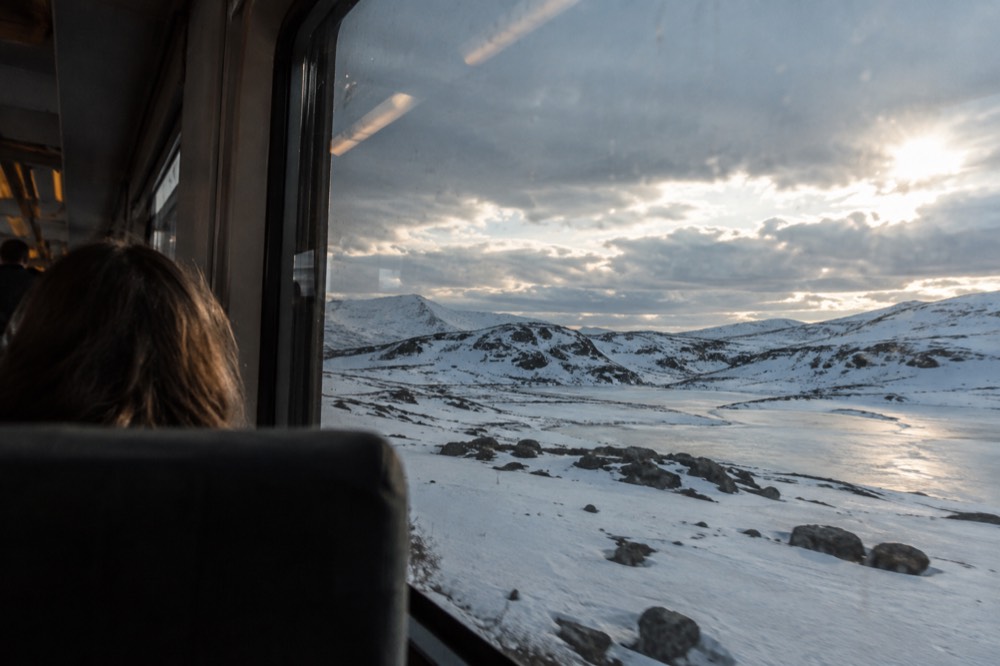
The rail link is the reason the combination works so well. The Bergen Railway crosses the Hardangervidda, Europe's largest mountain plateau, a high, treeless stretch where snow can sit late into summer. In winter the crossing is snow country; in summer it is tundra and reindeer. Travelers who break the journey at Myrdal and ride the Flåm Railway down to the Aurlandsfjord get the full scenic arc in one long day, which is precisely the route the Norway in a Nutshell product packages.
For visitors who cannot spare the days for the west, the same fjord appetite can be served from Oslo as a very long day trip. The private Sognefjord round trip with the Flåm Railway runs about fifteen and a half hours door to door, which is a commitment, but it delivers the fjord and the railway without surrendering your Oslo base, your unpacked bag or your remaining museum days.
One practical note on direction: flying into Oslo and out of Bergen, or the reverse, avoids backtracking and is usually no more expensive than a round trip. Norway's internal flight market connects the two cities in under an hour, so a west-to-east finishing itinerary, fjords first, capital last, is equally workable. In high summer, book the Bergen Railway seat in advance, the panorama cars and the popular departures fill up.
So Which Should You Choose?
Choose Bergen if scenery is the trip's purpose, your stay is two or three days, you are traveling between May and September, and you accept rain as the price of the green. Choose Oslo if museums, food and city life matter as much as the view, you are traveling outside high summer, or your trip is four days or longer and needs a city that can sustain it. For most first-time visitors with a week, the answer is both.
| Priority | Better choice | Why |
|---|---|---|
| Dramatic fjord scenery | Bergen | The Sognefjord and Hardangerfjord regions sit on its doorstep |
| Museums and galleries | Oslo | The National Museum, MUNCH, Bygdøy peninsula, Viking-age collections |
| Compact walkability | Bergen | The whole center sits within a fifteen-minute radius of the harbor |
| Food and nightlife | Oslo | A capital-sized restaurant and bar scene across distinct districts |
| Winter city break | Oslo | Deeper indoor offer, drier cold, snow sports inside the transit network |
| Budget control | Oslo | More free headline sights, including Vigeland Park and the Opera House roof |
| Short trip, two to three days | Bergen | Essentials complete quickly without transit time |
| Long trip, five days plus | Oslo | Sustains a full week without repeating itself |
Whichever way you decide, the planning resources on oslotravelguide.com cover the Oslo half in depth: the fjord cruise options from the capital run from silent electric boats to full-day island trips, the best time to visit Oslo breaks the year down month by month, and if you are still weighing whether the capital justifies the journey at all, the honest case is laid out in is Oslo really worth visiting?. Bergen's own visitor infrastructure is excellent and mostly bookable at the harbor, and the city forgives improvisation more easily than the capital does.
If the fjord is the part of the comparison that pulls you toward the west, that itch can be scratched from either base. The Sognefjord trip above runs from Oslo and returns the same night, and the two products below cover the gentler end of the same appetite, the islands and the sightseeing cruise, for visitors who would rather sleep in the capital.
Common Questions About Oslo or Bergen
which is nicer, oslo or bergen?
Bergen is nicer for scenery-focused trips of two or three days between May and September, thanks to its mountain setting and proximity to the big western fjords. Oslo is nicer for museum-heavy, food-focused or winter trips, and for stays of four days or more, because it sustains a longer itinerary with more variety.
Is Bergen cheaper than Oslo?
Not meaningfully. Both cities sit in Norway, the sixth most expensive country in Europe, with household prices 28.6 percent above the EU average and alcohol more than double the European average. Oslo's hotels and restaurants run somewhat higher, but Oslo also offers more free headline attractions, including Vigeland Park and the Opera House roof, which lowers the typical daily total.
Is Bergen rainier than Oslo?
Yes, considerably. Bergen sits on the west coast in the direct path of Atlantic weather systems and records rain far more often than the capital, whose 1991 to 2020 normals show a drier, more continental pattern with August, at 103 mm, as its wettest month. Bergen's rain is also the reason its mountains are famously green.
Can you do Oslo and Bergen in one trip?
Yes. The two cities are roughly seven hours apart by direct train across the Hardangervidda plateau, and the journey is itself one of Norway's scenic highlights. A common shape is three or four days in Oslo, the train west, and two days in Bergen, flying out of one end to avoid backtracking.
Which city is better in winter?
Oslo. Both cities are dark at that latitude, with under six hours of daylight in late December, but Oslo pairs a deeper museum offer with snow sports inside the transit network, from groomed Nordmarka trails to snowshoeing tours. Bergen in winter is wet as often as it is white.
Do you need a car in either city?
No. Both are walkable and transit-covered. Oslo's metro, trams and ferries reach the islands, the forest and the airport region on ordinary tickets, and Bergen's center, funicular and fjord boats are all manageable on foot and public transport. A car is a liability in both city centers.