What Is the Most Famous Street in Oslo?
The most famous street in Oslo is Karl Johans gate, the processional avenue running from Oslo Central Station to the Royal Palace. Here is what to expect along it.
What Is the Most Famous Street in Oslo?
The most famous street in Oslo is Karl Johans gate, the broad avenue that runs straight from Oslo Central Station at one end to the Royal Palace at the other. It is the city's ceremonial and processional spine, the route of the 17 May children's parade, and the single stretch of pavement that most visitors walk at least once. Along its length sit the Storting, the National Theatre and Eidsvolls plass.
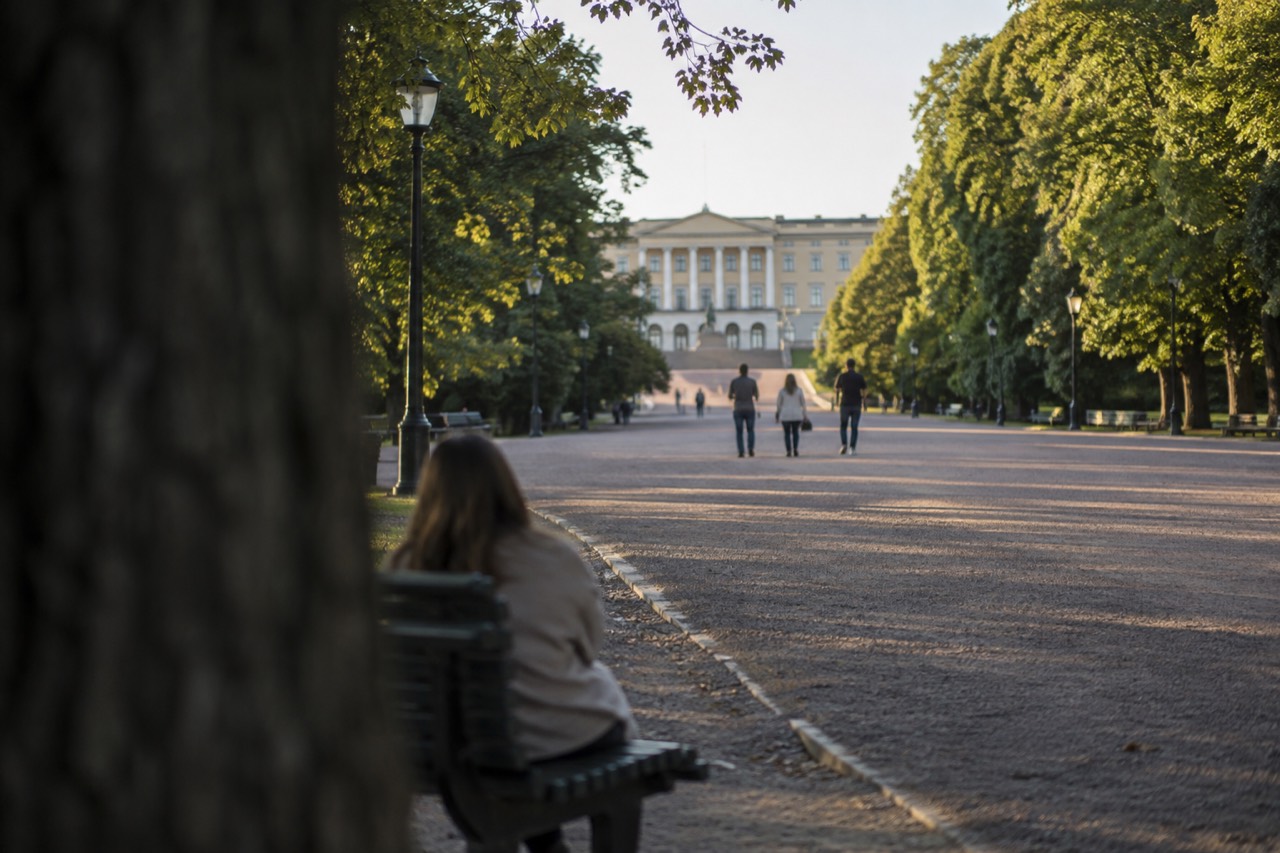
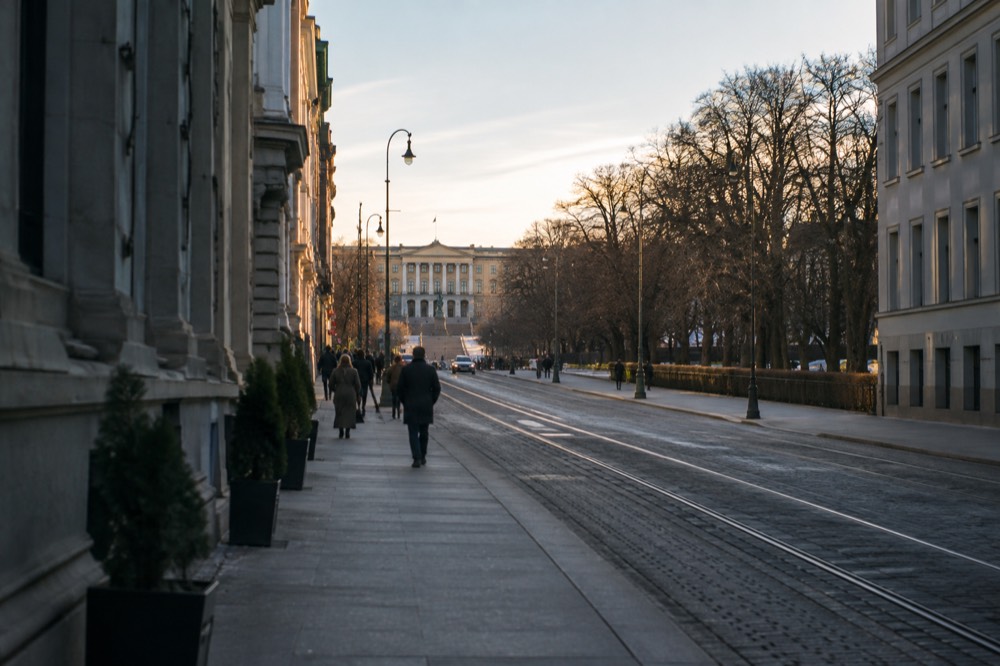
If you have seen a photograph of Oslo that is not the Opera House or the fjord, there is a good chance it was taken on Karl Johans gate. The classic shot looks up the avenue from near the Storting, with the National Theatre on the left and the pale front of the Royal Palace closing the view at the top of the small rise. On a clear winter afternoon, when the low sun sits directly over the palace end, it is the most photographed view in the city centre.
The street works as an orientation line for the whole visit, and that is really why it is famous rather than merely well known. Lay it down in your head and you have divided central Oslo in two: the harbour, Aker Brygge and the City Hall sit downhill to the south-west, while the Grønland and Tøyen districts sit behind you to the east. Our guide to central Oslo covers that wider map, but the short version is that Karl Johans gate is the seam everything else hangs from.
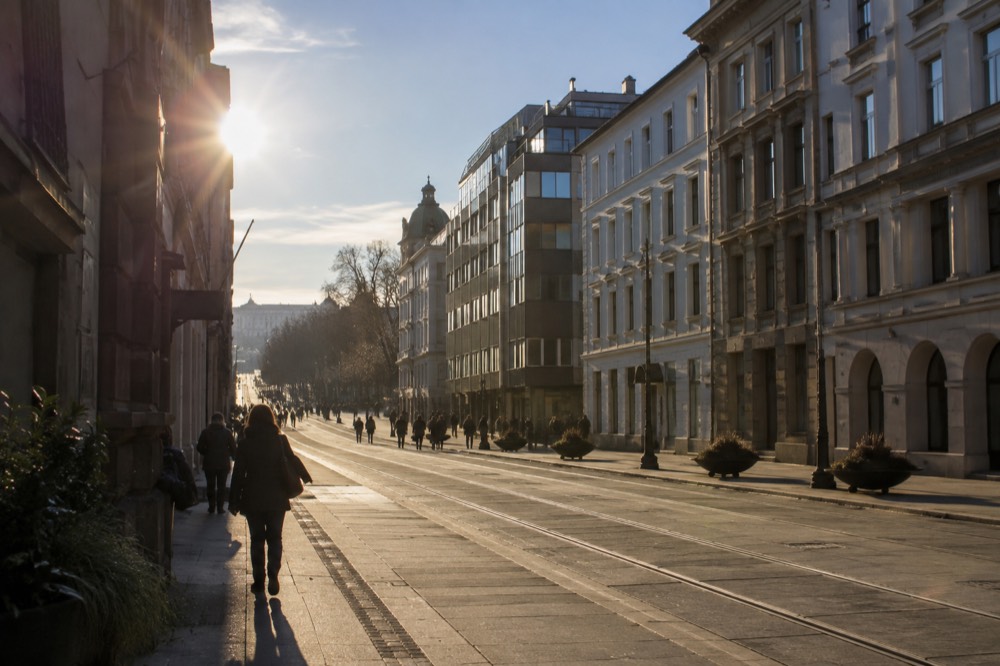
It is also a working street, not a museum piece. The lower half, from the station up to the Storting, is paved and largely pedestrianised, busy with buskers, kebab outlets and the everyday commerce of a capital. The upper half, from the Storting to the palace, is grander and greener, lined with the National Theatre, the university's historic buildings and the open lawns of Eidsvolls plass and Studenterlunden. The character changes halfway along, and the change happens exactly where the street passes the parliament.
Where Does Karl Johans Gate Start and End?
Karl Johans gate runs in one straight line from the forecourt of Oslo Central Station in the east to the Royal Palace in the west, with the Storting roughly at its midpoint. The station end is the commercial, pedestrianised half. The palace end is the ceremonial half, where the street widens, the trees thicken and the views open out toward the fjord behind you. The whole length is flat and walkable.
The station end is where most people arrive, because most people arrive by train, and the street simply begins outside the main doors. From there it climbs gently westward. Within a few minutes you pass the Oslo Cathedral on your right, then the Storting, Norway's parliament, which sits in a slight dip facing up the avenue. That building anchors the middle of the street and marks the point where the tone shifts.
Above the Storting the street opens into the Eidsvolls plass and Studenterlunden parkland, a green wedge of lawns, statues and benches that runs along both sides of the carriageway, with the National Theatre standing at its western edge. From the theatre it is one final short rise to the palace, which sits at the head of the avenue facing directly down it, so that the king's residence looks along the whole length of the street toward the station. That alignment is not an accident, and it is the reason the street photographs so well from the palace steps looking back.
| Section | From and to | Character | What you pass |
|---|---|---|---|
| Lower gate | Oslo Central Station to the Storting | Pedestrianised, commercial, busiest | Oslo Cathedral, shops, street performers |
| Middle | The Storting to the National Theatre | Parkland, statues, open lawns | Eidsvolls plass, Studenterlunden |
| Upper gate | National Theatre to the Royal Palace | Ceremonial, grandest, greenest | Palace forecourt, views back down the avenue |
Because the street connects the two buildings, it doubles as the city's default parade route, and the biggest of those is the 17 May Constitution Day children's parade, which fills the avenue with schoolchildren, brass bands and national dress. If you are in Oslo on 17 May, expect Karl Johans gate to be the centre of everything, and expect crowds. The rest of the year it hosts smaller demonstrations, seasonal markets and, in December, the Christmas lights and stalls that make it the natural place to start; our Oslo in December guide covers that season in detail.
Walking the full length takes well under half an hour at a stroll, and most visitors do it several times without deciding to, because the street sits between so many of the things you will want to see. A guided walk is one way to make those repeats count, and there are three formats worth knowing about.
The cheapest of those is the two-hour guided walk of central Oslo, which uses the street as its backbone and fills in the history around it, while the food-focused alternative spends its time in the Grünerløkka district instead. The free, tip-based walk is the budget default and also starts from the central area. All three can be checked for the dates you need.
What Will You Actually See Along Karl Johans Gate?
You will see Oslo Cathedral, the Storting, the National Theatre, the parkland of Eidsvolls plass and the Royal Palace, all in one straight line, plus a constant stream of street performers on the pedestrianised lower half. The lower gate is where the buskers and pavement life are. The upper gate is where the postcard photographs are taken. Between them sits the greenest stretch of central Oslo.
Start at the station end and the first landmark is Oslo Cathedral, the city's main church, sitting just off the avenue on the right. It is a modest brick building rather than a soaring one, and it is open to visitors outside service times; our page on Oslo Cathedral has the detail. From there the street proper begins, paved, closed to through traffic and busy from morning to late evening.
The Storting comes next, on the left as you walk west. Norway's parliament is a distinctive half-round yellow-brick building that faces up the avenue, and the public galleries are open when the house is sitting, which is a genuinely free thing to do in an expensive city. Facing it, on the right, sits the historic university complex, whose neoclassical frontage is one of the reasons the upper street feels grander than the lower.
Past the Storting the avenue splits around the Palace Park approach and runs through the Eidsvolls plass and Studenterlunden lawns, where office workers eat lunch in summer and the Christmas market sets up in December. The National Theatre stands at the top of this wedge, a stone building fronted by statues, and behind it rises the final short slope to the Royal Palace. The palace itself is a working royal residence; it is open for guided tours in the summer season only, and the changing of the guard happens at the palace end most days around lunchtime, a small ceremony that draws a modest crowd.
A guided walk puts names to all of this, and the central-Oslo walking tour is the one that follows this exact route with a local guide explaining what you are looking at. It runs about two hours, it is the cheapest credible guided walk in the city, and it is worth booking for your first full day so the geography is settled early.
How Do You Pronounce Karl Johans Gate, and Why Is "Gate" Lowercase?
It is pronounced roughly "Karl YOO-hans GAH-tuh", and the word "gate" is lowercase because it is a common Norwegian noun meaning street, not part of the name. The street is named for King Carl Johan, the Bernadotte king who ruled Norway and Sweden in the first half of the 19th century. Writing "Karl Johans Gate" with a capital G is the single most common spelling mistake visitors make.
The naming logic is worth a minute because it recurs all over the city. Norwegian street names attach a generic word for the type of road, and that word stays lowercase: Karl Johans gate, Karl Johans gate's neighbour streets, and countless others across Oslo follow the same pattern. The possessive is built in too, so the name reads as "Karl Johan's street" without an apostrophe. Once you have seen the pattern you will stop mistaking it for a proper noun, and signs will make more sense. More of these guides are collected on Oslo Travel Guide. More of these guides are collected on Oslo Travel Guide.
The king it is named for is the man who chose the palace site. Carl Johan, born Jean-Baptiste Bernadotte in France, was crowned king of a united Norway and Sweden, and it was under his reign that the decision was made to build the Royal Palace on the rise at the west end of what became his street. That is why the avenue points at the palace and why the palace points back down it: the street was laid out as a processional approach to a royal residence, and it still reads that way on the ground today.
Practical note for planning: because the name appears in addresses, tickets and directions, getting it slightly wrong causes small confusions. Taxi drivers, hotel staff and booking confirmations will all write it the same way, with "gate" lowercase and no apostrophe, so match that and you will be understood everywhere.
Is Karl Johans Gate Expensive?
The street itself costs nothing to walk, and the best of it, the palace exterior, the parkland, the guard ceremony and the people-watching, is free. The shops and cafés along it are another matter: this is central Oslo, and Norway is the sixth most expensive country in Europe, with food prices 33% above the European average. Budget for the surroundings, not the street.
The honest way to frame Oslo prices is with the national figures rather than with invented menu prices. Statistics Norway's 2025 price-level survey puts Norwegian household costs 28.6% above the EU average, food and non-alcoholic drink 33% above, and alcohol and tobacco at more than double the European average. On the ground that means the cafés on Karl Johans gate are perfectly pleasant and noticeably dear, and a beer anywhere near the National Theatre will cost you more than it would in almost any other European capital.
None of that is a reason to avoid the street, because the street's main attractions are free. Walking the full length, sitting in the Eidsvolls plass lawns, watching the changing of the guard and photographing the palace from the theatre steps cost nothing at all, and they are the reasons to come. If you want the paid experiences, the National Theatre's repertoire and the summer palace tours are the two headline items, and the museums a short walk downhill, the National Museum with The Scream among them, are covered by the Oslo Pass. Our is Oslo expensive page breaks the whole budget question down with the real numbers.
For eating, the smart move is to treat Karl Johans gate as a corridor rather than a destination. The side streets and market halls a few minutes away offer better value than the avenue's own tables, and our cheap eats in Oslo guide lists where. The street's cafés are fine for a coffee and a rest, and that is a legitimate use of them.
What Is Close to Karl Johans Gate?
Almost everything in central Oslo is within a ten-to-fifteen-minute walk of the street, because it runs through the middle of it. Downhill to the south-west sit the City Hall, Aker Brygge and the harbour. Behind the station lies Grønland and the east side. The Opera House is a short walk from the bottom of the street, and the National Museum, MUNCH and the Barcode district cluster around that same harbour end.
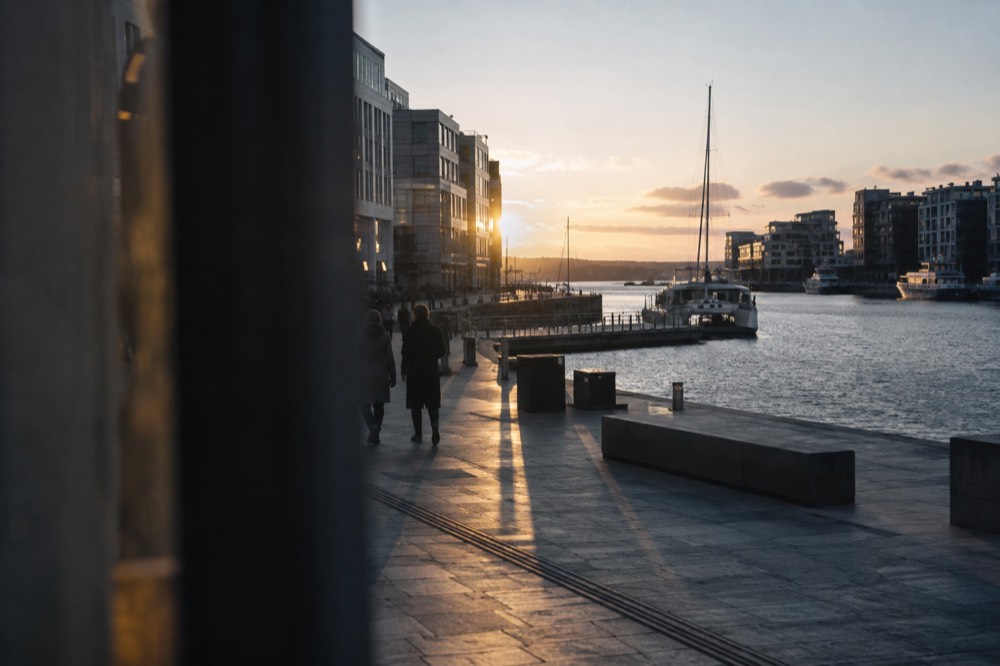
The harbour end of the walk is the most rewarding. From the Storting, head downhill past the City Hall, whose twin towers and ceremonial hall are open to visitors, and you reach the Aker Brygge waterfront in minutes, where the fjord, the restaurants and the boat piers are. Our Aker Brygge guide covers what to do there, and it is the natural place to end a walk down Karl Johans gate, with the Opera House's marble roof a further ten minutes along the water.
In the other direction, the streets behind the Central Station end lead into Grønland, a livelier, cheaper district of food shops and ethnic restaurants, and beyond it to Tøyen and the MUNCH museum. That east side is where the city's other famous street-level scene lives, in the Grünerløkka district, whose cafés, vintage shops and river walk make it the local counterweight to the formal avenue; our Grünerløkka guide is the full treatment.
For shoppers, the avenue itself and the streets running off it carry the main high-street names, and our Oslo shopping page maps where the serious retail actually is, which is mostly not on the famous street itself. For sightseeing logistics, the street's position between the station and the palace makes it the natural assembly point for tours: guided walks, the hop-on hop-off bus and the fjord boats from the nearby piers all start within a few minutes of it, and our guided tours in Oslo page compares them.
That central position is the final reason the street matters. You will not plan around Karl Johans gate so much as cross it repeatedly, and every crossing reorients you: palace behind you means west, station behind you means east, harbour over your shoulder means south. After a day in Oslo the street stops being a sight and becomes the thing you navigate by, which is, in the end, what the most famous street in any capital city is for.
Common Questions About the Most Famous Street in Oslo
what is the most famous street in oslo?
Karl Johans gate, the avenue running straight from Oslo Central Station to the Royal Palace. It passes the Storting, the National Theatre and the Eidsvolls plass parkland along the way, and it is the route of the city's parades and ceremonies.
Why is Karl Johans gate famous?
It is the ceremonial axis of the city, laid out as a processional approach to the Royal Palace, which sits at its west end facing down the whole length of the street. It hosts the 17 May children's parade, the Christmas market and most of the city's public gatherings, and it connects the station to the palace in one straight, walkable line.
How long does it take to walk Karl Johans gate?
Walking the full length from Oslo Central Station to the Royal Palace takes well under half an hour at a normal pace. Most visitors spend longer, because the pedestrianised lower half invites stopping for street performers, and the parkland and palace at the top reward a slower approach.
Is Karl Johans gate pedestrianised?
The lower half, from the station up to the Storting, is largely pedestrianised and closed to through traffic. The upper half carries trams and traffic through the parkland section around Eidsvolls plass, so watch for trams near the National Theatre and the palace end.
What should you see at the palace end of the street?
The Royal Palace itself, which offers summer guided tours, the changing of the guard ceremony that takes place at the palace end most days around lunchtime, the Palace Park behind the building, and the classic photograph looking back down the entire avenue toward the station.