What Is a Must Eat in Oslo?
The foods worth building an Oslo trip around: fjord shrimp, brunost, cinnamon buns, fish soup and more, with where to eat them and what they cost.
What Is a Must Eat in Oslo?
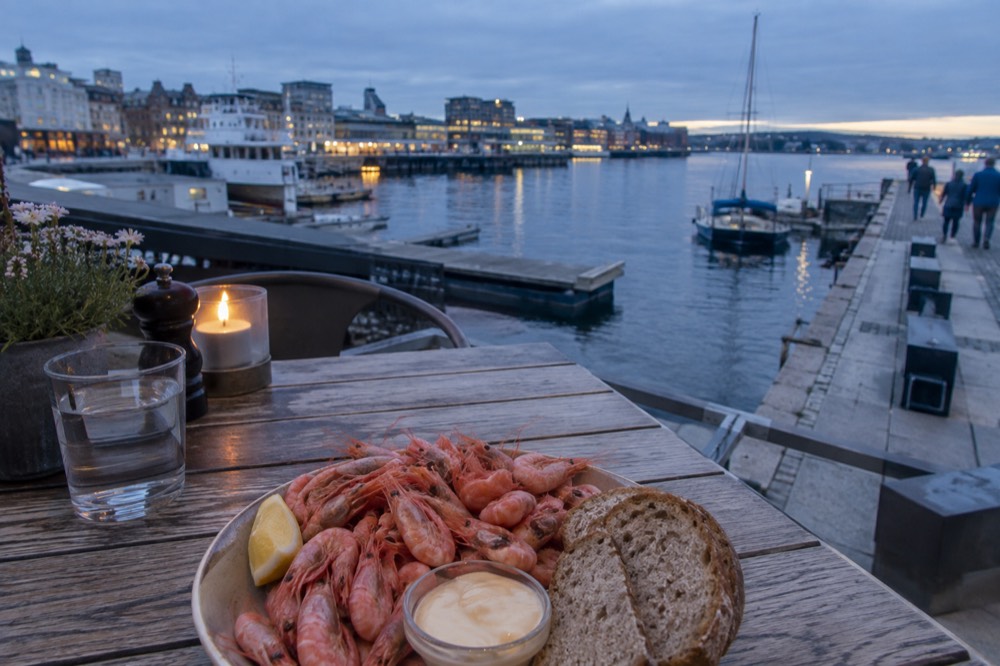
The one must-eat in Oslo is fjord shrimp, bought boiled and eaten cold with bread, lemon and mayonnaise, ideally on or beside the water. After that, brown cheese on waffles, a cinnamon bun called a skillingsbolle, Norwegian fish soup, and something from the autumn salted-and-fermented tradition such as rakfisk. None of these are restaurant inventions; they are what Norwegians actually eat, and Oslo is where all of them are easiest to find.
The question sounds simple, and most answers to it are wrong in the same way: they list restaurant dishes rather than foods. Oslo's food culture is not primarily a restaurant culture. It is a shoreline culture of shrimp and mackerel, a farm culture of cheese and bread, and a winter culture of preserving things so they last until spring. The restaurants matter, and the city has a serious fine-dining scene, but a visitor who eats only in restaurants will miss the foods Norwegians would name first if you asked them this question on the street.
Start with the shrimp, because it is the food most tied to this exact city. The Oslofjord shrimp season runs through summer and early autumn, and the tradition is not a plated dish: it is a paper cone or a bucket of cold pink shrimp, peeled by hand at the table, with white bread, mayonnaise and lemon. Norwegians drive to the shore to do this. In Oslo you can do it on a boat in the middle of the fjord without leaving the city, which is the single most Oslo food experience there is.
This page walks through the classics in the order worth eating them, then covers where to eat each one, what a food day in Oslo realistically costs, and how the country's alcohol rules shape the way people drink here. If you want the short version: shrimp first, brown cheese second, a cinnamon bun with your third coffee, and fish soup if the weather has turned.
Which Norwegian Classics Should You Try First?
Eat these five in order of how Norwegian they are: fjord shrimp with bread, brunost (brown cheese) on a waffle, a skillingsbolle cinnamon bun, fiskesuppe (Norwegian fish soup with cream and root vegetables), and cured or smoked salmon, which Norwegians eat on bread rather than as a restaurant starter. Together they cover the shoreline, the dairy, the bakery and the cold store, which is the whole of the traditional Norwegian kitchen in five foods.
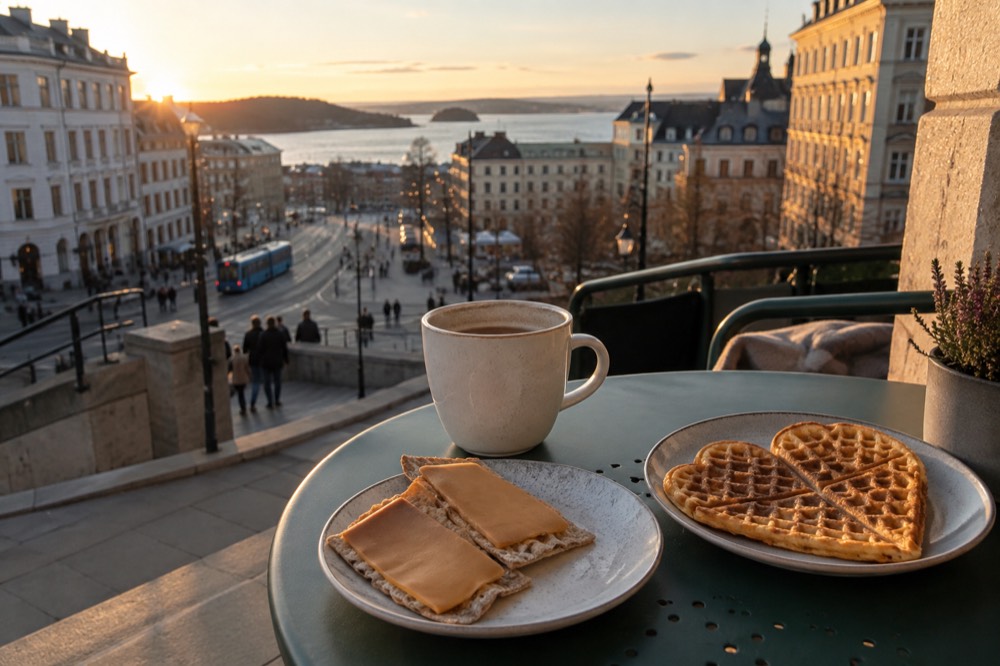
Brunost is the food Norwegians miss most abroad and the one visitors remember longest. It is a caramelised whey cheese, made by boiling the whey left over from cheesemaking until the milk sugars brown, which gives it a sweet, faintly tangy, fudge-like character that has no real equivalent anywhere else. Gudbrandsdalsost is the most common version; geitost means it includes goat's whey and tastes sharper. It belongs on a fresh waffle, and in Norway the waffle is heart-shaped, soft and eaten as a snack rather than a dessert. Trying brunost once is not optional; whether you like it is a genuine coin toss, and Norwegians know this and will watch your face.
Skillingsboller are the cinnamon bun of the Norwegian coffee table, and the coffee table itself, the kaffebord, is a social institution. The bun is cardamom-heavy, often iced or pearl-sugared, and Oslo bakeries compete on them seriously. Buy one from a bakery rather than a supermarket, and eat it the same morning.
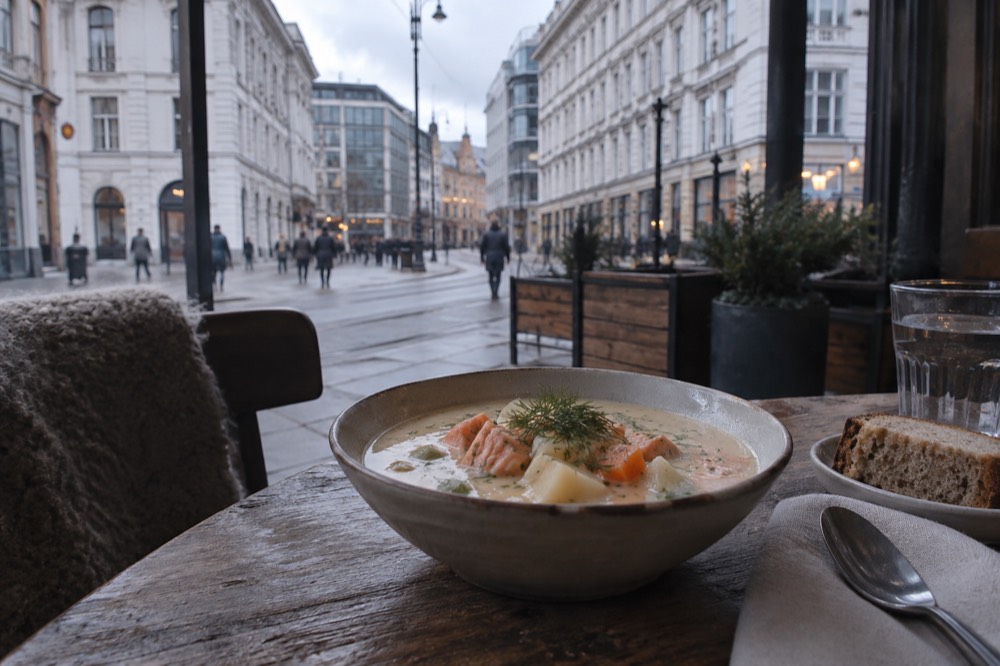
Fiskesuppe is the dish to order once the temperature drops. It is a cream soup, usually with salmon and cod or other white fish, root vegetables and often shrimp, richer than it sounds and served everywhere from harbor shacks to hotel dining rooms. It is also the honest answer to "what do Norwegians actually eat in winter."
Cured and smoked fish rounds out the list. Gravlaks (salt-and-sugar-cured salmon with dill), cold-smoked salmon and hot-smoked mackerel are everyday bread toppings here, sold by weight at fish counters and eaten open-faced on the national sliced bread. The Norwegian relationship to salmon is the relationship other countries have to ham.
For the adventurous, the autumn tradition of rakfisk, salted and fermented trout, is the strongest test of nerve in the Norwegian kitchen, and lutefisk, the lye-treated dried fish eaten around Christmas, is the seasonal ritual version of the same preserve-or-starve logic. Both are widely available in Oslo in season and neither is for everyone.
If you would rather have someone arrange the tasting than navigate it yourself, three products cover the ground well: the Grünerløkka food and culture walk, the fjord evening cruise with a shrimp buffet, and a beer and culture walk. The table below compares what each one is actually for.
| Experience | What you eat | Where it happens | Best for |
|---|---|---|---|
| Grünerløkka food walk | Neighborhood tastings across markets and independent shops | Grünerløkka, the city's most food-dense district | Seeing how locals actually eat |
| Fjord evening cruise, shrimp buffet | Fjord shrimp with the traditional trimmings | On the water, departing central Oslo | The shrimp tradition, done properly |
| Beer and culture walk | Norwegian beer in several stops | City center | Understanding Norway's alcohol rules with a drink in hand |
Where Should You Eat Them in Oslo?
Eat shrimp at the waterfront around Aker Brygge and on the fjord boats; eat brunost, waffles and skillingsboller from bakeries and cafés, with the Grünerløkka district holding the densest concentration of good ones; and eat fish soup anywhere the menu says fiskesuppe in the colder half of the year. Mathallen, the food hall in the Vulkan area, is the single best one-stop answer for tasting many things in one visit.
Grünerløkka, the old working-class district east of the river Akerselva, is where Oslo's food identity is most concentrated. Independent cheese shops, bakeries, coffee roasters and small restaurants sit shoulder to shoulder, and the district's food culture is the reason a dedicated neighborhood food walk exists here rather than in the center. The Grünerløkka neighborhood guide covers the district's layout if you want to plan the walk yourself.
Mathallen Oslo, the food hall in the old industrial Vulkan buildings by the river, is the practical answer for a visitor with limited time. Under one roof you get cheese counters, fishmongers, butchers, coffee and bars, which makes it the easiest place in the city to assemble your own tasting plate of brunost, cured fish and whatever else this page has made you hungry for. The Mathallen food hall guide has the details on stalls and opening hours.
The Grünerløkka food and culture walking tour is the bookable version of the same idea: a local guide leads a roughly two-and-a-half-hour route through the district's food culture, with tastings built in. It is the strongest food product in the city that is anchored in a neighborhood rather than a set of restaurants, and it suits visitors who want the context, not just the calories.
For the shrimp specifically, the waterfront is the point. The shrimp tradition is a shore tradition, and eating it while looking at the water it came from is most of the experience. The classic version is the evening cruise with a shrimp buffet, which puts the whole meal on a boat in the fjord; the Oslofjord cruise guide covers the other ways to get out on that same water if you would rather eat shrimp on land and sail separately.
What Is the Deal with Fjord Shrimp?
Fjord shrimp are small, cold-water northern shrimp, and in Norway they are eaten cold, hand-peeled and plain, with white bread, mayonnaise and lemon, never as a warm plated dish. The season peaks in summer and early autumn, and the ritual of peeling them yourself at the table is considered the whole pleasure rather than a chore. In Oslo the tradition is strongest at the waterfront and on the fjord boats.
This is the food that most rewards eating it in the right place. A bucket of shrimp on a kitchen table in January is a sad thing; the same shrimp on a boat in July with the city sliding past is one of the experiences people come back from Oslo talking about. The evening cruise with shrimp buffet is the bookable version of exactly that, and it is a Norwegian institution rather than a tourist invention: the operator's listing carries a strong rating across thousands of reviews.
The shrimp tradition also explains something about Norwegian food generally: it is unpretentious. Nobody sauces fjord shrimp. The bread is plain, the mayonnaise comes from a jar, and the quality lives entirely in the shrimp. If you are used to food cultures where the kitchen does the work, this is the adjustment, and most visitors make it within one peel.
What Does Eating in Oslo Cost?
Eating in Oslo is expensive by any European measure, but unevenly so: groceries, bakery items and street food are merely dear, while restaurant dinners and especially alcohol are where the money goes. Statistics Norway's 2025 price-level survey puts food and non-alcoholic drinks 33% above the European average and alcohol more than double it, which is why locals buy shrimp from a fish counter and eat it on a bench.
That SSB survey is the honest anchor for this question, because individual menu prices shift constantly and any specific figure dates a page. Norway was the sixth most expensive country in Europe overall, with prices facing households 28.6% above the EU average. The practical translation for a visitor: the foods on this page are mostly the cheap ones. Brunost from a shop, a bakery skillingsbolle, and shrimp by weight from a fishmonger cost a fraction of a sit-down dinner, and they happen to be the most Norwegian things you can eat anyway.
| Cost category | How it compares to the European average | What it means for eating |
|---|---|---|
| Food and non-alcoholic drinks | 33% above average | Grocery and bakery eating is dear but manageable |
| Alcohol | More than double the average | The single biggest cost at any restaurant |
| Overall price level | 28.6% above the EU average for households | Sixth most expensive country in Europe |
The budget strategy that follows from those numbers is simple: eat the traditional foods in their traditional formats. The Oslo on a budget guide and the cheap eats guide go deeper, but the shape of it is to buy from counters and bakeries, treat restaurant dinners as a planned splurge, and be extremely careful about alcohol in restaurants, which is where an ordinary dinner doubles in price.
How Do Norway's Alcohol Rules Change the Food Experience?
Wine and spirits are sold only through Vinmonopolet, the state monopoly, which keeps short hours, closes all day Sunday and closes early on Saturdays, while supermarkets sell only beer and cider up to 4.7% ABV and stop selling it at a fixed evening cut-off. The result is that beer is a normal part of eating out in Oslo, while wine with dinner is a deliberate, priced-in decision.
For a visitor, this changes the shape of a food day more than any menu does. A beer with a burger is normal and only somewhat expensive. A bottle of wine with dinner means restaurant markups stacked on some of the highest retail alcohol prices in Europe, and many Norwegians simply do not do it, which is why the pre-drink culture and the strength of the city's bar scene exist in the form they do. The price of beer in Oslo guide covers the specifics.
This is also why a guided beer and culture walk is a genuinely useful product in this city rather than a novelty. Someone who explains the monopoly, the supermarket strength limit and the local brewing landscape while you taste through it is doing something the rules make necessary. The beer and culture walk does exactly that, and it pairs naturally with a food walk if you are building a full eating day.
What Should You Eat If You Only Have One Day?
Build the day around three stops: a bakery skillingsbolle and coffee in the morning, fjord shrimp at or near the water at midday, and a walk through Mathallen or Grünerløkka in the afternoon for brunost, cured fish and whatever else the counters are offering, with an evening fjord cruise with shrimp buffet if you want the day to end on the water. Fish soup replaces the shrimp if you are visiting between November and March.
The one-day version works because the foods cluster. Mathallen and Grünerløkka sit beside each other along the Akerselva river, the waterfront is a short walk from there, and the fjord boats leave from piers in the same central stretch. You can cover the bakery, the food hall, the neighborhood and the water without ever needing more than a single ticket on the tram.
Season changes the plan more than weather does. Summer and early autumn are shrimp season, and that is when the fjord-and-shrimp version of the day is at its best. From late autumn through winter, the same skeleton works with fiskesuppe in the shrimp slot, and the dark months are when the evening walks and the indoor food culture carry the city. The best time to visit Oslo guide covers the trade-offs in full.
Common Questions About Must-eat Foods in Oslo
what is a must eat in oslo?
Fjord shrimp eaten cold with bread, lemon and mayonnaise, ideally on or beside the water. After that, brunost (brown cheese) on a heart-shaped waffle, a skillingsbolle cinnamon bun, Norwegian fish soup in the colder months, and cured or smoked salmon eaten on bread. These are the everyday foods of the country, not restaurant inventions, and they are what the city does best.
Is Norwegian food just salmon?
Salmon is the export, not the whole kitchen. The foods Norwegians themselves name first are more often brunost, shrimp, waffles, fish soup and the preserved fish traditions of autumn and Christmas. Salmon is certainly everywhere, mostly cured or smoked and eaten on bread, but treating it as the national menu misses most of what is worth eating here.
What is brunost and will I like it?
Brunost is caramelised whey cheese, made by boiling the whey from cheesemaking until the milk sugars brown. It is sweet, tangy and fudge-like, with no close equivalent elsewhere. Whether you like it is genuinely unpredictable, and Norwegians expect visitors to be divided on it. Try it on a fresh waffle, which is its natural home, and decide from there.
Where is the best place to eat in Oslo?
For the traditional foods rather than fine dining, Grünerløkka and the Mathallen food hall at Vulkan are the densest areas, and the waterfront around Aker Brygge is the natural home of the shrimp tradition. A neighborhood food walk through Grünerløkka is the efficient way to taste across many small producers in one afternoon.
Is food in Oslo really that expensive?
Yes, but unevenly. Statistics Norway's 2025 comparison puts food and non-alcoholic drinks 33% above the European average and alcohol more than double it. Bakery items, grocery counters and fishmongers are merely dear; restaurant dinners with wine are where budgets break. The traditional foods on this page are mostly the affordable formats.
Can I drink beer with food in Oslo?
Yes, and beer is the normal accompaniment to casual eating. Wine and spirits are sold only through the state monopoly Vinmonopolet, which closes Sundays and early on Saturdays, and supermarkets sell beer only up to 4.7% ABV with an evening cut-off. In restaurants, alcohol is the single biggest driver of the bill, more than doubling the European average.
For more on eating your way through the city, the best restaurants in Oslo guide and the street food guide cover the restaurant and casual ends of the same spectrum, and Oslo Travel Guide has the full food section if your trip runs longer than a day.