Is Oslo Really Worth Visiting?
An honest, numbers-first answer to whether Oslo is worth visiting, covering costs, sights, the fjord, the missing old town, and who the city suits best.
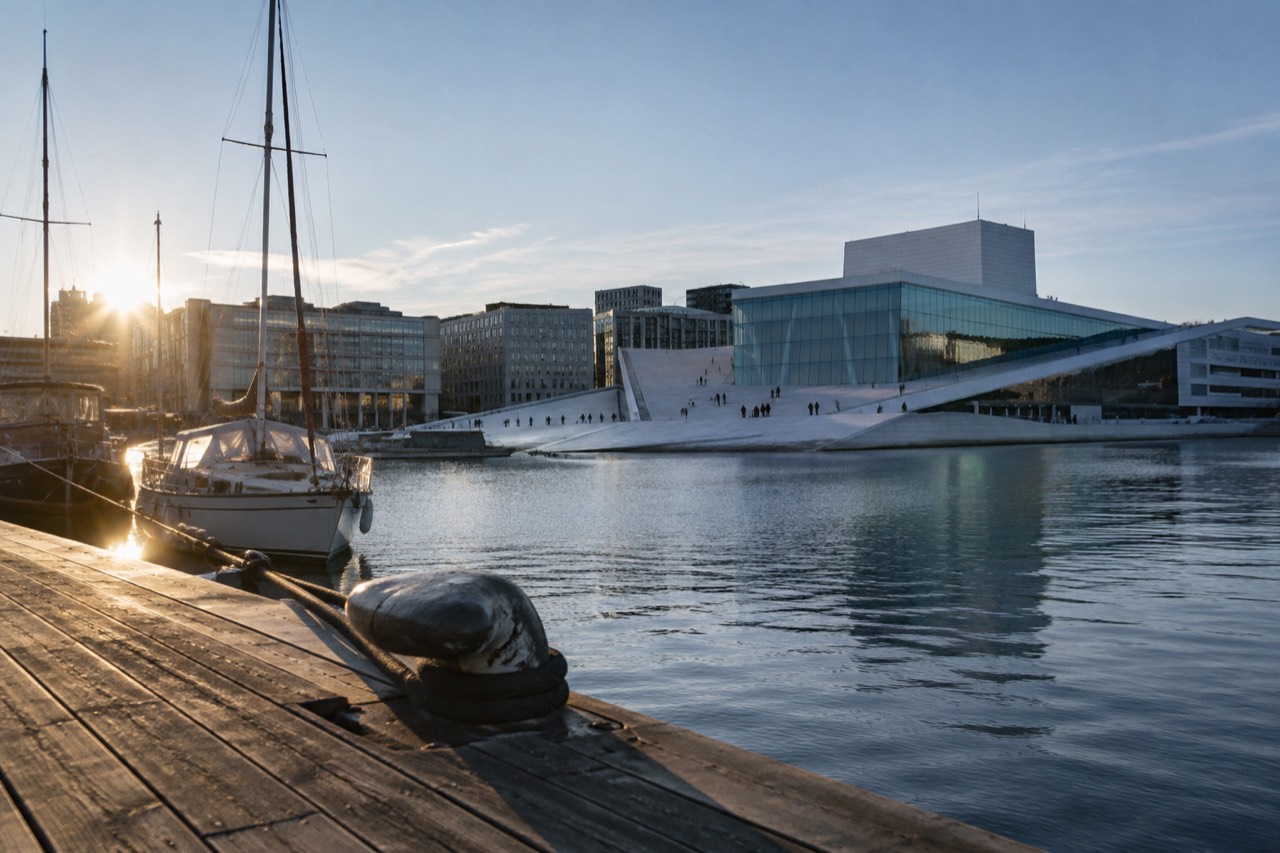
Oslo gets a strange amount of hesitation from travelers planning a Scandinavia trip. Stockholm has the old town everyone photographs, Copenhagen has the food scene, Bergen has the colorful wharf, and Oslo has a reputation for being the expensive, modern one with less to see. That reputation is half right and half completely wrong, and the difference matters if you are deciding where your days and your budget go.
The honest starting point is a fact most guides never mention: Norway is the sixth most expensive country in Europe on Statistics Norway's 2025 price-level survey, with household prices 28.6% above the EU average and alcohol more than double the European average. That is real, and it shapes every day you spend in the city. But the same city has a sculpture park open 24 hours for free, a fjord that begins at the downtown waterfront, and a museum peninsula reachable by boat. Whether that adds up to "worth it" depends on what you are actually shopping for, so this page works through the question with numbers rather than vibes.
Is Oslo Really Worth Visiting?
Yes, for most first-time visitors to Scandinavia, Oslo is worth visiting, with two conditions attached. It is worth it if you budget for the things that are genuinely expensive, mainly restaurants and alcohol, and it is worth it if you give it at least two full days rather than treating it as a half-day stop between Stockholm and Bergen. Visitors who do both consistently leave surprised by how much green space, water and world-class museums fit inside one small capital.
The core of the case is density. You can walk from the central station to the Opera House roof in ten minutes, and the roof itself is free and open to anyone. The Akershus Fortress grounds, the harbor promenade at Aker Brygge, the botanical garden at Tøyen and the entire island chain of the Oslofjord are all within a single transit zone. Very few European capitals put this much publicly accessible water and greenery within a twenty-minute ride of their center, and none of it charges admission.
The counterargument is real too, and pretending otherwise would be dishonest. Oslo burned down and was rebuilt repeatedly, so it lacks the medieval core that makes Bergen or Stockholm's Gamla Stan feel historic. And the cost of a restaurant dinner or a bar beer is high enough that it changes behavior; Statistics Norway's survey puts alcohol and tobacco at more than double the European average. If your image of a city trip is long old-town wanders ending in cheap dinners, Oslo will fight you on both counts.
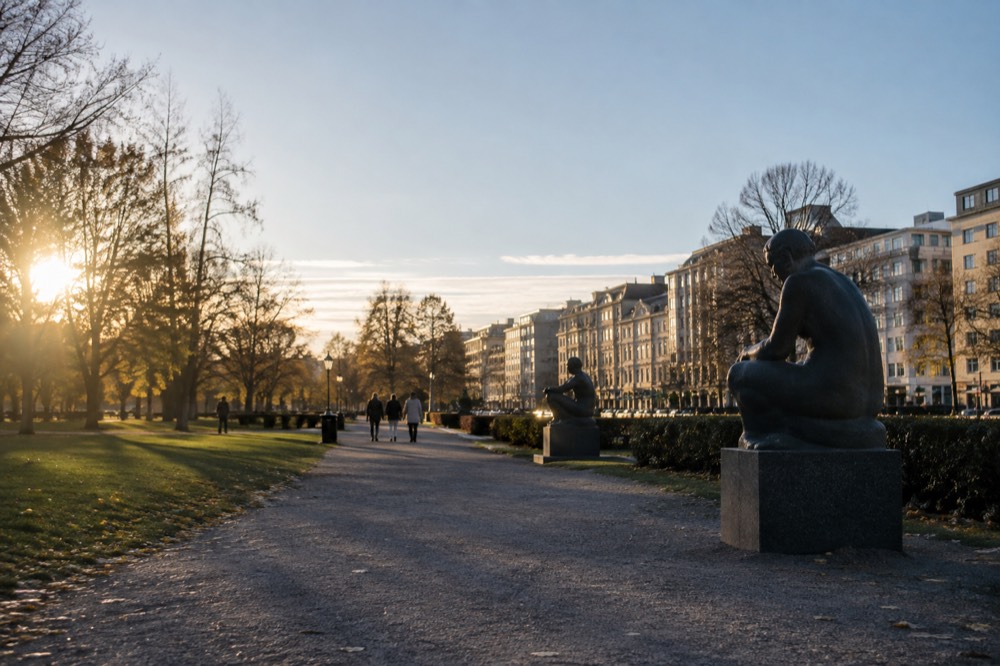
What Oslo does instead, it does at a level that surprises people. The Vigeland installation in Frogner Park is the world's largest sculpture park by a single artist, over 200 works, free, and open around the clock. The National Museum holds one version of The Scream. The MUNCH museum dedicates eleven floors to a single painter. And the Oslofjord is not a day trip from the city; the islands are a twenty-minute ferry ride from Aker Brygge on an ordinary transit ticket.
Is Oslo Worth Visiting
Oslo is worth visiting as a city break of two to four days, especially between May and September when the fjord, the islands and the parks are all in play. It is less worth it as a single-day add-on squeezed between other Scandinavian capitals, because its best experiences, the museum peninsula, the island ferries and the forest edge, each need half a day of their own. Rushed Oslo is the Oslo that disappoints.
The city rewards a certain pace. A morning at the Kon-Tiki and Fram museums on Bygdøy, an afternoon ferry to Hovedøya's ruined abbey, an evening walk up the Opera House roof for the sunset over the fjord: none of these can be compressed into an hour between trains. The visitors who rate Oslo highest are the ones who picked two or three things per day and did them properly, and the ones who rate it lowest are usually the ones who tried to walk the whole center in an afternoon and found it modern and quiet.
Season matters more here than in most capitals, and the reason is astronomical rather than cultural. At 59.91 degrees north, Oslo gets 18 hours 50 minutes of daylight at midsummer and under six hours at midwinter. A June visit gives you evening light on the water until nearly eleven at night. A December visit gives you a window between roughly 09:18 and 15:11, which is workable for museums and the Christmas market but not for island swimming. There is no midnight sun at this latitude, but summer evenings stay in deep twilight and never go properly dark.
If you are weighing Oslo against adding days elsewhere in Norway, the honest split is this: Oslo for the museums, the design and the easy fjord access, western Norway for the dramatic scenery. The two are different products, and the Norway in a Nutshell route is the classic way to bolt the fjord region onto an Oslo start.
Is Oslo Worth Visiting for Tourists?
For tourists, Oslo is worth visiting mainly as a museum-and-waterfront city rather than a monument city. The tourist infrastructure is excellent, English is near-universal, and the sights cluster tightly, but the headline attractions are museums, parks and the fjord rather than palaces and medieval lanes. Tourists who come for culture and coast leave happy; tourists expecting a picture-postcard old town adjust their expectations.
The practical tourist experience is unusually smooth. Signage is bilingual, card payment is accepted almost everywhere including buses and ferries, and the transit system runs on one app with one zone structure covering the metro, trams, buses and the island ferries. The city is also safe by any European measure, and compact enough that most visitors never need more than a single transit ticket per day. Our guide to getting around Oslo covers the ticketing details.
The tourist sights, ranked by how reliably they deliver:
| Sight | What it is | Admission | Time needed |
|---|---|---|---|
| Vigeland Park | Over 200 sculptures by one artist, outdoors | Free, open 24h | 1 hour |
| Opera House roof | Walkable marble slope over the fjord | Free | 30 minutes |
| Kon-Tiki Museum | Thor Heyerdahl's expedition rafts | 180 NOK | 1 hour |
| Fram Museum | The polar ship, fully boardable | 180 NOK | 1 to 3 hours |
| MUNCH | Eleven floors of Edvard Munch | 280 NOK | 2 hours |
| Akershus Fortress grounds | Renaissance castle and harbor walls | Grounds free | 1 hour |
A pattern jumps out of that table, and it is the pattern that decides the verdict for most people: the outdoor icons are free and the indoor ones are moderately priced by big-city standards, roughly 180 to 280 NOK for the major museums. What Oslo does not do is charge you for the water, the parks or the skyline. The cost pressure comes later, at dinner.
One tourist-facing caveat deserves its own sentence: the Museum of the Viking Age on Bygdøy is closed until 2027, and any itinerary or listing that promises the Viking ships this year is selling something that does not exist. The full story is in our Museum of the Viking Age guide, and Viking Planet in the center is the honest, bookable alternative.
Is Oslo, Norway Worth Visiting?
Oslo, Norway is worth visiting specifically because it is the most accessible version of the Norwegian landscape anywhere in the country: a fjord with swimmable islands inside the transit zone, a forest with groomed ski trails at the end of a metro line, and a city center you can leave on foot in twenty minutes. No other Norwegian city puts nature this close to the capital's business district.
That claim sounds like tourism-board padding until you check the mechanics. Line 1 of the metro ends at Frognerseteren, on the edge of Nordmarka, a forest of marked trails that Skiforeningen grooms for skiing all winter. The island ferries B1 and B2 leave from Aker Brygge on an ordinary ticket and reach Hovedøya, Gressholmen and Langøyene in under half an hour. The Sognsvann lake trailhead is a metro ride from the National Theatre. You can be in genuine wilderness, or on a quiet island beach, inside forty minutes of leaving your hotel.
The fjord itself is the reason many visitors book the trip, and the decision of which boat to take is worth making deliberately. The electric sightseeing cruise runs silently, which changes the experience of the inner fjord more than you would expect; the wooden sailing ship is the heritage version; the shrimp-buffet evening boat is the Norwegian institution. The full fjord cruise comparison breaks down the trade-offs.
For visitors weighing Norway as a whole, the framing that holds up is this: Oslo is the country's cultural capital and the practical gateway to everywhere else, with the Bergen railway, the Nutshell route and the flights north all starting here. It is not the place to see fjord-country cliffs or the aurora, and it does not pretend to be. Norway is in Schengen but not in the EU, uses the krone rather than the euro, and prices reflect that the country sits outside EU VAT entirely.
Is Oslo Worth Visiting?
Oslo is worth visiting, full stop, for travelers whose interests run to modern architecture, maritime and polar history, contemporary art and outdoor access, and it is the best small-city version of Norway on offer. It is not worth visiting for travelers whose main pleasure is historic streetscapes and low-cost dining, because Oslo is thin on the first and firmly priced on the second. Match the city to the traveler, not the other way around.
The strongest single argument for the city is the Bygdøy peninsula, a cluster of national museums that between them tell the story of Norwegian exploration better than anywhere else on earth. The Kon-Tiki Museum holds the balsa raft Thor Heyerdahl sailed 8,000 kilometers across the Pacific in 1947, and the Fram Museum lets you walk the actual ship that carried Amundsen and Nansen into the ice, both for 180 NOK each, or 325 NOK combined on the museums' own joint ticket. The Bygdøy guide covers how to get there, including the seasonal ferry and year-round bus 30.
The second argument is the art. The National Museum's collection includes one of the painted versions of The Scream, and MUNCH gives the painter an entire waterfront building with views that compete with the canvases. Add the Astrup Fearnley collection of contemporary art at Tjuvholmen and the Ekeberg sculpture park above the eastern harbor, and Oslo covers more ground per square kilometer than its size suggests. Everything else covered here is indexed on Oslo Travel Guide.
The third argument is the one locals would give first: the city works. The harbor promenade connects the Opera House to Aker Brygge in a continuous waterfront walk, the Grünerløkka district delivers the café-and-vintage-street energy people expect of a European capital, and the food halls and coffee scene punch above the city's size. Oslo is not a place that performs for visitors, which is either its weakness or its charm depending on what you came for.
Is Oslo Old Town Worth Visiting?
Oslo has no medieval old town worth visiting, because fires and redevelopment erased it, and this is the single biggest gap between expectation and reality in the city. The closest equivalents are the Kvadraturen quarter's surviving 17th-century buildings, the Akershus Fortress grounds and the wooden houses on the museum peninsula, none of which amount to a Gamla Stan or a Bryggen. Plan for Oslo's actual strengths instead.
This deserves a direct answer because so much disappointment traces back to it. Travelers arrive expecting the wooden-wharf atmosphere of Bergen or the cobbled lanes of Stockholm and find a city center that is largely 19th and 20th century, rebuilt after fires in 1624 and 1850 and again after the waterfront redevelopments of recent decades. Christiania Torv and the streets around it hold some of the oldest surviving structures, and Oslo Cathedral from 1697 anchors the historic core, but it is a modest quarter, not a destination in itself.
The honest substitutes, in order of value:
| Alternative | What you get instead | Cost |
|---|---|---|
| Akershus Fortress | Renaissance castle, grounds, harbor walls, Resistance Museum | Grounds free |
| Norsk Folkemuseum | A relocated open-air town of historic wooden buildings | 200 NOK |
| Kvadraturen | The surviving 17th-century grid and Oslo Cathedral | Free to walk |
| Bygdøy ferry crossing | Historic peninsula approach by boat | 70 NOK one-way |
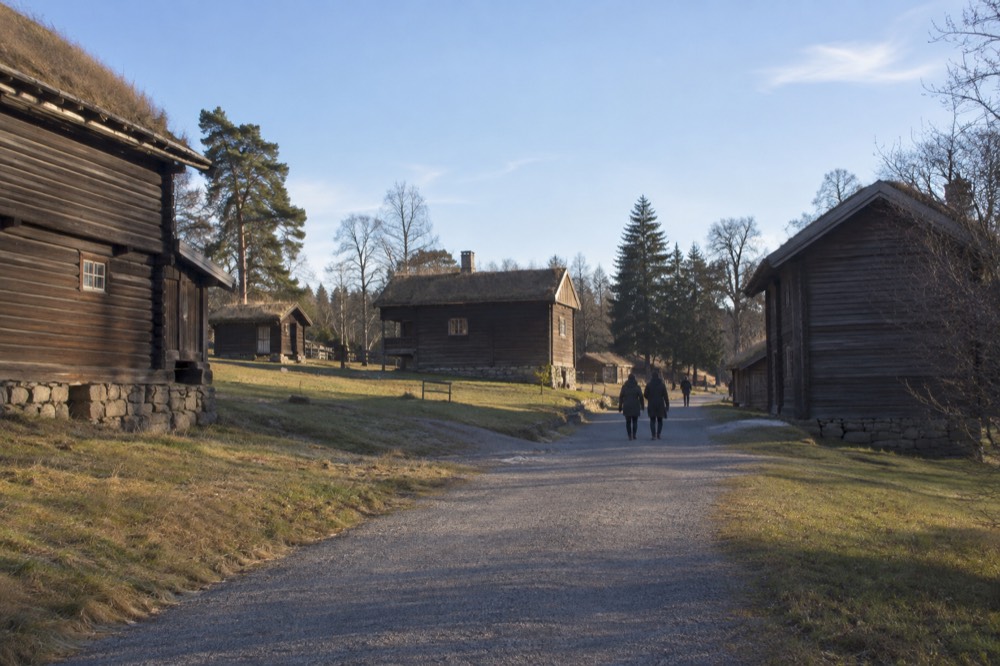
The Norsk Folkemuseum on Bygdøy is the real fix for the missing old town: it is an open-air museum with relocated buildings spanning centuries of Norwegian town and rural life, children under 18 enter free, and it sits a short walk from the Dronningen ferry pier. If your heart was set on historic streetscapes, spend your old-town hours there and at the fortress rather than hunting for something the city does not have.
When Is Oslo Least Worth Visiting?
Oslo is least worth visiting in the depths of winter if you are not interested in winter itself, and in late August if you dislike rain, because August is statistically the city's wettest month at 103 mm on the 1991 to 2020 normals. The dark months from November to January compress sightseeing into a six-hour daylight window, which suits museums and cozy interiors but defeats parks and islands.
The winter case is more nuanced than the raw daylight numbers suggest. December's Christmas market, torchlit walks, snowshoeing in Nordmarka and the learn-to-ski half-day are genuine products, and Oslo is one of very few capitals where a ski slope sits inside the transit zone. The Oslo in winter guide makes that case properly. But a visitor who arrives in January expecting a general city break will find the sun rising at 09:18 and setting at 15:11, and that constraint is not negotiable.
The budget case flips the question: the cheapest months to visit are the shoulder ones, and the cheapest time to fly to Oslo question has its own answer. What never gets cheaper is the restaurant floor, which is set by national price levels rather than by season.

The Verdict, and How to Spend the Money
Oslo is worth visiting for the majority of travelers who go in with correct expectations: a modern, expensive, outdoor-heavy capital with world-class exploration museums and a working fjord. Budget roughly as you would for any major Scandinavian city, spend on the museums and one boat trip, eat one proper restaurant meal, and use supermarkets and food halls for the rest. The city rewards planning and punishes improvisation.
The money map is uneven in a way that works in a careful visitor's favor. Museums cluster at 180 to 280 NOK, public transport is a single modest fare across the whole central zone, and the parks, the fortress grounds, the Opera House roof and the islands cost nothing beyond a ferry ticket. What genuinely stings is alcohol, at more than double the European average, and restaurant dinners, which is why the Vinmonopolet monopoly, the supermarket beer limit of 4.7% and the early Saturday closures are practical knowledge rather than trivia here.
A defensible two-day budget for one adult, using only sourced figures:
| Item | Cost | Notes |
|---|---|---|
| Oslo Pass, 48h | 845 NOK | Over 30 museums plus all central-zone transit |
| Three museum days without the pass | 560 NOK | Kon-Tiki, Fram and MUNCH at full price |
| Bygdøy ferry round trip | 140 NOK | Included with the Oslo Pass |
| Vigeland Park | 0 NOK | Free, open 24 hours |
| Island ferry to Hovedøya | Standard transit fare | Ordinary Ruter ticket applies |
That table contains the whole argument for the city in miniature. The Oslo Travel Guide position, built from the price data rather than from enthusiasm, is that a 48-hour visit built around the pass, the peninsula and one fjord cruise costs less than a comparable weekend in several cheaper capitals, once you keep the restaurant spending disciplined.
Common Questions About Whether Oslo Is Worth Visiting
is oslo worth visiting
Yes, as a two-to-four-day city break focused on museums, waterfront walks and the fjord. The outdoor icons are free, the major museums cost 180 to 280 NOK each, and the main expense is restaurants and alcohol rather than sightseeing.
is oslo really worth visiting?
For most first-time Scandinavian visitors, yes, provided you budget for dining and give the city at least two full days. The density of museums, parks and accessible water inside one small capital is unusual, and the common disappointment comes from rushed visits or expecting a medieval old town that does not exist.
is oslo worth visiting for tourists?
Yes, for tourists seeking culture and coast rather than historic streetscapes. English is near-universal, transit is simple, the sights cluster tightly, and the biggest sights, Vigeland Park and the Opera House roof, cost nothing.
is oslo, norway worth visiting?
Oslo is worth visiting because it is the most accessible version of the Norwegian landscape in the country: islands and swimming beaches inside the transit zone, a ski forest at the end of a metro line, and a fjord that starts at the downtown waterfront.
is oslo worth visiting?
Yes, if your interests include polar and maritime exploration history, Munch and contemporary art, modern architecture and easy outdoor access. No, if historic lanes and inexpensive dining are your primary reasons for city travel.
is oslo old town worth visiting?
Oslo has no medieval old town, because fires and redevelopment erased it. The closest substitutes are the Kvadraturen quarter, the Akershus Fortress grounds and the open-air Norsk Folkemuseum on Bygdøy, where children enter free.