Is Oslo Known for Seafood?
Yes, but not the way coastal Norway is. Here is what Oslo seafood actually means: fjord shrimp, Mathallen counters, the evening shrimp buffet cruise, and what it costs.
Is Oslo Known for Seafood?
Yes, though not in the way a coastal town like Bergen or Ålesund is. Oslo sits at the head of the Oslofjord, and the city's food identity leans on fjord shrimp, cured and smoked salmon, cod in winter, and a strong seafood-counter culture around Mathallen and the harbor. The honest answer is that Oslo is known for eating seafood well and conveniently, rather than for landing it in industrial quantities.
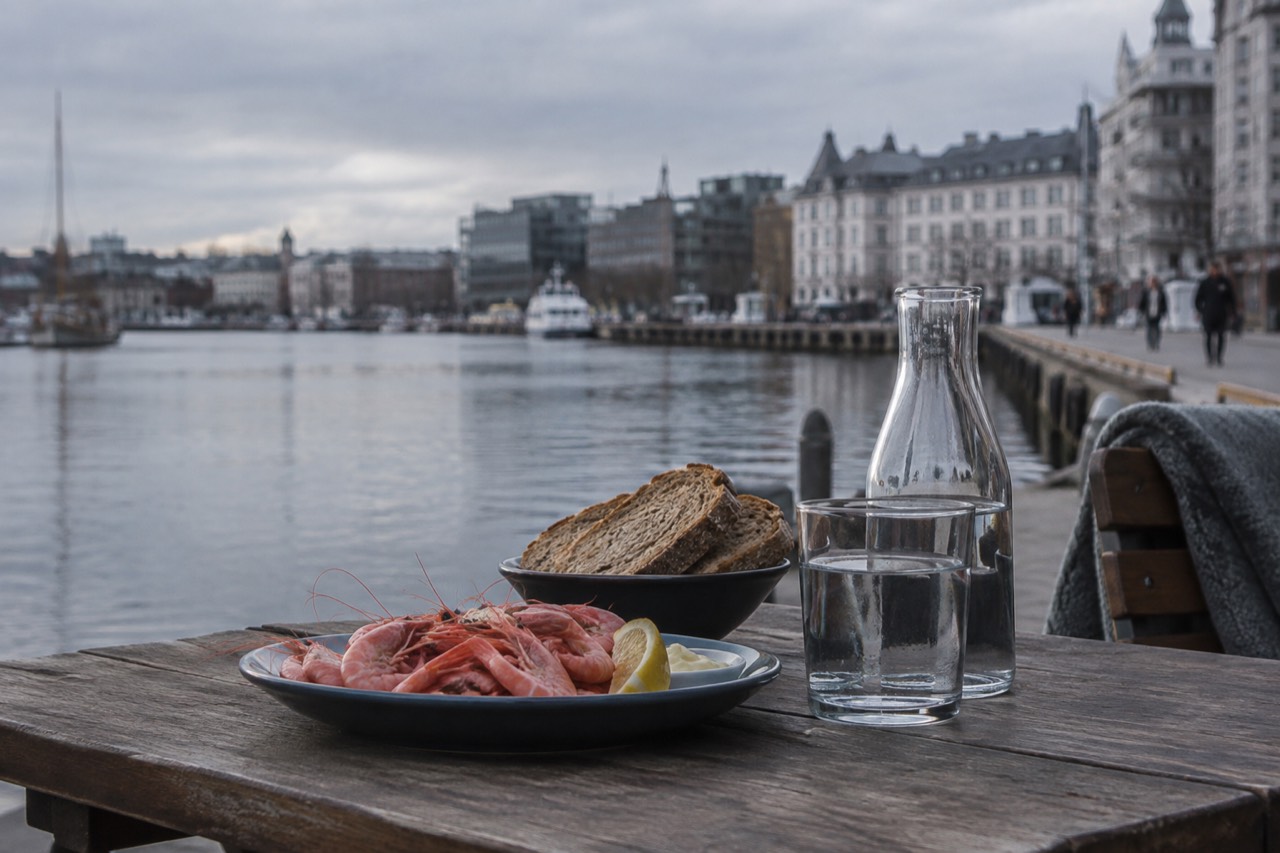
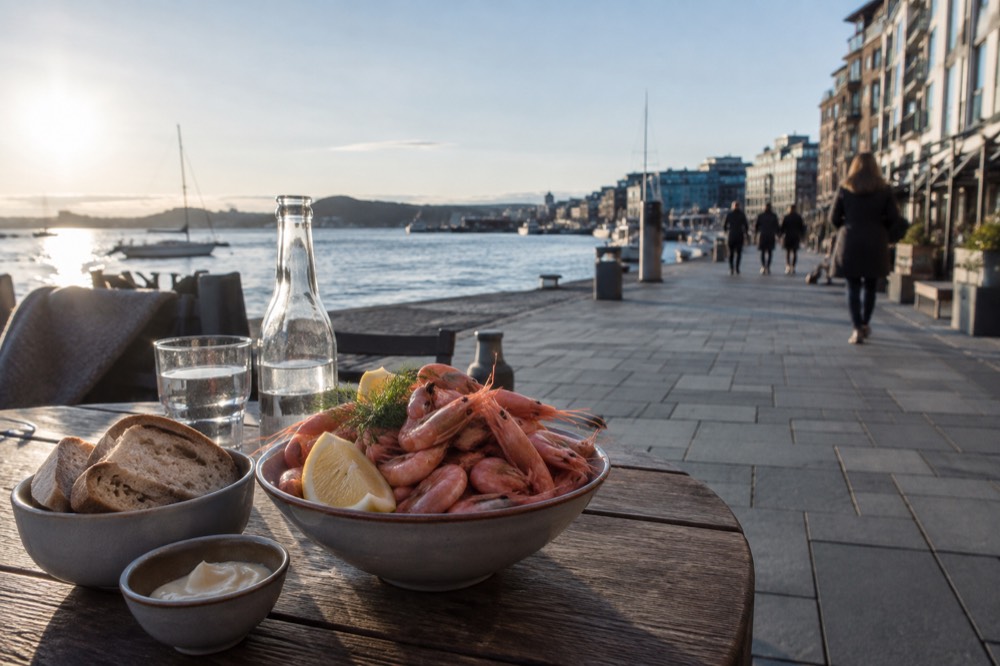
That distinction matters for how you plan. Nobody comes to Oslo to watch a fish market auction at dawn, because there isn't one on that scale. What the city offers instead is unusually fresh fjord and North Sea product, served in a compact center where the water is a ten minute walk from almost any restaurant district. The shrimp that the Oslofjord is famous for appear on menus from April through autumn, and the classic way to eat them is deliberately simple: peeled by hand, with bread, mayo and a lemon, ideally near the water they came from.
The Norwegian food culture around fish is also older and deeper than the city's current restaurant scene. Curing, salting, smoking and drying were how a long coastline preserved its catch long before refrigeration, and those techniques still define what a Norwegian seafood plate looks like. Dried and cured fish remains a genuine export industry for Norway, and the flavors that built it, salt, smoke and patience, are the ones Oslo kitchens still work with.
One more thing worth setting straight early: Norway is in Schengen but not in the European Union, it uses the krone rather than the euro, and it sits outside EU VAT. That shapes seafood prices in ways most visitors don't expect, and we come back to it below, because cost, not availability, is the real story around eating fish in Oslo.
What Seafood Is Oslo Actually Known For?
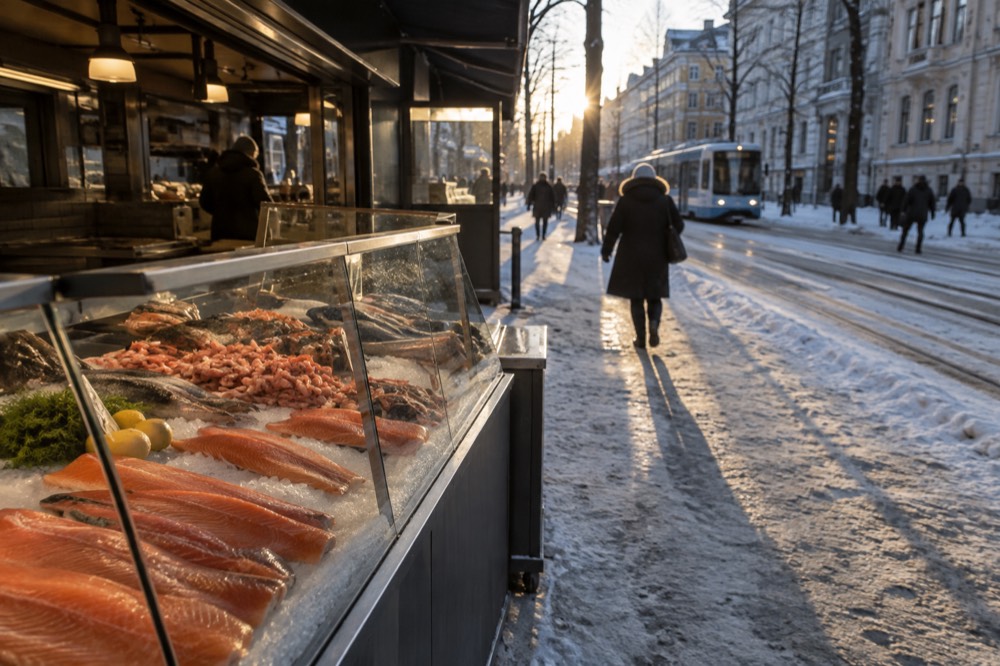
The short list is fjord shrimp, cold-water cod and skrei, cured and smoked salmon, trout, and the shellfish that turn up in season, with mackerel in late summer. Shrimp are the signature item: small, sweet, cold-water prawns that Norwegians eat cold, hand-peeled, on bread or with mayo. Cod is the winter hero, and salmon in its cured and smoked forms is the everyday staple that shows up at breakfast, on open sandwiches and at every seafood counter in the city.
Shrimp deserve the top slot because they are the item most tied to Oslo itself. The fjord shrimp season runs through the warmer months, and the ritual around them is specific: you buy them cooked and cold, you peel them yourself at the table, and the peeling is considered part of the meal rather than a chore. The traditional serving is a simple fiskekake-style setup of bread, butter, mayonnaise, lemon and a pile of shrimp, sometimes with a cold beer. It is a picnic food as much as a restaurant food, and the harbor areas at Aker Brygge and the piers around Rådhusbrygge are where you find it closest to the water.
Cod is the other pillar. Norway's winter cod fishery, the skrei that migrate south to spawn, is one of the largest and most managed in the world, and Oslo kitchens serve it through the colder half of the year. The Norwegian relationship with cod includes dried and salted versions, stockfish and salted cod, which built entire coastal economies and remain a real export business. In the city you will mostly meet it fresh, in fish soups, pan-seared fillets and the cod tongues and cheeks that coastal cooks treat as a delicacy.
Salmon is the everyday face of Norwegian seafood, and it is worth being precise about it. The farmed salmon Norway is famous for exporting is a modern industry, but the cured and smoked salmon on Oslo menus comes out of older preservation traditions, and the quality at a good counter here is a level above what most visitors have had at home. Gravlaks, the sugar-and-dill-cured version, and its mustard sauce are as close to a national seafood dish as Norway has. Trout, including the cold-smoked røkelaks, sits right beside it.
| What to order | What it is | Where you meet it in Oslo |
|---|---|---|
| Fjord shrimp, cold and hand-peeled | Small sweet prawns, served cold with bread, mayo, lemon | Harbor-side at Aker Brygge, seafood counters, the fjord boats |
| Gravlaks | Sugar-and-dill cured salmon, sliced, with mustard sauce | Breakfast and lunch spreads, Mathallen counters, delis |
| Smoked salmon and trout | Cold-smoked fillets, the everyday cured fish | Hotel breakfasts, open sandwiches, food halls |
| Cod and skrei | Fresh winter cod, fillets, fish soup, tongues and cheeks | Restaurant menus, roughly winter through spring |
| Mackerel | Late-summer oily fish, often grilled or cured | Seasonal menus and market counters |
| Fish soup, fiskesuppe | Creamy coastal fish soup, often with shrimp and root vegetables | Seafood restaurants and harbor kitchens year-round |
The open sandwich, the brødkniv-sized matpakka culture's restaurant cousin, is the format where most of this gets eaten. A slice of good bread with cured salmon, or a shrimp sandwich with the shells still on the side, is standard Oslo lunch food rather than a tourist dish, and it is the cheapest honest way to eat well here.
Where Do Locals Eat Seafood in Oslo?
Locals split into three camps: the seafood counters and vendors around Mathallen food hall in Grünerløkka, the harbor restaurants at Aker Brygge and Tjuvholmen, and the neighborhood fish shops and everyday restaurants spread through areas like Frogner and Majorstuen. The visitor-friendly concentration is Mathallen and the harbor strip, but the everyday reality is that most Oslo seafood is bought at a counter and eaten at home or on a bench.
Mathallen Oslo, the food hall in the Vulkan complex on the Grünerløkka side of the Akerselva river, is the single best one-stop answer. It is a former iron works turned indoor market, and its counters include fishmongers selling cured and smoked product you can take away or eat on the spot. Because it sits in Grünerløkka, the city's most food-forward neighborhood, a visit pairs naturally with the coffee shops, bakeries and bars around it. If you want to understand what Oslo seafood culture looks like on an ordinary Tuesday, this is the place, and our Mathallen food hall guide covers it in detail.
The harbor strip is the other pole. Aker Brygge, the converted shipyard district on the west side of the piped waterfront, concentrates seafood restaurants with fjord views, and prices to match the real estate. Tjuvholmen just south of it continues the same scene past the Astrup Fearnley museum. This is where the classic cold-shrimp-and-a-view experience lives, and where most of the visitor money around Oslo seafood gets spent. Our Aker Brygge neighborhood guide maps the district if you want to plan the walk.
The third camp is the one guides usually skip: fish shops and everyday restaurants in the residential west and the gentrifying east. Norwegians buy a large share of their seafood raw from a fishmonger and cook it at home, which is one reason restaurant seafood here carries the premium it does. The neighborhood guides for Frogner and Grünerløkka both point at the everyday eating options in those districts.
If you would rather have the neighborhood interpreted for you than find it yourself, the food walk is the efficient route. The Grünerløkka food culture walking tour moves through exactly this district, east-side eating culture, counters, vendors and the stories behind them, with a local guide doing the ordering.
There is also a self-guided version of the same idea: our where to eat in Oslo guide sorts the city by meal and budget, and the best restaurants in Oslo guide covers the top end, where several kitchens work the fjord product seriously.
Is Seafood Expensive in Oslo?
Yes, restaurant seafood in Oslo is expensive, but the reason is general rather than fishy: Norway is the sixth most expensive country in Europe, households face prices 28.6% above the EU average, and food is 33% above it, with alcohol more than double. The offset is that supermarket and counter seafood, and the simple shrimp formats, cost far less than a sit-down fish restaurant, so the same fjord product spans a wide price range depending on where you eat it.
Those numbers come from Statistics Norway's 2025 European price-level survey, and they are the honest frame for the question. Eating out in Oslo is expensive across the board, and fish dishes sit at the top of the menu because fish is a premium raw material in a country that both produces and exports it. What surprises most visitors is how uneven the picture is. Museums, public transport and the outdoors, including the harbor itself, are not unusually expensive by big-city standards. Restaurants and alcohol are where the money goes. The rest of the planning pages sit on Oslo Travel Guide. The rest of the planning pages sit on Oslo Travel Guide.
| Cost factor | Level vs EU average | What it means for seafood |
|---|---|---|
| Overall household prices | 28.6% above | Everything from a coffee to a dinner runs high |
| Food and non-alcoholic drink | 33% above | Raw fish and supermarket seafood cost more than at home |
| Alcohol and tobacco | More than double | The beer beside your shrimp costs more than the shrimp |
| Museums and transport | Not unusually high | The harbor, piers and views are effectively free |
| Outdoor spaces | Free | The classic shrimp picnic costs only the shrimp |
That last row is the real budget answer. The most traditional way to eat Oslo's signature seafood, cold shrimp peeledd by hand on the waterfront, is a picnic format, and the waterfront itself, from the Opera House roof to the piers, is public and free. The money goes into the fish, not the table.
Two Norwegian rules shape the rest of the evening. Wine and spirits are sold only through Vinmonopolet, the state monopoly, which closes on Sundays and public holidays and early on Saturdays, and supermarkets sell only beer and cider up to 4.7% ABV with a fixed evening cutoff. This is why a beer with your shrimp is a harbor-restaurant luxury, and why the classic Norwegian move is to buy the shrimp at a counter and take it somewhere with a view.
If you want the seafood experience without the restaurant bill, there are two reliable routes: a food tour, which bundles several stops and tastings into one price, or the shrimp-buffet fjord cruise, which combines the eating with the boat ride.
Can You Eat Seafood Straight from the Oslofjord?
Partly, and this is where Oslo differs from every other Scandinavian capital. The fjord is a working body of water that reaches the city center, its shrimp support a real seasonal fishery, and the island ferries run on ordinary public transport tickets. What you cannot do is show up expecting a fish market on the scale of Bergen's or Tokyo's; the Oslo version is smaller, seasonal and mostly channeled through counters, harbor kitchens and boats rather than a single market hall.
The geography is the point. Oslo sits at the northern head of the Oslofjord, a long arm of water that connects to the Skagerrak and the North Sea beyond it, and the city's waterfront is walkable in a way that few capitals' is. The shrimp that define the local season come from these cold, relatively shallow waters, and the boats that land them tie up within sight of the City Hall.
The islands extend the same idea. The public ferries B1 and B2 leave from Aker Brygge on an ordinary Ruter ticket and serve Hovedøya, Gressholmen, Langøyene and the other islands, several of which have swimming beaches and picnic spots. A bag of cold shrimp from a counter, a ferry ride and a spot on the rocks at Langøyene is about as close to eating from the fjord as the city offers, and the whole outing costs a transport ticket plus the shrimp. Note the distinction that trips visitors up constantly: the Bygdøy museum ferry from Rådhusbrygge 3 is a separate, seasonal operator that does not take Ruter tickets, while the island ferries from Aker Brygge do.
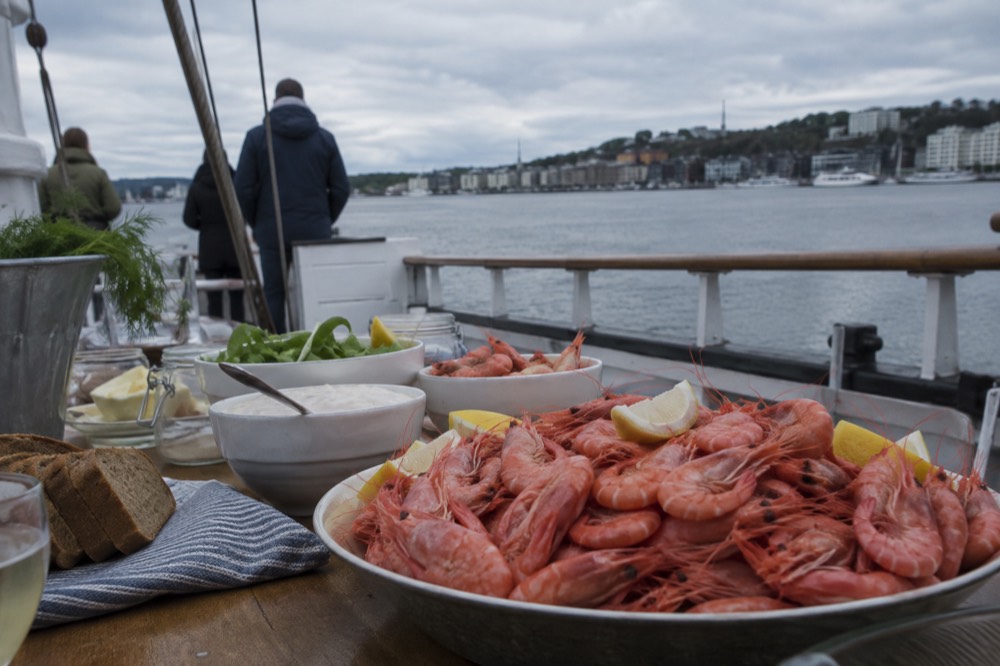
The other way to eat on the fjord is the evening cruise with shrimp buffet, a three-hour boat trip that serves the classic peel-your-own shrimp supper while the city slides past. It is the closest thing Oslo has to a signature food experience on the water, and reviews consistently describe it as exactly the Norwegian institution it sounds like: unhurried, simple food, long summer light. In June the sun sets at 22:43, so a summer evening departure runs in daylight nearly the whole way.
For the fuller picture of the boats, including the silent electric cruise and the island-hopping formats, our Oslofjord cruise guide compares all the options, and the free things to do in Oslo guide covers the parts of the waterfront that cost nothing at all.
What Is the Best Way to Experience Oslo Seafood on a Short Visit?
On a short visit, stack three experiences: a shrimp-based meal on or beside the water, a counter visit at Mathallen for the cured and smoked fish, and either a food walk or the evening shrimp cruise if you want it guided. That sequence covers hand-peeled shrimp, gravlaks and smoked salmon, and the fjord setting, which together are what Oslo seafood actually is, without spending a night in an expensive harbor restaurant unless you want to.
The order matters less than the spread. A one-day visitor can do the harbor shrimp at lunch, walk the waterfront to the Opera House roof, which is free and public, and finish with a Mathallen counter stop in the late afternoon. A visitor with two evenings can give one to the boat, and the shrimp-buffet cruise doubles as the fjord sightseeing and the dinner, which is efficient in a city where both of those things cost money separately.
The guided options each earn their place differently. The food walks, including the Grünerløkka one above, buy you interpretation and access to kitchens you would not find alone. The beer and culture walk is the other face of Norwegian food rules: with alcohol as expensive and regulated as it is, a guided route through the city's beer culture is genuinely more useful than it sounds, and it pairs naturally with an evening in the same neighborhoods. Our Oslo street food guide covers the cheaper end of the same scene if you would rather self-direct.
Whatever you choose, book the boat and the food walks ahead in summer. The shrimp season and the long evenings concentrate everyone's appetite on the same few departures, and the harbor tables fill the same way.
Common Questions About Is Oslo Known for Seafood?
is oslo known for seafood?
Yes, though as a place that eats seafood well rather than a major fishing port. Fjord shrimp, cured and smoked salmon, winter cod and a strong seafood-counter culture around Mathallen and the harbor are what the city is actually known for.
What seafood should I try in Oslo?
Start with cold fjord shrimp, hand-peeled with bread, mayo and lemon. Add gravlaks, the dill-cured salmon with mustard sauce, cold-smoked salmon or trout, and fresh cod or fish soup in winter. Mackerel appears in late summer menus.
Is seafood expensive in Oslo?
Restaurant seafood is expensive because Norway overall runs 28.6% above the EU price level and food 33% above it. Counter-bought shrimp and supermarket fish cost much less, and the classic waterfront shrimp picnic is the budget-friendly version of the same product.
Where is the best place to eat seafood in Oslo?
Mathallen food hall in Grünerløkka for counters and take-away, Aker Brygge and Tjuvholmen for harbor restaurants with views, and the evening fjord cruise if you want the shrimp served on the water itself.
Can you eat fresh fish from the Oslofjord?
Yes, seasonally. The fjord's cold-water shrimp are the signature catch, served cooked and cold from April through autumn. The island ferries from Aker Brygge run on ordinary public transport tickets, so a shrimp picnic on an island beach is an easy half-day trip.
Do I need to book seafood experiences in Oslo in advance?
In summer, yes for the evening shrimp-buffet cruise and the popular food walks, since departures fill when the season and the long evenings coincide. Counter visits at Mathallen need no booking, and harbor restaurants take walk-ins outside peak dinner hours.