Is Oslo Known for Coffee?
Yes, Oslo is genuinely known for coffee, and the answer explains why, what it costs, and how the city's café culture actually works for a visitor.
Is Oslo Known for Coffee?
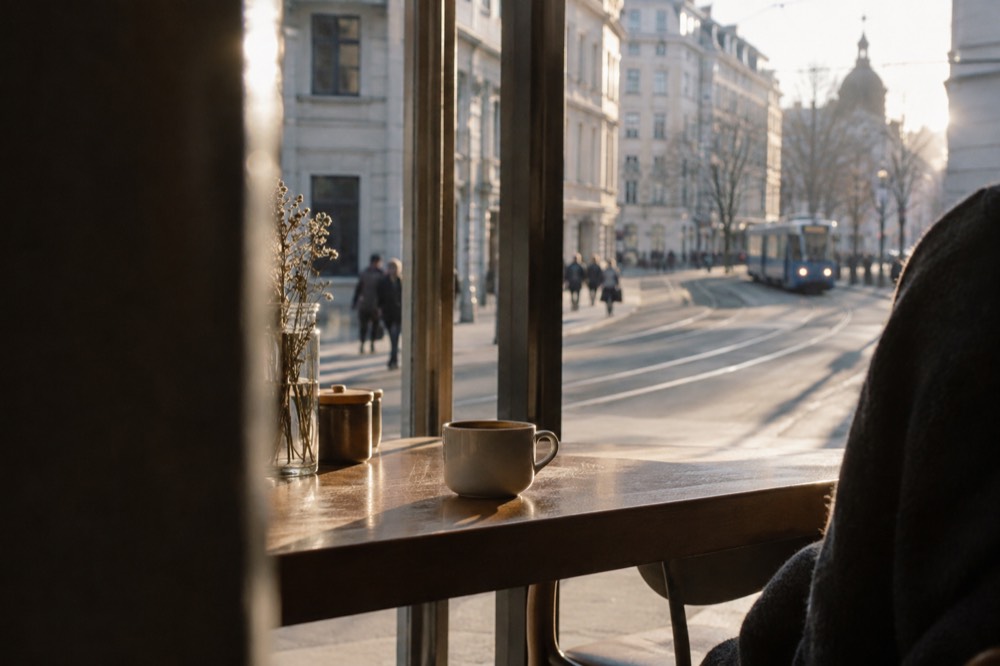
Yes, and the reputation is earned rather than manufactured. Oslo runs on coffee in a way few European capitals do, and the city's café scene is compact, quality-obsessed and deeply local. Norwegians are consistently among the heaviest coffee drinkers in the world, and Oslo concentrates that national habit into a walkable center full of independent roasters and serious espresso bars. A visitor notices it within a day: the cafés are full at breakfast, full at the afternoon pause, and the coffee itself is unusually good.
Norway's relationship with coffee is old and practical. It is a cold-country habit that became a social institution: the morning cup at home, the workplace coffee that is genuinely free and genuinely drinkable in most Norwegian offices, and the long Saturday coffee that anchors weekend life. Oslo took that baseline and layered a modern specialty scene on top of it, so the city now has both the volume habit and the craft end of the spectrum sitting side by side.
What makes the Oslo version distinct is scale. This is a small capital, and the specialty coffee scene is concentrated in a handful of central neighborhoods. That means a visitor can walk between several of the city's best cafés in a single morning, something that takes planning and metro rides in London or Paris. The scene is also unusually local in ownership, with independent roasters and bakers rather than international chains setting the tone.
The honest caveat is price. Norway is the sixth most expensive country in Europe on Statistics Norway's 2025 purchasing-power comparison, with food and non-alcoholic drink prices sitting 33 percent above the European average, and café coffee sits inside that price level. The coffee culture is real, the quality is real, and the bill is real too. The rest of this article covers how to enjoy it without letting it eat the budget.
Why Is Oslo's Coffee Culture So Strong?
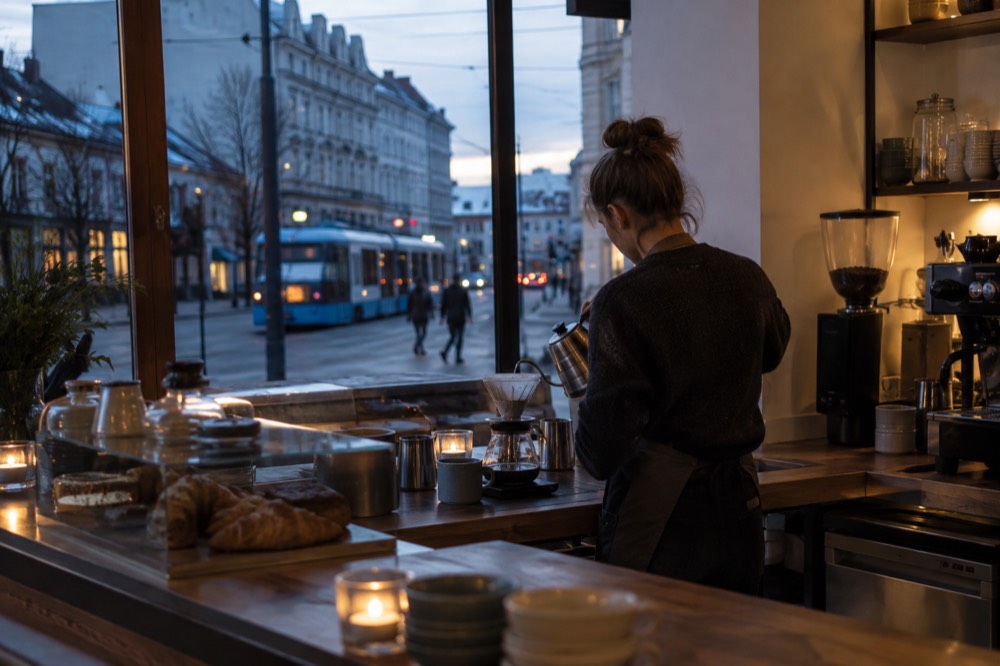
Coffee became a Norwegian daily institution before it became a style, and Oslo built its specialty scene on top of a habit that was already universal. In most countries specialty coffee had to persuade people to drink coffee at all; in Norway it only had to upgrade an existing ritual. That is why the scene feels native rather than imported, and why even small neighborhood cafés in Oslo serve carefully sourced beans rather than defaulting to commodity roast.
The historical layer is the one foreign guides usually skip. Norway modernized late and stayed rural long into the twentieth century, and coffee was the warm drink that carried people through that climate and those winters. The habit embedded itself so deeply that the coffee break, the kaffepause, remains a protected part of the working day. Office coffee in Norway is free, filtered and expected, which is not true in the United States or most of southern Europe.
The modern layer arrived when a small group of Norwegian roasters and baristas started competing internationally and winning. Norwegian roasters and baristas have taken world brewing and barista championships in recent years, and that success gave the domestic scene confidence and visibility. Oslo's cafés responded by treating light-roast filter coffee as a signature rather than a niche, which is now the single most recognizable Norwegian coffee style.
The third layer is the city's baking culture. Oslo's best cafés are very often also bakeries, and the pairing of a cardamom bun or a cinnamon knot with filter coffee is the standard Oslo café order in a way that a plain espresso at a standing bar, the Italian model, is not. If you are planning a food-focused visit, our piece on where locals eat in Oslo covers the same overlap from the food side.
The practical result for a visitor is a scene that works all day. Oslo cafés are busy from early morning through the afternoon dark-season slump, they welcome laptop work and long sits far more than southern European bars do, and they are distributed across neighborhoods rather than packed into one tourist strip.
What Does Coffee Actually Cost in Oslo?
Café coffee in Oslo is expensive by any European measure, because Norway's food and drink prices run about a third above the European average and restaurants and cafés sit at the top of that band. A specialty filter coffee or a cappuccino in a central Oslo café is a genuine budget line, not a rounding error, and the honest planning approach is to treat two café coffees a day as a real cost rather than an invisible one.
The verified numbers that exist are the structural ones. Statistics Norway's 2025 European price-level survey puts overall prices facing Norwegian households 28.6 percent above the EU average, food and non-alcoholic drink 33 percent above, and alcohol and tobacco at more than double the European average. Coffee bought in a café sits in the restaurant-and-café band of that price structure, which is the expensive band. No verified per-cup figure for Oslo exists in our research, so this article will not print one: check the board in any café and the price will be on it plainly.
What can be said with confidence is the shape of the cost curve. Coffee made at home or at an office in Oslo is cheap, because the raw material is not taxed the way alcohol is, and supermarket coffee in Norway is decent by default. The expensive version is the café version, where you are paying Oslo rent and Oslo wages, which are the real drivers of the bill rather than the beans.
| Where you drink it | What drives the price | Budget reality for a visitor |
|---|---|---|
| Hotel or apartment, supermarket beans | Raw material only, no service | Cheap, and the quality floor is surprisingly high |
| Office or co-working space | Usually free, filtered, expected | Effectively zero if you have access |
| Neighborhood café off the center | Rent and wages at Oslo levels | A daily habit that adds up fast |
| Central specialty café | Oslo rent, wages and craft premium | The memorable version, budget it deliberately |
The budget framing matters because the rest of Oslo is not uniformly expensive. Museums, public transport and the outdoors are genuinely reasonable, and several of the city's headline sights cost nothing at all: Vigeland Park is free and open 24 hours a day year-round, and the Opera House roof is a free public walk. A visitor who spends freely on café mornings can balance the day with free afternoons, a trade-off covered in detail in our Oslo on a budget guide.
A morning of café hopping and a free afternoon sight pairs naturally with a booked activity in the evening, and the selection above is the shortlist that fits that shape of day.
Which Oslo Neighborhoods Are the Coffee Neighborhoods?
Grünerløkka is the city's coffee heartland, with the highest density of independent roasters and bakeries, and Vulkan and Majorstuen are the other two names to know. Central Oslo around Karl Johans gate has the chain and mainstream coverage, but the specialty scene lives one bridge east in Grünerløkka and in the converted industrial buildings of Vulkan, with Majorstuen holding a quieter, more local cluster.
Grünerløkka, the former workers' district on the east side of the Akerselva river, is where the scene concentrated first. Its blocks of wooden houses and converted warehouses now hold a dense run of cafés, and the neighborhood's character, young, design-heavy, slightly scruffy in the right way, matches the coffee style. The area is walkable end to end in under half an hour, so a coffee crawl here is genuinely a stroll rather than a commute. Our Grünerløkka area guide maps the neighborhood in full.
Vulkan, immediately south of Grünerløkka across the river, is the smaller, more deliberate version: a cluster of converted industrial buildings around a food hall, Mathallen, where coffee sits alongside bread, cheese and everything else Norwegian. It is compact enough to cover in an hour and makes a natural first or second stop. The Mathallen food hall guide covers what else is in there.
Majorstuen, west of the center toward Frogner Park, is the local's version: fewer visitors, solid cafés, and a layout that puts coffee within a short walk of Vigeland Park, which is free and always open. Combining a Majorstuen café morning with a sculpture-park walk is one of the better cheap days the city offers, and the Vigeland Park guide explains what you are looking at once you get there.
If the day needs an anchor beyond the cafés themselves, the fjord cruise is the natural one: it runs from the harbor at the bottom of the same walkable center, it needs no planning beyond a booking, and free cancellation is available if the weather turns.
Is Filter Coffee or Espresso the Oslo Default?
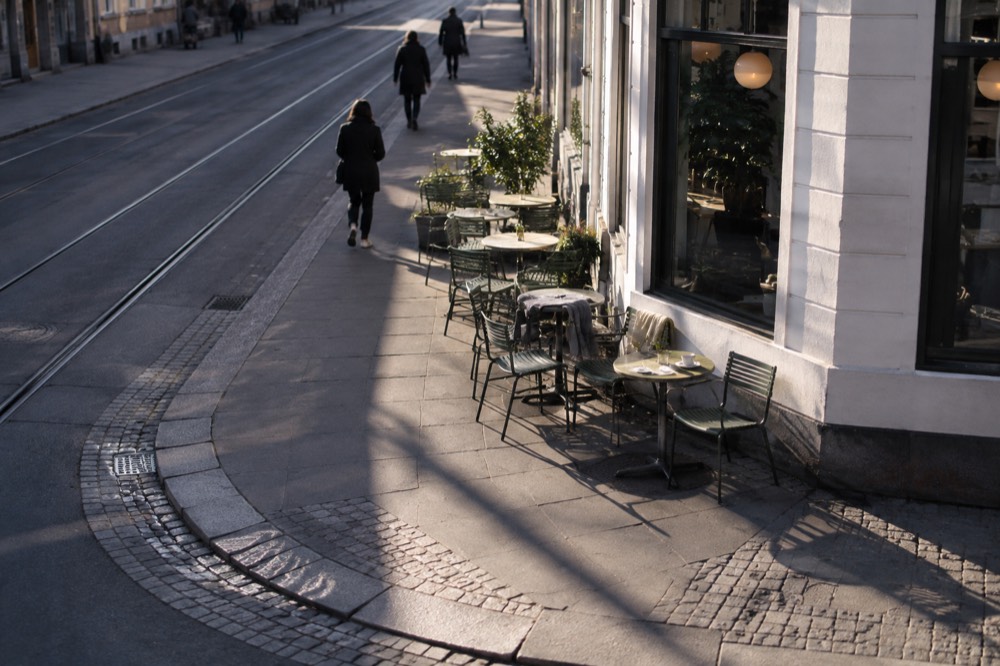
Filter coffee is the Norwegian signature and the thing Oslo's scene is internationally known for, served as light-roast single-origin brews rather than the dark diner filter of the United States. Espresso drinks are fully available everywhere, but the local order at a serious Oslo café is a filter of the day, and the light-roast style, bright, tea-like, fruit-forward, is the taste that defines the city.
The light-roast filter style is the Norwegian contribution to world coffee. Where Italian tradition roasts dark for sweetness through milk, and American third-wave roasting split the difference, Norwegian roasters pushed roasts lighter still, which pulls out acidity and origin character and hides flaws less kindly. It is a style that demands good beans, which is partly why the Norwegian scene's reputation and its sourcing standards rose together.
For a visitor this has a practical edge: if you normally drink coffee with a lot of milk and sugar, Norwegian light-roast filter can taste startlingly sharp on first sip. Order a smaller size, drink it a bit cooler, and the fruit notes arrive. If it still is not your style, every café in the city will make a competent cappuccino, and the milk drinks in Oslo are generally excellent because the same roasters supply them.
The other local signature is the pairing, not the brew method. The cardamom bun, the skillingsboller and cinnamon knot family of Norwegian baking, is the standard companion order, and Oslo's best coffee bars are usually also its best bakeries. That makes the Oslo café stop closer to a Vienna café stop than a Milan espresso bar: you sit, you eat something warm, you stay a while.
Can You Build a Whole Coffee-themed Day in Oslo?
Yes, easily, and it is one of the better cheap-day structures the city offers. A realistic version is a Grünerløkka bakery morning, a walk south along the Akerselva river through Vulkan, a free afternoon at Vigeland Park or the Opera House roof, and an evening on the fjord, with two or three café stops spread across it rather than clustered in one block.
The spine of the day is the Akerselva river, which runs from the northern neighborhoods down through Grünerløkka and Vulkan to the city center, past waterfalls, old factory buildings and parkland. Walking it south is roughly a one-way stroll of a few kilometers, entirely free, and it threads together the two main coffee neighborhoods without any transport at all. The free things to do in Oslo guide lists the other no-cost pieces that can fill the gaps.
Timing matters more than route. Oslo's daylight swings from 5 hours 53 minutes at the winter solstice to 18 hours 50 minutes at midsummer, so a winter version of this day needs to start by 10:00 to catch any light at all, while a June version can begin with a 06:00 coffee and still have evening sun at 21:00. The Oslo daylight hours guide has the full month-by-month table.
| Stop on the day | What it is | Cost basis |
|---|---|---|
| Grünerløkka bakery café | Filter coffee and a cardamom bun | Café prices, Oslo level |
| Akerselva river walk south | Waterfalls, murals, old industrial buildings | Free |
| Vulkan and Mathallen | Food hall, second coffee, bread to carry | Pay for what you eat |
| Opera House roof | Public walk on the building itself | Free |
| Evening fjord cruise | The city from the water | Booked activity |
The evening fjord leg is the part worth booking ahead, and the silent electric boat is the natural pick after a slow café day: quiet, unhurried and the single best-reviewed activity in the city.
Do Oslo Cafés Work for Working, or Just for Coffee?
They work for working, and that is one of the clearest cultural differences between Oslo and southern European coffee cities. Long sits, laptops and notebooks are normal in Oslo cafés, many of which are laid out more like small public living rooms than bars, and nobody will hurry you out of a seat. The trade-off is that the best bakeries get crowded on weekends, when a table can be scarce between late morning and early afternoon.
The laptop-friendly norm comes from the same place as the coffee habit itself: the café is treated as semi-public space, an extension of the long Norwegian sit. Weekday mornings belong to commuters and parents with prams, midday belongs to meetings and students, and the afternoon belongs to everyone. Weekend afternoons in Grünerløkka are the exception, when every café in the neighborhood fills with the Saturday crowd and finding a table becomes the day's small challenge.
Power outlets are common but not universal, and the newer, smaller espresso bars are deliberately standing-room-ish, closer to the Italian model. A useful rule of thumb from the outside: the bigger the bakery counter, the more likely the café expects you to stay an hour; the smaller the bar and the more chrome on the machine, the more it expects a quick standing stop.
For visitors on a data plan, Oslo's café wifi is generally reliable and generally free with a purchase, and the city itself is well covered. Our eSIM and data in Oslo guide covers the connectivity side if the trip involves working days.
Common Questions About Coffee in Oslo
is oslo known for coffee?
Yes. Oslo is one of Europe's most serious coffee cities, with a national coffee habit that predates the specialty scene and a compact, quality-driven café landscape of independent roasters and bakeries. Light-roast filter coffee is the local signature style.
How much is a coffee in Oslo?
Café coffee in Oslo is expensive by European standards, inside a price level where Norwegian food and drink runs about a third above the European average. No verified per-cup figure exists in our research, so check the board in the café: prices are posted plainly. Coffee made from supermarket beans at your hotel is cheap by comparison.
What coffee style is Oslo known for?
Light-roast, single-origin filter coffee. Norwegian roasters pushed roasting lighter than most traditions, producing a bright, fruit-forward cup that is the city's international signature. Espresso and milk drinks are available everywhere and generally excellent, but the local order at a serious café is the filter of the day.
Where is the best area for cafés in Oslo?
Grünerløkka, the former workers' district east of the city center, has the highest density of independent roasters and bakery cafés. Vulkan and its food hall sit just south across the Akerselva river, and Majorstuen holds a quieter local cluster near Frogner Park.
Do Oslo cafés allow laptops and long stays?
Yes. Long sits and laptop work are normal in Oslo cafés, which function more like small public living rooms than standing bars. Weekend afternoons in Grünerløkka are the exception, when tables fill with the Saturday crowd and a long stay is harder to secure.
Is coffee in Oslo served with anything on the side?
The standard companion is Norwegian baking: the cardamom bun and its cinnamon knot relatives. Oslo's best coffee bars are very often also its best bakeries, which makes the café stop a seated, unhurried one closer to the Vienna model than the Milan one.
One honest closing note from the editorial desk at Oslo Travel Guide: nobody here has sat in these cafés, so every structural fact above, the price levels, the daylight hours, the free sights, comes from primary sources rather than a personal crawl. The coffee reputation itself is not in doubt. Oslo earned it, and a visitor with a filter of the day and a cardamom bun in Grünerløkka will understand why within the first sip.