Is Oslo Cheap or Expensive?
Oslo is expensive by European standards but not uniformly: alcohol and restaurants are dear, while museums, transport and the outdoors are not. Here is the honest breakdown in real numbers.
Is Oslo Cheap or Expensive?
Oslo is not cheap, but it is not uniformly expensive either, and the difference between those two statements is the whole planning question. Statistics Norway's 2025 price-level survey ranks Norway as the sixth most expensive country in Europe, with prices facing households sitting 28.6 percent above the EU average. Food runs 33 percent above the European average and alcohol and tobacco cost more than double. Yet the parts of Oslo most visitors actually come for, the museums, the fjord, the sculpture park, the forest, are either moderately priced or completely free, and public transport is cheaper than in several far less famous capitals.
That asymmetry is why two people can visit the same city in the same week and report completely different price experiences. One spends an evening on restaurant mains and bar beers and goes home shocked. The other walks Vigeland Park at dawn, rides the T-bane, buys a supermarket picnic, and wonders what all the fuss was about.
Is Oslo Cheap or Expensive?
Oslo is expensive by European standards, ranking sixth on the continent in Statistics Norway's 2025 comparison, but the cost is concentrated in specific categories rather than spread evenly. Alcohol, tobacco and restaurant meals carry the real premium, at double or more the European average, while museum tickets, public transport and virtually all of the city's outdoor attractions are either moderately priced or free. A visitor who plans around that split can spend less in Oslo than in many mid-sized European cities, while a visitor who does not will feel every krone. The question is less "can I afford Oslo" and more "which Oslo am I buying."
The useful way to think about it is in tiers. The painful tier is anything involving alcohol, restaurant table service, taxis, or hotel breakfasts. The moderate tier is museums, which mostly sit between 120 and 280 NOK at full adult price, and transit, which is zone-based and cheaper than London or Copenhagen equivalents for what it covers. The free tier is remarkably large: Vigeland Park is open 24 hours with no ticket, the Opera House roof is a public walkway, the Akerselva river path runs through the middle of the city, and the entire Oslofjord coastline is public land.
For a fuller treatment of the same question with a day-by-day budget breakdown, see the site's guide to whether Oslo is expensive, and for the trip-planning version, the Oslo trip cost breakdown itemizes a full visit.
How Expensive Is Oslo Compared with the Rest of Europe?
Norway is the sixth most expensive country in Europe on Statistics Norway's 2025 purchasing-power-parity survey, with prices facing Norwegian households 28.6 percent above the EU average. Food and non-alcoholic drinks run 33 percent above the European average, and alcohol and tobacco cost more than double the European average. Those are the three numbers that explain Oslo's reputation, and all three are about what Norwegians pay, not a tourist trap premium. The city is not singling visitors out; it is an expensive place for everyone, which is also why salaries are what they are.
The survey detail matters for planning because it tells you where the damage concentrates. A restaurant main is not slightly more than elsewhere, it is dramatically more, because restaurant labor and alcohol costs stack. A museum ticket, by contrast, is not meaningfully different from what you would pay in Amsterdam or Vienna. The categories behave differently, so a budget built on category choices rather than city-level anxiety is what actually works.
One comparison worth internalizing: on restaurants and hotels, Denmark is actually marginally more expensive than Norway, and Norway sits above Sweden. So a traveler pairing Copenhagen with Oslo does not experience a step change in restaurant prices between the two, they are both in the top tier. The shock tends to come from comparing Oslo with Berlin or Lisbon, not with its Scandinavian neighbors.
What Do Things Actually Cost in Oslo?
The reliable anchor points are these: adult museum admission runs from 120 NOK at the Vigeland Museum to 280 NOK at MUNCH, the Oslo Pass costs 580 NOK for 24 hours, and the pass covers more than 30 museums plus all public transport in zones 1 through 4N. Everyday food and drink prices are harder to pin down from official sources, which is why this site quotes Statistics Norway's category indices rather than inventing a price for a beer or a coffee. What is certain is the direction: restaurants and bars are where budgets break, tickets and transport are where they hold.
Here are the verified anchor prices, all read from the venues' own published rates:
| Item | Adult price | Notes |
|---|---|---|
| MUNCH museum entry | 280 NOK | 200 NOK after 18:00; under 25s pay 100 NOK; 17 and under free |
| Norsk Folkemuseum | 200 NOK | Children 0 to 17 free |
| Kon-Tiki Museum | 180 NOK | Family ticket (2 adults, 5 children) 400 NOK |
| Fram Museum | 180 NOK | Pairs with Kon-Tiki at 325 NOK combined |
| Vigeland Museum | 120 NOK | The sculpture park itself is free, 24 hours |
| Oslo Pass, 24 hours | 580 NOK | Over 30 museums plus transport in zones 1, 2, 3, 4V and 4N |
| Oslo Pass, 72 hours | 995 NOK | Senior and child versions cost less |
The pattern in that table is the point. Oslo's museum prices are ordinary for a European capital, and several of its headline sights cost nothing at all. The free things to do in Oslo list is not a consolation prize for budget travelers, it includes the city's most visited attraction in Vigeland Park and one of its best views from the Opera House roof.
Where the money genuinely goes is alcohol and restaurants. The monopoly system means wine and spirits are only sold at Vinmonopolet, which keeps short hours, closes early on Saturdays and is shut all day Sunday, and the tax structure pushes bar prices far above what most visitors expect. Supermarkets sell only beer and cider up to 4.7 percent ABV, with a fixed evening cut-off on sales. None of this is a secret from Norwegians; it is why the duty-free shop at Gardermoen does brisk business with residents, not just tourists.
Is the Oslo Pass Worth the Money for a Short Visit?
For a museum-heavy visit of one to three days, the Oslo Pass usually pays for itself, because it bundles entry to more than 30 museums and attractions with unlimited public transport in zones 1 through 4N, including the Vy trains to and from Oslo Airport Gardermoen. At 580 NOK for 24 hours against, for example, three Bygdøy museums at a combined 560 NOK full price, the pass covers the museums and effectively makes the transport free. The catch is that it covers neither Flytoget nor the Bygdøy ferry's Ruter exclusion, and a visitor who mostly wants free sights will never break even.
The airport train detail is the highest-value money fact on this site. The pass covers Vy's trains to and from Gardermoen but not Flytoget, which costs 268 NOK for an adult single. Vy's own trains take about 23 minutes against Flytoget's 20, on the same tracks, for roughly half the point-to-point price. A pass holder rides Vy for nothing; a non-holder who buys Flytoget out of habit pays a premium measured in minutes.
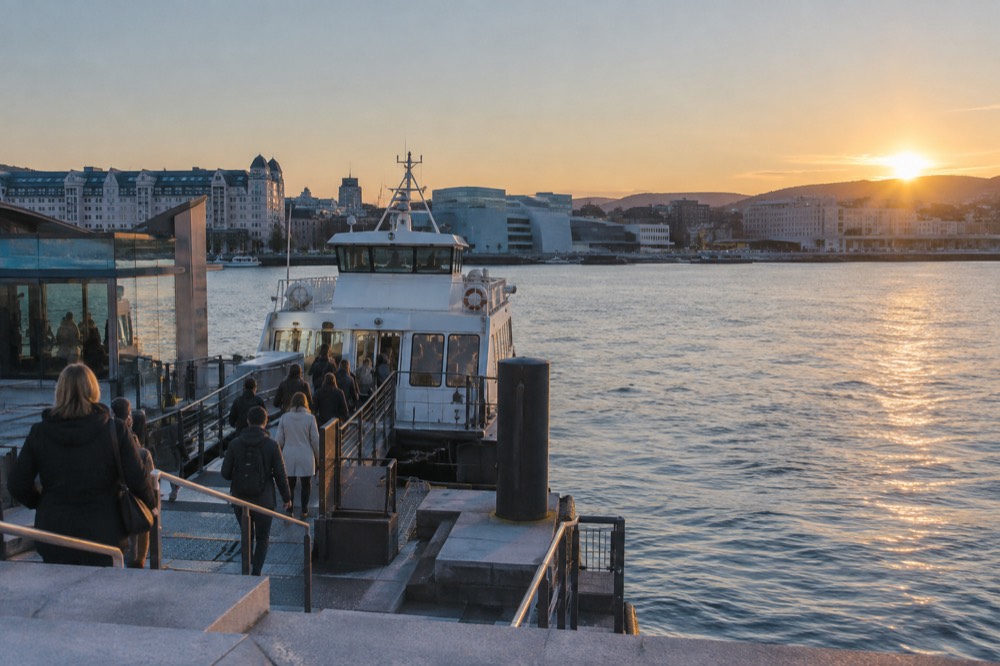
The pass also covers the Bygdøy museum ferry, which ordinary Ruter tickets do not, and the public island ferries, which they do. That asymmetry is worth knowing before you buy anything: the Bygdøy ferry is a separate operator departing Rådhusbrygge 3, while the island ferries B1, B1X and B2 are ordinary Ruter lines departing Aker Brygge. A day combining Bygdøy museums in the morning and an island swim in the afternoon is close to the pass's best-case use.
The full worked comparison, including the senior and child pricing and which museums are included, lives in the site's Oslo Pass worth-it breakdown, with the complete coverage detail in the Oslo Pass guide.
Where Is Oslo Genuinely Cheap?
Oslo is genuinely cheap, or free, in exactly the categories a visitor spends the most time on: the outdoors and the public realm. Vigeland Park's 200-plus sculptures are free and open 24 hours a day year-round, the Opera House roof is a public walkway with no ticket, the Akerselva river path runs from the fjord deep into the city, and the entire Oslofjord coastline and its islands are public land reachable on an ordinary transit ticket. Public transport itself is zone-based and covers the whole metro network inside zone 1, which is unusually generous.
The islands deserve a specific mention because they are the best-value half-day in the city. The Ruter ferry lines to Hovedøya, Gressholmen and Langøyene ride on a standard ticket, and what they deliver is an uninhabited-island landscape with ruined abbey walls, swimming coves and forest paths, twenty minutes from the City Hall pier area. Very few capitals sell that at commuter-fare prices. The Oslo islands guide covers which island suits which plan.
Museums are the second cheap category, relative to reputation. The 180 to 280 NOK range at full adult price is unremarkable for Europe, and the concessions are unusually generous: children are free at Norsk Folkemuseum, the Nobel Peace Center and MUNCH (17 and under), and under-25 pricing at MUNCH cuts the ticket to 100 NOK. A family of four can spend a full museum day in Oslo for less than the same family would spend in London or Amsterdam. The rest of the planning pages sit on Oslo Travel Guide. The rest of the planning pages sit on Oslo Travel Guide.
How Do You Visit Oslo on a Budget?
The budget playbook is category discipline: take the free walking tour for orientation, buy supermarket picnic food instead of restaurant lunches, drink tap water, which is excellent, and put your money into two or three museum entries rather than restaurant dinners. A visitor doing that can hold a Oslo day to a modest outlay while still seeing the city's headline sights, because the expensive tier is almost entirely optional. The Oslo on a budget guide carries the full version of this plan.
The free walking tour is the natural first move. The Free Highlights Walking Tour is the largest free walk in the city, running about two hours on a tip basis, and it covers the central core well enough that you can then decide what is worth paying to see more of. For visitors who prefer a fixed price and a smaller commitment, the budget central walking tour at around sixteen dollars is the cheapest credible paid option, and the site's guide to Oslo's free walking tours compares all of them.
Beyond the first day, the savings compound through choices rather than sacrifices. The T-bane to Frognerseteren costs an ordinary zone 1 ticket and delivers a forest-edge viewpoint and trailhead. Bus 30 to Bygdøy is the same fare and drops you at the museum doors. The evening MUNCH ticket after 18:00 saves 80 NOK over the daytime price for the same collection. None of these feel like austerity; they feel like using the city the way residents do.
Does Oslo Get Cheaper at Certain Times of Year?
Flights and hotels to Oslo fluctuate with season far more than ground costs do, so the timing lever is real but it works on the travel and lodging line, not on museum tickets or meals, which are the same in February and July. The cheapest months to fly are typically the shoulder and winter ones, outside the June-to-August peak and the December Christmas-market window, and a winter visit trades short daylight, under six hours at the solstice, for lower fares and a city that is fully functional and much quieter at the sights.
What winter does change is the experience rather than the price list. The Oslo in winter guide covers what actually works in the cold months, from the torchlit forest walks to the museums that are at their emptiest. What it does not change is the cost of a Kon-Tiki ticket or a metro ride. If the goal is a cheaper Oslo, the honest mechanics are cheaper flights, cheaper beds, and the same category discipline on the ground.
One timing note that does affect ground costs: Norway's national visitor levy framework took effect in July 2026, allowing municipalities to add up to 3 percent to accommodation prices, but Oslo has decided not to charge it. There is no city tourist tax on your hotel bill in Oslo, which is a small but genuine difference from many European capitals that pile one on.
So Is Oslo Worth the Money?
Oslo is worth the money if you spend it on the categories where the city is strong and priced fairly, museums, boats, forest and the public realm, and it is poor value if your idea of a city break is centered on restaurant dinners and nightlife drinking. The same week can cost two very different amounts depending almost entirely on those choices, because the fixed costs, entry fees and transit, are moderate while the discretionary costs, alcohol and table service, are among the highest in Europe.
The framing that helps is that Oslo is not trying to be cheap and does not apologize for not being so. What it offers in exchange is a capital where the top attraction is a free sculpture park, the waterfront is public, the drinking water is mountain reservoir quality, and the forest is a metro ride away. For travelers whose priorities match that profile, the price question mostly dissolves. For travelers who measure cities by their restaurant scenes, the Oslo cheap eats guide is the honest workaround, but the premium is real.
Common Questions About Oslo Prices
is oslo cheap or expensive?
Oslo is expensive by European standards, sixth on the continent on Statistics Norway's 2025 survey, with household prices 28.6 percent above the EU average. But the cost is concentrated in alcohol, tobacco and restaurants, while museums, public transport and the outdoors are moderately priced or free, so the answer depends heavily on how you spend your days.
How much does a day in Oslo cost?
There is no single verified figure, and this site does not publish invented per-item prices. The reliable anchors are museum tickets from 120 to 280 NOK, a 24-hour Oslo Pass at 580 NOK, and the fact that the city's most visited attractions, including Vigeland Park and the Opera House roof, cost nothing. Restaurant meals and alcohol are where daily budgets balloon.
Is food expensive in Oslo?
Yes, food and non-alcoholic drinks run 33 percent above the European average on Statistics Norway's survey, and restaurant meals are worse than that once service and alcohol are involved. Supermarkets are the budget lever, and the Vinmonopolet monopoly plus supermarket beer limits shape what is even available to buy.
Is alcohol really double the price in Oslo?
Statistics Norway's price-level survey puts alcohol and tobacco at more than double the European average, and that is the single biggest driver of Oslo's expensive reputation. It is also why the duty-free shop at the airport is busy with residents, not only tourists.
What is free in Oslo?
More than most capitals: Vigeland Park is open 24 hours with no ticket, the Opera House roof is a public walkway, the Akerselva river path and the Oslofjord coastline are public land, and children get free entry at several major museums. The largest free walking tour in the city runs on tips.
Is Norway in the EU and does it use the euro?
No to both. Norway is in the Schengen Area but not the European Union; it is an EFTA state in the EEA. The currency is the Norwegian krone (NOK), and euros are not generally accepted, so budget in kroner.