Is It Worth Taking the Train from Oslo to Stockholm?
An honest look at whether the Oslo to Stockholm train beats flying, what the decision hinges on, and what it costs on the Norwegian side of the border.
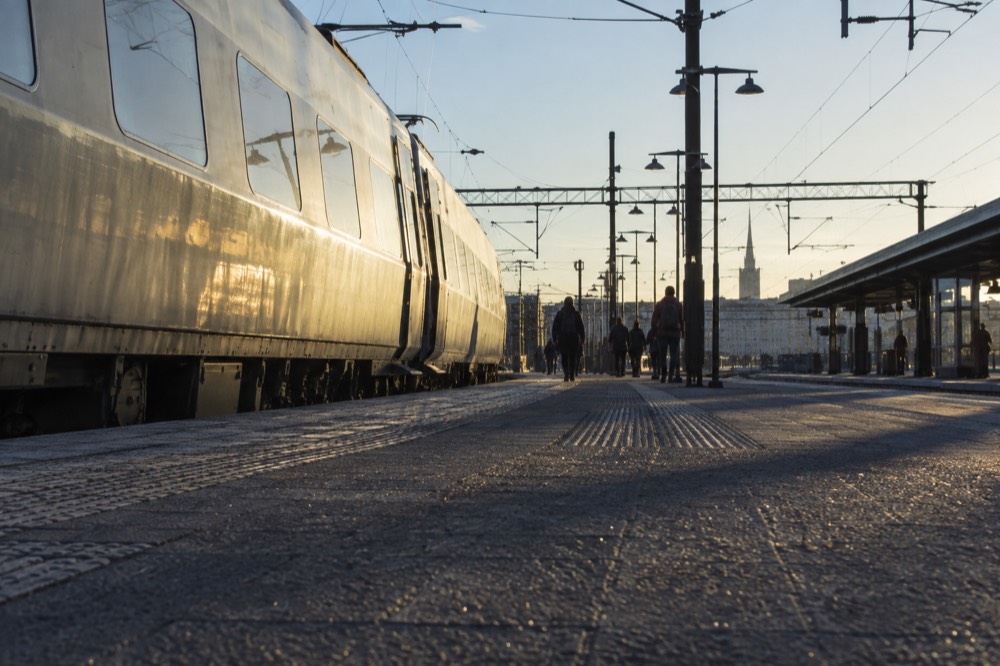
Is It Worth Taking the Train from Oslo to Stockholm?
Yes, for most leisure travelers the train is worth it, and the reason is not scenery alone. The flight only saves time if you ignore the two airport legs at each end, and Oslo's airport sits roughly 50 km north of the city. Once you add transfers, security lines, and boarding on both sides, the door-to-door gap between train and plane shrinks to a margin most vacation schedules barely notice, and the train delivers you into the center of both capitals rather than their peripheries.
That is the arithmetic case. There is also a plainer one: this is one of the two long rail corridors out of Oslo that people actually argue about, the other being the Oslo to Bergen line, and the Stockholm run is the easier of the two to recommend casually. It is a comfortable, mainstream intercity service, not an expedition. You sit down in central Oslo, you stand up in central Stockholm, and in between you cross the width of two countries through forest, lakes, and small towns that no flight path shows you.
The honest answer has a boundary, though, and this article will keep to it. The train is worth it if your schedule has slack, if you enjoy the ride as part of the trip rather than a tax on it, and if door-to-door time matters more than headline time. It is the wrong call if you are connecting onward the same day, traveling on a razor-thin budget fare, or moving with so much luggage that a seat-to-seat journey stops being simple. Everything below is how to work out which of those travelers you are.
One framing note before the detail. This site is an editorial desk, not a traveler's diary: nobody here has ridden this line, so every figure and claim below comes from published, checkable sources, and where something varies by season, operator, or booking window, it says so plainly instead of pretending to a fixed number. Train timetables, fares, and seat availability for the Oslo to Stockholm route change constantly, so treat the operator's live listing as the final word on any specific departure.
How Does the Train Compare with Flying?
The train wins on center-to-center convenience and loses on headline speed, and the real comparison is door to door. Oslo's main airport is about 50 km from the center, which means a flight absorbs an airport transfer at each end plus airport time, while the train starts and finishes at Oslo S and Stockholm Central Station, both in the middle of their cities. For a leisure traveler with a hotel near either station, the practical time difference is far smaller than the timetable suggests.
The train removes four separate airport stresses that the timetable never prices in: the transfer, the check-in deadline, security, and the gate wait. That fixed overhead is the quiet equalizer on this corridor, and it is why the door-to-door comparison keeps coming out closer than the runway-to-runway one.
Start with the geometry, because it decides everything else. Flying out of Oslo means going to Oslo lufthavn Gardermoen, which sits roughly 50 km north of the city. The dedicated airport express train covers that distance in about 20 minutes and costs 268 NOK for an adult single, per the operator's own ticket page. That is the fast option. The cheaper option is the ordinary Vy regional train, which takes about 23 minutes and, because the airport sits in Ruter zone 4N, rides on a standard multi-zone Ruter ticket rather than an airport supplement, a mechanism most guides miss entirely. So even the "quick" flight out of Oslo begins with a station trip that costs either money or minutes.
The train to Stockholm, by contrast, begins where you probably already are. Oslo Sentralstasjon sits at the east end of Karl Johans gate, the city's main street, and is served by the entire Ruter network: trams, buses, and every metro line, all inside zone 1. If your hotel is anywhere in the central ring, you are a single cheap local ride from your departure platform. On the Stockholm end, Stockholm Central Station is likewise the middle of the city, walking distance from much of the hotel stock. The plane asks you to touch the edge of two metros; the train touches two centers.
Then there is the time you spend not traveling. Airport procedure, arriving early, clearing security, waiting at a gate, waiting for bags, adds a fixed overhead that the timetable never shows. The train's overhead is showing up ten minutes before departure. When you lay the two journeys side by side door to door rather than runway to runway, the flight's advantage on this corridor is real but modest, and it evaporates entirely if either airport transfer goes badly.
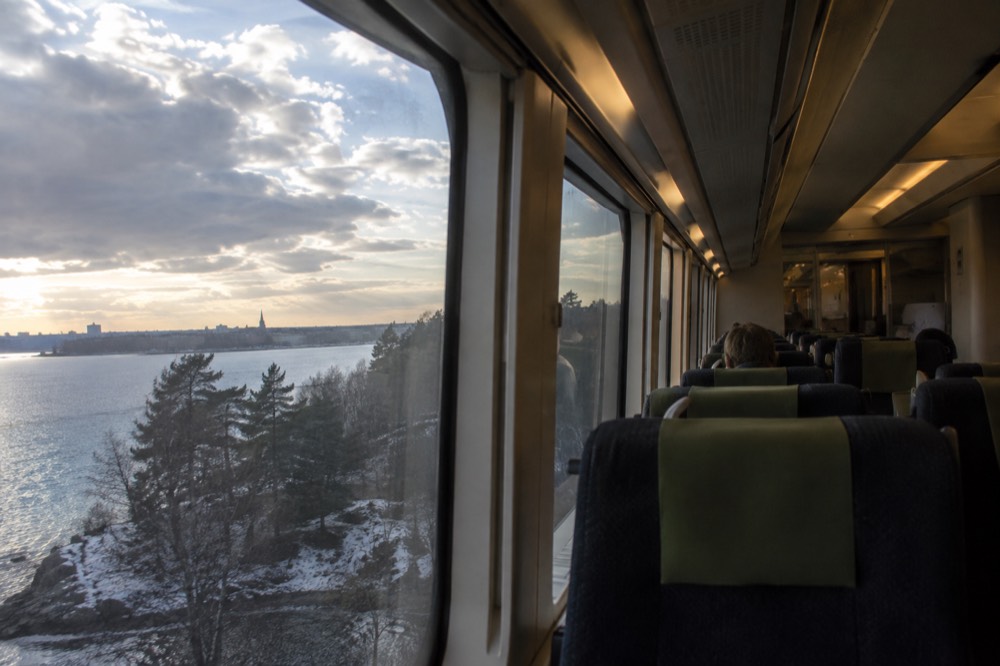
The window is the part no flight offers. The route crosses southern Scandinavia, lake country and forest for most of the run, and in winter it does so under snow, in summer under very long evening light. Whether that is worth an extra hour or two of nominal travel time is a personal call, but it is the difference between consuming the journey and merely enduring it.

There is a fuller treatment of this corridor, including the practicalities of booking it, on the site's Oslo to Stockholm train guide, and the wider question of getting to Oslo in the first place is covered separately. If you are weighing the other great rail run out of the city, the Oslo to Bergen train is the more spectacular and the more weather-exposed of the two.
For travelers who decide the flight suits them better after all, the airport leg is the part worth planning, and there is a private option for it:
What Does the Journey Itself Look Like?
It is a long, comfortable, seated day through the interior of southern Scandinavia, crossing from Norway into Sweden and running through forest and lake country for most of the way. The border crossing itself is quiet paperwork: Norway and Sweden are both in the Schengen Area, so there are no routine passport checks on this route. The service is a conventional intercity train, not a scenic mountain line, so come for the ease and the window, not for drama.
The practical border moment is simply a sign and a change in the scenery's feel, nothing more. That makes the run belong to the category of European rail journey that is pleasant rather than spectacular. Southern Scandinavia from the window is flat to rolling terrain, heavy with pine and birch, cut by lakes, and dotted with small towns whose stations are the main event. It shares that character with much of the Swedish rail network: green, quiet, and repetitive in a way that reads as restful rather than boring if you are in the mood for it. Travelers who want fjords and mountains should be clear that this is not that trip; the dramatic Norwegian rail is westward, toward Bergen, not eastward toward Sweden.
The border is the detail that surprises people, in both directions. Norway is in the Schengen Area but is not a member of the European Union: it is an EFTA state and a party to the EEA Agreement, and it participates in Schengen through a separate association agreement. Sweden is an EU member and also Schengen. For you, on this train, that means no routine border control at all, the same way a train from Oslo to Copenhagen or a bus into Sweden works. It also means a currency change mid-journey: Norway uses the krone, Sweden uses the krona, and neither country's currency is the euro, so if you buy something on board or at a station on each side of the border you will need both, though cards handle almost everything in both countries.
Daylight shapes the experience more than most visitors expect, because Oslo sits at 59.91 N and the swing across the year is enormous. In late June the sun is up from 03:53 to 22:43, 18 hours and 50 minutes of daylight, and the evening run west of twilight the whole way. In late December it is up for 5 hours 53 minutes, rising at 09:18 and setting at 15:11, so a winter departure can start and finish in the dark. MET Norway's sunrise data is the source for those figures, and the practical version of them is simple: a summer ride gives you light until absurdly late, a winter ride gives you a dark window and a bright midday core, and you should book your departure with that in mind.
| Date | Sunrise | Sunset | Day length | What it means for the ride |
|---|---|---|---|---|
| 15 Jan | 09:04 | 15:49 | 6 h 45 m | Dark at both ends; the midday core is your window time |
| 15 Mar | 06:34 | 18:19 | 11 h 45 m | Light for the whole run in either direction |
| 21 Jun | 03:53 | 22:43 | 18 h 50 m | Full daylight even on a late departure; never truly dark |
| 15 Sep | 06:44 | 19:38 | 12 h 54 m | Comfortable light for a morning or early afternoon start |
| 21 Dec | 09:18 | 15:11 | 5 h 53 m | Shortest day; time your departure inside 10:00 to 14:00 |
Comfort is the other half of the answer. Modern intercity rolling stock on this corridor means reserved seating, a bistro or trolley service on most departures, power sockets, and wifi of varying quality, and the standard advice applies: book a seat reservation, take snacks as a hedge, and treat any on-board catering as a convenience rather than a plan. Norway is the sixth most expensive country in Europe on Statistics Norway's 2025 price-level survey, with food and non-alcoholic drink 33 percent above the European average and alcohol and tobacco more than double it, so a station or on-board sandwich is priced accordingly. Buying food before you board, in Oslo, is the budget move.
What Does the Trip Cost, and How Do You Book It?
The train and the plane price in different currencies of value: flights swing between very cheap and very expensive depending on how early you book, while train fares are steadier and land somewhere in the middle of the range, with the added constant that the train's start and end points are free of transfer costs. There is no honest single number for either mode on this route, because both are dynamic pricing markets, and any specific figure should be checked against the operator's live listing before you commit.
The rule that follows from that is simple: book the train early, compare against the door-to-door total, and never compare a bare airfare against a bare rail fare. What can be stated firmly is the structure of the costs, not the level, and the structure is where the train quietly wins ground. Everything else covered here is indexed on Oslo Travel Guide. Everything else covered here is indexed on Oslo Travel Guide.
The structural point first. A flight from Oslo to Stockholm has a ticket price plus, on the Oslo side, an airport transfer, and on the Stockholm side, another one. The dedicated airport express into Oslo costs 268 NOK adult single, and the ordinary Vy train covering the same distance on a Ruter multi-zone ticket is cheaper still, roughly half the express fare per Vy's own framing of the two options. The train to Stockholm has a ticket price and then, usually, nothing, because both termini are central stations on local transit networks. When you compare the two modes, add the transfers to the airfare before you declare the plane cheaper. This is the single most common mistake in this comparison, and it is made in both directions.
Booking mechanics matter more than fare levels on this corridor. Train tickets between Norway and Sweden are sold by the operators themselves and by rail aggregators, and prices move with demand the way airfares do, so the same rules apply: earlier is cheaper, off-peak days are cheaper, and flexible fares cost more than the restricted ones. If your dates are fixed, buy early. If they are not, watch the fare for a week before buying, because the swings on this route are large enough to notice. Seat reservations are worth the small extra cost on a run this long, especially in summer when the corridor fills with holiday traffic.
| Cost element | Train | Flight |
|---|---|---|
| Ticket price behavior | Dynamic, steadier swings; early booking helps | Dynamic, wider swings; early booking helps a lot |
| Oslo-side transfer | None; departs Oslo S in the center | Airport run of about 50 km; express train 268 NOK adult, or cheaper ordinary train |
| Stockholm-side transfer | None; arrives Stockholm Central | Airport express or local transit from Arlanda |
| Time overhead | Arrive shortly before departure | Check-in, security, gate wait, both ends |
| Baggage | Typically included, no per-bag fees | Often charged separately on low fares |
| Cancellation flexibility | Depends on fare type bought | Depends on fare type bought |
One Norwegian-side detail that saves real money and that most international guides get wrong: the Oslo Pass, the city's official visitor pass, covers public transport in Ruter zones 1, 2, 3, 4V and 4N, and that explicitly includes the trains to and from Oslo Airport Gardermoen operated by Vy, but not the separate airport express service. The adult pass runs 580 NOK for 24 hours, 845 NOK for 48 hours, and 995 NOK for 72 hours, per the tourist board's own price page. If you are flying out and spending your last day museum-hopping, the pass can carry you to the airport on the Vy train as part of the same ticket, which quietly changes the flight-versus-train arithmetic at the margin.
The booking-side honesty rule applies to everything above: fares, timetables, and availability for this route are live data, not published constants, and the operator's listing is the only source that has today's number. Treat every figure here as structure, not quote.
When Is the Train the Wrong Choice?
The train is the wrong choice when time pressure is real: same-day onward connections, very early meetings, or a Stockholm visit measured in hours rather than days all favor the plane, because the flight's raw speed advantage, even discounted for airport overhead, still wins when your schedule has no slack. It is also the wrong choice for the tightest budgets when a discounted airfare undercuts the cheapest rail fare, which happens often enough on this corridor to check.
And it is a poor fit for one more group: travelers with heavy or awkward luggage who would rather be delivered door to door than manage their bags across a long seated day. That third case is personal rather than arithmetic, but it decides the question for plenty of people all the same.
The connection case is the clearest. If you land in Oslo from abroad and need to be in Stockholm the same evening, or if your Stockholm stay is a single night before flying on, the train's extra hours are hours you do not have. The flight, with all its overhead, still compresses the journey into a smaller slice of the day. This is also true in the reverse direction for cruise passengers and layover travelers with a fixed sailing or departure: the Oslo cruise port day and the Oslo layover guides cover those tighter formats, and in both cases the plane is usually the sane answer.
The budget case is real but narrower than people assume. Discounted airfares on this corridor can drop below rail fares, and when they do, the plane wins on pure cost even after transfers, though not always by much. The fair comparison is total against total, and the honest conclusion is that on price the two modes trade blows depending on booking window, day of week, and season. If the only thing driving your decision is the cheapest possible seat, check both live and take whichever wins on the day; the train is not reliably cheaper, and pretending otherwise is how guides mislead.
The luggage and mobility case deserves its own paragraph because it is the one people skip. A long train day is easy with a backpack and genuinely pleasant with a small suitcase; it is a slog with two large bags, a bike box, or limited mobility, where a car-to-curb airport flow or a private transfer is simply the better shape of journey. Travelers prioritizing comfort on that axis should price the door-to-door options rather than defaulting to the train on principle.
Finally, weather and disruption cut both ways. Winter storms delay both planes and trains in Scandinavia, and neither mode is immune, so the disruption argument is mostly a wash; the difference is that a delayed train usually keeps you seated, warm, and fed, while a canceled flight puts you back in an airport queue. If you are traveling in the Oslo winter months, build a buffer into whichever mode you choose, because the December daylight budget, under six hours, leaves no slack for recovery.
What Should You Know Before You Travel Between Norway and Sweden?
Three things carry most of the practical weight: there is no routine border check because both countries are in Schengen, the currencies are different, with Norway on the krone and Sweden on the krona and neither on the euro, and Norway is outside the EU customs union, which is why duty-free allowances apply on this route even between two neighboring countries. None of it requires paperwork, but all three can cost you money or embarrassment if you arrive assuming this is a domestic-style trip inside one system.
The border first, because it is the one people over-prepare for. Norway is in the Schengen Area through its association agreement, Sweden as an EU member, and on this train that means no routine passport control, no border station, no form. Carry your passport anyway: it is the standard identification for international rail travel in Europe, spot checks are possible on any Schengen crossing, and hotels in both countries expect it at check-in. But the days of a border stop on this line are over, and nothing about the crossing will interrupt your book.
The currency split catches people who assume Scandinavia is one money zone. Norway uses the Norwegian krone, Sweden the Swedish krona, and the two are not interchangeable despite the similar names, and neither is the euro. In practice cards cover nearly everything on both sides, but a coffee bought in Oslo and a coffee bought an hour into Sweden will be charged in two different currencies, and any cash you withdraw in Oslo is useless the moment you cross. Do not withdraw krone for the Swedish half of your trip.
The customs line is the genuinely non-obvious one. Norway is not in the EU customs union or EU VAT; it is in the single market through the EEA, but goods crossing this border are still an import. That is why duty-free shopping applies on this route, including the arrivals shops at Oslo Airport, and why Norway's alcohol prices drive so much of that trade: on Statistics Norway's 2025 price-level comparison, alcohol and tobacco in Norway cost more than double the European average. It is also why a returning Norwegian resident with a car full of Swedish groceries is a border-region tradition. As a visitor heading east, the practical version is simple: you can buy duty-free leaving Norway, and you should not treat the two countries as one shopping zone.
On the Swedish side, arrival at Stockholm Central puts you on the city's metro and commuter rail hub, with connections to everywhere in the capital. On the Norwegian side, the same is true in reverse, and if your Oslo plans include more than the station neighborhood, the site's things to do in Oslo page is the full list, with the Oslo Central Station guide covering the station itself, its facilities, and its transport links in detail.
For travelers whose real question is the wider Scandinavian circuit, the Oslo vs Stockholm comparison covers the two cities side by side, and the Oslo to Copenhagen ferry covers the southern leg of a three-capital loop. The train question you are reading about is usually one segment of a bigger itinerary, and it is worth deciding the whole loop before you commit to any single leg of it, because the order of the cities changes which trains, ferries, and flights make sense.
If you would rather arrive in Oslo with the ground transportation already settled, a private airport transfer is the comfort answer:
And if the train has won you over for the intercity leg but you still want structured sightseeing inside Oslo before you leave, the sightseeing options below cover the standard formats:
Common Questions About the Oslo to Stockholm Train
is it worth taking the train from oslo to stockholm?
For most leisure travelers, yes. The door-to-door time gap against flying is smaller than the timetable suggests, because the flight requires about 50 km of airport transfer at the Oslo end and another at the Stockholm end, while the train runs center to center. The train is the wrong call only for tight same-day connections, the tightest discounted airfares, or travelers with heavy luggage.
How long does the train from Oslo to Stockholm take?
It is a long daytime journey, roughly half a day in the seat, with the exact duration depending on the specific departure and any stops it makes. Timetables change by season and by year, so check the operator's live listing for your date rather than any figure quoted in an article, including this one.
Is there a passport check on the train between Oslo and Stockholm?
No, not routinely. Norway and Sweden are both in the Schengen Area, so there is no regular border control on this route. Carry your passport anyway, since it is the standard ID for international rail travel and hotels in both countries ask for it at check-in.
Do I need different currency in Norway and Sweden?
Yes. Norway uses the Norwegian krone and Sweden uses the Swedish krona, and neither country uses the euro. Cards are accepted almost everywhere on both sides, but any cash you withdraw in Oslo will not be usable in Sweden, so plan to pay by card across the border.
Is the train cheaper than flying from Oslo to Stockholm?
It depends on when you book. Both modes use dynamic pricing, and discounted airfares sometimes undercut rail fares while at other times the train wins comfortably. Compare the door-to-door totals, meaning the airfare plus airport transfers at both ends against the rail fare, and check both live before deciding.
Is the Oslo to Stockholm train scenic?
It is pleasant rather than spectacular: forest, lakes, and small towns across southern Scandinavia, with a quiet border crossing and, in summer, daylight until very late indeed. If dramatic mountain rail is what you want, the westward Oslo to Bergen line is the famous one; this route is about comfort and the window, not spectacle.