Is Hop on Hop Off Oslo Worth It?
An honest answer to whether the Oslo hop-on hop-off bus is worth the money, compared with Ruter public transport, the Oslo Pass and a fjord cruise.
Is Hop on Hop Off Oslo Worth It?
For most visitors, no. Oslo is a compact, walkable capital where an ordinary Ruter ticket, a tram ride and a fjord cruise will show you more of the city for less money than a hop-on hop-off bus. The bus earns its price only in specific situations: limited mobility, a very short first visit, or a genuine want for recorded commentary. Otherwise the city's own transport beats it on speed, coverage and cost.
That answer surprises people who have used sightseeing buses in Rome or London and assume every European capital works the same way. Oslo does not. The city center is small enough that most of the headline sights sit within a 20 minute walk of each other, the sights that do not sit on a hill, such as Holmenkollen, are served by a metro line that runs every few minutes, and the single best view of Oslo, the one from the water, is something a bus physically cannot deliver.
There is exactly one credible hop-on hop-off product in the city, the Gray Line bus, and it is a real, well-run product with thousands of reviews behind it. This is not a page about avoiding a scam. It is a page about spending your sightseeing budget where Oslo actually rewards it, and knowing precisely when the bus is the right call. The full picture, including how the bus stacks up against guided walks and fjord boats, is in our Oslo guided tours overview.
It is worth saying what this page is not doing, because the internet is full of both kinds of bad advice on this question. One camp says sightseeing buses are always a tourist trap, which is lazy and wrong; the other camp says they are the easiest way to see any city, which ignores how differently Oslo is built compared with the sprawling capitals where that logic holds. The honest answer sits in the middle and depends on three things: your mobility, your appetite for commentary, and how many hours you actually have. Everything below is built around those three variables, with real fares and real ratings rather than vibes.
What the Oslo Hop-on Hop-off Bus Actually Covers
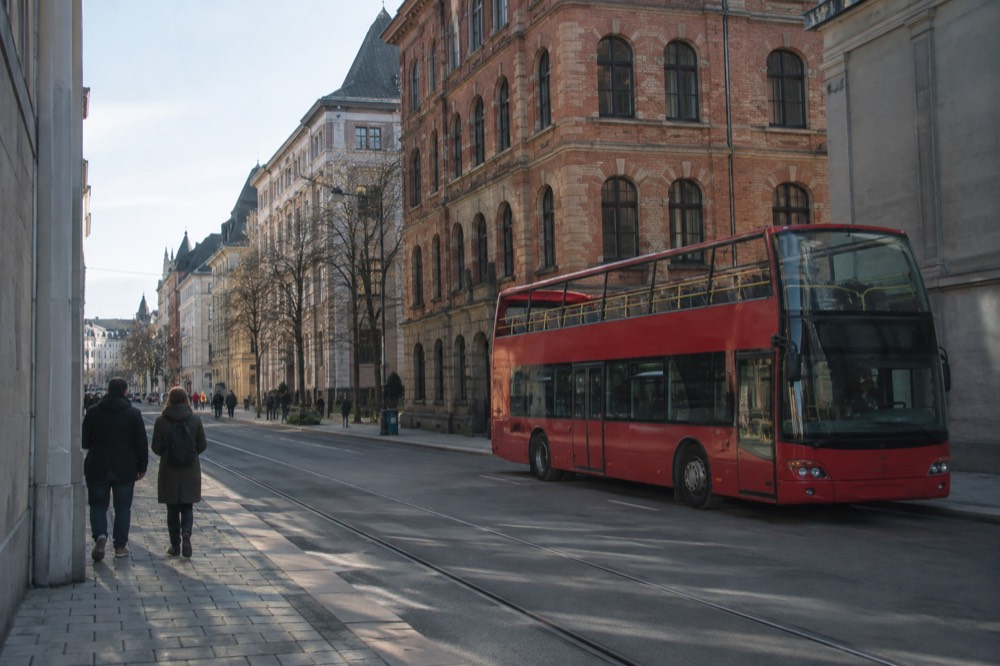
The Gray Line bus loops Oslo's core sights, including the Opera House, Akershus Fortress, Vigeland Park and the museum peninsula at Bygdøy, on an open-top double-decker with recorded commentary. It is the only sightseeing bus in the city worth considering, because the competing product rates far below it. The loop is designed for first-time visitors who want the headline sights in one circuit without planning a route themselves.
The route hits the names a first-time visitor lists: the Opera House, the Akershus Fortress walls, the Royal Palace area, Karl Johans gate, Vigeland Park and the Bygdøy museums. That is a genuinely sensible list. The problem is not what the bus covers, it is what it competes against, because every single one of those stops is also served by Oslo's ordinary public transport, which runs more often, later into the evening and for a fraction of the per-day cost once you look at the actual fares.
The commentary is the one thing the tram cannot give you. If you want someone, or at least a recording, to tell you what you are looking at as you pass it, that is a real service and the bus sells it honestly. Our guide to getting around Oslo covers the transport side in depth if you would rather do this yourself.
There is a seasonal wrinkle worth knowing before you book anything on wheels in this city. The Bygdøy peninsula, one of the headline legs of any sightseeing loop, is served by a small museum ferry from Rådhusbrygge 3 between mid-March and early October, and by ordinary Ruter bus 30 all year. A bus loop that includes Bygdøy is competing not just with bus 30 but with a boat ride that is included free with an Oslo Pass. When the weather is good, the boat is the better experience and it costs a pass-holder nothing extra. When the weather is bad, the whole peninsula question changes and the museums become the point, which again is a pass question rather than a bus question.
The trio above is the honest shortlist for a first day in Oslo. The bus covers the streets, and the two boats cover the water, which is where the city's best-reviewed experiences actually are. The silent electric fjord cruise is the single best-reviewed activity in Oslo on either booking platform, and the wooden sailing ship is a completely different experience from the electric boats despite a near-identical price. If you only take one loop of the city on wheels, the bus does that job; if you only take one trip on the water, either boat does it better.
Think of it as three formats for the same sightseeing instinct. The bus is the passive, dry, commentary-led format: you sit, the city scrolls past, someone explains it. The electric cruise is the same instinct applied to the fjord, with an audio guide doing the explaining while the boat glides almost silently past the islands. The wooden sailing ship is the romantic format, canvas up, engine mostly off, slower and older-feeling. All three cost within a band of each other, which is exactly why the choice between them is about format and not about price, and why most people who regret the bus regret it because they picked the commentary format when what they wanted was the water format.
What the Bus Costs Compared with Oslo's Public Transport
A 24-hour Oslo Pass costs 580 NOK and includes over 30 museums plus all Ruter transport in zones 1 through 4N, including the Vy train to and from the airport. The sightseeing bus costs more per day than that and includes no museums and no transport beyond its own loop. On pure cost, the bus loses to the pass and to ordinary Ruter tickets in almost every itinerary longer than a few hours.
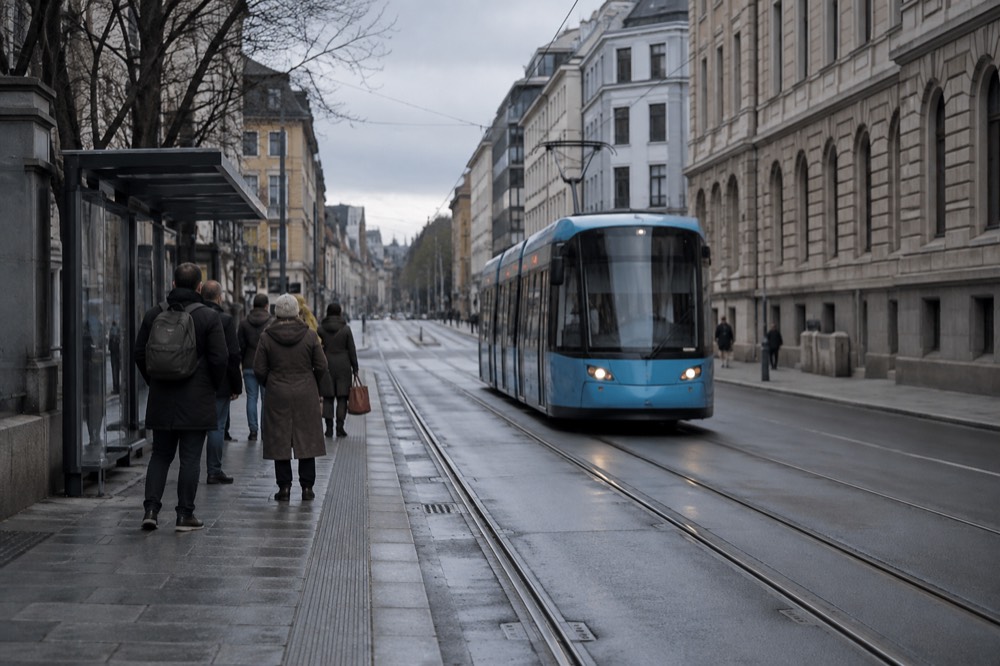
This is the part of the decision that most guides skip, so here are the real numbers from the sources that publish them. VisitOSLO's own price page puts the 2026 Oslo Pass at 580 NOK for 24 hours, 845 NOK for 48 hours and 995 NOK for 72 hours, adult. That pass includes, in VisitOSLO's own words, "free entry at over 30 museums and attractions" and "public transport in zones 1,2,3,4V and 4N", the latter including the Vy trains to and from Gardermoen airport. Three Bygdøy museums alone at full price come to 560 NOK, so the pass pays for itself on museums before you count a single tram ride.
The sightseeing bus does none of that. Its ticket buys the loop and the commentary, full stop. No museum entry, no metro, no ferry. Here is the comparison laid out plainly:
| Option | What you get | Rough cost for one day | Best for |
|---|---|---|---|
| Sightseeing bus, 24h | One loop of the core sights with commentary | Check the live listing | Commentary, mobility, zero planning |
| Oslo Pass, 24h | Over 30 museums plus all Ruter zones 1-4N transport | 580 NOK | Museum-heavy days, airport arrival by Vy |
| Ruter day ticket | All trams, buses, metro and island ferries in the zones you buy | Confirm in the Ruter app | Cheap flexible days, islands |
| Silent electric fjord cruise | 90 minutes on the water with audio guide | Check the live listing | The view the bus cannot give you |
Read that table twice, because the second column is where the decision actually lives. The bus and the cruise sell an experience; the pass and the Ruter ticket sell access. If your Oslo day is built around going inside buildings, and in this city it probably should be, access wins. The National Museum holds The Scream, MUNCH holds the paintings everyone can name from a poster, and the Fram and Kon-Tiki museums are the reason Bygdøy has a ferry at all. A bus seat gives you the outside of those buildings and a sentence about each.
One honest caveat on the bus side of that table: the bus is genuinely useful for visitors with limited mobility, because it removes stairs, tram platforms and long walks from the equation, and the open-top deck gives a sightline the tram cannot. If that is your situation, the price premium buys something real. The Oslo accessibility guide goes deeper on which parts of the city repay that trade-off.
There is also a timing dimension the fare tables do not show. Sightseeing loops in Oslo run on a daytime schedule that fades with the season, while the tram and metro run well into the evening all year. In midsummer, when the sun sets at 22:43 and the city stays light until nearly midnight, a bus that stops running in the late afternoon is missing the best hours of the day. In December, when the sun rises at 09:18 and sets at 15:11, every sightseeing hour is precious and a loop that wastes 20 minutes waiting at a stop is a real cost. The bus is a fair-weather, mid-hours product in a city whose best hours are often early or late.
When a Hop-on Hop-off Ticket Actually Makes Sense in Oslo
The bus earns its price in three situations: you have limited mobility and need door-to-door sightseeing, you are on a very short first visit and want the headline sights explained in one loop, or you are traveling with children who do better on an open-top deck than on a tram. Outside those cases, the money is better spent on a fjord cruise, a guided walk or an Oslo Pass.
The short-visit case is real. If you have a single day, or you are off a cruise ship for eight hours, a loop that touches the Opera House, Akershus, Vigeland Park and Bygdøy in one circuit removes every routing decision from your day. Cruise passengers in particular should weigh the bus against the full-day bus-plus-fjord combination product, which bundles the city loop with the boat, and our Oslo cruise port day guide lays out that whole decision.
The commentary case is also real, and it is the one thing nobody else sells at that price point. A free walking tour gives you a live guide, and the best of those walks run about two hours with a tip-based model, but a free walk covers the center on foot while the bus covers the hills and the peninsula. If you want both, the bus plus a free walk is a legitimate pairing rather than a redundant one.
The mobility case needs no argument. Not every visitor can manage the walk from a tram stop to the Fram Museum or the climb around Frogner Park, and a bus that stops at the door is worth a premium that no fare table captures.
The children case deserves a sentence of its own, because families weigh it constantly and rarely find a straight answer. An open-top double-decker is an event for a six-year-old in a way that a modern tram is not, and a parent who needs one child asleep in a stroller and another one contained for an hour has a use case that no amount of fare arithmetic addresses. If the bus buys you a calm hour in the middle of a family day, that is worth something, and it is a better use of the money than a second museum that nobody enjoys. Our Oslo with kids guide covers the rest of the family toolkit, including the activities that outperform any bus for the same spend.
One more narrow case: bad weather that is not bad enough to be indoor weather. A drizzly Oslo day makes an open-top deck miserable but a covered lower deck tolerable, and the bus at least keeps moving while a walking tour grinds on through the rain. That said, Oslo has genuinely strong rainy-day answers, from the Paradox Museum's interactive illusions to the National Museum's galleries, and our rainy day in Oslo guide is the better page for that scenario. The bus is the third-best rainy-day answer, not the first.
When You Should Skip the Bus in Oslo
Skip the bus if you are comfortable walking 20 minutes at a stretch, if your priority is museums rather than commentary, or if the fjord is the reason you came. In those cases a Ruter ticket plus an Oslo Pass, or a fjord cruise, delivers more of Oslo per krone than any sightseeing loop can.
Oslo rewards two things that the bus is bad at: going inside buildings, and going on the water. The National Museum holds The Scream, MUNCH holds the paintings everyone can name, and the Fram and Kon-Tiki museums on Bygdøy are the reason the peninsula has its ferry. None of that is visible from a bus seat. A day built around museum entries with an Oslo Pass in your pocket will outperform a day built around a loop every time, and the pass question has its own breakdown in is the Oslo Pass worth it.
The water is the other miss. Oslo is a city you read from the fjord, looking back at the amphitheater of buildings, and the boats that do that reading are the best-reviewed products in the city. The silent electric cruise runs 90 minutes with an audio guide, and the traditional wooden sailing ship runs two hours with sails. Both cost in the same band as a bus ticket and neither can be replicated from a road.

There is a third miss that nobody puts in the brochures: Oslo's geography is vertical, and the best of it is at the top. The metro Line 1 climbs to Frognerseteren, over 400 meters above sea level, where the forest begins and the whole fjord lies below you, and the Holmenkollen ski jump stands on the same ridge. A sightseeing bus drives past the lower slopes of this world or skips it entirely, while a metro line delivers you into it for the price of an ordinary zone 1 ticket. The view from Frognerseteren's terrace, with the city and the fjord spread out below, is the single best free viewpoint in the capital, and it is a train ride away rather than a bus loop away.
The honest summary of the skip case: the bus is a commentary product, and if you do not primarily want commentary, you are paying a commentary premium for a route the tram already runs.
How the Bus Compares with a Fjord Cruise for a First Day
For a first day in Oslo, a fjord cruise beats the sightseeing bus for most visitors. The cruise is the city's best-reviewed activity on either booking platform, it delivers the one view of Oslo that no road can, and it pairs naturally with a walk through the compact center. The bus wins only when commentary or accessibility is the priority over the water.
The pairing question is really a budget question. Plenty of visitors do both, and that is a defensible first day: a loop on the bus to get oriented and hear the history, then 90 minutes on the electric boat to see the city from the water. But if the budget covers one, take the boat. The electric cruise carries an audio guide too, so the commentary gap between the two products is smaller than it looks, and the deck of a silent boat in the Oslofjord is a memory in a way that the top deck on a city street is not.
A concrete way to think about it: the bus shows you Oslo's front doors, the boat shows you the reason the city is where it is. The Oslofjord is not decoration on the edge of the capital, it is the original highway, the fishing ground and the summer escape, and the islands scattered across it, Hovedøya with its ruined abbey, Langøyene with its beaches, are reachable on the same ordinary Ruter ticket you would use for a tram. A visitor who spends their whole day on wheels will leave without ever understanding what the water means to this city, and that is the quiet failure mode of the bus-first plan.
That aside is the whole decision in four lines. The bus is not a bad product; it is a product whose main competitor is a transit system that is unusually good, in a city that is unusually compact, next to a fjord that is unusually central. Very few capitals put a swimmable archipelago, a metro-to-forest line and a walkable museum peninsula inside a single zone 1 ticket. Oslo does, and that is why the standard sightseeing-bus calculus flips here.
If the honest read above has not talked you out of the bus, that is fine: the Gray Line product is the right one to take, it rates far above the rival sightseeing bus in the city, and the 24 versus 48 hour choice is worth a minute of thought. Take 24 hours unless your itinerary genuinely spreads the loop across two days, because a 48-hour ticket on a one-and-a-half day visit is money left on the table. The live listing carries the current prices and departure points for both durations.
Whatever you decide, decide it before you land rather than at the first bus stop, because the two best alternatives, the fjord boats and the museum-heavy pass day, both benefit from being slotted into your plan early. Oslo rewards visitors who choose one thing on the water and one thing inside a building, and the bus, for all its competence, is neither of those things. For more on how this site weighs the whole sightseeing question, start with what to do in Oslo and the Oslo Travel Guide homepage.
Common Questions About the Oslo Hop-on Hop-off Bus
is hop on hop off oslo worth it?
For most visitors, no. Oslo is compact and walkable, its public transport is cheap and frequent, and the Oslo Pass bundles museums with all Ruter transport for 580 NOK per 24 hours. The bus is worth it if you want recorded commentary, have limited mobility, or are on a very short first visit and want the headline sights in one loop.
Does the Oslo hop-on hop-off bus go to Bygdøy?
Yes, the Gray Line loop includes the Bygdøy museum peninsula. Note that the Museum of the Viking Age on Bygdøy is closed until 2027, and outside the summer ferry season the museums are also reachable on ordinary Ruter bus 30.
Is the bus or the tram better for seeing Oslo?
The tram is better for most visitors. It runs more often, later into the evening, on an ordinary Ruter ticket, and the metro Line 1 to Holmenkollen reaches sights the bus loop treats as a drive-by. The bus's only real advantages are commentary and step-free access.
Can I use the sightseeing bus ticket as public transport?
No. A hop-on hop-off ticket is valid only on the sightseeing operator's own buses. It does not cover trams, the metro, Ruter buses or the island ferries, and it does not include museum entry, unlike the Oslo Pass.
What is the best alternative to the hop-on hop-off bus in Oslo?
A silent electric fjord cruise is the city's best-reviewed activity and shows you Oslo from the water. Pair it with a free or cheap guided walking tour for the center, and an Oslo Pass if museums are on your list.