How Many Days in Oslo Is Enough?
The honest answer to how many days in Oslo is enough, with what one, two, three and four days actually cover, how the season changes the maths, and where the point of diminishing returns sits.
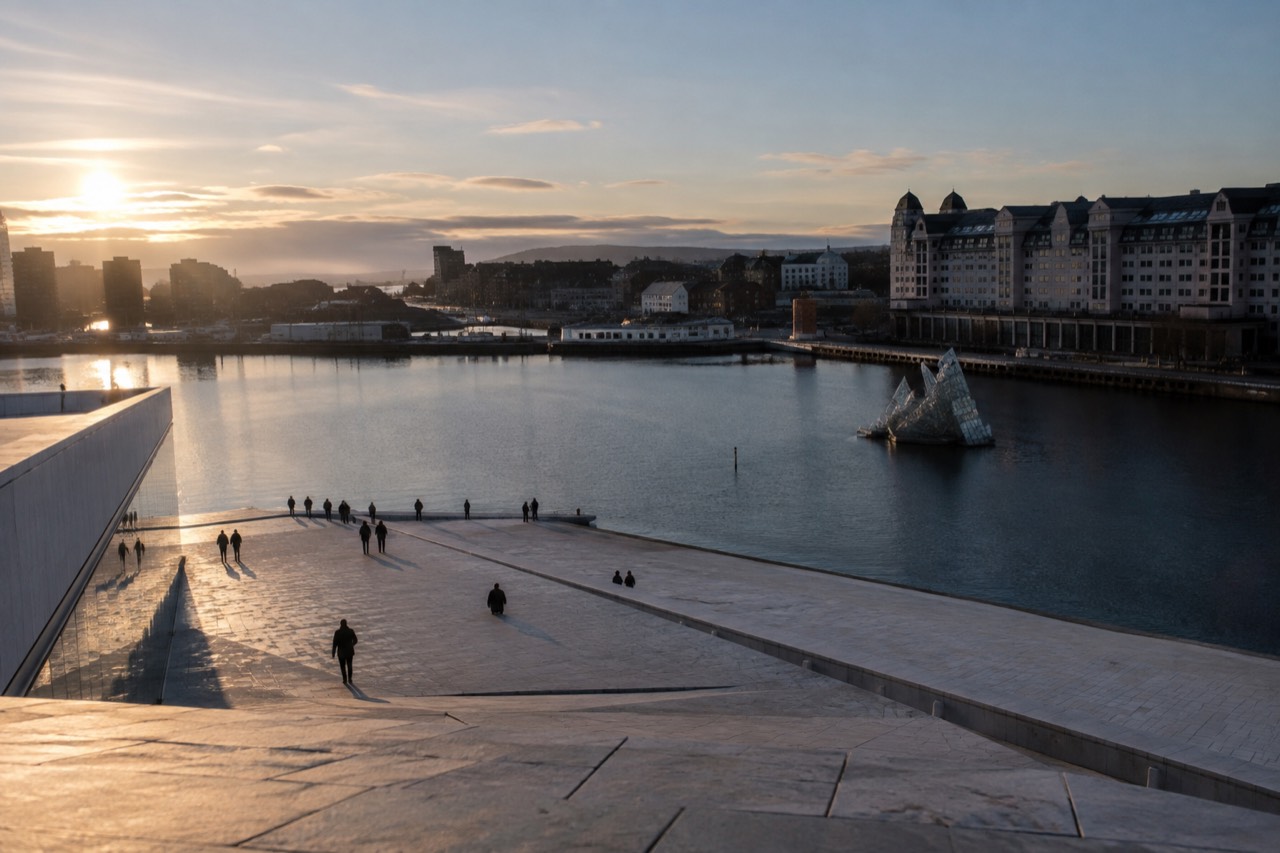
How Many Days in Oslo Is Enough?
Two days is enough for most visitors to see Oslo's core, and three days is the comfortable answer that lets you add the museum peninsula and the fjord without checking your watch. One day is possible but forces hard cuts, and anything beyond three only pays off if you add day trips or slow down deliberately. The season changes this maths more than the itinerary does, because Oslo's daylight swings from under six hours in December to nearly nineteen in June.
That is the short version. The longer version depends on what kind of trip you are building, and Oslo is a city that punishes a certain kind of planning mistake: visitors assume it is a compact European capital they can absorb in a day, then discover that its headline sights are spread across a peninsula, a hilltop and a waterfront, connected by a metro system that is fast but not free of walking. The city is not huge, but it is long, stretched along the Oslofjord from the Opera House in the east to Bygdøy in the west, and the distances add up in a way that photographs do not show.
There is also a budget dimension. Norway is the sixth most expensive country in Europe on Statistics Norway's 2025 price-level survey, with household prices sitting 28.6 percent above the EU average, so every extra day in Oslo is an extra day of Nordic prices. The counterweight is that the city's best assets, the Opera House roof, Vigeland Park, the Akershus fortress grounds, the islands, are free. A well-planned two or three days can cost less per memorable hour than a rushed single day of paid attractions.
This page breaks the question down by day count, because that is how people actually ask it. If you want the fuller itinerary treatment once you have picked your number, the site's one day in Oslo guide and the two days in Oslo breakdown carry hour-by-hour versions of what is summarized here.
What Can You Realistically See in One Day?
One day in Oslo works, but only if you accept that you are choosing between the museums and everything else. A realistic single day covers the Opera House, Karl Johans gate, the Akershus fortress exterior, Aker Brygge and the harbor front, and one fjord cruise, or it covers the Bygdøy museum peninsula instead of the cruise, but not both comfortably. What it cannot cover is Vigeland Park and Bygdøy and the National Museum and the fjord, because each of those is a half-day commitment on its own.
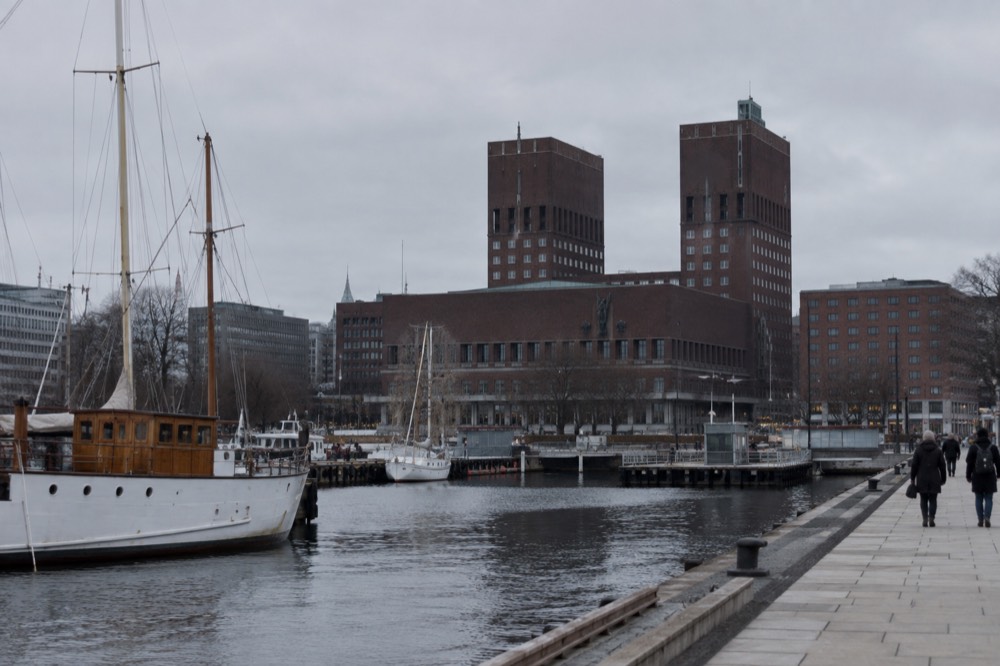
The geography is the reason. The Opera House and the Barcode district sit at the eastern end of the waterfront. The National Museum and the City Hall sit in the middle. Aker Brygge and the pier for the Bygdøy ferry sit just west of that. Bygdøy itself is a peninsula to the southwest, and the museums there, the Fram Museum, the Kon-Tiki Museum and the Norwegian Museum of Cultural History, are clustered but a ferry or bus ride away. Vigeland Park and the Holmenkollen ski jump are inland and uphill, on the metro lines. A day that tries to touch all of these becomes a day of transit.
A defensible one-day plan looks like this: start at the Opera House and walk its roof at opening, cut through the Barcode district to the waterfront, walk west past the City Hall to Aker Brygge, and take a fjord cruise from the piers there in the early afternoon. Finish at Akershus Fortress before it closes, and end the day with dinner around Aker Brygge or in Grünerløkka. That is a full and genuinely good day, and it costs almost nothing in admissions.
The alternative one-day plan swaps the cruise for Bygdøy. The ferry to the museum peninsula runs seasonally from Rådhusbrygge 3, roughly every twenty minutes, and outside that season bus 30 covers the same route on an ordinary Ruter ticket. Two museums on Bygdøy, the Fram and the Kon-Tiki, sit side by side at the Bygdøynes pier and pair naturally. The former Viking Ship Museum remains closed and will reopen as the Museum of the Viking Age in 2027, so do not budget time for it.
If your single day is a cruise-ship day, the calculus changes again, and the Oslo cruise port day guide handles that specific squeeze. For everyone else, the honest summary is that one day gives you Oslo's outdoor face, its waterfront and its skyline, but not its interiors.
For visitors who want to compress the transit problem, two products solve it directly. The selection below covers the standard approaches:
The bus loop connects the scattered headline sights, the full-day combo packages the bus and the fjord into one ticket, and the electric boat cruise is the city's single best-reviewed activity on either platform, a ninety-minute silent run past the islands with audio commentary. Any of the three converts a scattered day into a structured one.
Is Two Days the Sweet Spot for Oslo?
For most first-time visitors, yes: two days is the point where Oslo stops feeling rushed. Day one takes the waterfront, the Opera House, Karl Johans gate and Akershus, and day two takes either the Bygdøy museums or the Vigeland Park and Holmenkollen pair, leaving room for a fjord cruise in the evening. Two days also absorbs Oslo's real friction, museum opening hours and ferry schedules, without forcing you to choose between them.
The second day is what makes the difference. With two days you can give Bygdøy the half-day it deserves: the Fram Museum and the Kon-Tiki Museum at Bygdøynes, reached by the seasonal ferry from Rådhusbrygge 3 or by bus 30 year-round. Both museums charge 180 NOK adult admission, and a combined Kon-Tiki plus Fram ticket costs 325 NOK, which is worth knowing before you stand at the counter. The Oslo Pass at 580 NOK for 24 hours covers both museums plus the transport out there, and the arithmetic on that is covered in detail on the is the Oslo Pass worth it page.
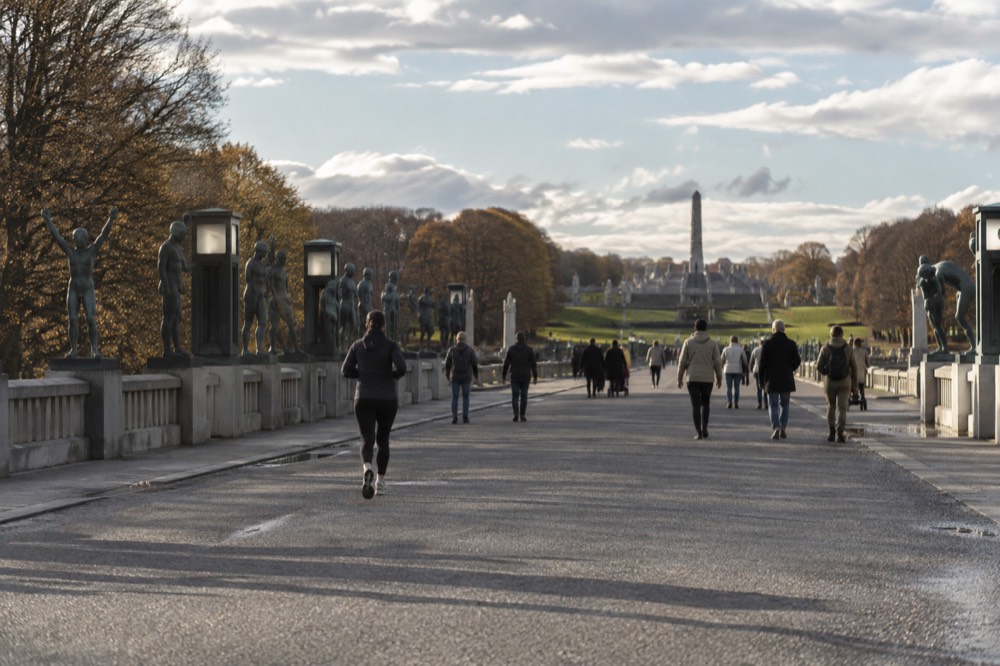
Alternatively, day two can go inland. Vigeland Park is free, open around the clock, and holds more than two hundred sculptures across the Frogner Park grounds, and the Holmenkollen ski jump and its museum sit one metro line further out, with the ski museum and jump tower at 195 NOK adult. Doing both in one afternoon is realistic because the metro to Frognerseteren and Holmenkollen is inside Ruter zone 1, the same ticket that carries you around the city center.
What two days still leaves out is depth. You will not get to the National Museum's Edvard Munch rooms at a sensible pace, you will not cross to the Oslofjord islands, and you will not have a slow evening in Grünerløkka without sacrificing something else. Whether that matters depends on whether you treat Oslo as a destination or as a stop on a Norwegian route.
Here is a compact view of what each day count realistically covers, so you can match the plan to the time you actually have:
| Days | What comfortably fits | What you sacrifice |
|---|---|---|
| 1 | Opera House, waterfront walk, Akershus exterior, one fjord cruise | All museums, Vigeland Park, the islands |
| 2 | Day one core plus Bygdøy museums or Vigeland and Holmenkollen | The National Museum at leisure, island hopping, Grünerløkka evenings |
| 3 | Both Bygdøy and the inland sights, plus a museum day or the islands | Nothing essential; you choose the pace |
| 4 to 5 | All of the above plus a day trip such as Drøbak or the forests | Only relevant with slow-travel or day-trip plans |
If you are leaning toward two days and want the structure handled for you, this is the natural place to compare the options:
The hop-on hop-off ticket exists in 24 and 48-hour versions, which maps neatly onto a two-day stay, and free cancellation means the weather call can wait until the morning of.
What Does a Third Day in Oslo Add?
A third day is where Oslo stops being a checklist and becomes a place. It buys you the National Museum at a proper pace, the Oslofjord islands, or the Grünerløkka and Tøyen neighborhoods, and it gives you slack for the one thing that ruins tight Oslo itineraries: a museum that takes three hours when you budget ninety minutes. Three days is also the point where the Oslo Pass's 72-hour tier starts to compete with individual tickets.
The third day's best use is the Oslofjord islands, because they are the thing Oslo has that no other European capital does. The public ferries B1 and B2 leave from Aker Brygge on an ordinary Ruter zone 1 ticket, no surcharge, and cross to Hovedøya with its ruined Cistercian abbey in minutes. In summer the B2 line continues to Langøyene, the swimming and walking island. This is a half-day that costs almost nothing and feels nothing like a city break, and the Oslo islands guide covers the routes and the seasonal schedules.
The other strong use of day three is the National Museum, which holds The Scream among its highlights and deserves more than a hurried sweep. Pair it with MUNCH in Bjørvika, which charges 280 NOK adult entry, dropping to 200 NOK after 18:00, with under-25s at 100 NOK and under-18s free, and you have a genuinely serious art day in a city most visitors do not associate with one. The full index of guides sits on Oslo Travel Guide. The full index of guides sits on Oslo Travel Guide.
A third day also absorbs the weather. Oslo's August normal is 103 mm of rain, the wettest month of the year on the 1991 to 2020 normals, and a wet day in a two-day itinerary is a disaster while a wet day in a three-day one is simply the museum day moved forward. The rainy day in Oslo guide has the full indoor playbook.
For travelers who want a guided spine through the city while leaving the afternoons free, the bus loop is the tool built for exactly this shape of trip:
Gray Line's version rates well above the competing city-sightseeing product, and the 48-hour window means you can ride it on day one for orientation and again on day two or three for the stops you skipped. The site's Oslo guided tours overview compares it against the walking and bike alternatives if you would rather be at street level.
When Do You Need Four or Five Days in Oslo?
You need four or five days in Oslo only if you are adding day trips or deliberately traveling slowly. The city itself is comfortably exhausted in three days at a normal pace, and a fourth day inside the city limits is best spent on the forests of Nordmarka, a deep dive into a single neighborhood, or a day trip to Drøbak, Fredrikstad or the Hadeland glassworks. Stretching to five without those plans usually means padding, not depth.
The day trips are the honest reason to extend. Drøbak, the coastal town on the east side of the fjord, and Fredrikstad's old fortified town are both reachable by public transport, and the day trips from Oslo guide lays out the full set with travel times. The Norway-in-a-Nutshell fjord-and-railway loop is the big one, a full-day commitment that visitors consistently rate as the highlight of a Norway trip, and it is the single strongest argument for a fifth day if fjord landscapes are why you came.
Inside the city, a fourth day can go to Nordmarka, the forest that begins where the metro ends. In winter that means cross-country trails and the toboggan run; in summer it means marked forest paths from Sognsvann or Frognerseteren. This is free, it is on the ordinary zone 1 ticket, and it is the Oslo that locals actually use, but it is also skippable if your trip is about the city.
What a fourth and fifth day should not go to is more of the same. Oslo rewards concentration. The visitors who report the city felt small are almost always the ones who stretched four days of sightseeing into six, and the visitors who report it felt rushed are the ones who tried to see the whole peninsula and the park and the museums inside a single day. Three days, or two with a strict plan, is where the experience sits.
How Does the Season Change the Answer?
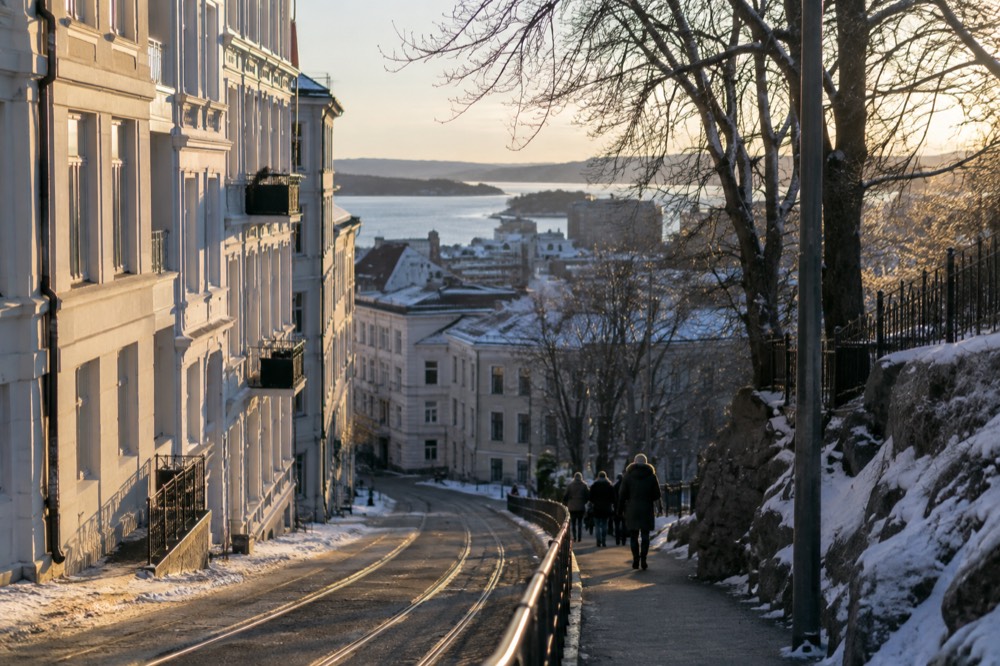
The season matters almost as much as the day count, because Oslo's daylight swings from 5 hours 53 minutes in late December to 18 hours 50 minutes in late June, a factor of more than three. A summer day fits what a winter day and a half fits, and a December visit effectively loses half of each day to darkness, which means winter trips should either be shorter or slower. The ferry season also cuts both ways: the Bygdøy boat stops running in early October.
In practical terms, a June day gives you sightseeing from before 04:00 until nearly 23:00 if you want it, though the sun does set, and there is no midnight sun at Oslo's latitude of 59.91 N. Museums still close at their normal hours, so the surplus light goes to parks, the waterfront and long evenings on Aker Brygge. Winter inverts this: on 21 December the sun rises at 09:18 and sets at 15:11, and the practical sightseeing window is six hours. A three-day winter trip and a two-day summer trip can cover a similar amount of ground.
The seasonal schedule facts matter for planning around them. The Bygdøy ferry runs a defined season and closes in early October, after which bus 30 is the route to the museums. The island ferries run reduced service outside the summer timetable. And the Christmas market period draws its own crowd, covered on the Oslo in December guide, which changes the two-versus-three-day answer for festive visitors.
For a quick seasonal read on how much usable day you get, the daylight table below is the planning tool:
| Date | Sunrise | Sunset | Day length |
|---|---|---|---|
| 15 Jan | 09:04 | 15:49 | 6 h 45 m |
| 15 Mar | 06:34 | 18:19 | 11 h 45 m |
| 21 Jun | 03:53 | 22:43 | 18 h 50 m |
| 15 Sep | 06:44 | 19:38 | 12 h 54 m |
| 21 Dec | 09:18 | 15:11 | 5 h 53 m |
The pattern to take from this: between April and September, two days of Oslo daylight roughly equals three winter days of it. If you are visiting in the dark months and museums are not your priority, consider trimming the trip rather than stretching it.
So How Many Days Should You Actually Book?
Book two days if Oslo is one stop on a larger Norwegian route, and three if Oslo is the destination. Two days with a firm plan covers the waterfront, the fortress, the museums and a fjord cruise; three days adds the islands or the art museums at a human pace and buys insurance against weather. One day is a legitimate choice for a layover or cruise stop, and four or more only makes sense with day trips attached.
The final decision usually comes down to the fjord. If seeing the Oslofjord from the water is a priority, and for most visitors it is, the cruise alone justifies building the itinerary around the piers at Aker Brygge, and the length of your stay determines whether that cruise is a ninety-minute electric-boat loop or a full evening with a shrimp buffet. The electric boat, the wooden sailing ship and the guided premium boat all cover the same water in different registers, and the Oslofjord cruise guide compares them in full.
Whatever you decide, book the structure before the season forces your hand. The three formats below are the ones this site's own testing keeps returning to for short stays:
The hop-on hop-off bus solves the distance problem on a two-day stay, the full-day combo is the single-ticket answer for a one-day visit or a cruise stop, and the silent electric fjord cruise is the activity most likely to be the thing you remember. Whichever number of days you land on, the planning resources at oslotravelguide.com break each of them down hour by hour, starting with the three days in Oslo itinerary if the sweet spot is where you have landed.
Common Questions About How Many Days in Oslo
how many days in oslo is enough?
Two days is enough for Oslo's core sights for most visitors, and three days is the comfortable answer that adds the Bygdøy museums, the islands or the National Museum without rushing. One day works for a layover or cruise stop with hard priorities, and four or five days only pays off when you attach day trips.
Is one day in Oslo enough?
One day covers the Opera House, the waterfront, Akershus Fortress and a fjord cruise, or the Bygdøy museums instead of the cruise, but not both. It is a legitimate choice for a layover or cruise-port day, but it means choosing between Oslo's outdoor sights and its museums.
Is three days in Oslo too much?
No. Three days is the point where Oslo stops feeling rushed: it fits the museums, the fjord islands, Vigeland Park and a neighborhood like Grünerløkka, with slack for weather. The city itself is comfortably covered in three days, so a fourth day is best spent on a day trip.
What is the best time of year to visit Oslo?
June through August gives the longest days, up to nearly 19 hours of daylight, and the warmest weather, with July's normal mean at 17.7 °C. December offers the Christmas market but under six hours of daylight. A summer day fits roughly what a winter day and a half fits, so the season changes how many days you need.
Can you see the Viking ships in Oslo?
Not at present. The former Viking Ship Museum on Bygdøy is closed and will reopen as the Museum of the Viking Age in 2027. Some Viking-age objects are on display at the Historical Museum in central Oslo, and the Viking Planet, a VR-based attraction in the city center, is the bookable substitute.