What Is the Difference Between Oslo S and Oslo Central Station?
Oslo S and Oslo Central Station are the same station, and the answer matters for airport trains, Ruter tickets and every connection you will make in the city.
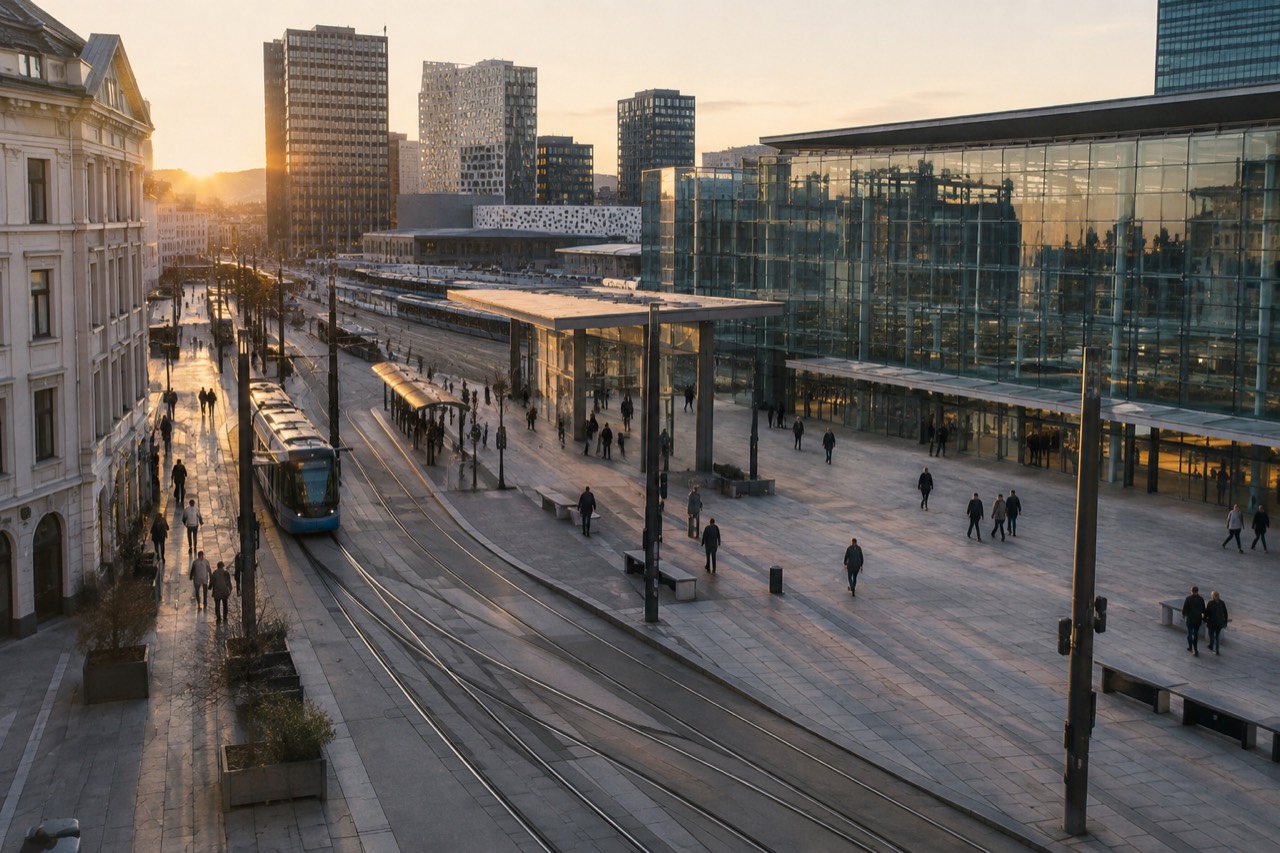
There is a moment on every Oslo trip when the itinerary says one thing and the departure board says another. Your ticket, your hotel's directions or a fellow traveler says "Oslo Central Station," while every platform sign, timetable and announcement in the city says "Oslo S." The two names point at exactly the same building, and the station behind them is the single busiest transport hub in Norway. Getting the naming straight is genuinely useful, because almost every train, tram, metro line and airport connection in the city funnels through this one place, and the airport train question that follows it has a money-saving detail most guides get wrong.
What Is the Difference Between Oslo S and Oslo Central Station?
There is no difference at all: "Oslo S" and "Oslo Central Station" are the same station, and "Oslo S" is simply the abbreviation of its Norwegian name, Oslo Sentralstasjon, which translates to Oslo Central Station. One is the Norwegian short form you will see on every platform sign, timetable and ticket machine, the other is the English full name used by some maps and travel articles. If your ticket, your booking or a local tells you to go to the other one, walk nowhere, you are already there.
The "S" is not a platform, a terminal, a separate building or a different operator. Norwegians abbreviate "Sentralstasjon" to "S" the way other cities clip long station names, and the abbreviation is so standard that even the railway operator's own signage uses it exclusively. You will see "Oslo S" on the departure boards, on the national rail timetables and in the journey planner, and you will almost never see the full English phrase inside the country.
The reverse trap catches travelers arriving by air. English-language booking confirmations and airport instructions often say "Oslo Central Station," and some visitors spend a confused few minutes looking for a second building they believe must exist somewhere nearby. It does not. The station you are standing in, the one with the glass roof over the main hall at the eastern end of Karl Johans gate, is the station every one of those documents means.
| Name you might see | What it actually is | Where you will encounter it |
|---|---|---|
| Oslo S | The abbreviation of Oslo Sentralstasjon, the same station | Platform signs, timetables, departure boards, journey planners |
| Oslo Central Station | The English translation of Oslo Sentralstasjon | English-language tickets, hotel directions, foreign guidebooks |
| Oslo Sentralstasjon | The official full Norwegian name | Official railway pages and signage |
The practical takeaway is simple. Treat the two names as interchangeable in every context, and when something in your planning says "Central Station," read it as Oslo S and follow the S. The station's own dedicated guide on this site, the Oslo Central Station planning guide, walks through the building itself in more depth if you want platforms, exits and facilities in detail.
Where Is Oslo S, and How Does the Station Connect to the City?
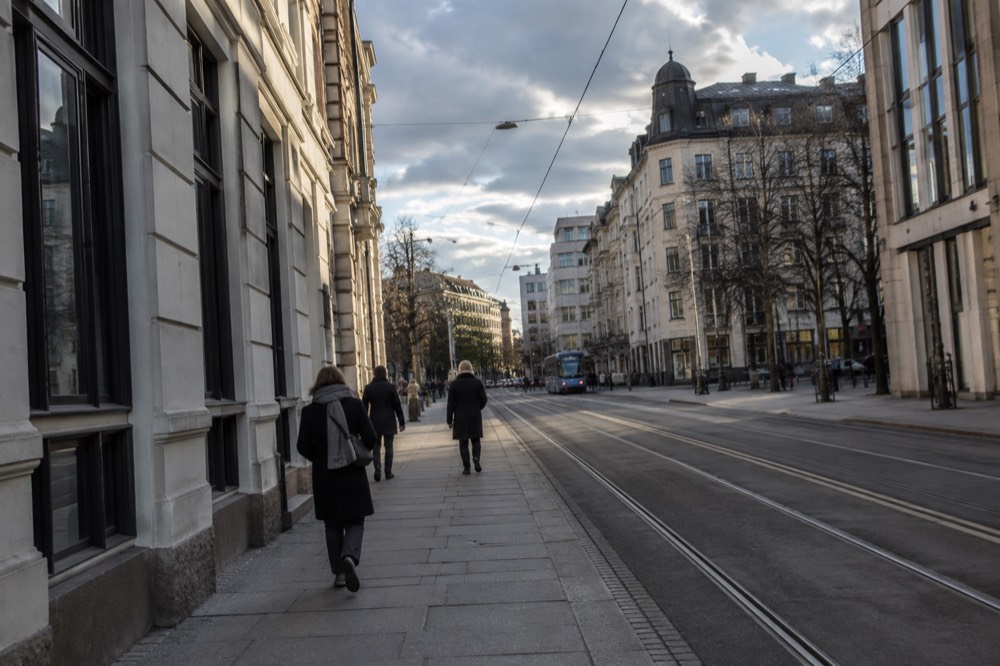
Oslo S sits at the eastern end of Karl Johans gate, the main street running from the Central Station up to the Royal Palace, with the main hall facing the square at Jernbanetorget, which is the busiest tram and metro interchange in the city. From the front doors, the Opera House is a few minutes' walk toward the waterfront, Karl Johans gate begins directly opposite, and the metro, trams and buses all meet at the interchange on the doorstep. Locationally, the station is the center of the city's transport map.
The station's position is the reason it shows up in every Oslo plan. The stretch of Karl Johans gate leading away from the station is the city's principal processional street, ending more than a kilometer later at the Royal Palace. Along it sit the Cathedral, the Parliament and, at the far end, the palace grounds. The walk is flat, direct and lined with the shops and buildings most visitors come to see, which makes arriving at Oslo S a genuinely convenient way to arrive in Oslo.
Turn the other way, downhill and toward the water, and you reach the Bjørvika waterfront and the Opera House, whose sloping marble roof you can walk on for free. The piers at Aker Brygge and Rådhusbrygge, where the Bygdøy museum ferry and the Oslofjord island ferries leave, are also within reasonable walking distance west along the shore. If you are connecting between a train and a fjord cruise or a museum ferry, the station puts you close to everything on the waterfront side of the city center.

The interchange at Jernbanetorget in front of the station deserves a sentence of caution and reassurance at once. It is the busiest public transport hub in Norway, with trams crossing in several directions and a major metro station, called Jernbanetorget on lines that serve it, sitting directly beneath the square. At first glance the intersection looks chaotic. It is actually well signed and compact, and every tram stop and metro entrance is within a minute or two of the station's front doors.
A first visit to a new city rewards a slow orientation, and a couple of hours spent getting the layout straight pays for themselves later. The classic budget version of that orientation is one of the free walking tours, which cover the center in about two hours and, together with the fjord boats, form the backbone of most first-day itineraries.
Which Trains, Metro Lines and Trams Meet at Oslo S?
Oslo S is the terminus for long-distance trains across Norway, including services toward Bergen, Stockholm and Gothenburg, and it is also where the airport trains from Oslo Airport Gardermoen arrive. Directly beneath and beside the station sit the Jernbanetorget interchange and the metro and tram network serving the rest of the city, so every mode of transport in Oslo either starts here or connects to it. Nationaltheatret, about a kilometer up Karl Johans gate, is the only other station sharing some of the same lines.
The national and regional picture first. Vy, the Norwegian national railway operator, runs its long-distance services from Oslo S, and the station is also the Norwegian end of international routes to Sweden. Travelers heading for the famous mountain crossing to Bergen, the Stockholm route or the fjord country to the west will all start or end at this station. The airport connection deserves its own section below, because the two train services that run to Gardermoen both arrive here, and they differ in ways worth real money.
Underground, the picture is local. The Oslo T-bane, the metro network, serves the station area through the Jernbanetorget stop, and the entire metro network sits inside Ruter zone 1, the central fare zone. Ruter, the regional transport authority, runs the trams crossing the square at street level, the buses on the surrounding streets and the ferries from the piers near City Hall, all on the same zonal ticket system. The practical consequence is that one ticketing app and one fare logic cover almost everything you will do from the station outward.
| Mode | What it serves from Oslo S | Ticket it rides on |
|---|---|---|
| Vy long-distance trains | Bergen, the mountain line, Stockholm, Gothenburg, other national routes | Vy tickets, bought separately |
| Airport trains | Flytoget express and Vy regional trains to Gardermoen | Flytoget ticket, or Ruter multi-zone ticket on Vy services |
| T-bane metro | Jernbanetorget stop, full network in zone 1 | Ruter tickets and the Oslo Pass |
| Trams | Jernbanetorget interchange, city-wide network | Ruter tickets and the Oslo Pass |
| Buses | Stops around Jernbanetorget and the station | Ruter tickets and the Oslo Pass |
For visitors whose trip involves the airport, the fjord or the islands, the fare details matter, and the getting around Oslo guide untangles the whole Ruter system. The single most valuable detail for most readers is the airport one, and the Flytoget versus Vy comparison covers it in full.
How Do You Get from Oslo Airport to Oslo S?
Two trains connect Oslo Airport Gardermoen to Oslo S: the Flytoget airport express, which takes about 20 minutes and costs 268 NOK for an adult single, and Vy's ordinary regional trains, which take about 23 minutes and ride on a standard Ruter ticket covering the zones between the airport and the city, making them the cheaper option. Both arrive at the same platforms at Oslo S. The Oslo Pass covers the Vy trains but not Flytoget.
That last sentence is the detail most guides get wrong or omit, and it is worth understanding rather than memorizing. Oslo Airport Gardermoen sits in Ruter zone 4N, while central Oslo is zone 1. A Ruter ticket covering the zones between the two is valid on Vy's trains, because within the Oslo region Vy services function as part of the ordinary zonal system, with no separate airport supplement. Flytoget is a separate company running its own express product, and ordinary Ruter tickets are not valid on it, nor is the Oslo Pass. Everything else covered here is indexed on Oslo Travel Guide. Everything else covered here is indexed on Oslo Travel Guide.
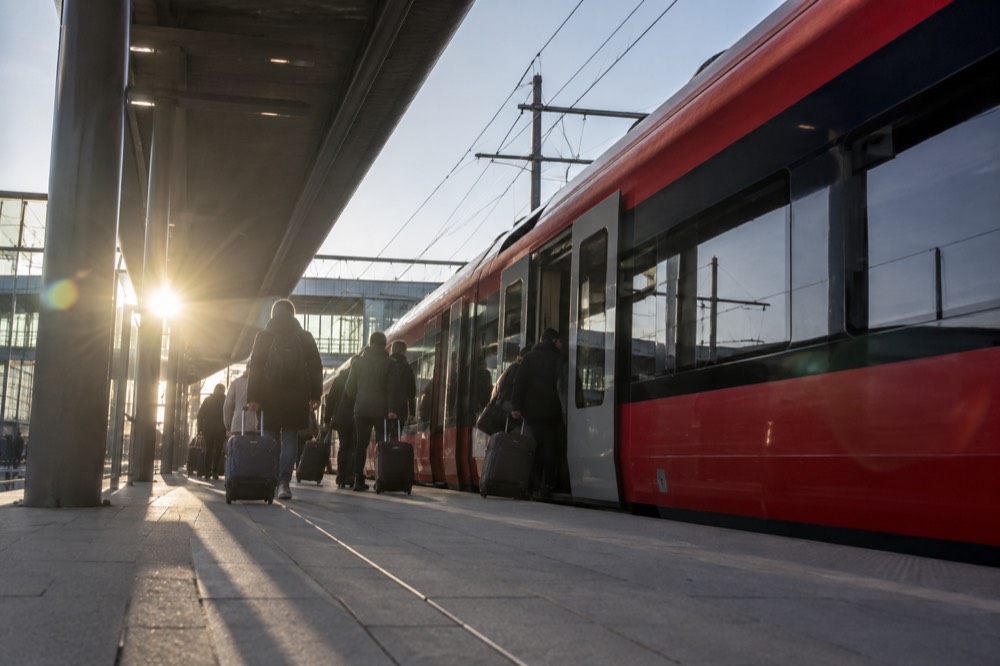
The numbers, all from the operators' own published pages: Flytoget runs every 10 minutes and reaches Oslo S in about 20 minutes, with an adult single at 268 NOK and reduced fares for seniors, students, youths and children. Vy's trains on the airport corridor take about 23 minutes, and the operator itself frames the difference as three to four extra minutes for usually about half the price. Avinor, the airport operator, publishes the public transport options on its own pages, and the timetables for both live in the journey planners.
For a visitor holding an Oslo Pass, the arithmetic tips firmly toward Vy. The pass includes public transport in zones 1, 2, 3, 4V and 4N, and VisitOSLO's own wording states that this includes "transport to and from Oslo Airport Gardermoen with public trains operated by VY." It explicitly excludes Flytoget. So a pass holder rides the airport train for nothing extra, while a Flytoget ticket would cost full fare. The same logic applies to anyone arriving on an ordinary multi-zone Ruter ticket.
| Option | Journey time to Oslo S | Adult cost | Notes |
|---|---|---|---|
| Flytoget express | About 20 minutes | 268 NOK single | Departs every 10 minutes, reduced fares for concessions |
| Vy regional trains | About 23 minutes | Ruter multi-zone fare, roughly half the express price | Rides on a zone 1 to 4N ticket and on the Oslo Pass |
| Airport coaches | Roughly 45 to 65 minutes, traffic dependent | Varies by purchase channel | Slower road option, check the operator's live pages |
The full airport picture, including coaches, taxis and the city-side orientation at both ends, is laid out in the airport to city centre guide.
Is Oslo S the Same as Nationaltheatret Station?
No, Nationaltheatret is a separate station about a kilometer up Karl Johans gate from Oslo S, but the two share important lines: the airport trains, the metro's common tunnel and several tram routes stop at or serve both, so Nationaltheatret often works as a second city-centre interchange for travelers staying in the western half of the center. If your accommodation is near the theatre or the Royal Palace, staying on the train two more minutes usually beats walking the full distance from Oslo S.
The two stations sit on the same central rail spine. Trains arriving from the airport at Oslo S continue onward through the central tunnel to Nationaltheatret, which serves the area around the theatre, the Royal Palace, the Parliament end of Karl Johans gate and the western side of the downtown core. For long-distance services the relationship holds too: many national and international trains call at both stations, with Nationaltheatret functioning as the city-center stop before or after the main terminal.
The metro runs underneath the same corridor. The T-bane's central tunnel connects the major downtown stops, and both the station area at Jernbanetorget and Nationaltheatret sit on it, which means the western center is one short metro hop from the eastern. At street level, trams along the upper part of Karl Johans gate and across the theatre square knit the two together, and the walk between them, straight along the main street, takes most people ten to fifteen minutes at a relaxed pace.
The decision is usually about luggage and weather rather than time. With light bags on a dry day, the walk from Oslo S to the theatre end of Karl Johans gate is one of the nicer arrivals any city offers, past the Cathedral and the Parliament. With suitcases, or in the dark of a December afternoon, staying on the train or metro to Nationaltheatret and emerging a few hundred meters from your hotel is the better plan. Seasonal daylight matters here: in late December the sun sets before most afternoon arrivals complete, while in June it stays light past ten in the evening.
What Is Changing at Oslo S?
Oslo S is the subject of a large planned redevelopment called Nye Oslo S, which aims to rebuild and expand the station and the rail infrastructure through the city center, and the project was in public consultation during 2026. No completion date for construction has been confirmed in the sources available to this site, and day-to-day operation of the station continues normally. Visitors should simply expect the station to keep functioning as the city's main hub for the foreseeable future.
The consultation matters less to a visitor than the headline fact that nothing major at the station is currently closed. The project's own pages describe a long-term ambition to renew the central station area and the rail capacity through Oslo, and public consultation is the early planning stage, not a construction site. For trip planning in the near term, the practical reality is an operating station with all of its platforms, services and connections in daily use.
Routine disruption is a different and smaller thing. Railway infrastructure anywhere needs maintenance, and occasional signal work, event-related closures and timetable adjustments happen at Oslo S as they do at any major terminus. The reliable response is to check your specific departure in a journey planner on the day you travel, rather than relying on a schedule copied weeks in advance. The national journey planner covers trains, metro, trams and ferries together, which is the habit worth forming for the whole trip.
The station area's immediate surroundings have been evolving in a way visitors notice more than the rail plans. Bjørvika, the waterfront district just south of the station around the Opera House and the Munch museum, has seen new hotels and restaurants open through 2025 and 2026, with the largest new hotel in the city's central area opening in 2026. For a visitor arriving at Oslo S, that means the walk from the platforms toward the fjord is livelier and better served than it was a couple of years ago, with more options for a first meal or a first night within minutes of the platforms.
How Should You Plan a Connection Through Oslo S?
Give yourself comfortable margin at Oslo S rather than a tight one: the station is large, the metro and tram interchange sits outside the main hall at Jernbanetorget, and international and long-distance platforms can be a few minutes' walk from each other, so a fifteen to twenty minute buffer for a train-to-metro or train-to-tram connection is a sensible rule of thumb. For luggage storage, waiting areas and facilities, the station operates as a full modern terminus, and its services are aimed squarely at transferring passengers.
Orientation inside the building is straightforward once you know the shape. The main hall with its glass roof fronts Jernbanetorget, the platforms run through the body of the station, and the entrances on the fjord side serve the Bjørvika district and the Opera House. Signage uses the Norwegian names, which is where this article's original question closes its loop: the signs will say Oslo S, and that is your station, whatever your booking confirmation calls it.
A few practical habits make the station easier. Buy Ruter tickets in the app before you travel, because tickets bought on board buses and boats cost more. Keep your Oslo Pass handy if you hold one, since it covers the metro, trams, buses, the island ferries and the Vy airport trains, but not Flytoget. Check departures on the boards rather than from memory, because maintenance and events shift platforms. And if you are heading to the fjord after your train, aim for the piers by the City Hall end of the waterfront, where the boats leave.
The natural first experience from the station is the fjord itself, which sits minutes downhill from the platforms. The most-reviewed activity in the city, a silent electric boat cruise with audio guide commentary, departs from the waterfront close to the station area and gives you the harbor, the islands and the city skyline from the water in about ninety minutes, a schedule that slots neatly between an arrival and an evening plan.
If your time in the city is short, the pairing that works for most visitors is the fjord in one direction and the museum peninsula of Bygdøy in the other, both reachable without a car and both covered in depth elsewhere on this site. The free walking tours guide covers the center on foot, and the one day in Oslo itinerary sequences the station, the waterfront and the museums into a single workable day. Between trains, or before one, the city's compactness is the quiet advantage: everything in this article sits within a short ride or an easy walk of one roof.
Common Questions About the Difference Between Oslo S and Oslo Central Station
what is the difference between oslo s and oslo central station?
None. "Oslo S" is the abbreviation of Oslo Sentralstasjon, the Norwegian name for Oslo Central Station, and both names refer to the same building and the same platforms. Norwegian signage and timetables use the short form, while English-language tickets and directions often use the full English name.
Is Oslo S the main train station in Oslo?
Yes. Oslo S is Norway's busiest station and the terminus for long-distance trains, international services to Sweden and the airport trains, with the city's main metro and tram interchange, Jernbanetorget, directly outside its front doors.
Does the Flytoget airport train go to Oslo S?
Yes. Flytoget runs every 10 minutes from Oslo Airport Gardermoen to Oslo S in about 20 minutes, and an adult single costs 268 NOK. It also continues to Nationaltheatret for the western city center.
Can I use the Oslo Pass on the train from Oslo Airport to Oslo S?
Yes, but only on the Vy trains, not on Flytoget. VisitOSLO states that the pass covers public transport in zones 1, 2, 3, 4V and 4N, including trains to and from the airport operated by Vy. The airport is in zone 4N.
Are Oslo S and Nationaltheatret the same station?
No. Nationaltheatret is a separate station about a kilometer from Oslo S along Karl Johans gate. Both are served by the airport trains, the metro's central tunnel and several tram routes, so Nationaltheatret works as a second interchange for the western city center.
Is Oslo S within walking distance of the Opera House?
Yes. The Opera House sits on the Bjørvika waterfront a few minutes' walk downhill from the station's fjord-side exits, and its sloping roof can be walked on free of charge, with no ticket required.