Is Oslo Opera House Worth Visiting?
A straight answer on whether the Oslo Opera House is worth your time, what it costs, when to go and what to combine it with on the Bjørvika waterfront.
Is Oslo Opera House Worth Visiting?
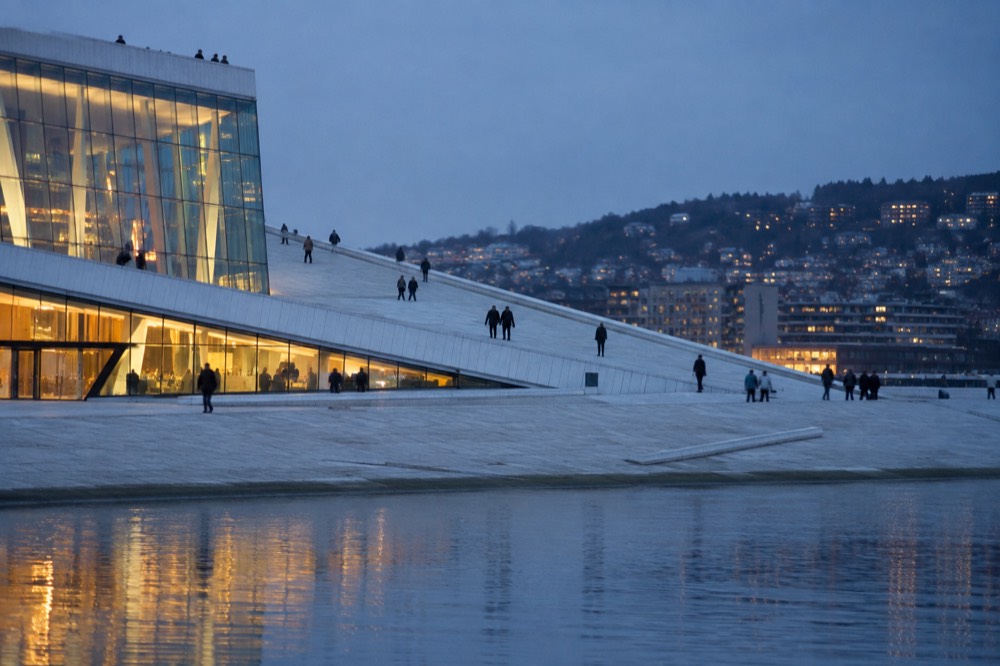
Yes, the Oslo Opera House is worth visiting, and it earns its place on almost any Oslo itinerary. It is the rare flagship landmark that costs nothing to experience: the sloping marble roof is a public space, open to anyone, with no ticket, no queue and no closing time tied to opening hours. You get architecture, a harbor panorama over the Oslofjord and a genuine piece of contemporary Norwegian civic life in under an hour if you are short on time.
The building sits at the head of the Bjørvika inlet, where the city meets the Oslofjord, and its whole design idea is that the roof is the plaza. Instead of a staircase leading to a door, the structure slopes up from the water's edge in angled planes of white marble and glass, and you simply walk up. Visitors treat the roof as a viewing platform, a photo spot and a place to sit facing the water, and on a clear evening it fills with people doing exactly that.
What makes it a genuinely good use of time rather than a box to tick is the combination of price and position. Oslo is the sixth most expensive country in Europe on Statistics Norway's 2025 price-level survey, with household prices 28.6% above the EU average, so a world-famous building you can experience for free carries real weight in the planning maths. And the Opera House is not stranded on a hill outside town. It is a short walk from Oslo Central Station, next to the MUNCH museum, and right on the waterfront piers where the fjord boats leave.
There is a limit to how much time it deserves, and honesty about that limit is part of the answer. If you walk up, take in the view, circle the building along the water and move on, you have done the essential experience. Attending a performance is a different proposition, and buying a ticket for a guided interior tour is worth it only for visitors with a real interest in architecture or stagecraft. For most people, the free roof is the attraction, and it delivers.
What Can You Actually Do at the Opera House?
The core activity is walking the roof, which takes most people 30 to 60 minutes including photos. You climb the marble slopes, follow the angled paths to the summit, and look out over the Oslofjord, the islands, the Barcode district and the fortress on the far side of the harbor. Around the base, the waterfront promenade runs along the glass facades facing the water, with the fjord lapping almost at the building's edge. Add an interior look or a performance and the visit stretches to half a day.
The roof itself is the draw. The surfaces are broad, angled and deliberately walkable, and the route to the top is a gentle climb rather than stairs, though there are steps in places and the marble can be slippery in rain or ice, so sensible shoes matter more than they might for a museum visit. From the summit the view opens across Bjørvika: the container terminals to the south, the low green shapes of Hovedøya and the other Oslofjord islands in the middle distance, and the city rising behind you.
Around the building, the public spaces continue. The promenade that wraps the seaward side is part of the same waterfront walk that connects the Opera House to the Sørenga seawater pool area, and in summer the water off the edge is swimmable in the way Oslo's harbor generally is, with official bathing spots nearby. The interior foyer is a public space too, a long, light-filled hall facing the fjord, and wandering into it costs nothing even when you have no ticket for anything.
For visitors who want more than the free experience, two upgrades exist. One is a performance: the house is the national opera and ballet's home, and the program spans opera, ballet and concerts across the year. The other is a guided tour of the backstage and stagecraft, which suits travelers who care about how a building like this actually works. Neither is necessary for the answer to this question to be yes, but both convert a photo stop into something richer.
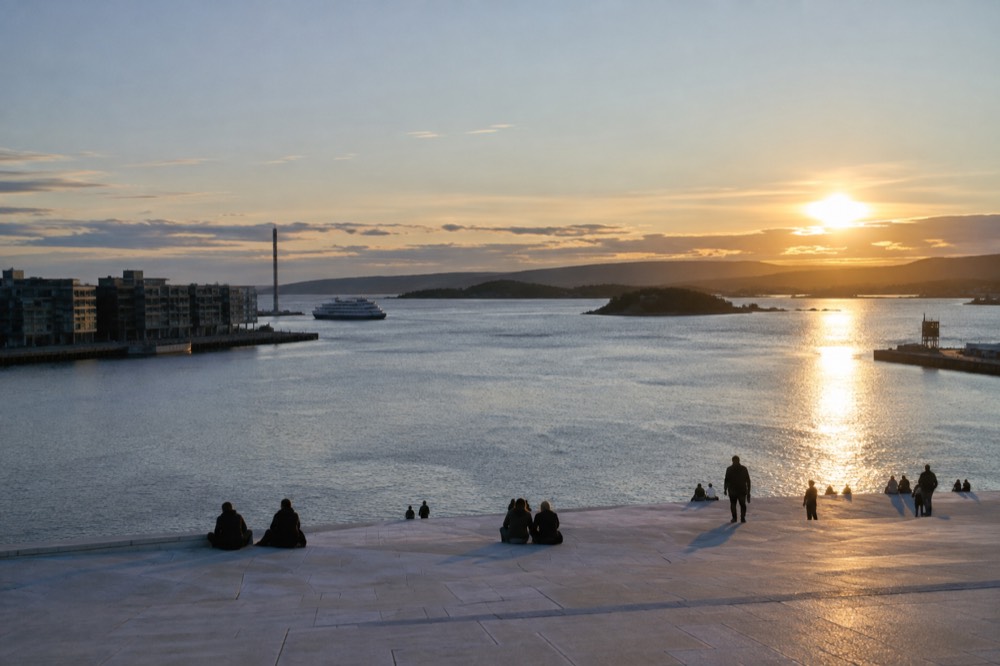
The Opera House also anchors a wider waterfront hour better than almost anywhere else in the city. The MUNCH museum stands a few minutes' walk along the quay, the Barcode towers rise directly behind, and the piers at Vippetangen and along Bjørvika are where the sightseeing boats dock. If you are planning a first visit to the city, the one day in Oslo itinerary slots the Opera House into the waterfront stretch naturally, usually late afternoon so the roof catches the evening light.
How Much Does the Oslo Opera House Cost?
Walking the roof and the exterior costs nothing, full stop. There is no ticket, no gate and no staffed checkpoint, and the space is public in the same way a city square is public. Inside, the foyer is also free to enter. Money enters the picture only for performances, guided backstage tours, and the food outlets, and for the surrounding sights: MUNCH charges 280 NOK for a standard adult daytime ticket, dropping to 200 NOK after 18:00, with under-25s at 100 NOK and under-18s free.
That cost profile is unusual for a European landmark and worth stating plainly, because Oslo's reputation for expense is real in the categories that dominate a visitor's budget. Statistics Norway's 2025 comparison puts food and non-alcoholic drinks 33% above the European average and alcohol and tobacco at more than double, so it is the restaurants and the bar bills that strain a budget in this city. The Opera House sits on the other side of the ledger, alongside the museums and the outdoors, where Oslo is not unusually expensive at all.
| Experience | What it is | Typical cost |
|---|---|---|
| Roof walk and exterior | Public space, no ticket | Free |
| Interior foyer | Public space during opening hours | Free |
| Performance ticket | Opera, ballet or concert, varies by seat and show | Set per production, book via the house's own site |
| Guided tour | Backstage and architecture tour, subject to schedule | Set per tour, check the house's own site |
| MUNCH, next door | Adult daytime | 280 NOK |
| MUNCH after 18:00 | Evening rate | 200 NOK |
| MUNCH under 25 | Reduced rate | 100 NOK |
| MUNCH under 18 | Free entry | Free |
One planning note on the neighborhood: the Opera House pairs naturally with a fjord cruise, because the departure piers sit within a short walk of the building. The Oslofjord cruise guide covers the boat options in depth, and the pairing works in either direction, a boat first with the roof as the sunset finale, or the roof first while you wait for a departure.
If you would rather keep the whole afternoon on land, the free walking tours of central Oslo pass through this end of the city, and the big free highlights walk is the default budget answer for the city as a whole. And if the weather turns, the museums of Bygdøy are one bus or ferry ride away, with the Kon-Tiki Museum the best-reviewed museum ticket in the city on either booking platform.
The fjord cruise pairing is the one worth locking in before you arrive, especially between June and August when cruise-ship passengers fill the departures from the piers beside the Opera House. Free cancellation applies on the booking, so reserving a seat early costs nothing in flexibility if your plans shift with the weather.
When Is the Best Time to Visit the Opera House?
Evening, and in summer, late evening. The roof faces west and southwest across the water, so the light is best in the hours before sunset, and in June the sun does not set until 22:43, which means an evening visit at 21:00 still has full daylight and golden tones. Winter flips the calculus: the roof is at its most dramatic under snow, but the sun sets before 15:30 in late December, so a midday visit is the only bright option.
The daylight swing in Oslo is extreme and it shapes this decision more than the weather does. On the summer solstice the day runs 18 hours 50 minutes, from sunrise at 03:53 to sunset at 22:43, and the gap between is deep twilight rather than true night, so the roof stays usable late into the evening. On 21 December the day is 5 hours 53 minutes, with sunrise at 09:18 and sunset at 15:11. There is no midnight sun in Oslo, the city is too far south at 59.91 N, but the long June evenings are close enough in practice for a waterfront viewpoint. The rest of the planning pages sit on Oslo Travel Guide. The rest of the planning pages sit on Oslo Travel Guide.
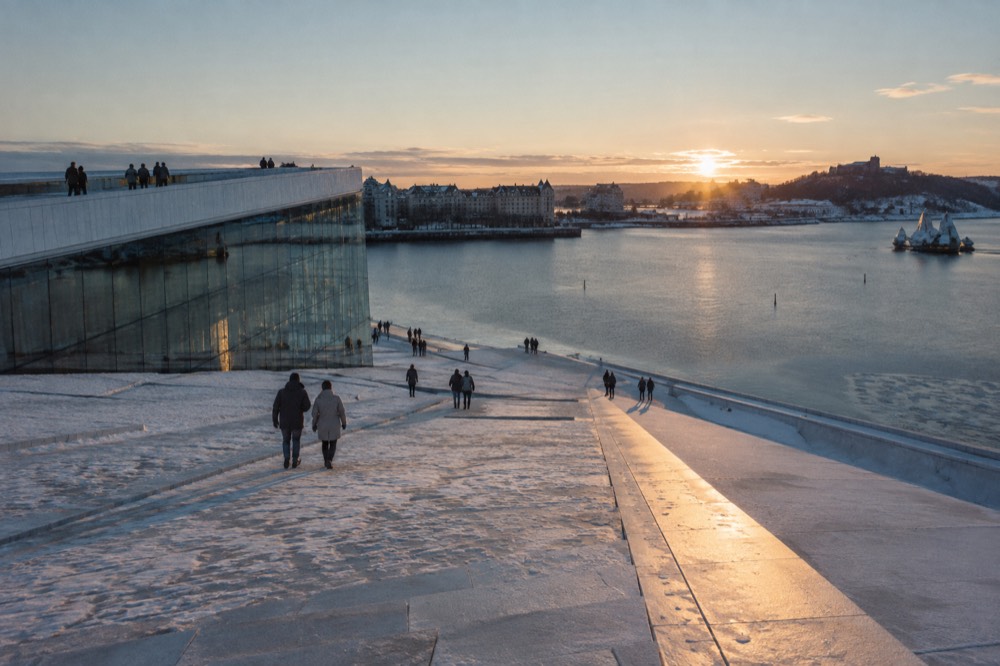
Season by season, the trade-offs look like this. Summer gives the long evenings, the swimming nearby and the full fjord panorama, at the cost of the biggest crowds on the roof, especially when cruise ships are in port. Autumn and spring are quieter and the light can be excellent, but rain is a factor: August is Oslo's wettest month on the official 1991 to 2020 normals at 103 mm, ahead of November, which surprises most visitors. Winter is the underrated option, because snow on the angled marble transforms the building and the crowds vanish, but the surface demands care and the daylight window is narrow.
Time of day matters beyond the light. The roof is quietest in the early morning, when the building belongs to joggers and commuters cutting through the waterfront, and busiest from late afternoon through the evening. Performance evenings add life to the foyer and the surrounding bars, which is part of the appeal if you like a building that is working rather than preserved. The Oslo at night guide covers the evening city in more depth, and the Opera House roof is one of its reliable anchors in every season.
How Do You Get to the Oslo Opera House?
On foot from the city center in about 10 minutes from Oslo Central Station, or by tram, bus or metro to the stops around Bjørvika. The building sits directly across the harbor basin from Akershus Fortress, at the end of the Karl Johans gate axis that runs from the Royal Palace through the center, so it is effectively impossible to visit central Oslo without passing close to it. There is no dedicated parking worth recommending, and none is needed.
The walk from the station is simple: exit toward the fjord and the building is visible immediately, the sloping white roof is the landmark you aim at. From the western end of the center, the route down Karl Johans gate and through the station area takes roughly 20 minutes at a relaxed pace. The getting around Oslo guide covers the tram and metro network in full, and several tram lines stop within a few minutes' walk of the building.
| Starting point | Best option | Notes |
|---|---|---|
| Oslo Central Station | Walk | About 10 minutes, building visible on exit toward the fjord |
| Karl Johans gate / center | Walk | 15 to 20 minutes, flat the whole way |
| Aker Brygge / City Hall | Walk or tram | 20 minutes on foot along the waterfront |
| Bygdøy museums | Bus 30 or ferry | Ferry runs 14 March to 4 October 2026, from Rådhusbrygge 3 |
| Oslofjord islands | Ferry to Aker Brygge, then walk | Island ferries are ordinary Ruter tickets, from Aker Brygge |
Two ferry systems matter here and they are not the same one, a distinction most guides blur. The Bygdøy museum ferry departs from Rådhusbrygge 3, runs seasonally from 14 March to 4 October 2026, and does not accept ordinary Ruter tickets, though the Oslo Pass covers it. The island ferries to Hovedøya, Gressholmen and Langøyene are ordinary Ruter services departing from Aker Brygge, a different pier a short walk further west. Both are covered in detail in the Oslo ferries guide.
The Opera House's position at the junction of land transport, the fjord and the waterfront walk is the practical reason it keeps appearing on itineraries. It is the natural first or last stop on almost any route that touches the harbor, and it costs nothing to fold into whatever else the day holds.
What Is Near the Opera House?
MUNCH is the nearest major sight, a few minutes along the quay, holding the world's largest collection of works by Edvard Munch including versions of The Scream. Behind the building rise the Barcode towers, and west across the water sit Akershus Fortress and the Aker Brygge waterfront with its restaurants and the island ferry piers. Everything on this list is within a 30 minute walk, which makes Bjørvika the most efficient sightseeing base in the city.
MUNCH deserves the headline slot. The museum brands itself with the single word MUNCH, it is open every day of the year except 1 May, and its hours run late on several days a week, to 21:00 from Wednesday to Saturday, which pairs perfectly with an evening on the Opera House roof afterward. The MUNCH museum guide covers the collection and the ticketing in depth, including the under-25 and evening rates.
West of Bjørvika, the options stack up quickly. Akershus Fortress occupies the headland across the harbor basin, its grounds free to wander, and the Akershus Fortress guide covers the museums inside the walls. Aker Brygge and Tjuvholmen extend the waterfront west with restaurants, the Astrup Fearnley museum and the seawater pools at Sørenga's end of the walk. The things to do in Oslo overview ties the whole waterfront stretch together if you are building a day around it.
The silent electric fjord cruise is the pairing that makes the most sense from this end of the harbor, because its departures sit within walking distance of the Opera House and the trip shows you the building from the water, which is the view its architects were designing for. Running about an hour and a half with audio commentary, it fits neatly before or after an evening on the roof, and it is the best-reviewed activity in the city on either booking platform, which is why it is the related pick for this page. Booking ahead is sensible in the cruise-ship season when the boats fill.
Should You Book Anything in Advance?
For the Opera House itself, no: the roof needs no ticket and no booking, and the foyer is walk-in. Book ahead only for a performance, a guided tour, or the fjord cruise if you are pairing one with the roof, and book the cruise in particular during the summer months when cruise-ship passengers fill the departures. Museums around Bjørvika generally do not need advance booking outside peak exhibition openings, though MUNCH's timed late openings can fill on Wednesdays through Saturdays.
The honest division is between the free, unbookable city and the bookable city. The roof, the fortress grounds, Vigeland Park, which is free and open 24 hours a day year-round, and the whole waterfront walk belong to the first category, and they make up a surprising share of what Oslo is worth seeing. The second category, performances, tours and boats, is where planning pays, and where the Oslo guided tours overview helps sort what is worth reserving from what is not.
Cancellation terms on the bookable products are generally generous, with free cancellation windows on most tours and cruises, so booking early costs little in flexibility. That is the practical advice for a city where the weather decides the shape of the day more often than the schedule does: lock in the boat, keep the roof free-floating, and let the sky pick the order.
For the wider question of how this building fits a short trip, the 2 days in Oslo itinerary places it on the second day's waterfront stretch in most seasons, while the Oslo in winter guide makes the case for the snow-covered roof as one of the season's best free sights. However you cut it, the answer to this page's question holds: the Opera House is worth visiting, it costs nothing to visit well, and it sits at the center of the most walkable cluster of sights in the city. That combination is rare enough in an expensive capital to state without hedging.
Common Questions About the Oslo Opera House
is oslo opera house worth visiting?
Yes. The roof is free, always accessible as a public space, and delivers one of the best views in Oslo across the Oslofjord. Even a short visit of 30 to 60 minutes on the roof and the surrounding waterfront justifies the stop, and the building's position next to the station and MUNCH makes it nearly effortless to include.
Can you walk on the Oslo Opera House roof for free?
Yes. The sloping roof is a public plaza with no ticket, no gate and no restricted hours beyond the practical limits of daylight and weather. The interior foyer is also free to enter during the building's opening hours.
How long should you spend at the Oslo Opera House?
Plan on 30 to 60 minutes for the roof and the waterfront around the base. Add an hour or two if you are visiting MUNCH next door, and half a day only if you are taking a guided tour or attending a performance.
Is the Opera House roof slippery in winter?
It can be. The marble surfaces hold snow and ice, and the angles are steep enough in places that sensible footwear matters. Winter visits are rewarding, the snow-covered roof is one of the city's best sights, but go at midday when the light is best and take care on the slopes.
What is the best time of day to visit?
Evening, especially in summer when the sun sets as late as 22:43 in late June. The roof faces the water to the west and southwest, so the hours before sunset give the best light. Early morning is the quietest alternative.
Is the Opera House near MUNCH?
Yes, a few minutes' walk along the quay. MUNCH charges 280 NOK for a standard adult daytime ticket, 200 NOK after 18:00, with under-25s at 100 NOK and under-18s free, and it stays open until 21:00 from Wednesday to Saturday, which pairs well with an evening on the roof.