Is Oslo Cathedral Free to Enter?
Yes, Oslo Cathedral is free to enter. Here is what free actually means at a working church, what else nearby costs nothing, and when a paid tour is worth adding.
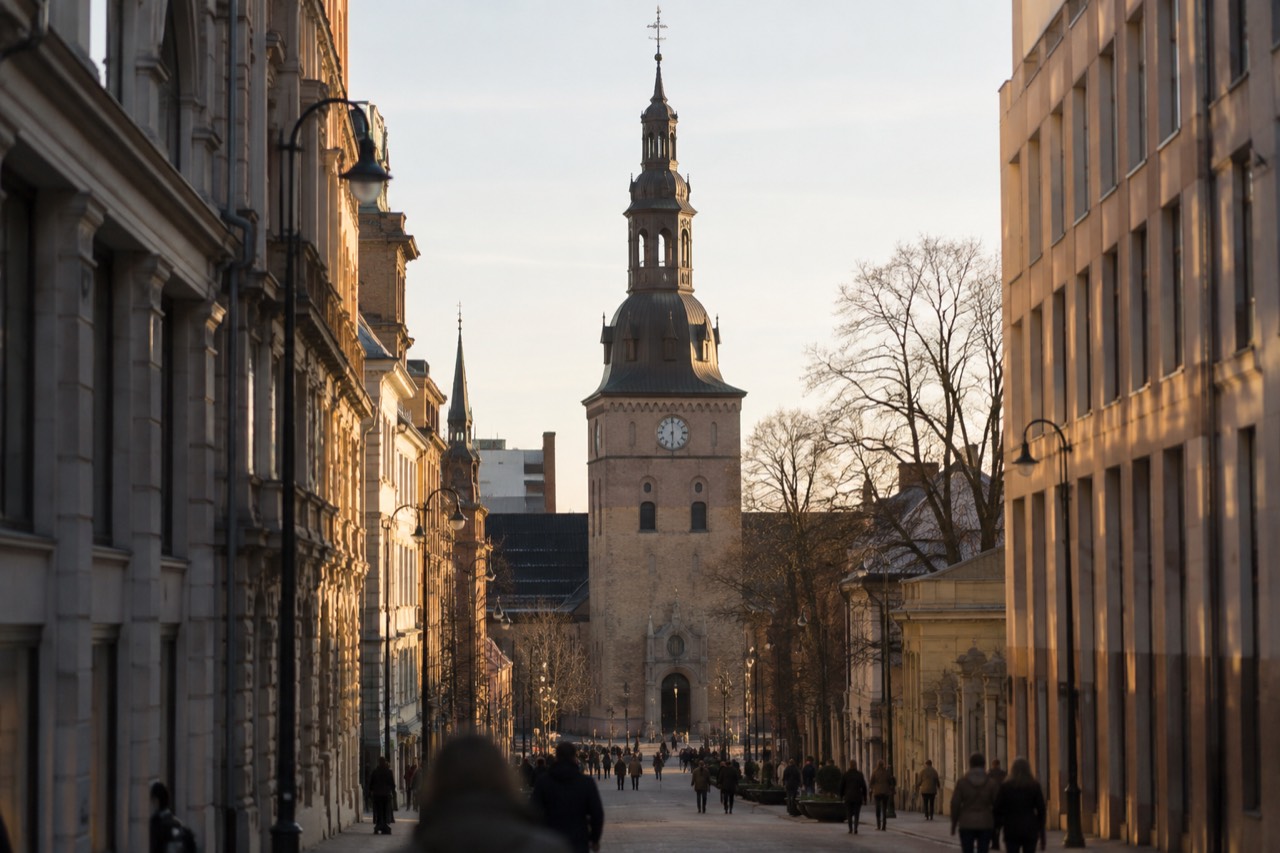
Is Oslo Cathedral Free to Enter?
Yes, Oslo Cathedral is free to enter. It is a working Church of Norway parish church, not a ticketed attraction, so there is no admission desk, no gate and no suggested fee at the door. You walk in the same way locals do, for a service, for a quiet look, or to get out of the rain. Donations are welcome, and special events such as organ concerts can carry their own ticket, but ordinary visiting costs nothing.
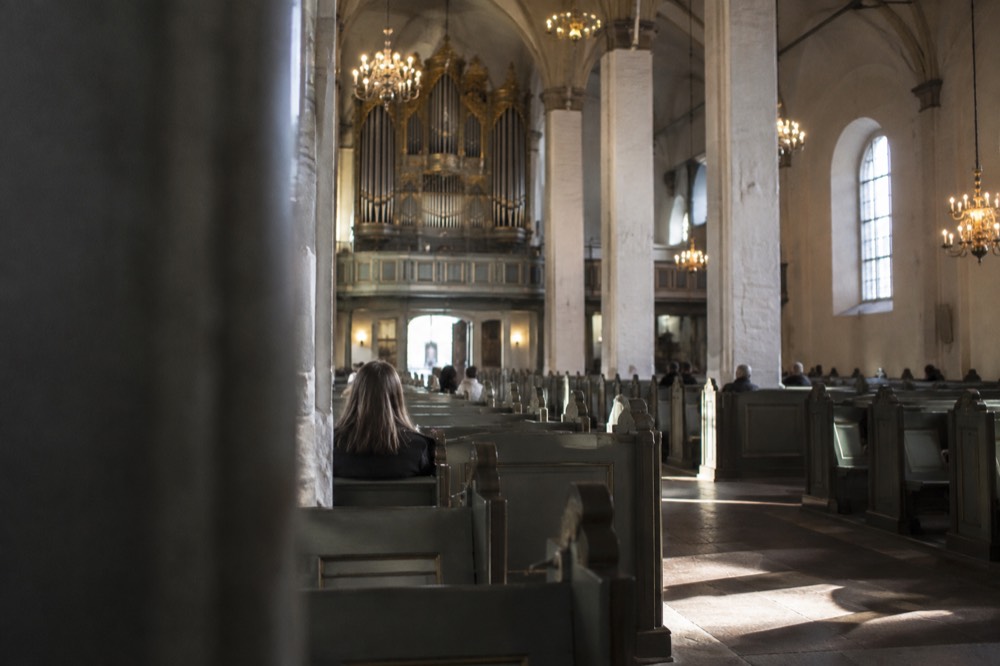
That single fact shapes more of your Oslo day than you might expect. Visitors arrive expecting a ticket price somewhere between the museums and brace for it, and the absence of one is a small but real saving in a city where the museums add up fast. The cathedral also sits directly on the city's main processional street, which means it costs you no transport either, it is a stop you pass on foot between other stops, not a destination you travel to.
There is a full guide to the building itself elsewhere on this site, covering its history, its stained glass and its role in Norwegian national life, and you can read it at the Oslo Cathedral visitor guide. This page stays on the practical question: what free means here, what is and is not included, and how the answer fits into a day of spending decisions in one of Europe's most expensive countries.
Where the Cathedral Sits on Your Walking Route
Oslo Cathedral stands at the lower end of Karl Johans gate, the city's main street, roughly halfway between Oslo Central Station and the Royal Palace, and it costs nothing to reach or to enter. That placement is the practical reason it ends up on almost every visitor's route: arriving by train, you walk out of the station, and the cathedral is a few minutes ahead of you before the street continues uphill past the Parliament building, the National Theatre and the palace grounds at the far end. Nothing about visiting it requires a detour, a tram transfer or a ticket machine, and nothing about it requires a coin either.
The street itself is the real frame for the visit. Karl Johans gate is the spine of central Oslo, and the cathedral anchors its eastern end. If you are planning the walk from station to palace, the Karl Johans gate walking guide breaks the street down block by block, including what is worth stopping for and what you can safely stride past. The cathedral is one of the few stops on that street that costs nothing, which matters when the surrounding blocks are full of the restaurants and shops that make Norway the sixth most expensive country in Europe on Statistics Norway's 2025 price-level survey.
A sensible free-first sequence looks like this: leave the station, reach the cathedral within minutes, spend twenty minutes inside, then continue up the street. By the time you reach the National Theatre you have covered the most photographed stretch of central Oslo without spending a krone on admission. The palace's exterior and the surrounding palace park are likewise open public space, so the whole spine of the city can be done for the price of whatever coffee you buy along the way.
If you would rather have someone else assemble that walk, the guided options are worth comparing before you commit. The three below are the ones this site rates for a first visit.
What Free Actually Means at a Working Church
Free entry at Oslo Cathedral means the nave is open to anyone during visiting hours, with no ticket, no suggested donation and no rope line, but it does not mean the building is an all-access attraction. It is the seat of a living congregation and the church used for state occasions, so parts may be closed for services, weddings or rehearsals, and the atmosphere is expected to stay quiet. Photography is generally tolerated in the nave, but a service in progress is not a photo opportunity, and the respectful move is to sit at the back or come back later. Free, in other words, means free, not unrestricted.
The distinction that catches visitors out is between visiting and events. Walking in during ordinary open hours costs nothing and always has. An organ recital, a concert or a special program is a ticketed event in the same building, and those tickets are sold on their own terms. If a poster at the door advertises an evening concert, that is not a hidden admission fee for the cathedral, it is a separate event that happens to use the space. Check the listing before assuming either way.
The same pattern holds across most of the churches in the city center, and it is worth internalizing early because it inverts the museum logic visitors arrive with. In Oslo, the buildings that charge are the museums, and the buildings that are free tend to be the sacred and civic ones. The table below shows how the cathedral fits into the wider picture of central Oslo sights, using verified admission figures.
| Sight | Admission | Notes |
|---|---|---|
| Oslo Cathedral | Free | Working church, no ticket for ordinary visits |
| Vigeland Park (Frognerparken) | Free | Open 24 hours a day, all year, over 200 sculptures |
| Opera House roof | Free | Public walkway, no ticket required |
| Royal Palace exterior and park | Free | Palace interior tours are separate and limited |
| MUNCH | 280 NOK adult | 200 NOK after 18:00, under 25s pay 100 NOK |
| Fram Museum | 180 NOK adult | Children and students 70 NOK |
| Kon-Tiki Museum | 180 NOK adult | Family ticket 400 NOK |
| Norsk Folkemuseum | 200 NOK adult | Children 0 to 17 free |
One more thing worth saying plainly: the cathedral's freeness is not a temporary promotion or an off-season quirk. It reflects how the Church of Norway operates its city churches generally, as open parish buildings rather than gated heritage sites. The paid items in the table above are paid because they are museums with collections to maintain, not because Oslo charges for old buildings as a rule. That distinction will save you money all over the city if you let it.
Other Free Sights Within Walking Distance of the Cathedral
The cathedral sits inside a cluster of genuinely free sights: Vigeland Park, the Opera House roof, the palace park and the entire waterfront promenade from Aker Brygge to Sørenga are all public space with no admission whatsoever. That is an unusual concentration for a European capital, and it is the honest counterweight to Norway's price reputation. The expensive parts of Oslo are restaurants, alcohol and taxis, not the sightseeing, and a visitor who plans around the free cluster can see an enormous amount of the city before spending a single krone on entry fees.
Vigeland Park is the headline. It is free, open 24 hours a day, all year, with no ticket of any kind, and it holds over 200 sculptures by Gustav Vigeland across a vast Frogner parkland that is itself free to wander. It is one of the city's most visited sights precisely because it costs nothing and never closes. The Vigeland Park guide covers the layout, the monolith and how to reach it by metro in minutes from the center.
The Opera House belongs on the same list. Its sloping marble roof is a public walkway, and climbing it for the fjord view is one of the definitive free Oslo experiences, no ticket, no queue, no closing time beyond common sense. From the cathedral you can walk there in about fifteen minutes, passing the MUNCH museum on the way, which is very much not free at 280 NOK but drops to 200 NOK for evening visits after 18:00. More of these guides are collected on Oslo Travel Guide. More of these guides are collected on Oslo Travel Guide.
The waterfront completes the set. The promenade from Aker Brygge south through Tjuvholmen and on to Sørenga is a continuous public walk, and the harbor baths at the end of it are public swimming. For a fuller rundown of what costs nothing in this city, including several sights most visitors never hear about, see free things to do in Oslo, and for the churches-and-streets version of the same idea, the free walking tours guide covers the tip-based walks that leave from outside the cathedral's end of town daily.
When a Paid Tour Earns Its Money in a Free City
A paid tour in Oslo earns its money when it adds interpretation to something you would otherwise walk past, and the clearest example is the guided art walk through Vigeland Park, which turns 200 granite figures into a readable story for a modest price. The park itself costs nothing, so what you are buying is the guide, and that is the honest test for every paid product in this city: does it add understanding, or does it merely transport you somewhere you could reach alone?
By that test, the Vigeland art walk passes easily. The sculptures are famously enigmatic standing alone, and the figures carry a running theme of human relationships that a guide can actually decode, from the famous angry boy to the towering monolith at the park's center. The walk runs about an hour and a half and is among the highest-rated guided products in the city. Check availability if that format appeals, and read the guided tours overview first for how it compares against the bus and bike formats.
The same logic applies to the fjord. The harbor is free to look at, but the fjord itself is the one thing in Oslo you cannot experience from land, and the boat products are how you get onto it. The silent electric cruise is the city's single best-reviewed activity on either platform, with an audio guide doing the interpretation, while the traditional wooden sailing ship offers a completely different experience for nearly the same money, two hours under sail rather than ninety minutes of quiet motoring. Neither is cheap in absolute terms, but both are priced in the same band as a single museum-plus-lunch day.
The pattern to notice is that Oslo's paid products cluster around interpretation and access, not admission. You pay a guide to explain, a boat to float, a small group for depth. You do not pay to stand in a church, a park or a palace garden. A visitor who grasps that can build three expensive days or three nearly free ones from the same map.
Budgeting the Rest of the Day Around a Free Cathedral Stop
Budgeting around the cathedral is less about the cathedral and more about everything next to it, because the free sights are clustered while the paid ones are not, and the gap between a cheap day and an expensive one in Oslo is usually lunch and a beer. The cathedral stop itself costs you nothing but time, roughly twenty to thirty minutes done properly, which makes it the most efficient line item in any Oslo itinerary you will ever write down.
The honest numbers come from Statistics Norway rather than menu folklore. Norway is the sixth most expensive country in Europe overall, food and non-alcoholic drink runs 33% above the European average, and alcohol and tobacco cost more than double the average. What that means on the ground is that the cathedral, the park and the palace cost nothing, the museums cost a moderate and predictable amount, and the restaurant or bar you sit down in afterward is where the day's budget actually goes. Visitors who picnic from a supermarket and eat one restaurant meal spend a fraction of what visitors who lunch twice spend, and the sightseeing is identical.
Museums are where planning pays. Three Bygdøy museums at full price total 560 NOK, against a 24-hour Oslo Pass at 580 NOK that also includes all public transport in zones 1 through 4N, the Bygdøy ferry and the Vy airport train. That is the kind of arithmetic this site exists for, and it is why the pass question deserves its own reading rather than a snap decision at a ticket desk. If you are only in town for a day centered on the free cathedral-park-waterfront circuit, you may need no pass at all.
One practical note on the money itself. Norway is in the Schengen Area but not in the European Union, it is an EEA state through EFTA, and the currency is the krone, not the euro. Card payment is close to universal, so you rarely need cash, but the krone is the only money you will be quoted in, and the free-entry question at the cathedral is answered in exactly those terms: zero krone.
A final thought on sequencing. Because the cathedral is free and sits at the start of the main street, it works best as the first stop of the morning rather than a midday detour. Churches reward the early light through their windows, the pews are emptiest before the tour groups reach Karl Johans gate, and finishing your visit by mid-morning leaves the rest of the day for the paid decisions, the museums, the fjord boats or the guided walks, when you can weigh them against a budget you have not yet dented. Starting free is not just a saving, it is a scheduling advantage.
Common Questions About Oslo Cathedral Entry
is oslo cathedral free to enter?
Yes. Oslo Cathedral is a working Church of Norway parish church and charges no admission for ordinary visits. There is no ticket desk and no suggested fee, though donations are welcome and ticketed events such as organ concerts are sold separately.
Do I need to book anything to visit Oslo Cathedral?
No. You simply walk in during open hours. The only bookings associated with the building are for concerts and special events, which are separate ticketed occasions rather than a condition of entry.
Can I visit Oslo Cathedral during a church service?
Generally yes, services are open to anyone, but the expectation is participation or quiet observation from the pews rather than sightseeing. If you want to photograph the interior at leisure, plan around the service schedule and visit outside those times.
How long does a visit to Oslo Cathedral take?
Most visitors spend twenty to thirty minutes inside, enough to see the nave, the ceiling and the organ. Because it sits on Karl Johans gate, it slots naturally into the walk between Oslo Central Station and the Royal Palace without any dedicated travel time.
Is Oslo Cathedral the same as any other free sight in Oslo?
It follows the same rule as most of the city's churches: free entry, donation optional. The broader pattern in Oslo is that churches, parks and public spaces cost nothing, while museums charge. Vigeland Park, the Opera House roof and the palace park are the other headline free stops.
Are the other big Oslo churches also free?
City churches in Norway generally operate as open parish buildings rather than ticketed attractions, so the pattern of free ordinary entry with paid special events is common. Check the specific church's own site for current open hours, since these vary by parish and season.