Is It Worth Going to Oslo in December?
A straight answer on whether Oslo in December is worth the trip: daylight hours, weather, Christmas markets, costs, what is open and what is not.
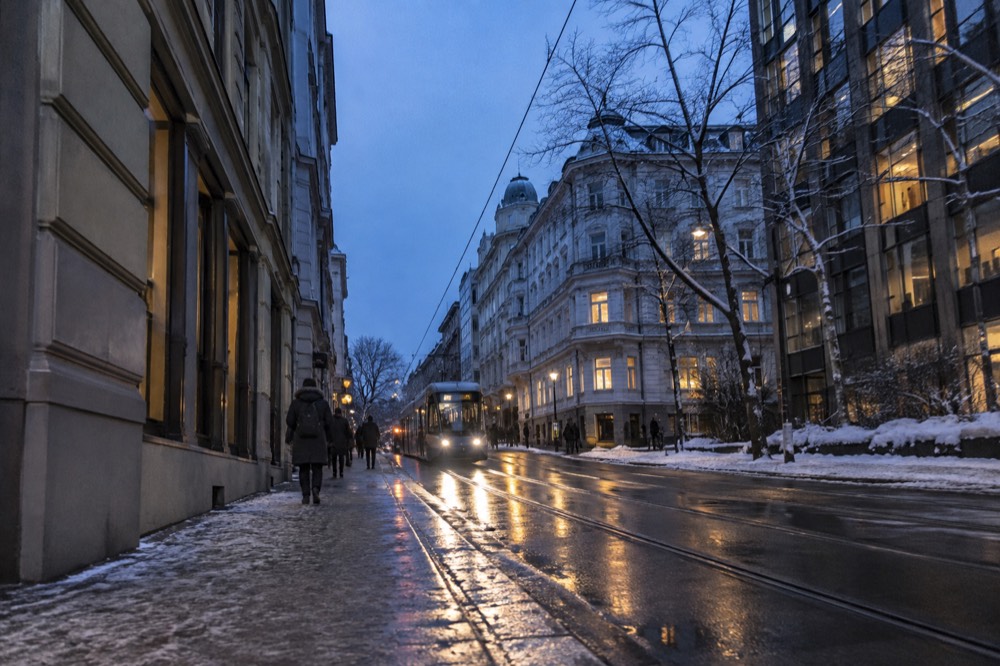
Is It Worth Going to Oslo in December?
Yes, Oslo in December is worth it if you go for winter itself: the Christmas market, torchlit streets, a quiet fjord, saunas and museums with no queues. It is not worth it if your checklist is the Viking ships, long outdoor sightseeing or the island beaches, because the Museum of the Viking Age is closed until 2027 and daylight lasts under six hours at midwinter. Go for atmosphere over coverage and the month pays its way.
December is the month Oslo stops pretending to be a summer city and becomes what it actually is: a northern capital built for the dark. The city does not shut down. Norwegians do not hibernate. The streets are lit, the museums are open, the T-bane runs on schedule, and the fjord is still there, just colder and quieter. The question is not whether Oslo functions in December, it clearly does. The question is whether the version of Oslo you get in December matches the trip you want.
This page answers that question with real numbers: how much daylight you actually get, what the weather does, what stays open, what is closed, and what the whole thing costs. There is no hedging, because the honest answer is not "it depends". It depends on specific, checkable things, and all of them are below.
What Is December Weather Actually Like in Oslo?
Oslo's December normal mean temperature is −1.4 °C (about 29 °F), with about 54 mm of precipitation across the month, and daylight shrinks to 5 hours 53 minutes on 21 December, when the sun rises at 09:18 and sets at 15:11. That is the headline: not extreme cold, but extreme dark. Your sightseeing window is a short block in the middle of the day, with long lit evenings on either side of it. The cold itself is manageable in a way the latitude suggests it should not be, so the month is really a darkness question, not a temperature one.
The cold is manageable in a way the latitude suggests it should not be. Oslo sits at 59.91 N, the same latitude as Shetland and Anchorage, but the coast keeps the city milder than inland Norway. MET Norway's 1991 to 2020 normals for the Blindern station put December at −1.4 °C on average, which is parka weather, not expedition weather. Recent observed winters have swung either side of that, with a low of −17.2 °C recorded in January. Pack for −5 to −15 °C and you have the range covered.
Precipitation is the quieter problem. December's normal is 54 mm, which makes it one of the drier months of the Oslo year, wetter only than February. But that precipitation often arrives as snow, sleet or freezing rain rather than clean snowfall, and the city's official snow-depth statistics are not something this site will guess at. What is fair to say: expect some white days, some grey slush days, and a real chance the ground is bare and brown on any given afternoon.
Here is how the deep-winter months compare, using MET Norway's normals and the daylight figures from its own sunrise data:
| Month | Normal mean temp | Normal precip | Daylight on the 21st |
|---|---|---|---|
| November | 2.2 °C | 85 mm | ~7 h 30 m |
| December | −1.4 °C | 54 mm | 5 h 53 m |
| January | −2.3 °C | 58 mm | ~6 h 00 m |
| February | −2.0 °C | 46 mm | ~9 h 30 m |
Read that table again with planning eyes. December is darker than January. If you are choosing between the two on weather alone, January is marginally colder but sunnier by December's standards, and February is the month where the light comes back fast. The full picture is in the site's guide to Oslo daylight hours by month, which is worth ten minutes of your planning time before you book anything.
One thing December is not: the wettest month. That title belongs to August, at 103 mm on the normals. A common fear about December trips is endless rain, and the data does not support it. What December trades you is light, not dryness.
What Can You Actually Do in Oslo in December?
Most of Oslo's core sights stay open in December: the museums, the Opera House roof, Vigeland Park, the fjord cruises, saunas and the Christmas market, with reduced hours around the holidays themselves. The big exceptions are the Museum of the Viking Age, closed until 2027, and the Bygdøy ferry, which stops running in early October. Bus 30 covers Bygdøy's museums year-round on an ordinary Ruter ticket, so the peninsula itself remains reachable even when the boats do not.
Start with the waterfront. The fjord does not freeze into uselessness, and the winter versions of the boat trips are arguably better than the summer ones: fewer passengers, sharper air, and a city lit up against the dark water. The silent electric fjord cruise is the best-reviewed activity in the city on either major booking platform, and it runs through the winter season with an audio guide doing the commentary. A heated indoor deck and a quiet electric hull is exactly the right vehicle for a December afternoon on the Oslofjord.
On land, the free walking tours keep running, and a two-hour walk in the dark with a guide who knows where the good streetlights are turns out to be a genuinely good format for December. The big free highlights walk is the largest in the city by review count and operates year-round; tip-based, so the cost is what you decide it is. For a paid option, the evening myths-and-legends walk was built for exactly this season, the October-to-March dark months, and it is one of the highest-rated themed walks in the city.
The museums are the reliable December backbone. MUNCH on the waterfront holds the world's largest collection of works by Edvard Munch, at 280 NOK adult entry, 200 NOK after 18:00, and free for anyone 17 or under. The National Museum holds The Scream. On Bygdøy, the Kon-Tiki and Fram museums sit side by side and pair naturally: Kon-Tiki at 180 NOK adult, and a combined Kon-Tiki plus Fram ticket at 325 NOK, with the full three-museum Bygdøy combination at 485 NOK. Every one of those is covered by the Oslo Pass, which costs 580 NOK for 24 hours, so a heavy museum day can break even on the pass. The full breakdown lives in the site's Oslo Pass guide.
And then there is the stuff December adds rather than merely tolerates. Saunas by the fjord, sold direct by the operators rather than through any booking platform. The Opera House roof, free to walk at any hour, and striking in low light. Vigeland Park, free and open 24 hours a day all year, its 200-plus granite sculptures holding snow in ways the sculptor could not have planned but would probably have approved of. Torchlight and firepit walks in the forest edge of the city, the signature Oslo winter product. And cross-country skiing in Nordmarka, whenever the snow allows, reached by an ordinary T-bane ride to Frognerseteren.
The one thing to say plainly: there are no northern lights tours from Oslo, because Oslo is too far south for reliable aurora. The aurora oval reaches this latitude only during strong geomagnetic storms, a handful of times a year at best. A December aurora sighting in Oslo is a lottery win, not a bookable product, and any listing suggesting otherwise is selling you something that does not exist. Tromsø is the northern lights trip, and it is a separate flight north, covered in the site's guide to getting from Oslo to Tromsø.
Is the Oslo Christmas Market Worth It?
The Christmas market is a genuine reason to visit in December rather than merely something that happens to be open, and it is the single biggest seasonal draw in the city centre, with wooden stalls, gløgg, grilled food and lights in the darkest weeks of the year. The market's own dates and stall line-up change year to year, so check the current details before you build a day around it, but the format itself is reliable and it is exactly the kind of thing this latitude does well.
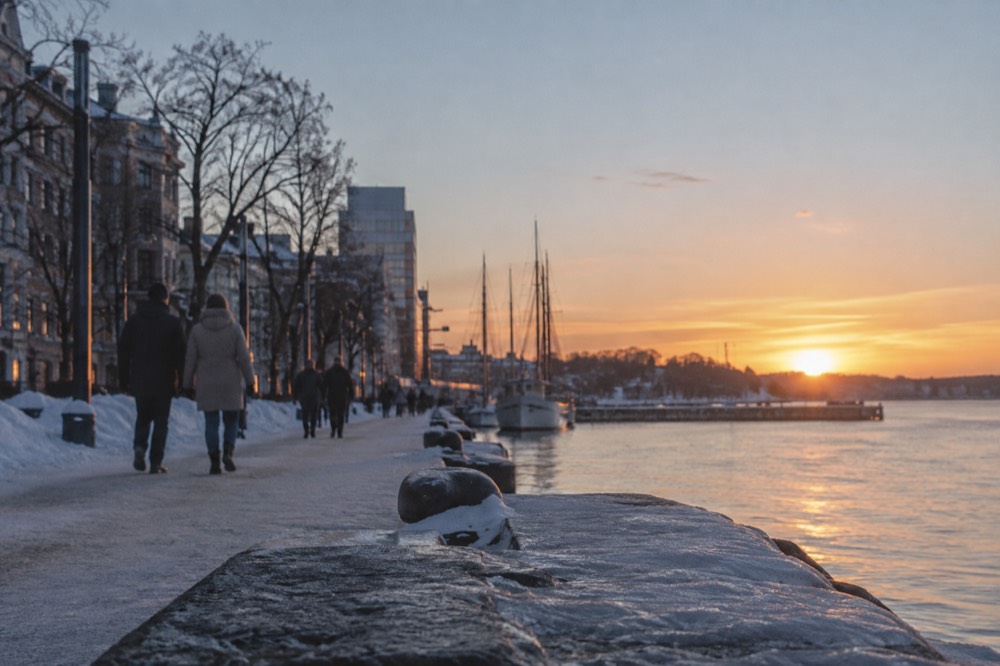
The honest framing: a Norwegian julemarked is a compact, food-and-drink-heavy affair, not a vast German-style market. Budget an hour or two, not an afternoon. What makes it work in Oslo is the darkness around it, because the lights carry an aesthetic weight they never earn in southern cities in December. Go at 16:00, after the sun has set and the stalls have switched on, and the payoff is real.
The wider Christmas layer matters more than the market itself. Karl Johans gate and the surrounding blocks light up, shop windows do their one big seasonal push, and the whole city centre shifts toward indoor comfort: bakeries, cafés, and the food halls. The site's Oslo in December guide covers the full seasonal programme, and the Oslo Christmas market page handles the market in detail. Two practical notes belong here. Vinmonopolet, the state monopoly, is the only place to buy wine and spirits, it closes on Sundays and public holidays and shuts early on Saturdays, and supermarkets sell only beer up to 4.7% ABV with a fixed evening cut-off. And 17 May, Christmas Eve, Christmas Day and New Year's Day all reduce museum and transport schedules, so plan around the holidays themselves rather than through them.
How Much Does a December Trip Cost?
Oslo in December costs the same as Oslo in any month, because Norway's prices do not do seasonal tourist surges the way southern Europe does: the 24-hour Oslo Pass is 580 NOK, a museum-heavy day runs roughly 400 to 560 NOK in entries, and the expensive parts of the city are alcohol and restaurants, not sights. Flights and hotels are the only lines that move, and December's position relative to other months depends heavily on which week you pick.
The structural cost facts are stable year-round. Norway is the sixth most expensive country in Europe on Statistics Norway's 2025 price-level survey, with household prices 28.6% above the EU average. Food and non-alcoholic drinks run 33% above the European average. Alcohol and tobacco are more than double the European average, which is the single number that explains most visitors' bar bills. The krone, not the euro, is what you pay with, and Norway's membership of Schengen without membership of the EU is what makes duty-free allowances apply on arrival. The full index of guides sits on Oslo Travel Guide. The full index of guides sits on Oslo Travel Guide.
Here is what a realistic December day looks like in NOK:
| Item | Typical cost | Notes |
|---|---|---|
| Oslo Pass, 24h adult | 580 NOK | Over 30 museums plus Ruter zones 1 to 4N, including the Vy airport train |
| MUNCH, adult | 280 NOK | 200 NOK after 18:00, free for 17 and under |
| Kon-Tiki + Fram combo | 325 NOK | Full three-museum Bygdøy combo 485 NOK |
| Bygdøy museums travel | Ruter zone 1 fare | Bus 30, ordinary ticket, the ferry stops in early October |
| Free walking tour | Tip-based | Budget 100 to 200 NOK as a fair tip |
The cheap end of December is genuinely cheap. Vigeland Park is free, the Opera House roof is free, the walking tours are tip-based, the palace exterior and the harbour front cost nothing, and window-shopping the Christmas lights costs exactly that. The expensive end is restaurants and any evening centred on drinking, and that is where the SSB numbers bite. A reasonable strategy is to spend on one good restaurant experience and one paid activity a day, and let the free layer fill the rest. The site's Oslo on a budget guide and the free things to do in Oslo page carry that plan much further.
Getting in from the airport has one trap worth real money. Flytoget, the airport express, costs 268 NOK adult one-way. The Vy regional trains cover the same route in about 23 minutes, three minutes slower, at roughly half the point-to-point price, and a Ruter ticket covering zone 1 through 4N is valid on them, as is the Oslo Pass. Most guides state the airport train question wrong, and the difference is the price of a museum entry. The full comparison is in Flytoget vs Vy.
What Are the Real Downsides of December?
The downsides are the daylight, the weather lottery, the Viking closure and the holiday-week shutdowns: under six hours of daylight at midwinter, a real chance of brown slush instead of snow, no Viking ships until 2027, and reduced schedules around Christmas and New Year. None of these is fatal, but all of them shape the trip, and pretending otherwise would make this page useless.
The daylight is the big one, and it deserves blunt treatment. On 21 December the sun rises at 09:18 and sets at 15:11. If you sleep until 10:00 and have a slow hotel breakfast, you have burned two of your six daylight hours before you have seen anything. December in Oslo rewards early risers disproportionately, and it punishes anyone who plans a 9-to-5 sightseeing day, because there is no 5. The flip side is that the twilight is long and the city is built for it, so evenings do not feel wasted, they feel like the main event. But outdoor photography, hiking and anything requiring visibility must be front-loaded into the 11:00 to 14:00 window.
The Viking closure catches a lot of visitors out. The former Viking Ship Museum closed in 2021 and will reopen as the Museum of the Viking Age in 2027, per the museum's own statement, with no month confirmed. Some booking platforms still sell entry to it, and those listings should be treated as dead. The honest substitutes are Viking Planet, an interactive Viking experience in the city centre that is bookable now, and the Viking-age objects displayed at the Historical Museum. If the ships are the reason you are going, December is not your month, and neither is 2026.
The weather lottery deserves one more line. A December week can give you crisp snow, blue twilight and postcard streets, or a week of 2 °C drizzle with brown grass in the parks. The normals average out to something in between. Book the trip for the things that survive bad weather, the museums, the market, the boats, the saunas, and treat snow as a bonus rather than the plan. The site's rainy day in Oslo guide doubles as the bad-weather December plan.
Finally, the holiday weeks. Between Christmas Eve and New Year's Day, Oslo thins out: offices close, some restaurants shut entirely or run reduced hours, and several museums operate holiday schedules. The days around 25 and 26 December in particular are quiet enough that you should plan a self-guided day around the always-free sights. New Year's Eve itself is loud and public and fun, and covered in the site's New Year in Oslo guide.
The Verdict: Who Should Go and Who Should Wait?
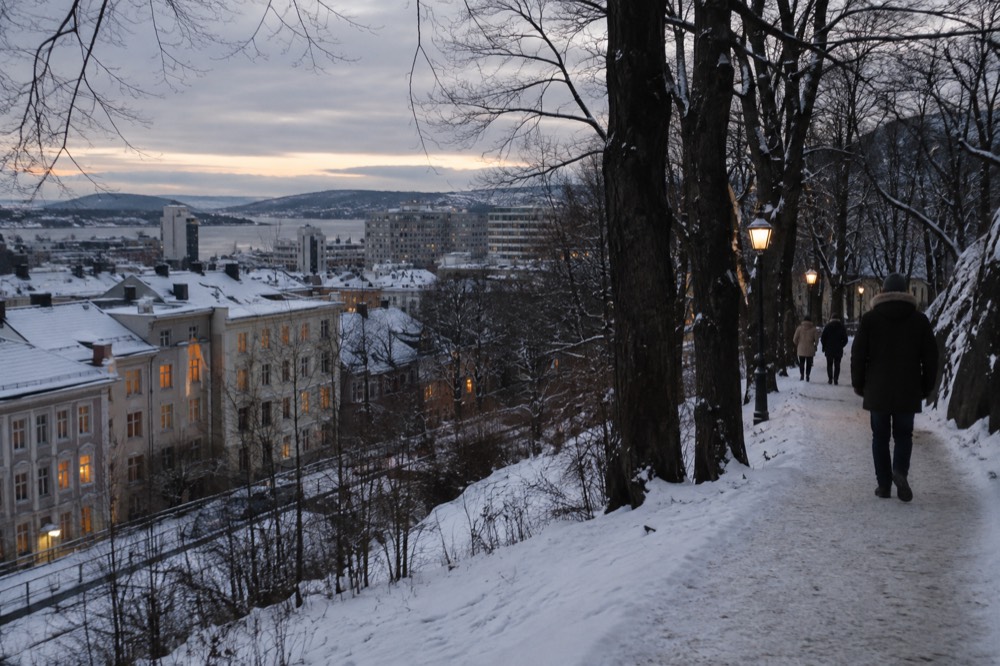
Go in December if you want Christmas atmosphere, museums without crowds, a quiet fjord and the specific beauty of a northern city in the dark. Wait for another month if you need long days, guaranteed snow, the Viking ships or island swimming. December is Oslo at its most atmospheric and its least convenient, and which of those two words weighs more is genuinely the whole decision.
For the right traveller, December is arguably the best month. The city is decorated for itself, not for tourists, because Norwegians take the dark season seriously and light it accordingly. Museum queues are short. The fjord boats are uncrowded. The free walking tours run with small groups and guides who have time to talk. Hotel rates outside the holiday weeks can be softer than the summer peak. And the experiences that define Oslo in winter, the torchlit forest walk with a campfire, the sauna-and-fjord cycle, the evening myths walk, the snowshoeing in Nordmarka when the snow arrives, do not exist in July at all.
For the wrong traveller, it is a frustrating month. If your Oslo list is the Viking ships, a long hike, a swim, a boat to the islands with time ashore, and photographs in golden evening light, you will get maybe one of those. The honest move in that case is to shift the trip to May through September and use the site's best time to visit Oslo guide to pick the week. This site exists to tell you the version that saves you the disappointment, and the version that saves the disappointment in December is: fewer hours, better hours.
A three-night December itinerary that works with the light instead of against it looks like this. Day one, arrive, evening at the Christmas market and the lit waterfront. Day two, early start, free walking tour at 10:00, museums through the short afternoon, MUNCH after 18:00 when the price drops and the dark outside stops mattering. Day three, the fjord cruise at midday in whatever light the day offers, Vigeland Park on the way back, and a proper restaurant in the evening. That is a full Oslo trip, and none of it requires the sun.
Common Questions About Visiting Oslo in December
is it worth going to oslo in december?
Yes, if you go for winter itself: the Christmas market, lit streets, quiet museums, saunas and a fjord cruise in the cold. No, if you need the Viking ships, long daylight or guaranteed snow. December Oslo is atmospheric and short on hours, and it rewards travellers who plan around the dark rather than against it.
How many hours of daylight does Oslo get in December?
On 21 December, Oslo gets 5 hours 53 minutes of daylight, with sunrise at 09:18 and sunset at 15:11. The rest is twilight rather than full night. Plan outdoor sightseeing between late morning and early afternoon, and let the evenings be for museums, food and the Christmas lights.
Is Oslo very cold in December?
The December normal mean is −1.4 °C, milder than January's −2.3 °C, because the coast moderates the city. Cold snaps well below that happen, so pack for roughly −5 to −15 °C with windproof layers, a real hat and proper boots for slush and ice.
Does it snow in Oslo in December?
December averages 54 mm of precipitation, some of it snow, some sleet and rain. A white Christmas is possible but never guaranteed, and the city can equally be brown and bare. Book the trip for what works without snow and treat snow as the bonus.
What is closed in Oslo in December?
The Museum of the Viking Age is closed until 2027, and the seasonal Bygdøy ferry stops running in early October, though bus 30 serves the museums year-round. Around Christmas Eve, Christmas Day and New Year's Day, many museums and restaurants run reduced holiday schedules, so check each venue's own site for the specific days.
Is the Oslo Pass worth it in December?
It can be, on a museum-heavy day. The 24-hour adult pass costs 580 NOK, covers over 30 museums including MUNCH, Kon-Tiki and Fram, and includes Ruter transport across zones 1 to 4N, which reaches Gardermoen on the Vy trains. Three Bygdøy museums alone at full price total 560 NOK before any travel, so the maths favours the pass on a packed day.