How Much Is Uber from Oslo Airport to Oslo?
No published flat rate exists for Uber or taxi from Oslo Airport to Oslo. Here is what actually sets the price, and the cheaper train alternatives most visitors miss.

How Much Is Uber from Oslo Airport to Oslo?
No official figure exists, because neither Uber nor Oslo's taxi operators publish a flat rate for the 50 km run from Gardermoen to the city center. The fare is metered, set per operator, and varies with time of day, traffic and surcharges, so any single number a guide prints is a guess. What is verifiable is the structure: a regulated metered fare over roughly 50 km, against a 268 NOK airport train that makes the same trip in about 20 minutes.
The honest answer starts with what Oslo's regulators actually publish. Oslo airport taxi fares are regulated per operator, which means each taxi company files its own rate card, and rideshare apps price dynamically on top of that. No primary source, not the airport operator, not the city, not the taxi companies themselves, publishes a single "airport to center" price that a guide can responsibly quote. Any page that prints an exact figure for this trip is filling a gap with a plausible-sounding number, and this site will not do that.
What can be said with sources behind it is the shape of the decision. The distance is about 50 km. The drive takes 40 to 60 minutes depending on traffic on the E6 and the time of day. And the two trains that parallel the route cost 268 NOK (Flytoget, the airport express) and roughly 134 NOK (Vy's ordinary trains) for the same journey, in 20 and 23 minutes respectively. That price spread, roughly 2:1 between the two trains and far wider against a metered car, is the real planning fact.
If you are weighing a car against the alternatives, the full decision, including the two trains, the coach and the Oslo Pass wrinkle, is laid out in the airport-to-city-centre guide. The short version for this question: a rideshare or taxi is the choice when you have luggage, kids, a late landing or a group, not when you are optimizing for price.
What Actually Sets the Price of a Taxi or Rideshare from Gardermoen?
Three things stack: a per-operator metered rate approved by the regulator, a roughly 50 km distance that does not shrink, and time-of-day effects on both traffic and app pricing. Oslo's taxi fares are regulated per operator rather than city-wide, so two taxis at the same rank can charge different amounts for the identical trip, and rideshare surge pricing sits on top of whatever the app calculates.
The per-operator structure is the part visitors from most other countries find strangest. In many cities one tariff applies to every cab. In Oslo, each operator files its own rates, and the differences between them are not trivial. The practical consequence: the taxi you are handed at the rank is not the same product as the one your hotel called, even for the same route. A hotel receptionist calling "a taxi" for you is really calling one specific company's taxi, at that company's rate.
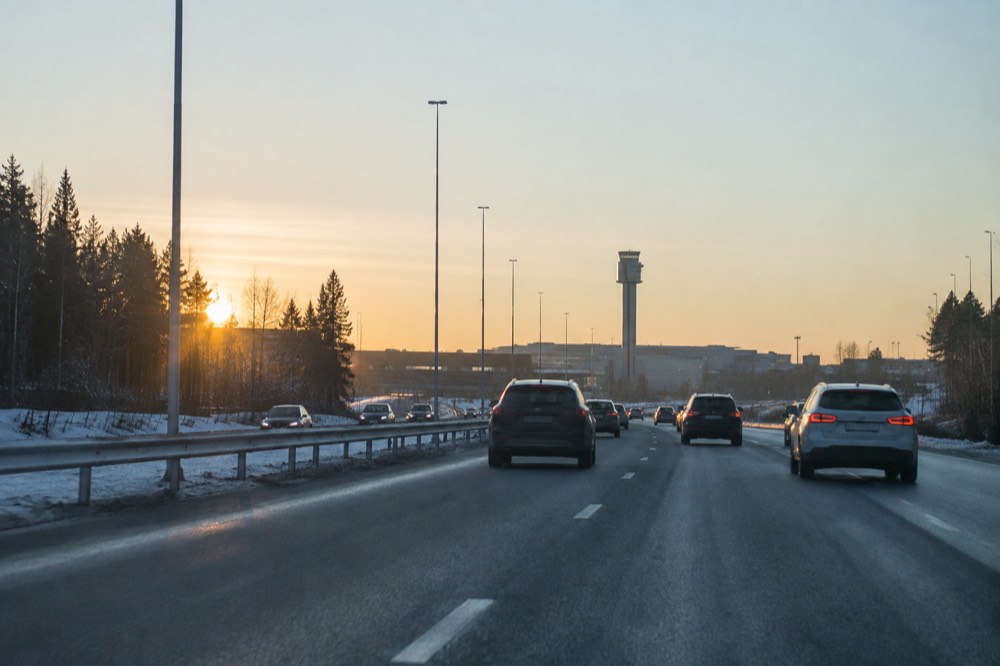
Then there is the distance. Gardermoen sits about 50 km northeast of the city, and the run follows the E6 and RV4 corridors into town. At a free-flowing hour it is a 40-minute drive; at the morning peak or in snow it can stretch past an hour, and every extra minute on a meter is extra fare. Late-night arrivals add their own surcharge layer, which is standard practice for Oslo operators and one more reason no single number survives contact with a real trip.
App-based rides face all of that plus dynamic pricing. When flights land in waves, demand at the terminal spikes, and the app price reflects it. The counterweight is that apps show you the price before you commit, which a rank taxi with a running meter does not. If you are going to take a car at all, seeing a fixed quote in the app before you accept it is the one control you have over the outcome.
For context on why the car option feels expensive in Norway at all: Statistics Norway's 2025 price-level survey puts the country sixth in Europe overall, with household prices 28.6 percent above the EU average. Transport labor costs feed directly into metered fares, which is part of why the trains, which run on fixed public tariffs, look so cheap next to any car. Norway's cost structure is not uniform, either: restaurants and alcohol sit far above European averages while public transport and museums do not, and the airport transfer decision lands right on that seam.
What Are the Cheaper Ways from Oslo Airport to the City?
The Flytoget airport express costs 268 NOK adult one-way and reaches Oslo S in about 20 minutes, departing every 10 minutes. Vy's ordinary trains cover the same distance in about 23 minutes at roughly half the price, and they ride on ordinary Ruter zone tickets, which means the Oslo Pass covers them outright. Both trains beat any car on both price and, usually, time.
The train is not just cheaper than a car in Oslo, it is usually faster. The airport railway runs on its own dedicated line into Oslo S, immune to the E6 traffic that inflates a metered fare. Flytoget is the premium product: 268 NOK adult, concessions at 134 NOK, departures every 10 minutes, about 20 minutes to the central station. If you want the detail on how the two train products compare, the Flytoget versus Vy breakdown covers it in full.
Vy's trains are the budget answer most guides underexplain. The R10, R11 and R12 all call at the airport, take about 23 minutes, and, critically, are ordinary Ruter-zone trains. A Ruter ticket covering zone 1 through zone 4N is valid on them, and the Oslo Pass includes them outright. That is the mechanism that saves real money: you do not buy a special airport supplement, you buy a multi-zone public transport ticket, or you hold a pass that already includes the ride.
| Option | Adult price | Time to central Oslo | Frequency | Notes |
|---|---|---|---|---|
| Flytoget airport express | 268 NOK | about 20 min | every 10 min | concession singles 134 NOK; not covered by Oslo Pass |
| Vy ordinary trains | about 134 NOK point-to-point | about 23 min | frequent | rides on a Ruter ticket covering zones 1 to 4N; Oslo Pass valid |
| Taxi or rideshare | metered, per-operator rate | 40 to 60 min | on demand | no published flat rate; surge and night surcharges apply |
| Private transfer | set price, booked in advance | about 1 hour | pre-booked | fixed quote before you travel |
The coach option, Flybussen, sits between the trains and the cars on price and behind both on speed, at 45 to 65 minutes depending on traffic. Its current fares have not been verified against a primary source, so this page will not print them; check the operator's own site before booking.
There is one more wrinkle worth knowing before you decide. The Oslo Pass includes Vy local trains to and from Gardermoen, but not Flytoget and not the coach. If you were buying a pass for the museums anyway, the airport ride can arrive effectively free, which changes the whole calculation. The full Oslo Pass guide runs the break-even math.
Is a Pre-booked Private Transfer Worth It Instead of a Metered Taxi?
A private transfer replaces the meter with a price you see and accept before you land, which is the whole benefit. For a solo traveler with one bag the train wins on every axis, but for families, groups, awkward luggage or arrivals outside the trains' comfort zone, a fixed-price car booked in advance removes the two things a metered fare cannot: the uncertainty and the surcharge stacking.
The group math is where a transfer starts to make sense. Two Flytoget tickets at 268 NOK each already cost more than one Vy ticket for every member of a party, and once you add a second adult, luggage and the last leg from the station to your hotel, the comparison stops being close. Four travelers, winter luggage, a 23:30 landing, and a car is genuinely the rational pick rather than the lazy one. A transfer is one vehicle, one price, door to door, and the driver meets you in arrivals rather than queuing you at a rank.
The product on this site's roster runs about an hour door to door and is booked against a set price shown before you commit, which is exactly the control a metered fare denies you. Free cancellation terms are stated, so a flight change does not have to mean a lost booking; check the current terms there before you rely on them.
For travelers with mobility needs, a transfer has a second advantage that no rank taxi guarantees: you can specify the vehicle when you book, rather than accepting whatever pulls up. The accessibility guide covers the wider picture of getting around the city with reduced mobility.
How Long Does the Trip Take, and How Far Is Oslo Airport?
Oslo Airport Gardermoen is about 50 km northeast of the city center. A car covers it in 40 to 60 minutes depending on traffic; Flytoget does it in about 20 minutes and Vy's trains in about 23, because the railway line avoids the road entirely. In winter, snow can push the drive past an hour, while the trains barely notice.
The geometry matters for your planning. Gardermoen was built well out of the city, and that distance is the reason the airport question deserves its own page: every option has to cover the same 50 km, and the options differ mainly in how they price it. The train sells it as a zone crossing on a public tariff. The taxi sells it as 50 km on a meter. The transfer sells it as one fixed number.
The airport sits in Ruter zone 4N, a fact this site states carefully because an automated read of Ruter's own zone map once returned the wrong zone. Zone 4N is the correct one, confirmed against Entur's national tariff-zone data, and it is the zone you need your Ruter ticket to cover if you take the Vy train. The Ruter app's journey planner counts the zones for you, so there is no need to add them by hand.

Time of day is the biggest swing factor on the road. The morning peak into Oslo and the afternoon peak out of it both slow the E6, and a metered fare climbs with every minute. The trains hold their 20-odd minute schedule through all of it, which is why the getting-around guide recommends the rail link for anything except door-to-door necessity.
What About Luggage, Late Landings and Traveling with Kids?
A car wins these scenarios honestly: a late landing outside the trains' evening frequency, more bags than you can carry onto a platform, small children who have already traveled all day, or a group whose combined train tickets approach a car's price. Outside those cases, the train's 20 minutes and fixed fare are hard to argue with, and the station connects directly to the metro and tram network.
Luggage is the practical decider for most people. Oslo S is a step-free station with lifts to every platform, and the airport trains have generous luggage racks, so one rolling suitcase per person is genuinely fine on the train. Two surfboards, a stroller, a car seat and a week of family luggage is not, and pretending otherwise helps nobody. That is the case where the fixed-price transfer earns its slot.
Late landings deserve a specific warning. Flights from North America and Asia often arrive late evening. Flytoget's frequency thins overnight, and a 23:30 arrival with a 05:50 departure window can leave you choosing between waiting and a car. This is also when taxi night surcharges apply and app prices run hottest, so a transfer booked in advance at a price you accepted days earlier is the version of the car option that cannot surprise you.
Families should also know that children under 6 travel free on Ruter services, and Flytoget charges children under 16 nothing when accompanied by an adult. Those concessions can tip a family of four decisively toward the train, and they are worth checking on the operators' own pages before you book anything, since concession rules shift more often than base fares do. The Oslo with kids guide carries the wider family-planning picture, and the rest of the city, from neighborhoods to museums to the fjord boats, is covered across Oslo Travel Guide.
Common Questions About Uber from Oslo Airport
how much is uber from oslo airport to oslo?
There is no published flat rate. The fare is metered per operator for taxis and dynamically priced for apps, over roughly 50 km. For comparison, the Flytoget airport express is 268 NOK adult and Vy's trains about 134 NOK, both in around 20 to 23 minutes. Get a quote in the app before accepting, or book a transfer at a fixed price in advance.
Is Uber cheaper than a taxi at Oslo Airport?
Not reliably. Both are priced per ride with no flat rate, and app surge pricing at peak arrival times can push a rideshare above a rank taxi's metered fare. The only structural saving is that the app shows the price before you commit, while a meter does not.
How much is a taxi from Oslo Airport to the city center?
No verifiable figure exists. Oslo taxi fares are regulated per operator, so each company files its own rates and no official source publishes a single airport-to-center price. Expect a metered fare for about 50 km, with night and weekend surcharges on top, and check the operator's rate card or an app quote before riding.
Is the train cheaper than Uber from Oslo Airport?
Yes, by a wide margin. Flytoget costs 268 NOK adult and Vy's ordinary trains about 134 NOK, against a metered car fare covering the same 50 km. The trains also take only about 20 to 23 minutes, so they are usually faster as well as cheaper.
Does the Oslo Pass cover the trip from Oslo Airport?
It covers Vy's local trains to and from Gardermoen, but not Flytoget and not the coach. VisitOSLO's inclusion list states that public transport in zones 1, 2, 3, 4V and 4N is included, naming the Vy airport trains specifically. The airport is in zone 4N.
How far is Oslo Airport from the city and how long does the drive take?
About 50 km northeast of central Oslo. A car takes 40 to 60 minutes depending on traffic on the E6, and longer in snow. The dedicated airport railway does the same trip in about 20 minutes on Flytoget or 23 on Vy's trains.