Does Oslo Get a Lot of Snow?
Oslo gets real winter snow, usually from December through March, but less than most visitors expect. Here is what the weather data actually shows, month by month.
Does Oslo Get a Lot of Snow?
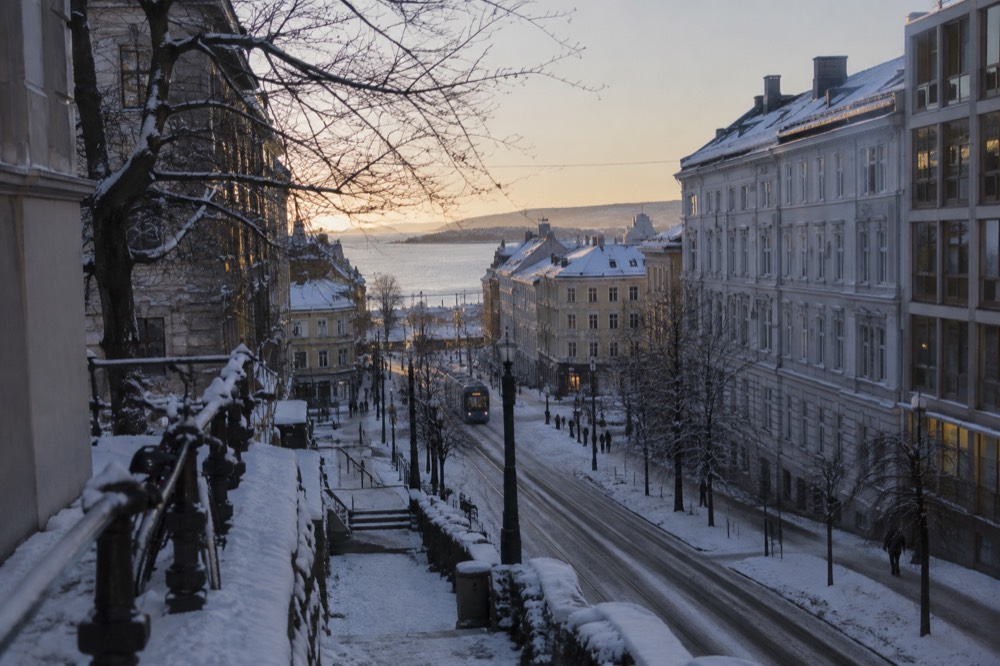
Yes, but less than most visitors expect, and only for a defined stretch of the year. Oslo normally has snow on the ground from sometime in December through March, with January and February the reliably white months. MET Norway's 1991 to 2020 normals put the city's mean temperature at −2.3 °C in January and −2.0 °C in February, cold enough for snow to settle and stay. But Oslo is at 59.91 N, well south of the Arctic Circle: a proper winter city, not an Arctic one.
The honest answer has two layers. The first is that Oslo does get a real winter, with snow, ice and short days, in a way that cities like London or Paris never do. The second is that the quantities are moderate rather than extreme, and the snow does not arrive as one permanent blanket from November to April. Some winters the city center goes weeks with bare pavement; other winters the snow piles up past the bench tops. Variability is the norm.
What makes Oslo unusual among capital cities is how the snow is treated. It is a functioning part of city life rather than an emergency. The metro keeps running, the ski trails in the forest above the city are groomed all season, and the whole culture of the place leans into winter rather than shutting down around it. If you are planning a trip and wondering whether to pack boots, the short version is: from December to early March, yes.
When Does It Snow in Oslo?
Snowfall in Oslo is concentrated in the four months from December through March, with the deepest and most reliable snow cover in January and February. November can bring the first snow of the season but it often melts again, and by April the city is usually in thaw. MET Norway's normals show the coldest months are January at −2.3 °C and February at −2.0 °C, which is when snow that falls stays on the ground. Early and late winter are coin flips.
The transition months are where visitors get caught out. October in Oslo is more often cold rain than snow, with a normal mean of 6.6 °C, and November at 2.2 °C sits right on the line where precipitation can arrive as either. A white November happens, but it is not the base case, and a November visit should be planned around rain gear more than snow gear.
At the other end, March is genuinely two months in one. Early March can still look like deep winter, with snow on the ground and freezing nights, while late March, with a normal mean of 1.3 °C and daylight stretching past 12 hours, is a thaw month. April at 6.2 °C is spring in the city, even when the hills above it stay white.
Here is what the official 1991 to 2020 climate normals from MET Norway's Blindern station show for the winter half of the year. These are long-run averages, not a forecast for any specific week, and any single winter can land well above or below them.
| Month | Normal mean temp | Normal precipitation | What that usually means on the ground |
|---|---|---|---|
| October | 6.6 °C | 93 mm | Cold rain, snow rare and short-lived |
| November | 2.2 °C | 85 mm | Rain or first snow, often melting |
| December | −1.4 °C | 54 mm | Snow settling, patchy in warm years |
| January | −2.3 °C | 58 mm | Reliable snow cover, icy pavements |
| February | −2.0 °C | 46 mm | Deepest winter, snow usually stays |
| March | 1.3 °C | 41 mm | Early-month snow, late-month thaw |
| April | 6.2 °C | 48 mm | Spring in the city, snow on the hills |
One detail in that table surprises people: the precipitation column. January and February are actually among Oslo's driest months by total precipitation. The snow that makes the city white comes in modest, repeated doses, not big dumps. What keeps it on the ground is the cold, not the volume.
If you are weighing a winter visit against other times of year, the guide to Oslo in winter breaks down the whole season month by month, including the dark weeks and what stays open.
How Much Snow Actually Accumulates?
Honest answer: Oslo's snow cover is moderate and varies a lot year to year, and there is no single verified snow-depth figure for the city that a guide can responsibly quote. The climate normals measure precipitation, not snow depth, and no verified Oslo snow-depth or snow-days statistic was captured from a primary source. What can be said is that the city center typically carries a shallow, persistent snow cover in January and February, while the forested hills above the city hold far more.
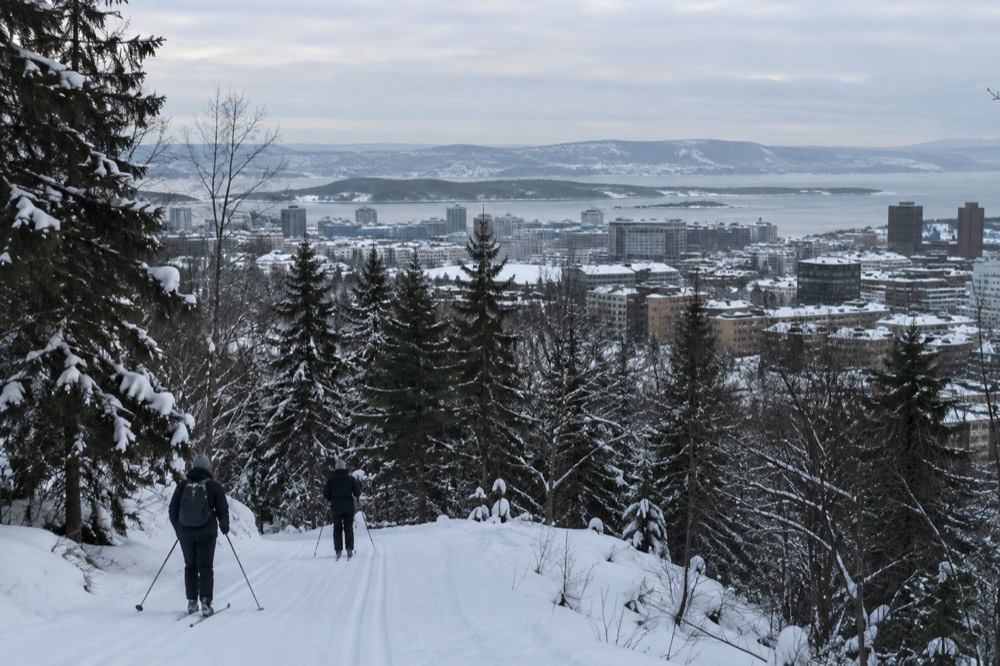
That elevation effect matters more than most visitors realize. Oslo rises quickly from the fjord at sea level to the forests of Nordmarka several hundred meters up. When the city center has a thin, slushy two centimeters, the trails around Sognsvann or Frognerseteren can be properly deep and white. Locals treat the two as different worlds: the city is where snow is shoveled, the forest is where it is enjoyed.
The practical consequence for a visitor is that a snow-based day out does not depend on the city itself being white. Cross-country ski trails in Nordmarka are groomed by Skiforeningen through the season, and live trail and snow-depth reports are published on their site, so you can check conditions on the morning you want to go rather than trusting a weather app's guess about the city center.
Recent winters also show how wide the spread is. In the thirteen months to August 2026, the Blindern station recorded a low of −17.2 °C in January 2026 against a normal January mean of −2.3 °C, and the same period produced stretches of well-above-normal winter temperatures too, including a December mean of 2.4 °C, which is a December that spends much of its time above freezing. Some of that December was rain in the city even while the hills held snow.
For the numbers that do exist and are verified, the page on snow in Oslo collects what the primary sources actually publish, and is honest about the gaps.
Does Oslo Get Snow in December?
Usually, but not always, and usually not much before mid-month. December's normal mean of −1.4 °C sits barely below freezing, so the city spends the month oscillating across the snow line. Early December is often bare or rainy, while the Christmas period and the week either side of New Year more often have snow on the ground. A guaranteed white Christmas is not something Oslo can promise, though the odds are far better than in almost any other European capital.
The reason December is marginal is simple arithmetic. A mean of −1.4 °C means plenty of individual days above zero, and precipitation that falls on those days comes down as rain. The snow that does settle in December tends to be thin in the center and deeper as you climb, which is why the Christmas markets and the city-center lights matter more to a December visit than deep snow does. The rest of the planning pages sit on Oslo Travel Guide. The rest of the planning pages sit on Oslo Travel Guide.
The trade-off is daylight, and it is a serious one. On 21 December the sun rises at 09:18 and sets at 15:11, giving just 5 hours 53 minutes of daylight. That is the trade the city makes for its white months: the deepest snow and the shortest days arrive together. By late February the equation has flipped, with over 9 hours of daylight and often the best snow cover of the season, which is why many locals consider February the superior winter month for actually doing things.
| Date | Sunrise | Sunset | Daylight |
|---|---|---|---|
| 15 November | ~08:15 | ~16:05 | ~7 h 50 m |
| 21 December | 09:18 | 15:11 | 5 h 53 m |
| 15 January | 09:04 | 15:49 | 6 h 45 m |
| 15 February | 07:54 | 17:08 | 9 h 14 m |
| 15 March | 06:34 | 18:19 | 11 h 45 m |
The December sunrise and sunset times above are from MET Norway's sunrise data for Oslo's coordinates; the full month-by-month breakdown lives in the guide to Oslo daylight hours. If a white December is what you are after, the guide to Oslo in December covers the Christmas markets, the lights and what realistically stays open across the holiday week.
What Is a Snowy Oslo Actually Like to Visit?
A snowy Oslo is a city that keeps working and starts glowing. The metro runs on time, the pavements are gritted, museums keep normal hours, and the dark afternoons are filled with candlelit cafes and floodlit ski trails. The classic winter experience is the torchlit forest walk with a campfire, a 3h 30m guided trip inside the city limits rated 4.7 across 280 reviews, which turns the Nordic winter from an obstacle into the main event. Snow in Oslo is an activity, not a disruption.
The forest above the city is where the winter really lives. The metro's Line 1 runs up to Frognerseteren, and from there the groomed trails of Nordmarka spread out in every direction. This is the same forest that makes Oslo one of very few capitals where cross-country skiing is a weeknight activity, and where a learn-to-ski half-day exists as a genuine bookable product. The Norwegian skiing experience is a 3h 30m session rated a perfect 5.0 across its review base, aimed at beginners, with gear included.
Between the two, the torchlit walk is the one that fits a first visit best. It runs in the evening, so it does not consume one of your precious daylight hours, and the campfire stop means the cold is punctuated rather than constant. The listing describes it as a walk by torchlight through the Oslo forest with a fire and warm drinks, and reviews consistently single out the moment the trail opens onto a lit campfire clearing. If your mental image of a Norwegian winter is a lantern-lit path through pines, this is that image, sold as an actual product.
For more ways to spend cold days, the guide to skiing near Oslo covers the trails, the toboggan run and the small lift-served area at Oslo Vinterpark, all reachable on an ordinary transit ticket.
Does Snow Ever Stop You Getting Around Oslo?
Almost never, and this is one of the city's quiet strengths. Oslo's winter infrastructure is built for the climate it has: metro lines run largely on their own tracks, the main roads and pavements are cleared and gritted quickly, and the transit system does not shut down for snow the way cities with rare winters do. The realistic winter friction points are icy pavements in the center and short-term service changes, not city-wide paralysis.
The practical advice that follows from this is about footwear more than transport. The cleared pavements of central Oslo are frequently compacted ice rather than snow, and the locals wear studded soles from roughly December through February. Smooth-soled shoes on an Oslo pavement in January are a genuine hazard in a way the snow itself is not.
Two winter-specific notes are worth carrying. First, the airport connection is unaffected by snow: both the Flytoget airport train and the Vy regional trains run on rails that handle the season, and the Oslo Pass covers the Vy trains to and from Gardermoen, though not Flytoget. Second, if you are heading into the hills, check the live trail reports from Skiforeningen rather than the city forecast, because conditions up top and conditions downtown can differ sharply on the same afternoon.
And if the day turns out to be the wrong kind of winter, rain instead of snow or a thaw that leaves everything grey, the museum cluster on Bygdøy is the standard shelter. The Kon-Tiki Museum ticket is the anchor of that peninsula, rated 4.5 across 1,116 reviews, and it pairs naturally with the Fram Museum next door for a full polar-day theme that suits the season perfectly.
Should You Plan a Trip Around Oslo's Snow?
Plan around January or February if reliable snow is the point of the trip, and around late February if you want that snow plus usable daylight. January delivers the deepest cover but only 6 to 7 hours of light; February adds over two hours of daylight while usually keeping the snow, making it the best overall snow month for visitors. December is atmospheric but a gamble on white ground, and March is a thaw month in the city even as the forest holds on.
The other framing worth knowing: you do not need the city itself to be white to have a snow trip. Because the groomed forest sits a metro ride above downtown, a February visit can combine bare, easy pavements in the center with deep trails up top, which is arguably the most comfortable version of a winter Oslo trip. The snow you came for is a 25-minute train ride away, and the city you sleep in is not an ice rink.
For weighing winter against the rest of the year, the guide to the best time to visit Oslo compares all four seasons on daylight, weather and crowds, and the team at oslotravelguide.com keeps those pages updated as the verified numbers change.
Common Questions About Snow in Oslo
does oslo get a lot of snow?
Oslo gets a real but moderate amount of snow, concentrated from December through March, with January and February the reliably snowy months. It is a genuine winter city, but at 59.91 N it is far south of the Arctic, so the snow cover is shallow in the center and deeper only in the hills above town.
What is the snowiest month in Oslo?
January and February are the months with the most reliable snow cover, because they are the coldest, at normal means of −2.3 °C and −2.0 °C. By precipitation volume they are actually among the driest months of the year; the snow stays because of the cold rather than arriving in large amounts.
Does Oslo have snow at Christmas?
Often, but not reliably. December's normal mean of −1.4 °C straddles the freezing point, so early December is frequently bare or rainy while the Christmas week more often has snow on the ground. A white Christmas in Oslo is a good bet compared with other European capitals, but not a guarantee.
Is Oslo too cold to visit in winter?
No. Normal January and February means sit just below freezing, which is comparable to many continental cities, and the infrastructure is built for it. The bigger adjustment is daylight, with under six hours on the shortest days, and icy pavements, which call for proper footwear or studded soles.
Can you ski in Oslo without a car?
Yes, and that is one of the city's signature features. The metro's Line 1 runs up to Frognerseteren on the edge of Nordmarka, where Skiforeningen grooms an extensive trail network all season. Live trail and snow-depth reports are published online so you can check conditions on the day.