What Is the Most Beautiful Train Ride from Oslo?
The most beautiful train ride from Oslo is the Bergen Railway, especially with the Flåm Railway branch down to the fjord. Here is how to plan it, what it costs in time, and how to book it.
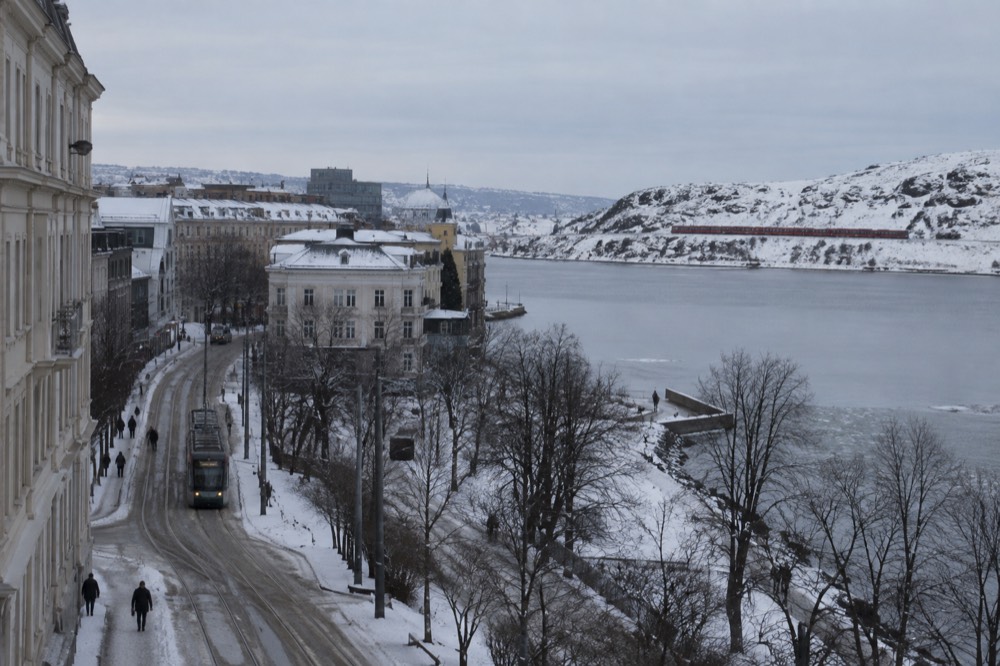
What Is the Most Beautiful Train Ride from Oslo?
The most beautiful train ride from Oslo is the Bergen Railway, the mountain crossing that leaves Oslo Central Station and climbs onto the Hardangervidda plateau before dropping to the coast at Bergen. Its most spectacular stretch is the branch line from Myrdal down to Flåm, the Flåm Railway, which descends from the plateau to the Aurlandsfjord through tunnels, cliffs and one of the steepest gradients a normal passenger train runs on anywhere in Europe.
That is the short answer, and almost every Norwegian would give it. The Bergen Railway is the line people mean when they talk about Norwegian train travel: it crosses the largest mountain plateau in Northern Europe, passes the highest station on the entire national network at Finse, and swaps between a forested east and a fjord-cut west within a single sitting. The Flåm Railway, which branches off it at Myrdal, is the most famous twenty-odd kilometres of rail in the country and the reason many travellers book the whole crossing at all.
The site's own guide to the Oslo to Bergen train covers the full crossing in detail, and the dedicated Flåm Railway guide handles the branch line stop by stop. This page answers the narrower question: which ride is the most beautiful, what the realistic options are, and how to fit one into a trip that starts and ends in Oslo.
Why the Bergen Railway Wins, and What You Actually See
The Bergen Railway earns the title because it is the only ride from Oslo that crosses a genuine mountain range rather than hugging a valley. Between Oslo and the highest stretches of the line you pass through eastern Norway's forests and lakes, then climb above the tree line onto the Hardangervidda, a plateau of bare rock, snow fences and tiny hamels of reindeer territory, before descending into the steep, green fjord country on the western side.
No other departure from the capital offers that sequence. The train to Stockholm runs through settled, gentle forest the whole way. The train north toward Trondheim, the Dovre Line, has its moments in the mountains around Dombås and over the Dovrefjell, and it is a genuinely good ride, but the consensus among Norwegians and guidebooks alike is that the Bergen crossing is the one worth planning a trip around. The line was built across some of the harshest terrain in the country, and the engineering is part of the spectacle: snow sheds, avalanche fences and the long curve up to Finse, where the station sits higher than any other on the network.
Sit on the left side leaving Oslo for the first hours, then move to the right after the climb begins in earnest; the best views shift sides, and the train is rarely full outside peak summer weekends. The stretch around Finse and the descent toward Myrdal and the western valleys is where most people give up on their book and just watch the window. Bring something warm even in summer: the plateau sits above the tree line, and the temperature difference between Oslo and Finse can be startling on the same afternoon.
One honest caveat: the plateau is a high, open landscape, and in bad weather it can be a whiteout with nothing to see. The ride is at its best in late winter with clear skies, or in September when the mountains carry the first snow and the valleys are still green. Check the forecast at yr.no before committing to a specific day if you have flexibility. And if the weather does turn, the ride is not wasted: the tunnels, sheds and cuttings are their own kind of spectacle, a piece of Victorian-era engineering stubbornness that still carries a modern railway across a landscape that wanted nothing to do with it.
If you would rather someone else handle the logistics of a fjord-and-mountain day out of Oslo, these are the three products this site carries that fit that brief:
The full-day bus and fjord combination is the closest thing to a sampler of the same scenery for a visitor with limited time: it bundles a city overview with time on the water, and it runs about seven and a half hours door to door. It is not a mountain railway, but it is the practical answer when the train timetable does not fit a short stay.
The Flåm Branch: The Most Famous Hour of Rail in Norway
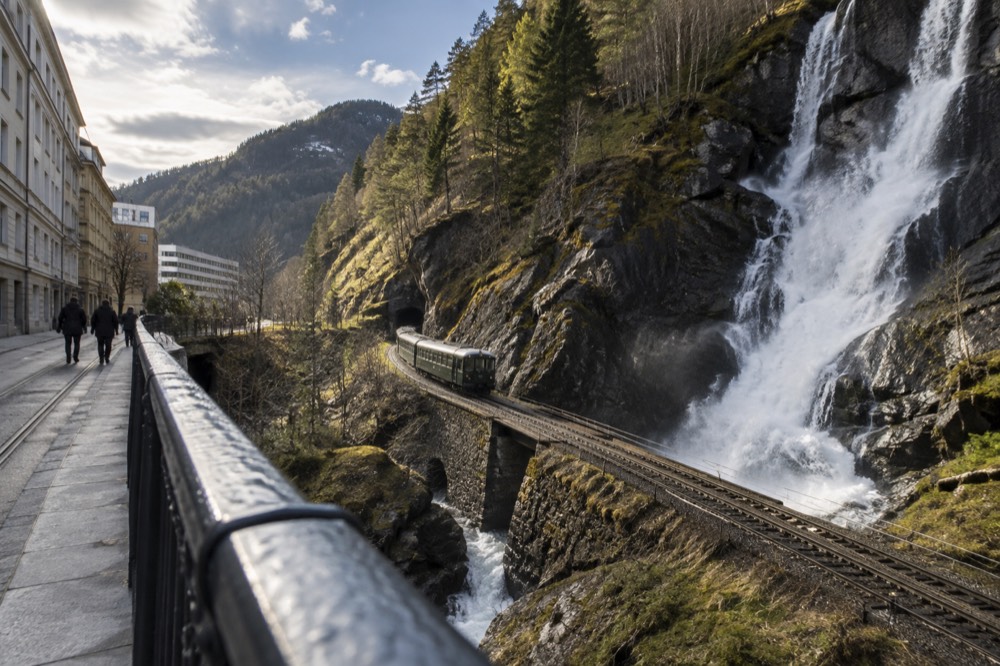
The Flåm Railway is a branch line that leaves the Bergen Railway at Myrdal and descends to the village of Flåm on the Aurlandsfjord, dropping through a gorge on one of the steepest standard-gauge gradients in Europe. It is short, it is intensely scenic, and it is the single stretch of Norwegian rail that most international visitors have already seen a photo of before they arrive.
The branch exists because the fjord needed a rail connection, and the engineers solved the gradient with tunnels, including one that spirals inside the mountain, and with a waterfall stop, Kjosfossen, where the train pauses in summer so passengers can get out and look. The ride down passes tiny farms clinging to ledges, a river that has cut the valley, and finally the water of the fjord itself at Flåm, where the cruise boats and the fjord sightseeing trips take over. Many travellers ride the Bergen line as far as Myrdal purely to do this descent, then continue by boat or return the same way.
The practical detail that matters: the branch is not a mainline service, it is a dedicated tourist railway with its own timetable and its own tickets, and in high summer it sells out. If the Flåm Railway is the reason you are taking the Bergen line, book the branch first and fit the mainline around it, not the other way round. The site's Norway in a Nutshell guide walks through the classic self-assembled version of exactly this routing, train down, boat across the fjord, and how the pieces connect.
Getting to Oslo Central Station in time for a morning departure is the unglamorous half of this plan, and it is where trips go wrong. A missed first train cascades through every connection after it.
Can You Do the Fjord and the Railway in One Day from Oslo?
Yes, but only as a very long day, and only with a booking that handles the connections. The best-reviewed same-day option is a private full-day round trip from Oslo through the Sognefjord country that includes the Flåm Railway, running about fifteen and a half hours from pickup to drop-off. Doing it independently on public trains in one day is possible in summer but leaves almost no margin for a missed connection.
The geography is the constraint. Oslo sits at the head of its own fjord, at the eastern end of the mountains, and the beautiful rail-and-fjord country is on the far side of the Hardangervidda. A day trip therefore means an early start, a long ride west, the descent to Flåm, some time on or beside the Sognefjord, and the whole journey back. The private version that this site carries exists precisely because the public timetable makes that brutal to self-manage: it is the best-reviewed product in this category on the roster, and it is priced accordingly as a private, full-day booking.
For visitors who want the fjord feeling without crossing the mountains at all, Oslo's own fjord offers a shorter answer. The silent electric sightseeing cruise runs an hour and a half on the inner Oslofjord, the traditional wooden sailing ship runs two hours, and the shrimp-buffet evening cruise runs three. None of them is a mountain railway, but they are the honest options when the day does not have fifteen hours in it.
Here is how the realistic options compare on time, using the durations this site has verified for each product:
| Option from Oslo | Format | Time needed | Best for |
|---|---|---|---|
| Private Sognefjord trip with Flåm Railway | Private full-day round trip | 15 h 30 m | The complete railway-and-fjord answer in one booking |
| Full-day bus plus fjord combo | Coach and boat, guided | 7 h 30 m | A sampler of city, views and water on a mid-length day |
| Silent electric fjord cruise, audio guide | Boat, inner Oslofjord | 1 h 30 m | A fjord taste without leaving the city |
| Traditional wooden sailing ship cruise | Boat, inner Oslofjord | 2 h | The same water, in a heritage vessel |
| Evening cruise with shrimp buffet | Dinner boat | 3 h | An evening on the water after a city day |
The pattern in that table is honest: the only way to actually ride the beautiful railway from Oslo inside a single day is to give the day away entirely. The shorter the product, the closer to the city it stays.
How to Plan the Departure: Stations, Tickets and Timing
Plan the Bergen Railway around three things: the branch-line booking, the seat reservation on the mainline, and the time you need to reach Oslo Central Station in the morning. Norwegian long-distance trains use seat reservations on the popular departures, and the scenic side of the train fills first in summer, so booking ahead is what secures both a seat and a window.
Start from the airport if you are flying in the day before. Oslo Airport, Gardermoen, sits about 50 km north of the city, and the airport-to-city decision is well covered on this site: the Flytoget airport express runs about 20 minutes and costs 268 NOK adult single, while the Vy regional trains cover the same distance in about 23 minutes at roughly half that, around 134 NOK, and an ordinary Ruter ticket covering the zones is valid on them. The full comparison, including what the Oslo Pass does and does not cover, is in the Oslo airport to city centre guide. If you are arriving late, jet-lagged or with a family and luggage, a pre-booked private transfer removes the last piece of guesswork, and it is the product this page links as its related tour.
Timing on the day itself matters more than most visitors expect. The morning departures west are the ones that let you connect to the branch line and still see the plateau in daylight, and in winter that window is narrow: around the winter solstice, Oslo gets under six hours of daylight, with sunrise close to 09:18 and sunset before 15:30. A departure that leaves Oslo at midday in December crosses the Hardangervidda in the dark. In June the opposite problem disappears entirely, with daylight stretching past 22:40 and the sun back up before 04:00, so any departure works.
Ticketing for the long-distance trains themselves runs through the operator's own channels, and prices move with demand the way airline fares do: the same seat is cheaper weeks out than on the day. There is no honest fixed figure this site can quote for the Oslo to Bergen fare, because there isn't one; book early, travel midweek if you can, and check the operator's live listing rather than a guide's cached number.
Which Other Rides from Oslo Are Worth the Rails?
After the Bergen line and its branch, the strongest scenic alternatives from Oslo are the Dovre Line toward Trondheim, which crosses the Dovrefjell mountains, and the slow, lake-lined stretch of the eastern routes toward the Swedish border. Neither matches the Bergen crossing, but both reward a traveller who has already done the main event.
The Dovre Line is the honest runner-up. It leaves the same station, climbs through Gudbrandsdalen, one of the great valleys of eastern Norway, and crosses the Dovrefjell, where musk oxen genuinely live, before dropping toward Trøndelag. The stretch over the fjell is high and open, closer in feeling to the Hardangervidda than anything else leaving the capital. For a shorter taste, the Oslo to Stockholm train is comfortable and easy but scenically the plainest of the international rides, running through flat, pleasant forest for most of the way.
For travellers with a compass pointed at Sweden rather than the mountains, the Oslo to Sweden day trip guide covers the practical border hops. But if beauty is the only criterion, the ranking is not close: Bergen line first, its Flåm branch as the jewel inside it, the Dovre Line a distant third, and everything else after that.
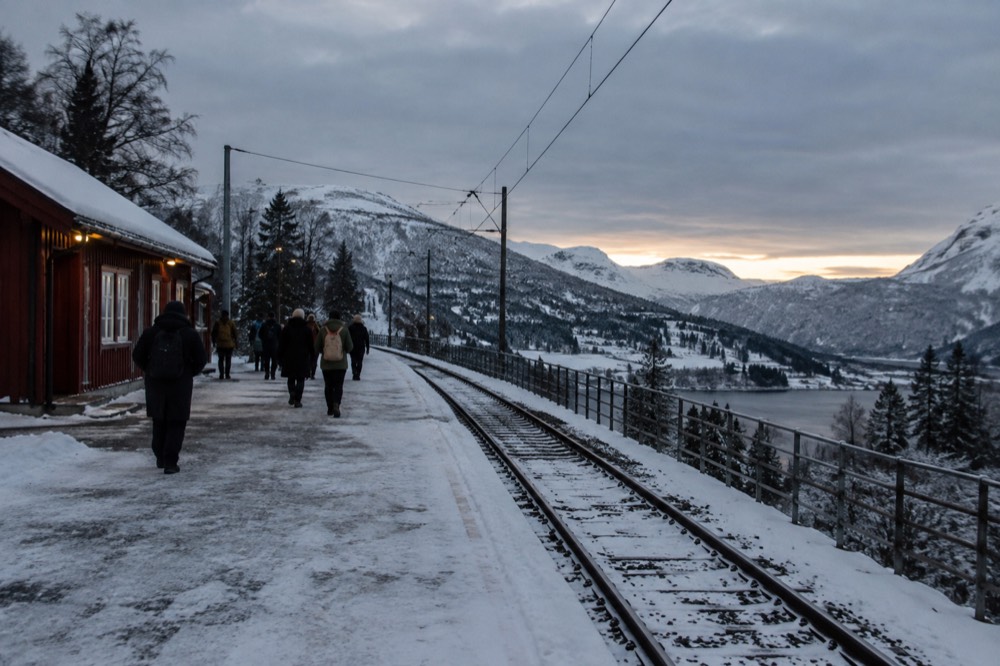
A note on the season, because it changes the answer. In deep winter the plateau ride becomes a snow experience, with drifts higher than the fences and a light that only lasts a few hours; it is arguably even more beautiful, but only if you are dressed for it and only on a clear day. In high summer the branch line is at its busiest and the plateau can be fogged in. The sweet spots, on the balance of weather, crowds and daylight, are late May into June, and September.
Common Questions About the Most Beautiful Train Ride from Oslo
what is the most beautiful train ride from oslo?
The Bergen Railway, the mountain crossing from Oslo to Bergen over the Hardangervidda, with the Flåm Railway branch from Myrdal down to the Aurlandsfjord as its most spectacular stretch. It is the ride Norwegians themselves name when asked.
Is the Flåm Railway worth it if I have already seen the Bergen line?
Yes. The branch is a different kind of ride from the mainline: steeper, slower, gorge-bound rather than plateau-wide, and it ends at the water. If your time is limited to one of the two, the branch plus a fjord boat is the more concentrated dose of scenery.
Can I do it as a day trip from Oslo?
Only as a very long day. The best-reviewed same-day option is a private round trip of about fifteen and a half hours that includes the Flåm Railway. Doing it independently on public trains in one day is possible in summer but leaves almost no margin for missed connections.
Which side of the train should I sit on?
Left leaving Oslo for the first hours, then move: the best views shift sides as the line climbs and descends. The train is rarely full outside peak summer weekends, so switching seats mid-ride is usually possible.
When is the best time of year for the ride?
Late May into June, and September. Winter crossings are spectacular on a clear day but the daylight window is under six hours around the solstice, and the plateau can be a whiteout in bad weather. High summer brings the biggest crowds on the Flåm branch.
Do I need to book the Flåm Railway in advance?
Yes in summer. The branch is a dedicated tourist railway with its own tickets, and peak departures sell out. If the branch is the reason for the trip, book it first and fit the mainline connections around it.
If this page has settled the rail question, the rest of the planning lives elsewhere on Oslo Travel Guide: start with the Oslo to Bergen train guide for the full crossing, and the Flåm Railway guide for the branch.