How Much Does It Cost to Go to the Sculpture Park in Oslo?
Vigeland Park is free to enter and open 24 hours a day, all year. Here is the full cost picture, from transport to the paid museum next door.
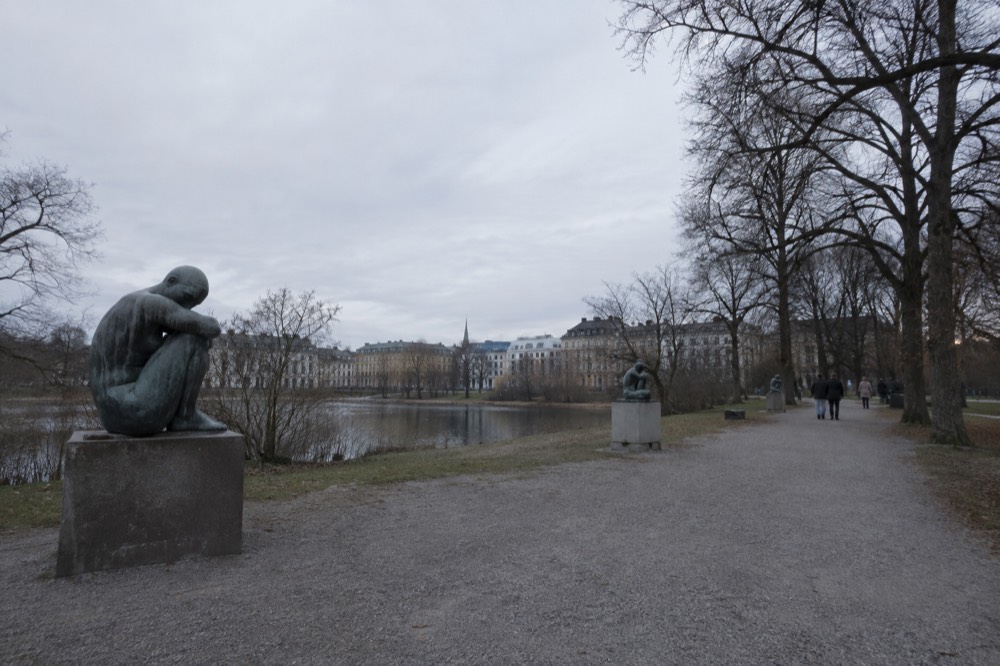
The question sounds like it needs a number, and the answer has one: zero. The Vigeland sculpture park in Frogner, the park most visitors mean when they say "the sculpture park in Oslo", charges no admission, requires no ticket, and never closes. What deserves a real answer is everything around that zero, because Norway is the sixth most expensive country in Europe on Statistics Norway's 2025 price-level survey, and the money you save at the gate tends to reappear at the café, the museum next door, and the metro ticket that got you there.
This page walks through the full cost picture in the order you will actually meet it: the park itself, the museum that sits beside it, the ride there, the pass question, and the one bookable product the park supports. Along the way it addresses the practical details that turn a free visit into a good one, from opening hours that do not exist to the weather that will shape your walk more than any price tag will.
How Much Does It Cost to Go to the Sculpture Park in Oslo?
Nothing, and that is the whole headline: the Vigeland sculpture park (Frognerparken) is free to enter, open 24 hours a day, all year round, with no ticket booth, no gate, no booking and no seasonal charge of any kind. The park holds more than 200 sculptures by Gustav Vigeland spread across roughly 80 hectares of public land, and none of it sits behind a paywall. The figure that does exist sits next door: the separate Vigeland Museum, the indoor building where the sculptor worked, charges 120 NOK for adults, and the distinction between the free park and the paid museum is the single most useful thing to understand before you go.
That free entry is not a quirk or a seasonal promotion. The park is public land, maintained by the city, and it functions like any other municipal park in Oslo, which is to say people jog through it, picnic in it, and cut across it on their morning commute. Tourists share it with locals at every hour, and in summer the lawns fill with the kind of crowds that a paid attraction would envy. The Frogner Park guide on Oslo Travel Guide covers the layout in detail if you want to plan the walk itself.
It is worth pausing on how unusual this is. In a city where a museum ticket regularly runs into the hundreds of NOK, the single most visited sight in the country costs exactly nothing. That is why the park anchors every honest list of free things to do in Oslo, and why it earns its place there on merit rather than as padding.
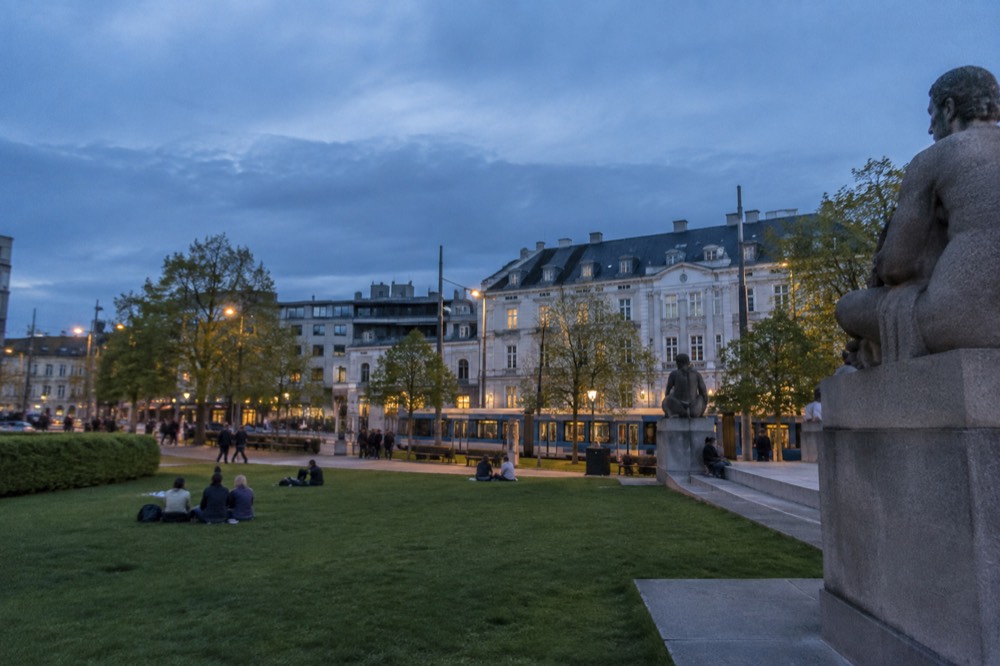
There is a second layer to the free entry that matters for planning. Because the park has no opening hours, there is no closing-time rush and no need to time a visit around a schedule. A traveler landing late, or ending a long museum day at 17:00 when the paid attractions shut, can still walk the full axis of the park in evening light, and in midsummer that light lasts until close to 23:00. Few expensive cities hand out their headline sight on those terms.
What Is Free in the Park, and What Will You Actually Pay For?
Entry, the sculptures, the Monolith, the bridge, the fountain, the wheel-of-life zone and every path in the park are free; the indoor Vigeland Museum is the one paid element at 120 NOK for an adult, and the café, public toilets and any guided walk you book are the other places money can go. Nothing in that list is required. A visitor with no interest in the museum can spend three hours in the park, see every sculpture, and spend nothing beyond the transport that delivered them there.
The museum is worth the 120 NOK for many people, but it is a separate decision. The building was Vigeland's studio under an agreement with the city, and it now holds plaster originals, early works, and material that explains how the granite and bronze pieces outside were made. If your visit to the park is a quick stop between other things, skip it without guilt. If the sculptures genuinely interest you, the museum is where the story lives.
| Item | Cost | Notes |
|---|---|---|
| Park entry, all sculptures, grounds | Free | Open 24 hours, all year, no ticket |
| Vigeland Museum (adult) | 120 NOK | The sculptor's former studio, separate building |
| Guided art walking tour | From the tour listing | Optional, bookable, around 90 minutes |
| Café refreshments | Varies | Tourist-area pricing in an expensive city |
| Getting there by metro or bus | Ordinary Ruter zone 1 fare | Entire metro network is inside zone 1 |
One cost trap deserves a name: the café. Norway's food and non-alcoholic drink prices run 33 percent above the European average on Statistics Norway's price-level comparison, and a café with a captive audience inside a major sight behaves exactly as you would expect. Eat elsewhere, or bring something. Frogner is a pleasant neighborhood with better options a short walk away, and the money you saved at the gate buys a proper lunch two streets over.
Since the park itself is free, the only bookable way to spend money on it directly is with a guide, and the guided art walk is a genuinely different experience from wandering solo. The trio below covers that walk plus two contrasting fjord options if you are building a day around the free sights.
How Much Does It Cost to Get to the Sculpture Park?
Getting to Vigeland Park costs an ordinary Ruter public transport ticket, because the park sits inside central Oslo's zone 1 and the entire metro network is inside zone 1 too; the nearest stations are on the metro, and a bus stop sits at the park's edge, so there is no special fare, no shuttle, and no parking-style attraction surcharge. The exact single-ticket price is one figure this site will not publish, because Ruter's price table renders through an app rather than a readable public page, and a guessed fare is worse than none.
What is solid: a zone 1 ticket is valid for 60 minutes from activation, the validity grows by 30 minutes per extra zone you buy, and buying on board a bus or boat costs more than buying in the app. The 30-day zone 1 pass fell from 805 to 655 NOK in May 2026, which tells you the direction the city is pushing fares, but the casual visitor cares about the single or day ticket, and those should be checked live in the Ruter app before travel.
If you are staying centrally, the walk is also realistic. From the Nationaltheatret area the park is a 30 to 40 minute walk west, mostly through pleasant streets, and many visitors fold it into a route that takes in Frogner and the neighborhoods between the center and the park. Walking costs nothing, which fits the theme of this page rather well.
For a wider planning picture, the guide to getting around Oslo covers metro, tram, bus and ferry in one place, and it belongs on your reading list before you commit to any transport pass. A day built on free sights pairs naturally with cheap transport, and the park is the anchor of both halves of that equation.
Does the Oslo Pass Help at a Free Attraction?
The Oslo Pass does not save you money on the sculpture park itself, because there is nothing to save on a free entrance, but at 580 NOK for 24 hours, 845 NOK for 48 hours and 995 NOK for 72 hours for an adult, it can still be the cheapest way to combine the park with the paid museums, transport and ferries around it. The pass includes free entry to over 30 museums and attractions plus Ruter public transport across zones 1, 2, 3, 4V and 4N, so its value at the park depends entirely on what else your day holds.
The honest framing is this: a visitor whose whole day is the park, a picnic, and a wander through Frogner gains nothing from the pass. A visitor pairing a morning in the park with an afternoon at MUNCH, the Kon-Tiki Museum or the Fram Museum, all reachable on the transport the pass already covers, can break even comfortably. Three Bygdøy museums at full price run 560 NOK against a 580 NOK 24-hour pass that also carries you there and back, and that arithmetic is the real reason to consider one.
One clarification the pass question forces: the sculpture park and the museum are separate entities with separate pricing logic. The park is public ground. The museum is a paid institution. Do not let any page or listing imply that a pass, ticket or tour is needed to see the sculptures, because that claim is simply false, and it is made more often than you would think.
Is the Guided Art Walking Tour Worth the Money?
A guided art walk is the only thing at Vigeland Park you can actually book, and it answers a real problem: the sculptures are dense with meaning that a casual visitor will walk straight past, so a guide converts a free but opaque experience into one you understand, for a price set rather than typed into a comparison table. The tour runs about 90 minutes, is led by an art guide, and has drawn a small but strong review base, which is the pattern you see with specialist walks that only genuinely interested people book.
The honest test is simple. If you already know why a monolith of intertwined human figures exists, or what the sinuous granite figures along the bridge are doing, walk yourself and pocket the money. If those sentences describe a mystery rather than a fact, a guide is money better spent than a second museum ticket, because the park is where the actual art lives. The guided art walking tour page has the details.
There is also a middle path that costs nothing: read up beforehand. The park's central axis, the bridge, the fountain and the Monolith are laid out deliberately, and knowing the sequence changes how the place reads. For most visitors, though, a guide compresses hours of reading into one walk, and that is the product being sold.
How Much Should You Budget for a Vigeland Park Visit?
Budget nothing for the park, 120 NOK if the museum tempts you, one zone 1 transit fare each way, and whatever you choose to spend on a guide or refreshments; a frugal visitor can do the whole thing for the price of two bus fares, while a full visit with a guided walk, museum entry and lunch lands closer to what a mid-range Oslo activity costs. The park fits any budget precisely because the core experience has no price at all.
| Visit style | Rough spend per adult | What it includes |
|---|---|---|
| Bare minimum | Two transit fares | The park, all sculptures, no extras |
| Museum visit | Two fares plus 120 NOK | The park plus the Vigeland Museum |
| Guided experience | Fares plus the tour price | The park with an art guide, about 90 minutes |
| Pass-based day | 580 NOK for 24 hours | Park plus museums and transport citywide |
Put that in the context of an Oslo trip overall and the park becomes even more attractive. Restaurants and alcohol are where the city's cost reputation is earned, with alcohol and tobacco running more than double the European average, but museums, public transport and the outdoors are not unusually expensive by regional standards, and the sculpture park sits at the extreme free end of that spectrum. The full Oslo trip cost breakdown covers where the money actually goes on a typical visit.
Families should notice one further advantage. Museum tickets in Oslo often add up quickly for a group, and while several city museums do waive child admission, the park removes the question entirely: there is no per-person cost for anyone, of any age, ever. A family of five can spend an entire afternoon among the sculptures, the lawns and the playground equipment that sits in the wider Frognerparken grounds, and spend nothing beyond the fares that brought them. In a city where the average attraction has a price per head, that is a genuine planning lever.
When Is the Best Time of Day to Visit, Given That It Is Always Open?
Because the park is open around the clock, the best time is a daylight question rather than an hours question: early morning and late evening give you the sculptures nearly alone, midday in July gives you crowds and the strongest light, and in winter you should work around Oslo's short days, with the sun rising as late as 09:18 and setting as early as 15:11 in late December. None of those windows costs anything extra, which is the quiet point of an always-open free park.
The lighting matters more than visitors expect. The sculptures read differently in low, slanting light than they do under a high midday sun, and photographers planning an Oslo shot list often schedule the park twice, once in morning light and once near sunset, precisely because the free access makes that possible. The best views in Oslo guide treats the park as one of the city's dependable photographic locations for exactly this reason.
Winter deserves a specific note. Snow on the granite figures is a genuinely striking sight, and the park costs the same nothing in January as in July, but the daylight budget is tight: around the winter solstice Oslo gets under six hours of daylight, and a visitor who arrives at 14:30 will be walking in the dark within the hour. Check the daylight table before a winter trip, plan the park for the middle of the day, and let the paid museums, which have fixed hours, absorb the dark margins of the afternoon.
Common Questions About How Much It Costs to Go to the Sculpture Park in Oslo
how much does it cost to go to the sculpture park in oslo?
Nothing. Vigeland Park is free to enter, open 24 hours a day, all year round, with no ticket, no gate and no booking. The only costs at the park are the optional ones: the 120 NOK Vigeland Museum next door, a guided walk, refreshments, and your transport there.
Is Vigeland Park really free?
Yes, genuinely and unconditionally. It is public parkland maintained by the city, the same as any other municipal park in Oslo, and the more than 200 sculptures carry no admission of any kind. There is no seasonal charge, no evening charge, and no separate ticket for the Monolith or any other zone.
Do you need to book anything in advance?
No. The park requires no booking, no time slot and no ticket. The only bookable element is the optional guided art walking tour, which has scheduled departures, and the indoor museum is bought at the door. If you arrive unannounced on any day of the year, the park is open.
How much is the Vigeland Museum?
The Vigeland Museum, the separate indoor building where Gustav Vigeland worked, charges 120 NOK for adults. The museum is worth it if the sculptures interest you, since it holds the plaster originals and the story of how the park was made, but it is entirely optional and separate from the free park.
What is the cheapest way to reach the park?
Walk, if you are staying centrally, which costs nothing and takes 30 to 40 minutes from the Nationaltheatret area. Otherwise a single zone 1 Ruter ticket covers the metro or bus, since the entire metro network and the park both sit inside zone 1. Check the live fare in the Ruter app before buying.
Is the sculpture park included in the Oslo Pass?
The park is free, so there is nothing for a pass to cover. The Oslo Pass at 580 NOK for 24 hours still earns its place if you pair the park with paid museums, since it includes entry to over 30 museums and attractions plus all Ruter transport in the city zones, including the rides to and from the park.
Is the park worth visiting at night?
In summer, often yes: the park stays open and the late light lasts until close to 23:00, so an evening walk costs nothing and avoids the midday crowds. In winter the daylight window is under six hours, so plan the park for midday and let the fixed-hours museums take the dark afternoon instead.
The park pairs naturally with the rest of a free-first day in the city, and the two contrasting fjord boats below round out the trio this page has recommended throughout if your budget has room for one paid experience after all that free art.