Can I Drink Tap Water in Norway?
Yes, tap water in Norway is safe to drink, and in Oslo it is often better than the bottled alternative. Here is what to expect from taps, restaurants and hiking trails.
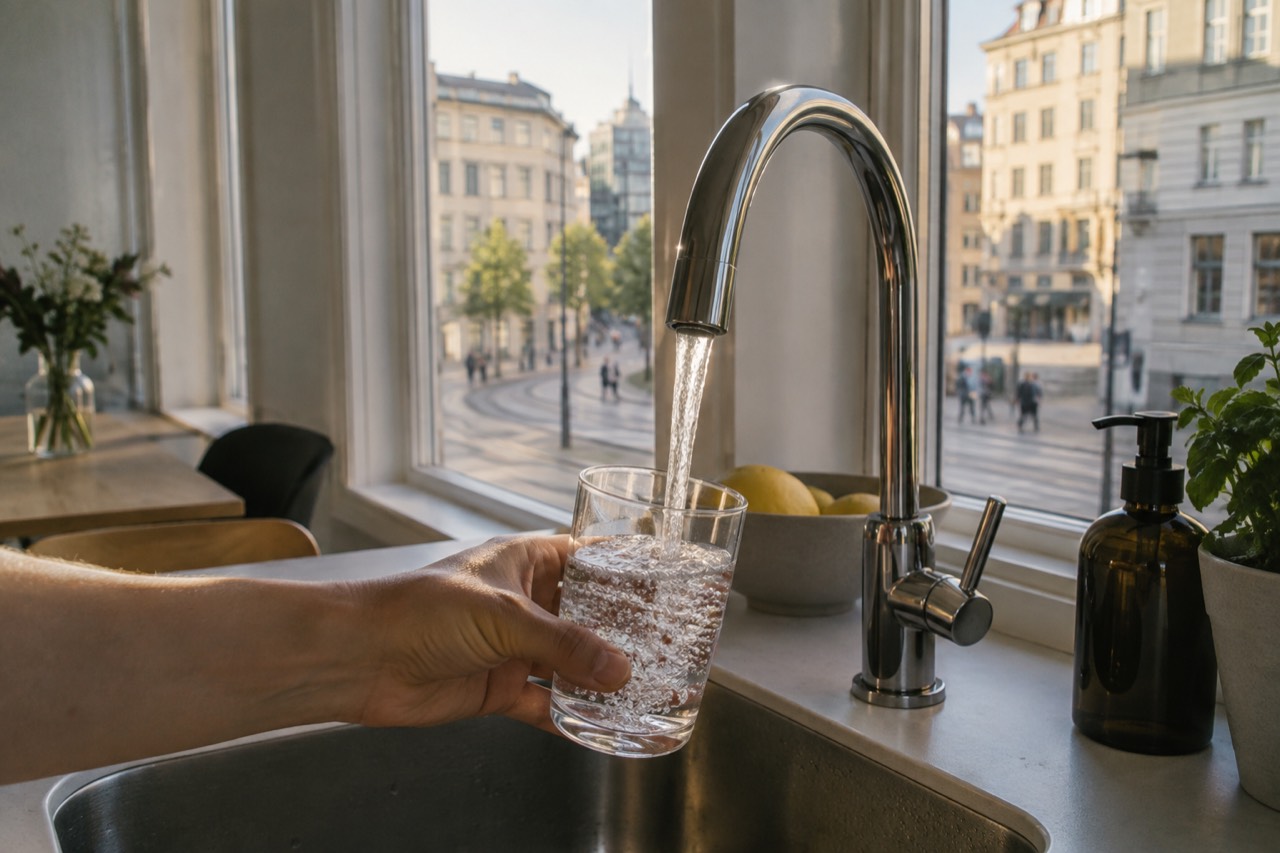
Can I Drink Tap Water in Norway?
Yes. Tap water in Norway is safe to drink, and it is considered some of the cleanest municipal water in Europe. In Oslo you can drink from the tap in hotels, restaurants, cafes, holiday apartments and public buildings without a second thought, and nobody will look at you strangely for asking for a glass of it. The practical upside is real too: Norway is an expensive country, and skipping bottled water is one of the few daily savings that costs you nothing at all in quality.
That single fact quietly changes the shape of a Norway trip. In plenty of destinations the standard advice is to buy a sealed bottle, budget a few euros a day for it and treat the tap as a backup. Here the advice inverts completely. The tap is the good option, the bottle is the marketing, and the money you would spend on water goes further literally anywhere else, from a museum ticket to a coffee that costs three times what the water does.
This page answers the question in full: where the water comes from, what happens in restaurants, whether bottled is ever worth it, and how the same rules play out when you leave the city for the forest or the fjord.
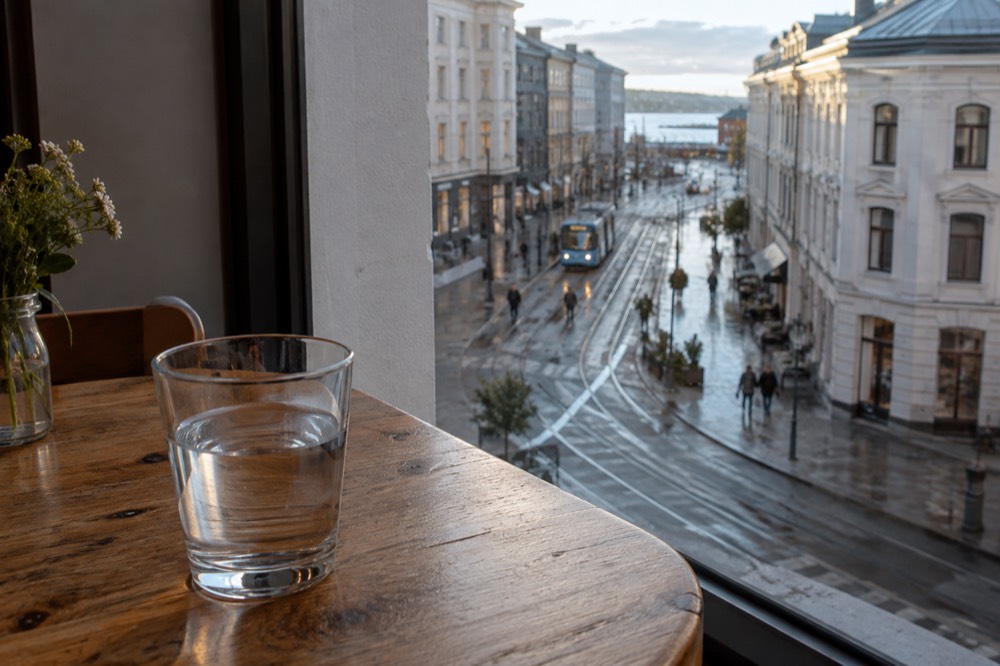
Is Oslo Tap Water Safe to Drink?
Yes, Oslo's tap water is safe to drink straight from the tap, with no filtering, no boiling and no second thought required, and the same holds across Norwegian cities and towns. Norwegian drinking water is subject to strict national quality standards, and municipal suppliers publish their results rather than hiding them. Visitors from the United States, Canada, the UK and across Europe generally find it tastes cleaner than what they have at home, which is the usual reaction rather than the exception. There is no region of the country where the standard advice changes, and no advisory in effect for any major city.
A few practical notes worth knowing before you travel:
- Hotel and apartment taps are all fine, including older buildings. The pipes are not the issue people sometimes imagine.
- Public drinking fountains appear in Oslo's parks and squares in the warmer months, and they draw on the same supply.
- Ice in drinks is made from tap water and is equally safe.
- Brushing your teeth with tap water is completely normal; nobody uses bottled water for that here.
The city's supply is drawn from lakes and reservoirs in the forested hills that surround Oslo, which is why the water arrives tasting soft and clean rather than heavily treated. If you want the deeper local context, including how the supply works and where the city's water actually comes from, we cover it in detail on our page about Oslo's tap water supply.
One honest caveat that applies anywhere: very old or rarely used plumbing in an individual building can occasionally affect taste, exactly as it can at home. That is a building problem, not a country problem, and it is rare enough that most visitors never encounter it. If it happens, running the tap for a moment usually clears it, and the water is still safe regardless.
Can You Ask for Free Tap Water in Oslo Restaurants and Bars?
Yes, you can ask for tap water in Norwegian restaurants and bars, and most will bring it, though unlike some countries there is no absolute legal guarantee of free water with a meal. In practice, a polite request for a glass of tap water, "kan jeg få vann fra kranen" if you want to try the Norwegian, is normally met without fuss in restaurants. In bars and nightclubs the culture is different, and free tap water is less of an expectation than it is in, say, the United States. It never hurts to ask, and it rarely costs anything beyond the asking.
| Situation | What to expect | What to say or do |
|---|---|---|
| Restaurant, sit-down meal | Tap water usually provided on request | Ask when ordering; a carafe is common |
| Cafe or lunch spot | Free tap water often offered, sometimes self-service from a jug | Just ask at the counter |
| Bar or nightclub | Least likely to be free; expectations differ from the US | Ask, accept a no gracefully |
| Hotel breakfast | Water freely available, often with jugs out | Take a glass, fill a bottle |
| Holiday apartment | Fully drinkable tap, unlimited | Fill bottles before you head out |
The reason the bar answer differs is cultural rather than anything about the water. Norway's alcohol prices are famously high, and bars operate on tight margins, so the free-water culture that American visitors take for granted has never developed the same way. Service is included in Norwegian prices, and tipping is voluntary rounding rather than an expectation, which also shapes how staff handle small requests. Nobody is being difficult; the economics of a Norwegian bar simply run differently from the economics of an American one.
There is a second layer worth knowing about, and it is the one genuinely local twist. Norway's alcohol rules are strict and specific in ways most visitors never expect: wine and spirits are sold only through the state monopoly Vinmonopolet, which keeps short hours, closes early on Saturdays and stays shut all day Sunday, while supermarkets sell only beer and cider. A guided evening that explains this system while walking you through it exists, and it is one of the more genuinely useful tours in the city, since it turns the country's confusing drinking rules from an obstacle into the evening's storyline.
If you would rather sort the evening yourself, the practical summary is simple: drink the tap water everywhere, order what you actually want from the menu, and treat the alcohol rules as part of the travel experience rather than a problem to solve. For a full cost breakdown of drinking in Oslo, see our page on the price of beer in Oslo.
Is Bottled Water Worth Buying in Norway?
Almost never, and the only honest exceptions are convenience and carbonation. The tap water is safe everywhere, so bottled water in Norway buys you a bottle, a label and still water you already have for free. If you want sparkling water, Norwegian supermarkets sell that, and it is a legitimate purchase since the tap cannot carbonate itself. Still water, though, is paying for packaging in a country where the free alternative is excellent, and most visitors who buy it once out of habit do not bother again.
The money angle matters more here than in most destinations. Statistics Norway's European price-level comparison, published in June 2026, places Norway as the sixth most expensive country in Europe, with prices facing Norwegian households 28.6 percent above the EU average and food and non-alcoholic drinks 33 percent above the European average. Every small saving in a trip budget counts, and water is the one line item you can zero out entirely with no loss of quality or comfort. Over a week, that is a real amount of money back in your pocket.
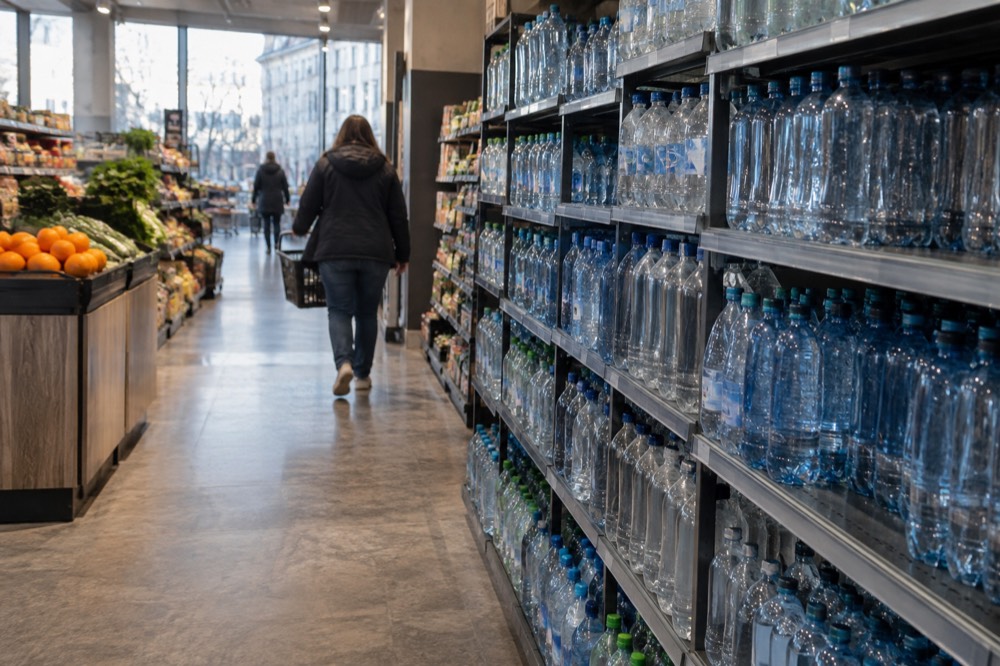
A reusable bottle solves the whole question. Fill it at the hotel in the morning, refill it at fountains, cafes and public buildings through the day, and the bottled aisle stops being relevant to your trip. If you are building a full budget for the city, our guide to visiting Oslo on a budget covers where the money genuinely goes, and where, as with water, it does not have to.
| Choice | Quality | Cost | When it makes sense |
|---|---|---|---|
| Tap water | Excellent, safe everywhere | Free | Default, all day, every day |
| Sparkling bottled | Same source, carbonated | Paid | You prefer bubbles |
| Still bottled | Identical to tap for practical purposes | Paid | Convenience when you forgot your bottle |
| Filter jug in an apartment | Unnecessary for safety | Optional | Only if you dislike the local taste |
The comparison table above is really a decision table, and the decision is almost always the first row. One way to spend the money you just saved, if you want an evening that leans into Norwegian drinking culture rather than around it, is a guided walk built on exactly that theme.
What About Drinking Water When You Hike or Sail Around Oslo?
Tap and fountain water in the city is safe, and on the trails around Oslo the standard advice is to fill up before you leave and refill at visitor facilities, rather than to assume every stream is drinkable. The forests north of the city, Nordmarka, and the lake at Sognsvann are the classic day trips from the center, reachable on an ordinary metro ticket, and the trailheads and lodges there have taps and water access in the warmer season. The honest position on wild streams is the one that applies everywhere in the world: most are fine, but nobody can promise you a specific one on a specific day, so treat them as a backup rather than a plan.
The same logic applies out on the Oslofjord. The island ferries from Aker Brygge run on ordinary public transport tickets, and Hovedøya, Gressholmen and Langøyene make an easy summer afternoon, but none of them is a place to count on a shop. A filled bottle in the daypack covers the whole trip. If you are planning the boat day itself, our guide to the Oslofjord cruise options lays out the choices, from the silent electric boats to the traditional wooden sailing ships.
For winter trips the advice barely changes. Cold weather makes people think about water less, but dry winter air dehydrates you just as fast, and heated indoor spaces even faster. The tap in the cabin, the hotel or the museum cafe is still the answer, and it is still free.
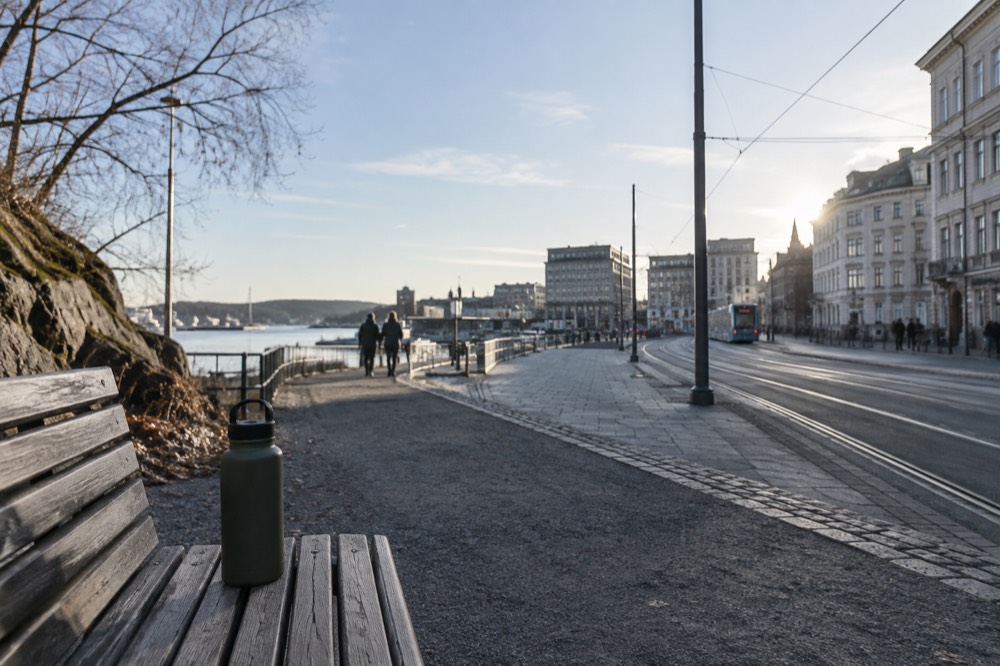
Does Norwegian Tap Water Contain Anything You Should Know About?
Norwegian tap water is treated and monitored to national drinking water standards, is not artificially sweetened or altered, and contains only the natural minerals of the local source. There is nothing added that a visitor needs to filter out, and no widespread advisory in effect for any of the country's major cities. If you have a specific medical sensitivity to mineral content, the practical step is the same one you would take at home: check the local supplier's published water quality information, which Norwegian utilities make freely available. For everyone else, the water needs no thought at all.
A few comparisons travelers ask about:
- Compared with the US: Norwegian water is generally softer, and chlorine taste is far less noticeable than in many American cities.
- Compared with southern Europe: the taste is closer to mountain spring water than to heavily treated municipal supplies.
- For children and babies: safe to use for formula and bottles straight from the tap, as at home.
- For pets: the same water you drink is fine for them.
The one thing this site will not do is quote you a chemical breakdown, because a precise mineral table is a supplier-level document that changes and belongs on the utility's own site, not in a travel guide. What matters for a visit is simpler: the water is clean, safe, soft and free at the point of use, and that is true in Oslo, Bergen, Trondheim and the villages in between.
Should You Bring a Water Bottle to Norway?
Yes, bring one reusable bottle, and that is the entire water-related packing decision for a Norway trip. A standard bottle covers the city, the trails, the ferries and the long train rides, because the tap is safe at every point of the journey, including on board and in stations. There is no need for purification tablets, filter straws or the sealed-bottle stockpiling routine that other destinations require. If you forget yours, supermarkets sell bottled water, but you will be buying convenience, not safety, and a cheap bottle from any grocery store solves it for the rest of the trip.
Long-distance travel in Norway makes this especially pleasant. The rail routes out of Oslo, including the spectacular ride toward Bergen, are day-long journeys where hydration matters, and station taps and cafe water fill a bottle without ceremony. Our overview of getting around Oslo and Norway covers the transport side of that planning.
One small cultural note to close the practical loop: Norwegians themselves drink tap water as the default, at home, at work and at the gym. Asking for it in a restaurant is not a budget tourist move here, it is simply what people do. The country's relationship with drinking water is the inverse of its relationship with alcohol, strictly regulated and expensive, and that contrast is genuinely part of understanding the place. As Oslo Travel Guide puts it in our planning pages, the cheapest thing in Norway is also one of the best.
If an evening exploring that contrast appeals, the guided Beer and Culture Walk spends three hours doing exactly that, walking the city while explaining how Norway's alcohol system actually works, from the Vinmonopolet monopoly to the supermarket beer rules, and it pairs naturally with a first evening in the capital.
However you spend the evenings, the water question stays answered for the whole trip: the tap is safe, the bottle is optional, and the money you do not spend on still water is better spent on almost anything else the city offers. For a wider look at how to fill the rest of your days, our overview of things to do in Oslo is the natural next stop.
Common Questions About Drinking Tap Water in Norway
can i drink tap water in norway?
Yes. Tap water in Norway is safe to drink everywhere, in cities, towns and rural areas, with no filtering or boiling needed. In Oslo it is clean, soft and often better tasting than bottled alternatives, and it is free at every tap.
Is restaurant tap water free in Norway?
Usually, on request, but there is no absolute legal guarantee of free water with a meal as there is in some countries. Restaurants and cafes will generally bring tap water if you ask politely. Bars and nightclubs are the least likely to provide it free.
Can I drink tap water in Oslo hotels?
Yes, hotel tap water in Oslo is safe to drink, including in older buildings. Fill a bottle from the bathroom or kitchen tap and use it all day. There is no need to buy bottled water for safety reasons anywhere in the city.
Is Norwegian tap water safe for babies and children?
Yes. The same water the whole household drinks is safe for formula, bottles and children of any age. No special preparation is needed beyond what you would do at home with your own tap water.
Can you drink from streams when hiking near Oslo?
Fill your bottle before you leave rather than planning around wild streams. Most are fine, but no one can guarantee a specific stream on a specific day, so treat them as a backup. Trailheads and lodges around Nordmarka and Sognsvann have water access in season.
Should I buy bottled water in Norway?
Only if you want sparkling water or forgot your reusable bottle. Still bottled water offers no safety or quality advantage over the tap, and in one of Europe's most expensive countries it is a cost you can simply remove from the budget.