What Is the Best Month to Go to Oslo?
The honest month-by-month answer for Oslo, built on MET Norway climate normals, daylight tables and real NOK prices, so you can pick the month that matches what you actually want from the city.
What Is the Best Month to Go to Oslo?
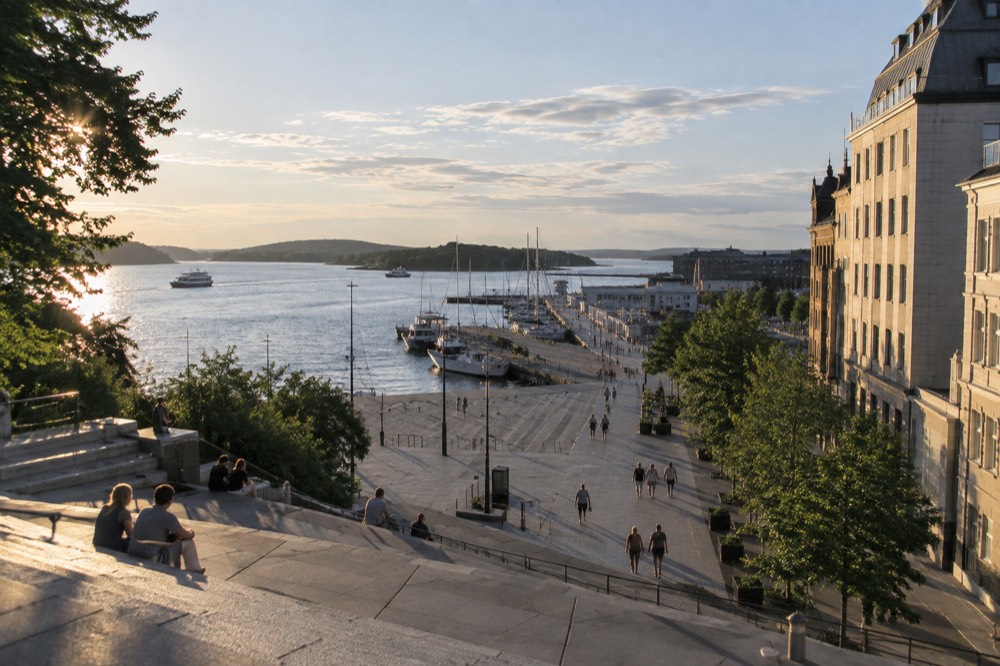
The best month to go to Oslo is July, if you want the warmest weather: MET Norway's 1991 to 2020 normals put the July mean at 17.7 °C, the mildest of the year, with 18 hours of daylight at midmonth. June is the better pick if light matters more than warmth, with the sun setting at 22:43 on 21 June. September is the best value month, and December is the best for winter atmosphere.
That is the short version, and it is built on measured numbers rather than vibes. Oslo's climate is more extreme than most visitors expect, not in temperature but in light. The city sits at 59.91 N, and its day length swings from 5 hours 53 minutes on 21 December to 18 hours 50 minutes on 21 June, a factor of more than three. The month you choose changes the city more than almost any other decision you make about the trip.
A few things this page is not. It is not a claim that there is one right answer for everyone: a swimmer, a skier and a museum-goer will each pick a different month, and each will be correct. It is also not a page about the northern lights, because Oslo is too far south for reliable aurora and no tour of that kind exists from the city. If the aurora is the goal, that is a Tromsø trip, and this site covers that decision separately.
The honest framing is that Oslo is a city of two peak seasons rather than one. The summer peak, June through August, is about water, light and the fjord. The winter peak, December through February, is about snow, candles, Christmas markets and the peculiar coziness a Nordic city builds around its darkest weeks. Both are real Oslo. The mistake is arriving in April or October expecting either one and getting the in-between instead.
What Each Season Actually Feels Like in Oslo
Oslo has four genuinely distinct seasons, and the differences are sharper than in most European capitals. Summer means 15 to 18 °C means, water warm enough to swim in, and evenings that never go fully dark. Winter means means below freezing, snow on the ground, and under six hours of daylight at the solstice. Spring and autumn are short, changeable and quiet, with the museums open and the crowds thin.
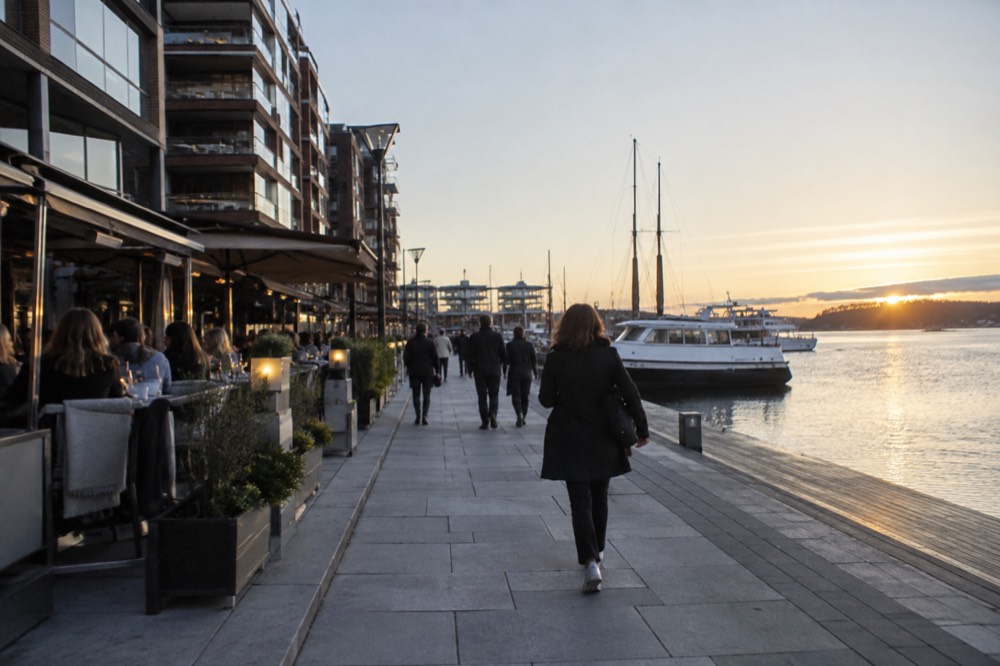
The numbers behind that come from MET Norway's official 1991 to 2020 standard normals for the Blindern station, which is the dataset every Norwegian forecaster works from. July, the warmest month, averages 17.7 °C. January, the coldest, averages −2.3 °C. Neither figure sounds dramatic on paper, but the light is what hits visitors: in late June the sun sets at 22:43 and rises at 03:53, and the gap between is deep twilight rather than true night, so it never gets properly dark. In late December the sun rises at 09:18 and sets at 15:11.
One expectation worth correcting: August, not November, is Oslo's wettest month on the normals, at 103 mm. The dark months feel damper than they measure because the precipitation falls as cold rain and sleet, but the measuring tape does not lie. October and November are also wet, at 93 mm and 85 mm, while late winter, February and March, are among the driest stretches of the year.
The seasonal character, briefly:
- June and July are the fjord months. The water in the inner Oslofjord reaches a swimmable 15 to 20 °C in a normal July and August, the island ferries run their summer timetables, and the evening light makes 22:00 feel like 18:00.
- August and September are the shoulder. August is warm but the wettest month; September cools to a 12.2 °C mean and 12 hours 54 minutes of daylight at midmonth, which is still plenty for a full sightseeing day.
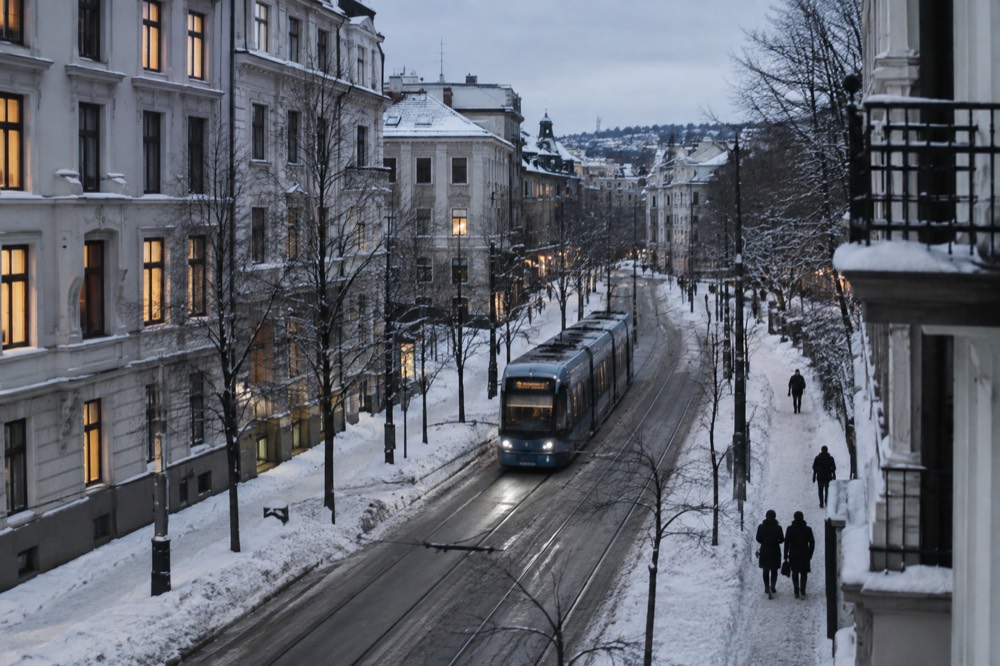
- December through February are the dark months, with snow, Christmas markets in December, and cross-country skiing in Nordmarka once the trails are groomed. The torchlit forest walks and snowshoe tours that define an Oslo winter run in this window.
- March through May are the light-hungry local's favorites: February and March are dry, May averages 11.4 °C and 17 hours of daylight, and Norwegians emerge onto every café patio in the city.
A note on how quickly the seasons turn, because the monthly table understates it. The daylight column moves in steps of an hour or more between consecutive months in spring and autumn, which means mid-March and mid-April are different cities. A visitor who books "spring" without checking which half of spring is buying either a snow-dusted city with 11 hours of light or a green one with almost 15. The same applies in reverse in autumn: the first two weeks of September still feel like summer's long tail, while the last two weeks of October are unmistakably winter's opening act.
Month by Month: Matching the Calendar to What You Want
Every month in Oslo trades something for something else: July buys warmth with peak crowds and peak prices, December buys atmosphere with 5 to 6 hours of daylight, and the shoulder months of May, June and September buy balance. June is the strongest all-round pick, because it combines the year's longest days with a lower chance of rain than August and water that is warming fast.
The table below is the one to plan from. The temperature and precipitation columns are MET Norway's Blindern normals, the daylight figures come from MET Norway's sunrise data for the middle of each month, and the last column is the honest editorial read.
| Month | Mean temp | Precip | Daylight (midmonth) | The honest verdict |
|---|---|---|---|---|
| January | −2.3 °C | 58 mm | 6 h 45 m | Cold, dark, quiet; cheapest hotels, skiing in Nordmarka |
| February | −2.0 °C | 46 mm | 9 h 14 m | Dry and brightening fast; the locals' winter |
| March | 1.3 °C | 41 mm | 11 h 45 m | Driest air, snow still on the ground, light returning |
| April | 6.2 °C | 48 mm | 14 h 34 m | Unpredictable; spring arrives late and suddenly |
| May | 11.4 °C | 60 mm | 17 h 08 m | Long bright days, patios open, before peak season |
| June | 15.3 °C | 80 mm | 18 h 50 m (21st) | Longest days of the year, fjord season in full swing |
| July | 17.7 °C | 87 mm | 18 h 02 m | Warmest month; swim, sail, island-hop |
| August | 16.5 °C | 103 mm | 15 h 38 m | Still warm, but the wettest month of the year |
| September | 12.2 °C | 82 mm | 12 h 54 m | The value month: mild, quieter, museums fully open |
| October | 6.6 °C | 93 mm | 10 h 13 m | Autumn color, rain, first dark evenings |
| November | 2.2 °C | 85 mm | ~8 h | Grey and short; lowest crowds of the year |
| December | −1.4 °C | 54 mm | 5 h 53 m (21st) | Christmas markets, snow chance, 6-hour days |
Read that table against what you actually want to do. The fjord is the clearest example, because it is the activity most sensitive to season. The silent electric boat cruise and the wooden sailing ship both run through the warm half of the year, the island ferries run their full summer timetable from 4 July to 30 August, and the shrimp-buffet evening cruise is a summer institution. In January the same water is grey and the boats are fewer.
Those three are also the three products that survive every season. The fjord cruise is the best-reviewed activity in the city and the default first booking for a summer visit. The free walking tour, tip-based and roughly two hours, is the budget answer year-round, and it runs when the boats do not. The Kon-Tiki ticket anchors a Bygdøy museum day, which is the single best rainy-day plan in Oslo, and August will give you a reason to use it.
For a deeper season-by-season breakdown, the site's best time to visit Oslo guide works through the same question at full length, and the Oslo weather by month page expands the climate table above with more detail on what each month's weather does to specific plans.
What About Crowds, Prices and the Winter Trade-off?
July is the busiest and most expensive month, December is busy for its short Christmas-market window, and the cheapest months to be in Oslo are January, February, November and early March, when hotel rates drop and the museums are quiet. The winter trade-off is daylight: you get roughly 6 hours of it in January, which compresses sightseeing but makes the city's indoor life, its museums and its cafés, the whole point.
Prices inside the city barely move with the season, and that matters for planning. Museum admission is fixed year-round: MUNCH charges 280 NOK for an adult daytime ticket, the Fram Museum 180 NOK, the Kon-Tiki Museum 180 NOK, and the Oslo Pass, at 580 NOK for 24 hours, costs the same in February as in July. What moves is accommodation and flights, so the savings from an off-season trip come from your bed and your seat, not your tickets.
The winter months reward a different kind of visitor. Daylight of 6 hours 45 minutes in mid-January sounds bleak, but it is bright, low-angle light on snow, and the city is built for it: cafés glow, museums are empty, and Nordmarka's groomed ski trails sit a metro ride from the center. The dark season, October to March, is exactly when the evening myths-and-legends walk and the torchlit forest walk with a campfire run, because those products need the dark.
If you do land in the warm half of the year, book the fjord early. The silent electric boat is the city's most-reviewed product and its summer departures fill first, and the free-cancellation terms mean an early booking costs you nothing if your plans shift. The Oslofjord cruise guide compares all the boat options, including the wooden sailing ship and the island-hopping tour, if you want the full picture before committing.
There is one more seasonal gate worth knowing: the Bygdøy museum ferry, the little boat from Rådhusbrygge 3 to the museum peninsula, runs only from 14 March to 4 October. Outside that window you reach the museums by Ruter bus 30, which is a normal city bus on a normal ticket. It is a small thing, but arriving at Kon-Tiki by water is one of the small pleasures of a summer visit, and it is simply unavailable for a third of the year.
The same logic extends to the islands. The Ruter ferry lines B1 and B1X serve Hovedøya, Gressholmen and their neighbors year-round and through the summer respectively, but the B2 line to Langøyene, the swimming and camping island, is a summer-only service. If an island afternoon with a towel is part of your plan, the calendar has already made part of the decision for you, and the months that qualify are the ones with the warmest water.
The Verdict, by Traveler Type
Pick June for the best overall balance of light, weather and atmosphere, July for warmth and swimming, September for value with everything still open, December for Christmas-market atmosphere, and February or March if you want snow, sun and empty museums rather than total darkness. May is the sleeper pick: 17 hours of daylight, an 11.4 °C mean and pre-peak prices.
A month that suits nobody especially well does exist, and it is worth naming: November. It is not the wettest month, that is August, but it is grey, the leaves are gone, the snow has usually not yet settled, and the daylight is under eight hours. If your dates are flexible and November is on the table, slide them either side of it.
For the two most common visitor profiles, the math is simple. A first-timer with a three- or four-day trip and a list of museums, the Opera House roof, Vigeland Park and a boat on the fjord gets the most from June through early September. A visitor whose priority is winter atmosphere, snow, candles and cross-country skiing, should aim for late January through March, when the light returns but the snow holds, rather than December, when the days are shortest.
There is a third profile worth a sentence: the visitor who is pricing the whole trip rather than optimizing it. For that person the answer is late September, or the first half of June before the schools break up. Both windows keep the full range of the city's bookable experiences live, the fjord boats included, while dodging the peak weeks that push flights and rooms to their annual highs. The city does not close in these windows; it simply has fewer people in it.
Whatever month you choose, the planning basics do not change, and Oslo Travel Guide covers them in depth: the Oslo Pass math, the airport train decision, and the neighborhood-by-neighborhood question of where to sleep. The month sets the frame; the rest is logistics.
The fjord cruise deserves its place in almost any answer, because it is the one product whose experience changes most with the calendar: a 90-minute silent electric boat trip at 22:00 in late June, in twilight over flat water, is a different thing from the same boat in a September drizzle. Both are good. They are not the same.
Common Questions About the Best Month to Visit Oslo
what is the best month to go to oslo?
July is the warmest month at a 17.7 °C normal mean, with about 18 hours of daylight at midmonth, so it is the best pick for weather. June offers the longest days of the year, 18 hours 50 minutes on 21 June, and September offers the best balance of mild weather, open attractions and lower prices.
What is the rainiest month in Oslo?
August is Oslo's wettest month on the 1991 to 2020 normals, at 103 mm, ahead of October at 93 mm and November at 85 mm. Many visitors assume the dark winter months are the wettest, but the measurements say otherwise.
Is Oslo good in winter?
Yes, for a specific kind of trip. The daylight is short, under 6 hours at the December solstice, but the museums are fully open and quiet, Christmas markets run in December, and Nordmarka's ski trails are groomed all winter. February and March combine returning light with lingering snow, which many locals consider the best winter window.
When can you swim in Oslo?
July and August, when the inner Oslofjord typically reaches 15 to 20 °C. The official bathing spots, including Sørenga, Huk and Paradisbukta, are free and public, and the island ferries to swimming islands like Langøyene run their summer timetable from early July to the end of August.
What is the cheapest month to visit Oslo?
January, February and November, when hotel rates drop to their annual lows and the museums are at their quietest. City prices such as museum admission and transport passes are fixed year-round, so the savings come from accommodation and flights rather than from anything you do on the ground.
Does Oslo have a midnight sun?
No. Oslo is at 59.91 N, well south of the Arctic Circle at about 66.5 N where midnight sun begins. In late June the sun sets at 22:43 and the sky stays in twilight rather than going fully dark, which is a long evening, not a midnight sun.